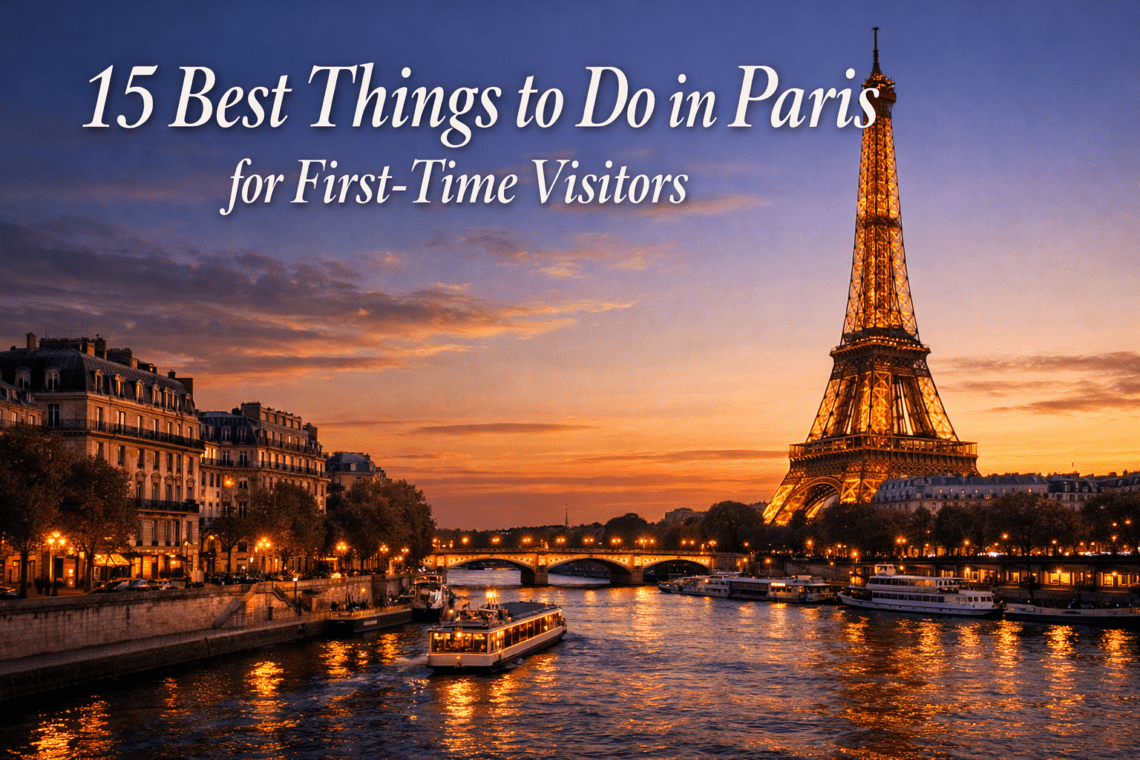
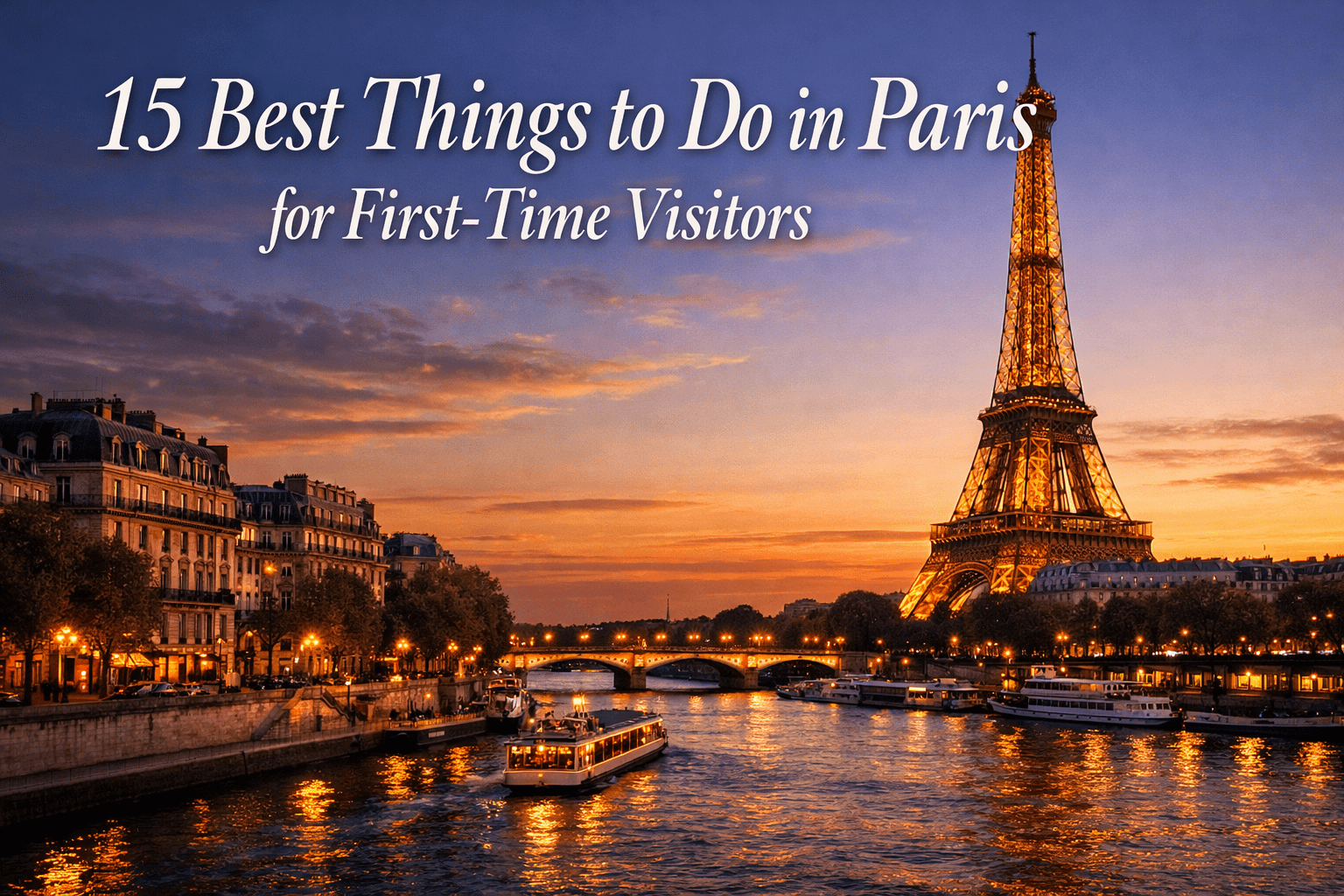
I’ll never forget my first glimpse of the Eiffel Tower sparkling at night—it took my breath away and made every travel cliché suddenly make sense. Paris delivers those pinch-me moments around every corner, but knowing where to start can feel overwhelming. If you’re planning your first trip to the City of Light, you’re in for an unforgettable experience. The best things to do in Paris blend iconic landmarks with hidden neighborhood gems, world-class museums with charming café culture, and grand monuments with intimate riverside strolls. I’ve put together this guide to help you make the most of your Paris adventure without missing the experiences that make this city truly magical.
Key Takeaways
- Plan for at least 4 full days to cover major attractions and experience Paris’s neighborhoods properly
- Book Eiffel Tower and Louvre tickets in advance to avoid long lines and potential sold-out situations
- Notre-Dame Cathedral reopened in 2026 after restoration, making it a must-see for first-time visitors
- The Paris Museum Pass saves money if you plan to visit multiple museums and monuments
- Early morning or golden hour visits to popular spots like Montmartre help you avoid crowds
- Seine River walks are free and offer some of the most memorable Paris experiences
- Le Marais and Montmartre neighborhoods provide authentic Parisian charm beyond major monuments
- Bike tours efficiently cover multiple landmarks in 3-4 hours with local insights
Quick Answer
The best things to do in Paris for first-time visitors include climbing the Eiffel Tower, exploring the Louvre Museum, walking along the Seine River, visiting Notre-Dame Cathedral (reopened in 2026), and discovering charming neighborhoods like Montmartre and Le Marais. Plan for at least 4 full days to experience both iconic landmarks and authentic local culture, and book popular attractions in advance to maximize your time.
What Are the Must-See Landmarks in Paris?
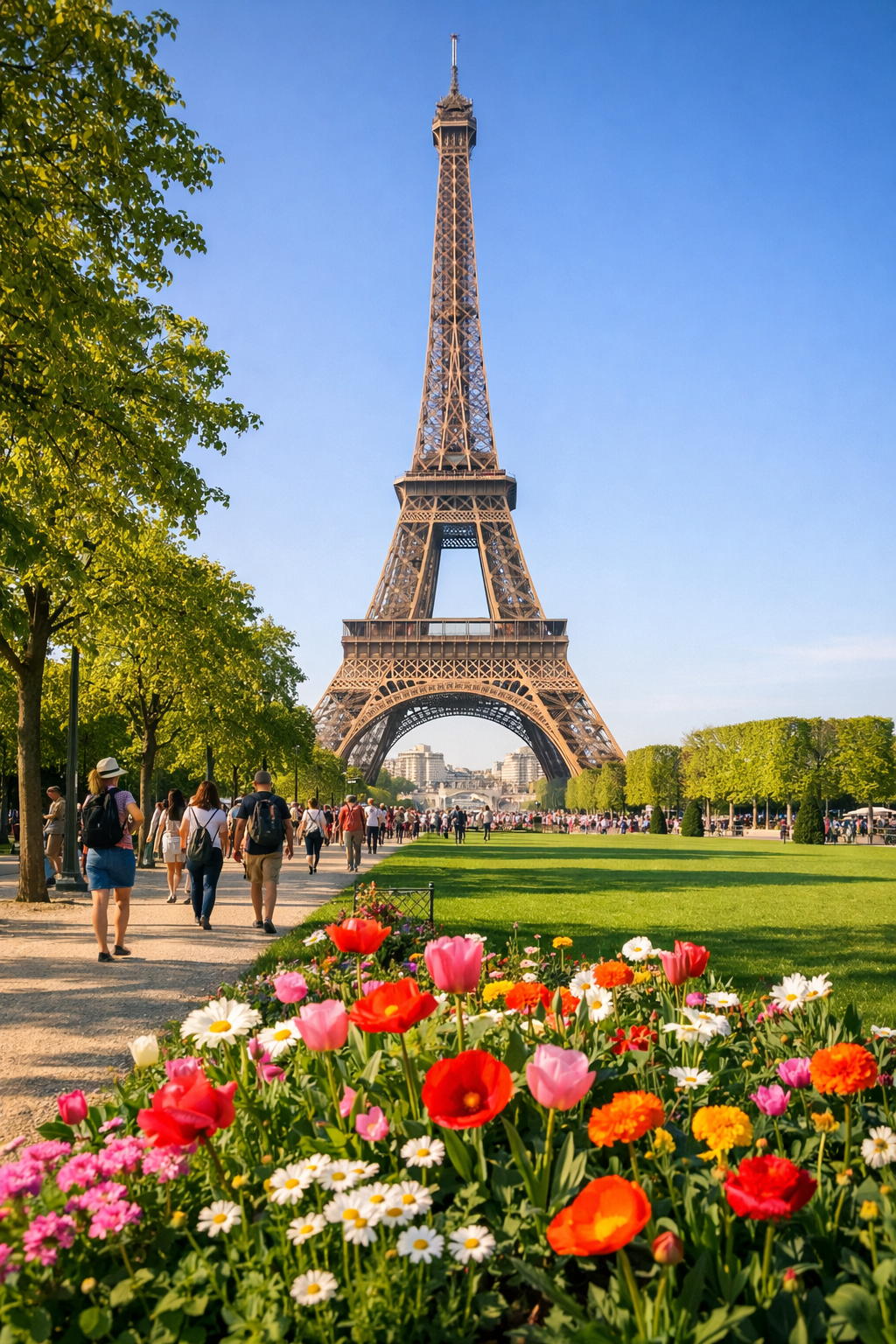
The Eiffel Tower, Arc de Triomphe, and Notre-Dame Cathedral form Paris’s essential landmark trio that every first-time visitor should experience. These monuments define the city’s skyline and offer different perspectives on Parisian history and architecture.
The Eiffel Tower remains the absolute essential first stop for anyone visiting Paris.[1] You have two main options: take the elevator to the top for panoramic views, or enjoy the tower from Champ de Mars gardens and surrounding areas. The latter is budget-friendly and lets you avoid crowds while still getting those iconic photos.[2] I recommend visiting at different times—once during the day for photos and again at night to see the tower sparkle (it lights up every hour after sunset).
Notre-Dame Cathedral reopened to the public in 2026 after the devastating 2019 fire, making it a bucket list priority again.[3] Located at 6 Parvis Notre-Dame on Île de la Cité, climbing to the top offers incredible views of the city and a close-up look at the famous gargoyles.
Arc de Triomphe sits at the western end of the Champs-Élysées and offers another stunning panoramic viewpoint.[1] You’ll climb 284 steps to reach the top, but the 360-degree views of Paris’s grand boulevards radiating outward make it worth the effort. The monument also houses the Tomb of the Unknown Soldier, adding historical significance to your visit.
Common mistake: Trying to visit all three landmarks in one day. Give yourself time to actually experience each location rather than just checking boxes. The Eiffel Tower alone deserves at least 2-3 hours including wait times and exploration.
Which Museums Should First-Time Visitors Prioritize?
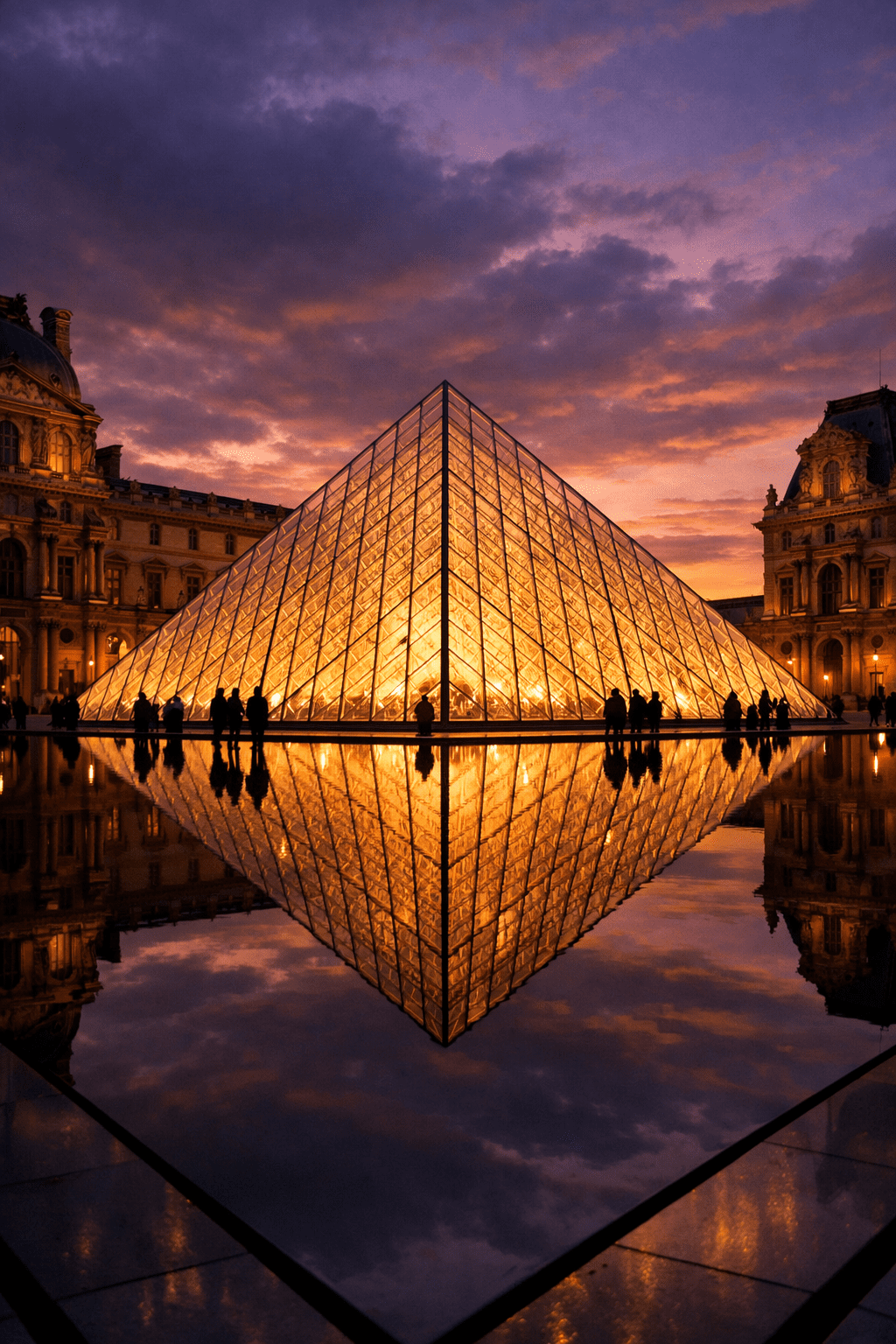
The Louvre and Musée d’Orsay are the two must-see museums for first-time visitors exploring Paris’s world-class artistic heritage.[5] These institutions offer complementary experiences—the Louvre for classical art and antiquities, Musée d’Orsay for Impressionist masterpieces.
The Louvre Museum is the world’s largest art museum and home to the Mona Lisa, Venus de Milo, and Winged Victory of Samothrace. Here’s how to make the most of it:
- Book tickets online in advance to skip the main entrance lines
- Arrive right when it opens (9 AM) or late afternoon to avoid peak crowds
- Focus on specific galleries rather than trying to see everything (it’s impossible)
- Plan for 3-4 hours minimum to see highlights without feeling rushed
- Use the Carrousel du Louvre entrance for shorter lines
Musée d’Orsay showcases Impressionist and Post-Impressionist works by Monet, Renoir, Van Gogh, and Degas in a stunning converted railway station. The museum is more manageable in size than the Louvre, making it perfect for a 2-3 hour visit.
Pro tip: The Paris Museum Pass covers both museums plus many other attractions including the Pantheon, Palais Garnier, and Les Invalides (though not the Catacombs).[5] If you plan to visit multiple sites, it provides excellent value and lets you skip ticket lines.
Choose the Louvre if you want to see world-famous masterpieces and ancient civilizations. Choose Musée d’Orsay if you prefer Impressionist art and a less overwhelming museum experience. Better yet, visit both—they represent different eras of artistic achievement.
What Are the Best Neighborhoods to Explore in Paris?
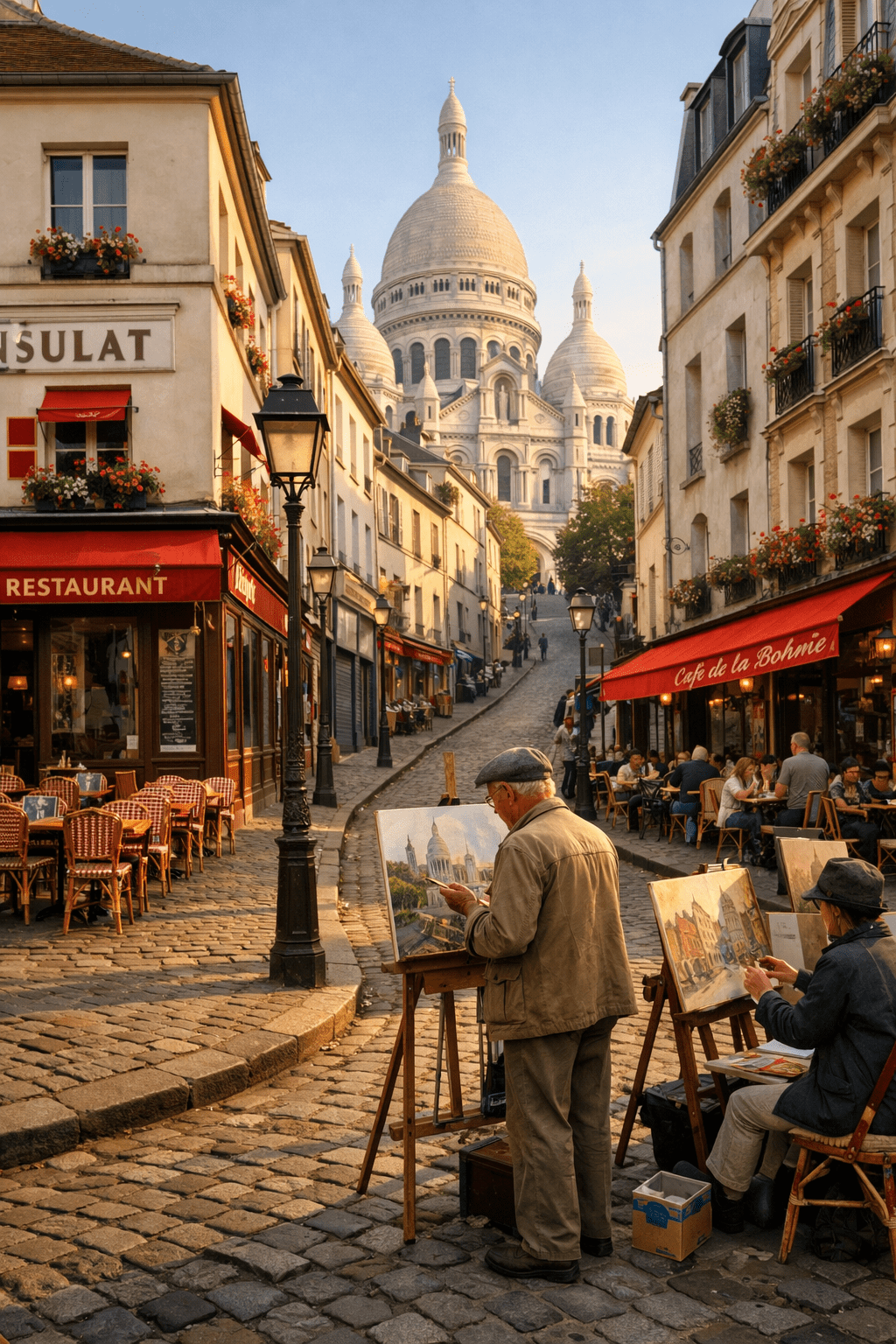
Montmartre and Le Marais offer the most rewarding neighborhood experiences for first-time visitors seeking authentic Parisian charm beyond major monuments.[6] These districts reveal the city’s creative soul and local lifestyle.
Montmartre sits on a hill in northern Paris and once served as home to Picasso, Renoir, and other legendary artists.[6] The neighborhood retains its bohemian character with:
- Sacré-Cœur Basilica at the summit offering panoramic city views
- Place du Tertre where artists paint and sell their work
- Cobblestone streets lined with cafés and historic buildings
- Moulin Rouge cabaret for evening entertainment
- Best visiting time: Early morning or golden hour to avoid crowds[6]
Le Marais represents Paris’s creative heart in the 3rd and 4th arrondissements.[6] This historic district features:
- Vintage boutiques and concept stores along Rue des Francs-Bourgeois
- Elegant mansions-turned-museums like Musée Picasso and Musée Carnavalet
- Jewish Quarter with excellent falafel shops on Rue des Rosiers
- LGBTQ+ friendly atmosphere with vibrant nightlife
- Place des Vosges, Paris’s oldest planned square with beautiful arcades
Île de la Cité and Île Saint-Louis provide quiet refuge on the Seine’s two islands.[6] You’ll find cobbled bridges, hidden bookshops, and Berthillon ice cream—a more intimate alternative to crowded main attractions.
Common mistake: Spending all your time at monuments and missing neighborhood exploration. The real Paris reveals itself in these local districts where you can sit at a café, browse small shops, and observe daily life. Similar to how exploring local neighborhoods in Rome enhances your Italian experience, Paris’s neighborhoods offer authentic cultural immersion.
How Should You Experience the Seine River?
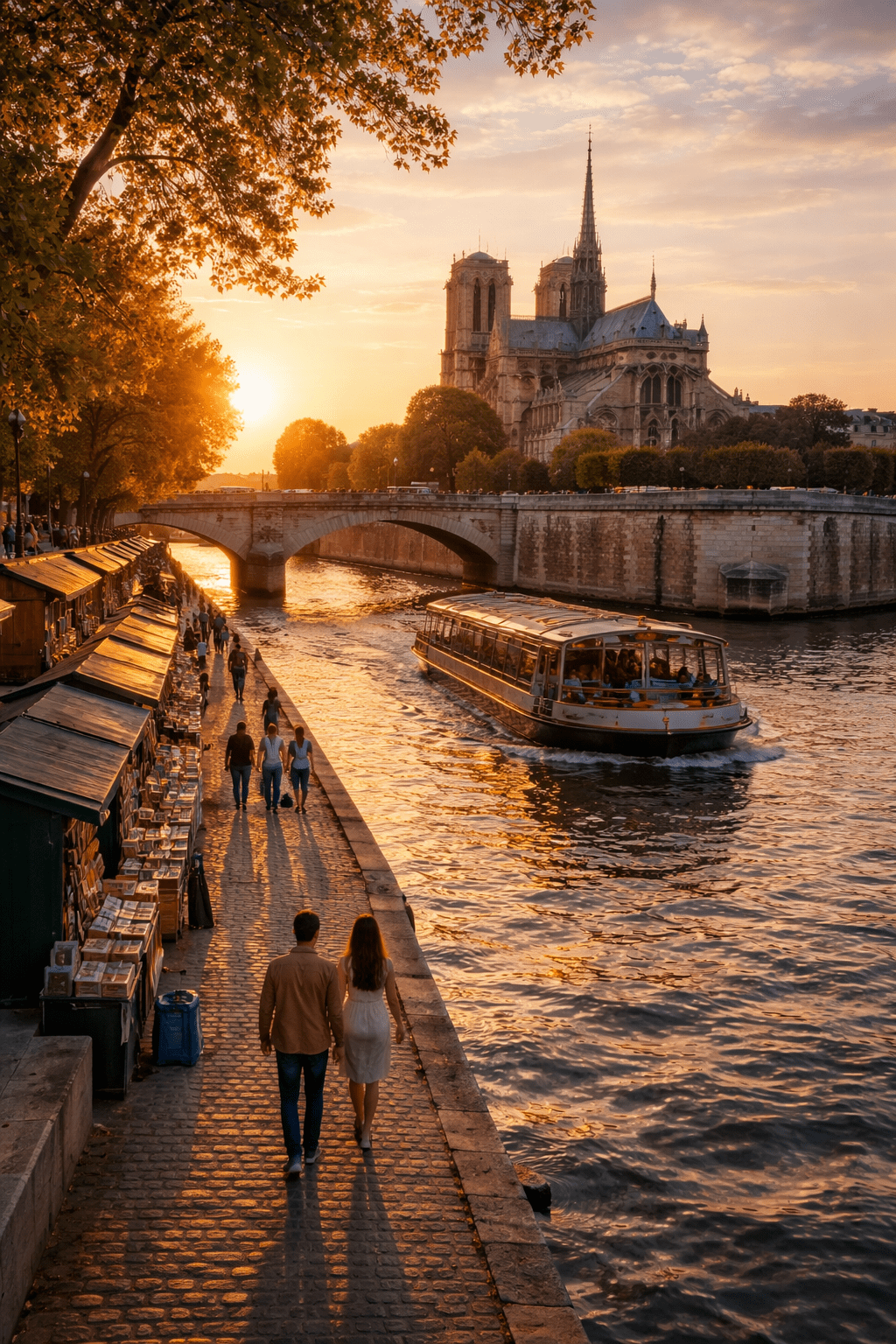
Walking along the Seine River, particularly during golden hour, provides some of the most memorable Paris experiences according to travel experts, with the riverbanks designated as a UNESCO World Heritage Site.[4][1] The river serves as Paris’s central artery and offers free, accessible beauty.
Best Seine River activities:
- Riverside walks from Pont Alexandre III to Notre-Dame
- Picnics on the banks with bread, cheese, and wine from local shops
- Bouquiniste browsing at the green book stalls selling vintage prints and books
- Bridge hopping to see different architectural styles (Pont Neuf, Pont des Arts, Pont Alexandre III)
- Sunset viewing from any of the bridges or embankments
Seine River cruises offer a different perspective if you want to relax while seeing landmarks. One-hour cruises pass by the Eiffel Tower, Notre-Dame, Louvre, and Musée d’Orsay with audio commentary explaining what you’re seeing.
Timing matters: Golden hour (the hour before sunset) creates magical lighting that makes the Seine glow. The river looks completely different at various times of day, so I recommend walking different sections during your trip—morning for fresh light, afternoon for people-watching, evening for romance.
Edge case: During winter months, sunset comes early (around 5 PM), which means you can enjoy golden hour along the Seine and still have your evening free for dinner and other activities.
What Alternative Viewpoints Offer the Best Paris Panoramas?
Montparnasse Tower provides exceptional panoramic views with a full rooftop observation deck and clear sightlines to the Eiffel Tower, especially striking at night when the tower is illuminated.[2] This often-overlooked viewpoint offers advantages over more famous options.
Why Montparnasse Tower beats other viewpoints:
- You can see the Eiffel Tower in your panorama (unlike from the Eiffel Tower itself)
- Shorter lines compared to the Eiffel Tower or Arc de Triomphe
- Indoor and outdoor viewing areas for comfort in any weather
- Sunset timing allows you to watch the city transition from day to night
- Less crowded than tourist-heavy alternatives
Other excellent viewpoints:
| Location | Height | Best For | Cost |
|---|---|---|---|
| Montparnasse Tower | 210m | Eiffel Tower views | €18-20 |
| Arc de Triomphe | 50m | Champs-Élysées perspective | €13 |
| Sacré-Cœur steps | 130m elevation | Montmartre charm | Free |
| Eiffel Tower summit | 276m | Ultimate height | €28-35 |
Pro tip: Visit Montparnasse Tower at sunset, then head to the Eiffel Tower area afterward to see it sparkle from ground level. This combination gives you both perspectives in one evening.
Choose Montparnasse if you want photos with the Eiffel Tower in frame and prefer avoiding massive crowds. Choose Arc de Triomphe if you want to see Haussmann’s grand urban planning radiating from one central point. Both offer unique perspectives that complement each other.
How Can You Efficiently Cover Multiple Landmarks?
Guided bike tours efficiently cover key Paris sights in 3-4 hours, including the Champs-Élysées, Eiffel Tower, Notre-Dame, Louvre, Musée d’Orsay, Place de la Concorde, Invalides, and local markets like Rue Cler.[7] This active approach maximizes your sightseeing while providing local insights.
Benefits of bike tours for first-timers:
- Cover 10+ landmarks in half a day versus 2-3 on foot
- Local guide commentary explains history and points out details you’d miss
- Small group sizes (usually 8-12 people) keep it personal
- Photo stops at major monuments without the pressure of navigating
- Discover shortcuts and paths you can revisit later on your own
Alternative efficient strategies:
Hop-on-hop-off bus tours let you create your own route between attractions with recorded commentary. They work well if you have limited mobility or want flexibility to spend different amounts of time at each stop.
Walking tours by neighborhood provide deeper dives into specific areas. A Montmartre walking tour covers that district thoroughly in 2-3 hours, while a Latin Quarter tour explores a completely different character.
Metro + walking combination gives you control and saves money. Paris’s metro system connects all major attractions within 10-15 minutes, and walking between nearby sites lets you discover hidden gems.
Common mistake: Trying to cram too many activities into one day. Paris rewards a slower pace—better to fully experience 3-4 things than rush through 8-10. Similar to planning your time in London, quality beats quantity when exploring major European cities.
What Unique Paris Experiences Shouldn’t You Miss?
The Paris Catacombs, Palais Garnier opera house, and authentic café culture offer unique experiences that reveal different facets of the city beyond standard tourist attractions. These activities add depth to your Paris understanding.
The Catacombs hold the remains of over six million Parisians in underground tunnels lined with artfully arranged bones and skulls. This macabre attraction provides a fascinating look at Paris’s history and relationship with death. Book timed entry tickets well in advance as daily visitor numbers are limited.[5]
Palais Garnier is the ornate opera house that inspired “The Phantom of the Opera.” Even if you don’t attend a performance, touring the building reveals opulent architecture, the grand staircase, and Chagall’s ceiling painting. The Paris Museum Pass covers entry.[5]
Authentic café experiences mean more than just grabbing coffee. Find a traditional café, order a café crème or chocolat chaud, and spend an unhurried hour people-watching like Parisians do. Café de Flore and Les Deux Magots in Saint-Germain-des-Prés are historic options, while neighborhood cafés in Le Marais or Montmartre offer more local atmosphere.
Additional unique experiences:
- Sainte-Chapelle’s stained glass creates a kaleidoscope of color on sunny days
- Père Lachaise Cemetery where Oscar Wilde, Jim Morrison, and Édith Piaf are buried
- Shakespeare and Company bookshop for literary atmosphere
- Marché des Enfants Rouges, Paris’s oldest covered market with international food stalls
- Canal Saint-Martin for a hipper, local vibe away from tourist areas
Pro tip: Many unique Paris experiences happen in the evening. After visiting major daytime attractions, explore a different side of the city with a jazz club in Saint-Germain, a wine bar in the Marais, or simply wandering illuminated streets.
How Many Days Do You Need in Paris?
A minimum of 4 full days is recommended to see main attractions like the Eiffel Tower, Louvre, and Champs-Élysées, plus additional landmarks such as the Pantheon, Palais Garnier, Catacombs, or Les Invalides.[5] This timeframe allows for comprehensive coverage without exhausting yourself.
Sample 4-day Paris itinerary:
Day 1: Iconic Landmarks
- Morning: Eiffel Tower (arrive early)
- Afternoon: Arc de Triomphe and Champs-Élysées walk
- Evening: Seine River sunset walk
Day 2: Museums and Islands
- Morning: Louvre Museum (3-4 hours)
- Afternoon: Île de la Cité, Notre-Dame, Sainte-Chapelle
- Evening: Le Marais dinner and exploration
Day 3: Montmartre and Culture
- Morning: Montmartre neighborhood and Sacré-Cœur
- Afternoon: Musée d’Orsay
- Evening: Palais Garnier or opera performance
Day 4: Hidden Gems
- Morning: Catacombs (book timed entry)
- Afternoon: Luxembourg Gardens and Latin Quarter
- Evening: Montparnasse Tower for sunset views
Extend to 5-7 days if you want to add day trips to Versailles, explore more neighborhoods like Canal Saint-Martin, visit additional museums, or simply adopt a slower pace with more café time. Just as planning adequate time in Barcelona enhances your Spanish experience, extra days in Paris let you move beyond surface-level tourism.
Weekend trip (2-3 days): Focus on the absolute essentials—Eiffel Tower, one major museum, Seine walk, and one neighborhood. You’ll get a taste of Paris but will definitely want to return.
What Practical Tips Help First-Time Paris Visitors?
Book major attraction tickets online in advance, wear comfortable walking shoes, learn basic French phrases, and expect to walk 15,000-20,000 steps daily while exploring the city. These practical considerations make your trip smoother.
Essential booking advice:
- Eiffel Tower tickets sell out weeks in advance during peak season (April-October)
- Louvre and Versailles offer timed entry that skips main ticket lines
- Restaurant reservations are necessary for popular spots, especially dinner
- Museum Pass can be purchased online or at participating museums
Money and payment tips:
- Credit cards are widely accepted, but carry some euros for small purchases
- Tipping isn’t mandatory—service is included, but rounding up or leaving 5-10% is appreciated
- ATMs offer better exchange rates than currency exchange offices
- Museum Pass economics: Breaks even after 4-5 paid attractions[5]
Transportation insights:
- Metro tickets come in books of 10 (carnet) for savings
- Walking is often faster than metro for nearby destinations
- Navigo Découverte weekly pass saves money if you’re staying 5+ days
- Taxis and Uber are available but expensive compared to public transit
Cultural considerations:
- Greet shopkeepers with “Bonjour” when entering stores
- Dress slightly nicer than you might in other cities—Parisians appreciate effort
- Dinner starts late (8-9 PM is normal)
- Sunday closures affect many shops, but tourist areas and restaurants stay open
Common mistake: Underestimating walking distances. Paris looks compact on maps, but you’ll cover serious mileage. Comfortable shoes are non-negotiable. Also, avoid the mistake many travelers make when visiting other European cities—don’t try to see everything in one trip.
When Is the Best Time to Visit Paris?
April-June and September-October offer the best combination of pleasant weather, manageable crowds, and cultural events, while avoiding summer’s peak tourism and winter’s cold, gray days. Your timing significantly impacts your experience.
Season-by-season breakdown:
Spring (April-June):
- Weather: Mild, 15-20°C (59-68°F), occasional rain
- Crowds: Moderate, increasing toward June
- Highlights: Gardens blooming, outdoor cafés opening, longer days
- Best for: First-time visitors wanting ideal conditions
Summer (July-August):
- Weather: Warm, 20-25°C (68-77°F), occasional heat waves
- Crowds: Peak tourist season, long lines everywhere
- Highlights: Paris Plages (beach along Seine), outdoor festivals
- Best for: Families with school-age children, those who don’t mind crowds
Fall (September-October):
- Weather: Crisp, 12-18°C (54-64°F), beautiful autumn colors
- Crowds: Moderate, decreasing after September
- Highlights: Cultural season begins, fashion week, harvest festivals
- Best for: Couples, food lovers, those seeking authentic experiences
Winter (November-March):
- Weather: Cold, 3-8°C (37-46°F), gray and rainy
- Crowds: Lowest, except Christmas/New Year
- Highlights: Christmas markets, winter sales, no lines at attractions
- Best for: Budget travelers, museum enthusiasts, those avoiding crowds
Edge case: Visiting during Paris Fashion Week (late September/early October and late February/early March) means hotel prices spike and some areas get very crowded, but the city buzzes with creative energy.
Conclusion
Paris rewards first-time visitors with experiences that live up to every romantic expectation while surprising you with depth beyond the clichés. The best things to do in Paris combine iconic monuments like the Eiffel Tower and Notre-Dame with authentic neighborhood exploration in Montmartre and Le Marais, world-class museums with simple pleasures like Seine River walks and café culture.
Start planning your trip by booking tickets for major attractions—especially the Eiffel Tower and Louvre—at least 2-3 weeks in advance. Allocate a minimum of 4 full days to experience both famous landmarks and local neighborhoods without rushing. Consider purchasing the Paris Museum Pass if you plan to visit multiple cultural sites, and remember that some of Paris’s best moments cost nothing at all.
Your next steps:
- Choose your travel dates based on the seasonal guidance above
- Book accommodation in central arrondissements (1st-7th) for easy access
- Purchase advance tickets for Eiffel Tower, Louvre, and any timed-entry attractions
- Create a flexible itinerary that balances major sights with spontaneous exploration
- Learn basic French phrases to enhance your interactions with locals
- Pack comfortable walking shoes and layers for variable weather
Paris isn’t a city you conquer in one visit—it’s a place you begin a lifelong relationship with. Focus on experiencing rather than checking boxes, leave room for serendipity, and don’t stress about seeing everything. The beauty of Paris lies as much in unexpected moments—a perfect croissant, a hidden courtyard, golden light on the Seine—as in its famous monuments.
Just as first-time visitors to other European destinations discover that the best experiences blend planning with spontaneity, your Paris adventure will be most rewarding when you balance must-see attractions with the freedom to wander and discover. The City of Light awaits, ready to create those pinch-me moments that will stay with you forever.
FAQ
How much does it cost to visit the Eiffel Tower?
Elevator tickets to the summit cost €28-35 for adults, while tickets to the second floor cost €18-23. Stairs to the second floor are cheaper at around €11. Book online in advance to guarantee entry and skip some lines.
Is the Paris Museum Pass worth buying?
The Paris Museum Pass is worth it if you plan to visit 4-5 or more included attractions during your trip. It covers over 60 museums and monuments including the Louvre, Musée d’Orsay, Arc de Triomphe, and Versailles, plus lets you skip ticket lines.
Can you visit Notre-Dame Cathedral in 2026?
Yes, Notre-Dame Cathedral reopened to the public in 2026 after restoration from the 2019 fire. You can visit the cathedral and climb to the top to see the gargoyles and city views at 6 Parvis Notre-Dame on Île de la Cité.
How many days should a first-time visitor spend in Paris?
First-time visitors should plan for at least 4 full days to see major attractions like the Eiffel Tower, Louvre, Arc de Triomphe, and Notre-Dame, plus explore neighborhoods like Montmartre and Le Marais without feeling rushed.
What’s the best way to get around Paris?
The Paris Metro is the fastest and most economical way to get around, with stations near all major attractions. Walking is ideal for nearby destinations and lets you discover hidden gems. Buy a carnet (book of 10 tickets) for savings.
Do I need to speak French to visit Paris?
You don’t need to speak French, but learning basic phrases like “Bonjour” (hello), “Merci” (thank you), and “Parlez-vous anglais?” (Do you speak English?) shows respect and improves interactions. Most tourist areas have English speakers.
When is the best time to visit the Louvre?
Visit the Louvre right when it opens at 9 AM or after 3 PM to avoid peak crowds. Wednesday and Friday evenings (open until 9:45 PM) are also less crowded. Always book timed entry tickets online in advance.
What should I wear in Paris?
Parisians dress more formally than many other cities, so avoid athletic wear, flip-flops, and overly casual clothing outside of exercise contexts. Comfortable walking shoes are essential, but opt for stylish sneakers or leather shoes over running shoes.
Are Paris restaurants expensive?
Paris offers options for all budgets. Expect to pay €15-25 for casual bistro meals, €30-50 for mid-range restaurants, and €75+ for fine dining. Lunch menus (prix fixe) offer better value than dinner. Bakeries and markets provide excellent budget options.
How far in advance should I book Eiffel Tower tickets?
Book Eiffel Tower tickets 2-3 months in advance during peak season (April-October) and at least 2-3 weeks ahead during off-season. Tickets often sell out, especially for sunset time slots.
Is it safe to walk around Paris at night?
Central Paris neighborhoods and tourist areas are generally safe at night, though use common sense precautions. Stick to well-lit, populated areas, watch for pickpockets near major attractions, and avoid isolated Metro stations late at night.
What’s the best viewpoint in Paris?
Montparnasse Tower offers the best panoramic views because you can see the Eiffel Tower in your photos, unlike viewing from the Eiffel Tower itself. Arc de Triomphe and Sacré-Cœur also provide excellent perspectives from different vantage points.
References
[1] D479 – https://www.viator.com/Paris/d479
[2] Best Paris Bucket List – https://www.mywanderlustylife.com/best-paris-bucket-list/
[3] Ten Things To Do In Paris In 2026 Bucket List – https://theearfultower.com/2026/01/06/ten-things-to-do-in-paris-in-2026-bucket-list/
[4] Paris Travel Guide What To See How To Plan The Best Day Trips 2026 – https://www.ophorus.com/blog/111/paris-travel-guide-what-to-see-how-to-plan-the-best-day-trips-2026
[5] Tips Visit Paris First Time – https://fullsuitcase.com/tips-visit-paris-first-time/
[6] Paris Travel Guide 2026 Essentials – https://www.letzgocitytours.com/guide/paris-travel-guide-2026-essentials/
[7] Ideas To Start Off New Year A808 – https://parisjetaime.com/eng/article/ideas-to-start-off-new-year-a808
SEO Meta Title and Description
Meta Title: 15 Best Things to Do in Paris for First-Time Visitors 2026
Meta Description: Discover the best things to do in Paris! From the Eiffel Tower to hidden gems in Montmartre, this first-timer’s guide covers must-see attractions.
Tags: Paris travel, best things to do in Paris, Paris first-time visitors, Eiffel Tower, Louvre Museum, Montmartre, Paris itinerary, Paris attractions, Seine River, Notre-Dame Cathedral, Paris neighborhoods, France travel