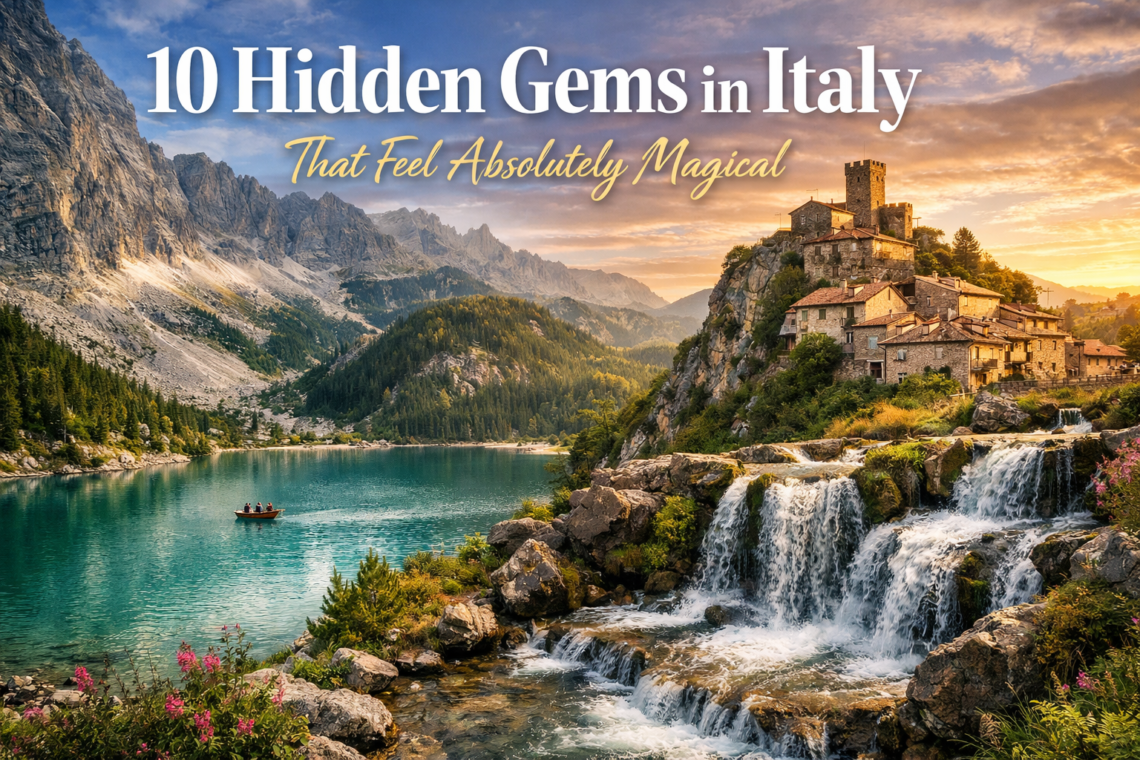
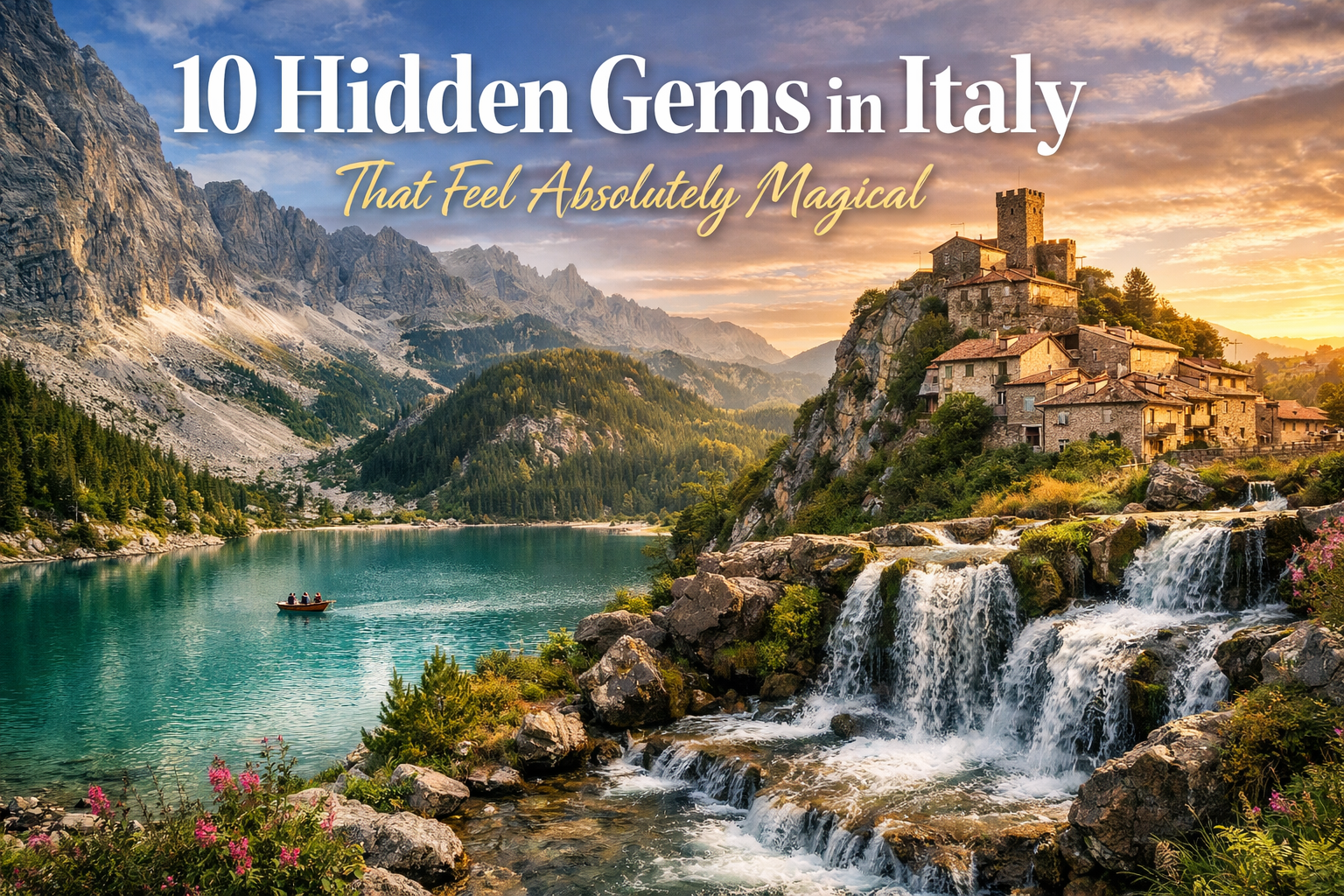
I’ll never forget the moment I stumbled upon a sun-drenched baroque square in southern Italy, its honey-colored buildings glowing like they were lit from within, and realized I was completely alone. No selfie sticks, no tour buses, just me and centuries of untouched beauty. That’s when I understood that the real magic of Italy isn’t found where everyone else is looking. While millions flock to Rome, Venice, and Florence each year, some of Italy’s most enchanting destinations remain blissfully uncrowded, waiting for travelers willing to venture beyond the guidebook classics. These Hidden Gems in Italy offer the authentic experiences, stunning landscapes, and genuine local culture that make you fall in love with travel all over again.
Key Takeaways
- Hidden Gems in Italy offer authentic experiences without the overwhelming crowds found in major tourist cities, with destinations like Lecce and Lake Orta providing baroque architecture and medieval charm in peaceful settings
- Lesser-known regions like Gran Paradiso National Park and Salina island deliver spectacular natural beauty—from alpine meadows to volcanic landscapes—that rival or surpass famous Italian destinations
- Many of these magical spots are part of Italy’s 2026 “Luminous Destinations” initiative, designed to showcase the 99% of Italy beyond typical tourist routes[8]
- Budget-friendly options exist throughout, including free natural hot springs in Maremma and €4 museum entries in Turin[1][4]
- Spring and fall offer the best combination of pleasant weather, fewer tourists, and special seasonal attractions like camellia blooms at Lake Maggiore
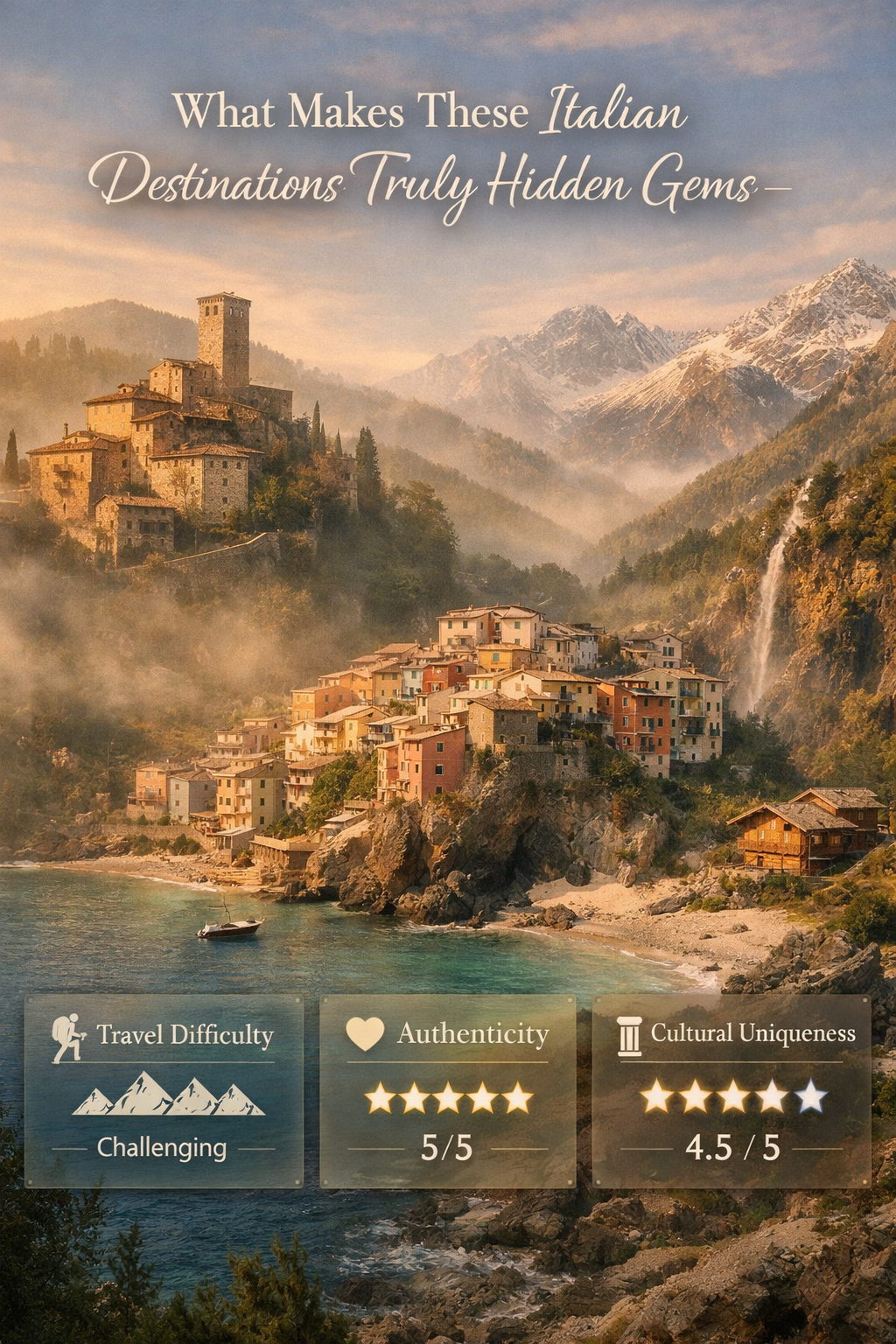
Quick Answer: What Makes These Italian Destinations Truly Hidden Gems?
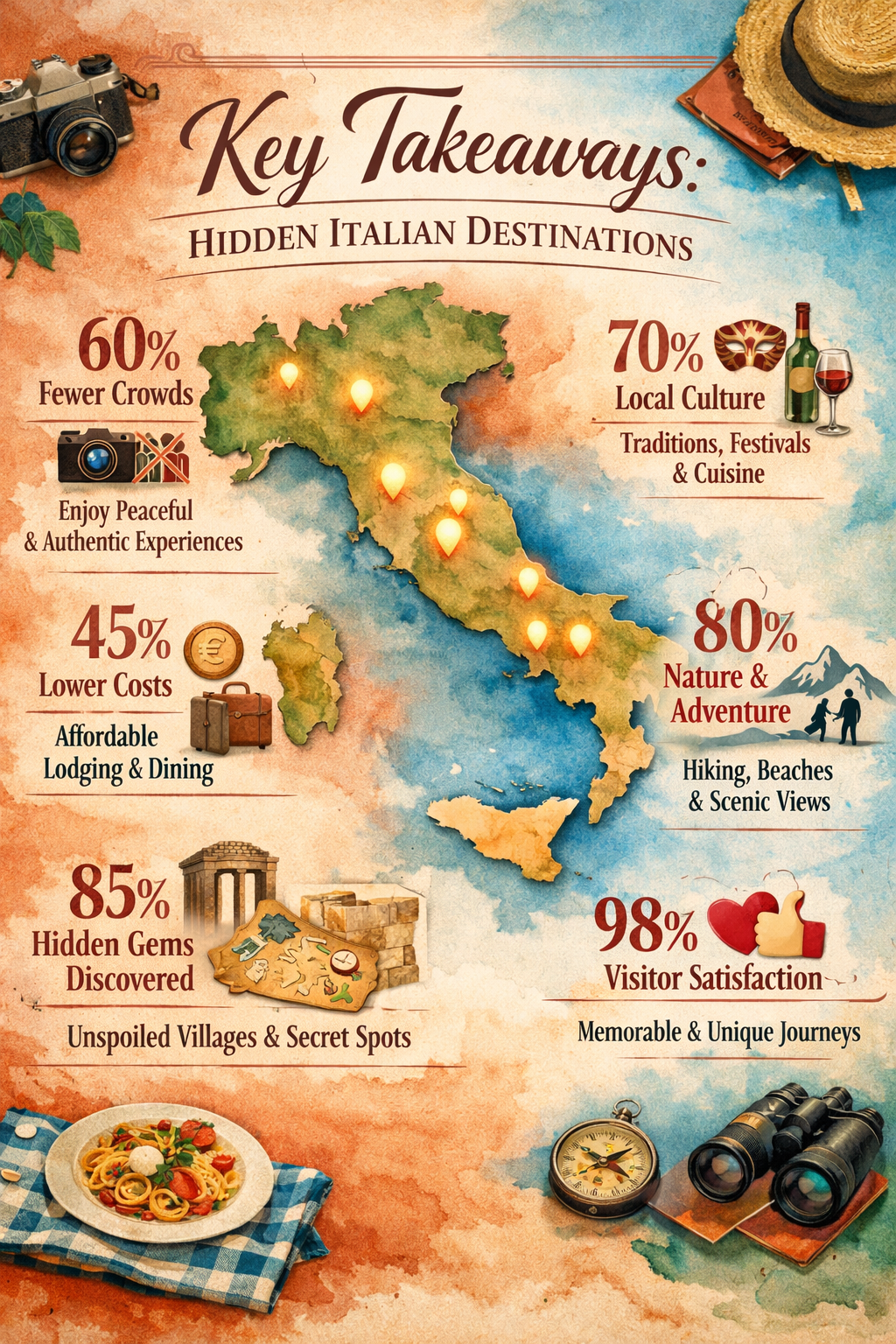
These 10 destinations qualify as genuine Hidden Gems in Italy because they successfully avoid the tourist industrial complex while offering experiences that match or exceed famous Italian sites. From Lecce’s baroque masterpieces that glow golden at sunset to Gran Paradiso’s untouched alpine wilderness, these locations provide authentic Italian culture, stunning natural beauty, and architectural wonders without the crowds. Most importantly, they’re accessible, affordable, and part of Italy’s official 2026 push to help travelers discover the country’s lesser-known treasures through the Luminous Destinations project.[1][8]
Why Should You Explore Hidden Gems in Italy Instead of Famous Cities?
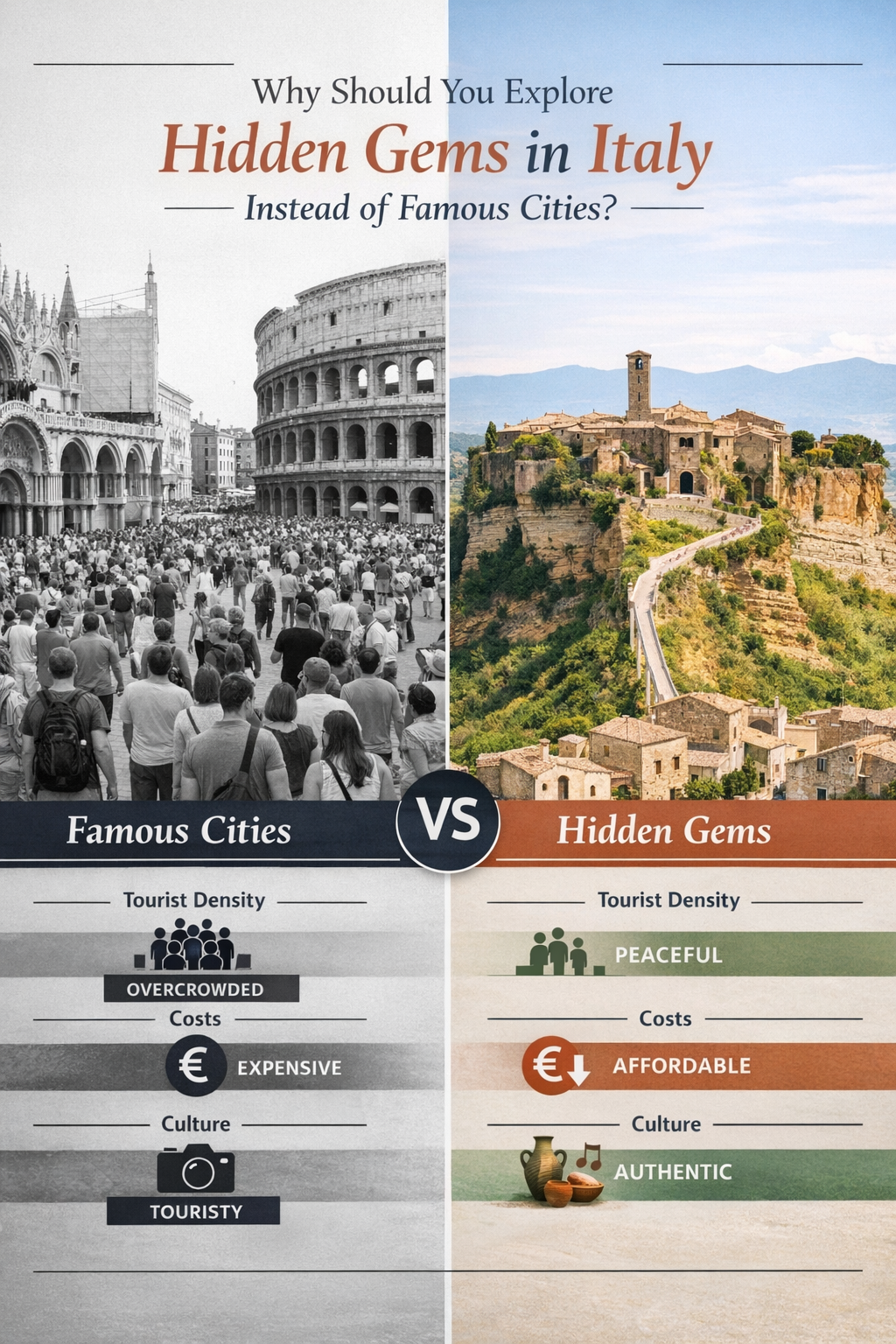
The famous Italian cities are worth visiting, but Hidden Gems in Italy offer something the crowded hotspots can’t: authentic experiences where you can actually breathe and connect with local culture. I’ve spent time in both, and the difference is night and day.
Here’s what you gain by choosing lesser-known destinations:
- Genuine local interactions – When tourism isn’t the primary industry, locals interact with you as a person, not a walking wallet
- Better value for money – Accommodations, meals, and attractions cost 30-50% less than in Venice or Florence
- Actual photo opportunities – No waiting in line or photobombing strangers in every shot
- Deeper cultural immersion – You’ll witness daily Italian life as it’s actually lived, not performed for tourists
- Reduced environmental impact – Your visit supports communities that need tourism revenue without contributing to overtourism problems
The top places to travel often include Italy’s famous cities, but these hidden destinations offer experiences that feel more rewarding and memorable.
Common mistake to avoid: Don’t assume lesser-known means harder to reach. Most of these destinations have excellent train connections or are short drives from major airports. Turin, for example, has its own international airport and is Italy’s fourth-largest city, yet remains remarkably under-visited.[4]
What Are the Best Hidden Gems in Italy for 2026?
Italy’s best-kept secrets for 2026 span from alpine peaks to Mediterranean islands, each offering distinct magical qualities. I’ve selected these 10 based on accessibility, unique character, and that ineffable quality that makes a place feel truly special.
1. Lecce: The Florence of the South
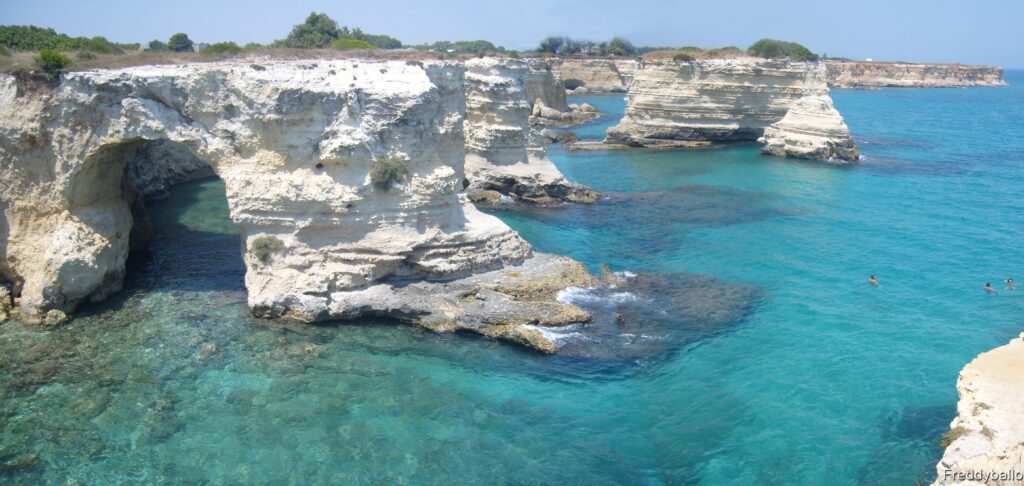
Lecce in Puglia is called the “Florence of the South” for good reason—its baroque architecture rivals anything in Tuscany, but you’ll have the piazzas mostly to yourself.[1] The entire historic center is built from warm Pietra Leccese limestone that glows in yellows and golds at sunset, creating an almost supernatural atmosphere.
What makes Lecce magical:
- Ornate baroque churches and palaces on nearly every corner
- Intimate scale that’s perfect for wandering without a map
- Exceptional food scene featuring orecchiette pasta and pasticciotto pastries
- Summer temperatures that stay comfortable compared to northern cities
- Authentic southern Italian culture with minimal tourist infrastructure
The city avoids the peak summer overcrowding that plagues Tuscan destinations, making it ideal for travelers seeking beauty without the chaos.[1]
2. Gran Paradiso National Park: Italy’s Alpine Secret
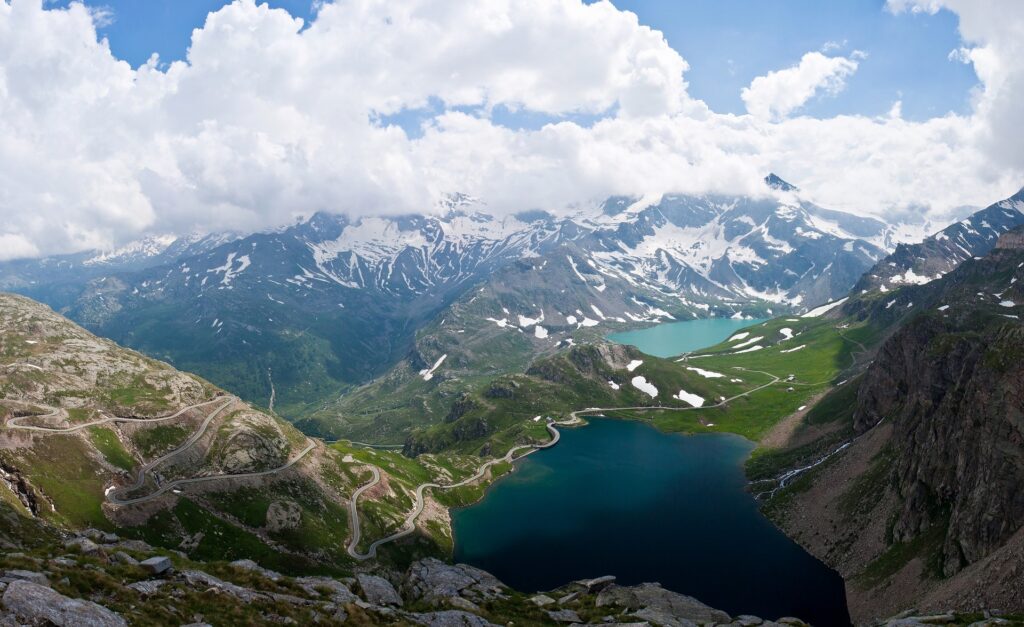
Gran Paradiso National Park in Piedmont and Valle d’Aosta is the Italian Alps’ most underrated destination, offering mountain landscapes that rival Switzerland without the price tag or crowds.[1] As Italy’s oldest national park, it protects pristine alpine ecosystems where ibex and chamois roam freely.
Why Gran Paradiso feels magical:
- Over 700km of hiking trails through wildflower meadows and glacial valleys
- Genuine wilderness experience rare in Western Europe
- Traditional alpine villages serving polenta and fontina cheese
- Opportunities to spot golden eagles and alpine marmots
- Access to both French-influenced Valle d’Aosta and Piedmontese cultures
Choose Gran Paradiso if you want outdoor adventure combined with authentic mountain culture, or if you’re hiking-focused and want to escape the Dolomites’ growing popularity.
3. Salina: The Green Pearl of Sicily
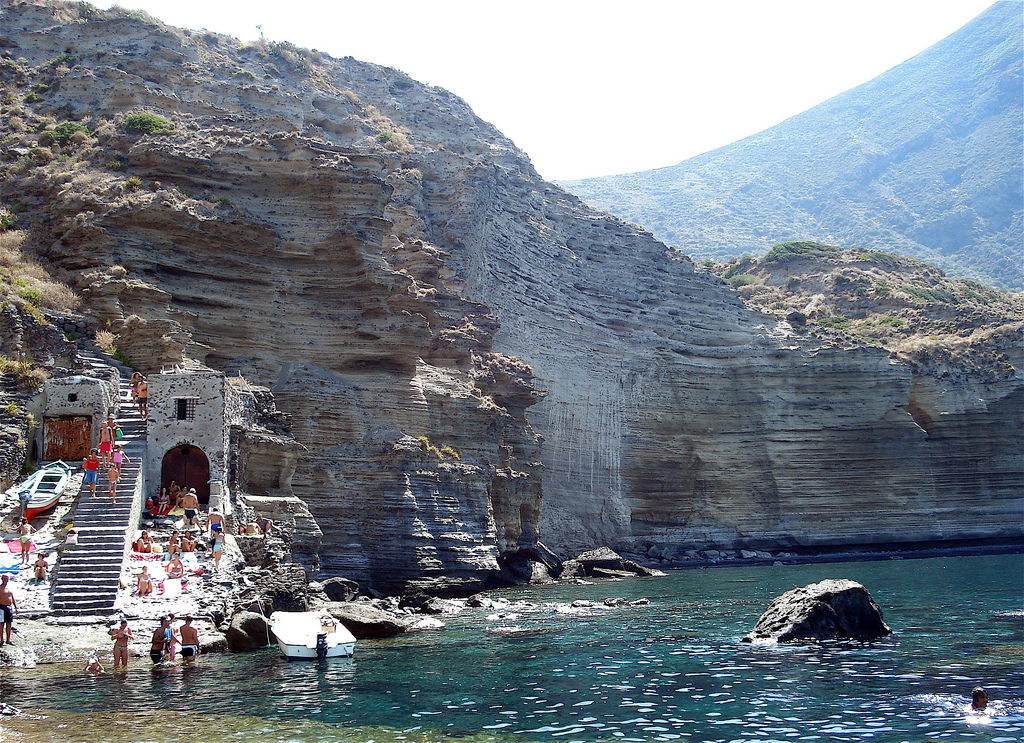
Salina stands apart from Sicily’s other Aeolian Islands as the “Perla Verde” (Green Pearl), featuring twin dormant volcanoes—Monte Fossa delle Felci and Monte dei Porri—that create an emerald landscape distinct from its rockier neighbors.[1] This is where they filmed parts of “Il Postino,” and the island retains that same timeless, unhurried quality.
What sets Salina apart:
- Lush vegetation including terraced Malvasia vineyards producing sweet wine
- Capers growing wild on stone walls (Salina produces Italy’s finest)
- Black sand beaches and hidden swimming coves
- Small-scale tourism with family-run hotels and restaurants
- Ferry connections to other Aeolian Islands for island-hopping
The island works best for travelers who want Mediterranean beauty with an emphasis on food, wine, and relaxation rather than nightlife or resort amenities.
4. Lake Orta: The Cinderella Lake
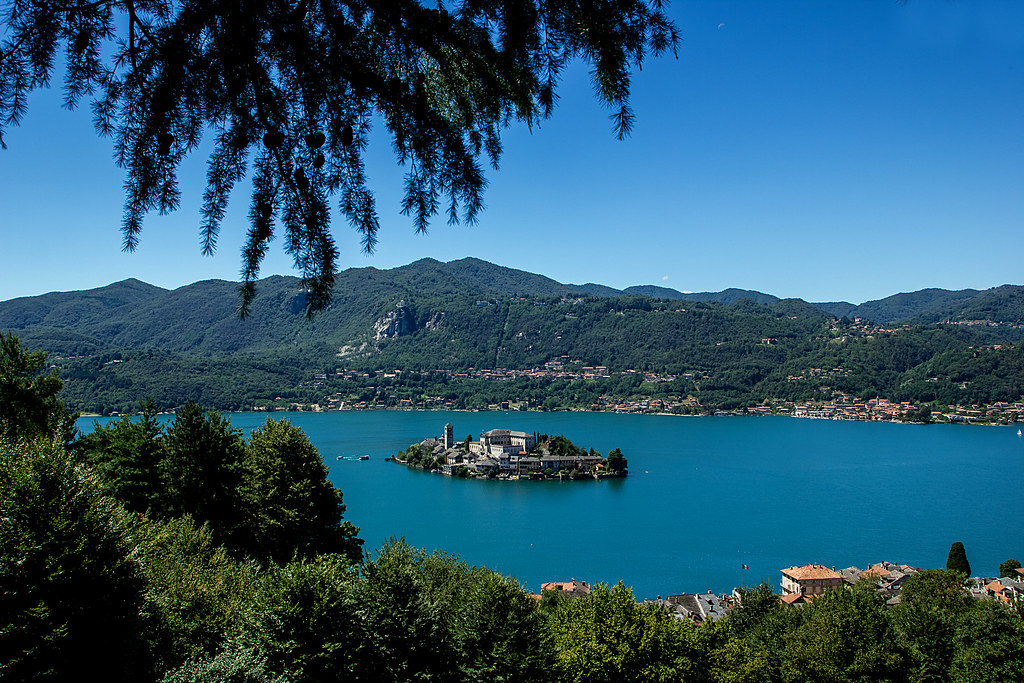
Lake Orta near Milan is called “La Cenerentola” (Cinderella) by Milanese insiders—the discreet lake choice that locals prefer over famous Lake Como.[1] The medieval village of Orta San Giulio, with its cobblestone alleys and lakeside piazza, feels like stepping into a Renaissance painting.
Lake Orta’s magical elements:
- Isola San Giulio, a tiny island with an ancient basilica, accessible by boat
- UNESCO World Heritage Sacro Monte complex with 20 chapels depicting St. Francis’s life[1]
- Intimate scale perfect for a romantic weekend
- Excellent restaurants serving lake fish and Piedmontese cuisine
- Dramatically fewer tourists than Lakes Como or Garda
Insider tip: Visit on weekday mornings when day-trippers haven’t arrived yet. The early light on the lake is extraordinary for photography.
If you’re drawn to lakeside charm, you might also enjoy exploring what to do in Mykonos for a different take on waterfront magic.
5. Turin: Italy’s Regal Secret Capital
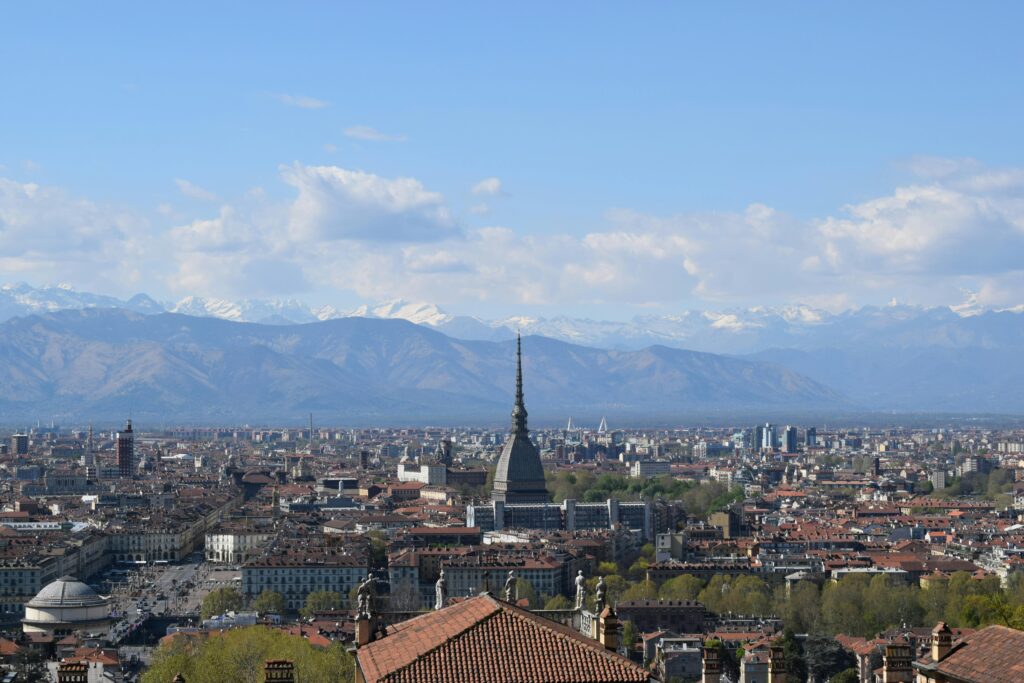
Turin is promoted as Italy’s best-kept secret for 2026, featuring regal palaces from its period as Italy’s first capital, world-class museums, and a café culture that rivals Vienna.[4] Most travelers skip it entirely, which is exactly what makes it special.
Why Turin deserves your attention:
- Stunning baroque and neoclassical architecture without the crowds
- Borgo Medioevale, an open-air medieval museum on the Po River (€4 entry)[4]
- Egyptian Museum, second only to Cairo’s collection
- Birthplace of Italian cinema with excellent film museums
- Aperitivo culture where €10 gets you a drink plus elaborate buffet
The city combines sophistication with affordability—you’ll find Michelin-starred restaurants alongside traditional trattorias, all at prices that would be impossible in Rome or Milan.
6. Maremma: Tuscany’s Wild Side
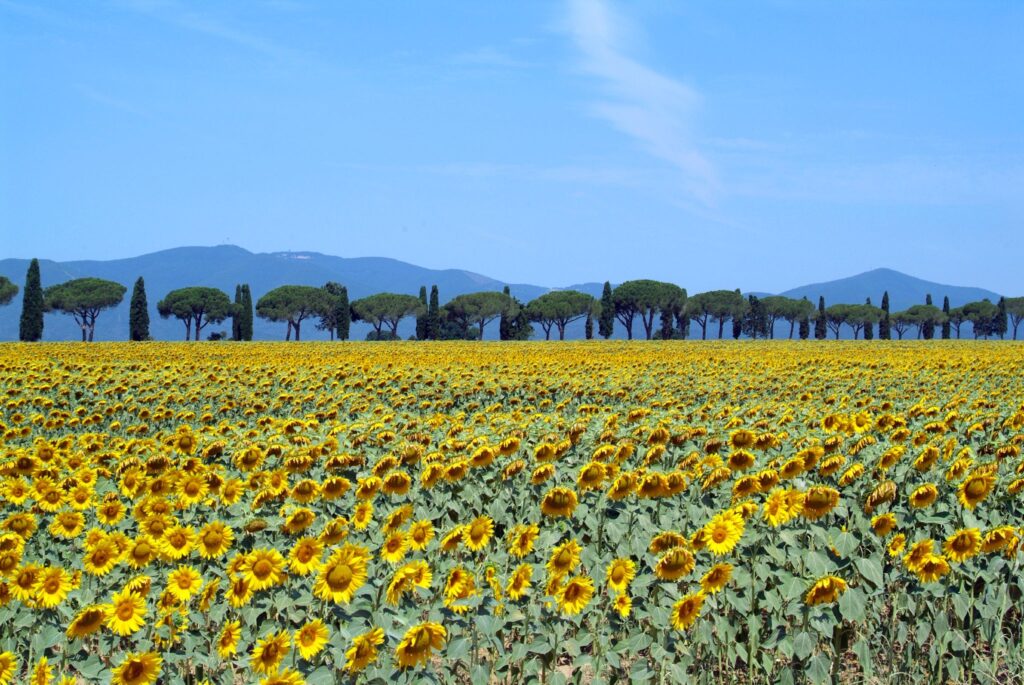
Maremma in southern Tuscany offers everything you love about the region—rolling hills, medieval villages, exceptional wine—without the tour buses clogging the roads.[1] This is working Tuscany, where cowboys (butteri) still herd cattle and ancient Etruscan sites hide in the forest.
Maremma’s hidden treasures:
- Etruscan Vie Cave (sunken roads carved through rock, mysteriously ancient)[1]
- Free hot springs at Saturnia where thermal water cascades over limestone terraces[1]
- Wild beaches along the Tyrrhenian coast
- Local specialties like tortelli maremmani (stuffed pasta) and wild boar[1]
- Medieval hilltop towns like Pitigliano built into tufa cliffs
Choose Maremma if you want Tuscan beauty combined with outdoor adventure and don’t mind renting a car (essential for exploring the region).
7. Cilento National Park: Ancient Greece in Italy
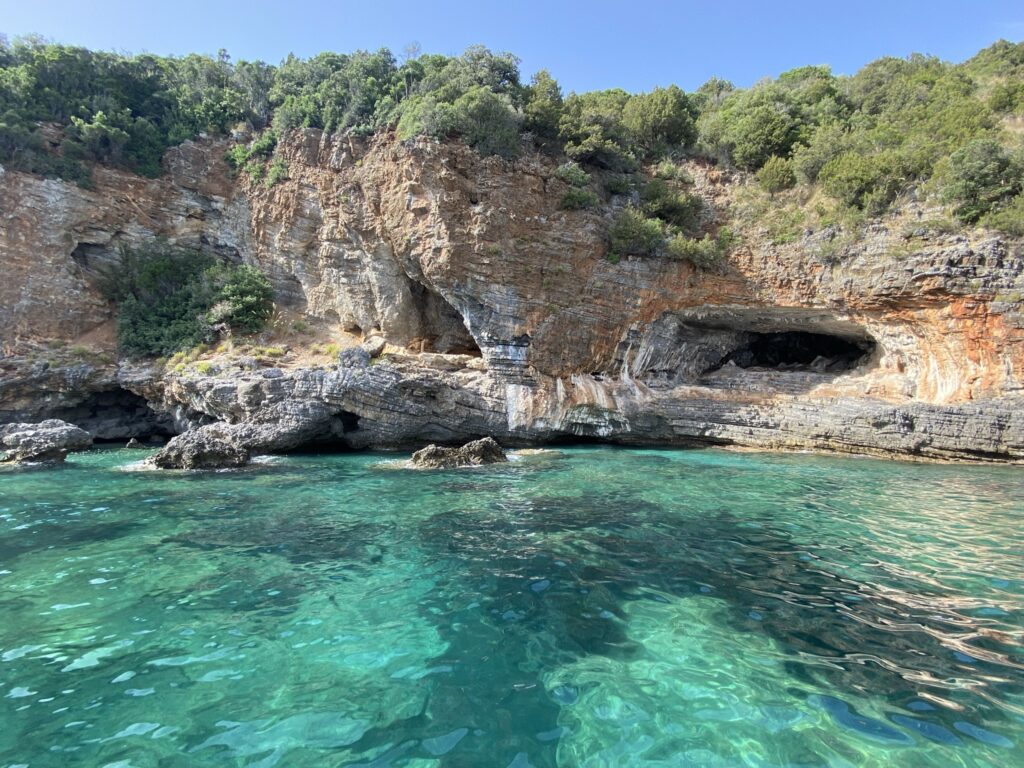
Cilento National Park in Campania is home to Paestum, which contains the finest and best-preserved Greek temples in mainland Italy—structures older and more intact than the Parthenon itself.[1] The colossal Doric temples of Hera and Neptune from the Magna Graecia empire stand in golden fields with mountains as backdrop.
What makes Cilento magical:
- Three massive Greek temples in remarkable preservation
- Rugged coastline with hidden beaches and fishing villages
- Buffalo mozzarella produced in the traditional way
- Hiking trails through Mediterranean maquis and ancient olive groves
- Combination of archaeological wonders and natural beauty
Edge case: If you’re visiting Rome as a first-timer, Cilento makes an excellent 2-3 day extension, just 90 minutes south by train.
8. Riserva Naturale di Punta Aderci: Abruzzo’s Coastal Secret
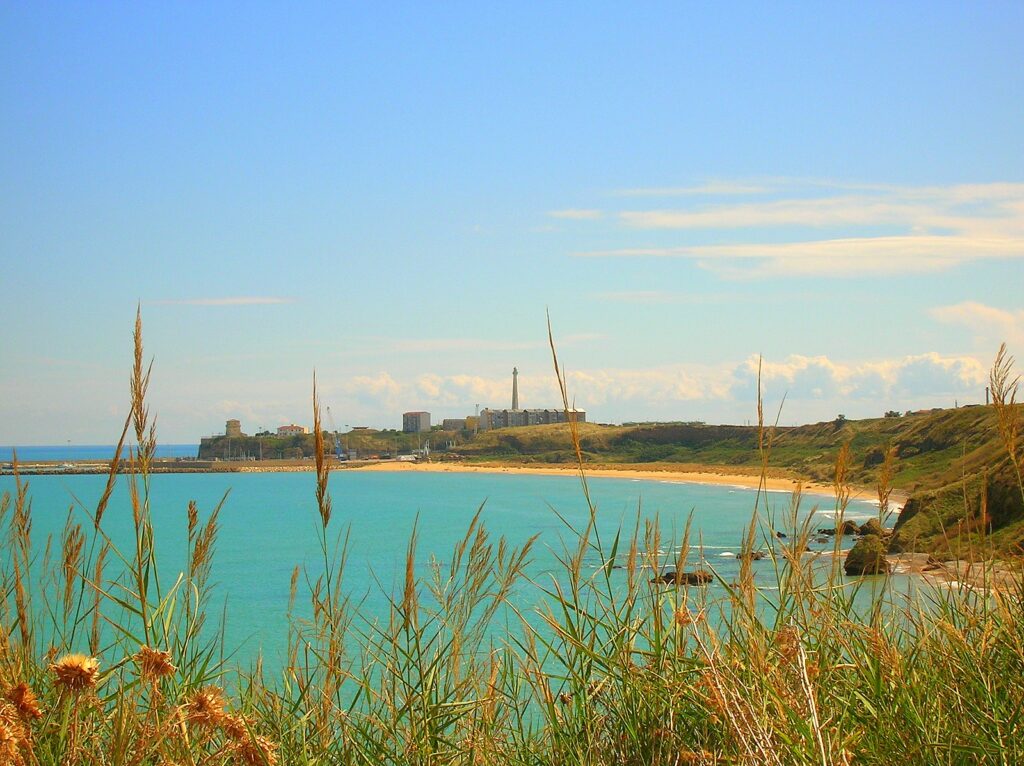
Riserva Naturale di Punta Aderci in Abruzzo is a coastal nature reserve that coincides with the region’s cultural renaissance in 2026.[1] This protected stretch of Adriatic coastline features dramatic cliffs, secluded pebble beaches, and walking trails through Mediterranean scrubland.
Why Punta Aderci stands out:
- Pristine beaches without development or crowds
- Excellent birdwatching during migration seasons
- Traditional trabocchi (fishing platforms) converted to restaurants
- Proximity to Abruzzo’s mountain parks for combined coast-and-mountains trips
- Authentic Abruzzese culture and cuisine
The reserve works perfectly for travelers who want beach time without resort atmospheres, or those combining coastal and mountain exploration in one trip.
9. Elba: Napoleon’s Island Paradise
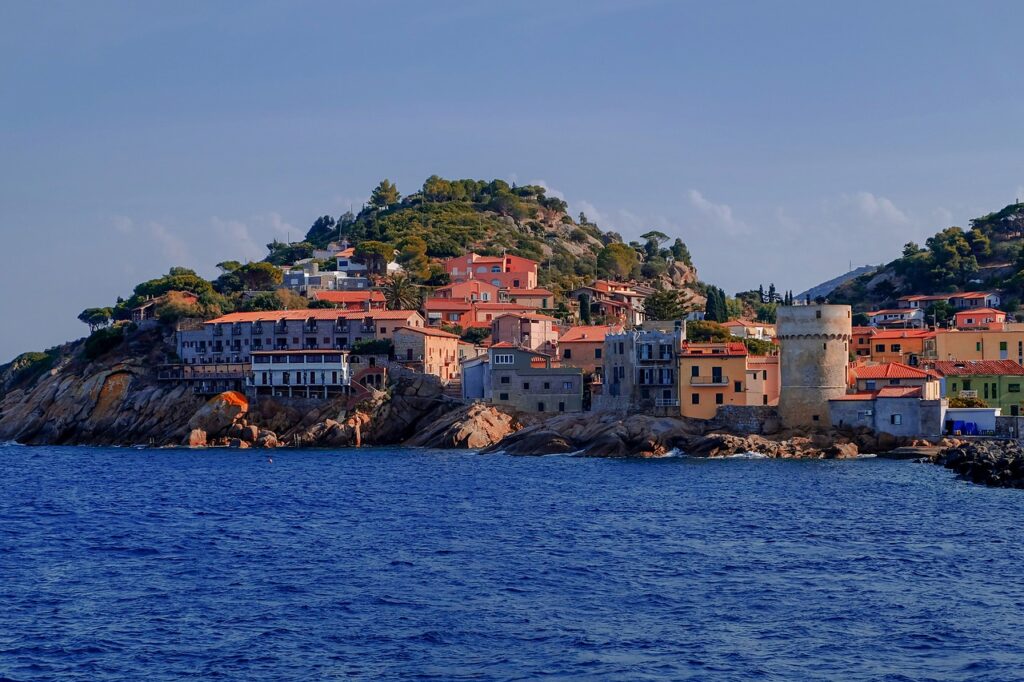
Elba features 150 coves with varying characteristics, from white pebbles at Sansone to golden sand at Fetovaia and mineral-rich black earth near Terranera from ancient iron mines.[1] While Napoleon was exiled here, you’ll feel like you’ve discovered paradise.
Elba’s diverse attractions:
- Incredible beach variety for different moods and activities
- Hiking trails with panoramic Mediterranean views
- Napoleon’s residences open for tours
- Excellent local wine, especially Aleatico dessert wine
- Easy ferry access from Piombino on the Tuscan coast
Choose Elba if: You want Italian island life with more variety than beach-only destinations, or you’re combining it with a Tuscany trip and want coastal balance.
10. Lake Maggiore: The Quieter Alternative
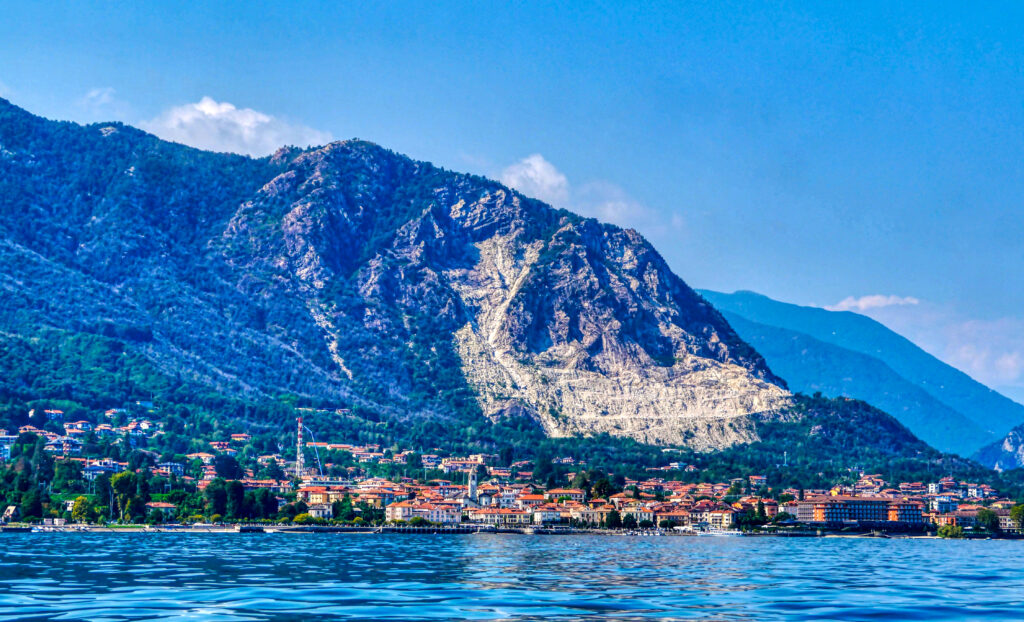
Lake Maggiore offers a quieter alternative to Lake Como, with the Borromean Islands and botanical gardens in Verbania showcasing camellias at their peak in spring.[2] The lake straddles the Italian-Swiss border, giving it a unique cultural blend.
Lake Maggiore’s magical qualities:
- Isola Bella’s baroque palace and terraced gardens
- Isola Madre’s botanical garden with exotic plants and peacocks
- Stresa’s belle époque grandeur without Como’s crowds
- Cable car to Mottarone peak for alpine views
- Spring camellia blooms creating explosions of color[2]
The lake combines Italian elegance with Swiss efficiency, making it ideal for travelers who appreciate well-organized beauty and don’t need the celebrity cachet of Como.
When Is the Best Time to Visit These Hidden Gems in Italy?
The best time to visit most Hidden Gems in Italy is during shoulder seasons—late April through June and September through October—when weather remains excellent but crowds stay minimal. However, each destination has specific optimal windows.
Seasonal timing guide:
| Destination | Best Months | Why | Avoid |
|---|---|---|---|
| Lecce | April-May, Sept-Oct | Comfortable temps, fewer tourists | July-Aug (very hot) |
| Gran Paradiso | June-Sept | Trails accessible, wildflowers peak | Oct-May (snow-closed) |
| Salina | May-June, Sept | Perfect beach weather, uncrowded | Aug (Italian holidays) |
| Lake Orta | April-June, Sept | Mild weather, spring blooms | Winter (cold, limited services) |
| Turin | Year-round | City destination, indoor attractions | Aug (locals on vacation) |
| Maremma | April-June, Sept-Oct | Spring wildflowers, fall harvest | July-Aug (hot, crowded beaches) |
| Cilento | April-June, Sept-Oct | Temple visits comfortable | Summer (very hot for ruins) |
| Punta Aderci | May-June, Sept | Beach weather, not crowded | Aug (peak Italian tourism) |
| Elba | May-June, Sept | Beach variety, hiking weather | Aug (ferry waits, packed beaches) |
| Lake Maggiore | April-May, Sept | Camellia blooms, fall colors | Winter (gardens closed) |
Common mistake: Assuming hidden gems stay quiet in August. Italians vacation in August, and many “hidden” destinations become packed with domestic tourists. September offers the best combination of good weather and returned tranquility.
If you’re planning multiple European destinations, consider timing similar to a South of France itinerary for optimal weather patterns.
How Do You Get to These Hidden Italian Destinations?
Most Hidden Gems in Italy are more accessible than you’d expect, with good train connections or short drives from major airports. I’ve found that the “hidden” aspect comes from lack of awareness, not difficulty reaching them.
Transportation breakdown:
By Train:
- Lecce – Direct trains from Rome (5.5 hours) or Bari (1.5 hours)
- Turin – High-speed trains from Milan (1 hour) or Rome (4 hours), plus international airport[4]
- Lake Orta – Train to Orta-Miasino station from Milan (1.5 hours)
- Lake Maggiore – Trains to Stresa from Milan (1 hour)
By Car (recommended):
- Maremma – Rental car essential; base in Grosseto or coastal towns
- Gran Paradiso – Car needed for trailhead access; nearest cities Turin or Aosta
- Cilento – Car helpful but not essential; trains reach Paestum from Naples
- Punta Aderci – Car recommended; nearest train station Vasto-San Salvo
By Ferry:
- Salina – Ferries from Milazzo, Sicily (1.5 hours) or Naples (4.5 hours)
- Elba – Ferries from Piombino (1 hour); frequent departures
Budget tip: Italy’s regional trains cost significantly less than high-speed options and often pass through more scenic countryside. The slower pace suits the hidden gem philosophy perfectly.
What Should You Pack for Hidden Gems in Italy?
Packing for Hidden Gems in Italy requires balancing practical outdoor gear with the Italian expectation of presentable appearance. These destinations are less formal than major cities but still maintain Italian style standards.
Essential items:
Footwear (most important):
- Comfortable walking shoes with good support for cobblestones
- Hiking boots if visiting Gran Paradiso, Cilento, or Punta Aderci
- Sandals for beaches and casual evenings
- Avoid: Pure athletic shoes for city destinations (too casual for restaurants)
Clothing:
- Layers for variable mountain/coastal weather
- One nice outfit for dinners (Italians dress up more than Americans)
- Swimsuit for lakes, islands, and hot springs
- Light rain jacket (especially spring and fall)
- Sun protection including hat and sunglasses
Practical items:
- Reusable water bottle (many towns have public fountains)
- Small daypack for hikes and beach days
- Power adapter (Italy uses Type L plugs)
- Portable phone charger for navigation and photos
Choose packing based on your focus: If you’re primarily doing outdoor activities like in Gran Paradiso or Maremma, prioritize technical gear. For cultural destinations like Lecce or Turin, emphasize versatile casual-smart clothing.
How Much Does It Cost to Visit Hidden Gems in Italy?
Hidden Gems in Italy generally cost 30-50% less than famous tourist cities, with daily budgets ranging from €50-150 per person depending on your travel style. The lack of tourist infrastructure actually works in your favor financially.
Budget breakdown by category:
Accommodation:
- Budget: €40-70/night (guesthouses, B&Bs, agriturismos)
- Mid-range: €80-150/night (3-star hotels, nice B&Bs)
- Splurge: €180-300/night (boutique hotels, luxury agriturismos)
Meals:
- Breakfast: €3-8 (cappuccino and cornetto at a bar)
- Lunch: €10-20 (pizza, panini, or casual trattoria)
- Dinner: €25-50 (full meal at local restaurant with wine)
- Aperitivo: €10-15 (drink plus substantial buffet, especially in Turin)[4]
Activities:
- Many churches and piazzas: Free
- Museums: €4-12 (Turin’s Borgo Medioevale is just €4)[4]
- National park entry: Free or €5-10
- Hot springs at Saturnia: Free[1]
- Guided tours: €30-80
Transportation:
- Regional trains: €10-30 between cities
- Car rental: €30-50/day (essential for some destinations)
- Ferries to islands: €15-40 round trip
Real example: A week exploring Lecce, Maremma, and Cilento could cost €700-900 per person including accommodation, meals, car rental, and activities—far less than a week in Venice or Florence.
For more budget travel strategies, check out where to find cheap flights to maximize your Italy trip value.
What Foods Must You Try in These Hidden Italian Regions?
Each Hidden Gem in Italy has distinct culinary traditions that differ dramatically from “Italian food” as Americans know it. The regional specificity is part of what makes these destinations feel authentic and magical.
Regional specialties by destination:
Lecce (Puglia):
- Pasticciotto – sweet pastry filled with custard, perfect with morning coffee
- Orecchiette con cime di rapa – ear-shaped pasta with turnip greens
- Rustico leccese – puff pastry filled with mozzarella and béchamel
- Primitivo wine from nearby Manduria
Salina:
- Capers (the island produces Italy’s finest)[1]
- Malvasia wine – sweet dessert wine from volcanic terraces[1]
- Fresh seafood, especially swordfish and tuna
- Pane cunzato – bread topped with tomatoes, capers, and local cheese
Maremma:
- Tortelli maremmani – pasta stuffed with ricotta and spinach[1]
- Wild boar (cinghiale) prepared various ways[1]
- Acquacotta – traditional vegetable soup
- Morellino di Scansano wine
Turin:
- Bicerin – layered drink of espresso, chocolate, and cream
- Agnolotti del plin – tiny stuffed pasta
- Vitello tonnato – veal with tuna sauce
- Gianduiotto chocolates
- Aperitivo spreads (unmatched in Italy)[4]
Lake regions:
- Lavarello and persico (lake fish)
- Risotto with perch
- Local cheeses from alpine dairies
Common mistake: Ordering “Italian classics” like carbonara or cacio e pepe in these regions. Those are Roman dishes. Embrace regional specialties instead—they’re what locals actually eat and what chefs prepare best.
Are These Hidden Gems in Italy Safe for Solo Travelers?
Yes, Hidden Gems in Italy are generally safer than major tourist cities because they have less crime targeting visitors and stronger community cohesion. I’ve traveled solo through several of these destinations and found them welcoming and secure.
Safety considerations:
What makes them safer:
- Lower pickpocketing risk (the main concern in Rome, Venice, Florence)
- Stronger local community presence
- Less tourist-targeting scams
- Better lighting and visibility in small towns
- Locals notice and help outsiders more readily
Standard precautions:
- Keep valuables secured in accommodations
- Don’t leave bags unattended at beaches
- Be cautious on empty hiking trails (tell someone your plans)
- Watch for aggressive drivers in southern regions
- Avoid isolated areas after dark
Solo-specific advantages:
- Easier to meet locals when dining or exploring alone
- More flexibility to change plans based on discoveries
- Lower accommodation costs in single rooms at B&Bs
- Simpler logistics for spontaneous decisions
Choose destinations based on your comfort level: Turin and Lake Orta feel very safe and manageable for first-time solo travelers. Gran Paradiso or Maremma require more confidence with navigation and Italian language basics.
Women traveling solo will find these destinations respectful and welcoming, particularly compared to more touristy areas where harassment can be more common.
How Can You Experience These Destinations Like a Local?

Experiencing Hidden Gems in Italy authentically requires slowing down, following local rhythms, and engaging beyond surface-level tourism. The magic emerges when you stop checking off sights and start living in the place.
Strategies for authentic experiences:
Follow Italian daily rhythms:
- Have breakfast standing at a bar like locals (sitting costs more)
- Embrace the afternoon closure (riposo) from 1-4pm
- Join the evening passeggiata (stroll) when locals promenade
- Eat dinner at 8-9pm, not 6pm
- Linger over meals—rushing signals you’re a tourist
Shop and eat where locals do:
- Buy picnic supplies at morning markets, not supermarkets
- Choose restaurants without English menus or photos
- Ask locals for recommendations (they’re usually happy to help)
- Avoid anywhere with touts trying to pull you inside
Learn basic Italian phrases:
- “Buongiorno” (good morning) and “Buonasera” (good evening) are essential
- “Posso avere…” (Can I have…) for ordering
- “Dov’è…” (Where is…) for directions
- Attempting Italian, even poorly, earns respect and better service
Stay longer in fewer places:
- Three nights minimum per destination
- Rent an apartment instead of hotel-hopping
- Establish routines at a favorite café or bakery
- Take time to simply observe daily life
Engage with local culture:
- Attend a local festival or market day
- Take a cooking class from a home cook, not a tourist operation
- Visit during non-peak hours when attractions are quiet
- Strike up conversations (Italians are generally warm and talkative)
“The difference between a tourist and a traveler is that tourists see the sights, while travelers see the life.” – This philosophy applies perfectly to Italy’s hidden gems.
FAQ: Hidden Gems in Italy
What is the most underrated city in Italy?
Turin is Italy’s most underrated city for 2026, offering regal baroque architecture, world-class museums, exceptional café culture, and sophisticated dining at a fraction of the cost and crowds found in Rome or Florence.[4] Despite being Italy’s fourth-largest city with its own international airport, it remains remarkably overlooked by international tourists.
Which Italian island is the least touristy?
Salina in the Aeolian Islands is the least touristy while still offering excellent infrastructure, featuring lush volcanic landscapes, terraced Malvasia vineyards, and authentic fishing villages without the development found on Capri or Sardinia’s Costa Smeralda.[1]
Can you visit Hidden Gems in Italy without speaking Italian?
Yes, you can visit these destinations without speaking Italian, though learning basic phrases significantly enhances your experience and locals’ reception. In tourist-facing businesses (hotels, restaurants, major attractions), you’ll find some English, but less than in Rome or Venice. Translation apps work well for menus and signs.
Are Hidden Gems in Italy suitable for families with children?
Most Hidden Gems in Italy work well for families, particularly Lake Orta, Lake Maggiore, Elba, and Turin, which offer varied activities, safe environments, and child-friendly infrastructure. Gran Paradiso and Cilento require more hiking ability. Avoid destinations requiring extensive car travel with very young children.
How many hidden gems should I visit in one Italy trip?
Visit 2-3 hidden gems in one trip to avoid exhaustion and allow proper immersion. Rushing through five destinations in a week defeats the purpose of seeking authentic, slower-paced experiences. Consider pairing one coastal/island destination with one mountain or city destination for variety.
What’s the difference between Luminous Destinations and regular tourism?
Luminous Destinations is Visit Italy’s official 2026 project representing a natural evolution of the “99% of Italy” campaign, specifically designed to help travelers discover lesser-known Italian destinations beyond typical tourist routes and support communities where tourism isn’t the primary industry.[8]
Do these hidden gems have good internet and phone service?
Cities and towns (Lecce, Turin, Lake Orta, Lake Maggiore) have excellent internet and phone service. Remote areas (Gran Paradiso backcountry, some Maremma locations, Punta Aderci beaches) may have spotty service. Most accommodations offer WiFi, though speeds vary in rural areas.
Can I use public transportation to reach all these destinations?
You can reach Lecce, Turin, Lake Orta, Lake Maggiore, Salina, Elba, and Cilento via public transportation (trains and ferries). Gran Paradiso, Maremma, and Punta Aderci require rental cars for full exploration, though you can reach gateway towns by train and use taxis or local buses for limited access.
Are these destinations accessible for travelers with mobility issues?
Accessibility varies significantly. Turin and Lake Maggiore’s main towns have good accessibility. Medieval villages like Orta San Giulio have cobblestones and stairs that challenge wheelchair users. Natural areas (Gran Paradiso, Punta Aderci, Maremma) have limited accessible trails. Always contact accommodations directly about specific needs.
What’s the best hidden gem for first-time visitors to Italy?
Lecce offers the best combination of Italian beauty, culture, cuisine, and accessibility for first-timers, with baroque architecture rivaling famous cities, excellent food, manageable size, and good transportation connections, all without overwhelming crowds.[1]
How far in advance should I book accommodations in these hidden gems?
Book 2-3 months ahead for shoulder season (April-June, September-October) and 4-6 months for peak summer if visiting islands or popular lakes. Turin and Lecce have more availability year-round. Last-minute bookings work in winter but limit your choices.
Can I combine hidden gems with famous Italian cities in one trip?
Yes, combining hidden gems with famous cities creates excellent balance. Pair Rome with Cilento, Milan with Lake Orta or Turin, or Florence with Maremma. This approach satisfies the desire to see iconic sights while experiencing authentic Italy beyond tourist zones.
Key Takeaways: Planning Your Hidden Gems Italy Adventure
- Hidden Gems in Italy like Lecce, Gran Paradiso, and Salina offer experiences matching or exceeding famous destinations without overwhelming crowds or inflated prices
- The best visiting window is shoulder season (late April-June and September-October) when weather remains excellent but tourist numbers stay low
- Most destinations are accessible via train or short ferry rides, though some (Maremma, Gran Paradiso, Punta Aderci) benefit from rental cars
- Daily costs run 30-50% less than Venice or Florence, with budgets of €50-150 per person covering accommodation, meals, and activities comfortably
- Regional cuisine differs dramatically from “Italian food” stereotypes—embrace local specialties like Lecce’s pasticciotto, Maremma’s tortelli, and Turin’s aperitivo culture
- These destinations are generally safer than major tourist cities, with lower crime rates and stronger community presence
- Authentic experiences emerge from following local rhythms: morning bar breakfasts, afternoon riposo, evening passeggiata, and leisurely late dinners
- The Luminous Destinations 2026 initiative officially supports discovering Italy’s lesser-known treasures as part of the “99% of Italy” campaign[8]
- Solo travelers, couples, and families all find suitable destinations, though specific locations match different travel styles and mobility levels
- Combining 2-3 hidden gems in one trip allows proper immersion without exhausting yourself rushing between destinations
Conclusion: Your Next Italian Adventure Awaits
The Hidden Gems in Italy I’ve shared aren’t just alternatives to famous cities—they’re often superior experiences for travelers seeking authentic connection, natural beauty, and that ineffable magic that makes you fall in love with a place. Whether you’re watching sunset gild Lecce’s baroque facades, hiking through Gran Paradiso’s wildflower meadows, or sipping Malvasia wine on Salina’s volcanic terraces, these destinations offer something the tourist trail can’t: the feeling of discovery.
Italy’s 2026 Luminous Destinations initiative makes this the perfect year to explore beyond the guidebook classics.[8] These communities welcome thoughtful travelers who appreciate their culture, support their local economies, and understand that the best experiences can’t be rushed.
Your next steps:
- Choose 2-3 destinations that match your interests (coastal, mountain, cultural, or mixed)
- Book shoulder-season dates (April-June or September-October) for optimal weather and minimal crowds
- Research transportation options and book accommodations 2-3 months ahead
- Learn basic Italian phrases to enhance local interactions
- Build flexibility into your itinerary—the best discoveries happen when you’re not rushing
Start planning your hidden gems adventure today. The baroque squares, alpine meadows, and volcanic islands are waiting, and unlike Venice or Florence, they’re waiting peacefully. If you’re looking for more inspiration beyond Italy, explore our guide to romantic cabin getaways or discover Edinburgh’s magic for your next European adventure.
The real Italy—the one that feels absolutely magical—is calling. Will you answer?
References
[1] 26 Places To Go In Italy In 2026 – https://italysegreta.com/26-places-to-go-in-italy-in-2026/
[2] 26 Places In Italy To Inspire Your – https://newromantimes.substack.com/p/26-places-in-italy-to-inspire-your
[4] This Beautiful Undiscovered City Is One Of Italys Top Hidden Gems For 2026 – https://www.traveloffpath.com/this-beautiful-undiscovered-city-is-one-of-italys-top-hidden-gems-for-2026/
[8] Luminous Destinations – https://www.visititaly.eu/latest-news/luminous-destinations