
I’ll never forget my first trip to New York City. I spent $200 on a hop-on-hop-off bus tour, waited two hours for a table at a mediocre Times Square restaurant, and somehow managed to miss half the neighborhoods that actually make NYC special. Looking back, I made nearly every mistake in the book—and I’m here to make sure you don’t do the same.
New York City for First Timers can feel overwhelming, but most visitors make the same avoidable errors that waste time, drain wallets, and leave them missing the real magic of the city. The good news? Once you know what to watch out for, navigating the Big Apple becomes infinitely easier and more rewarding.
Key Takeaways
- Skip the hop-on-hop-off buses and expensive airport taxis—the subway system is faster, cheaper, and more authentic
- Times Square restaurants are overpriced tourist traps; real New York food is found in neighborhood spots throughout all five boroughs
- Trying to see everything in Manhattan alone means missing Brooklyn’s nightlife, Queens’ international cuisine, and other borough treasures
- Planning your visit around the 2026 Sail250 event on July 4th offers a once-in-a-lifetime experience with Tall Ships in New York Harbor[3]
- Buying attraction tickets at the door costs significantly more than advance online purchases
Quick Answer: What Are the Biggest Mistakes First-Timers Make in NYC?
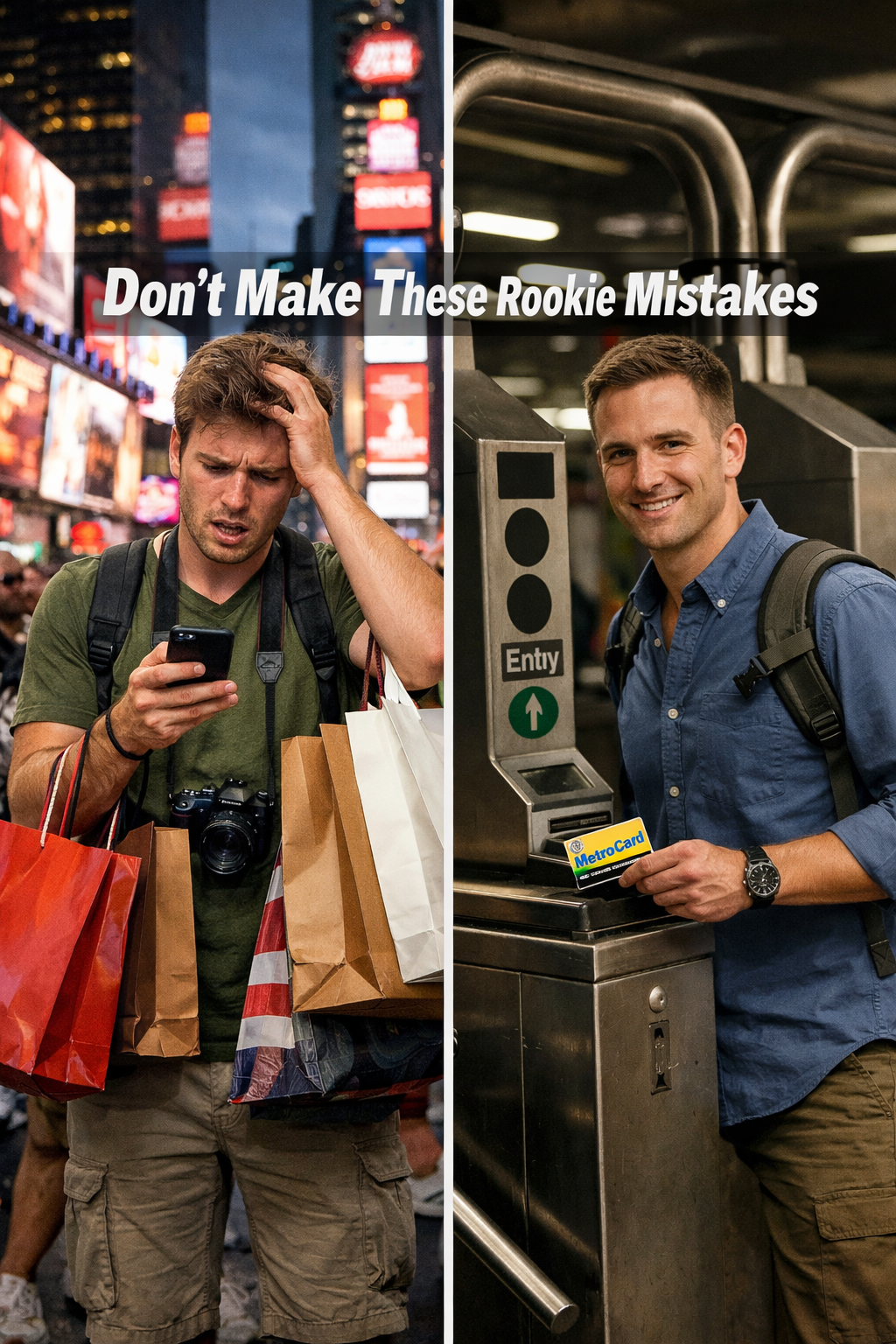
The most common mistakes New York City for First Timers make include staying only in Times Square, overpaying for transportation and food, trying to cram too many attractions into one day, and ignoring the outer boroughs entirely. These errors typically result from following outdated guidebook advice rather than planning like a local. The solution is simple: use the subway, eat where New Yorkers eat, explore beyond Manhattan, and book tickets online in advance.
Why Do Most First-Time Visitors Waste Money on Transportation?
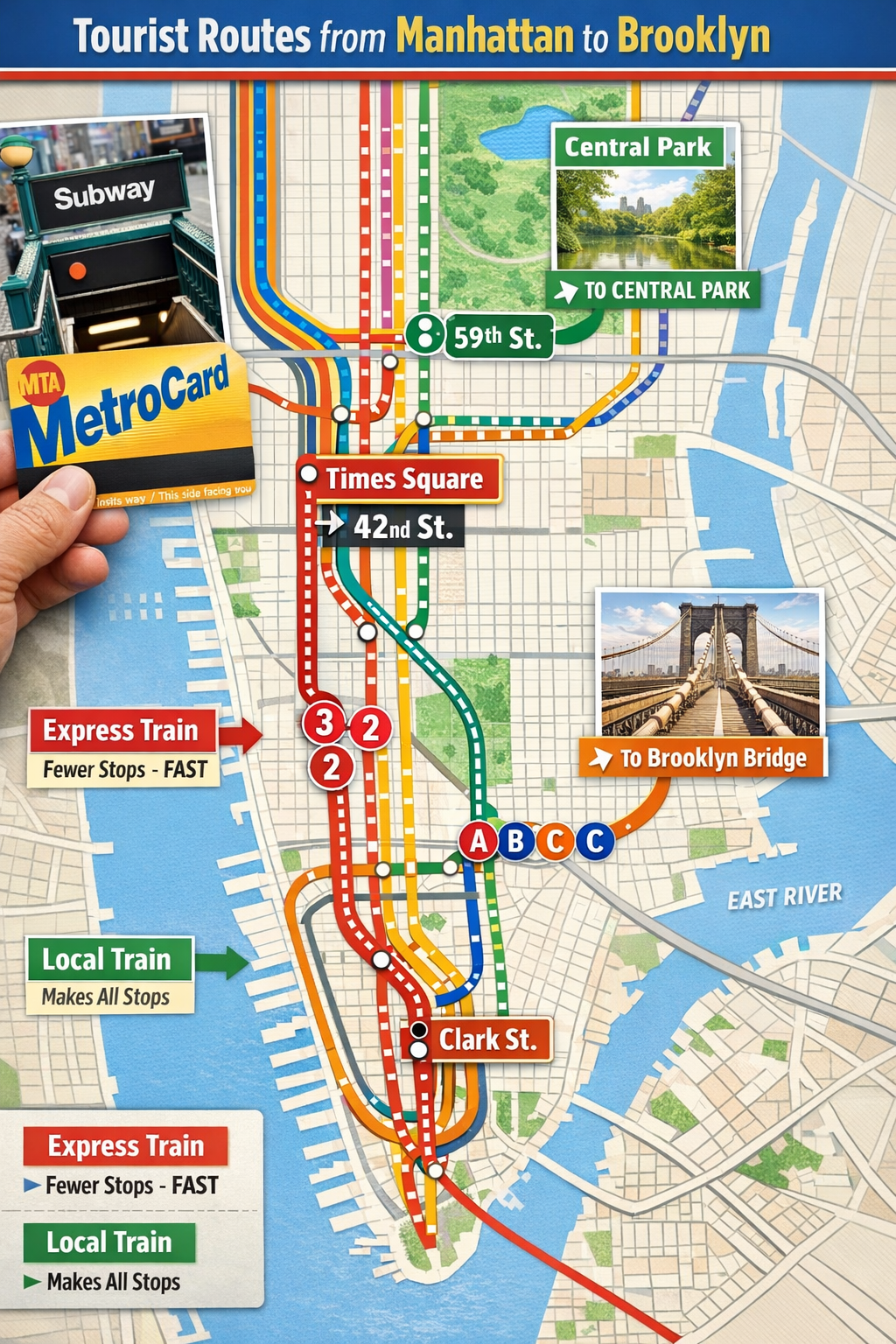
First-time visitors to New York City typically waste hundreds of dollars on taxis, Ubers, and tourist buses when the subway costs just $2.90 per ride. The Metropolitan Transportation Authority (MTA) subway system runs 24/7, reaches every major attraction, and moves faster than surface traffic during rush hours.
Here’s what actually works:
- Buy a 7-day unlimited MetroCard ($34) if you’re staying more than four days
- Download the MTA app or use Google Maps for real-time subway directions
- Skip the $70+ taxi from JFK—take the AirTrain to the subway for under $10 total
- Avoid hop-on-hop-off buses that cost $50-100 and get stuck in the same traffic as cars
Common mistake: Taking a yellow cab from the airport to Manhattan costs $52 plus tolls and tip (around $70 total). The AirTrain to Jamaica Station plus the E train to Manhattan costs $8.25 and often arrives faster.
The subway can feel intimidating at first, but it’s genuinely the best way to experience NYC. You’ll ride alongside actual New Yorkers, save massive amounts of money, and actually understand how the city connects. Express trains skip stops, so pay attention to whether you’re boarding a local or express—this distinction confuses many first-timers but makes perfect sense after one day of practice.
How Should New York City for First Timers Actually Plan Their Neighborhoods?
New York City for First Timers should plan to explore at least three different neighborhoods rather than camping out in Times Square for their entire trip. Each neighborhood offers distinct architecture, food scenes, and cultural experiences that reveal what makes NYC special beyond the postcard landmarks.
Smart neighborhood planning for first-timers:
- SoHo – Features the world’s largest collection of cast-iron architecture, high-end shopping, and excellent brunch spots[1]
- Greenwich Village – Washington Square Park, live music venues, and legendary pizza on Bleecker Street[1]
- Williamsburg, Brooklyn – Waterfront parks, street art, craft breweries, and a thriving food scene[1]
- Prospect Heights, Brooklyn – Brooklyn Museum, Brooklyn Botanic Garden, and authentic neighborhood restaurants[1]
Choose your base neighborhood based on priorities:
- Times Square/Midtown: Only if you want Broadway shows within walking distance (but expect noise and crowds)
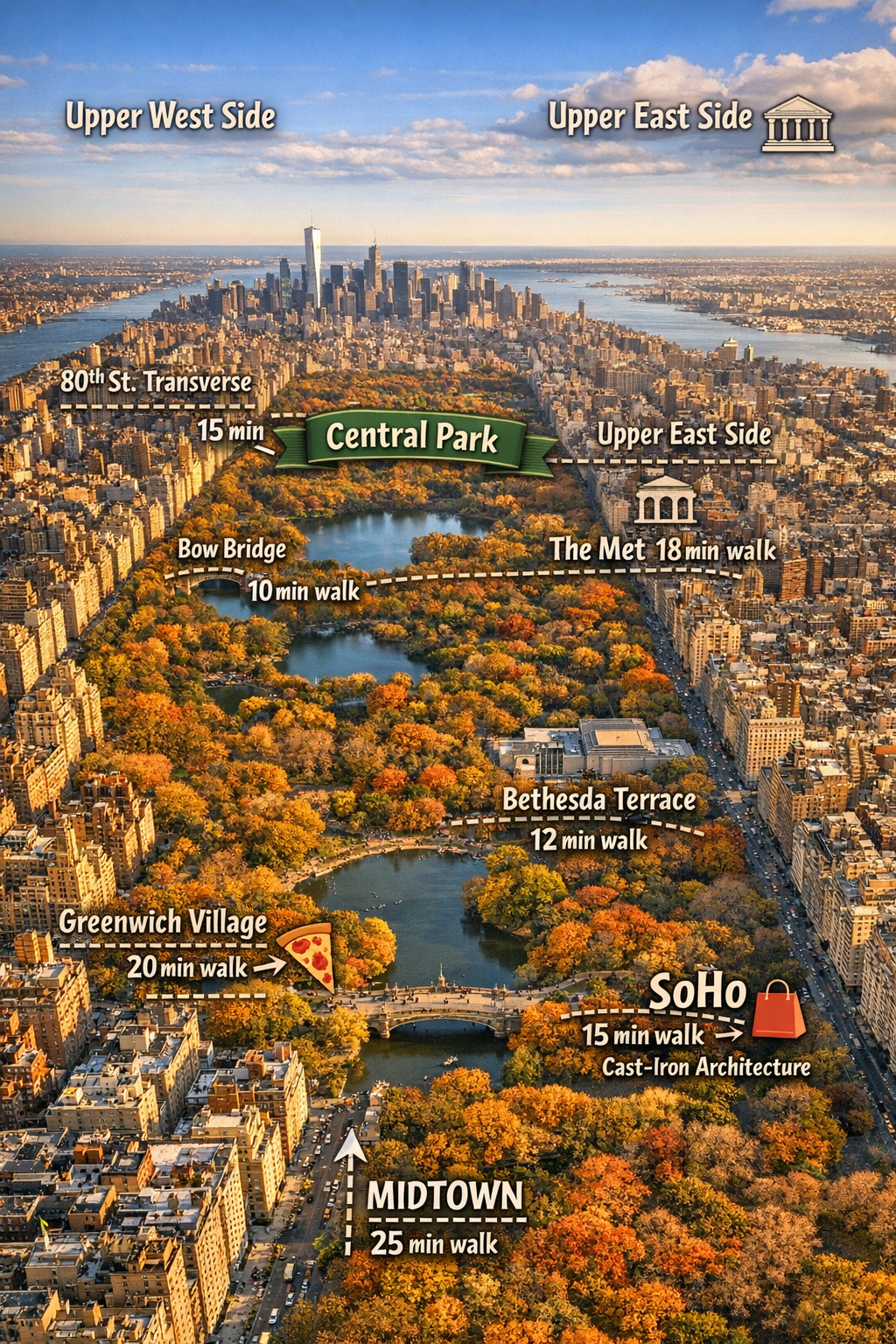
- Upper West Side: Near Central Park and museums, more residential and quiet
- Greenwich Village: Charming streets, great restaurants, central location
- Williamsburg: Hipper vibe, excellent nightlife, slightly cheaper hotels
The biggest mistake first-timers make is thinking Manhattan equals New York City. The five boroughs—Manhattan, Brooklyn, the Bronx, Queens, and Staten Island—each offer completely different experiences[4]. Brooklyn delivers incredible nightlife and cuisine, Queens serves the most diverse international food in America, and the Bronx holds rich cultural history beyond Yankee Stadium.
Pro tip: Stay in one neighborhood but plan day trips to others. A hotel in Greenwich Village puts you 20 minutes by subway from both Midtown attractions and Brooklyn’s best neighborhoods, while costing less than Times Square hotels.
What Food Mistakes Do First-Time NYC Visitors Always Make?
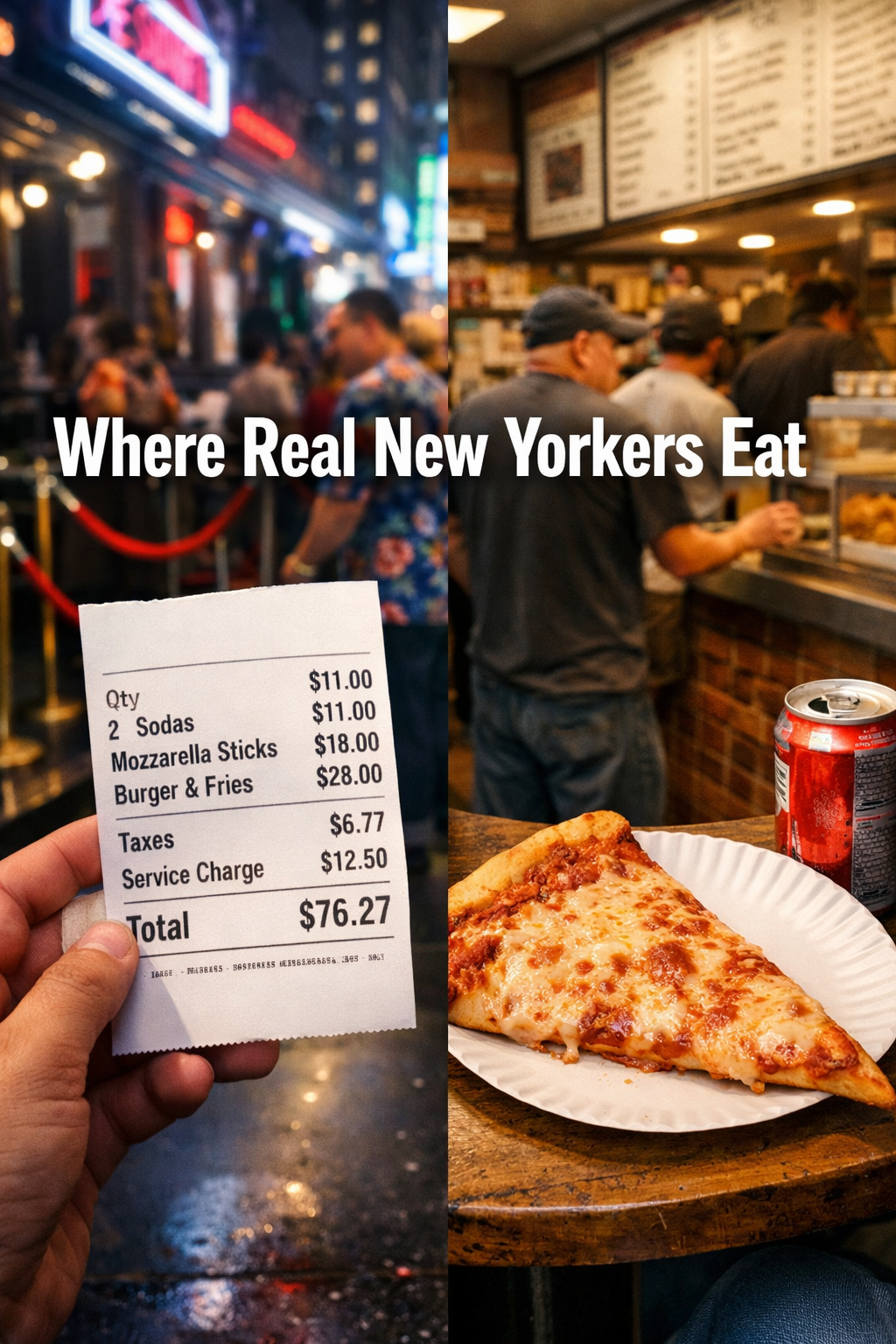
First-time visitors waste money eating in Times Square, waiting in manufactured lines at overhyped Instagram spots, and missing the neighborhood restaurants where actual New Yorkers eat daily. Any restaurant with photos on the menu or aggressive hosts pulling people inside from the sidewalk should raise immediate red flags.
Avoid these food traps:
- Times Square restaurants (overpriced, mediocre quality, tourist-focused)
- Chains you can find anywhere (Olive Garden, Bubba Gump, Hard Rock Cafe)
- Places with “authentic New York” in the name (real spots don’t need to say it)
- Restaurants where staff stands outside recruiting customers
Where to actually eat:
- Pizza: Joe’s Pizza (Greenwich Village), Prince Street Pizza (SoHo), or any neighborhood slice joint
- Bagels: Russ & Daughters, Ess-a-Bagel, or your hotel neighborhood’s local bagel shop
- Diverse cuisines: Head to Queens for authentic Chinese (Flushing), Greek (Astoria), or Colombian (Jackson Heights) food[4]
- Delis: Katz’s Delicatessen for pastrami, but go at off-peak hours to avoid manufactured lines
The real secret is eating where you see construction workers, office workers, and locals lined up during lunch. These spots serve better food at half the price of tourist restaurants. A proper New York slice costs $3-4, not $8. A bagel with schmear runs $4-6, not $12.
Budget reality check: Eating three meals daily in Times Square restaurants costs $100-150 per person. Eating like a New Yorker (bodega breakfast, slice for lunch, neighborhood dinner) costs $40-60 and tastes infinitely better. Similar advice applies to other first-timer destinations—just like avoiding tourist traps in New Orleans, finding authentic local spots makes all the difference.
Which NYC Attractions Are Actually Worth the Money?
Not all iconic New York attractions deliver equal value, and many first-timers waste money on experiences that disappoint while skipping genuinely memorable ones. The key is distinguishing between must-see landmarks and overhyped tourist traps.
Genuinely worth it:
- Empire State Building – The observation deck offers unmatched 360-degree views; go at sunset or buy a sunrise ticket to avoid crowds[2]
- Central Park – Completely free, covers 843 acres, and rewards exploration beyond the main paths
- Brooklyn Bridge – Free to walk, offers stunning skyline views, best experienced early morning
- Broadway shows – Book TKTS booth for same-day discount tickets (up to 50% off) rather than paying full price
- The Metropolitan Museum of Art – Suggested admission means you can pay what you wish (though the full price supports the museum)
Skip or reconsider:
- Statue of Liberty crown access – Requires advance booking, involves extensive security, and the view from the pedestal is nearly identical
- Madame Tussauds – Overpriced wax museum you can find in multiple cities worldwide
- M&M’s World – A four-story candy store that’s just a retail experience
- Horse carriage rides in Central Park – Expensive ($120+ for 45 minutes) and controversial; walking or bike rental offers better park exploration
Money-saving strategy: Many attractions offer significant discounts when booked online in advance. Buying Empire State Building tickets at the door costs $44, while online advance purchase drops to $38. The savings add up quickly across multiple attractions.
The 2026 Sail250 event on July 4th presents a unique opportunity for first-time visitors—a massive international fleet of Tall Ships and military vessels in New York Harbor combined with special Macy’s Fireworks for America’s 250th Anniversary[3]. This once-in-a-generation event makes July 2026 an exceptional time to visit, though you’ll need to book accommodations well in advance.
How Do First-Timers Mess Up Their NYC Itinerary Planning?
The most common itinerary mistake New York City for First Timers make is trying to see 10+ attractions per day, resulting in exhaustion, superficial experiences, and missing the spontaneous moments that make travel memorable. New York rewards depth over breadth.
Realistic daily planning:
- Morning: One major attraction or museum (2-3 hours)
- Lunch: Neighborhood exploration and local food (1-2 hours)
- Afternoon: Walking tour, park time, or second attraction (2-3 hours)
- Evening: Dinner and entertainment or neighborhood wandering (3-4 hours)
Sample realistic first-timer day:
- Morning: Empire State Building (arrive at opening, 8am)
- Walk south through Midtown, grab coffee
- Lunch: Pizza in Greenwich Village
- Afternoon: Walk through Washington Square Park, explore Village streets[1]
- Evening: Brooklyn Bridge walk at sunset, dinner in DUMBO
This approach allows for spontaneity—ducking into an interesting bookstore, grabbing a bagel from a place with a line of locals, or sitting in a park watching street performers. These unplanned moments often become favorite memories.
Geographic clustering saves time:
- Cluster 1: Times Square → Rockefeller Center → Central Park (all within walking distance)
- Cluster 2: 9/11 Memorial → Wall Street → Brooklyn Bridge
- Cluster 3: Metropolitan Museum of Art → Central Park → Upper West Side
- Cluster 4: SoHo → Greenwich Village → Chelsea[1]
Trying to bounce between Upper Manhattan and Lower Manhattan multiple times daily wastes hours on the subway. Plan geographically logical routes instead.
What Do First-Time Visitors Not Know About NYC Safety and Etiquette?
First-time visitors often carry outdated safety concerns from 1980s crime statistics while simultaneously making etiquette mistakes that mark them as tourists and create frustrating situations. Modern New York City is significantly safer than its reputation suggests, but street smarts still matter.
Actual safety tips that matter:
- Keep your phone and wallet secure in crowded subway cars (pickpocketing happens, though rarely)
- Stay aware of your surroundings, especially late at night in unfamiliar neighborhoods
- Avoid empty subway cars when other cars are crowded (there’s usually a reason they’re empty)
- Don’t flash expensive jewelry or large amounts of cash in public
NYC etiquette rules first-timers break:
- Subway: Move into the car, don’t block doors, let people exit before boarding
- Sidewalks: Walk on the right, don’t stop suddenly, move to the side to check your phone
- Restaurants: Don’t expect tables to be held indefinitely; when you’re done eating, the table is needed
- Tipping: 18-20% at restaurants, $1-2 per drink at bars, 15-20% for taxis
The standing-on-escalators debate: Stand on the right, walk on the left. Breaking this rule during rush hour will earn you annoyed comments from commuters behind you.
New Yorkers have a reputation for rudeness, but it’s actually efficiency. People move fast, talk directly, and don’t make small talk with strangers in line. This isn’t unfriendliness—it’s a city of 8+ million people optimizing their time. If you need directions, most New Yorkers will genuinely help; just ask clearly and quickly.
When Should New York City for First Timers Actually Visit?
New York City for First Timers should choose their travel dates based on weather preferences, crowd tolerance, and budget rather than assuming summer is automatically best. Each season offers distinct advantages and challenges that significantly impact the first-time experience.
Season-by-season breakdown:
| Season | Pros | Cons | Best For |
|---|---|---|---|
| Spring (April-May) | Mild weather, Central Park blooms, fewer crowds than summer | Occasional rain, unpredictable temperatures | Outdoor activities, park exploration |
| Summer (June-August) | Longest days, rooftop bars, free outdoor concerts | Extreme heat, humidity, highest prices, biggest crowds | First-timers who don’t mind crowds, 2026 Sail250 event[3] |
| Fall (September-November) | Perfect weather, fall foliage, cultural season begins | Higher prices in October, crowded in early fall | Best overall experience for most visitors |
| Winter (December-March) | Holiday decorations, lowest hotel prices (Jan-Feb), ice skating | Cold weather, early darkness, potential snow | Budget travelers, holiday enthusiasts |
2026 special consideration: The Sail250 event on July 4th, 2026, brings a massive international fleet of Tall Ships and military vessels to New York Harbor for America’s 250th Anniversary, combined with special Macy’s Fireworks[3]. This once-in-a-lifetime event makes summer 2026 particularly special for first-timers, despite the typical summer crowds and heat.
Avoid if possible:
- Thanksgiving week (Macy’s Parade crowds are intense)
- New Year’s Eve in Times Square (unless standing in a pen for 8+ hours without bathroom access sounds appealing)
- August weekends (peak heat and humidity with maximum tourist crowds)
The “shoulder seasons” of late April-May and September-early October offer the best combination of good weather, manageable crowds, and reasonable prices. Hotels cost 30-40% less than peak summer rates, restaurants have easier availability, and you can actually enjoy walking around without battling crowds at every corner.
What Should First-Timers Know About NYC Accommodation Choices?
First-time visitors typically waste money staying in Times Square hotels, assuming central location justifies premium prices and constant noise. The reality is that NYC’s subway system makes nearly any neighborhood equally accessible, while hotel location dramatically impacts both cost and experience quality.
Smart accommodation strategies:
- Book 3-6 months in advance for best rates and availability
- Consider outer borough hotels (Brooklyn, Queens) for 40-50% savings with easy subway access
- Use hotel points strategically – major chains have properties throughout all boroughs
- Read recent reviews carefully – NYC hotel rooms are notoriously small; check for accurate size descriptions
Neighborhood hotel selection guide:
Choose Times Square/Midtown if:
- You’re seeing multiple Broadway shows
- You have mobility limitations (everything’s closer together)
- You don’t mind paying premium prices for convenience
Choose Greenwich Village/Chelsea if:
- You want charming streets and excellent restaurants
- You prefer a more residential neighborhood feel
- You value authenticity over tourist attractions
Choose Upper West Side if:
- You’re visiting museums and Central Park extensively
- You want a quieter, more affordable Manhattan option
- You prefer a neighborhood vibe with easy access to attractions
Choose Williamsburg/Brooklyn if:
- You want to experience Brooklyn’s food and nightlife scene
- You’re budget-conscious (hotels cost 30-40% less than Manhattan)
- You don’t mind a 15-20 minute subway ride to Manhattan attractions
The smallest detail that catches first-timers off guard: NYC hotel rooms are genuinely tiny compared to other American cities. A “standard” room might be 150-200 square feet. If you need space, specifically search for “deluxe” or “superior” rooms, or consider an Airbnb in a residential neighborhood.
Budget reality: Times Square hotels average $300-500/night. Upper West Side hotels run $200-350/night. Brooklyn hotels cost $150-250/night for comparable quality. Over a week-long stay, choosing Brooklyn over Times Square saves $700-1,750 while offering a more authentic experience.
How Can First-Timers Actually Save Money in Expensive NYC?
New York City deserves its expensive reputation, but first-timers often spend double what’s necessary by not knowing where costs can be cut without sacrificing experience quality. Strategic planning transforms NYC from prohibitively expensive to reasonably affordable.
Major money-saving strategies:
Transportation savings:
- 7-day unlimited MetroCard ($34) versus paying per ride ($2.90 × 30+ rides = $87+)
- Walking between nearby attractions instead of defaulting to taxis
- Airport subway/train versus $70+ taxi rides
Food savings:
- Bodega breakfast ($5-8) versus hotel breakfast ($20-30)
- Pizza slices and food carts for lunch ($5-10) versus sit-down restaurants ($25-40)
- Happy hour specials at bars (4-7pm typically offers discounted drinks and appetizers)
- Grocery stores for snacks and breakfast items (Trader Joe’s, Whole Foods)
Attraction savings:
- Free attractions: Central Park, Brooklyn Bridge, High Line, Times Square, Grand Central Terminal
- Pay-what-you-wish museum hours (check individual museum websites)
- TKTS booth for same-day Broadway tickets (30-50% off)
- Online advance booking for paid attractions (10-20% cheaper than door prices)
Sample budget comparison:
Tourist approach (per person/day):
- Hotel: Times Square ($400/night)
- Meals: 3 restaurant meals ($100)
- Transportation: Taxis and Ubers ($40)
- Attractions: Full-price tickets ($80)
- Daily total: $620
Smart approach (per person/day):
- Hotel: Upper West Side or Brooklyn ($200/night)
- Meals: Bodega breakfast, slice lunch, neighborhood dinner ($45)
- Transportation: Unlimited MetroCard ($5/day averaged)
- Attractions: Mix of free and advance-booked paid ($30)
- Daily total: $280
The smart approach saves $340 per person daily—$2,380 over a week-long trip—while often delivering better experiences. That’s enough savings to upgrade to business class flights or extend your trip by several days.
Free entertainment options first-timers miss:
- Free concerts in Central Park (summer)
- Street performers throughout the city
- Window shopping in SoHo and Fifth Avenue
- Walking the High Line elevated park
- Exploring different neighborhood streets and architecture
Finding cheap flights to NYC can save hundreds more on your overall trip budget, making the city significantly more accessible for first-time visitors.
Frequently Asked Questions
How many days do first-timers need in New York City?
First-time visitors should plan 4-6 days minimum to see major attractions without feeling rushed. Four days covers Manhattan highlights plus one Brooklyn day. Six days allows for deeper neighborhood exploration, museum visits, and experiencing the city’s pace rather than just checking off landmarks.
Is the New York CityPASS worth it for first-timers?
The CityPASS ($138 for adults in 2026) saves money only if you plan to visit all included attractions within the 9-day validity period. Calculate your specific planned attractions—if you’re visiting 5-6 major paid attractions, it saves 30-40%. If you’re mixing free attractions and only hitting 2-3 paid ones, skip it.
Can you walk everywhere in New York City?
You can walk within neighborhoods, but Manhattan alone is 13.4 miles long. Walking from Times Square to the 9/11 Memorial takes 90+ minutes. Use the subway for distances over 1 mile or 15-20 blocks. Comfortable walking shoes are essential—expect to walk 5-8 miles daily even with subway use.
Do you need to book Broadway shows in advance?
Popular shows sell out weeks or months ahead, especially weekend performances. Book online in advance for best selection, or use the TKTS booth in Times Square for same-day discount tickets to shows with available seats. Weekday matinees offer the easiest availability and often the best discounts.
Is Times Square worth visiting for first-timers?
Yes, but only for 30-60 minutes to see the lights and energy, not as a base for your entire trip. Visit once in the evening for photos, then explore neighborhoods with actual character. Times Square is a spectacle worth witnessing, but spending significant time there means missing authentic New York.
What’s the best way to see the Statue of Liberty?
The free Staten Island Ferry offers excellent views without tickets or crowds. For closer access, book the Statue Cruises ferry to Liberty Island in advance. Crown access requires booking months ahead and involves extensive security. The pedestal level offers nearly identical views with much easier access.
Should first-timers stay in Manhattan or Brooklyn?
Manhattan offers proximity to major tourist attractions but costs significantly more. Brooklyn provides authentic neighborhood experiences, excellent food and nightlife, and 30-40% cheaper hotels with easy subway access to Manhattan. Choose based on budget and whether you value convenience or authentic local experience.
How much should you budget per day in NYC?
Budget travelers can manage on $100-150 per day (hostel, street food, free attractions, subway). Mid-range travelers should plan $250-350 per day (decent hotel, mix of restaurants, paid attractions, subway). Luxury travelers will spend $500+ per day (nice hotel, fine dining, taxis, premium experiences).
Do you need a car in New York City?
Absolutely not. A car is a liability in NYC—parking costs $30-60+ daily, traffic is constant, and the subway reaches everywhere faster. Rent a car only if you’re taking day trips outside the city. For getting around NYC itself, the subway and occasional taxi/Uber are far more practical.
What should first-timers pack for New York City?
Comfortable walking shoes (most important item), weather-appropriate layers, a small crossbody bag or secure backpack, phone charger and portable battery, reusable water bottle, and a light jacket even in summer (buildings are heavily air-conditioned). Dress casually—New Yorkers wear everything from suits to athleisure.
Is New York City safe for first-time visitors?
Yes. Modern NYC is significantly safer than its 1980s-90s reputation suggests. Use common sense: stay aware in crowded areas, secure your belongings on the subway, avoid empty streets late at night, and stick to well-lit areas. Millions of tourists visit safely every year—just exercise the same caution you would in any major city.
When are museums free or discounted in NYC?
Many museums offer pay-what-you-wish hours on specific days. The Metropolitan Museum of Art has suggested admission (though full price supports the museum). The Museum of Modern Art offers free admission Friday evenings. Check individual museum websites for current policies, as these change periodically.
Key Takeaways
- The subway system ($2.90 per ride or $34 for 7-day unlimited) saves hundreds compared to taxis and tourist buses while providing faster, more authentic transportation throughout all five boroughs
- Times Square works for a quick photo stop but not as a base—stay in Greenwich Village, Upper West Side, or Brooklyn for better value, food, and authentic experiences
- Real New York food costs a fraction of tourist restaurant prices—eat where you see locals lined up, not where hosts recruit customers from sidewalks
- Plan geographically clustered itineraries with 3-4 activities daily rather than trying to see 10+ attractions, allowing time for spontaneous discoveries that become favorite memories
- The five boroughs each offer distinct experiences—Brooklyn’s nightlife and cuisine, Queens’ international food, the Bronx’s cultural history—that first-timers miss by staying only in Manhattan[4]
- Book accommodations and major attractions 3-6 months in advance for significant savings, especially if visiting during the July 4, 2026 Sail250 event[3]
- Free attractions like Central Park, Brooklyn Bridge, High Line, and neighborhood exploration provide some of NYC’s best experiences without costing anything
- Mix expensive iconic experiences (Empire State Building, Broadway shows) with free and cheap activities to balance your budget while still seeing highlights
- Walking 5-8 miles daily is normal—comfortable shoes matter more than any other packing decision
- NYC rewards depth over breadth—exploring fewer neighborhoods thoroughly beats superficially checking off a long attraction list
Conclusion: Your New York City First-Timer Action Plan
New York City for First Timers doesn’t have to mean expensive mistakes and tourist trap disappointments. The visitors who have the best first-time experiences are those who plan strategically, eat like locals, use the subway confidently, and explore beyond the obvious Manhattan landmarks.
Start by choosing your travel dates based on the season breakdown above—fall offers the best overall experience, while summer 2026 provides the unique Sail250 opportunity[3]. Book your accommodation in a neighborhood that matches your priorities rather than defaulting to Times Square. Purchase a 7-day unlimited MetroCard immediately upon arrival and commit to using the subway as your primary transportation.
Plan your days geographically, clustering nearby attractions and neighborhoods together. Mix iconic paid experiences with free attractions and neighborhood wandering. Eat breakfast from bodegas, grab pizza slices for lunch, and research neighborhood restaurants for dinner—avoiding anywhere in Times Square with photos on the menu.
Most importantly, leave room for spontaneity. The best New York moments often happen when you stumble into a jazz club in Greenwich Village[1], discover an amazing dumpling spot in Flushing, or spend an unplanned hour people-watching in Washington Square Park. These unscripted experiences transform a trip from a checklist of attractions into genuine memories.
Your first trip to New York City should inspire you to return, not exhaust you or drain your bank account. By avoiding the common mistakes outlined above, you’ll experience the real city that keeps drawing millions of visitors back year after year—the neighborhoods, the food, the energy, and the endless discoveries waiting around every corner.
Ready to start planning? Book your flights and accommodation now for the best rates, especially if you’re targeting the 2026 Sail250 event. Download the MTA subway app, make a list of neighborhoods you want to explore, and prepare for one of the world’s greatest cities to exceed your expectations.
Just like planning any first-time destination—whether it’s exploring Rome’s hidden corners or discovering Lisbon’s neighborhoods—the key to NYC success is balancing iconic experiences with authentic local discoveries. Now get out there and experience New York City the right way.

References
[1] Watch – https://www.youtube.com/watch?v=hlFYLYs3niQ
[2] Dk New York City 2026 Guide Book – https://shop.tenement.org/product/dk-new-york-city-2026-guide-book/
[3] Things To Do In Nyc – https://usaguidedtours.com/blog/things-to-do-in-nyc/
[4] nyctourism – https://www.nyctourism.com