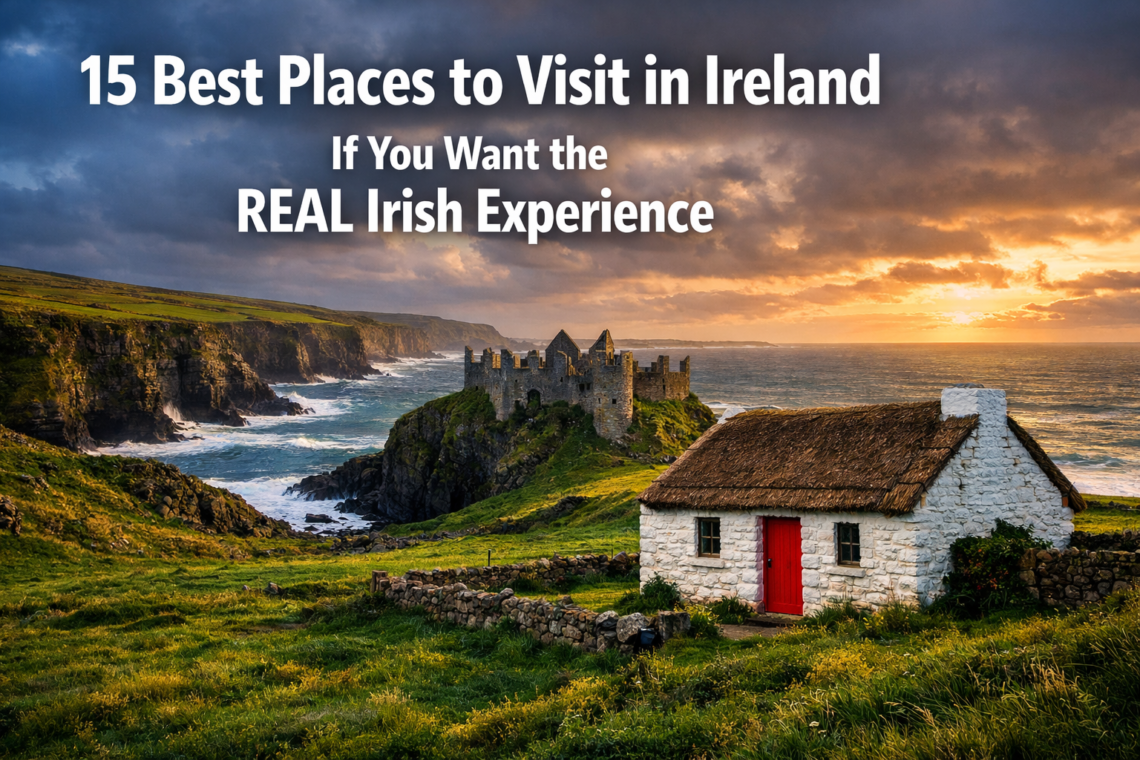
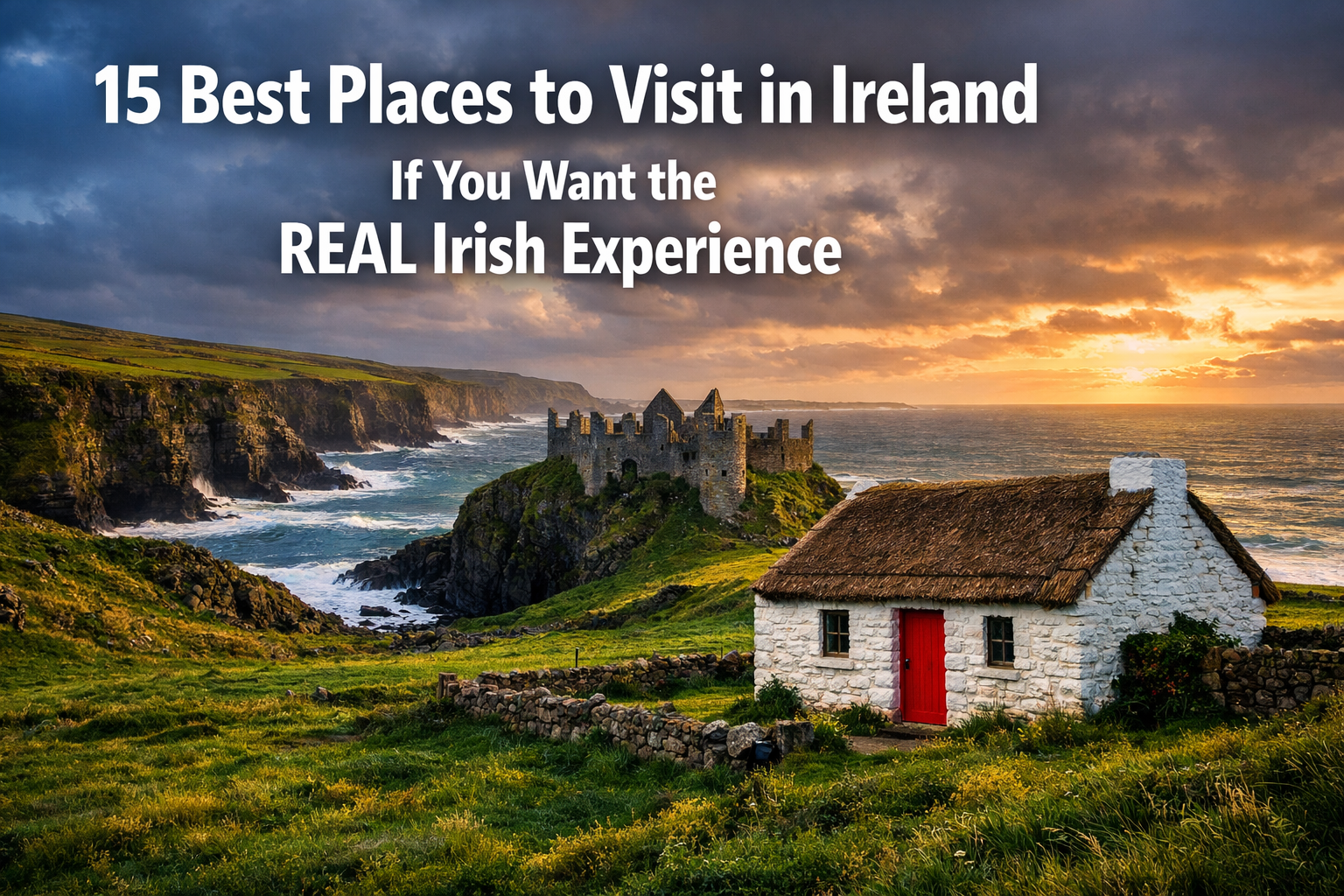
I’ll never forget the moment I realized I’d been doing Ireland all wrong. After ticking off the usual tourist boxes, a local in a Galway pub told me, “You haven’t seen Ireland until you’ve gotten lost on a back road in Connemara.” He was right. The real Ireland isn’t just in the guidebooks—it’s in the windswept peninsulas, the village pubs where locals still gather for traditional music sessions, and the ancient sites where you might be the only visitor for hours.
The best places to visit in Ireland for an authentic experience go far beyond Dublin’s Temple Bar and the Cliffs of Moher tour buses. With Ireland expecting continued tourism growth in 2026[1], now’s the time to discover the places where Irish culture, history, and natural beauty remain wonderfully unspoiled. These 15 destinations will show you the Ireland that locals know and love.
Key Takeaways
- The most authentic Irish experiences happen in small villages, rugged coastal areas, and lesser-known historical sites
- Traditional music sessions (seisiúns) in local pubs offer genuine cultural immersion
- Ireland’s Wild Atlantic Way and rural regions provide stunning landscapes without the crowds
- Spring and fall offer the best balance of good weather and fewer tourists
- Renting a car unlocks access to remote areas where the real Ireland thrives
Quick Answer
The best places to visit in Ireland for an authentic experience include the Dingle Peninsula, Connemara, the Aran Islands, and small towns like Doolin and Kinsale. These destinations offer traditional culture, stunning natural landscapes, and genuine interactions with locals. Skip the overcrowded tourist hotspots and head to Ireland’s western coast, rural villages, and ancient historical sites where Irish traditions remain vibrant and the pace of life reflects the true Irish spirit.
What Makes a “Real” Irish Experience Different from Tourist Ireland?
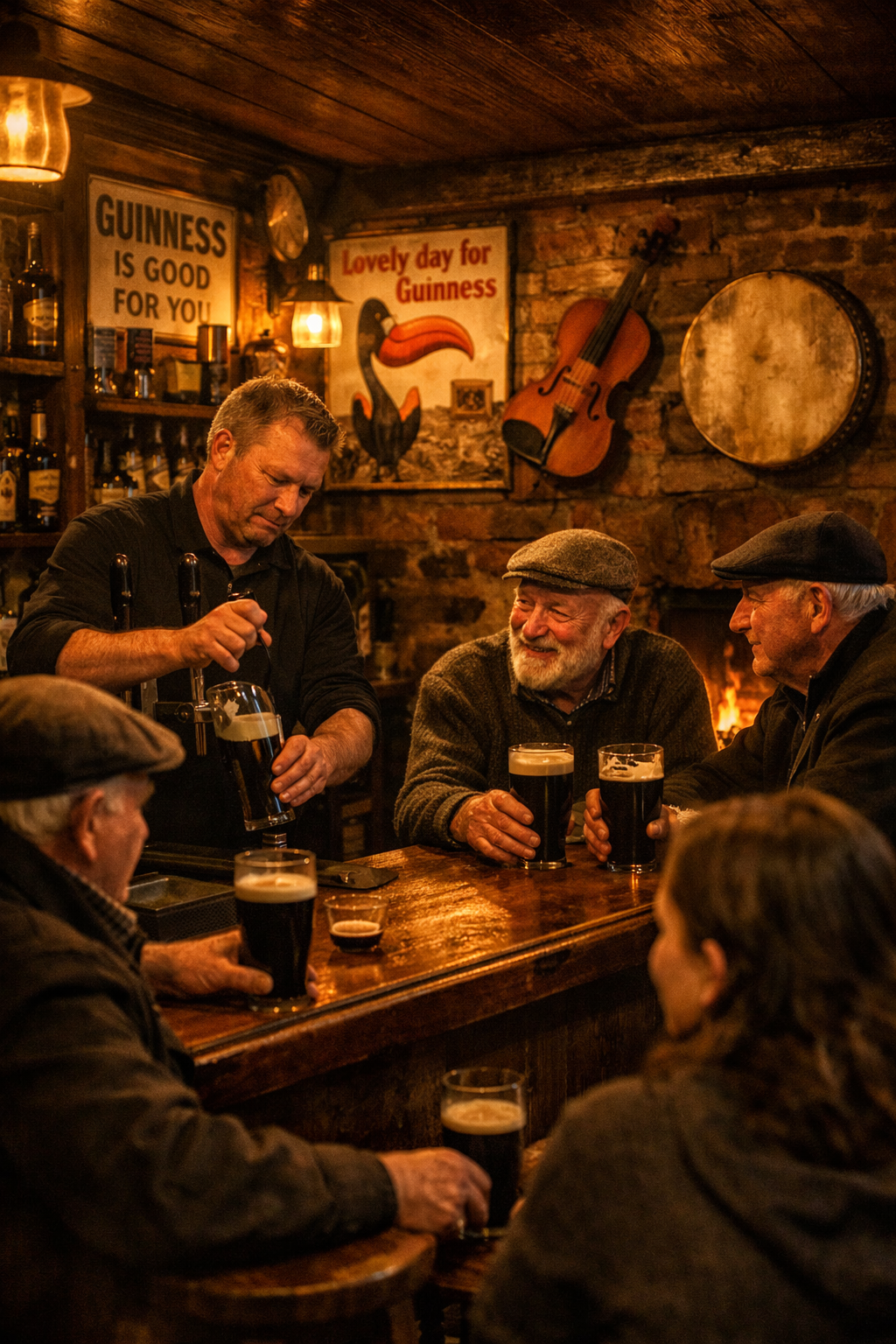
A real Irish experience centers on genuine cultural immersion, natural beauty without crowds, and interactions with locals in their daily environments. Tourist Ireland focuses on convenient, packaged attractions in major cities, while authentic Ireland thrives in rural communities, traditional music sessions, and landscapes where ancient history feels alive.
The difference shows up immediately when you step into a local pub in a small town versus a themed bar in Dublin’s Temple Bar district. In authentic settings, you’ll find:
- Traditional music sessions where locals play for themselves, not tourists
- Conversations that start naturally and last for hours
- Landscapes where you can walk for miles without seeing another person
- Food sourced from nearby farms and waters, prepared with regional recipes
- History you can touch, climb, and explore at your own pace
Choose authentic Ireland if you want to understand the culture, not just photograph it. The real Ireland requires more effort to reach—narrow roads, longer drives, and fewer amenities—but rewards you with experiences that tour buses can’t replicate.
Why the West Coast Offers the Best Places to Visit in Ireland
Ireland’s west coast delivers the country’s most dramatic landscapes, strongest cultural traditions, and most authentic experiences. The Wild Atlantic Way, stretching 1,600 miles along the western seaboard, showcases rugged cliffs, remote islands, traditional villages, and some of Europe’s best-preserved Celtic heritage.
The west escaped much of Ireland’s rapid modernization because its rocky soil and harsh Atlantic weather made large-scale development difficult. This geographic challenge became a cultural blessing, preserving traditional ways of life that disappeared elsewhere.
What you’ll find on the west coast:
- Gaeltacht regions where Irish (Gaeilge) remains the primary language
- Traditional farming and fishing communities operating as they have for generations
- Ancient monuments like stone forts, holy wells, and Celtic crosses
- Wild landscapes shaped by Atlantic storms and geological drama
- Music and storytelling traditions passed down through families
The west coast works best for travelers who enjoy driving, don’t mind unpredictable weather, and want to set their own pace. Expect narrow roads, sudden rain showers, and spectacular beauty around every turn.
The 15 Best Places to Visit in Ireland for Authentic Experiences
1. Dingle Peninsula, County Kerry
The Dingle Peninsula combines stunning coastal scenery with one of Ireland’s strongest Gaeltacht communities. This finger of land jutting into the Atlantic offers ancient beehive huts, dramatic mountain passes, and a town (Dingle) where traditional music sessions happen nightly in cozy pubs.
Why it’s authentic:
- Irish language still spoken in daily life
- Working fishing harbor with fresh seafood
- Slea Head Drive passes prehistoric sites and stone forts
- Traditional music scene driven by locals, not tourists
Drive the Slea Head loop early in the morning to avoid tour buses. Stop at Dunbeg Fort and the beehive huts, but save time for a pint and music session at Dick Mack’s or O’Flaherty’s in Dingle town after 9 PM.
2. Connemara, County Galway
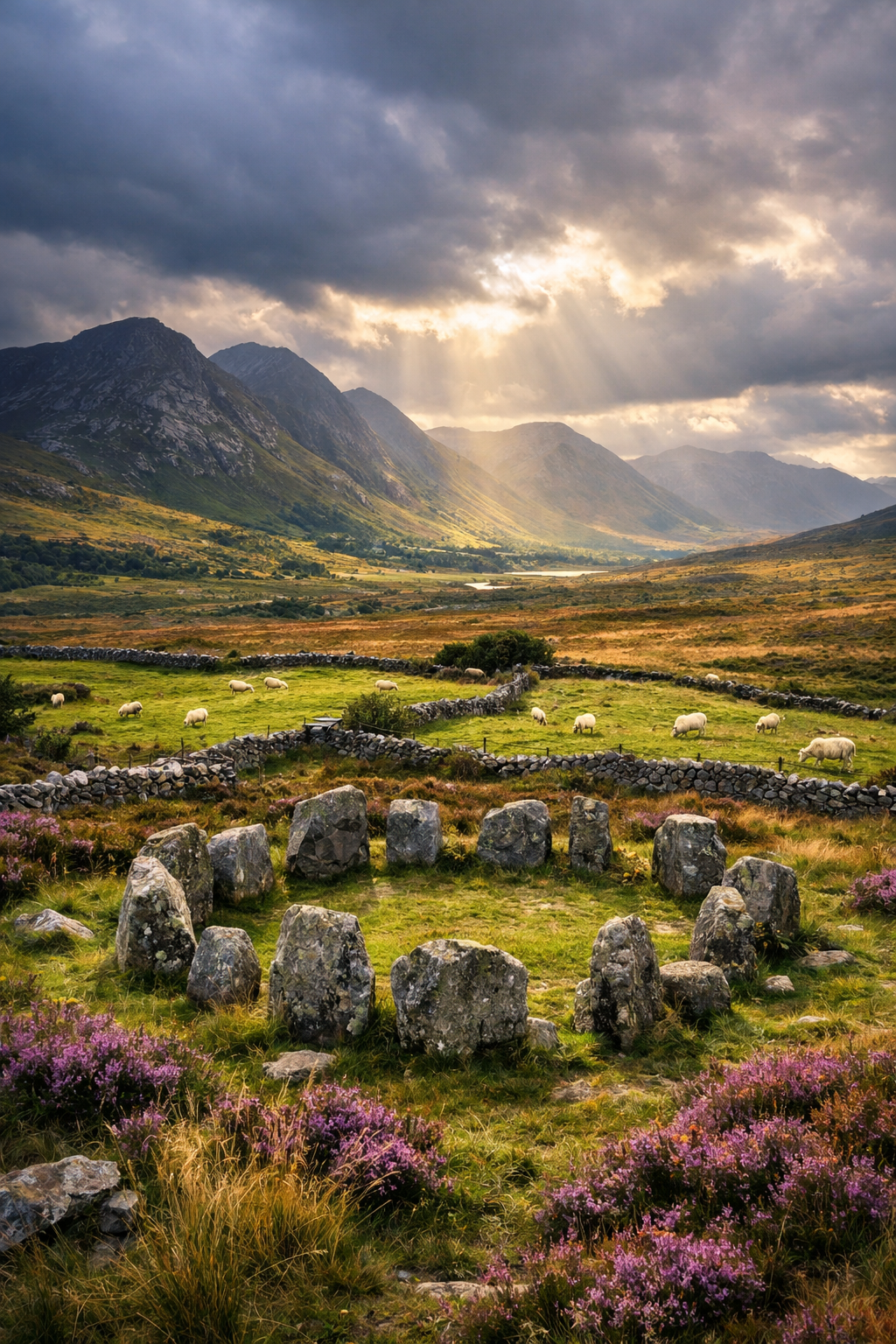
Connemara’s wild, boggy landscape of mountains, lakes, and stone-walled fields represents Ireland at its most elemental. This region northwest of Galway city feels remote and timeless, with scattered villages, traditional farms, and some of Ireland’s best hiking.
What makes it special:
- Twelve Bens mountain range for serious hikers
- Kylemore Abbey and Victorian walled gardens
- Traditional turf cutting and sheep farming
- Irish-speaking communities in the western areas
The Sky Road loop near Clifden offers spectacular coastal views. Visit in September or early October when the heather blooms purple across the bogs and tourist numbers drop significantly.
3. Aran Islands (Inis Mór, Inis Meáin, Inis Oírr)
These three limestone islands off Galway’s coast preserve Irish culture and language as it existed centuries ago. Dry stone walls crisscross the landscape, ancient forts crown clifftops, and locals still speak Irish as their first language.
Authentic experiences:
- Dún Aonghasa, a prehistoric stone fort on 300-foot cliffs
- Traditional currachs (canvas boats) still used for fishing
- Hand-knit Aran sweaters with family patterns
- Irish language heard in shops and pubs
Inis Mór gets the most visitors, but Inis Meáin offers the most authentic experience with fewer tourists and stronger traditions. Stay overnight to experience the islands after the day-trippers leave. The ferry from Doolin or Rossaveal takes 30-45 minutes.
4. Doolin, County Clare
This tiny village built around three pubs has become Ireland’s unofficial capital of traditional music. Every night of the week, musicians gather for sessions that draw locals and knowledgeable travelers who appreciate the real thing.
Why musicians and music lovers choose Doolin:
- Multiple sessions nightly at McGann’s, McDermott’s, and O’Connor’s
- Musicians play traditional tunes passed down through generations
- Informal atmosphere where anyone can join if they can play
- Gateway to the Cliffs of Moher and the Burren
Arrive by 9 PM for a seat, but the music often doesn’t start until 9:30 or 10 PM. Don’t request songs or applaud between tunes in a set—these sessions follow traditional etiquette that respects the music’s flow.
5. The Burren, County Clare
The Burren’s lunar landscape of limestone pavements creates one of Europe’s most unique ecosystems. This 100-square-mile karst region supports rare Arctic and Mediterranean plants growing side by side, plus ancient tombs, ring forts, and early Christian sites.
What you’ll discover:
- Poulnabrone Dolmen, a 5,000-year-old portal tomb
- Rare wildflowers in limestone cracks
- Underground cave systems
- Early Christian churches and high crosses
The Burren works best for slow exploration on foot. Take the Green Road from Ballyvaughan to Doolin for spectacular coastal views and limestone terraces. Spring (April-May) brings the best wildflower displays.
6. Kinsale, County Cork
This picturesque harbor town combines colorful buildings, serious food culture, and maritime history. Kinsale’s narrow streets, working harbor, and surrounding coastline offer authentic Irish coastal life without the crowds of larger towns.
Authentic Kinsale experiences:
- Fresh seafood from local boats
- Charles Fort, a 17th-century star-shaped fortress
- Scenic coastal walks to Old Head
- Traditional pubs mixed with excellent restaurants
Visit the English Market in Cork city (20 minutes away) in the morning, then spend the afternoon exploring Kinsale’s waterfront and forts. The town’s food scene attracts serious Irish food lovers, not just tourists.
7. Skellig Michael, County Kerry
This UNESCO World Heritage site rises 714 feet from the Atlantic, crowned by a 6th-century monastery. Monks lived in stone beehive huts on this impossibly steep island, creating one of the world’s most remarkable early Christian sites.
Why it’s unforgettable:
- 600 stone steps climb to the monastery
- Seabirds (puffins, gannets) nesting on cliffs
- Dramatic isolation and Atlantic views
- Authentic medieval monastic site
Boat trips run May through September, weather permitting. Book months in advance—only 180 visitors allowed daily to protect the site. The two-hour boat ride from Portmagee can be rough, so take seasickness medication if you’re prone to it. If you can’t get a Skellig Michael landing permit, the boat tour around the island still offers spectacular views.
8. Sligo and Yeats Country
Sligo’s landscape inspired poet W.B. Yeats and preserves ancient Irish mythology in its mountains, lakes, and megalithic tombs. This northwest region offers authentic Irish culture with fewer tourists than the southwest.
What makes Sligo special:
- Carrowmore, Ireland’s largest megalithic cemetery
- Ben Bulben mountain, featured in Yeats’ poetry
- Traditional music scene in Sligo town
- Surfing at Strandhill and Mullaghmore
Climb Knocknarea to Queen Maeve’s cairn for 360-degree views. The traditional music scene in Sligo town rivals Doolin but sees far fewer tourists. Visit Drumcliffe churchyard where Yeats is buried, with Ben Bulben looming behind.
9. Glendalough, County Wicklow
This glacial valley in the Wicklow Mountains holds one of Ireland’s most important early Christian sites. St. Kevin founded a monastery here in the 6th century, and the round tower, stone churches, and Celtic crosses remain remarkably intact.
Authentic experiences:
- Walking trails through the valley and to Upper Lake
- Early Christian architecture in its original setting
- Wicklow Mountains scenery
- Peaceful atmosphere (arrive early to avoid tour buses)
The site gets crowded midday when tour buses arrive from Dublin (about an hour south). Visit before 9 AM or after 4 PM for a more contemplative experience. The walk to the Upper Lake and Miners’ Village takes about 90 minutes round trip and offers solitude even on busy days.
10. Kilkenny City
Kilkenny combines medieval architecture, vibrant arts, and genuine Irish city life without Dublin’s tourist crowds. This inland city preserves its medieval street pattern, Norman castle, and traditional crafts.
Why Kilkenny feels authentic:
- Working city with real Irish life, not a tourist town
- Kilkenny Castle and medieval mile
- Traditional craft workshops (pottery, glass, textiles)
- Excellent pubs with traditional music
The Smithwick’s brewery tour offers local history along with beer tasting. Kilkenny’s narrow medieval streets, called “slips,” hide excellent cafes and craft shops. The city works well as a base for exploring Ireland’s Ancient East.
11. Achill Island, County Mayo
Ireland’s largest island connects to the mainland by bridge but feels worlds away. Achill’s dramatic cliffs, deserted beaches, and small villages offer authentic Irish island life with easier access than more remote islands.
What you’ll find:
- Keem Bay, one of Ireland’s most beautiful beaches
- Abandoned village at Slievemore
- Traditional sheep farming
- Surfing, hiking, and cycling
The Atlantic Drive around the island takes about an hour but deserves half a day with stops. Visit the Deserted Village at Slievemore to see stone cottages abandoned during the Famine. Achill’s west coast faces the full force of Atlantic storms, creating dramatic seascapes.
12. Cobh, County Cork
This colorful harbor town served as the Titanic’s last port of call and the main departure point for Irish emigrants to America. Cobh’s steep streets, Victorian architecture, and maritime history tell Ireland’s emigration story.
Authentic historical experiences:
- Cobh Heritage Centre and emigration museum
- St. Colman’s Cathedral overlooking the harbor
- Spike Island, Ireland’s Alcatraz
- Colorful row houses on steep hills
Take the train from Cork city (20 minutes) for scenic harbor views. The emigration museum offers moving context for understanding Irish-American connections. Spike Island tours include the fortress and prison history.
13. Inishowen Peninsula, County Donegal
Ireland’s most northerly peninsula remains one of its least visited, offering dramatic coastal scenery, ancient sites, and traditional communities. The Inishowen 100 scenic drive circles the peninsula past beaches, headlands, and small villages.
Why it’s authentically Irish:
- Malin Head, Ireland’s most northerly point
- Grianán of Aileach, a restored stone fort
- Traditional fishing villages
- Few tourists compared to southern destinations
The drive around Inishowen takes 3-4 hours without stops, but deserves a full day. Stop at Malin Head to see where the Atlantic meets the North Channel. The fort at Grianán of Aileach offers spectacular views and 4,000 years of history.
14. Westport, County Mayo
This planned Georgian town at the foot of Croagh Patrick combines attractive architecture, traditional music, and access to Connemara and Achill Island. Westport balances tourist amenities with authentic Irish town life.
Authentic Westport experiences:
- Climbing Croagh Patrick, Ireland’s holy mountain
- Traditional music in Matt Molloy’s pub (owned by The Chieftains’ flutist)
- Westport House and gardens
- Great Western Greenway cycling route
The Croagh Patrick climb takes 3-4 hours round trip and requires good fitness and proper footwear. The last Sunday in July (Reek Sunday) sees thousands of pilgrims climb the mountain, some barefoot. Matt Molloy’s pub offers excellent traditional music sessions most nights.
15. Killarney National Park and the Ring of Kerry
While the Ring of Kerry tour route gets crowded, Killarney National Park offers authentic natural beauty and the chance to escape the buses. The park’s lakes, mountains, and native oak woods support red deer and rare plants.
How to experience it authentically:
- Hike the Gap of Dunloe early in the morning
- Explore Muckross House and traditional farms
- Cycle the park’s trails
- Drive the Ring of Kerry counterclockwise to avoid tour buses
The traditional farms at Muckross show Irish rural life in the 1930s-40s with working demonstrations. Ross Castle on Lough Leane offers boat trips to Innisfallen Island. If you drive the Ring of Kerry, start early and go counterclockwise—tour buses go clockwise and start later.
How to Plan Your Authentic Ireland Trip
Planning an authentic Irish experience requires different strategies than a standard European vacation. Ireland’s best experiences happen in small places connected by narrow roads, and weather affects plans more than in other destinations.
Essential planning steps:
- Rent a car – Public transport doesn’t reach most authentic destinations
- Book accommodations early – Small villages have limited lodging
- Allow flexible time – Weather and chance encounters change plans
- Plan for weather – Bring layers and waterproof gear year-round
- Research music sessions – Traditional music happens on specific nights
- Avoid peak summer – May, September, and October offer better weather and fewer crowds
Realistic timeframes:
- One week: Focus on one region (west coast or southwest)
- Two weeks: Combine two regions (west coast and Ancient East)
- Three weeks: Cover most of the island at a comfortable pace
Drive times in Ireland take longer than GPS suggests because of narrow roads, livestock, and scenic stops you can’t resist. Budget extra time for getting lost—some of the best discoveries happen on wrong turns.
When Is the Best Time to Visit Ireland for Authentic Experiences?
Late spring (May) and early fall (September-October) offer the best combination of decent weather, fewer tourists, and authentic Irish life continuing its normal rhythm. Summer brings the most reliable weather but also the largest crowds, while winter offers solitude at the cost of short days and frequent rain.
Season-by-season breakdown:
Spring (April-May)
- Wildflowers in the Burren
- Lambing season on farms
- Fewer tourists than summer
- Unpredictable weather
Summer (June-August)
- Longest days (sunset after 10 PM in June)
- Most festivals and events
- Warmest weather (60-70°F)
- Highest tourist numbers and prices
Fall (September-October)
- Stable weather, especially early September
- Heather blooming in Connemara
- Harvest festivals
- Reduced crowds after mid-September
Winter (November-March)
- Shortest days, frequent rain
- Lowest prices
- Authentic local life without tourists
- Some attractions close or reduce hours
Choose May or September if you want the best balance. These months see Ireland’s tourism industry active but not overwhelmed, giving you access to all services while still experiencing authentic Irish life[2].
What Should You Know About Irish Culture Before You Visit?
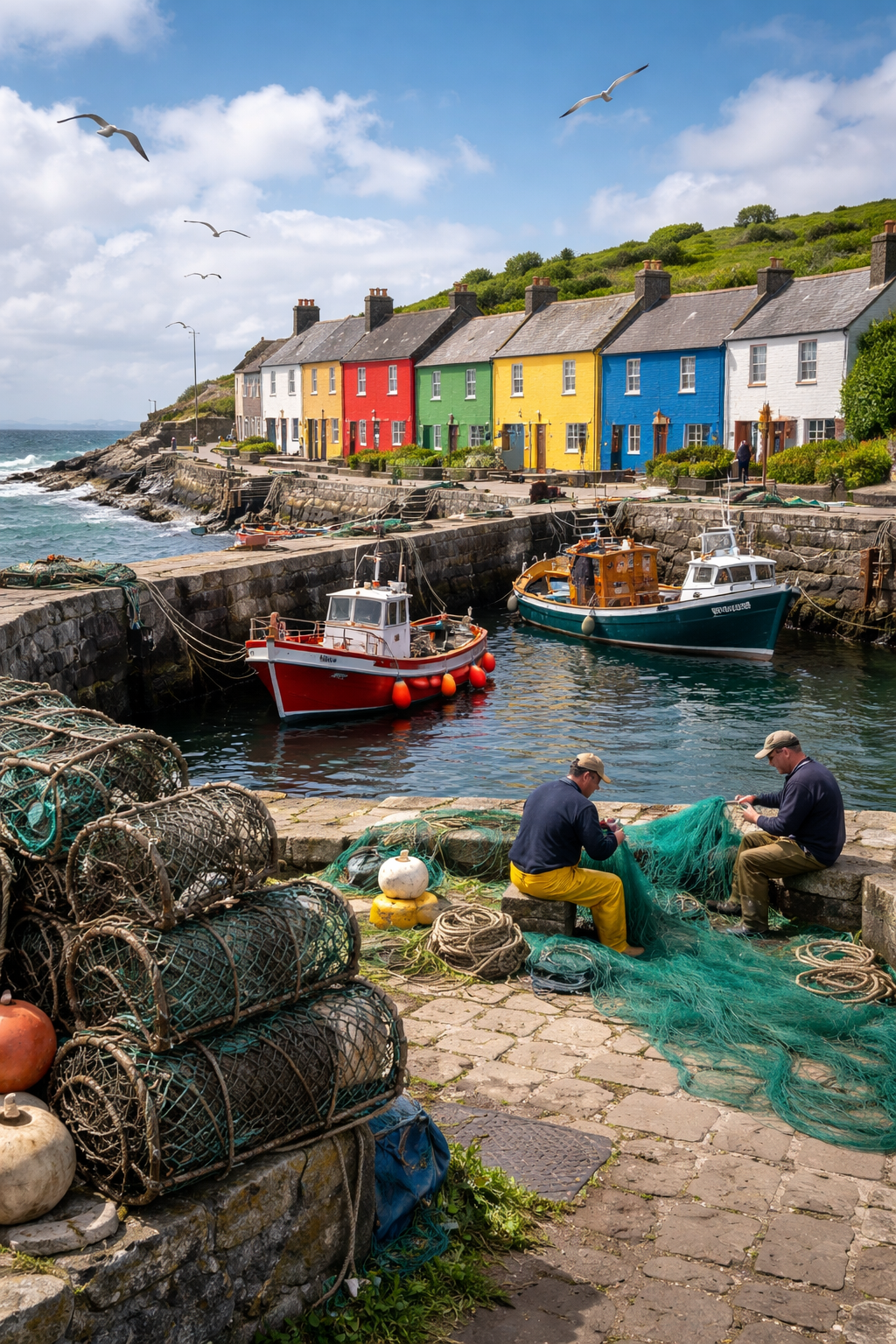
Understanding basic Irish cultural norms helps you connect with locals and avoid awkward moments. Irish culture values conversation, humor, and a relaxed pace that contrasts sharply with American efficiency.
Essential cultural knowledge:
Pub culture:
- Rounds system: if someone buys you a drink, you’re expected to buy the next round
- Don’t rush conversations or drinks
- Tipping: €1-2 per round or 10% for table service
- Music sessions: listen respectfully, don’t talk during tunes
Conversation:
- Irish people use humor and self-deprecation constantly
- “How are you?” expects a real answer, not “fine”
- Avoid talking about religion or politics initially
- The Irish appreciate storytelling and good conversation
Practical matters:
- Shops and restaurants close earlier than in the US
- Sunday hours are limited, especially in small towns
- Cash still important in rural areas
- Driving on the left requires full attention on narrow roads
Common mistakes to avoid:
- Calling Ireland “part of the British Isles” (politically sensitive)
- Expecting everything to run on schedule
- Rushing through conversations to “get things done”
- Assuming all Irish people know each other (it’s a country of 5 million)
- Ordering an “Irish Car Bomb” drink (offensive reference to the Troubles)
The pace of life in rural Ireland moves slower than in cities. This isn’t inefficiency—it’s a cultural value that prioritizes human connection over speed.
How Much Does an Authentic Ireland Trip Cost?
An authentic Ireland trip typically costs $150-250 per person per day, including accommodations, car rental, food, and activities. This budget allows for comfortable B&Bs, pub meals, and entrance fees to historical sites while avoiding luxury hotels and expensive restaurants.
Typical daily costs (per person, 2026):
| Category | Budget | Mid-Range | Comfortable |
|---|---|---|---|
| Accommodation | €40-60 (hostel/budget B&B) | €80-120 (quality B&B) | €150-200 (hotel) |
| Food | €30-40 (pub meals, picnics) | €50-70 (mix of pubs and restaurants) | €80-100 (restaurants) |
| Car rental | €25-35 (split between 2) | €35-45 | €50-70 (premium car) |
| Gas | €15-20 | €20-25 | €25-30 |
| Activities | €10-20 | €20-30 | €30-50 |
| Total per day | €120-175 | €205-290 | €335-450 |
Money-saving strategies:
- Stay in B&Bs instead of hotels (better value and more authentic)
- Eat lunch as your main meal (lunch menus cost less)
- Buy picnic supplies at local shops
- Visit free sites (most ancient monuments, beaches, hiking)
- Travel in shoulder season (May or September)
Where to splurge for authenticity:
- Traditional music pub sessions (cost of a few pints)
- Fresh seafood in coastal towns
- Boat trips to islands
- Guided tours of historical sites with knowledgeable locals
Car rental represents a significant cost but provides essential access to authentic Ireland. Splitting costs between 2-4 people makes it more affordable. Book rental cars months in advance for better rates.
What Are the Most Common Mistakes Visitors Make in Ireland?
The biggest mistake visitors make is trying to see too much in too little time, rushing through Ireland’s best experiences without allowing time for spontaneous discoveries. Authentic Ireland reveals itself slowly, in conversations that stretch into hours and detours down unmarked roads.
Common mistakes and how to avoid them:
Mistake 1: Overpacking the itinerary
- Problem: Driving takes longer than expected, leaving no time for discoveries
- Solution: Plan no more than one major destination per day, with buffer time
Mistake 2: Staying only in Dublin
- Problem: Dublin offers urban Ireland, not authentic cultural experiences
- Solution: Spend maximum 2 days in Dublin, then head west or south
Mistake 3: Following tour buses
- Problem: Arriving at popular sites when they’re most crowded
- Solution: Visit early morning or late afternoon, or choose lesser-known alternatives
Mistake 4: Expecting Mediterranean weather
- Problem: Inadequate rain gear ruins outdoor experiences
- Solution: Pack layers and waterproof jacket regardless of season
Mistake 5: Relying on GPS alone
- Problem: GPS doesn’t account for narrow roads, livestock, or scenic stops
- Solution: Add 30-50% to GPS time estimates
Mistake 6: Skipping travel insurance
- Problem: Weather cancels boat trips or flights, causing financial loss
- Solution: Buy comprehensive travel insurance that covers weather-related cancellations
Mistake 7: Not carrying cash
- Problem: Rural pubs and shops may not accept cards
- Solution: Keep €50-100 in cash, especially in small towns
Learn from travelers who’ve discovered that Ireland’s best moments happen between planned destinations. The conversation with a farmer at a stone wall, the unexpected rainbow over a bog, the music session you stumbled into—these experiences require time and flexibility.
If you’re planning other European adventures, you might enjoy our guide to hidden gems in Italy or our Edinburgh itinerary for another Celtic experience.
How to Find Traditional Music Sessions (Seisiúns)
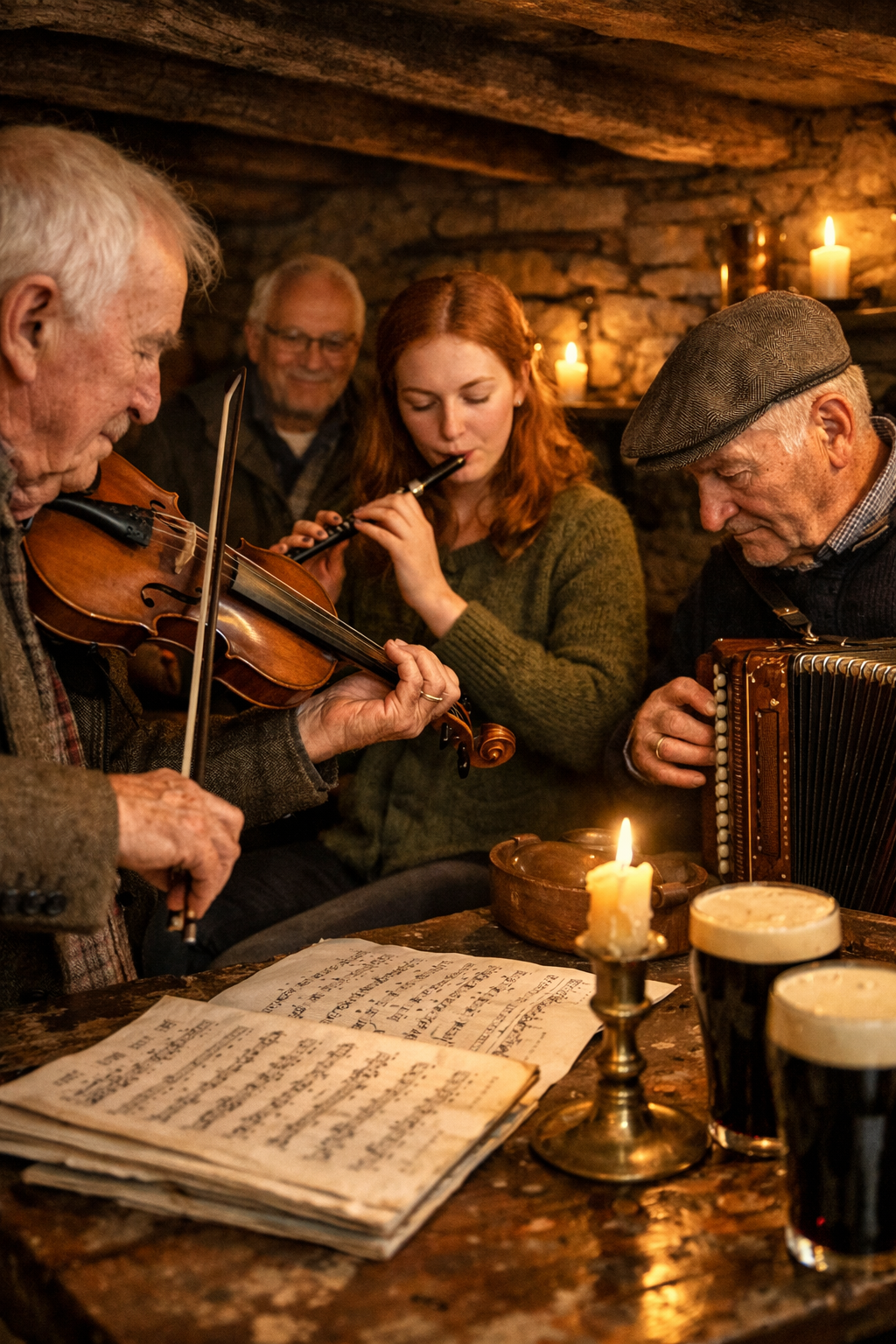
Traditional Irish music sessions happen in pubs across Ireland, but finding authentic sessions requires knowing where and when to look. The best sessions feature local musicians playing for themselves and their community, not tourists.
How to find authentic sessions:
- Ask locals – Bartenders, B&B hosts, and shop owners know which sessions are genuine
- Look for instruments – Pubs with fiddles, bodhráns, or tin whistles on walls often host sessions
- Check timing – Authentic sessions typically start 9:30-10 PM, not earlier
- Observe the crowd – If mostly locals, you’ve found the real thing
- Visit known music towns – Doolin, Dingle, Westport, Sligo, and Ennis have strong traditions
Session etiquette:
- Arrive early for a seat but don’t sit at the musicians’ table
- Don’t talk during tunes (conversation happens between sets)
- Don’t applaud between tunes in a set (wait for the set to finish)
- Don’t request songs unless you know the musicians well
- Don’t record video without asking permission
- Buy musicians a round if you’re staying for multiple sets
Best towns for traditional music:
- Doolin, County Clare – Three pubs with nightly sessions
- Dingle, County Kerry – Multiple venues, strong local tradition
- Westport, County Mayo – Matt Molloy’s and other pubs
- Sligo town – Several pubs with regular sessions
- Ennis, County Clare – Traditional music capital with many sessions
The quality of a session depends on who shows up that night. Even famous venues have off nights, while unknown pubs sometimes host incredible musicians. Part of the authentic experience involves accepting this unpredictability.
Frequently Asked Questions
How many days do you need for an authentic Ireland experience?
You need at least 7-10 days to experience authentic Ireland without rushing. This allows time for one or two regions, spontaneous discoveries, and the slower pace that reveals Irish culture. Two weeks lets you explore multiple regions comfortably, while three weeks covers most of the island.
Is it better to visit Ireland independently or with a tour?
Independent travel offers more authentic experiences because you can follow local recommendations, adjust timing for weather and discoveries, and spend time in small places tours skip. Tours provide convenience but limit spontaneity and often focus on crowded tourist sites rather than authentic cultural experiences.
Do you need to speak Irish (Gaeilge) to visit Gaeltacht regions?
No, everyone in Gaeltacht regions speaks English, though Irish remains their primary language among themselves. Learning a few phrases (“Dia dhuit” for hello, “Go raibh maith agat” for thank you) shows respect and often delights locals, but English works fine for all practical purposes.
What’s the best base for exploring the west of Ireland?
Galway city offers the best combination of amenities, culture, and access to Connemara, the Aran Islands, and the Burren. Alternatively, smaller towns like Westport, Dingle, or Doolin provide more authentic experiences as bases, though with fewer dining and accommodation options.
Can you visit Ireland on a budget and still have authentic experiences?
Yes, many of Ireland’s most authentic experiences cost little or nothing: hiking coastal paths, visiting ancient monuments, attending music sessions (cost of drinks), exploring small towns, and conversing with locals. Budget accommodations like hostels and B&Bs often provide more authentic interactions than expensive hotels.
Is Ireland safe for solo travelers?
Ireland ranks among Europe’s safest countries for solo travelers, including women traveling alone. Rural areas feel especially safe, and Irish hospitality means locals often look out for solo travelers. Standard precautions apply in Dublin and other cities at night.
How difficult is driving in Ireland?
Driving on the left requires adjustment, and narrow rural roads demand full attention and slow speeds. Most visitors adapt within a day or two. The main challenges are narrow roads with stone walls, roundabouts, and manual transmissions (automatic cars cost more to rent). Allow extra time and drive cautiously.
What should you pack for an Ireland trip?
Pack layers (Ireland’s weather changes frequently), a waterproof jacket, comfortable walking shoes, and one dressy outfit for nicer restaurants. Bring a small daypack, reusable water bottle, and power adapter (Type G plug). Leave room in your luggage for woolens and crafts you’ll want to bring home.
Are credit cards widely accepted in rural Ireland?
Most establishments accept credit cards, but small pubs, B&Bs, and craft shops in rural areas may prefer cash or have card minimums. ATMs exist in most towns, but carry €50-100 in cash for small purchases and rural areas.
What’s the difference between Northern Ireland and the Republic of Ireland?
Northern Ireland is part of the United Kingdom and uses pounds sterling, while the Republic of Ireland is an independent country using euros. Both offer authentic Irish experiences, but they have different governments, currencies, and some cultural differences stemming from their political histories.
Can you see the Northern Lights from Ireland?
Occasionally, during strong solar activity, the Northern Lights (Aurora Borealis) appear in northern Ireland, especially Donegal and Northern Ireland. This happens a few times per year, typically during winter months. Check aurora forecasts if you’re visiting October through March and want to try.
Is tipping expected in Ireland?
Tipping isn’t mandatory but is appreciated for good service. In restaurants, 10-12% is standard if service isn’t included. In pubs, tip €1-2 per round or 10% for table service. Taxi drivers appreciate rounding up the fare. Tipping isn’t expected in B&Bs unless staff provides exceptional service.
Key Takeaways
- The best places to visit in Ireland for authentic experiences lie along the west coast, in small villages, and at ancient historical sites away from major tourist routes
- Traditional Irish culture thrives in Gaeltacht regions, music towns like Doolin and Dingle, and rural communities where Irish language and customs remain strong
- Authentic Ireland requires a car, flexible planning, and willingness to embrace unpredictable weather and spontaneous discoveries
- May and September offer the best balance of good weather, fewer crowds, and authentic Irish life continuing its normal rhythm
- Traditional music sessions, conversations with locals, and time spent in nature provide deeper cultural understanding than any tourist attraction
- Budget €150-250 per person per day for comfortable authentic travel including B&Bs, pub meals, car rental, and activities
- Allow more time than you think you need—Ireland’s best experiences happen when you slow down and let the culture reveal itself
- Skip Dublin-centric itineraries and head west or southwest where Irish traditions remain strongest
- Learn basic cultural norms around pub etiquette, conversation style, and the Irish pace of life to connect more meaningfully with locals
- Book accommodations and car rentals months in advance, especially for May-October travel, but keep daily plans flexible
Conclusion
The real Ireland exists far from the tour bus routes and selfie spots that dominate social media. It lives in the west coast villages where Irish is still spoken, in the pubs where musicians gather to play tunes their grandparents taught them, and in the ancient landscapes where history feels present rather than past.
These 15 destinations offer authentic Irish experiences because they’ve retained their cultural identity despite tourism growth. With Ireland’s tourism industry continuing to expand in 2026[1][2], visiting these places now means experiencing them before they become tomorrow’s overcrowded attractions.
Your next steps:
- Choose your region based on interests (music, history, landscapes, or a combination)
- Book your car rental for the dates you’ve selected (automatic transmission if you’re not comfortable with manual)
- Reserve accommodations in small towns and villages (B&Bs book up months ahead for peak season)
- Research traditional music sessions in your chosen destinations
- Build a flexible itinerary that allows for spontaneous discoveries and weather changes
- Pack for all weather regardless of season
- Learn a few Irish phrases to show respect in Gaeltacht areas
The Ireland I’ve come to love reveals itself slowly, in moments rather than monuments. It’s the farmer who stops to chat while you photograph his stone wall, the session musician who nods for you to pull up a chair, the rainbow that appears over Connemara just as the rain stops. These experiences can’t be scheduled or guaranteed, but visiting the right places at the right pace makes them far more likely.
Ireland rewards travelers who embrace its weather, respect its culture, and allow time for the unexpected. The best Irish experience isn’t something you can tick off a list—it’s something that happens when you stop trying to see everything and start experiencing somewhere.
For more destination inspiration, check out our guide to top places to travel that ruin other vacations or explore other European gems in our Lisbon travel guide.
References
[1] Tourism Ireland Launches 2026 Marketing Plans – https://www.tourismireland.com/news-and-press-releases/press-releases/article/tourism-ireland-launches-2026-marketing-plans
[2] Ye25 Outlook26 – https://www.itic.ie/ye25-outlook26/