


Planning your first trip to Costa Rica can feel overwhelming with so much conflicting advice online. The do’s and don’ts of Costa Rica are essential knowledge that can mean the difference between an amazing adventure and a frustrating experience filled with avoidable mistakes. I’ve gathered the most important guidelines that every first-time visitor needs to know before stepping foot in this tropical paradise.
Key Takeaways
- Use public buses for budget travel – they’re the most affordable transportation option and connect most major destinations
- Rent a 4×4 vehicle for remote areas – many beaches and national parks require high-clearance vehicles, especially during rainy season
- Don’t drink tap water outside major cities – stick to bottled water to avoid stomach issues
- Do embrace “pura vida” – this laid-back lifestyle is central to Costa Rican culture and means accepting a slower pace
- Respect wildlife from a distance – never touch sea turtles, sloths, or other animals, even if locals or tours offer it
- Tip appropriately – 10% service charge is usually included in restaurant bills, but guides and drivers appreciate extra tips
- Pack reef-safe sunscreen – regular sunscreen is banned in many protected areas to preserve coral reefs
- Don’t underestimate travel times – roads are mountainous and winding, so 100 miles can take 4+ hours
Quick Answer
The most important do’s and don’ts of Costa Rica for first-timers include using public transportation or 4×4 rentals for getting around, drinking only bottled water outside cities, respecting wildlife by maintaining distance, embracing the “pura vida” lifestyle, and packing essentials like reef-safe sunscreen and rain gear. Avoid touching wildlife, underestimating travel times on mountain roads, and skipping travel insurance for adventure activities.
How Should You Get Around Costa Rica as a First-Timer?

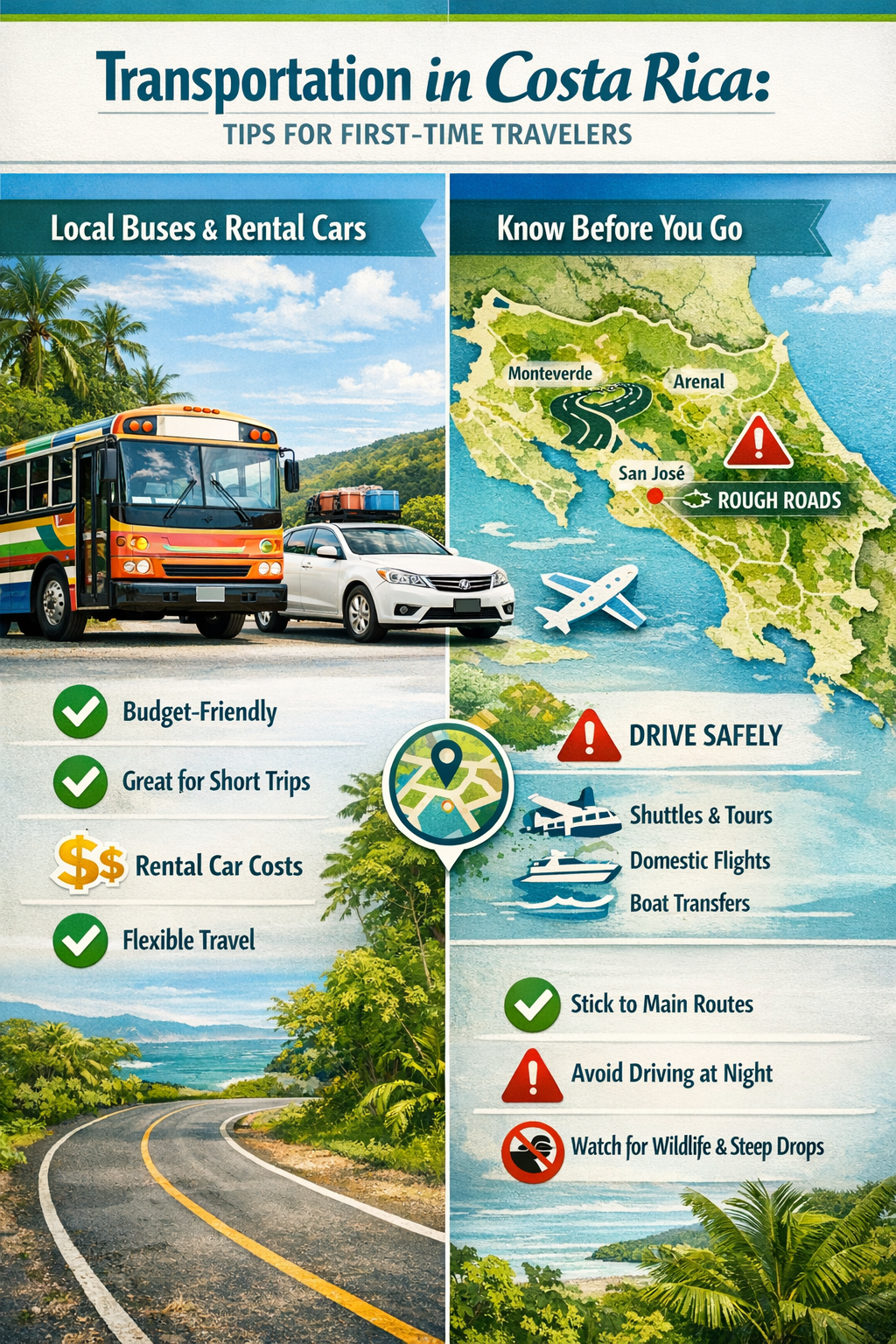
Public buses are the most affordable way to travel in Costa Rica, connecting major destinations for just a few dollars per trip[1]. However, your transportation choice should match your itinerary and comfort level.
Choose public buses if:
- You’re on a tight budget and don’t mind longer travel times
- You’re sticking to major tourist destinations like San José, La Fortuna, Manuel Antonio, and Monteverde
- You enjoy local cultural experiences and meeting Ticos (Costa Ricans)
- You’re comfortable with Spanish basics or navigation apps
Rent a vehicle (preferably 4×4) if:
- You plan to visit remote beaches, national parks, or off-the-beaten-path locations
- You want flexibility to stop for photos along scenic coastal roads and mountain passes[1]
- You’re traveling during rainy season (May-November) when many roads become muddy
- You have 3+ people to split rental costs
Use taxis sparingly for short distances in cities or when you’ve had a long day. Official red taxis with yellow triangles should always use meters (called “la maría”). If they refuse, find another taxi.
Common mistake: Underestimating travel times. A 60-mile journey can take 3-4 hours on winding mountain roads. Always add buffer time to your schedule, especially if you have flights or tours booked. Similar to planning a New York City itinerary, building in extra time prevents stress.
What Are the Essential Do’s and Don’ts of Costa Rica Culture?
Costa Rican culture centers around “pura vida” – a phrase meaning “pure life” that embodies a relaxed, wellness-focused lifestyle[2]. Embracing this slower pace is essential for first-timers.
Cultural Do’s:
- Greet people warmly – say “buenos días” (good morning) or “buenas tardes” (good afternoon) when entering shops or restaurants
- Be patient – service can be slower than you’re used to; rushing is considered rude
- Engage with local communities – visit sodas (family-run restaurants), farmers markets, and small villages[1]
- Learn basic Spanish phrases – even simple attempts are appreciated, though many tourism workers speak English
- Dress modestly when visiting small towns – beachwear is fine at the coast, but cover up in rural areas
Cultural Don’ts:
- Don’t expect everything on a strict schedule – “Tico time” means things often start 15-30 minutes late
- Don’t compare Costa Rica to other Central American countries – Ticos are proud of their unique identity, stability, and environmental leadership
- Don’t be loud or aggressive – Costa Ricans value calm, friendly interactions
- Don’t skip the local food – casado (traditional plate with rice, beans, plantains, salad, and protein) is affordable and delicious
Edge case: In San José and major tourist areas, punctuality matters more for tours and transportation. Always arrive on time for these, even if other aspects of life run slower.
What Are the Critical Safety Do’s and Don’ts of Costa Rica?

Costa Rica is one of the safest countries in Central America, but first-timers should follow basic precautions to avoid common issues.
Water and Food Safety
Do:
- Drink bottled water outside major cities and tourist hotels
- Eat at busy sodas and restaurants where food turnover is high
- Wash fruits and vegetables with bottled water if preparing your own food
- Use ice in tourist areas (usually made from purified water) but skip it in remote locations
Don’t:
- Drink tap water in rural areas or small towns
- Eat from street vendors unless you see locals eating there regularly
- Leave food uncovered – insects and humidity can contaminate it quickly
Wildlife and Nature Safety
Do:
- Maintain at least 6 feet distance from all wildlife
- Hire certified guides for wildlife tours – they know safe viewing practices
- Check your shoes and clothing for insects before putting them on
- Stay on marked trails in national parks
Don’t:
- Touch sea turtles, sloths, monkeys, or any wild animals, even if offered by tour operators
- Swim in rivers near crocodile warning signs
- Leave food in your car or tent – it attracts animals
- Approach or feed wildlife for photos
Personal Security
Do:
- Use hotel safes for passports, extra cash, and electronics
- Keep valuables out of sight in rental cars
- Stay aware in San José, especially downtown and near bus terminals
- Take official taxis or Uber in cities
Don’t:
- Walk alone on empty beaches at night
- Flash expensive jewelry, cameras, or phones in crowded areas
- Leave belongings unattended on beaches
- Carry large amounts of cash – ATMs are widely available
Common mistake: Assuming all wildlife encounters are safe because they’re offered by locals. Some unethical operators let tourists hold sloths or baby animals, which stresses the animals and can be dangerous. Choose certified eco-tours instead, similar to how you’d research authentic experiences in St. Lucia.
What Should You Pack for Costa Rica?
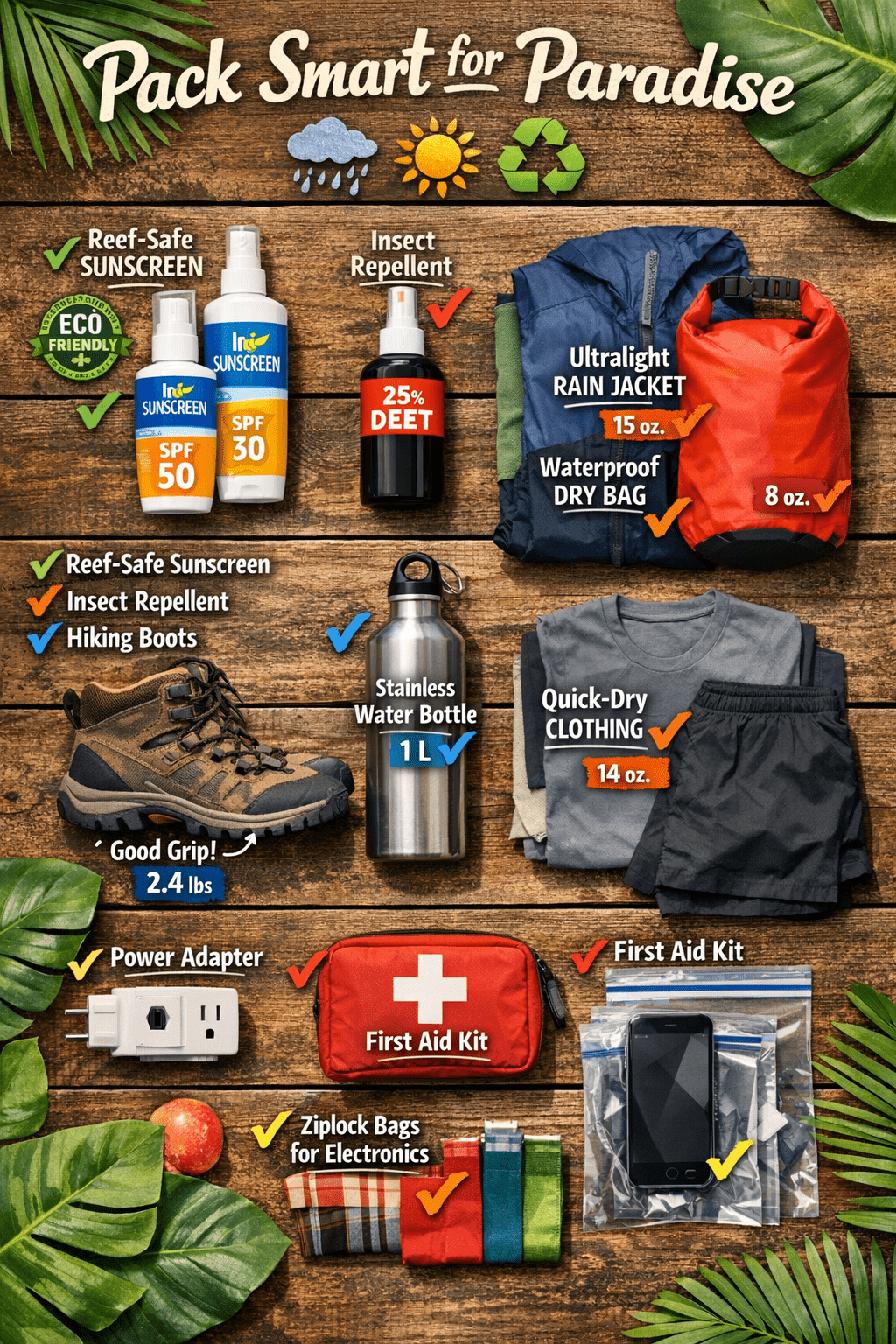
Packing smart prevents uncomfortable situations and helps you respect Costa Rica’s environmental regulations.
Essential Do’s and Don’ts of Costa Rica Packing
| Category | Do Pack | Don’t Pack |
|---|---|---|
| Sun Protection | Reef-safe sunscreen (non-nano zinc oxide or titanium dioxide) | Regular chemical sunscreen – banned in many protected areas |
| Clothing | Quick-dry fabrics, rain jacket, layers for cool mountains | Heavy jeans, cotton that stays wet, excessive clothing |
| Footwear | Hiking sandals, waterproof hiking boots, flip-flops | Only sneakers – you need waterproof options |
| Electronics | Universal adapter (Type A/B plugs), waterproof phone case | Hair dryers (most hotels provide them) |
| Health | Insect repellent with DEET, basic first aid kit, prescription meds | Aspirin or ibuprofen without checking customs rules |
| Extras | Reusable water bottle, dry bags for electronics, headlamp | Single-use plastics – Costa Rica is reducing plastic waste |
Do:
- Pack light – you’ll be moving between destinations frequently
- Bring a small daypack for tours and beach days
- Include a lightweight towel (hotel towels often can’t leave the property)
- Carry ziplock bags to protect electronics from humidity and rain
Don’t:
- Overpack – laundry service is cheap and widely available
- Forget rain gear even in dry season (December-April) – afternoon showers happen
- Bring expensive jewelry or items you’d be devastated to lose
Choose reef-safe sunscreen if: You plan to snorkel, dive, or swim in protected marine areas. Regular sunscreen damages coral reefs and is increasingly banned. This is similar to environmental considerations when visiting cheap islands.
How Do Tipping and Money Work in Costa Rica?
Understanding Costa Rica’s tipping customs and currency prevents awkward situations and ensures you’re not overpaying or undertipping.
Tipping Guidelines
Restaurants: A 10% service charge is automatically included in most restaurant bills. You can add an extra 5-10% for exceptional service, but it’s not required.
Tour guides: Tip $10-20 per person per day for excellent guides. They rely heavily on tips and provide valuable expertise.
Drivers: Give shuttle and private drivers $5-10 depending on distance and service quality.
Hotel staff: Tip porters $1-2 per bag and leave $2-5 per day for housekeeping.
Don’t tip: Taxi drivers (unless they help with heavy luggage), fast food workers, or when you see “servicio incluido” on the bill.
Money Matters
Do:
- Withdraw colones (local currency) from ATMs for the best exchange rates
- Carry small bills – many places can’t break 10,000 or 20,000 colone notes
- Use credit cards at hotels and major restaurants (Visa and Mastercard widely accepted)
- Notify your bank before traveling to avoid card blocks
Don’t:
- Exchange money at the airport – rates are poor
- Rely only on cash – cards offer better fraud protection
- Accept damaged or torn bills – they’re difficult to use later
- Forget to check if your ATM card charges foreign transaction fees
Common mistake: Paying everything in US dollars. While widely accepted in tourist areas, you’ll get poor exchange rates. Paying in colones saves 10-15% on most purchases.
What Free and Budget Activities Should First-Timers Know About?
Costa Rica can be expensive, but numerous free and low-cost activities let you experience the country’s natural beauty without breaking your budget.
Free activities:
- Hiking in national parks (entrance fees apply, but trails are free once inside)
- Swimming at public beaches – all beaches in Costa Rica are public by law
- Visiting some free hot springs near Arenal (locals know the secret spots)
- Exploring local markets and town squares
- Watching sunsets from beach viewpoints
- Birdwatching from your accommodation or public areas[1]
Budget-friendly options:
- National park entrance fees ($10-20) instead of expensive guided tours
- Eating at sodas instead of tourist restaurants (meals for $5-8)
- Taking public buses between destinations
- Staying in hostels or budget hotels with shared kitchens
- Visiting during green season (May-November) for lower accommodation rates
Do:
- Research free hot springs locations before booking expensive resort access
- Pack snacks and refillable water bottles for day trips
- Ask locals for free viewpoints and swimming holes
- Visit national parks early (opens 7-8 AM) to see more wildlife and beat crowds
Don’t:
- Skip national parks because of entrance fees – they’re worth every dollar
- Book every activity through your hotel – independent booking is often cheaper
- Assume “free” beach access includes parking – many beaches charge $5-10 for parking
For more budget travel strategies, check out our guide on finding cheap flights.
What Are the Do’s and Don’ts of Costa Rica Adventure Activities?
Costa Rica is famous for zip-lining, surfing, rafting, and other adventure sports. Following safety guidelines ensures you have fun without unnecessary risks.
Do:
- Book adventure activities with certified operators who have proper insurance
- Purchase travel insurance that covers adventure sports before your trip
- Listen carefully to all safety briefings and ask questions if unclear
- Wear provided safety equipment (helmets, life jackets, harnesses) even if uncomfortable
- Check weather conditions before water activities
- Start with beginner lessons if you’re new to surfing, diving, or rafting
Don’t:
- Book the cheapest tour without checking safety records and reviews
- Attempt advanced activities without proper experience
- Go zip-lining or hiking after heavy rain – trails become dangerous
- Surf alone if you’re a beginner
- Skip the waiver reading – know what you’re agreeing to
- Drink alcohol before adventure activities
Edge case: Some adventure activities have weight limits (zip-lining typically 250-280 lbs, some canopy tours lower). Check before booking to avoid disappointment.
Common mistake: Not disclosing medical conditions to tour operators. Heart conditions, pregnancy, back problems, and other issues can make certain activities dangerous. Be honest on health forms.
What Should You Know About Costa Rica’s Weather and Seasons?
Understanding Costa Rica’s weather patterns helps you pack appropriately and set realistic expectations for your trip.
Dry season (December-April):
- Best for beach vacations and outdoor activities
- Higher prices and more crowds
- Pacific coast is driest; Caribbean coast still gets rain
- Book accommodations and tours well in advance
Green/rainy season (May-November):
- Afternoon rain showers (usually 1-3 hours)
- Lush, vibrant landscapes and fewer tourists
- Lower prices on accommodations (30-50% off)
- Some remote roads become impassable
- Best for budget travelers and those who don’t mind rain
Do:
- Pack for both sun and rain regardless of season
- Plan outdoor activities for mornings during rainy season
- Check regional weather – Caribbean and Pacific coasts have different patterns
- Embrace the rain – it’s part of the rainforest experience
Don’t:
- Expect constant sunshine even in dry season
- Avoid rainy season entirely – it has unique advantages
- Forget that mountain areas (Monteverde, Arenal) are cooler year-round
- Pack only for beach weather if visiting highlands
Choose dry season if: You want guaranteed beach weather, are visiting for a special occasion, or have limited flexibility. Choose green season if you’re budget-conscious, prefer fewer crowds, or want to see nature at its most vibrant.
FAQ
Is Costa Rica safe for first-time visitors?
Yes, Costa Rica is one of the safest countries in Central America. Follow basic precautions like using hotel safes, avoiding empty beaches at night, and staying aware in San José. Most visitors have trouble-free trips.
Do I need to speak Spanish in Costa Rica?
No, but basic Spanish helps. Most tourism workers in popular areas speak English, but learning phrases like “gracias,” “por favor,” and “cuánto cuesta” enhances your experience and shows respect.
Can I drink tap water in Costa Rica?
Tap water is safe in San José and major tourist areas, but stick to bottled water in rural regions and small towns. When in doubt, choose bottled water to avoid stomach issues.
How much should I budget per day in Costa Rica?
Budget travelers can manage on $40-60 per day using public buses, sodas, and hostels. Mid-range travelers should budget $100-150 per day. Luxury travelers often spend $200+ per day on private tours and upscale accommodations.
Do I need a 4×4 rental car in Costa Rica?
Not everywhere, but highly recommended if visiting remote beaches, national parks, or traveling during rainy season. Paved roads to major destinations are fine with regular cars, but many beautiful spots require high clearance.
What’s the best time to visit Costa Rica for first-timers?
December through April (dry season) offers the most predictable weather and easiest travel conditions. However, May through November (green season) provides better prices, fewer crowds, and lush landscapes if you don’t mind afternoon rain.
Is tipping expected in Costa Rica?
Restaurants include 10% service charge automatically, so additional tipping is optional. Tip tour guides $10-20 per person per day, drivers $5-10, and hotel staff $1-5 depending on service.
What vaccinations do I need for Costa Rica?
No vaccinations are required for entry, but CDC recommends being up-to-date on routine vaccines. Consider hepatitis A and typhoid if visiting rural areas. Yellow fever vaccination is required only if arriving from certain countries.
Can I use US dollars in Costa Rica?
Yes, US dollars are widely accepted in tourist areas, but you’ll get poor exchange rates. Use colones for better value. ATMs offer the best exchange rates, and credit cards work at most hotels and restaurants.
How far in advance should I book tours and accommodations?
Book 2-3 months ahead for dry season (December-April) travel. Green season (May-November) allows more flexibility, though popular spots still fill up. Always book adventure tours at least a week in advance.
Are there mosquitoes and other bugs in Costa Rica?
Yes, especially in coastal and rainforest areas. Bring DEET-based insect repellent and consider long sleeves for evening. Mosquitoes are most active at dawn and dusk. Malaria risk is very low but exists in remote areas.
What should I do if I see wildlife on the road?
Slow down immediately and give animals space to cross. Never honk or try to rush them. Sloths, iguanas, and other animals often cross roads slowly. Take photos from your car but don’t approach on foot.
Conclusion
The do’s and don’ts of Costa Rica come down to respecting the environment, embracing local culture, and planning smart for your comfort and safety. Use public transportation or rent a 4×4 depending on your itinerary, drink bottled water outside major cities, and never touch wildlife no matter how tempting. Pack reef-safe sunscreen, rain gear, and quick-dry clothing while leaving single-use plastics at home.
Embrace the “pura vida” lifestyle by slowing down, eating at local sodas, and engaging with communities beyond tourist hotspots. Budget wisely by taking advantage of free activities like public beaches and hiking, while splurging on certified guides for adventure activities. Most importantly, purchase comprehensive travel insurance, notify your bank before departure, and build buffer time into your schedule for those winding mountain roads.
Your next steps:
- Create a comprehensive packing list with reef-safe sunscreen and rain gear
- Research certified tour operators for any adventure activities you want to try
- Download offline maps and basic Spanish phrases to your phone
- Book accommodations and popular tours 2-3 months ahead for dry season travel
- Set up travel insurance that covers adventure sports
Costa Rica rewards travelers who come prepared, respect its natural treasures, and embrace its laid-back culture. Follow these do’s and don’ts, and you’ll return home with incredible memories and a deep appreciation for this remarkable country.
References
[1] Travel – https://www.vacationscostarica.com/travel/
[2] Costa Rica – https://www.intrepidtravel.com/us/costa-rica