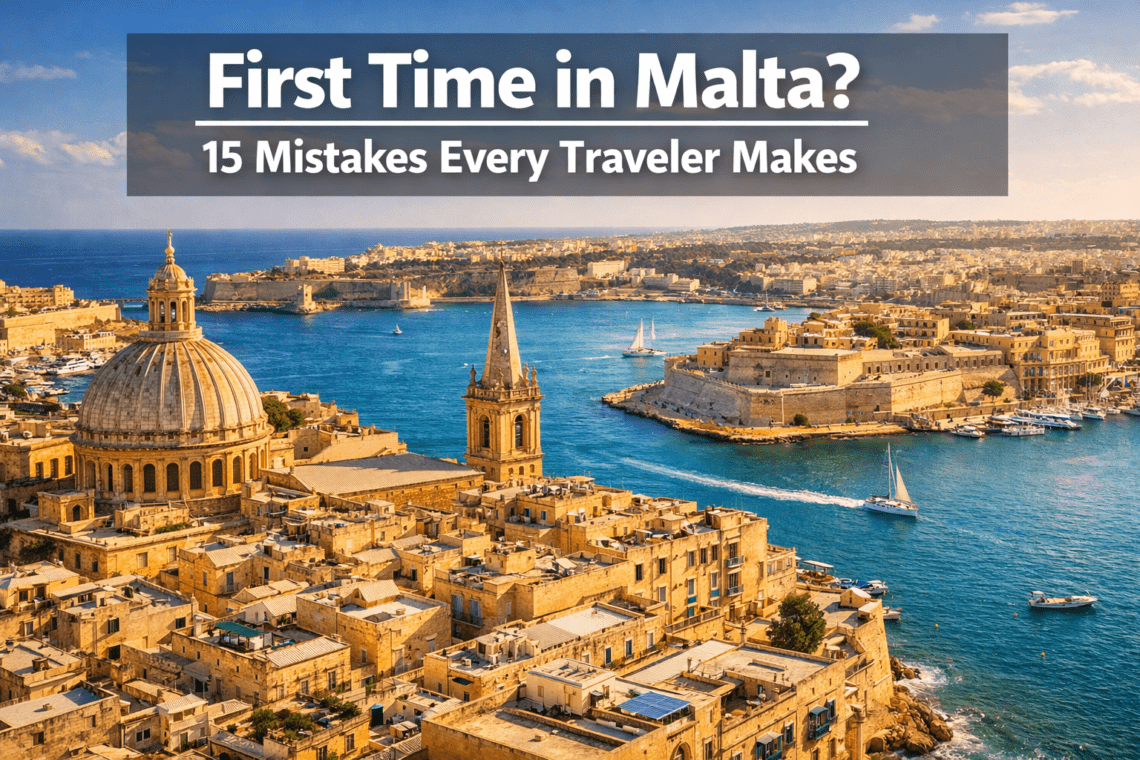
Quick Answer: Your first time in Malta can be genuinely spectacular — ancient cities, crystal-clear water, and some of the best food in the Mediterranean. But most first-timers make the same avoidable mistakes: underestimating travel times between islands, skipping Gozo, booking the wrong accommodation location, and showing up without cash. Fix those four things before you land and you’re already ahead of most visitors.
Key Takeaways
- Malta is tiny (316 km²) but surprisingly hard to get around without a plan — traffic and bus schedules catch most first-timers off guard.
- Valletta is the cultural heart, but Sliema and St. Julian’s offer better access to beaches and nightlife — choose your base based on your priorities.
- Gozo is a separate island and requires a ferry; most first-timers skip it and regret it.
- Malta’s peak summer season (July–August) means heat, crowds, and higher prices — spring and autumn are often better for first visits.
- Cash is still widely used, especially in markets, small restaurants, and village shops.
- Many churches require covered shoulders and knees — pack a light scarf.
- Malta recorded 235,772 tourist arrivals in January 2026 alone, up 21.4% year-over-year [1][4] — popular sites get genuinely crowded.
- Book accommodation in advance, especially between June and September.
- English is an official language in Malta, so communication is rarely a barrier.
- Renting a car gives you the most freedom, but driving on the left surprises many visitors.
Mistake #1: Underestimating How Long Getting Around Takes
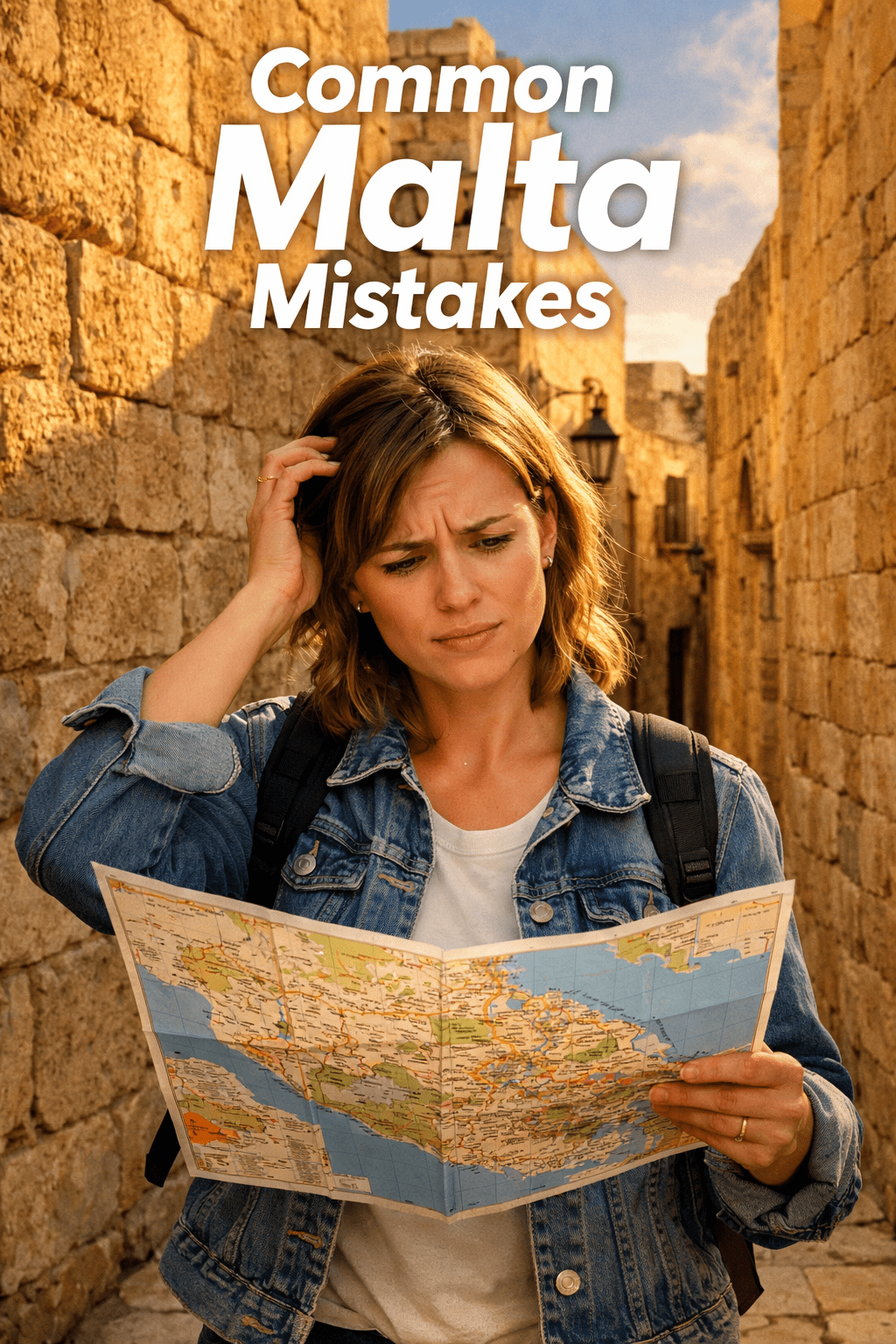
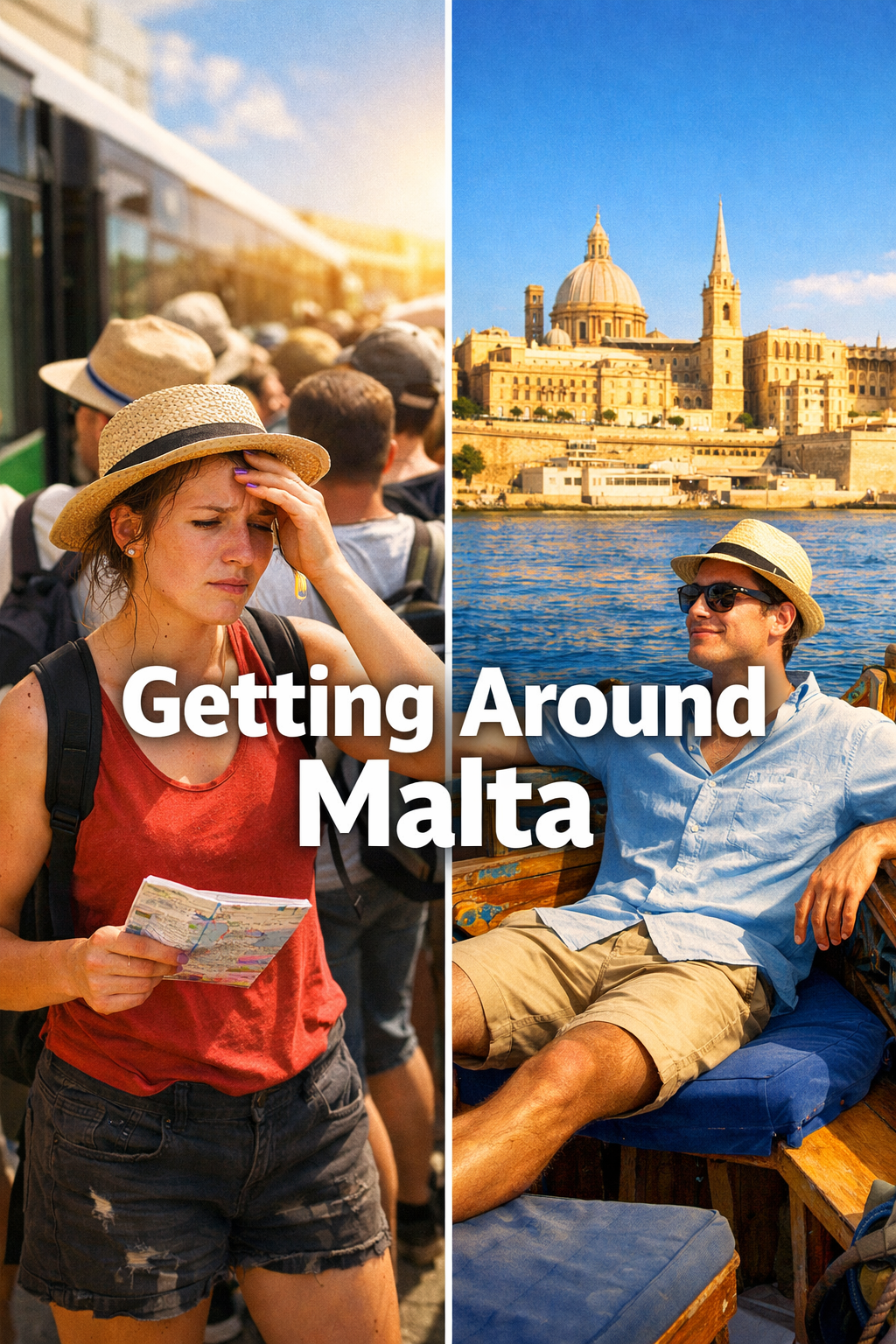
Malta is small, but that doesn’t mean travel is fast. The island’s road network is dense, traffic in and around Valletta and Sliema can be genuinely slow, and public buses — while cheap — run on schedules that don’t always match tourist priorities.
The fix: Budget at least 30–45 minutes for any bus journey, even ones that look short on a map. If you’re planning to visit multiple sites in a single day, consider renting a car or booking a half-day tour. Driving is on the left (Malta was a British colony), which surprises many European visitors.
Choose a car rental if: you want to explore rural Malta, visit multiple villages in one day, or travel to the ferry terminal for Gozo on your own schedule. Choose buses if you’re based in Sliema or Valletta and sticking to central areas.
Mistake #2: Skipping Gozo (The Biggest Regret of First-Time Malta Visitors)
Gozo is Malta’s quieter sister island, reachable by a 25-minute ferry from Ċirkewwa. Most first-timers either don’t know it exists or assume they don’t have time. Almost everyone who skips it wishes they hadn’t.
Gozo has a completely different pace — fewer tourists, better countryside, excellent diving, and the striking Azure Window site (now collapsed, but the surrounding coastline remains dramatic). The Citadella in Victoria is one of the most underrated historic sites in the entire Mediterranean.
The fix: Dedicate at least one full day to Gozo. Take the early morning ferry, rent a car or scooter on the island, and return on the evening ferry. If your budget allows, stay overnight — the island transforms when the day-trippers leave.
Mistake #3: Choosing the Wrong Base for Your First Time in Malta
Where you stay shapes your entire trip. First-timers often book in Valletta because it looks central on a map, or in Bugibba because it’s cheap. Both can work, but neither is ideal for everyone.
| Area | Best For | Watch Out For |
|---|---|---|
| Valletta | History lovers, culture, day trips | Limited nightlife, some areas quiet at night |
| Sliema | Shopping, beaches, ferry access | Busy, more urban feel |
| St. Julian’s | Nightlife, restaurants, younger crowd | Can be noisy |
| Mellieħa | Families, beaches, quieter pace | Farther from Valletta |
| Gozo (Victoria or Xlendi) | Peace, nature, diving | Requires ferry to reach Malta |
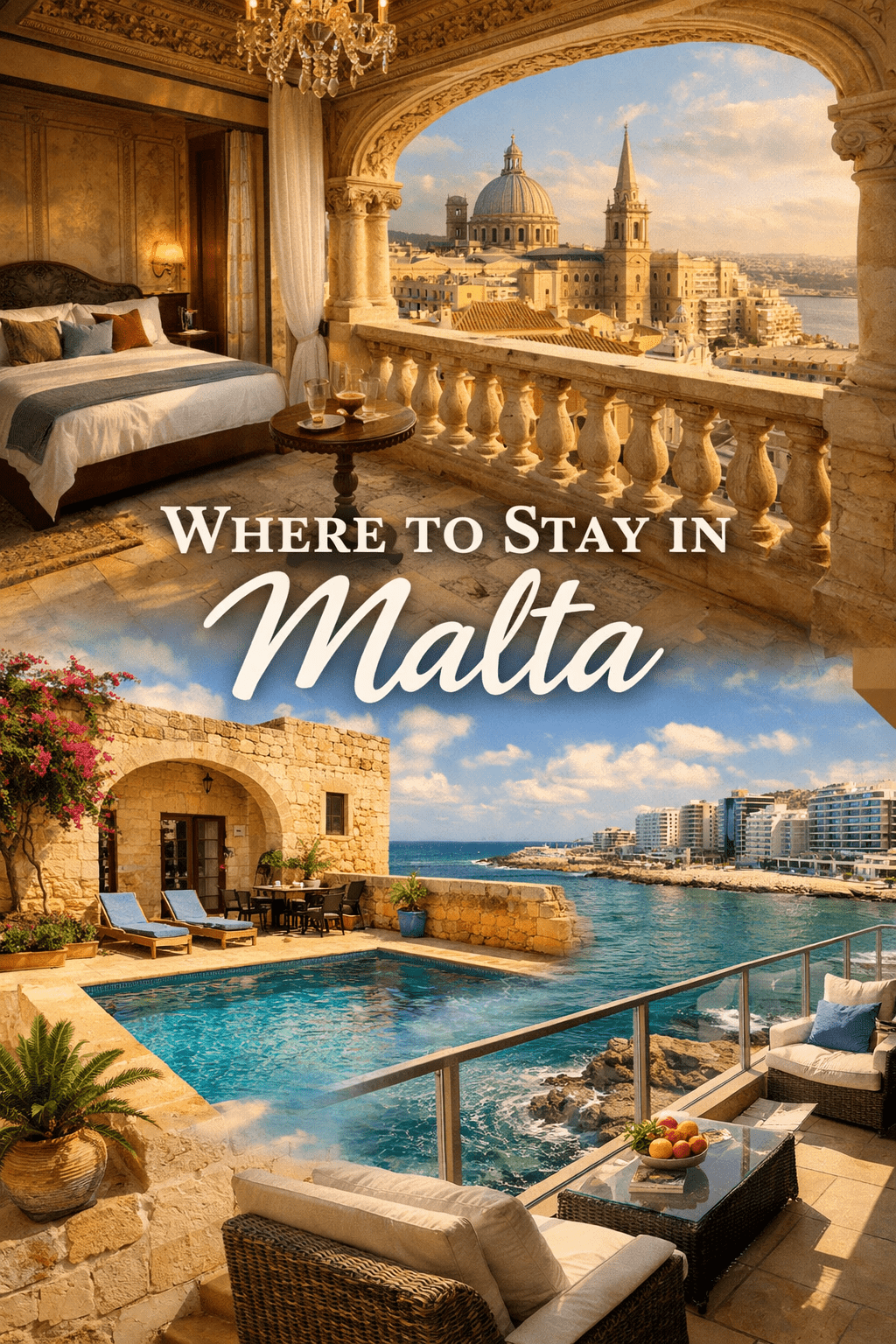
For most first-time visitors: Sliema or St. Julian’s offers the best balance of access, amenities, and atmosphere. Valletta is better if you’re primarily interested in history and don’t mind a quieter evening scene.
Boutique hotels inside Valletta’s historic palazzos are genuinely special — think carved stone balconies and rooftop views over the Grand Harbour. For a more relaxed vibe, Gozo farmhouses (converted rural properties with private pools) are a standout option that many repeat visitors swear by.
For more help planning where to stay, the Best Hotels in Athens Greece: First-Timer’s Guide offers a useful framework for comparing Mediterranean accommodation options by neighborhood.
Mistake #4: Not Carrying Cash
Malta uses the euro, and card payments are accepted in most hotels, larger restaurants, and shops. But many smaller restaurants, village bakeries, market stalls, and parish festas operate on cash only. Running out at the wrong moment is a common and easily avoidable problem.
The fix: Withdraw €100–€150 at the airport or a bank ATM on arrival (avoid airport currency exchange desks — the rates are poor). Keep smaller bills handy for buses, pastizzi shops, and market vendors.
Mistake #5: Ignoring the Heat and Sun
Malta sits at roughly the same latitude as North Africa. In July and August, midday temperatures regularly exceed 35°C (95°F), and the sun is intense. First-timers routinely underestimate this and spend a day or two recovering from sunburn or heat exhaustion instead of sightseeing.
The fix:
- Apply SPF 50 sunscreen every morning, even on cloudy days.
- Carry a reusable water bottle and refill it constantly.
- Plan outdoor sightseeing for early morning (before 10am) or late afternoon (after 4pm).
- Use the midday hours for lunch, museum visits, or a rest — locals do this for a reason.
If you’re visiting between October and May, the weather is much more forgiving for walking and exploring. Spring (April–May) is widely considered the best time for a first visit.
Mistake #6: Disrespecting Church Dress Codes
Malta is a deeply Catholic country and its churches — including the stunning St. John’s Co-Cathedral in Valletta — are active places of worship, not just tourist attractions. Turning up in shorts and a tank top will get you turned away at the door.
The fix: Pack a lightweight scarf or sarong that doubles as a shoulder cover. Wear or carry something that covers your knees when you’re planning to visit churches. This applies to all genders.
St. John’s Co-Cathedral is genuinely unmissable — it houses Caravaggio’s The Beheading of Saint John the Baptist, one of the largest paintings the artist ever made. Don’t miss it over a dress code issue.
Mistake #7: Only Visiting Valletta and Missing the Three Cities
Valletta gets most of the attention, and it deserves it — it’s a UNESCO World Heritage Site and one of the smallest capital cities in the world. But the Three Cities (Vittoriosa, Senglea, and Cospicua) sit directly across the Grand Harbour and are often completely skipped by first-timers.
They’re quieter, less polished, and more authentically Maltese. The waterfront in Vittoriosa has some of the best views back toward Valletta you’ll find anywhere. You can reach the Three Cities by the traditional dghajsa water taxi from Valletta’s Lower Barrakka area — a short, memorable crossing.
Mistake #8: Eating Only at Tourist-Facing Restaurants
Malta has a genuine food culture that most first-timers never discover because they eat at the restaurants closest to the main attractions. These tend to be overpriced and mediocre.
What to eat instead:
- Pastizzi — flaky pastry filled with ricotta or mushy peas, sold for cents at local pastizzeriji.
- Ftira — Maltese sourdough bread stuffed with tuna, capers, tomatoes, and olives.
- Braġjoli — beef olives in a rich tomato sauce, a traditional Maltese main course.
- Kinnie — Malta’s bitter orange soft drink, worth trying at least once.
Walk a few streets away from the main tourist drag in any town and prices drop noticeably. Village restaurants (especially in Marsaxlokk for seafood on Sunday mornings) offer some of the best meals on the island.
Mistake #9: Booking Too Little Time
Many first-timers treat Malta as a long weekend destination and find they’ve barely scratched the surface. Malta, Gozo, and the smaller island of Comino each deserve time. Add in the temples (Ħaġar Qim and Mnajdra are among the oldest freestanding structures on Earth), the Blue Grotto, Mdina, and the Three Cities, and a 3-night trip starts to feel rushed.
The fix: Plan for at least 5–7 nights on your first visit. This gives you time to explore Malta properly, spend a full day on Gozo, and still have a relaxed afternoon at a beach or two.
For comparison, see how other compact European destinations handle itinerary planning — the Lisbon Portugal Travel Guide: First Timer’s Guide 2026 covers a similar challenge of fitting a lot into a small city.
Mistake #10: Visiting Comino Without a Plan
The Blue Lagoon on Comino is one of the most photographed spots in Malta — shallow turquoise water, white limestone, and on a calm day, genuinely stunning. It’s also absolutely packed between June and September, with dozens of boat tours arriving simultaneously.
The fix: Go early (first ferry of the day) or visit in shoulder season (May or October). Alternatively, book a private boat charter that lets you arrive before the crowds and leave before the rush. If you visit in peak summer and expect a quiet paradise, you’ll be disappointed.
Mistake #11: Ignoring Malta’s Prehistoric Sites

Malta’s megalithic temples predate Stonehenge and the Egyptian pyramids. Ħaġar Qim and Mnajdra on the southern coast are extraordinary — and most first-timers walk right past them in favor of beaches and Valletta. That’s a genuine miss.
The fix: Pair a temple visit with the nearby Blue Grotto for an efficient half-day. The sites are well-maintained and the on-site museum provides good context. Go in the morning before tour buses arrive.
Mistake #12: Assuming Everything Is Walkable
Valletta itself is very walkable — it’s compact and flat enough. But Malta as a whole is not a walking destination. Villages are spread across the island, connected by roads rather than pedestrian paths. Attempting to walk between towns in summer heat is a common and exhausting mistake.
The fix: Use buses between towns, rent a car for flexibility, or book organized tours for sites that are harder to reach independently (like the temples or the Blue Grotto by boat).
Mistake #13: Not Booking Popular Sites in Advance
Malta’s tourism has grown significantly — January 2026 alone saw 235,772 arrivals, a 21.4% increase over the same month the previous year [1][4]. Popular sites like St. John’s Co-Cathedral and the Ħal Saflieni Hypogeum (an underground prehistoric burial site with strictly limited daily visitors) sell out regularly.
The fix: Book the Hypogeum weeks in advance — this is not an exaggeration. Book St. John’s Co-Cathedral tickets online to skip the queue. Check the Malta Tourism Authority website [2] for official booking information and updated visitor guidelines.
Mistake #14: Packing the Wrong Things
Malta’s climate and terrain call for specific packing choices that many first-timers get wrong. If you’re planning a trip to Europe more broadly, the 2 Weeks in Europe Spring Packing List for First-Timers is a useful starting point, but Malta has a few specific needs.
Malta-specific packing tips:
- Comfortable walking shoes with grip (Valletta’s streets are steep and can be slippery).
- A light layer for evenings, even in summer (sea breezes can be cool).
- Reef-safe sunscreen (Malta’s marine environment is protected).
- A church cover-up (scarf or lightweight trousers).
- A small daypack for beach days and day trips to Gozo.
Mistake #15: Not Learning a Few Words of Maltese
English is an official language and widely spoken — you won’t struggle to communicate. But Maltese people genuinely appreciate when visitors make even a small effort with the local language. A simple “Grazzi” (thank you) or “Bonġu” (good morning) goes a long way and tends to get you warmer service and more genuine interactions.
Maltese is a fascinating language — the only Semitic language written in the Latin alphabet — and locals are often delighted when visitors show any curiosity about it.
FAQ: First Time in Malta
Is Malta good for first-time travelers?
Yes. English is widely spoken, the island is safe, and it’s compact enough to navigate easily. The main challenges are transport logistics and summer heat — both manageable with a bit of planning.
How many days do I need in Malta for a first visit?
Five to seven nights is ideal. This gives you time to cover Malta’s main sites, spend a full day on Gozo, and still have some relaxed time at the beach or exploring villages.
What’s the best time of year to visit Malta for the first time?
April, May, October, and early November offer the best balance of good weather, manageable crowds, and lower prices. July and August are the busiest and hottest months.
Do I need a visa to visit Malta?
Malta is part of the Schengen Area. EU/EEA citizens don’t need a visa. Citizens of many other countries (including the US, UK, Canada, and Australia) can visit visa-free for up to 90 days. Check your specific country’s requirements before traveling.
Is Malta expensive?
Malta sits in the mid-range for European destinations. Budget travelers can get by on €60–€80 per day including accommodation; mid-range travelers typically spend €100–€150 per day. Eating local and using buses keeps costs down significantly.
Can I get around Malta without a car?
Yes, but it takes more time and planning. Malta’s bus network covers most of the island, but routes can be slow and infrequent in rural areas. For Gozo, you’ll need the ferry and either a rental car or scooter on the island.
Is Gozo worth visiting on a first trip to Malta?
Absolutely. Gozo is one of the highlights of any Malta trip — quieter, greener, and with a different atmosphere from the main island. At minimum, do a full day trip; overnight if you can.
What currency does Malta use?
Malta uses the euro (€). Cards are widely accepted in hotels and larger restaurants, but carry cash for markets, small eateries, and village shops.
Is Malta family-friendly?
Yes. Malta has good beaches, calm waters in many bays, and plenty of historical sites that engage older children. Mellieħa Bay is one of the best family beach options on the island.
What’s the most common mistake first-time visitors to Malta make?
Underestimating travel times and skipping Gozo. Both are easy to fix with a bit of advance planning.
Conclusion
Your first time in Malta has the potential to be one of your best trips. The island packs an extraordinary amount into a small space — prehistoric temples, a UNESCO-listed capital, world-class diving, and food that most visitors don’t expect to be this good.
The mistakes in this guide are all avoidable. Book the Hypogeum early, plan a full day on Gozo, pick your accommodation base based on your priorities, carry some cash, and respect the church dress codes. Do those things and you’re set up for a genuinely great trip.
Your next steps:
- Decide on your travel dates — spring or autumn for the best experience.
- Book accommodation in your preferred area (Sliema or St. Julian’s for most first-timers).
- Reserve the Ħal Saflieni Hypogeum as soon as your dates are confirmed.
- Plan your Gozo day trip for mid-trip, not as an afterthought.
- Download the Tallinja app for Malta’s bus network before you land.
If you’re planning a broader Mediterranean trip, our guides to what to see in Athens Greece beyond the Acropolis and Italy’s Amalfi Coast pair well with a Malta visit. And if you’re still deciding between European island destinations, the 11 cheap islands to visit for budget dream vacations guide offers useful comparisons.
Malta rewards the traveler who does a little homework. You’ve already started.
References
[1] Inbound Tourism Registers Strong Growth In January 2026 – https://thejournal.mt/inbound-tourism-registers-strong-growth-in-january-2026/
[2] Statistics – https://mta.com.mt/statistics/
[3] Visitor Arrivals – https://www.ceicdata.com/en/indicator/malta/visitor-arrivals
[4] Malta Tourist Arrivals Up 21 In Jan 2026 1351843 – https://centreforaviation.com/news/malta-tourist-arrivals-up-21-in-jan-2026-1351843