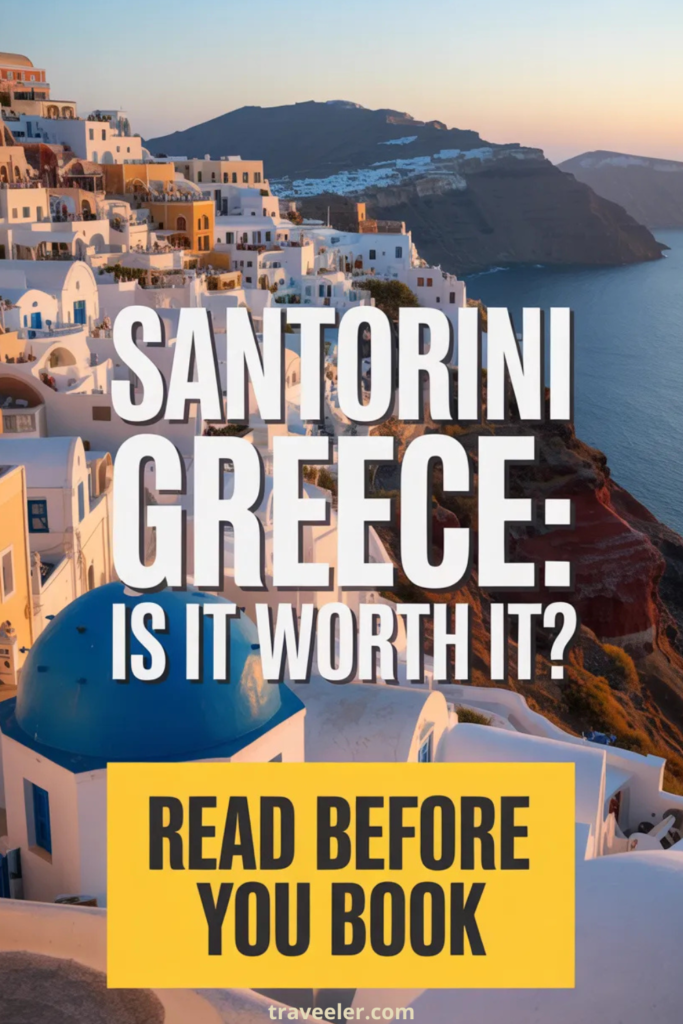
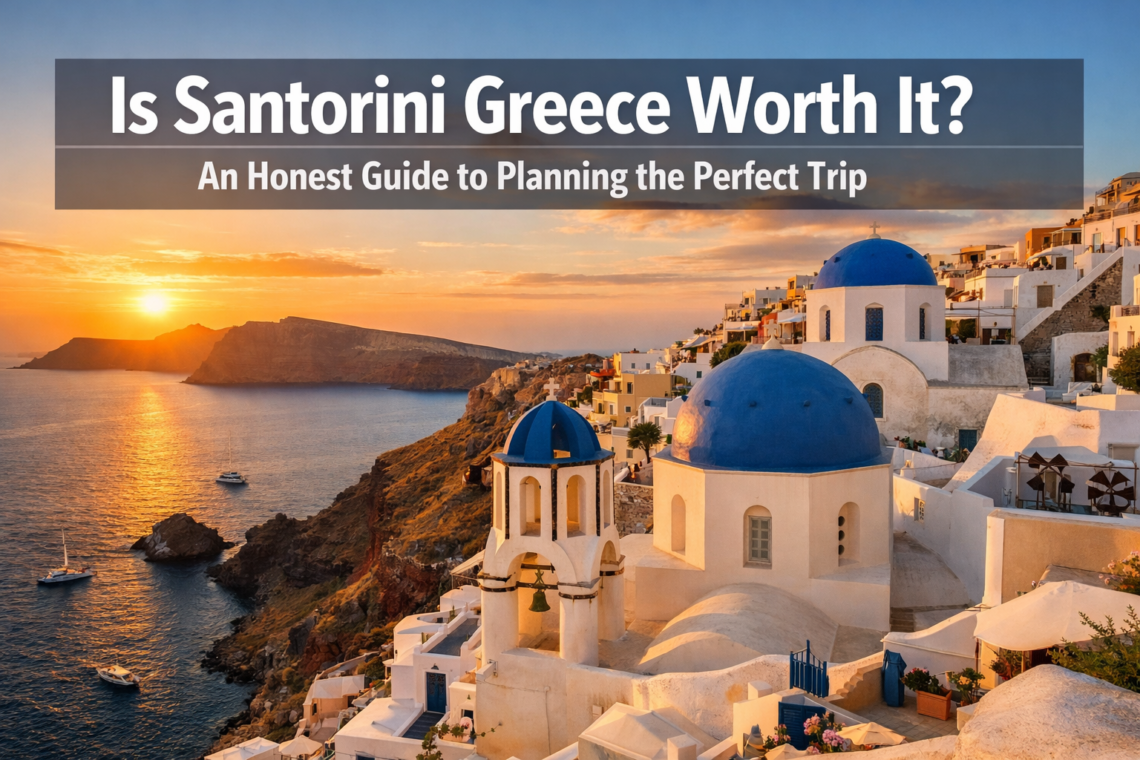
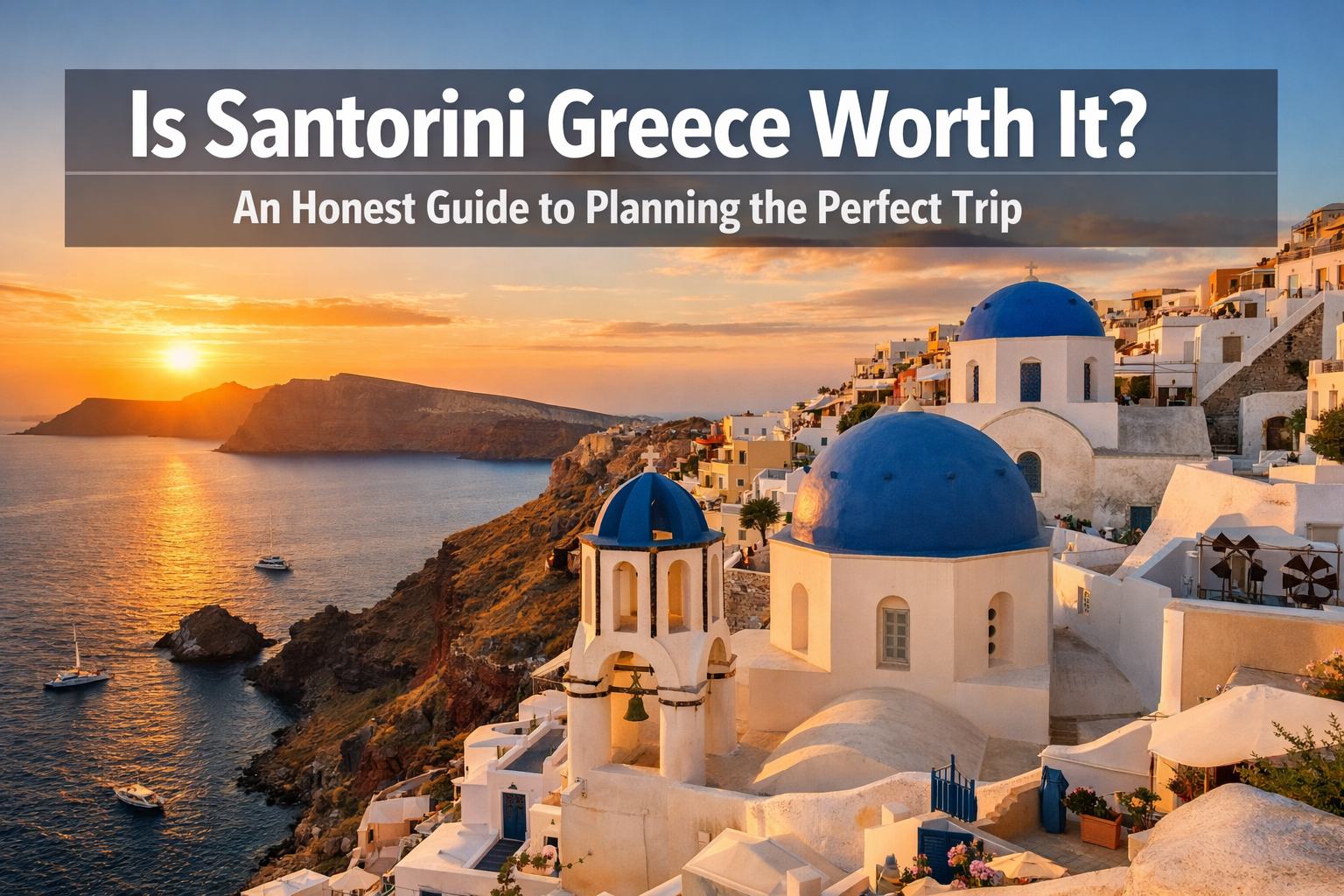
You’re standing on a cliff edge, watching the sun melt into the Aegean Sea while the iconic white-washed buildings of Santorini glow golden around you. It’s the Instagram shot you’ve dreamed about for years. But then reality hits—you’re shoulder-to-shoulder with hundreds of other tourists, you just paid €25 for a mediocre gyro, and your hotel room cost more than your monthly car payment. So, is Santorini Greece worth it, or is it just an overpriced, overcrowded tourist trap?
I’ve wrestled with this question myself, and after diving deep into the latest developments on this stunning Greek island, I can tell you that 2026 presents a unique opportunity. Recent changes in tourism regulations, pricing adjustments, and visitor patterns have transformed the Santorini experience in ways that might surprise you. Whether you’re a budget-conscious traveler or someone ready to splurge on a once-in-a-lifetime trip, this honest guide will help you decide if Santorini deserves a spot on your travel bucket list.
Key Takeaways
- 2026 offers better value than recent years: Hotel prices dropped 20-23% following 2025’s earthquake-related tourism decline, creating competitive pricing especially outside peak summer months[1]
- Crowds have significantly decreased: Visitor numbers fell from 2.05 million to 1.7 million (January-August 2025), making popular sites like Oia and Fira more accessible and enjoyable[7]
- New regulations improve the experience: Daily cruise passenger caps of 8,000 and expanded protected areas (now covering 67.3% of the island) are reducing overtourism[4]
- Shoulder seasons are the sweet spot: April-May and September-October offer the best balance of weather, pricing, and crowd levels for experiencing Santorini
- Infrastructure challenges remain: Winding roads, limited parking, and walkability issues persist despite recent improvements[1]
Why People Question If Santorini Greece Is Worth It
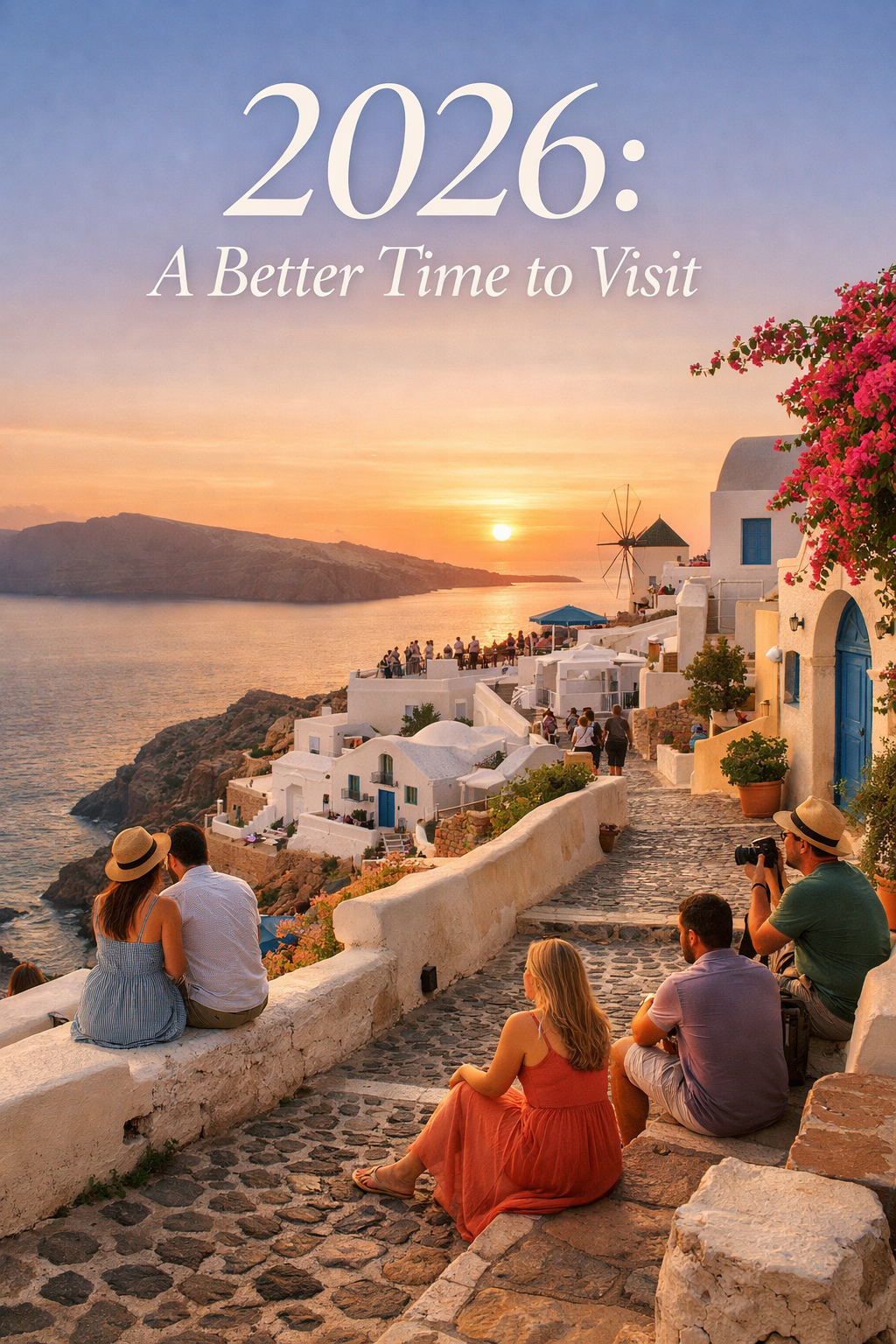
Let’s address the elephant in the room: Santorini has developed quite the reputation. For years, travelers have shared stories of €40 cocktails, impossible-to-navigate crowds, and experiences that felt more like a photo marathon than an actual vacation. These concerns aren’t entirely unfounded.
The Overtourism Problem (And How It’s Improving)
Until recently, Santorini was buckling under the weight of mass tourism. In 2023, the island welcomed a staggering 3.4 million visitors annually—creating a tourist-to-resident ratio exceeding 100:1[1]. Imagine trying to enjoy a romantic sunset when you’re literally fighting for elbow room!
The good news? Things are changing. From January to August 2025, Santorini hosted 1.7 million tourists compared to 2.05 million during the same period the previous year[7]. That’s a notable decrease that’s making a real difference on the ground.
“The alleys of Oia and Fira are less saturated during the day, the cable car is more accessible, and the general atmosphere is more breathable for non-cruise passengers.”[4]
The Greek government has implemented strict cruise passenger controls with a daily cap of 8,000 visitors beginning in 2025[4]. They’ve also introduced a €20 cruise passenger tax to fund infrastructure repairs[1]. These measures are already improving the quality of experience for overnight visitors.
The Price Tag Reality
I won’t sugarcoat it—Santorini isn’t cheap. This volcanic island imports most of its goods, driving up costs for everything from groceries to accommodations. The limited land area and high demand have historically created a perfect storm for premium pricing.
However, 2026 presents a unique pricing opportunity. Following the March 2025 earthquake swarm (which caused no structural damage but did spook some tourists), hotels implemented 20-23% price reductions to recover bookings[1]. These more competitive prices, especially outside the July-August peak season, mean you’re getting better value than you would have in 2023-2024[4].
Infrastructure Challenges You Should Know About
Santorini’s dramatic cliff-side geography is both its greatest asset and its biggest logistical challenge. The island’s winding roads, limited parking, and walkability issues can turn a simple 600-meter walk into a 45-minute journey during high season[1].
The good news is that recent visitor reductions have provided temporary relief from these bottlenecks. Plus, the new urban planning scheme finalized in 2026 increases protected areas from 21.8% to 67.3% of Santorini’s territory while reducing areas designated for tourism development by nearly 60%[4]. This shift prioritizes sustainability over expansion.
If you’re planning a European adventure and want to compare experiences, check out our guide to Lisbon Portugal, which offers a different Mediterranean vibe with its own unique charm.
What Makes Santorini Special (The Honest Truth)
Despite the challenges, there’s a reason Santorini remains one of the most sought-after destinations in the Aegean. Let me break down what actually makes this island extraordinary.
🌅 The Caldera Views Are Genuinely Unmatched
I’ve traveled to dozens of coastal destinations, and I can honestly say that Santorini’s caldera is in a league of its own. This massive volcanic crater, filled with deep blue sea and surrounded by dramatic cliffs topped with white-washed buildings, creates a landscape that feels almost otherworldly.
The sunset views from Oia have become legendary for good reason. Yes, they’re crowded and yes, they’re photographed constantly—but there’s something magical about watching the sun sink into the Aegean while the clifftop villages glow golden around you. It’s one of those rare experiences that actually lives up to the hype.
🍷 Volcanic Wines and Culinary Excellence
Santorini’s volcanic soil produces some of Greece’s most distinctive wines, particularly the crisp, mineral-rich Assyrtiko white wine. The island’s wineries offer tastings with caldera views that combine two of life’s greatest pleasures: excellent wine and stunning scenery.
The culinary scene has also reached new heights. Santorini has been included in the 2026 MICHELIN Guide alongside Athens and Thessaloniki, reflecting upgraded culinary and hospitality standards[4]. This recognition isn’t just about fancy restaurants—it represents a broader commitment to quality across the island’s dining scene.
From traditional tavernas serving fresh seafood and fava (yellow split pea puree) to innovative restaurants reimagining Greek cuisine, the food alone can justify a visit. Just be prepared to pay premium prices at caldera-view establishments.
🏖️ Unique Beaches Unlike Anywhere Else
Forget white sand—Santorini’s volcanic origins created beaches in shades of red, black, and even white volcanic pebbles. Red Beach near Akrotiri features dramatic red cliffs and matching sand, while Perissa and Kamari offer long stretches of black sand that absorb the sun’s heat (bring sandals!).
These beaches aren’t just geological curiosities; they’re genuinely beautiful and far less crowded than the clifftop villages. Swimming in crystal-clear water surrounded by volcanic rock formations feels like discovering a secret corner of the Mediterranean.
🏛️ Ancient History and Archaeological Treasures
Beyond the Instagram-worthy architecture, Santorini holds fascinating historical significance. The ancient city of Akrotiri, often called the “Minoan Pompeii,” was preserved under volcanic ash from the massive eruption around 1600 BCE. Walking through this remarkably well-preserved Bronze Age settlement offers a glimpse into sophisticated ancient civilization.
The archaeological site at Ancient Thera, perched high on Mesa Vouno mountain, provides both historical intrigue and panoramic island views. These cultural experiences add depth to a trip that could otherwise feel superficially focused on sunsets and selfies.
Similar to planning what to see in Rome, balancing Santorini’s historical sites with its natural beauty creates a richer travel experience.
When Is Santorini Greece Worth It? Timing Your Visit
The answer to “is Santorini Greece worth it” heavily depends on when you visit. Timing can literally make or break your experience and your budget.
The Sweet Spot: Shoulder Season Magic ✨
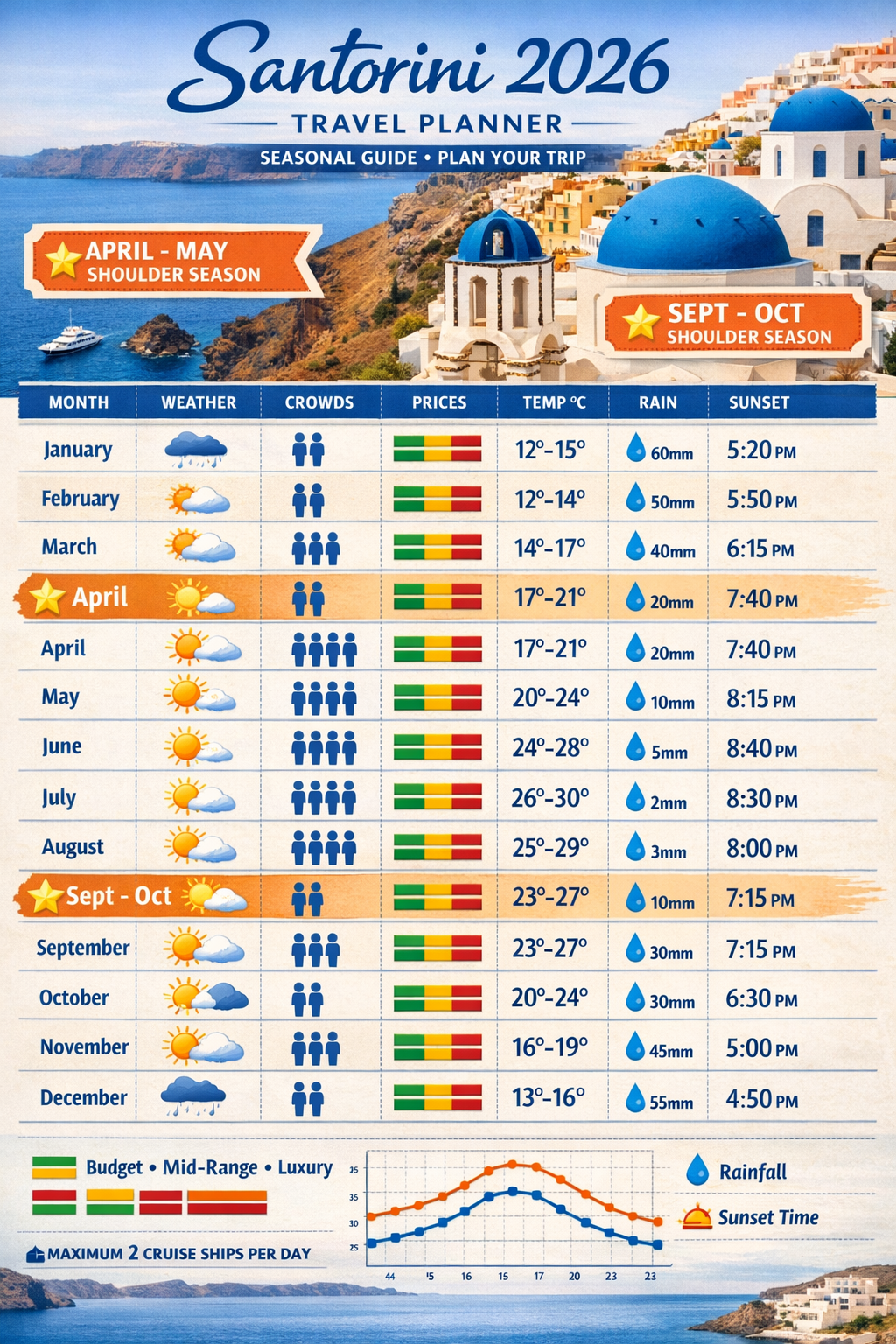
April through May and September through October represent the absolute best times to visit Santorini. During these shoulder seasons, you’ll enjoy:
- Moderate temperatures (18-25°C/64-77°F) perfect for exploring
- Significantly lower prices on accommodations and flights
- Manageable crowd levels at popular attractions
- Open businesses (unlike winter months when many close)
- Beautiful weather with minimal rainfall
I particularly love late April and early May when wildflowers bloom across the island, adding splashes of color to the white-and-blue landscape. September offers warm sea temperatures perfect for swimming, while October provides excellent conditions for wine tasting as harvest season concludes.
Summer: Peak Season Pros and Cons
July and August bring guaranteed sunshine and the full energy of Mediterranean summer—along with the highest prices and biggest crowds. If you must visit during peak season:
- Book accommodations 6-9 months in advance
- Expect to pay premium prices for everything
- Plan activities for early morning or late evening to avoid midday crowds
- Consider staying in quieter villages like Pyrgos or Megalochori instead of Oia or Fira
- Make restaurant reservations well ahead
The advantage? Every business is open, the atmosphere is electric, and you’ll have perfect beach weather. Just know you’re trading tranquility for guaranteed sunshine.
Winter and Early Spring: Budget Option with Trade-offs
November through March offers rock-bottom prices and virtually no crowds, but many hotels, restaurants, and tour operators close for the season. The weather can be unpredictable with occasional rain and wind.
This period works well if you’re primarily interested in the landscape and don’t mind limited dining options. It’s definitely worth considering for budget-conscious travelers who can be flexible.
2026-Specific Considerations
The ETIAS (Schengen area authorization) requirement took effect in 2026, costing approximately €20 and valid for three years for entry to Greece[4]. Factor this into your budget and apply well before your trip.
Also note that while Santorini showed a small decrease in pre-bookings for 2026[3], boutique establishments are offering wider availability than in previous years[4]. This means you have more flexibility in booking, especially if you’re targeting shoulder season dates.
If you’re considering other European destinations, our 7-day South of France itinerary offers another Mediterranean option with different timing considerations.
How to Make Santorini Worth It: Practical Planning Tips
Deciding that Santorini is worth visiting is just the first step. Here’s how to actually make it happen without breaking the bank or your sanity.
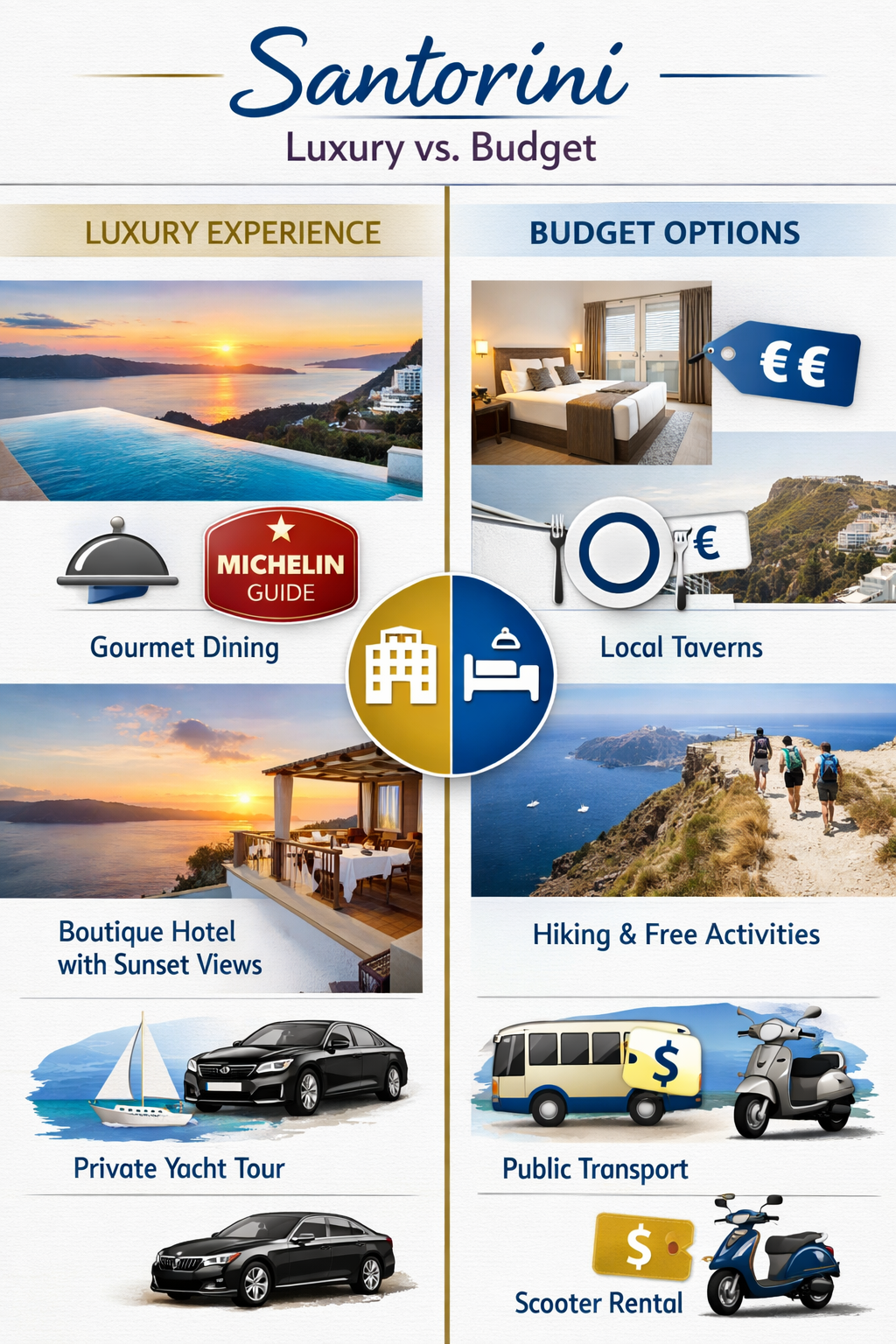
💰 Budget Strategies That Actually Work
Accommodation hacks:
- Stay in Fira instead of Oia for similar caldera views at 30-40% lower prices
- Consider villages like Pyrgos, Megalochori, or Emporio for authentic experiences and budget savings
- Book directly with hotels after comparing prices—many offer better rates than booking platforms
- Look for studios with kitchenettes to save on dining costs
Dining smartly:
- Eat lunch as your main meal when restaurants offer better value
- Venture away from caldera-view establishments for authentic tavernas with local prices
- Shop at local markets and bakeries for breakfast and snacks
- Reserve one or two splurge meals rather than overspending daily
Transportation savings:
- Rent an ATV or scooter (€20-30/day) instead of relying on expensive taxis
- Use the local bus system (€1.80-2.50 per trip) for major routes
- Share taxi costs with other travelers when possible
- Walk between nearby villages during cooler parts of the day
🗺️ Location Matters: Where to Stay
Your accommodation location dramatically impacts your experience:
Oia: Most expensive, most crowded, best sunsets, postcard-perfect views
Fira: Central location, good value, excellent restaurants, lively atmosphere
Imerovigli: Quieter than Fira/Oia, stunning views, romantic vibe, limited dining
Pyrgos: Authentic village life, affordable, panoramic views, requires transportation
Kamari/Perissa: Beach access, budget-friendly, less scenic, good for families
I recommend spending at least one night in a caldera-view room to experience the magic, then moving to a more affordable location for the rest of your stay. This balanced approach lets you enjoy Santorini’s signature views without draining your entire travel fund.
🚗 Getting Around the Island
Santorini’s compact size (just 76 square kilometers) makes it theoretically easy to explore, but the terrain and crowds create challenges:
Best transportation options:
- Rental car or ATV: Maximum flexibility, essential for reaching remote beaches and villages
- Local buses: Economical but limited schedules and can be crowded
- Taxis: Expensive and often unavailable during peak times
- Private transfers: Convenient but costly
- Walking: Great for exploring individual villages, impractical for longer distances
The winding roads can be intimidating for nervous drivers, and parking in popular areas remains challenging despite reduced crowds[1]. If you’re uncomfortable driving, consider booking a private tour or using a combination of buses and occasional taxis.
📱 Essential Bookings and Reservations
Book in advance:
- ✅ Accommodations (especially for caldera views)
- ✅ Sunset dinner reservations at popular restaurants
- ✅ Wine tours and tastings
- ✅ Catamaran cruises
- ✅ Car/ATV rentals during peak season
Can book closer to arrival:
- Archaeological site visits
- Most lunch spots
- Beach activities
- General sightseeing
🎯 Realistic Itinerary Expectations
For a first-time visit, I recommend 4-5 days to properly experience Santorini without rushing. This allows time to:
- Explore Oia, Fira, and Imerovigli thoroughly
- Visit 2-3 wineries
- Relax at different beaches
- See archaeological sites
- Enjoy sunset experiences
- Have downtime to simply soak in the atmosphere
A 3-day minimum can work if you’re selective about activities, while 7+ days suits those who want to deeply explore every village, beach, and hidden corner at a leisurely pace.
Similar to planning an Edinburgh itinerary, balancing must-see attractions with spontaneous discoveries creates the most memorable experiences.
The Verdict: Is Santorini Greece Worth It in 2026?
After examining all the factors—the costs, the crowds, the changes, and the undeniable beauty—here’s my honest answer: Yes, Santorini is worth it in 2026, especially if you plan strategically.
Who Should Definitely Visit
Santorini is absolutely worth it if you:
- ✅ Appreciate dramatic natural landscapes and unique geology
- ✅ Value exceptional wine and culinary experiences
- ✅ Can visit during shoulder seasons (April-May or September-October)
- ✅ Have a moderate-to-flexible budget (or can save specifically for this trip)
- ✅ Want to experience iconic Mediterranean beauty firsthand
- ✅ Enjoy photography and visual aesthetics
- ✅ Are celebrating a special occasion (honeymoon, anniversary, milestone birthday)
The combination of reduced crowds, competitive pricing, and improved regulations makes 2026 an especially good year to visit[4]. You’re getting a better version of Santorini than existed during the overtourism peak of 2023.
Who Might Want to Reconsider
Santorini might not be worth it if you:
- ❌ Have an extremely tight budget with no flexibility
- ❌ Hate crowds and can only travel in July-August
- ❌ Prefer off-the-beaten-path destinations
- ❌ Have mobility issues (the terrain is very challenging)
- ❌ Want extensive sandy beaches and water sports
- ❌ Prefer authentic local culture over tourist-oriented experiences
- ❌ Are looking for a party/nightlife destination
There are many beautiful Greek islands that offer better value and more authentic experiences if Santorini’s particular combination of attributes doesn’t align with your travel style. Islands like Naxos, Paros, or Milos provide stunning Cycladic beauty with fewer tourists and lower prices.
The 2026 Advantage
Christina Dimopoulou, manager of Fyralia Hotel, acknowledged that the island “is definitely in a decline compared to last season”[2] but recognized new regulatory approaches as necessary for long-term sustainability. This temporary dip in tourism creates a window of opportunity for travelers.
What makes 2026 special:
- 🎯 Better prices: 20-23% hotel reductions from peak years[1]
- 🎯 Fewer crowds: Significant visitor decrease creating more enjoyable experiences[7]
- 🎯 Improved infrastructure: New regulations protecting 67.3% of the island[4]
- 🎯 Quality focus: Michelin Guide recognition raising culinary standards[4]
- 🎯 Sustainable approach: Moratorium on new construction preserving island character[4]
The shift from mass tourism toward quality-focused experiences means you’re more likely to have the Santorini experience you’ve dreamed about rather than the overcrowded nightmare some travelers encountered in previous years.
Making It Worth Every Euro
To maximize value from your Santorini trip:
- Visit during shoulder season for the best balance of weather, crowds, and pricing
- Mix luxury and budget by splurging selectively while saving on everyday expenses
- Stay in multiple locations to experience different perspectives of the island
- Book key experiences in advance but leave room for spontaneity
- Venture beyond Oia and Fira to discover quieter villages and authentic moments
- Focus on experiences over Instagram shots to create genuine memories
Remember that Santorini offers something genuinely unique. While you can find beautiful beaches, excellent wine, and charming villages elsewhere, the specific combination of volcanic landscapes, caldera views, and Cycladic architecture exists nowhere else on Earth.
Conclusion: Planning Your Perfect Santorini Trip
So, is Santorini Greece worth it? For most travelers who plan thoughtfully and visit at the right time, absolutely yes. The island’s extraordinary beauty, improved crowd management, and current pricing opportunities create conditions for an exceptional Mediterranean experience in 2026.
The key is approaching Santorini with realistic expectations and smart planning. This isn’t a budget backpacker destination, nor is it an undiscovered paradise. It’s a world-famous island that’s learning to balance tourism with sustainability—and you can benefit from visiting during this transitional period.
Your Next Steps
Ready to make Santorini happen? Here’s your action plan:
- Choose your dates: Target April-May or September-October for optimal conditions
- Set a realistic budget: Plan for €150-300 per day depending on your style
- Book accommodations early: Secure caldera-view rooms 4-6 months ahead
- Apply for ETIAS: Get your Schengen authorization sorted (€20, valid 3 years)[4]
- Research activities: Identify must-do experiences and book wine tours/cruises
- Plan your itinerary: Balance popular attractions with off-the-beaten-path discoveries
- Arrange transportation: Reserve car/ATV rentals if visiting during peak periods
The question isn’t really whether Santorini is worth it—it’s whether you’re ready to experience one of the Mediterranean’s most iconic destinations during a uniquely advantageous time. With reduced crowds, competitive pricing, and improved sustainability measures, 2026 offers a version of Santorini that’s closer to the dream than the nightmare some travelers have encountered in recent years.
Whether you’re planning a romantic getaway, a milestone celebration, or simply fulfilling a long-held travel dream, Santorini can deliver an unforgettable experience. Just approach it with open eyes, realistic budgets, and flexible expectations, and you’ll likely return home convinced that yes, it was absolutely worth it.
For more European travel inspiration, explore our guides to other incredible destinations like the South of France or Lisbon, each offering their own unique Mediterranean magic.
References
[1] Santorini Is No Longer A Paradise Destination News15285 – https://www.tourism-review.com/santorini-is-no-longer-a-paradise-destination-news15285
[2] Santorini Tourism Drops Following Earthquakes But Demand Stays Strong – https://www.travelmarketreport.com/cruises/articles/santorini-tourism-drops-following-earthquakes-but-demand-stays-strong
[3] Explosion In Direct Hotel Bookings For 2026 Strong Demand For The Festive Period As Well – https://money-tourism.gr/en/explosion-in-direct-hotel-bookings-for-2026-strong-demand-for-the-festive-period-as-well/
[4] Travel Santorini 2026 New – https://www.zigzagonearth.com/travel-santorini-2026-new/
[5] 54222 Wtm Santorini Negative Start To 2026 From The British Market – https://tornosnews.gr/en/businesses/markets/54222-wtm-santorini-negative-start-to-2026-from-the-british-market.html
[7] passport.news – https://passport.news/article/1045