
Last updated: October 24, 2026
Edinburgh in December drops below freezing on plenty of nights, yet most visitors still show up wearing one heavy coat and nothing else. That’s the wrong strategy. Packing for Edinburgh in winter with just a carry-on means thinking in layers, not bulk, and I learned that the hard way after lugging a parka through security that I only wore twice.
This guide breaks down exactly what to pack, how many layers you actually need, and which pieces pull double duty so your bag stays under the limit and you stay warm.
Quick Answer
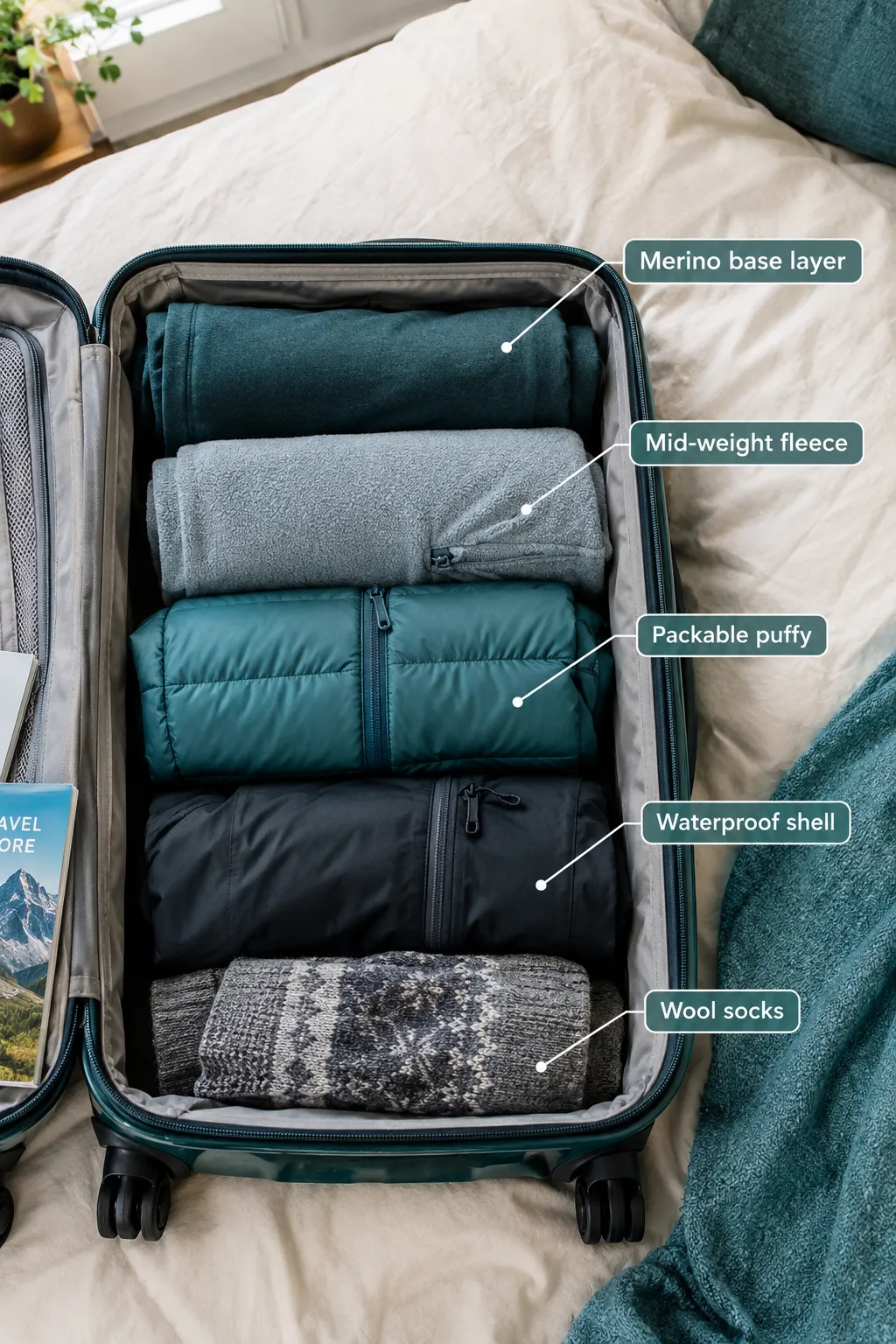
Pack four to five thin layers instead of one thick coat: a merino base layer, a fleece or light wool mid layer, a packable puffy, and a waterproof shell. Add wool socks, a waterproof boot, and a hat, scarf, and gloves set. This combo handles Edinburgh’s 34 to 45°F (1 to 7°C) winter range, the wind off the Firth of Forth, and sudden rain, all while fitting in a carry-on.
Key Takeaways
- Edinburgh winters hover around 34-45°F (1-7°C), but wind chill makes it feel colder, per worldweatheronline.
- Four to five light layers beat one bulky coat for warmth and packability.
- Merino wool compresses smaller and resists odor better than synthetic base layers.
- A packable puffy jacket can compress to the size of a water bottle.
- Waterproof boots matter more than fashion boots on icy cobblestones.
- Skip compression bags unless your bag is genuinely tight on space.
- Buying winter gear in Edinburgh is possible but pricier than packing smart.
- The biggest mistake is packing one heavy coat and skipping the layering system entirely.
What’s the actual temperature in Edinburgh in winter
Edinburgh’s winter temperatures typically sit between 34 and 45°F (1 to 7°C) from December through February, rarely dropping far below freezing for long stretches. The real challenge isn’t the thermometer. It’s the wind and damp.
According to VisitScotland, winter weather in the city brings a mix of crisp dry days and sudden wind-driven rain, especially near the castle and coastal areas. Scotland’s climate has also trended toward milder but wetter winters in recent years, which means fewer brutal freezes but more unpredictable showers.
What actually matters for comfort:
- Wind chill off the Firth of Forth can make 40°F feel closer to 30°F
- Damp air penetrates clothing faster than dry cold
- Daylight runs short, around 8 hours in late December
Edge case: if you’re hiking Arthur’s Seat or walking the coastline, add 5-10 degrees of perceived cold from wind exposure, even on a clear day.
How many layers do you really need for Edinburgh winter
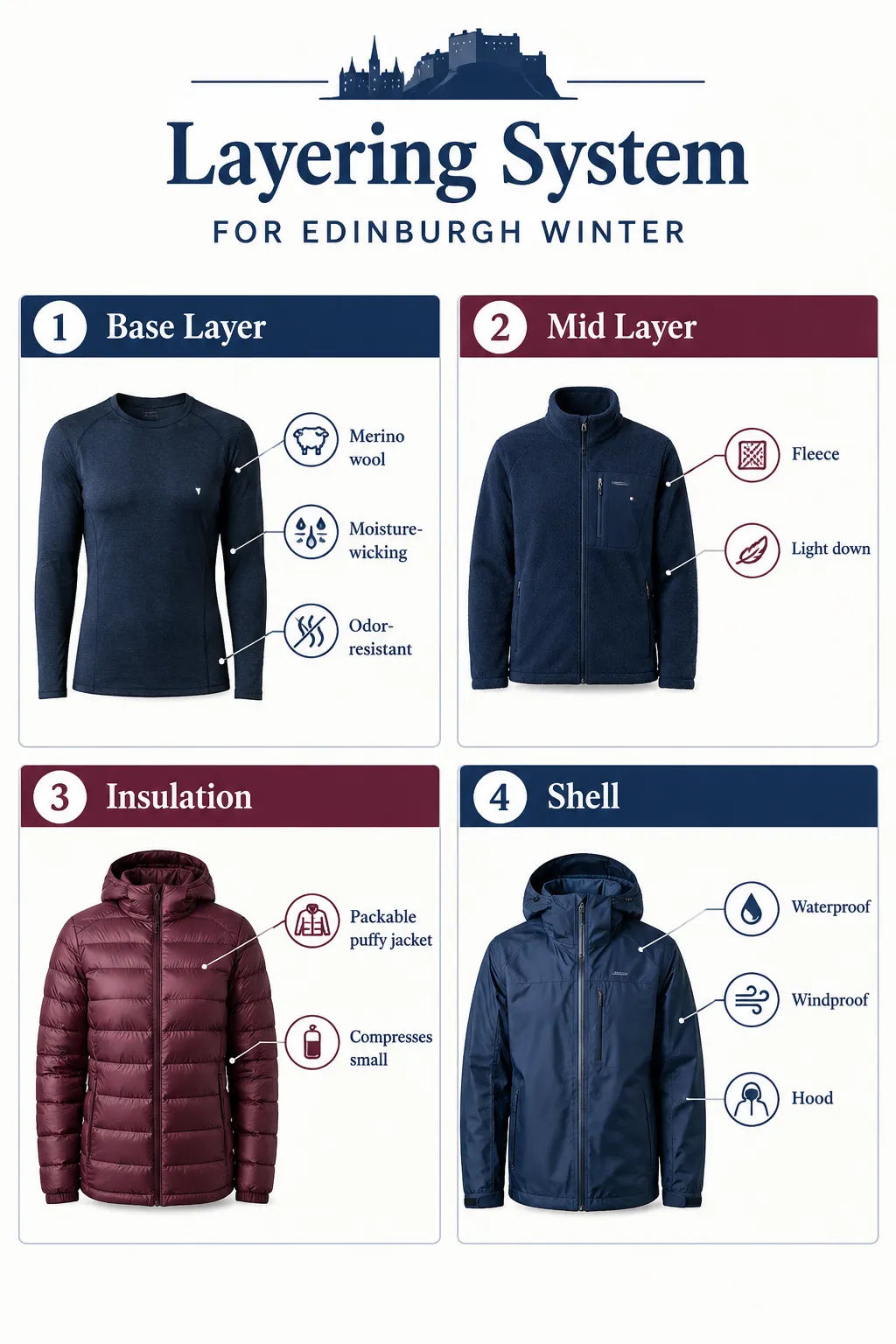
Four layers covers nearly every day in Edinburgh winter: a base layer, a mid layer, an insulating layer, and a weatherproof shell. Five layers only if you’re out before sunrise or after dark in open wind.
Here’s the breakdown:
- Base layer – merino wool or synthetic long sleeve top, moisture-wicking
- Mid layer – fleece pullover or lightweight wool sweater
- Insulating layer – packable puffy jacket or vest
- Shell layer – waterproof, windproof jacket with a hood
- Optional extra – a thin thermal if you run cold or plan early morning walks
Official local guidance consistently points to layering plus a proper winter jacket rather than one single heavy coat, since Edinburgh’s weather shifts within a single day (edinburgh.org).
Choose five layers if you’re visiting in January, doing early castle tours, or walking coastal paths at Portobello Beach. Choose four if you’re mostly sightseeing midday around the Royal Mile and ducking into pubs and museums.
Best fabrics for layering that pack small in a carry-on
Merino wool and technical synthetics pack smallest and perform best in Edinburgh’s damp cold. Cotton is the one fabric to avoid entirely, since it holds moisture and stays cold once wet.
Fabric priority list:
- Merino wool: warm even when damp, resists odor, compresses well
- Synthetic fleece: lightweight, dries fast, decent insulation for the bulk
- Down or synthetic puffy fill: best warmth-to-weight ratio, compresses tiny
- Nylon or Gore-Tex shells: blocks wind and rain without major bulk
Avoid heavy cotton sweaters and jeans as your main layers. They’re bulky, slow to dry, and offer little insulation once wet, which happens often given Edinburgh’s rain patterns.
Merino wool vs synthetic base layers which one packs better
Merino wool packs smaller for multi-day wear because it resists odor, letting you rewear it two or three times before washing. Synthetic base layers dry faster but need washing sooner.
| Feature | Merino Wool | Synthetic |
|---|---|---|
| Packed size | Smaller per wear | Slightly bulkier over time |
| Odor resistance | Excellent | Fair |
| Dry time | Slower | Fast |
| Cost | Higher | Lower |
| Best for | 5+ day trips | Quick trips, active days |
Choose merino if you’re traveling a week or more and want fewer pieces. Choose synthetic if you’re doing heavy outdoor activity like Arthur’s Seat hikes and need fast drying.
Do I need a heavy coat or can layers replace it
Layers can fully replace a heavy coat for most Edinburgh winter trips, and they pack far smaller. The exception is extended outdoor time in January’s coldest stretches, where a proper insulated coat still helps.
A packable puffy plus a waterproof shell generally matches or beats a single heavy parka in warmth, because trapped air between layers insulates better than one thick fabric. Expert packing guides for Edinburgh consistently recommend this layered approach over a single bulky coat (everythingedinburgh.com).
Common mistake: packing one wool peacoat as the only outer layer. It looks great but offers no wind or rain protection and takes up half your carry-on.
Can you fit a puffy jacket in a carry-on
Yes, a quality packable puffy jacket compresses down to roughly the size of a one-liter water bottle, making it one of the easiest high-warmth items to carry.
Look for jackets marketed as “packable” or “travel” puffies. They usually stuff into their own pocket or a small included sack. This single item often replaces the need for a heavy coat entirely when paired with a base and mid layer.
Quick example: a 700-fill packable down jacket weighs around 10-12 ounces and compresses to roughly 6×8 inches, leaving plenty of carry-on space for everything else.
What shoes won’t slip on Edinburgh’s icy streets
Waterproof boots with a lugged rubber sole are the safest footwear choice for Edinburgh’s cobblestones and occasional icy patches. Smooth-soled fashion boots or sneakers slip easily on wet stone.
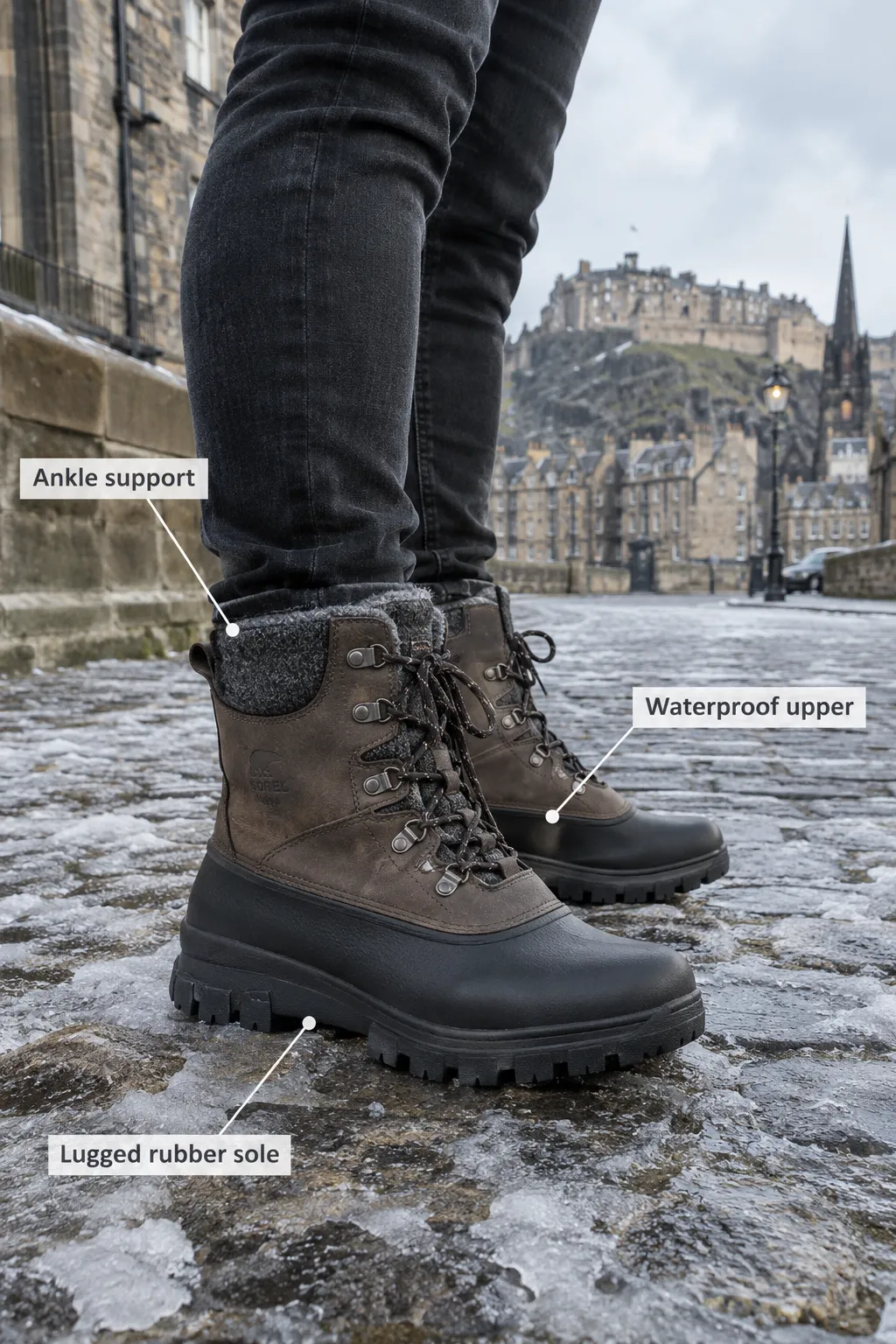
What to prioritize:
- Waterproof or water-resistant upper material
- Deep tread, not a flat smooth sole
- Ankle support for uneven cobblestones on the Royal Mile and the Grassmarket
- Enough room for a thick wool sock without pinching
One solid pair handles 90% of situations. A lightweight packable backup shoe, like a slim sneaker, works for indoor days or warmer afternoons. Check what to wear in Edinburgh guides for more outfit-specific footwear advice.
How do I avoid overpacking winter clothes in a small bag
Stick to a neutral color capsule of five to six tops, two bottoms, and one layering system worn repeatedly, rather than packing a different outfit for each day.
Steps to avoid overpacking:
- Pick one or two base colors (black, navy, grey) so everything mixes
- Limit yourself to one puffy, one shell, one fleece
- Rewear base layers two to three times before needing a wash
- Pack multi-use accessories instead of extra clothing items
- Lay everything out before packing and remove one item you’re unsure about
Mistake to avoid: packing a “just in case” heavy sweater on top of your full layering system. If your base, mid, and insulating layers work together, you rarely need a backup sweater.
For more general strategy, this guide to organizing a carry-on bag has useful folding and rolling techniques that free up extra space.
What do locals wear to stay warm in Edinburgh
Locals lean heavily on wool coats, scarves, and layered knitwear rather than puffer jackets, since the look pairs practicality with the city’s everyday style. A University of Edinburgh perspective on daily winter dressing notes that students and staff commonly favor wool and layered knits over bulky synthetic coats for daily commuting comfort.
Typical local winter outfit:
- Wool or tweed coat over a sweater
- Scarf wrapped high around the neck
- Flat waterproof boots or trainers with good tread
- An umbrella tucked in a bag for sudden showers
You don’t need to dress exactly like a local, but matching this layered, wool-heavy approach helps you blend in and stay warmer than tourists in thin jackets.
Is it worth buying compression bags for winter gear
Compression bags help only if your carry-on is genuinely over capacity after following a proper layering strategy. If you’ve already minimized bulky items, compression bags add marginal benefit for the extra step of packing and unpacking them each time.
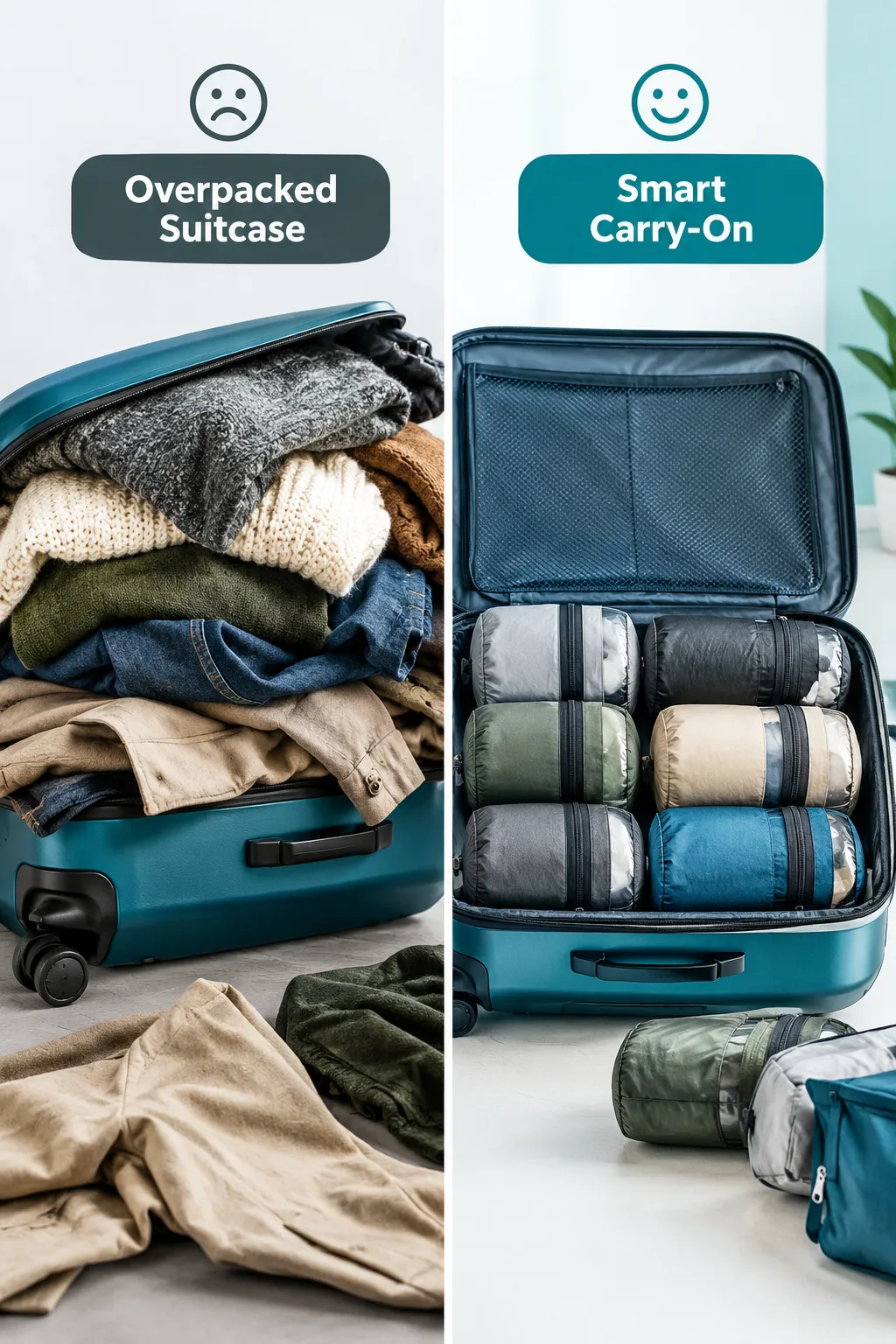
Use compression bags when:
- You’re traveling to multiple cold destinations and need bulkier gear
- Your puffy jacket isn’t naturally packable
- You’re combining Edinburgh with another cold leg, like a London winter trip
Skip them when your layering system already fits comfortably, since the time saved isn’t worth the bulk of carrying empty bags home.
How much does winter clothing cost if I need to buy it in Edinburgh
Buying winter clothing in Edinburgh is entirely possible, though prices run higher than planning ahead since you’re paying tourist-area retail rates. High street shops along Princes Street carry scarves, hats, and coats, but budget for premium pricing compared to home.
If you forget a key item, budget retailers and outdoor shops in the New Town area carry basics like hats, gloves, and scarves at reasonable prices. Full coats and boots cost significantly more when bought last-minute in a tourist city, so it’s worth packing the essentials from home.
What’s the most common mistake when packing for Edinburgh winter
The most common mistake is packing one heavy winter coat and treating it as the entire cold-weather solution, instead of building a flexible layering system. This leaves travelers stuck sweating indoors and still cold outdoors, since one coat can’t adjust to changing conditions throughout the day.
Other frequent mistakes:
- Forgetting waterproof footwear and relying on fashion boots
- Packing cotton as a main layer
- Skipping gloves, hat, or scarf because “it’s not that cold”
- Not accounting for wind near the castle and coastal viewpoints
Expert packing lists for Edinburgh consistently flag these same issues, reinforcing that layering flexibility matters more than any single garment (whattopack.net).
What if layers don’t keep me warm enough
If you’re still cold after layering properly, the fix is almost always adding a wind-blocking shell or swapping a cotton piece for wool, not adding more bulk. Cold usually comes from wind exposure or dampness, not a lack of fabric thickness.
Troubleshooting steps:
- Check if your outer layer actually blocks wind, not just looks warm
- Swap any cotton piece for wool or synthetic
- Add a thin glove liner under regular gloves
- Tuck a buff or neck gaiter under your scarf for extra wind protection
Edge case: if you’re consistently cold despite proper layers, you may need a true insulated winter coat rather than a packable puffy, especially for long outdoor days exploring beyond the city center.
Can you layer too much and still move around comfortably
Yes, over-layering is a real problem, and it usually shows up as restricted movement, overheating indoors, and an unnecessarily bulky silhouette under your shell jacket. Five or more thick layers is almost always overkill for Edinburgh’s actual temperature range.
Signs you’ve over-layered:
- You’re sweating within minutes of entering a heated pub or museum
- Your arms can’t move freely at the shoulder
- Your shell jacket won’t zip comfortably over everything underneath
Decision rule: if you can comfortably zip your outer shell and still bend your elbows without strain, your layering is right. If not, drop the mid layer and rely on base plus puffy plus shell instead.
FAQ
Is a carry-on really enough for a week in Edinburgh winter?
Yes, a 40-liter carry-on fits a full layering system, five to six tops, two bottoms, and one pair of boots if you stick to a neutral color capsule and rewear base layers.
Do I need an umbrella in Edinburgh winter?
A compact umbrella helps, but wind often makes it less useful than a hooded waterproof shell, which many travelers prefer for Edinburgh’s gusty conditions.
What temperature does it actually snow in Edinburgh?
Snow is possible but not guaranteed most winters, typically occurring during brief cold snaps rather than sustained periods.
Can I wear jeans in Edinburgh winter?
Jeans work for short outings but aren’t ideal as a main layer in rain, since denim holds moisture and dries slowly compared to synthetic or wool pants.
Do I need thermal underwear?
Thermal leggings help on especially cold or windy days, particularly for outdoor activities like hiking Arthur’s Seat, but aren’t essential for city sightseeing.
Is one scarf enough?
One substantial wool or cashmere-blend scarf is usually enough, since it doubles as a neck warmer and light head cover in wind.
What if I’m also visiting other cold cities?
Check destination-specific guides like this London winter packing list or Paris winter guide to adjust for local conditions.
Conclusion
Packing for Edinburgh in winter comes down to one shift in thinking: stop packing for cold, start packing for adjustable warmth. A merino base layer, light mid layer, packable puffy, and waterproof shell will carry you through nearly every day the city throws at you, all while fitting into a single carry-on.
Add waterproof boots, a real scarf, and gloves, and you’re set. Before you fly, lay out everything on your bed and cut anything that doesn’t layer into the system. If you’re extending the trip, check out this 4-day Edinburgh itinerary or explore more of the Royal Mile once you’ve got your layers sorted.