
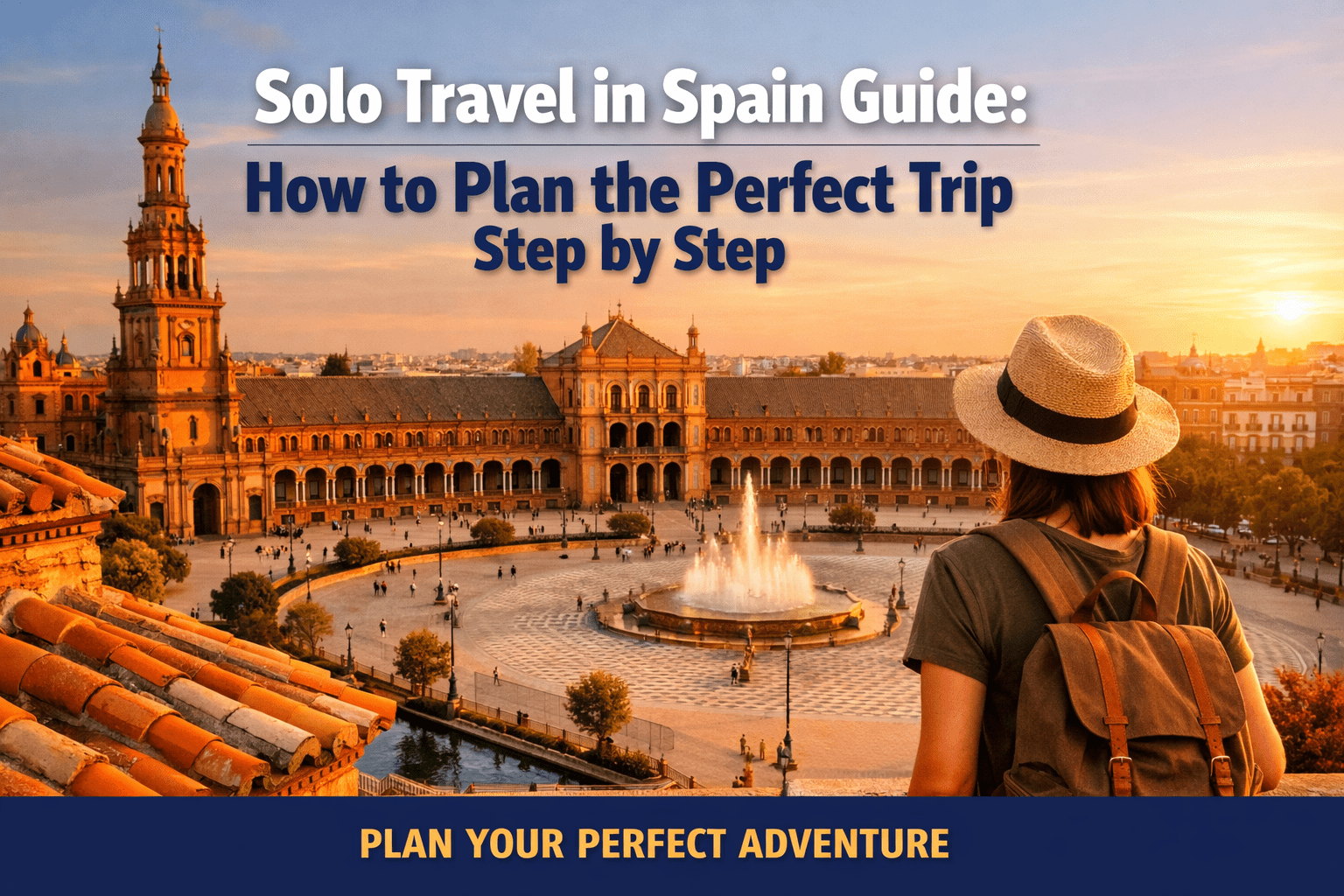
Quick Answer: Solo travel in Spain is one of the best decisions you can make as an independent traveler. Spain combines world-class cities, safe streets, incredible food, and a social culture that makes it easy to meet people even when you’re on your own. Plan around 10–14 days, choose 2–3 cities to avoid rushing, and book trains in advance for the best fares.
Key Takeaways
- Spain is consistently rated one of Europe’s safest and most welcoming countries for solo travelers, including women traveling alone [2]
- Cities like Seville, Barcelona, Madrid, and San Sebastián each offer distinct solo-friendly experiences
- Spain’s high-speed AVE train network makes city-hopping fast and affordable when booked early
- The local tapas and pintxos culture naturally encourages socializing, even if you’re traveling alone
- Budget travelers can manage on €60–€90/day; mid-range comfort costs around €120–€160/day (estimates based on 2026 hostel, food, and transport averages)
- Shoulder season (April–June and September–October) offers the best balance of good weather and smaller crowds
- Structured solo group tours through operators like Go Ahead Tours or Intrepid Travel are a great option if you want company without losing independence [1][4]
- Always carry a small day bag, use metro tourist passes in big cities, and keep digital copies of your documents
Why Is Solo Travel in Spain Such a Good Idea?
Spain works exceptionally well for solo travelers because the country’s social culture does half the work for you. Spaniards eat late, linger over meals, and gather in public spaces in a way that naturally pulls visitors into the rhythm of local life.
Beyond the vibe, the practical side is equally strong:
- Safety: Madrid, Barcelona, Seville, and Valencia all rank well for traveler safety, including for solo women [2][3]
- Infrastructure: Excellent trains, affordable buses, and walkable city centers make getting around easy without a car
- English: In major cities and tourist areas, English is widely spoken
- Variety: From beach cities to mountain villages to flamenco heartlands, Spain covers a huge range of experiences in a compact geography
“Spain’s tapas culture is one of the best social equalizers in travel — you can walk into almost any bar alone and leave having had a conversation.” — a sentiment echoed by solo travelers across the community [2]
If you’re new to traveling solo in Europe, check out our broader solo travel resources for tips that apply across destinations.
Which Spanish Cities Are Best for Solo Travel in Spain?
The best city for your solo Spain trip depends on your travel style, but a few consistently stand out.
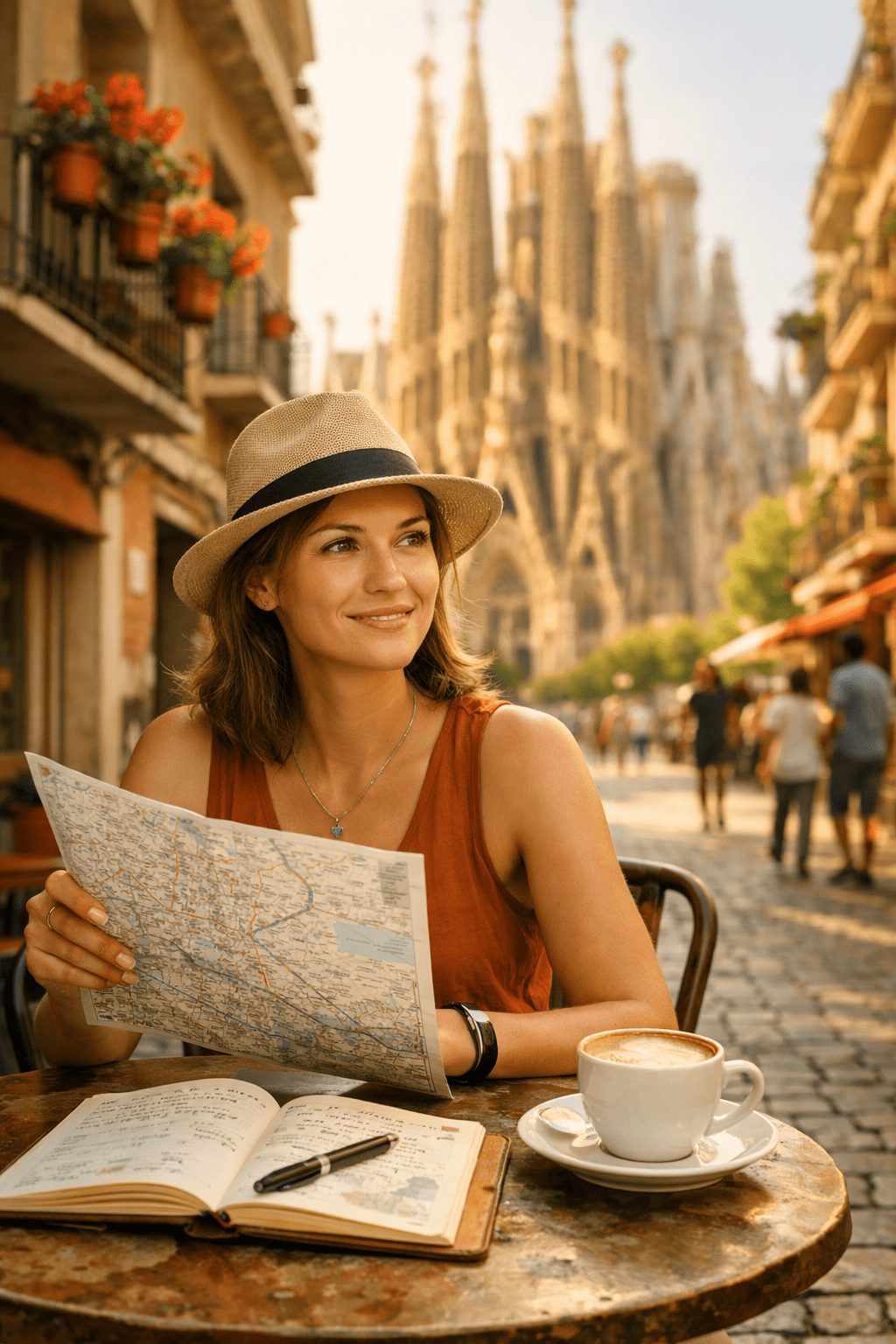
Barcelona is the classic starting point. The Gràcia district is especially good for solo travelers — it’s full of independent cafés, local bars, and a neighborhood feel that makes it easy to slow down and connect [2]. Add Gaudí’s architecture, the Gothic Quarter, and a strong hostel scene, and Barcelona rewards travelers who wander without a fixed plan. For a deeper look, our Barcelona guide covers the city’s best neighborhoods and sights.
Madrid is a cultural powerhouse. The Prado, Reina Sofía, and Thyssen-Bornemisza museums alone can fill three days. Add the Mercado de San Miguel, rooftop bars, and flamenco tablaos, and you’ve got a city that’s endlessly engaging solo [2][3]. Our 3-day Madrid itinerary is a solid starting framework.
Seville is arguably the best overall solo destination in Spain, especially for women. It’s Europe’s sunniest city, extremely walkable, and the birthplace of both tapas and flamenco [2]. You can cover a lot on foot, and the city’s relaxed pace makes it easy to linger.
San Sebastián is perfect if you love food. The pintxos bar-hopping culture here is one of the best natural icebreakers in travel — you move from bar to bar, sharing small plates, and conversations happen organically [2].
Málaga suits budget-conscious solo travelers well. Hostels are affordable, the local tapas scene is excellent (especially at the Atarazanas market), and the city has a young, energetic atmosphere [2].
Valencia is a smart choice if you want to avoid the crowds of Barcelona or Madrid while still getting world-class food, beaches, and culture. It also has strong safety ratings for female solo travelers [2].
Quick comparison:
| City | Best For | Vibe | Budget Level |
|---|---|---|---|
| Barcelona | Architecture, nightlife | Cosmopolitan | Mid–High |
| Madrid | Museums, culture | Urban, lively | Mid |
| Seville | Flamenco, history | Relaxed, warm | Budget–Mid |
| San Sebastián | Food, coast | Sophisticated | Mid–High |
| Málaga | Beach, budget | Young, casual | Budget |
| Valencia | Balance of everything | Laid-back | Budget–Mid |
How Do You Plan a Solo Spain Trip Step by Step?
Planning solo travel in Spain is straightforward if you work through it in the right order. Here’s a practical step-by-step process:
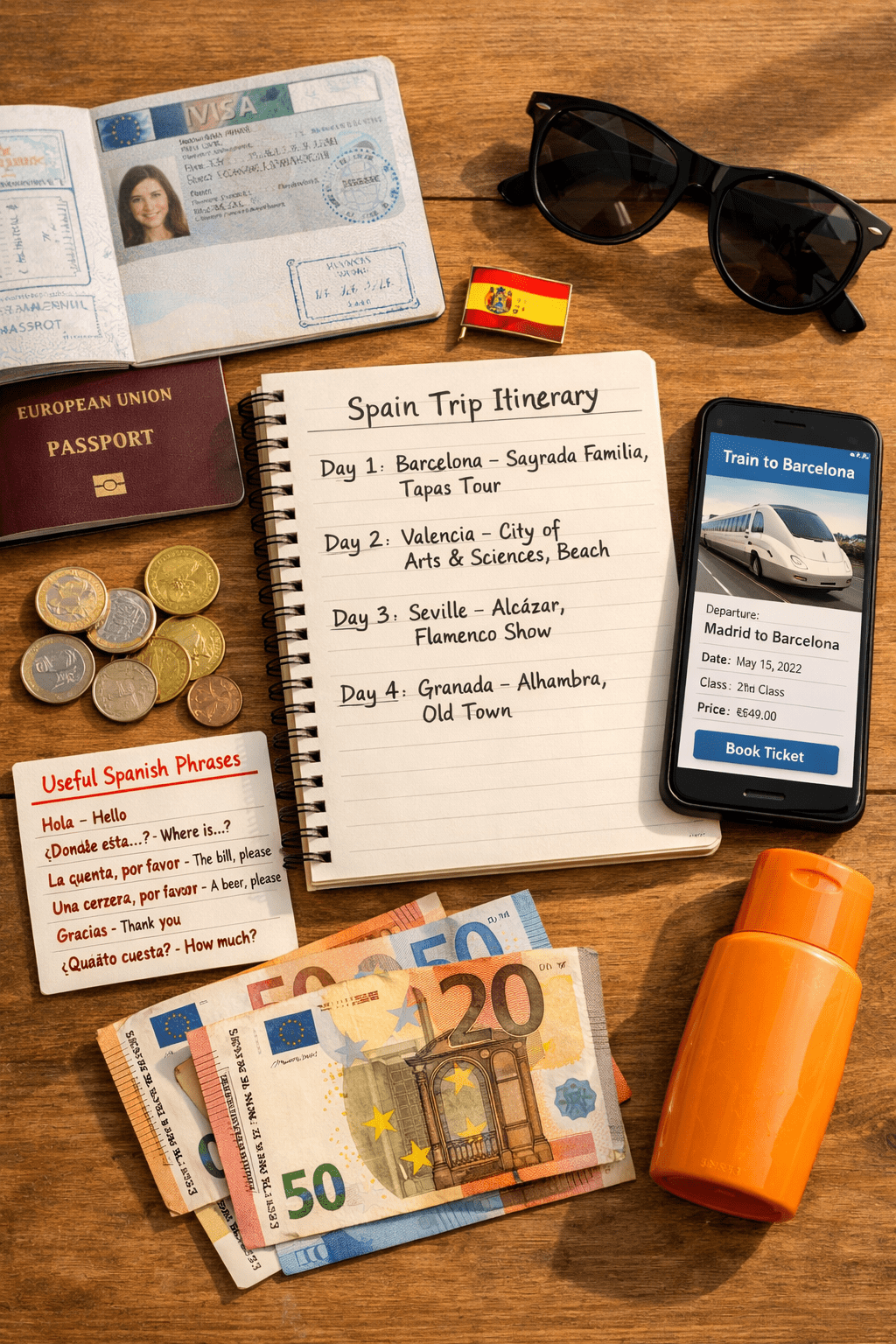
Step 1: Choose your cities (and limit them)
Pick 2–3 cities for a 10–14 day trip. More than that and you’ll spend most of your time on trains. A classic route: Madrid → Seville → Barcelona, or Madrid → San Sebastián → Barcelona.
Step 2: Decide on your travel style
- Fully independent: book everything yourself via Renfe (trains), Booking.com, and local tour apps
- Semi-structured: book a small-group tour for part of the trip (e.g., a day tour in Seville) and go solo the rest
- Fully guided: operators like Go Ahead Tours offer 9-day Spain solo packages with private hotel rooms, guided tours, food tastings, and a cooking class — good if you want company without planning stress [1]
Step 3: Book trains early
Spain’s AVE high-speed trains are fast and comfortable, but prices rise significantly closer to the travel date. Book on Renfe’s website at least 4–6 weeks out for the best fares.
Step 4: Sort accommodation
- Hostels with social spaces (common rooms, group dinners) are great for meeting people
- Boutique guesthouses (pensiones) offer privacy at a lower cost than hotels
- Choose central neighborhoods so you can walk everywhere
Step 5: Plan your budget
- Budget: €60–€90/day (hostel dorm, local tapas bars, free museums on certain days)
- Mid-range: €120–€160/day (private room, sit-down restaurants, paid tours)
- These are estimates based on 2026 average costs in major Spanish cities
Step 6: Handle the logistics
- Check visa requirements for your nationality (EU citizens need no visa; US, UK, Canadian citizens can stay up to 90 days)
- Get travel insurance — non-negotiable for solo travel
- Download offline maps (Maps.me or Google Maps offline) before you land
- For packing help, our travel essentials list covers everything you need
Is Solo Travel in Spain Safe?
Spain is one of the safer European countries for solo travelers, and this applies to women traveling alone as well [2][3]. That said, “safe” doesn’t mean “no precautions needed.”
What to watch for:
- Pickpocketing is the main risk, especially in Barcelona’s La Rambla and crowded tourist areas in Madrid. Use a crossbody bag, keep your phone in your front pocket, and don’t leave bags on chair backs at restaurants.
- Scams targeting tourists (fake petitions, “found” rings) are common in major cities. Politely ignore and keep walking.
- Nightlife areas can get rowdy late at night — stick to well-lit streets and use taxis or the metro rather than walking alone after midnight in unfamiliar areas.
What works in your favor:
- Madrid’s metro system is efficient, well-lit, and runs late on weekends [3]
- Most Spanish cities are walkable during the day with no safety concerns
- Locals are generally helpful if you’re lost or need assistance
For women planning a solo trip, our guide to the best places for solo female travel includes several Spanish cities worth considering.
What Should You Do and See as a Solo Traveler?
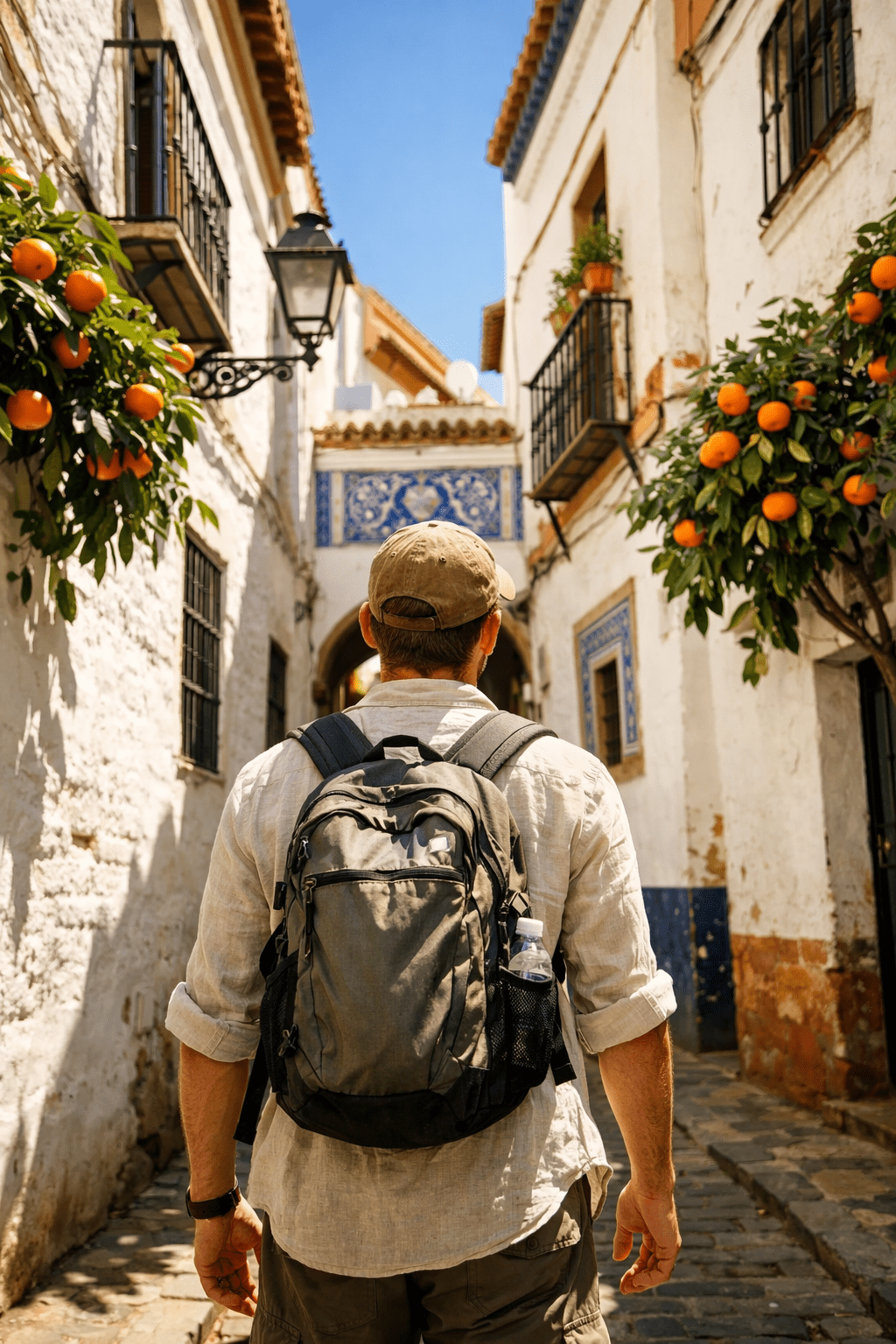
Solo travel rewards slow, curious exploration. Here are experiences that work especially well when you’re on your own:
In Madrid:
- Spend a morning at the Prado, then walk to the Retiro Park for lunch on a bench
- Visit the Temple of Debod at sunset — the ancient Egyptian temple gifted to Spain looks stunning after 9 PM in summer when it reflects in the water [3]
- Explore the Mercado de San Antón for an affordable solo lunch [2]
In Seville:
- Walk the old town in the morning before the heat kicks in
- Catch a live flamenco show at a tablao — many offer solo tickets
- Day trip to Cádiz for a change of pace; it’s one of the safest cities in southern Spain for solo travelers [2]
In Barcelona:
- Spend a full day on Gaudí architecture (Sagrada Família, Park Güell, Casa Batlló)
- Explore the Gràcia neighborhood in the evening for local bars and a less touristy atmosphere [2]
In San Sebastián:
- Do a pintxos crawl along the old town bars — this is one of the most social things you can do solo in all of Spain [2]
- Hike up to Monte Igueldo for views over La Concha beach
For a broader list of must-see destinations, our article on 15 must-see places in Spain is a great companion resource.
What’s the Best Time to Visit Spain Solo?
The short answer: April to June or September to October. These shoulder seasons offer warm weather, manageable crowds, and better prices on accommodation and flights.
- Spring (April–June): Mild temperatures, festivals (Seville’s Feria de Abril in April is spectacular), and green landscapes in the north
- Summer (July–August): Hot — very hot in Seville and Madrid (often above 40°C/104°F). Coastal cities are packed and expensive. If you go in summer, head to San Sebastián or the Basque Country instead.
- Autumn (September–October): Arguably the best overall window. Crowds thin out, temperatures drop to comfortable levels, and the light is beautiful.
- Winter (November–March): Quiet and cheap, but some coastal areas feel shut down. Madrid and Barcelona stay lively year-round.
How Do You Meet People When Traveling Solo in Spain?
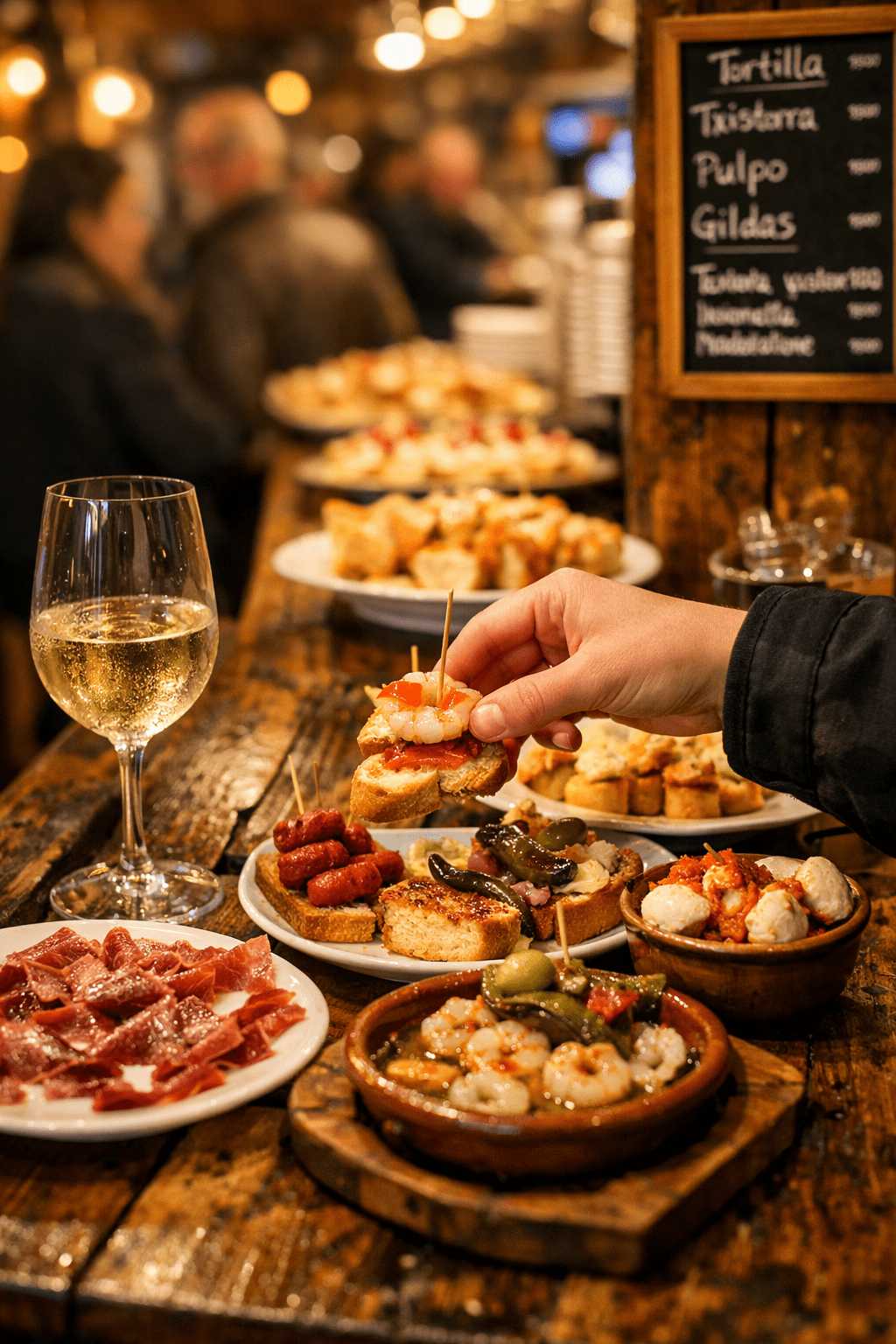
Meeting people is easier in Spain than in most countries, because the culture is built around communal eating and socializing. A few specific strategies:
- Stay in social hostels. Look for hostels that host group dinners, bar crawls, or free walking tours. These are the fastest way to meet fellow travelers.
- Join a free walking tour. Most major Spanish cities have free (tip-based) walking tours that attract solo travelers. They’re also a great way to orient yourself on day one.
- Do a pintxos crawl in San Sebastián. Moving from bar to bar solo is completely normal here, and you’ll naturally fall into conversations [2].
- Take a cooking class. Several tour operators, including Go Ahead Tours, include cooking classes in their Spain packages [1]. These are naturally social and give you a skill to take home.
- Use Meetup or Facebook travel groups. Searching “solo travel Spain 2026” in Facebook groups often turns up travelers looking for company on the same dates.
FAQ: Solo Travel in Spain
Is Spain good for first-time solo travelers?
Yes. Spain is one of the most beginner-friendly solo destinations in Europe. Cities are walkable, English is widely spoken in tourist areas, and the transport network is reliable.
How much money do I need for 10 days in Spain solo?
Budget around €700–€900 for a 10-day trip on a tight budget (hostel dorms, local tapas, free sights). Mid-range comfort costs €1,200–€1,600. These are estimates for 2026 based on current average prices.
Is Spain safe for solo female travelers?
Yes, Spain ranks well for female solo travel safety. Seville, Valencia, and Cádiz are particularly recommended [2]. Standard precautions (bag security, avoiding poorly lit areas at night) apply as they would anywhere.
What’s the best way to get between cities in Spain?
The AVE high-speed train is the best option for major routes (Madrid–Seville, Madrid–Barcelona). Book on Renfe’s website in advance. Buses (via ALSA) are cheaper but slower for longer routes.
Do I need to speak Spanish to travel solo in Spain?
Not in major cities. English is widely spoken in tourist areas. Learning a few basic phrases (gracias, por favor, una cerveza por favor) goes a long way and is appreciated by locals.
Should I book a solo tour or go fully independent?
Go fully independent if you’re comfortable navigating new cities and booking logistics. Consider a structured tour like Go Ahead Tours’ 9-day Spain package [1] or an Intrepid Travel group trip [4] if you want built-in company and less planning stress.
What’s the best city in Spain for solo travel?
Seville is often cited as the best overall solo destination — it’s safe, walkable, affordable, and culturally rich [2]. Barcelona wins for first-timers who want a big-city experience.
Can I do a day trip from Madrid or Barcelona?
Absolutely. From Madrid: Toledo, Segovia, and El Escorial are all under 90 minutes away. From Barcelona: Montserrat, Sitges, and the Costa Brava are easy day trips.
Is it weird to eat alone at restaurants in Spain?
Not at all. Eating at a bar counter (the barra) solo is completely normal in Spain and often the best way to interact with locals and staff.
What travel insurance do I need for Spain?
At minimum, get a policy that covers medical emergencies, trip cancellation, and theft. If you’re an EU citizen, your EHIC card covers basic medical care. Non-EU travelers should get comprehensive travel insurance before departure.
Conclusion: Your Solo Spain Trip Starts Here
Solo travel in Spain is genuinely one of the best experiences you can give yourself. The country is safe, social, and packed with things to see and do at every budget level. Whether you spend a week in Seville soaking up flamenco and tapas culture, or string together a two-week route from Madrid to Barcelona with stops in between, Spain rewards independent travelers who show up curious and open.
Your actionable next steps:
- Pick your 2–3 cities and decide on a rough route
- Check train schedules on Renfe and book your main routes at least 4–6 weeks out
- Book accommodation in central neighborhoods — social hostels if you want to meet people, pensiones for privacy
- Pack light, get travel insurance, and download offline maps
- If you want company without the planning, look at small-group solo tours through Go Ahead Tours or Intrepid Travel
Spain is waiting. Go.
References
[1] Spain For Solo Travelers – https://www.goaheadtours.com/guided-tours/spain-for-solo-travelers
[2] Solo Travel In Spain – https://www.theflashpacker.net/solo-travel-in-spain/
[3] Solo Travel Experiences In Madrid Ultimate 2026 Guide – https://tripxoxo.com/blog/solo-travel-experiences-in-madrid-ultimate-2026-guide
[4] Solo Travel – https://www.intrepidtravel.com/ca/spain/solo-travel