Key Takeaways
- Visit St. Mark’s Basilica before 9:30 AM to avoid the worst crowds and experience the golden mosaics in natural morning light
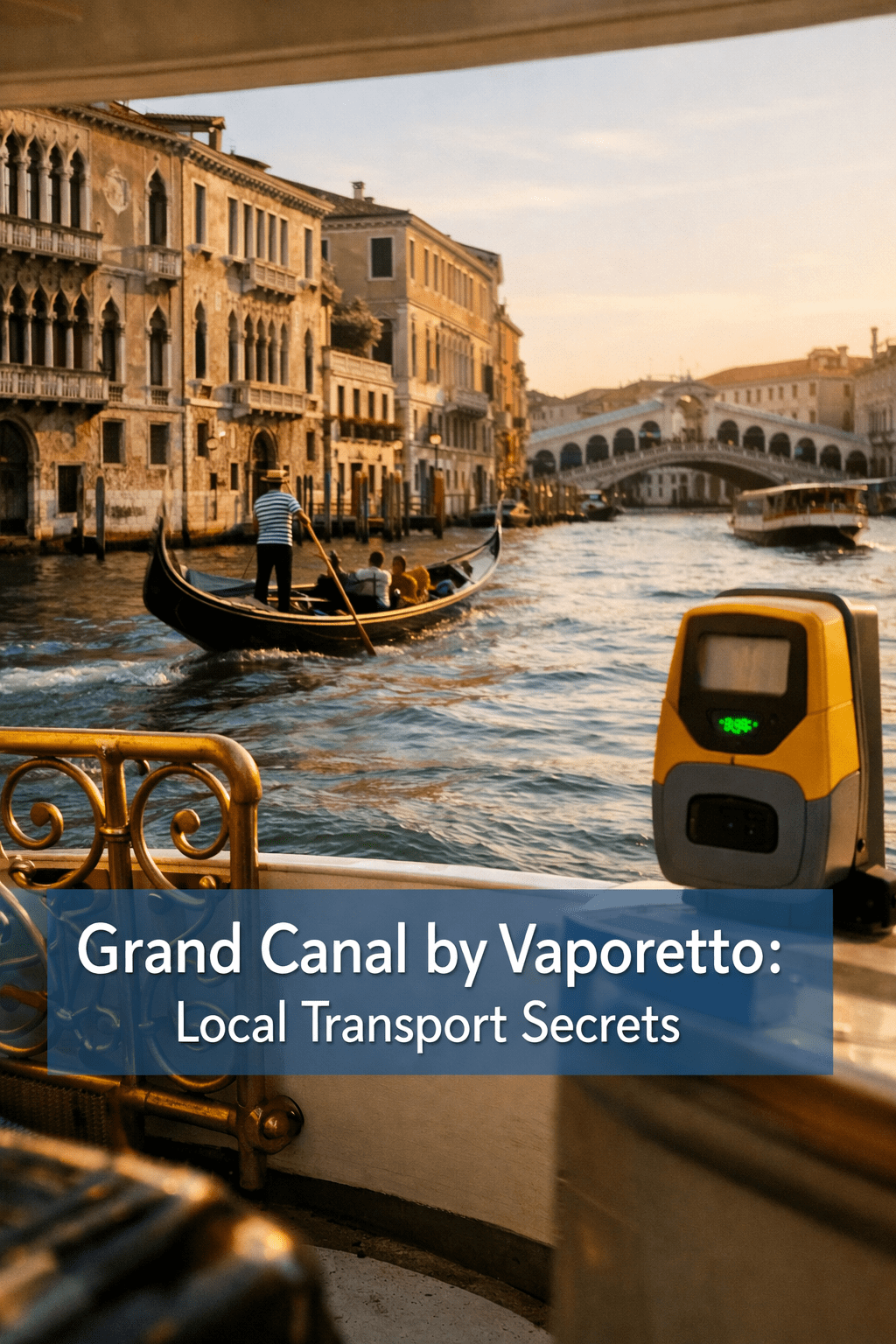
- Take the vaporetto (water bus) down the Grand Canal for €9.50 instead of paying €80+ for a touristy gondola ride
- Explore Burano and Murano islands for authentic Venetian culture and world-famous glassblowing demonstrations
- Walk the Rialto Bridge at sunrise or after 8 PM for stunning Grand Canal views without the shoulder-to-shoulder crowds
- Skip overpriced St. Mark’s Square cafes and venture into Cannaregio or Dorsoduro for authentic local dining
- Book Doge’s Palace tickets online in advance to bypass hour-long entrance queues
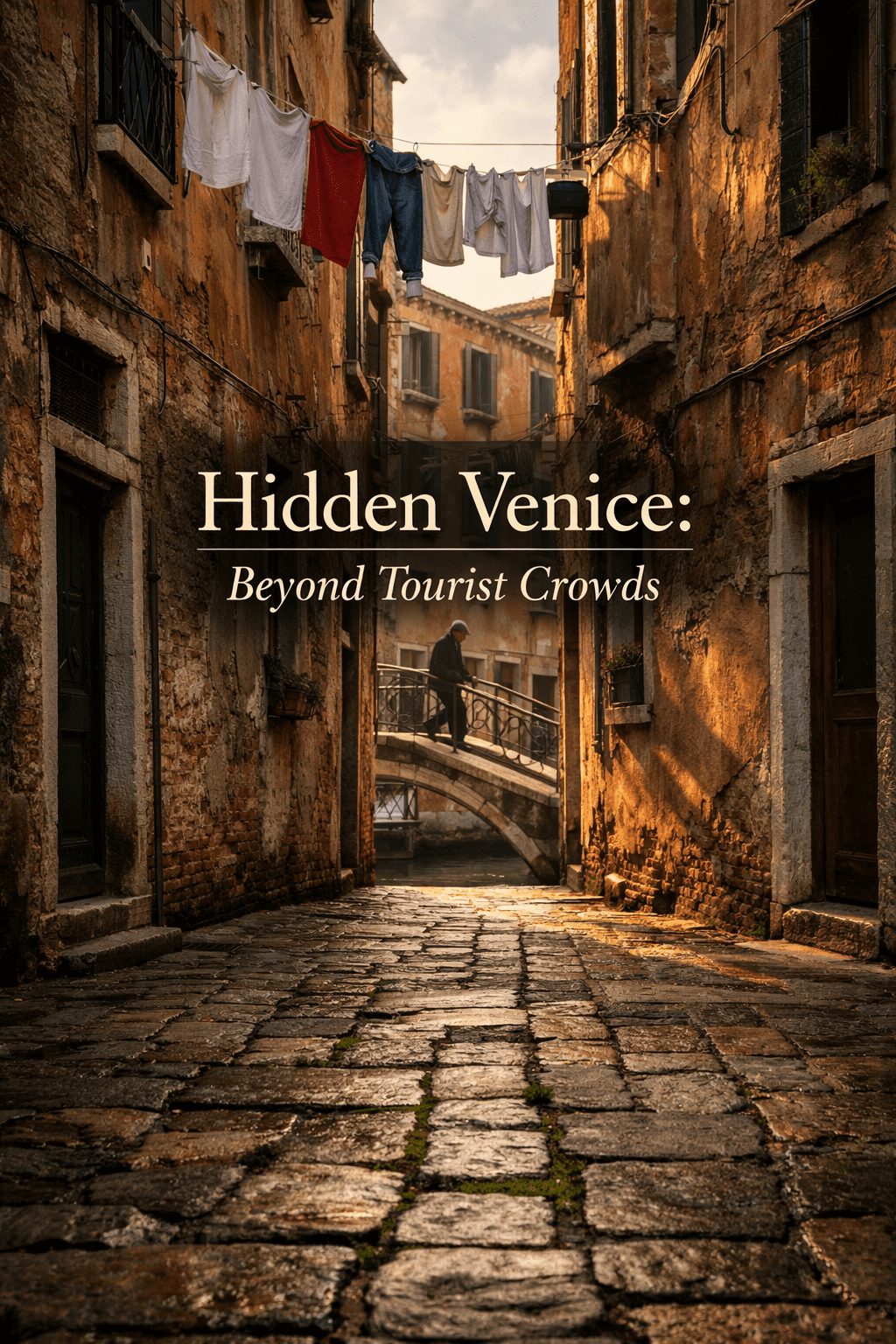
- Wander the quiet backstreets of Castello and Cannaregio districts where most tourists never venture
- Visit the Riva degli Schiavoni waterfront promenade for free panoramic lagoon views
- Allocate at least 3-4 days to experience Venice beyond the main square
- Travel during shoulder season (April-May or September-October) for better weather and fewer crowds
Quick Answer
The best things to do in Venice combine iconic landmarks visited strategically with authentic local experiences most tourists miss. Start your days early at St. Mark’s Basilica and Doge’s Palace before crowds arrive, use the vaporetto system like locals do, and dedicate at least half your time to exploring quiet neighborhoods like Cannaregio and the colorful islands of Burano and Murano. Skip expensive gondola rides and touristy restaurants around St. Mark’s Square in favor of authentic trattorias and free walking tours through Venice’s maze-like backstreets.
What Are the Must-See Landmarks Among the 10 Things to Do in Venice?

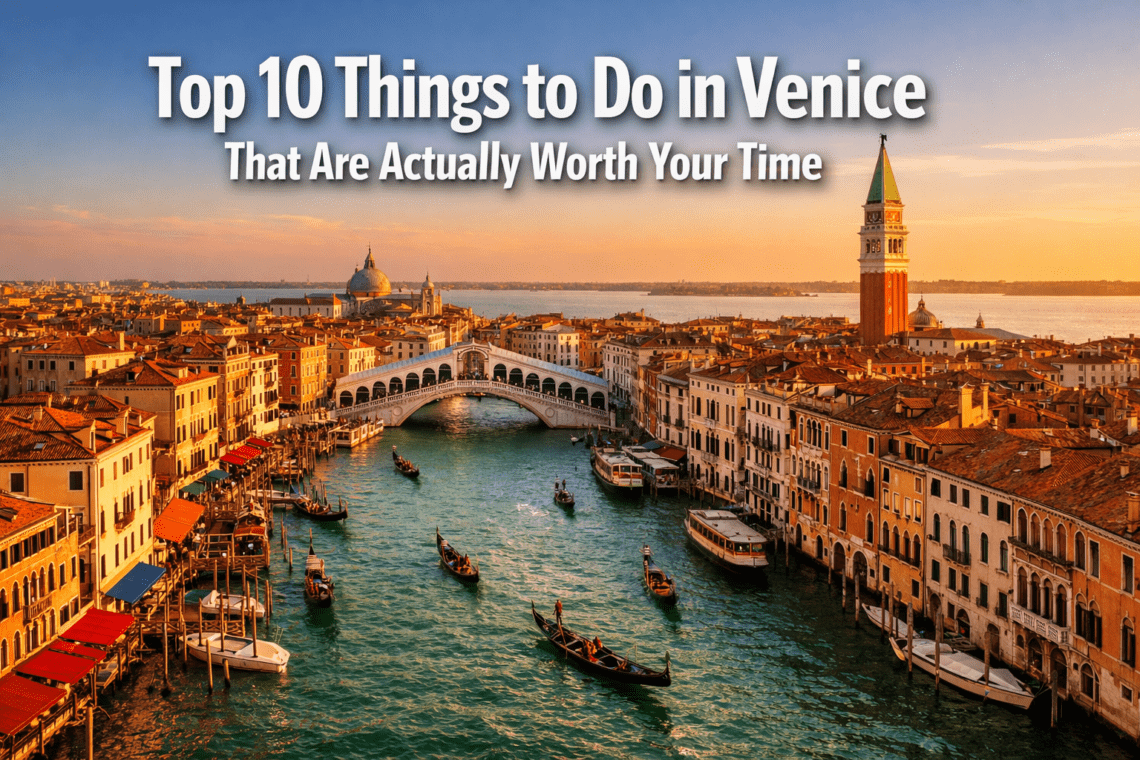
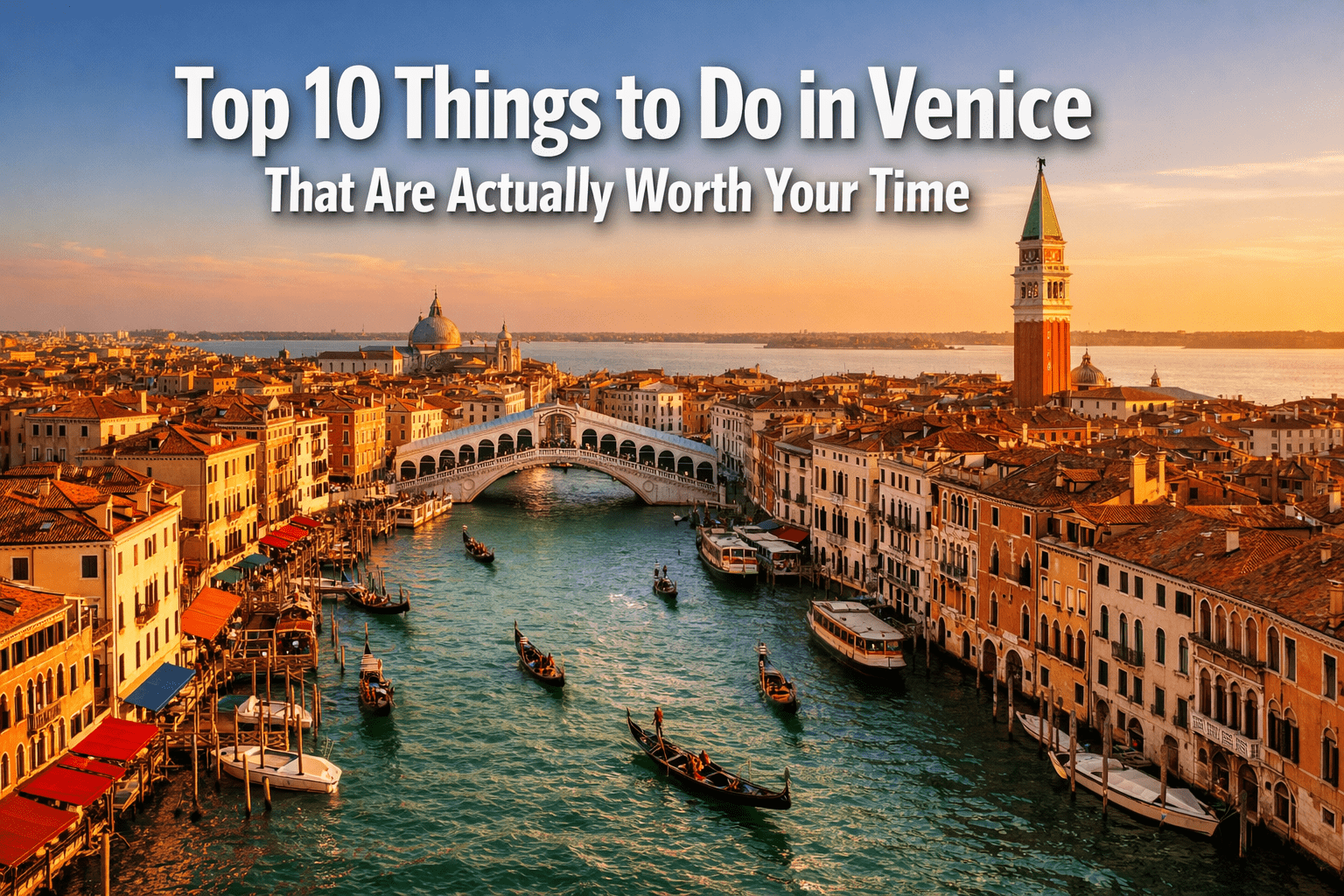
St. Mark’s Basilica, Doge’s Palace, and the Grand Canal form Venice’s essential landmark trio that genuinely deserve their reputation. These three attractions showcase the city’s Byzantine heritage, political history, and unique canal-based architecture that you can’t experience anywhere else.
St. Mark’s Basilica (Basilica di San Marco) stands as Venice’s most important church and consistently ranks as the top attraction[1][2][3]. The interior features over 8,000 square meters of golden mosaics that represent Venice’s wealth and power throughout history[5]. I recommend arriving before 9:30 AM when the basilica opens to the public, or booking a skip-the-line tour that includes access to the terrace and museum.
Doge’s Palace (Palazzo Ducale) served as the historic seat of Venetian government and now operates as one of the city’s premier museums[1][2][3]. The palace connects to the famous Bridge of Sighs, which you can walk through on guided tours. Combined tickets with St. Mark’s Basilica typically cost $81-$120 and help you avoid separate entrance queues[6].
The Grand Canal cuts through Venice’s heart and offers free viewing from multiple vantage points[4]. This S-shaped waterway showcases palaces, churches, and colorful buildings that display Venice’s architectural evolution from Byzantine to Renaissance periods[5].
Common mistake: Don’t waste money on a private gondola ride (€80-€120 for 30 minutes) when you’re first getting oriented. Take the vaporetto Line 1 down the entire Grand Canal for €9.50 instead, then decide if you want a gondola experience later.
How Should First-Timers Experience St. Mark’s Square?
St. Mark’s Square (Piazza San Marco) functions as Venice’s central hub where you could easily spend a full day exploring[3]. The square contains the basilica, Doge’s Palace, the 98.6-meter Campanile belltower, and historic 18th-century cafes[3].
Visit the square at three different times for completely different experiences:
- Early morning (7:00-9:00 AM): Nearly empty, perfect for photos and peaceful exploration
- Mid-morning (10:00 AM-12:00 PM): Crowds arrive, but museums and attractions are fully operational
- Evening (after 7:00 PM): Romantic atmosphere with live music from cafe orchestras, though drinks cost €15-€25
The St. Mark’s Campanile offers elevator access to 323-foot-high panoramic views of Venice and the lagoon[3]. Tickets cost approximately €10 and the wait is usually shorter than other major attractions.
Choose the square cafes if: You want the historic experience of Caffè Florian (opened 1720) and don’t mind paying €12 for an espresso. Skip them if: You’re on a budget—walk two blocks in any direction for €2 espresso at local bars.
For a deeper understanding of Venice’s history and architecture, consider exploring what to see in Rome Italy to compare how different Italian cities preserve their heritage.
Which Islands Should Be on Your Venice Itinerary?
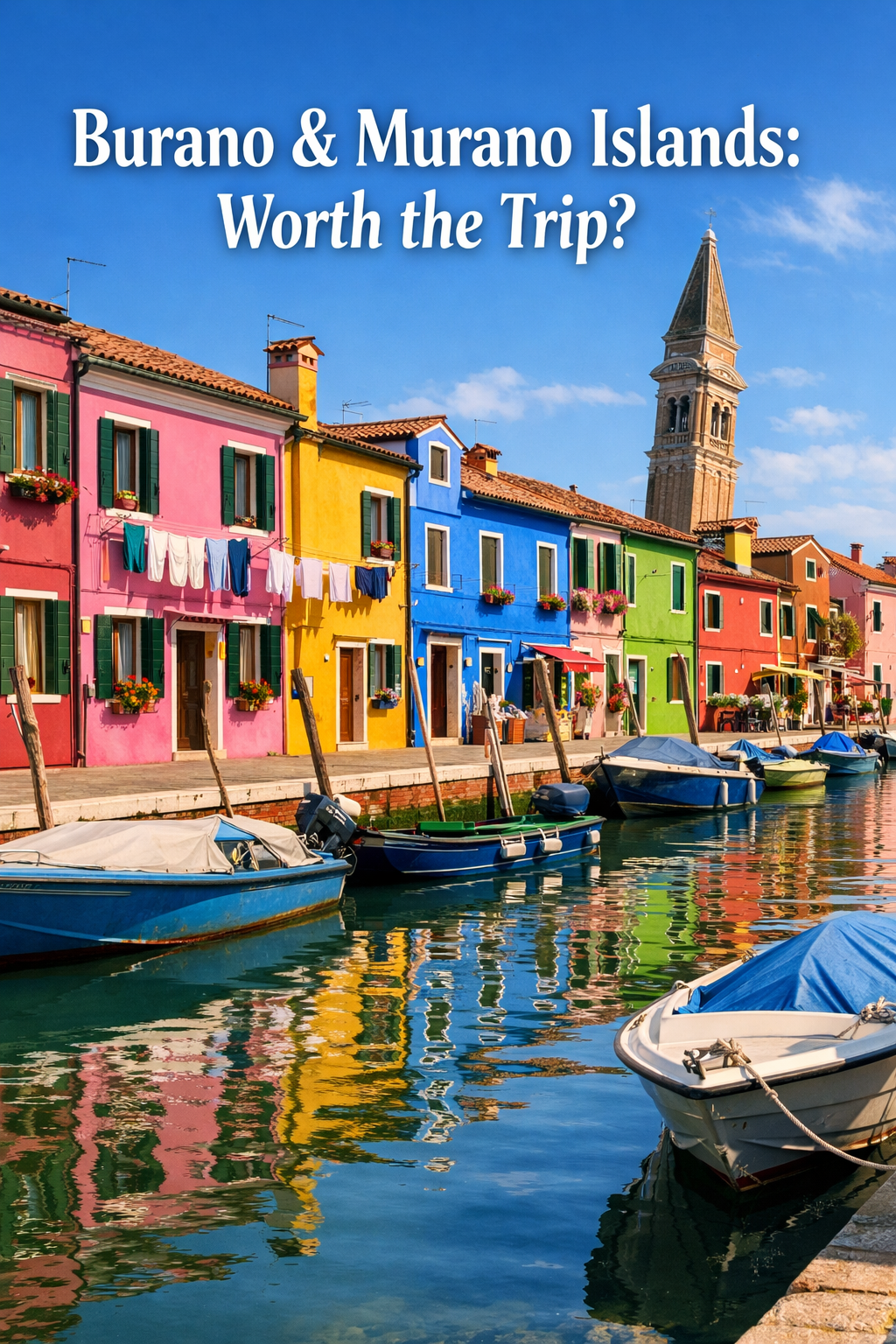
Murano and Burano islands rank among Venice’s top outdoor activities and offer authentic Venetian culture beyond the main island[1][2]. Both islands are accessible via vaporetto and make excellent half-day or full-day excursions.
Murano Island (20 minutes from Venice):
- Famous for glassblowing traditions dating back to 1291
- Free admission to watch master glassblowers demonstrate their craft
- Multiple glass museums and factory showrooms
- Less crowded than Venice proper
- Best visited in the morning before tour groups arrive
Burano Island (40 minutes from Venice):
- Known for brightly colored fishermen’s houses and lace-making traditions
- Extremely photogenic with rainbow-colored buildings lining the canals
- Authentic seafood restaurants at lower prices than Venice
- Quieter atmosphere perfect for afternoon exploration
- The leaning campanile of San Martino church rivals Pisa’s famous tower
Pro tip: Combine both islands in one day by taking the vaporetto from Venice to Murano first (morning glassblowing demonstrations), then continuing to Burano for lunch and afternoon photography. The entire trip costs just €9.50 with a standard vaporetto ticket.
Similar to how hidden gems in Italy offer magical experiences away from crowds, these islands provide authentic Venetian culture without the overwhelming tourism of the main island.
What Are the Best Free Activities in Venice?
Venice offers numerous free experiences that rival paid attractions, especially for first-time visitors who want to understand the city’s layout and character. The Rialto Bridge and Riva degli Schiavoni waterfront provide two of the best cost-free experiences.
Rialto Bridge (Ponte di Rialto) completed in 1591 as a stone arch spanning the Grand Canal[4]. This bridge offers:
- 24-hour free access with elevated Grand Canal viewpoints[4]
- Views of gondolas, vaporetti, and historic palaces[4]
- Surrounding Rialto Market (morning hours) with fresh produce and seafood
- Central location connecting San Marco and San Polo districts
Riva degli Schiavoni Waterfront stretches 700 meters along Venice’s southern edge[4]:
- 24-hour free access with lagoon and island viewpoints
- Runs from Doge’s Palace to the historic Arsenale naval complex[4]
- Perfect for sunset walks and people-watching
- Views across to San Giorgio Maggiore island
Additional free activities worth your time:
| Activity | Best Time | What You’ll See |
|---|---|---|
| Walking Cannaregio backstreets | Afternoon | Local life, quiet canals, authentic shops |
| Watching sunset from Accademia Bridge | 7:00-8:00 PM | Grand Canal golden hour |
| Exploring Campo Santa Margherita | Evening | University students, local bars, pizza by the slice |
| Jewish Ghetto wandering | Morning | Historic synagogues, quiet squares, bakeries |
Common mistake: Many first-timers spend all their time around St. Mark’s Square and miss Venice’s authentic neighborhoods. Allocate at least half your Venice time to simply wandering without a map—getting lost in Venice is both inevitable and part of the experience.
Just like first-time visitors to New Orleans benefit from skipping tourist traps, Venice rewards travelers who venture beyond the obvious attractions.
Which Museums Deserve Your Limited Time?
Venice contains dozens of museums, but only a few genuinely merit inclusion in a first-timer’s itinerary. The Gallerie dell’Accademia and Peggy Guggenheim Collection represent the best options for art enthusiasts with limited time.
Gallerie dell’Accademia ranks among Venice’s top cultural attractions[1][2] and houses the world’s finest collection of Venetian art from the 14th-18th centuries. The museum features works by Titian, Tintoretto, Veronese, and Bellini in a former monastery setting. Expect to spend 2-3 hours here if you appreciate Renaissance art.
Peggy Guggenheim Collection offers a complete contrast with modern and contemporary art[1][2]. Located in Peggy Guggenheim’s former palazzo on the Grand Canal, the collection includes works by Picasso, Pollock, Dalí, and Kandinsky. The sculpture garden and canal-side cafe make this museum particularly enjoyable.
Choose Accademia if: You want to understand Venetian painting traditions and see works in their historical context. Choose Guggenheim if: You prefer modern art and want a shorter museum experience (1-2 hours) with excellent cafe facilities.
Budget tip: Many Venice museums offer free admission on the first Sunday of each month, though expect larger crowds. The Venice Museum Pass (€35-€45) covers multiple museums if you plan to visit three or more.
How Can You Navigate Venice Like a Local?
Venice’s vaporetto water bus system functions as the city’s primary public transportation and offers the most authentic way to experience the canals. Understanding how locals move through Venice transforms your visit from frustrating to enjoyable.
Vaporetto system essentials:
- Single ride: €9.50 (valid 75 minutes)
- 24-hour pass: €25
- 48-hour pass: €35
- 72-hour pass: €45
- Line 1: Slow route down entire Grand Canal (recommended for first-timers)
- Line 2: Faster Grand Canal route with fewer stops
- Lines 4.1/4.2: Circle route around Venice’s perimeter
Walking strategies that work:
- Venice has no cars, so walking is inevitable
- Google Maps works poorly in Venice’s narrow streets
- Accept that you will get lost—build extra time into every journey
- Major routes have yellow signs pointing to “San Marco,” “Rialto,” “Accademia,” and “Ferrovia” (train station)
- The city is smaller than it appears—you can walk from one end to the other in about 45 minutes
Common mistake: Buying single vaporetto tickets for each journey instead of a multi-day pass. If you’re staying 2+ days and plan to visit the islands, the pass pays for itself after three rides.
Edge case: If you’re staying near the train station (Ferrovia) or bus terminal (Piazzale Roma), you’ll need to walk or take a vaporetto to reach your accommodation. Venice has no taxis except water taxis, which cost €60-€120 from the station to most hotels.
What’s the Smart Way to Experience Gondolas?
Gondola rides represent Venice’s most iconic (and expensive) tourist experience, with official rates starting at €80 for 30 minutes during the day and €100 after 7:00 PM. For first-timers wondering if gondolas are worth it, the answer depends entirely on your expectations and budget.
When a gondola ride makes sense:
- You want the classic Venice romantic experience
- You’re celebrating a special occasion
- You have mobility issues that make walking difficult
- You want to see narrow canals inaccessible by vaporetto
Smart gondola strategies:
- Share a gondola with other travelers (up to 6 people) to split the €80-€100 cost
- Book a gondola in quiet neighborhoods (Cannaregio, Dorsoduro) instead of San Marco for a more peaceful experience
- Skip the gondola serenade add-on (€30-€40 extra)—you’ll hear accordion players throughout Venice for free
- Ride in late afternoon for better light and slightly fewer crowds
Better alternatives for most first-timers:
- Traghetto crossings: Gondola ferries that cross the Grand Canal at seven points for €2 per person (you stand during the 2-minute crossing)
- Vaporetto Line 1: The slow Grand Canal route provides similar canal views for €9.50
- Water taxi sharing: Split a water taxi with other travelers for a faster, more practical experience
Choose a gondola if: You’ve budgeted for it and understand it’s primarily about the experience, not transportation. Skip it if: You’re on a tight budget or would rather spend that €80 on a excellent multi-course dinner in a local trattoria.
Where Should You Eat to Avoid Tourist Traps?
Venice’s restaurant scene divides sharply between tourist traps around St. Mark’s Square and authentic trattorias where locals actually eat. Learning to identify the difference will save you money and dramatically improve your dining experience.
Red flags for tourist traps:
- Menus displayed in 6+ languages with photos
- Restaurants on or within two blocks of St. Mark’s Square
- Aggressive hosts trying to pull you inside
- “Tourist menu” or “menu turistico” offerings
- Prices without decimal points (€20 instead of €20.00 suggests inflated pricing)
Where locals eat:
- Cannaregio district: North of the Rialto Bridge, especially around Fondamenta della Misericordia
- Dorsoduro district: Near Campo Santa Margherita and the university
- Castello district: East of San Marco, particularly around Via Garibaldi
- Giudecca island: Across from the main island with waterfront restaurants
Authentic dining strategies:
- Look for “bacaro” wine bars serving cicchetti (Venetian tapas) for €2-€4 per piece
- Eat lunch as your main meal when restaurants offer better-value fixed menus
- Order the daily special (piatto del giorno) rather than tourist favorites
- Avoid restaurants with seafood displays outside—fresh fish doesn’t need advertising
Budget breakdown:
- Tourist trap meal: €40-€60 per person for mediocre food
- Authentic trattoria: €25-€35 per person for excellent local cuisine
- Bacaro cicchetti crawl: €15-€20 per person for varied small plates and wine
Common mistake: Eating dinner at 6:00 PM when only tourist restaurants are open. Italians eat dinner at 8:00-9:00 PM, and the best restaurants don’t even open their kitchens until 7:30 PM.
When Is the Best Time to Visit Venice?
Venice’s experience varies dramatically by season, with timing affecting everything from crowd levels to water conditions. For first-timers, shoulder season offers the best balance of weather, accessibility, and manageable crowds.
Ideal visiting periods:
- April-May: Mild weather (15-22°C), flowers blooming, moderate crowds, lower acqua alta (flooding) risk
- September-October: Warm but comfortable (18-24°C), summer crowds departing, golden autumn light for photography
Avoid if possible:
- July-August: Extreme heat (28-35°C), overwhelming crowds, highest prices, strong odors from canals
- November-February: Frequent acqua alta flooding, cold and damp (5-10°C), many restaurants closed
- Carnival week (February): Massive crowds, 3x normal hotel prices, advance bookings essential
Daily timing strategies:
- Early morning (7:00-9:00 AM): Best time for photography and peaceful exploration
- Mid-morning to afternoon: Peak crowds at major attractions
- Evening (7:00-10:00 PM): Crowds thin out, romantic atmosphere, locals emerge
Acqua alta (high water) considerations:
- Occurs primarily November-February when high tides flood low-lying areas
- St. Mark’s Square floods first (it’s the lowest point)
- Elevated walkways (passerelle) appear during flooding
- Check forecasts at comune.venezia.it/it/content/centro-previsioni-e-segnalazioni-maree
- Bring waterproof boots if visiting in winter months
How long to stay: Allocate minimum 3 days for Venice itself, plus 1-2 additional days if visiting nearby Verona, Padua, or the Dolomites. This gives you time to see major attractions without rushing and explore quieter neighborhoods most tourists skip.
Similar to planning a Lisbon itinerary, Venice rewards travelers who allocate enough time to move beyond the main tourist circuit.
What Are the Biggest Mistakes First-Timers Make?
First-time Venice visitors consistently make the same avoidable mistakes that waste time, money, and create frustration. Learning from these common errors helps you maximize your limited vacation time.
Top mistakes and solutions:
Mistake 1: Staying only 1-2 days
Venice deserves minimum 3-4 days to experience both iconic landmarks and authentic neighborhoods. Rushing through in 48 hours means you’ll only see the crowded tourist areas.
Mistake 2: Booking accommodation far from the action
Staying in Mestre (mainland Venice) saves €30-€50 per night but adds 15-30 minutes of commuting each way. For a 3-4 day trip, stay on the main island in Cannaregio or Dorsoduro districts.
Mistake 3: Not booking attraction tickets in advance
St. Mark’s Basilica, Doge’s Palace, and popular museums have 1-2 hour queues during peak season. Book skip-the-line tickets online for €3-€5 extra to save hours of waiting.
Mistake 4: Overpacking and bringing wheeled luggage
Venice has 417 bridges, most with steps. Pack light in a backpack or soft bag you can carry. If you must bring a suitcase, book water taxi transfer (€60-€120) instead of struggling through the streets.
Mistake 5: Eating and drinking around St. Mark’s Square
A coffee at Caffè Florian costs €12-€15 versus €1.50 at a local bar three blocks away. Meals around the square cost 2-3x normal Venice prices for lower quality.
Mistake 6: Following Google Maps blindly
Google Maps frequently suggests impossible routes through Venice’s maze-like streets. Use it for general direction but follow the yellow signs to major landmarks and trust your instincts.
Mistake 7: Only visiting in summer
July-August brings extreme heat, overwhelming crowds, and canal odors. April-May or September-October offer better weather and a more authentic experience.
Edge case: If you have mobility issues, Venice presents serious challenges with its bridges, steps, and uneven surfaces. Stick to major vaporetto routes and book accommodations near water bus stops to minimize walking.
Frequently Asked Questions
How many days do you need in Venice?
Plan for 3-4 days minimum to see major attractions without rushing and explore authentic neighborhoods. Add 1-2 extra days if you want to visit Murano, Burano, and nearby cities like Verona or Padua.
Is Venice expensive to visit?
Venice costs 30-50% more than other Italian cities for accommodation and dining, especially near St. Mark’s Square. Budget €100-€150 per person per day for mid-range travel, or €60-€80 if you stay in budget accommodation, eat at local spots, and use vaporetto passes.
Do you really need a gondola ride?
No, gondolas are purely optional tourist experiences costing €80-€100 for 30 minutes. The vaporetto provides similar canal views for €9.50, or you can take a traghetto (gondola ferry) across the Grand Canal for €2.
Can you drink Venice tap water?
Yes, Venice tap water is safe to drink and comes from the same source as bottled water. Refill your bottle at public fountains throughout the city to save money and reduce plastic waste.
How do you avoid crowds in Venice?
Visit major attractions before 9:30 AM or after 5:00 PM, explore neighborhoods like Cannaregio and Castello where tourists rarely venture, and travel during shoulder season (April-May or September-October) instead of summer.
What should you wear in Venice?
Wear comfortable walking shoes with good grip for slippery bridges and uneven surfaces. Bring layers for changing weather, and pack modest clothing if you plan to enter churches (covered shoulders and knees required).
Is Venice safe for solo travelers?
Venice is very safe with minimal violent crime. Watch for pickpockets in crowded areas around St. Mark’s Square and on vaporettos, and be cautious walking dark alleys late at night, but overall safety concerns are minimal.
How far in advance should you book Venice hotels?
Book 2-3 months ahead for shoulder season travel, 4-6 months for summer visits, and 6-12 months for Carnival week in February. Last-minute deals rarely exist in Venice due to limited accommodation inventory.
Can you visit Venice on a day trip?
Technically yes, but it’s not recommended. Venice deserves at least 2-3 days to appreciate properly. Day-trippers only see the crowded areas around St. Mark’s Square and miss the city’s authentic character.
What’s the best way to get from the airport to Venice?
Take the ACTV bus #5 from Marco Polo Airport to Piazzale Roma for €8-€15 (20-30 minutes), then walk or take a vaporetto to your accommodation. Water taxis cost €110-€120 but deliver you directly to your hotel’s canal entrance.
Do Venetians speak English?
Most people working in tourism speak functional English, but learning basic Italian phrases (grazie, per favore, scusi) shows respect and improves interactions. In local neighborhoods, English proficiency drops significantly.
What’s acqua alta and should you worry about it?
Acqua alta (high water) is tidal flooding that primarily affects Venice November-February. St. Mark’s Square floods first as the lowest point. The city sets up elevated walkways and provides advance warnings at comune.venezia.it. Bring waterproof boots if visiting in winter.
Conclusion
Venice rewards travelers who look beyond the obvious tourist circuit and invest time in authentic experiences. The best approach combines strategic visits to iconic landmarks like St. Mark’s Basilica and Doge’s Palace during off-peak hours with generous exploration time in quiet neighborhoods where real Venetian life continues.
Start your days early to beat the crowds at major attractions, use the vaporetto system like locals do instead of expensive water taxis, and dedicate at least half your time to simply wandering through districts like Cannaregio and Castello. Skip overpriced gondola rides and tourist-trap restaurants around St. Mark’s Square in favor of traghetto crossings and authentic bacari where Venetians actually eat and drink.
Your next steps:
- Book accommodation in Cannaregio or Dorsoduro districts for authentic atmosphere and better value
- Purchase skip-the-line tickets for St. Mark’s Basilica and Doge’s Palace before your trip
- Download offline maps since Google Maps struggles with Venice’s complex layout
- Plan visits to Murano and Burano islands for half-day excursions away from main island crowds
- Budget for a 72-hour vaporetto pass (€45) if staying 3+ days to save on transportation
Venice isn’t just about checking off landmarks—it’s about experiencing a unique city built on water where getting lost in quiet canals and stumbling upon hidden squares creates the most memorable moments. Give yourself enough time to move slowly, eat well, and discover why this impossible city has captivated travelers for centuries.
References
[1] D522 Ttd – https://www.viator.com/Venice/d522-ttd
[2] Venice L35 – https://www.getyourguide.com/venice-l35/
[3] Top Things To Do In Venice – https://www.lonelyplanet.com/articles/top-things-to-do-in-venice
[4] Top 10 Free Things To Do In Venice 2026 Ultimate Budget Guide – https://www.machupicchu.org/top-10-free-things-to-do-in-venice-2026-ultimate-budget-guide.htm
[5] Top 8 Things To Do In Venice Italy Must See Attractions Experiences – https://www.adventure-life.com/italy/venice/articles/top-8-things-to-do-in-venice-italy-must-see-attractions-experiences
[6] Attractions G187870 Activities Venice Veneto – https://www.tripadvisor.com/Attractions-g187870-Activities-Venice_Veneto.html