

Quick Answer: Most travelers stick to Ha Long Bay, Hoi An, and the Hanoi Old Quarter — and miss roughly 90% of what makes Vietnam extraordinary. This Vietnam Travel Guide focuses on the lesser-known destinations, practical logistics, and accommodation options that help you experience the country the way locals and seasoned travelers do, without fighting tour groups for the same photo spot.
Key Takeaways
- Ha Giang Loop in the far north offers some of Asia’s most dramatic mountain scenery, with far fewer crowds than Ha Long Bay
- Pu Luong Nature Reserve and Ba Be National Park are ideal for eco-travelers who want rice terraces, waterfalls, and real quiet
- Ninh Binh’s Trang An beats Ha Long Bay for accessibility and atmosphere — and you can book a boat ride for a fraction of the price
- Hue’s Imperial City and Emperor Tombs are a UNESCO World Heritage Site that most visitors skip in favor of Hoi An
- Ho Chi Minh City has underrated gems like Tao Dan Park and the Saigon Sky Deck that most tourists never find
- Phong Nha-Ke Bang is home to some of the world’s largest caves, including Son Doong — a bucket-list experience unlike anything else
- Budget travelers can find excellent guesthouses and eco-lodges for $15–40 USD per night in most off-the-beaten-path areas
- The best time to visit most of Vietnam is November through April, when rainfall is lowest across the central and northern regions
Why Most Vietnam Itineraries Miss the Best Parts
Most first-time visitors follow the same north-to-south trail: Hanoi, Ha Long Bay, Hoi An, Ho Chi Minh City. That route is fine, but it skips enormous swaths of the country that are frankly more interesting. [2]
Vietnam is long and geographically varied — about 1,650 kilometers from north to south — so the hidden gems are often just a bus or train ride away from the tourist trail. The problem is that most travel guides don’t cover them in enough depth to make planning easy.
This Vietnam Travel Guide exists to fix that. Whether you have 10 days or a month, there’s a version of Vietnam that most tourists never see.
What Are the Most Overlooked Destinations in Northern Vietnam?
Northern Vietnam’s hidden gems are concentrated in its mountainous border regions and national parks — places that reward travelers willing to go a little further off the main road. [2]
Ha Giang Loop
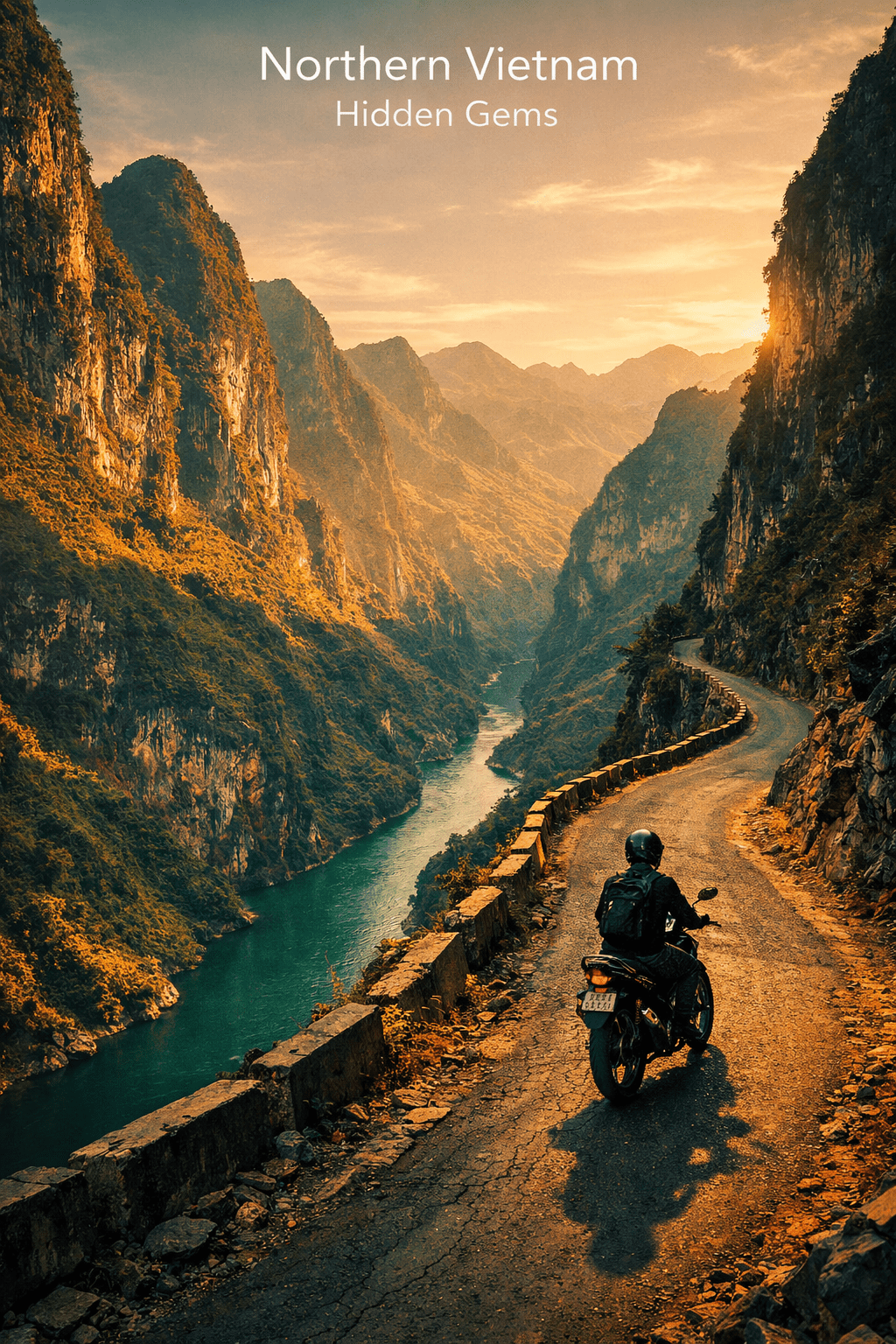
The Ha Giang Loop is a multi-day motorbike route through Vietnam’s northernmost province, near the Chinese border. The landscape here is unlike anything else in Southeast Asia: jagged limestone karst peaks, terraced fields carved into near-vertical hillsides, and tiny ethnic minority villages where Hmong and Dao communities have lived for centuries. [2]
The Ma Pi Leng Pass is the loop’s crown jewel — a cliff-edge road with the turquoise Nho Que River snaking through the gorge hundreds of meters below. It’s genuinely one of the most breathtaking roads in Asia. [2]
How to do it:
- Rent a semi-automatic motorbike in Ha Giang town (around $8–12 USD/day)
- Allow 3–4 days minimum for the full loop
- Stay in local homestays along the route for $10–20 USD/night including meals
- Go between September and November for golden rice terraces, or March to May for buckwheat flowers
“The Ha Giang Loop isn’t just a scenic drive — it’s a reminder that Vietnam’s most extraordinary landscapes have nothing to do with the tourist trail.”
Common mistake: Rushing the loop in 2 days. You’ll miss the side roads, the villages, and the moments that make it worth the journey.
Ba Be National Park
Ba Be National Park sits deep in the northeastern highlands and is home to one of Vietnam’s largest natural freshwater lakes. Limestone cliffs rise straight out of the water, caves like Hua Ma hide inside the karst, and the Dau Dang Waterfall is accessible by kayak or boat. [2]
It’s a genuine birdwatcher’s destination, and the lakeside homestays offer sunrise views that feel almost unreal. Most visitors to Vietnam never hear about it.
What Makes Ninh Binh Better Than Ha Long Bay for Many Travelers?
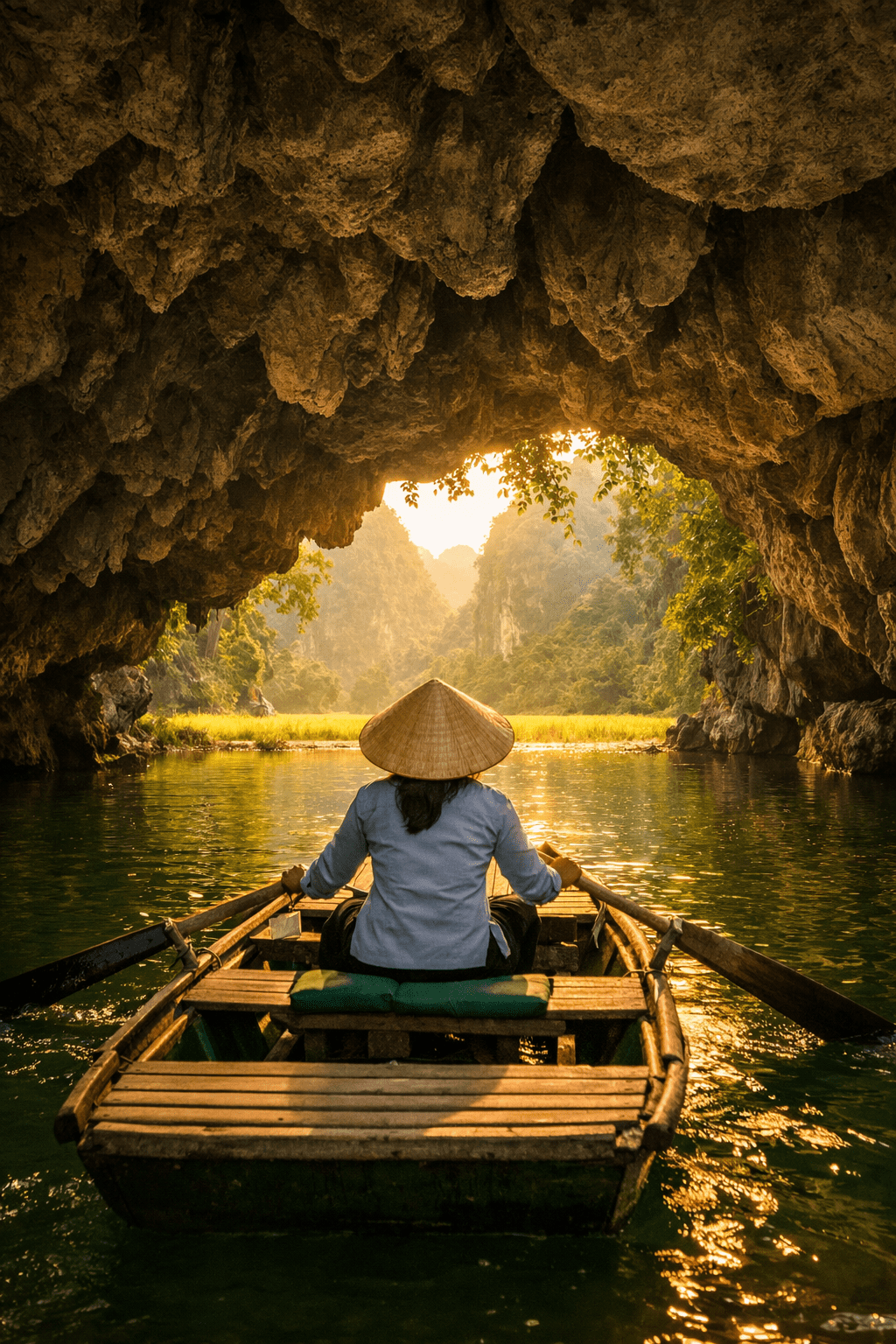
Ninh Binh delivers a similar karst landscape to Ha Long Bay — limestone peaks, caves, emerald water — but on land and river, without the overnight cruise price tag or the crowds. For many travelers, it’s the better choice. [3]
Trang An and Tam Coc
Trang An is a UNESCO-listed complex of waterways, caves, and rice paddies south of Hanoi. A traditional rowboat takes you through low cave tunnels carved by centuries of water erosion, past golden paddy fields and jungle-draped cliffs. It’s deeply calming and genuinely beautiful. [3]
Tam Coc is the more famous neighbor and gets busier, but it’s still far less crowded than Ha Long Bay. Go early in the morning to beat the day-trippers from Hanoi.
Hang Mua Viewpoint
Hang Mua is a short climb (around 500 steps) that rewards you with one of the most iconic panoramic views in northern Vietnam — a sweeping vista over the Tam Coc valley and its winding river. [3] It’s a better photograph than most people get from Ha Long Bay, and it costs almost nothing to visit.
Choose Ninh Binh if: You’re on a budget, you want to avoid large tour groups, or you’re traveling independently by motorbike or bicycle.
Which Central Vietnam Destinations Do Tourists Consistently Skip?
Central Vietnam is where history and landscape collide — and where the tourist trail is thinnest relative to what’s on offer.
Hue’s Imperial City and Emperor Tombs
Hue served as Vietnam’s imperial capital under the Nguyen Dynasty, and its Imperial City is a UNESCO World Heritage Site. The walled citadel, royal pavilions, and ornate gateways are genuinely impressive — and the Emperor Tombs scattered across the surrounding hills are architectural masterpieces that most visitors skip entirely in favor of another day in Hoi An. [6]
The tomb of Tu Duc is particularly striking: a lakeside complex built during the emperor’s own lifetime, surrounded by frangipani trees and reflecting pools.
Practical tip: Rent a motorbike in Hue for a day and visit 2–3 tombs on your own. Skip the group tours, which rush you through.
Phong Nha-Ke Bang National Park
Phong Nha is home to some of the world’s largest cave systems, including Son Doong — a cave so large it has its own weather system and jungle inside. [2] Guided expeditions into Son Doong are expensive (around $3,000 USD for a multi-day trip) and require booking months in advance, but even the more accessible caves like Paradise Cave and Phong Nha Cave are extraordinary.
This is one of the most undervisited UNESCO sites in all of Southeast Asia, and it won’t stay that way forever.
If you enjoy discovering places that feel genuinely off the tourist map, you might also appreciate our guide to hidden gems in Mexico you won’t believe exist for a similar style of travel.
What Are the Best Hidden Gems in Ho Chi Minh City and Hanoi?
Both of Vietnam’s major cities have well-worn tourist circuits. Here’s what’s worth finding beyond them.
Ho Chi Minh City (Saigon)
- Tao Dan Park: A large, shaded park in District 1 where locals practice tai chi at dawn, play chess under the trees, and gather for weekend bird competitions. It’s a window into daily Saigon life that most tourists walk right past. [4]
- Saigon Sky Deck (Bitexco Financial Tower): Less crowded than similar observation decks in other Asian cities, with excellent views over the Saigon River and the sprawling city below. [4]
- Mekong Delta day trips: The waterway landscape south of the city — floating markets, fruit orchards, narrow canal boats — is a completely different Vietnam from what you see in the north. [4]
Hanoi
- Hoa Lo Prison (Hanoi Hilton): This former French colonial prison, later used to hold American POWs, offers historical context that most visitors skip in favor of the Old Quarter’s street food scene. It’s sobering and important. [4]
- Hanoi’s French Quarter: The tree-lined boulevards and colonial-era architecture here are quieter and more atmospheric than the Old Quarter’s bustle. Walk the streets around Hoan Kiem Lake’s southern end for a different pace. [4]
For a similar approach to finding the local side of a major city, our first time in Bangkok guide covers the same philosophy applied to Thailand’s capital.
Where Should You Stay? Vietnam Accommodations for Every Budget
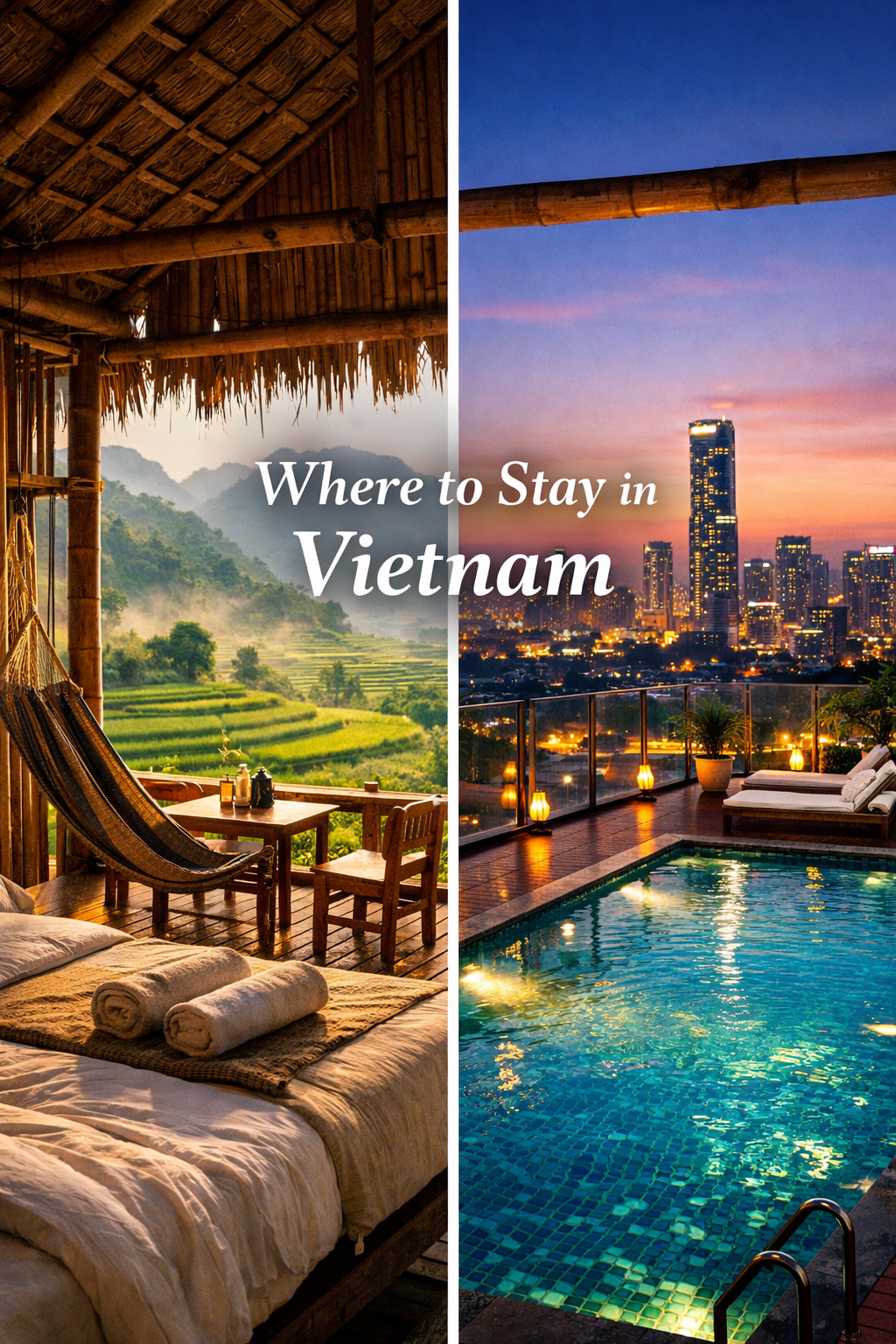
Vietnam has excellent accommodation at every price point. The key is matching your lodging to the type of experience you want, not just the city you’re in.
Budget: Hostels and Guesthouses ($8–25 USD/night)
Vietnam’s hostel scene is strong, especially in Hanoi, Ho Chi Minh City, and Hoi An. Look for places in the Old Quarter (Hanoi) or An Hoi Island (Hoi An) for central locations. In smaller towns, family-run guesthouses (called nhà nghỉ) are clean, friendly, and often include breakfast.
Mid-Range: Boutique Hotels and Eco-Lodges ($30–80 USD/night)
This is where Vietnam really shines for value. Some standout options:
| Location | Accommodation Type | What Makes It Special |
|---|---|---|
| Pu Luong | Eco-lodge | Valley views, rice terraces, sustainable design |
| Ba Be Lake | Lakeside homestay | Sunrise on the water, local cooking |
| Hoi An | Heritage boutique hotel | Lantern-lit courtyards, central location |
| Hue | Colonial villa hotel | French-Vietnamese architecture, quiet gardens |
| Ha Giang | Loop homestays | Authentic, home-cooked meals, mountain views |
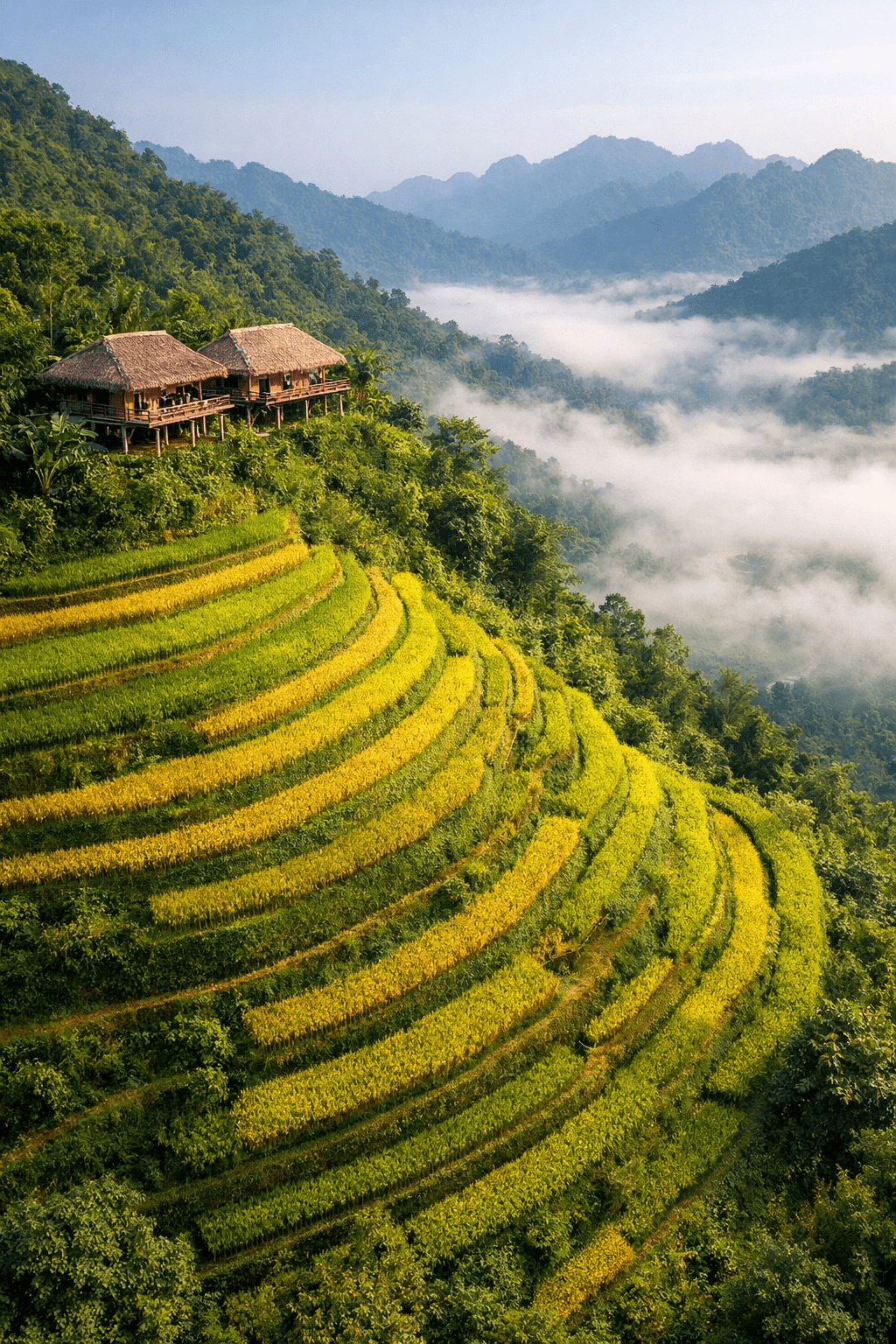
Pu Luong Nature Reserve deserves special mention. The eco-lodges here sit on ridgelines above the terraced valleys, with open-air bungalows and views that make waking up genuinely exciting. [2] Prices typically run $40–70 USD per night including meals.
Luxury: High-End Resorts and Heritage Hotels ($100–300+ USD/night)
Vietnam’s luxury options have grown significantly. The best include:
- Sofitel Legend Metropole (Hanoi): A genuine colonial landmark with a wartime bunker beneath it
- The Nam Hai (Hoi An): Pool villas near the beach, consistently ranked among Asia’s best resorts
- Six Senses Ninh Van Bay (Nha Trang): Overwater bungalows accessible only by boat
If luxury travel is your style, our guide to Bora Bora luxury stays and hidden spots shows how to approach high-end travel planning in a similar way.
How Do You Plan a Vietnam Trip That Avoids the Crowds?
The best Vietnam Travel Guide advice for avoiding crowds comes down to three things: timing, routing, and accommodation choice.
Timing:
- Visit November to April for the best weather in central and northern Vietnam
- Avoid Tet (Vietnamese Lunar New Year) in late January/early February unless you specifically want to experience the festival — domestic travel peaks and many businesses close
- Shoulder months (October, November, March) offer the best balance of good weather and manageable crowds
Routing:
- Add Ha Giang, Pu Luong, or Ba Be to a northern itinerary instead of a second Ha Long Bay cruise
- Replace one Hoi An day with a day trip to My Son Sanctuary (Cham temple ruins, often empty by mid-afternoon)
- Travel south to north instead of the standard north-to-south route — you’ll be moving against the grain of most group tours
Practical logistics:
- Open bus tickets let you hop on and off between cities at your own pace
- Sleeper trains between Hanoi and Da Nang or Hue are comfortable, scenic, and cheap
- Book cave tours in Phong Nha at least 2–3 months ahead; Son Doong requires a year or more
For packing tips before your trip, our travel essential packing guide covers exactly what to bring for a Southeast Asia trip.
FAQ: Vietnam Travel Guide
Is Vietnam safe for solo travelers?
Yes. Vietnam is consistently rated one of the safer destinations in Southeast Asia for solo travel, including for women. Petty theft (bag snatching on motorbikes) is the main risk in cities — keep bags on the inside, away from the road.
Do I need a visa for Vietnam?
Most nationalities need a visa. As of 2026, many countries are eligible for e-visas, which you can apply for online before arrival. Check the official Vietnam Immigration Department portal for your specific nationality.
What’s the best way to get around Vietnam?
For long distances, sleeper buses and trains are cheap and reliable. Within cities, ride-hailing apps (Grab) are safer and more transparent than negotiating with individual taxi drivers. For rural areas, renting a motorbike gives you the most freedom.
How much does a trip to Vietnam cost per day?
Budget travelers can manage on $30–50 USD/day including accommodation, food, and local transport. Mid-range travelers typically spend $60–100 USD/day. Luxury travel runs $150–300+ USD/day.
Is street food safe to eat in Vietnam?
Generally yes, especially at busy stalls with high turnover. Stick to cooked food, avoid raw vegetables washed in tap water, and drink bottled or filtered water. Vietnamese street food — pho, banh mi, bun bo Hue — is one of the best reasons to visit.
When is the best time to visit Ha Giang?
September to November for golden rice terraces and clear skies. March to May for blooming buckwheat flowers. Avoid the rainy season (June–August) when roads can become dangerous.
Can I visit Son Doong Cave without a tour?
No. Son Doong is only accessible through licensed guided expeditions run by Oxalis Adventure. Permits are limited and must be booked well in advance — often 12+ months ahead.
What currency does Vietnam use?
The Vietnamese Dong (VND). ATMs are widely available in cities and tourist areas. Cash is still king in rural areas and markets, so carry enough when heading off the beaten path.
Is Ha Long Bay worth visiting despite the crowds?
It depends on your budget and expectations. A mid-range or luxury overnight cruise on a reputable boat is genuinely beautiful. Budget cruises on crowded boats are less impressive. Ninh Binh offers a comparable landscape experience at lower cost and with fewer people.
What language is spoken in Vietnam?
Vietnamese is the official language. English is widely spoken in tourist areas, hotels, and restaurants. In rural areas, very little English is spoken — a translation app helps significantly.
Conclusion: Your Next Steps for Planning a Vietnam Trip
Vietnam rewards travelers who go a little further than the standard itinerary. The country’s best experiences — the Ha Giang Loop at sunrise, a rowboat through Trang An’s caves, a dawn walk through Hue’s empty Imperial City — are all accessible. They just require a bit more planning than booking the default tour package.
Here’s how to get started:
- Decide your travel style — adventure, culture, nature, or a mix — and build your route around that, not around what’s most famous
- Book Phong Nha cave tours and Son Doong expeditions first if they’re on your list — these sell out far in advance
- Add at least one off-the-beaten-path destination (Ha Giang, Pu Luong, or Ba Be) to any northern itinerary
- Plan your accommodation early for eco-lodges and boutique properties in smaller destinations — they have limited rooms
- Check visa requirements for your nationality at least 4–6 weeks before travel
If you’re also planning other Asian adventures, our guide to what to see in Japan for first-time visitors pairs well with a Vietnam trip for a broader Southeast and East Asia itinerary.
Vietnam is one of the most rewarding countries in the world to explore. This Vietnam Travel Guide is your starting point — the rest is up to you.
References
[1] Attractions G293921 Activities Zft12156 Vietnam – https://www.tripadvisor.com/Attractions-g293921-Activities-zft12156-Vietnam.html
[2] Vietnam Travel Guide 2026 – https://elitetraveljourneys.com/vietnam-travel-guide-2026/
[3] tnktravel – https://www.tnktravel.com/blogs/19638/
[4] Watch – https://www.youtube.com/watch?v=ZDdzNZnSBoM
[5] The Ultimate Guide To Vietnam Tours In 2026 – https://www.vietnamescapetours.com/travel-blog/the-ultimate-guide-to-vietnam-tours-in-2026.html
[6] Vietnam Travel Itinerary – https://www.latimes.com/eta/trip-ideas/couples/story/vietnam-travel-itinerary
[7] Vietnam Ttd169193 – https://www.getyourguide.com/explorer/vietnam-ttd169193/
[8] Vietnam Travel Guide 2026 Discover Hidden Gems And Authentic Flavors – https://www.vietnamtourpackages.com/vietnam-travel-guide-2026-discover-hidden-gems-and-authentic-flavors/