Last updated: February 15, 2026
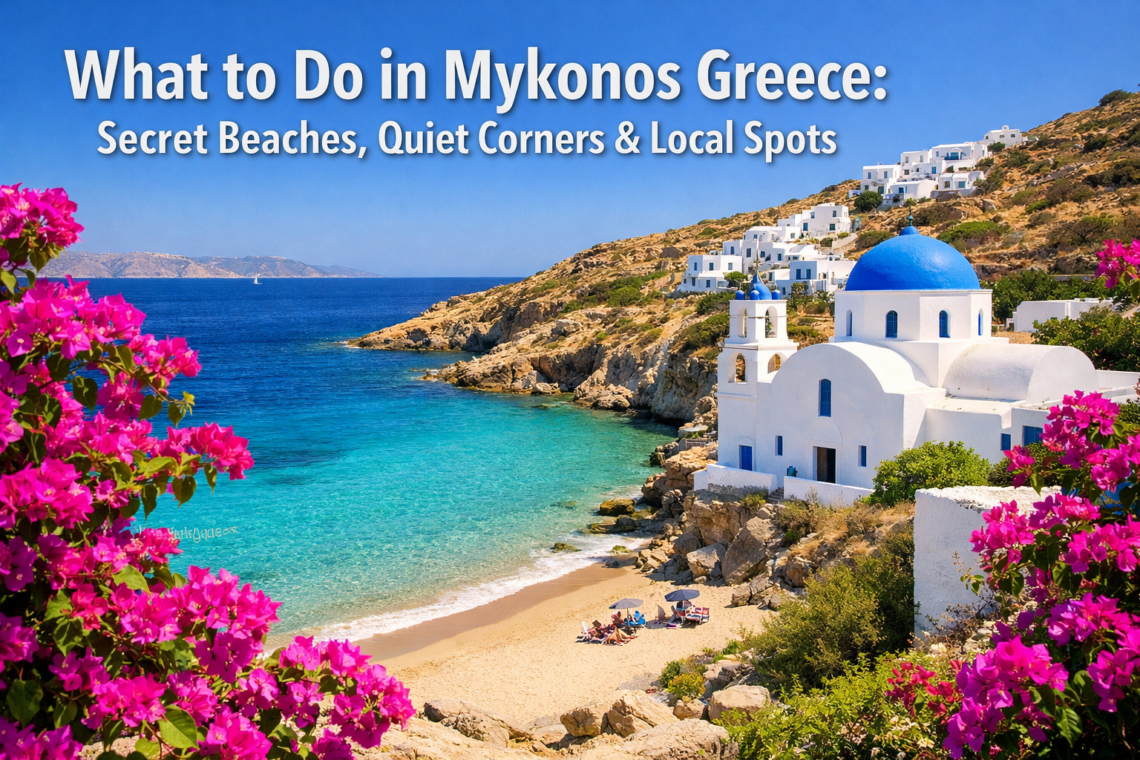
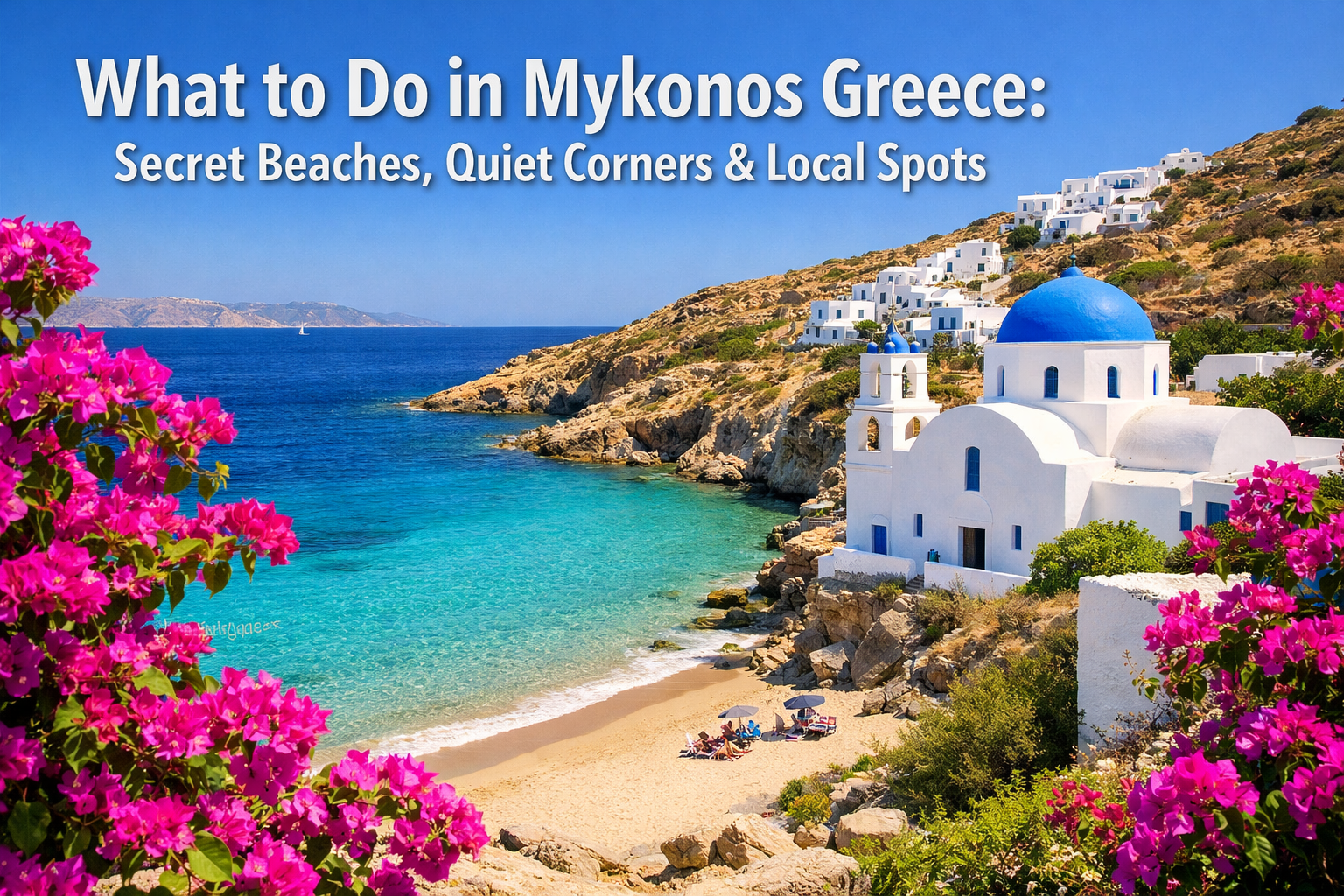
I’ll be honest—when I first thought about visiting Mykonos, I pictured nothing but packed beach clubs and nonstop parties. But after spending time on this island, I discovered a completely different side. Yes, the famous party scene exists, but Mykonos also hides quiet beaches, charming local tavernas, and peaceful corners where you can actually hear the waves. If you’re wondering what to do in Mykonos Greece beyond the Instagram hotspots, this guide will show you the island’s authentic side.
Mykonos in 2026 is shifting toward more experience-driven travel rather than pure spectacle[1]. The island still offers its legendary energy, but travelers are increasingly seeking out the calmer, more genuine experiences that make Greek islands special.
Key Takeaways
- May, June, and September are the best months to visit Mykonos for a balanced experience with manageable crowds and better prices[1]
- Secret beaches like Agios Sostis and Fokos offer peaceful swimming away from the beach club scene
- Early mornings in Mykonos Town reveal the authentic local life before tourists arrive
- Traditional tavernas in inland villages serve better food at half the price of waterfront restaurants
- The island works perfectly for couples and relaxation seekers, not just party-goers[1]
Quick Answer
What should you actually do in Mykonos Greece? Focus on visiting during shoulder season (May, June, or September), explore hidden beaches on the north coast, wake up early to experience Mykonos Town without crowds, eat at family-run tavernas in Ano Mera village, and balance one or two popular spots with plenty of quiet exploration. The best Mykonos experience in 2026 comes from choosing quality over quantity and timing your visits strategically[1].
When Should You Visit Mykonos for the Best Experience?
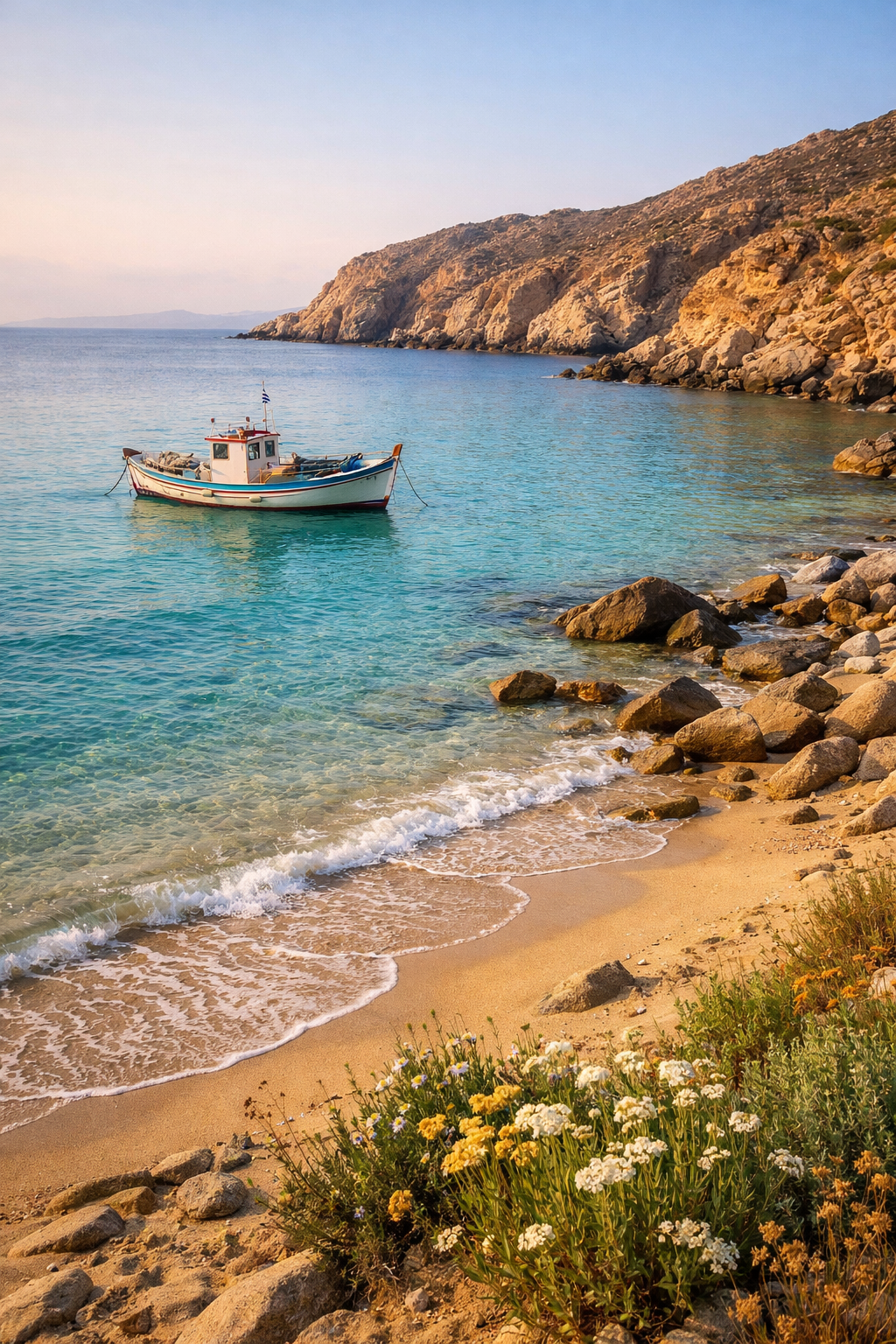
May, June, and September offer the sweet spot for visiting Mykonos, giving you an “alive but manageable” island feel with more reasonable prices[1]. During these months, you’ll find warm weather, swimmable seas, and enough activity to feel the island’s energy without the overwhelming crowds.
July and August remain peak season with maximum energy but also bring the highest crowds and costs[1]. If you visit during summer, expect:
- Beach clubs fully booked by 10 AM
- Restaurants requiring reservations days in advance
- Significantly higher accommodation prices
- Shoulder-to-shoulder crowds in Mykonos Town after sunset
Choose May or early June if: You want pleasant weather (70-80°F), fewer tourists, and prices 30-40% lower than peak season. The island feels alive but relaxed.
Choose September if: You prefer warmer water temperatures, want to avoid families with school-age children, and don’t mind occasional wind (the famous Meltemi winds calm down by late September).
Avoid late October through April if: You want beach time and lively atmosphere. Many restaurants and hotels close, ferry schedules reduce dramatically, and weather becomes unpredictable.
The tourism slowdown Mykonos is experiencing in 2025-2026 actually works in your favor[3]. You’ll find better service, less crowding at popular spots, and a more authentic experience as the island recalibrates from overtourism.
What Are the Best Secret Beaches in Mykonos?
The north and northeast coasts hide Mykonos’ most peaceful beaches, far from the organized beach clubs that dominate the south. These spots require a rental vehicle to reach, which naturally filters out most tourists.
Agios Sostis Beach
This completely undeveloped beach offers golden sand and clear water without a single sunbed or umbrella. A small taverna sits above the beach serving simple Greek food, but otherwise, you’ll find just natural beauty. The beach faces north, so it can get windy—bring a windbreak if you visit in July or August.
Best for: Travelers who want complete peace and don’t need facilities.
Fokos Beach
Located on the northeast coast, Fokos combines a beautiful sandy beach with one excellent taverna (Fokos Taverna) that serves fresh fish and traditional Greek dishes. The beach remains quiet even in August because the dirt road access keeps away tour buses and casual visitors.
Common mistake: Trying to reach Fokos in a small rental car. The road is rough—rent an ATV or sturdy vehicle.
Kapari Beach
This tiny beach near Agios Sostis attracts almost no one. The rocky access and lack of facilities mean you’ll often have it to yourself. The water is incredibly clear for snorkeling, and the surrounding landscape feels wild and untouched.
Mersini Beach
Tucked away on the northeast coast, Mersini offers calm waters and a small sandy area perfect for families with young children. A simple beach bar provides drinks and snacks, but the vibe stays relaxed and local.
Transportation tip: Renting a scooter or ATV is the most popular way to access these secluded beaches and explore less-known corners of the island[4]. Most rental shops in Mykonos Town offer daily rates starting around €25-35 for scooters.
How Can You Experience Mykonos Town Like a Local?
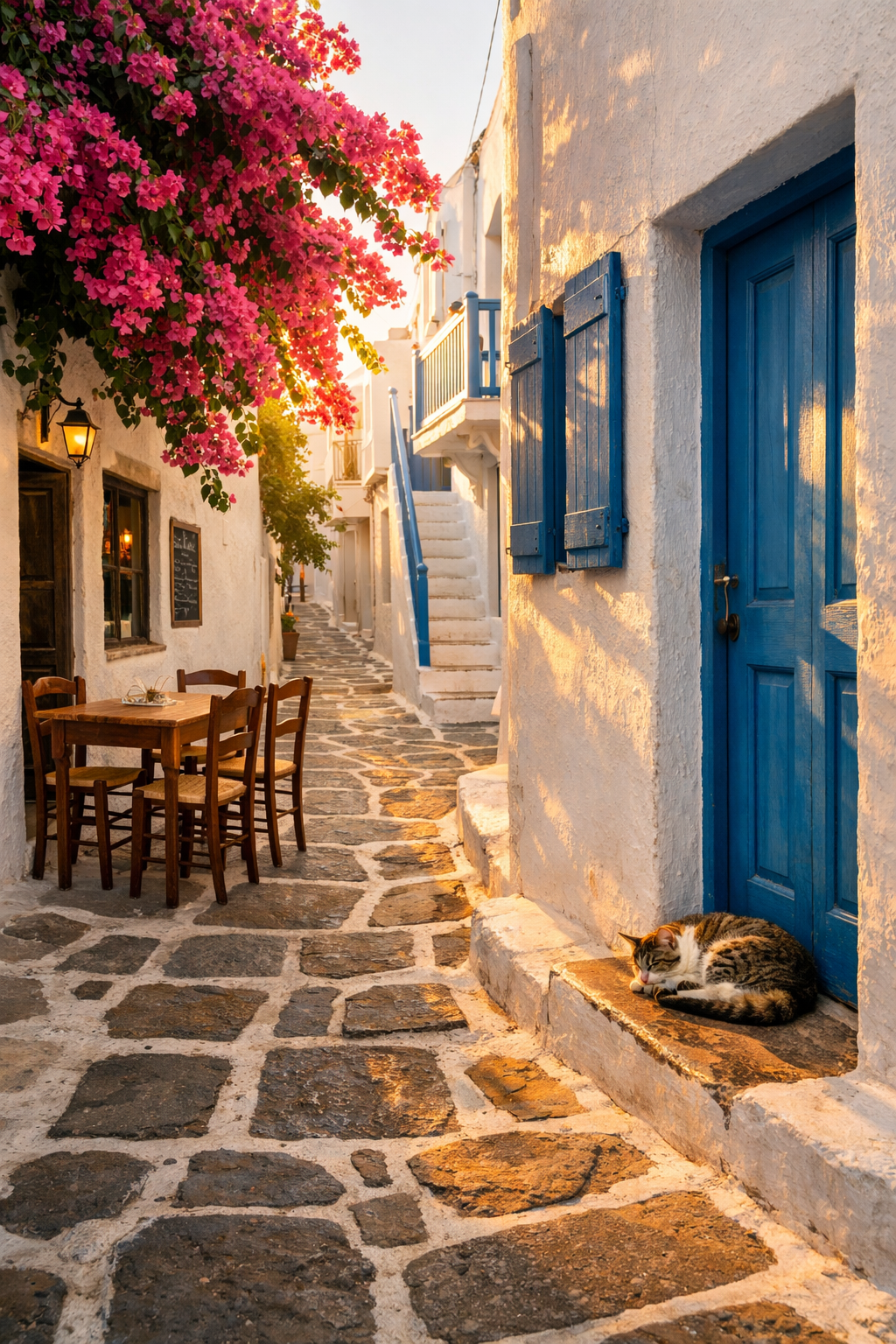
Wake up before 8 AM and walk through Mykonos Town (Chora) while it’s still quiet. This simple timing shift transforms your experience completely. The famous winding streets with their white and blue color scheme[4] become peaceful pathways instead of crowded mazes.
Early Morning Strategy
Between 7-9 AM, you’ll see:
- Shopkeepers washing their storefronts and setting up displays
- Locals drinking coffee at neighborhood cafes (not the waterfront tourist spots)
- Stray cats sunbathing on empty streets
- Perfect lighting for photography without people in every shot
- Fresh bread being delivered to bakeries
Where to go: Walk through the residential neighborhoods behind the main shopping streets. The area around Tria Pigadia (Three Wells) shows authentic Cycladic architecture with bougainvillea plantings offering romantic exploration spots[4].
Skip Little Venice at Sunset
Everyone goes to Little Venice at sunset, creating shoulder-to-shoulder crowds. Instead, watch the sunset from:
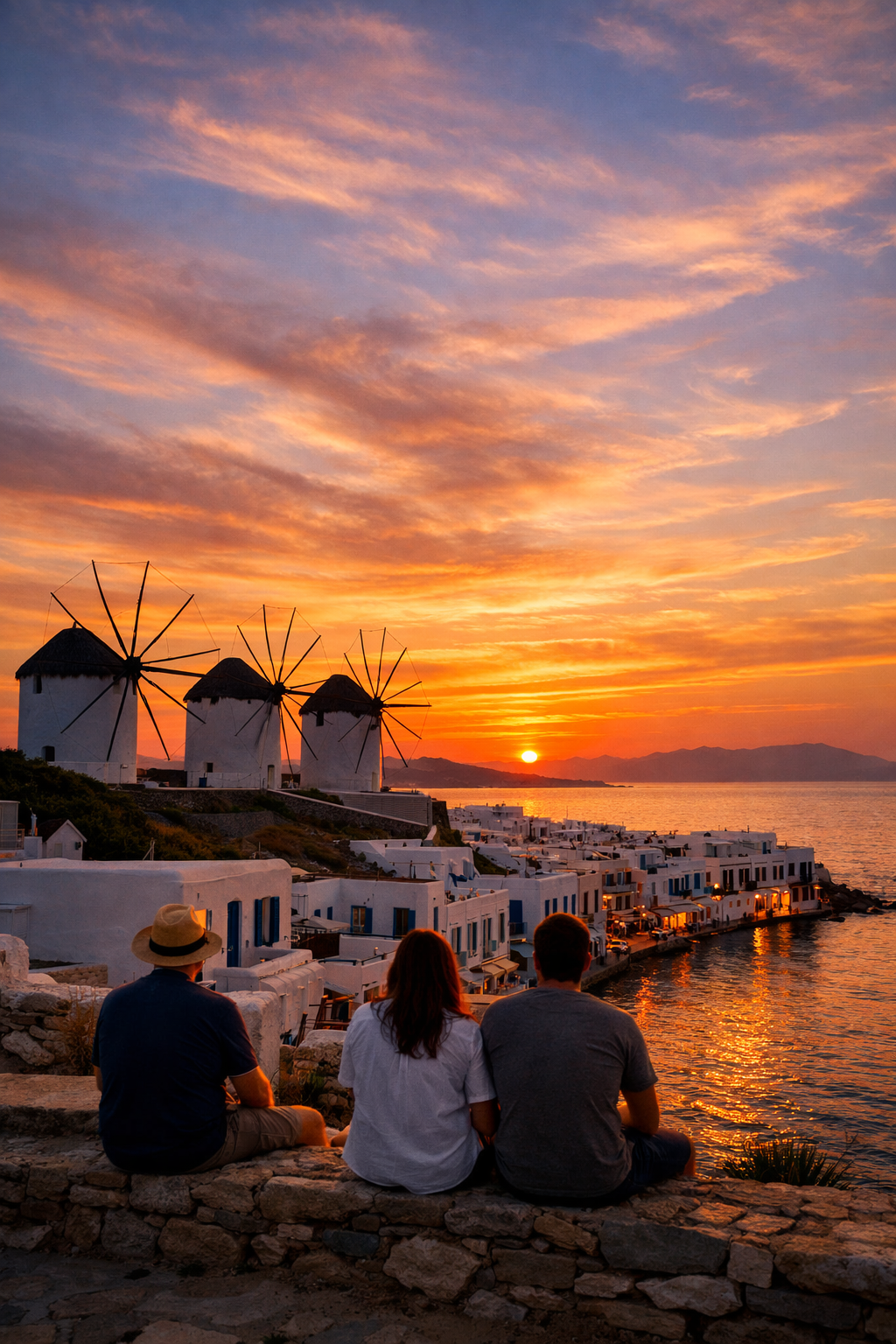
- The windmills above town (iconic views without the waterfront crush)
- Armenistis Lighthouse (requires a scooter but offers dramatic sunset views)
- Any quiet beach on the west coast
Then visit Little Venice around 10 PM after the sunset crowds disperse. You’ll actually get a table at the waterfront bars and enjoy the atmosphere without fighting for space.
Local Shopping Hours
Serious shoppers should know that many boutiques close from 2-6 PM for afternoon rest, then reopen until 10 PM or later. Shopping during the afternoon closure means empty streets—perfect for photos but frustrating if you want to buy something.
Similar to discovering hidden gems in other popular destinations, timing and local knowledge make all the difference in Mykonos.
Where Should You Eat to Avoid Tourist Traps?
Head inland to Ano Mera village for authentic Greek food at local prices. This traditional village sits in the center of the island, about 15 minutes from Mykonos Town, and serves the island’s best traditional tavernas.
Ano Mera Village
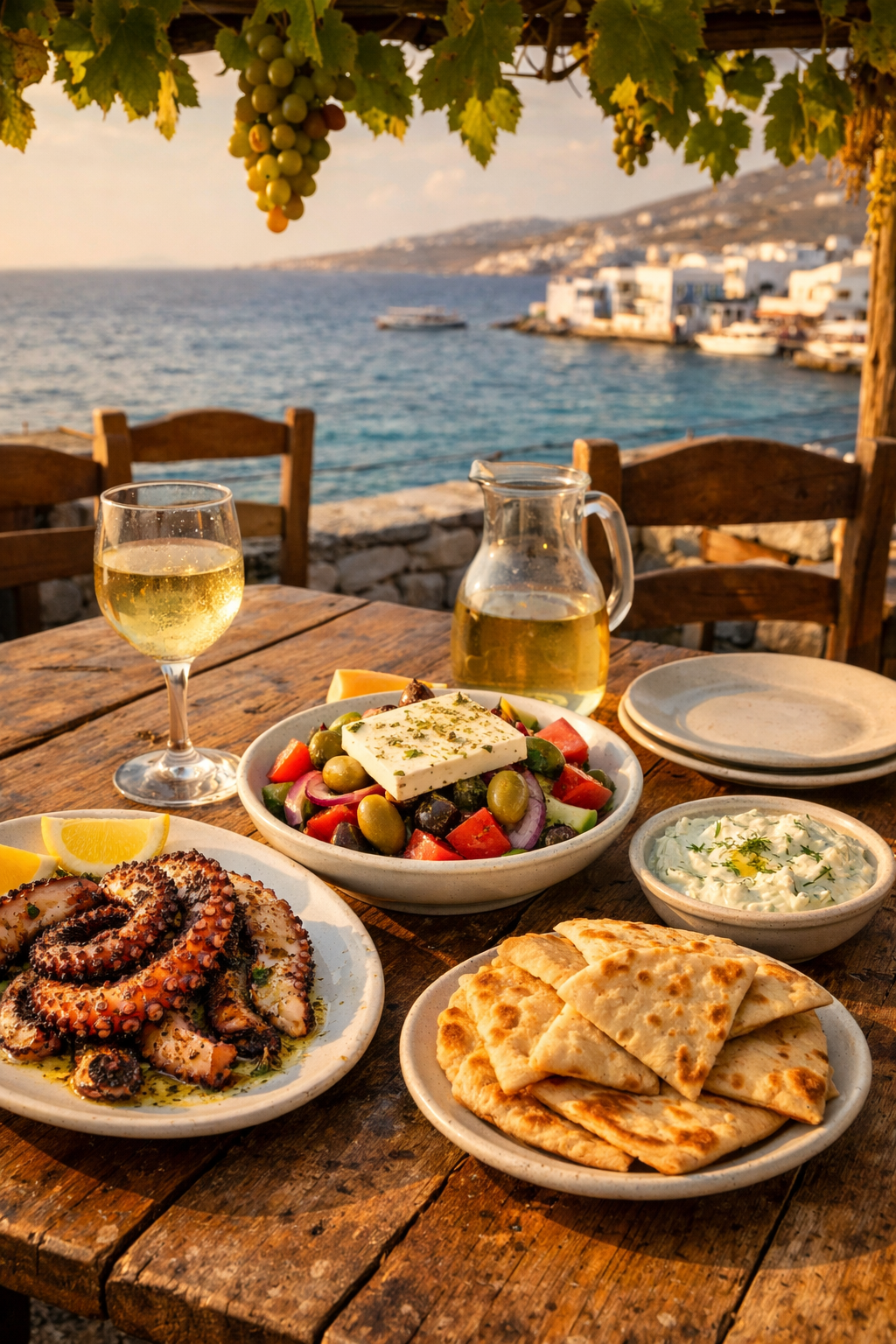
The main square in Ano Mera hosts several family-run tavernas where locals actually eat. You’ll pay €12-15 for a full meal instead of €30-40 in Mykonos Town. The food is simpler but more authentic—grilled meats, fresh salads, homemade tzatziki, and local wine.
Specific recommendations:
- Taverna Katerina – Family recipes, generous portions, friendly service
- To Steki – Known for grilled lamb and traditional Greek appetizers
- Vangelis – Simple taverna with excellent moussaka and stuffed vegetables
Beach Tavernas Worth the Visit
Not all beach restaurants are overpriced tourist traps. These spots offer fair prices and good food:
- Kiki’s Taverna (Agios Sostis) – No electricity, no phone, cash only, grilled food over charcoal, legendary among locals
- Fokos Taverna (Fokos Beach) – Fresh fish, traditional recipes, beautiful setting
- Spilia (Agia Anna Beach) – Built into a cave, reasonable prices, romantic atmosphere
Common mistake: Eating at the first taverna you see near the ferry port or in the center of Mykonos Town. Walk 5-10 minutes away from the main tourist areas and prices drop significantly.
Bakeries for Breakfast
Skip hotel breakfast and visit local bakeries:
- Gioras Wood Medieval Mykonian Bakery – Traditional wood-fired oven, cheese pies, sweet pastries
- Nikos Gallop – Fresh bread, spinach pies, morning coffee with locals
Budget reality: While Mykonos remains expensive compared to other Greek islands, clearer value emerges outside summer months and away from waterfront locations[1].
What Are the Best Quiet Corners for Relaxation?
The monastery of Panagia Tourliani in Ano Mera offers peaceful contemplation in a beautiful 16th-century setting. The ornate interior features a carved wooden iconostasis and religious artifacts, while the courtyard provides a shaded spot to rest away from beach crowds.
Peaceful Spots Around the Island
Armenistis Lighthouse – Located at the northwestern tip, this lighthouse offers dramatic coastal views and complete solitude. The 20-minute drive from Mykonos Town takes you through rural landscapes rarely seen by tourists.
Ftelia Beach – While known among windsurfers, the long stretch of sand means you can always find a quiet spot away from the action. The beach faces north with consistent wind, creating a different atmosphere from the calm southern beaches.
Marathi Marble Quarries – These ancient quarries supplied marble for the Temple of Apollo on Delos. Today, they’re abandoned and atmospheric, offering a unique landscape of white stone and turquoise water pools.
Garden Cafes and Quiet Bars
Remezzo (Mykonos Town) – Small garden cafe hidden in the residential area, perfect for afternoon coffee away from crowds.
180° Sunset Bar (above Mykonos Town) – Despite the name suggesting tourist trap, this spot attracts more locals than visitors. The sunset views rival Little Venice without the crowds.
Alemagou (Ftelia Beach) – Bohemian beach bar with relaxed daytime atmosphere (gets busier at sunset). Comfortable lounging areas and quality cocktails without the aggressive party vibe.
Choose quiet corners if: You’re visiting as a couple and want romantic moments, or you need breaks from stimulation. The island is increasingly suitable for couples, especially outside peak summer weeks when it becomes “more balanced and romantic”[1].
Just as travelers ask whether Santorini is worth visiting, Mykonos requires the same strategic approach—knowing where and when to go makes all the difference.
How Should You Plan Your Days in Mykonos?
Split your time between beach mornings, afternoon exploration, and strategic evening activities. This rhythm matches the island’s natural flow and helps you avoid the worst crowds while experiencing everything Mykonos offers.
Sample Day Structure
Morning (7 AM – 12 PM):
- Wake early and have breakfast at a local bakery
- Visit Mykonos Town while it’s quiet (7-9 AM)
- Head to a beach by 10 AM before it fills up
- Swim and relax until early afternoon
Afternoon (12 PM – 6 PM):
- Leave the beach before peak heat (beaches get most crowded 1-4 PM)
- Have late lunch at an inland taverna
- Return to accommodation for rest during hottest hours
- Explore a village, monastery, or quiet corner around 5 PM
Evening (6 PM – late):
- Watch sunset from a non-crowded spot
- Dinner at 9 PM or later (Greek dining schedule)
- Evening walk through Mykonos Town
- Drinks at a bar if desired (or early to bed for another early start)
Three-Day Itinerary for First-Timers
Day 1: Mykonos Town + South Coast
- Morning: Explore Mykonos Town early
- Afternoon: Visit Psarou Beach or Platis Gialos
- Evening: Sunset at the windmills, dinner in town
Day 2: North Coast + Ano Mera
- Morning: Drive to Agios Sostis or Fokos Beach
- Afternoon: Lunch in Ano Mera village, visit Panagia Tourliani monastery
- Evening: Quiet dinner, early rest
Day 3: Delos Island + Relaxation
- Morning: Half-day trip to Delos archaeological site
- Afternoon: Relax at hotel or visit a quiet beach
- Evening: Farewell dinner at a special restaurant
Common mistake: Trying to visit multiple beaches in one day. The island is small, but beach-hopping wastes time on driving and parking. Pick one beach per day and enjoy it fully.
Should You Rent a Vehicle?
Yes, absolutely. Public buses exist but run infrequently and don’t reach the best quiet spots. Rental options:
- Scooter/ATV: €25-35/day, perfect for two people, easy parking, fun exploration
- Small car: €40-60/day, better for families or if you’re uncomfortable on two wheels
- Quad bike: €35-45/day, popular choice, handles rough roads well
Book in advance during May-September as rental vehicles sell out. Most rental agencies are near the old port in Mykonos Town.
What About Mykonos’ Famous Party Scene?
You can completely avoid the party scene if you want, or dip into it selectively. The stronger divide between crowded hotspots and calmer areas is now more evident than ever[1], making it easy to choose your experience.
If You Want to Experience the Party Scene
The main party beaches and clubs:
- Paradise Beach – Beach club by day, massive parties at night
- Super Paradise Beach – Similar vibe, slightly more upscale
- Cavo Paradiso – Famous nightclub built into cliffs
- Scorpios – Upscale beach club with sunset rituals and DJ sets
Budget reality: Beach clubs charge €20-50 for sunbed rental (often includes a drink credit). Nightclub entry ranges €20-40, with cocktails at €15-20 each.
Choose the party scene if: You’re traveling with friends, enjoy electronic music and dancing, and have budget flexibility. The scene peaks in July and August.
If You Want to Avoid It Completely
Stay away from: Paradise Beach, Super Paradise Beach, and Mykonos Town’s main bar street (Matogianni area) after 11 PM.
Focus on: North coast beaches, Ano Mera village, early dinners at traditional tavernas, sunset watching from quiet spots, and accommodation outside Mykonos Town.
The island’s evolution beyond its party-centric reputation[1] means you’ll find plenty of like-minded travelers seeking authentic experiences rather than nightclub marathons.
Is Mykonos Worth Visiting in 2026?
Yes, Mykonos remains worth visiting, though value comes from experience, not from low prices—success depends on choosing the right period and planning carefully[1]. The island combines beaches, international dining, scenic villages, and social opportunities in compact proximity, allowing transitions from quiet swimming to vibrant evenings without lengthy transfers[1].
What Makes Mykonos Special
The unique white and blue color scheme of Cycladic architecture creates distinctive photo opportunities throughout the island[4]. Unlike other Greek islands, Mykonos offers this specific combination:
- Compact size – You can reach any point in 20-30 minutes
- Variety – Beach relaxation, cultural sites, nightlife, and quiet villages all accessible
- Infrastructure – Excellent hotels, restaurants, and services
- Connections – Easy ferry access to other islands and good flight connections
Who Should Visit Mykonos
Perfect for:
- Couples seeking romance with some energy (visit May, June, or September)[1]
- Friend groups who want beach days and optional nightlife
- Travelers who appreciate quality dining and boutique shopping
- People combining multiple Greek islands (Mykonos works well with Santorini, Paros, or Naxos)
Not ideal for:
- Budget backpackers (even with careful planning, Mykonos costs more than most Greek islands)
- Travelers seeking completely untouched, authentic Greece (the island is heavily developed)
- Families with very young children during peak season (crowds and party atmosphere)
The Tourism Shift
Mykonos is experiencing a measurable tourism slowdown in 2025-2026, though milder than Santorini, driven by overtourism fatigue, rising costs, and travelers shifting to quieter Greek islands[3]. This shift actually improves the visitor experience—less crowding, better service, and more attention to quality over quantity.
Greece continues promoting Mykonos among key 2026 destinations, highlighting its mix of history, beaches, culture, luxury stays, and nightlife to attract global travelers[2]. The island remains a priority destination while adapting to changing traveler preferences.
For context on planning Greek island trips, you might find our guide to first-time visits to Rome helpful for understanding European travel planning, or explore our Lisbon travel guide for another Mediterranean destination perspective.
Frequently Asked Questions
How many days do you need in Mykonos?
Three to four days gives you enough time to explore beaches, visit Mykonos Town, take a day trip to Delos, and experience both quiet corners and popular spots without rushing. Two days works if you’re island-hopping, but you’ll need to prioritize carefully.
Is Mykonos expensive in 2026?
Yes, Mykonos remains one of Greece’s most expensive islands. Expect to pay €100-200+ per night for decent accommodation in season, €15-30 per person for meals, and €30-50 for beach club access. Costs drop 30-40% in shoulder season (May, June, September).
Can you swim in Mykonos in May or September?
Yes, water temperatures reach 68-72°F in May and 72-75°F in September—comfortable for swimming, though cooler than July-August. Greek locals consider this perfect swimming weather.
Do you need a car in Mykonos?
Not essential but highly recommended. Buses connect major beaches and Mykonos Town, but they’re infrequent and don’t reach the best quiet spots. Renting a scooter, ATV, or car gives you freedom to explore hidden beaches and villages.
Is Mykonos good for couples or just party groups?
Mykonos works beautifully for couples, especially outside peak summer weeks when it becomes more balanced and romantic[1]. Focus on quiet beaches, sunset spots, good restaurants, and avoid the party areas.
What’s the best beach in Mykonos for families?
Ornos Beach offers calm, shallow water with facilities including restaurants and water sports. Platis Gialos also works well with its long sandy beach and family-friendly atmosphere. Avoid Paradise and Super Paradise beaches.
Should you visit Mykonos or Santorini?
Different experiences: Mykonos offers better beaches, more nightlife, and easier exploration. Santorini provides more dramatic scenery, famous sunsets, and romantic ambiance. Many travelers visit both via a short ferry ride (2-3 hours).
Can you visit Mykonos as a day trip from Santorini?
Technically possible but not recommended. The ferry takes 2-3 hours each way, leaving only a few hours on the island. If you’re short on time, choose one island and explore it properly.
What should you pack for Mykonos?
Sunscreen (expensive on the island), comfortable walking shoes for cobblestone streets, beach gear, light layers for wind, modest clothing for monastery visits, and a windbreaker for boat trips. Dress code is casual-chic for restaurants.
Is Mykonos safe for solo travelers?
Very safe. The main concerns are typical tourist issues: overpriced services, pickpockets in crowded areas, and aggressive club promoters. Solo travelers, including solo women, visit Mykonos regularly without problems.
When do the Meltemi winds blow in Mykonos?
The Meltemi winds typically blow from mid-July through August, sometimes extending into early September. They create choppy seas and can make north-facing beaches uncomfortable but cool down the island during the hottest months.
Can you drink tap water in Mykonos?
Tap water is safe but doesn’t taste great due to high mineral content. Most visitors buy bottled water. Restaurants serve bottled water (usually charged separately from meals).
Key Takeaways
- Timing transforms your Mykonos experience—visit in May, June, or September for manageable crowds, better prices, and a more authentic feel[1]
- Secret beaches on the north and northeast coasts (Agios Sostis, Fokos, Kapari) offer peaceful swimming away from organized beach clubs
- Wake up before 8 AM to experience Mykonos Town’s charm without tourist crowds blocking the narrow streets
- Eat inland at Ano Mera village for authentic Greek food at local prices, saving 50% compared to waterfront tourist restaurants
- Rent a scooter or ATV to access hidden spots and explore freely—public transport doesn’t reach the best quiet corners
- The party scene is completely optional thanks to a stronger divide between crowded hotspots and calmer areas[1]
- Mykonos works beautifully for couples and relaxation seekers, not just party groups, especially outside peak summer weeks[1]
- Value comes from experience, not low prices—plan carefully and choose quality over quantity for the best visit[1]
- The 2026 tourism slowdown actually improves the visitor experience with less crowding and better service[3]
- Three to four days provides enough time to experience beaches, culture, quiet villages, and selective nightlife without rushing
Conclusion
What to do in Mykonos Greece goes far beyond the famous party beaches and crowded sunset spots. The island’s secret beaches, quiet villages, family-run tavernas, and peaceful corners offer experiences just as memorable as the famous windmills and Little Venice—often more so.
The key to a great Mykonos visit in 2026 is strategic planning: choose shoulder season if possible, wake early to beat crowds, rent transportation for freedom, eat where locals eat, and balance popular attractions with hidden discoveries. The island rewards travelers who look beyond the Instagram highlights to find authentic moments.
Your next steps:
- Book for May, June, or September to get the best balance of weather, crowds, and prices
- Reserve accommodation early in quieter areas like Ornos, Agios Ioannis, or Elia Beach
- Plan to rent a scooter or ATV for at least 2-3 days of your visit
- Make a list of 2-3 secret beaches and 2-3 traditional tavernas to try
- Set your alarm for early morning exploration at least once during your stay
Mykonos continues evolving toward more experience-driven travel[1], making 2026 an excellent time to discover the island’s quieter, more authentic side. The secret beaches, local tavernas, and peaceful corners are waiting—you just need to know where to look.
References
[1] Mykonos In 2026 What Travelers Should Know – https://mykonosmediterraneo.com/en/2026/01/29/mykonos-in-2026-what-travelers-should-know/
[2] Greece Promotes Rhodes Corfu Santorini And Mykonos For 2026 Travel – https://www.tboacademy.com/blog/greece-promotes-rhodes-corfu-santorini-and-mykonos-for-2026-travel/
[3] Santorini Mykonos Tourism Drop – https://inflexinsight.com/santorini-mykonos-tourism-drop/
[4] Destination Mykonos 29044 City Exploration 998416 – https://sg.trip.com/moments/theme/destination-mykonos-29044-city-exploration-998416/