
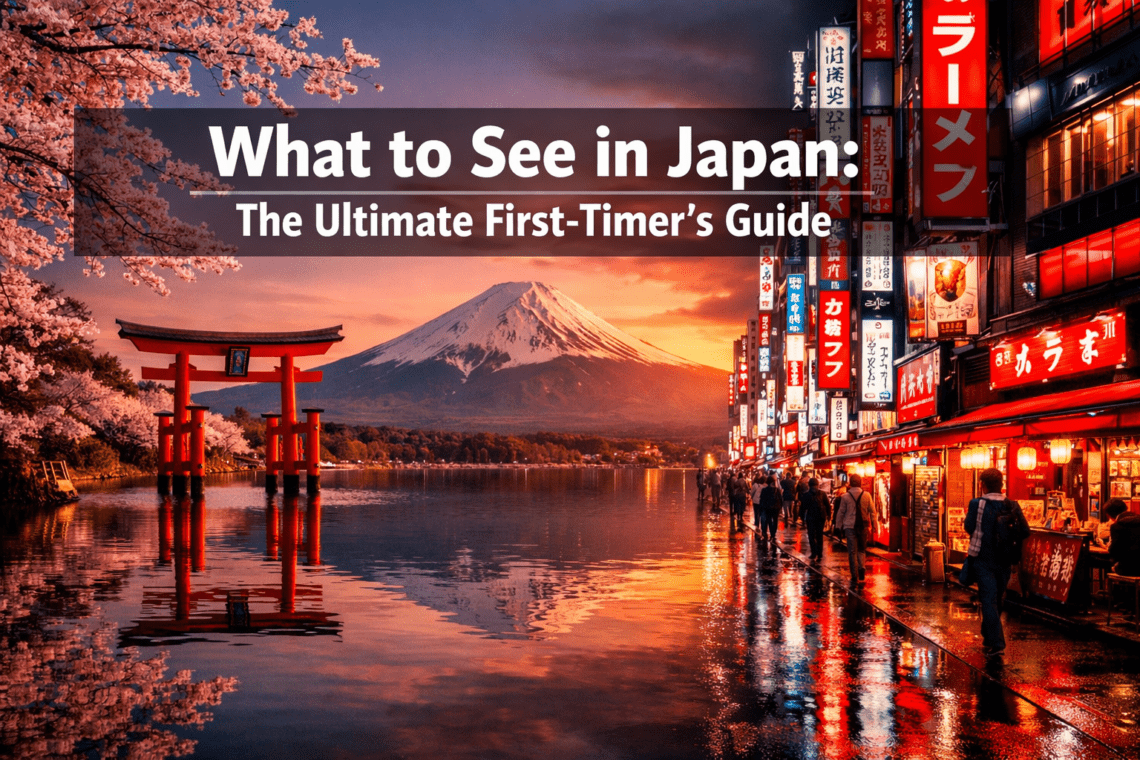
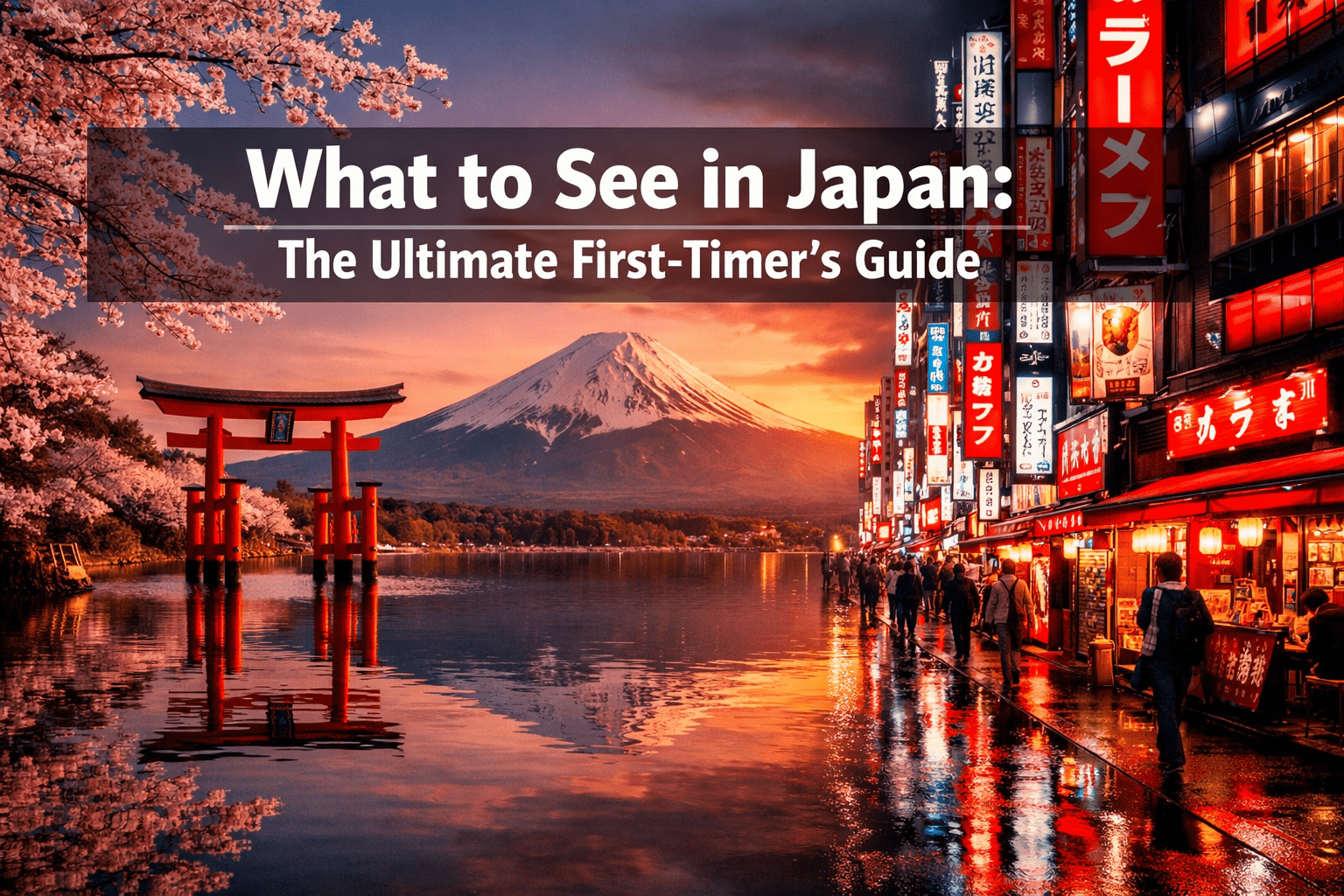
Quick Answer: Japan is one of the most rewarding first-time destinations in the world. Knowing what to see in Japan before you go makes the difference between a rushed, overwhelming trip and a genuinely memorable one. For most first-timers, the essential stops are Tokyo, Kyoto, Osaka, Nara, and a day trip to Mount Fuji or Hakone — all connected by the famous Shinkansen bullet train.
Key Takeaways
- Tokyo is the best starting point: Shibuya Crossing, Senso-ji Temple in Asakusa, and TeamLab digital art experiences are all first-timer essentials.
- Kyoto is the cultural heart of Japan — arrive at Kinkaku-ji (Golden Pavilion) right at 9am opening to beat the crowds.
- Arashiyama Bamboo Grove is stunning but only before 8am; after 10am it’s packed wall-to-wall.
- Nara is an easy day trip from Kyoto or Osaka and home to the world’s largest bronze Buddha at Todai-ji Temple.
- Hiroshima offers one of the most moving historical experiences in Asia, centered on the A-Bomb Dome UNESCO World Heritage site.
- Mount Fuji is best viewed from Lake Kawaguchiko and Chureito Pagoda — check fujisan.info for visibility before you go.
- Hakone is the top choice for an overnight ryokan stay and onsen experience within easy reach of Tokyo.
- The Japan Rail Pass is worth buying before you leave home if you’re covering multiple cities.
- Spring (late March to early May) and autumn (October to November) are the most popular and visually stunning times to visit.
- New in 2026: PokéPark Kanto opened in Tokyo, and the Samurai Immersive Theme Park in Kyoto’s Uzumasa Village is drawing strong reviews.
What to See in Japan First: Starting with Tokyo
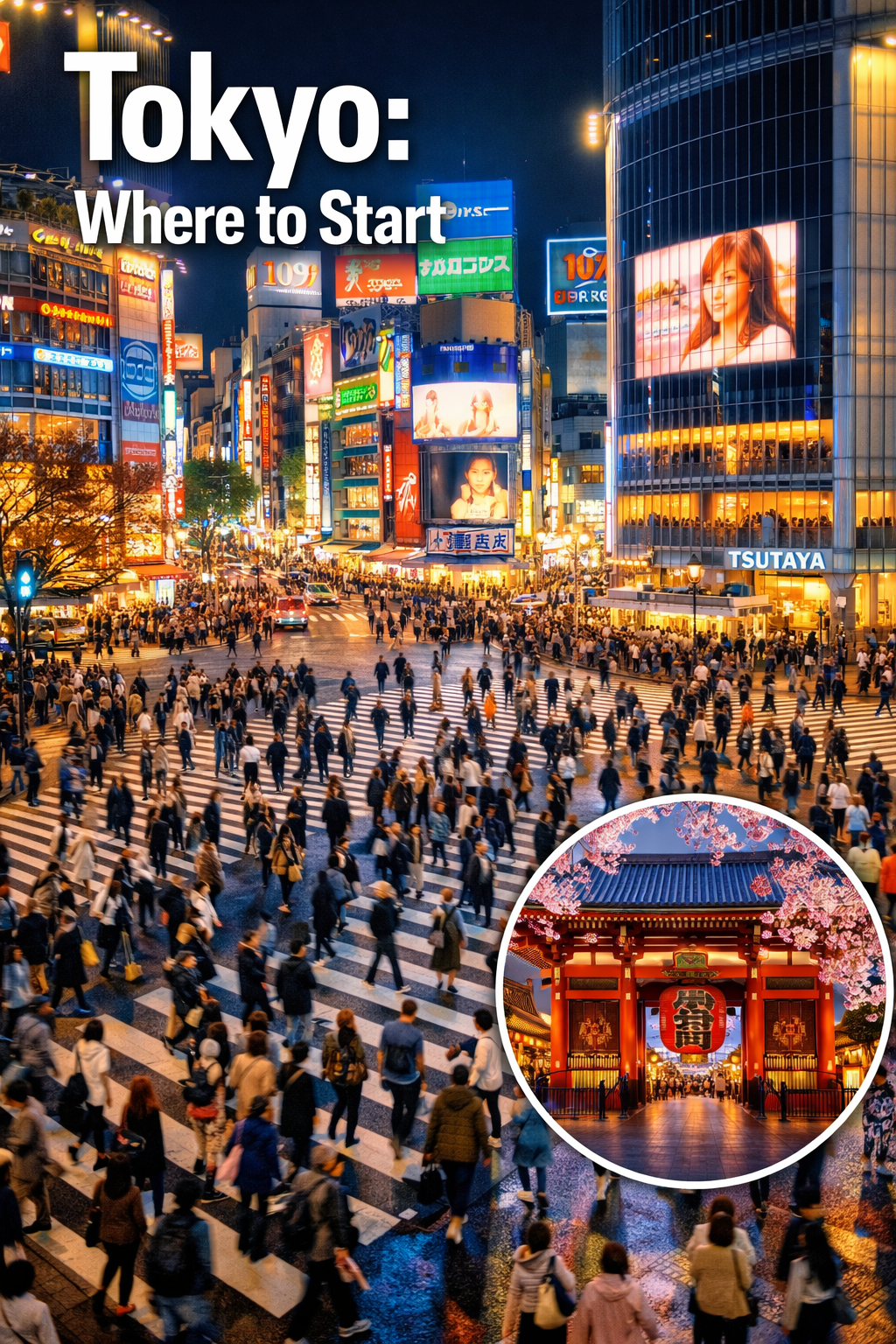
Tokyo is the right place to start your Japan trip. It eases you into the country’s scale and energy while offering an enormous range of things to do, from ancient temples to cutting-edge digital art.
Shibuya Crossing is the first thing most visitors want to see — and it delivers. Head to the Starbucks or Mag’s Park rooftop for a bird’s-eye view, then cross on foot for the full experience. Nearby, Harajuku’s Takeshita Street is a compact, colorful strip of fashion, crepes, and street culture that’s unlike anything else in the world.
In Asakusa, Senso-ji Temple is Tokyo’s oldest, dating back to the 7th century. The best time to visit is after sunset when the lanterns light up and the crowds thin out [1]. During the day, the Nakamise shopping street leading to the temple is a great place to pick up snacks and souvenirs.
For something more contemporary, TeamLab Planets in Toyosu and TeamLab Borderless (recently reopened in Azabudai Hills) are immersive digital art experiences that genuinely surprise even seasoned travelers [2]. Book tickets online well in advance — they sell out weeks ahead.
Don’t miss the Tokyo SkyTree for panoramic city views, and if you’re traveling in 2026, PokéPark Kanto is a brand-new theme park experience that’s already generating serious buzz [5].
Choose Tokyo first if: you want to land somewhere with excellent transport links, English signage, and a huge variety of food and accommodation options before heading into more traditional parts of Japan.
What to See in Japan’s Cultural Capital: Kyoto
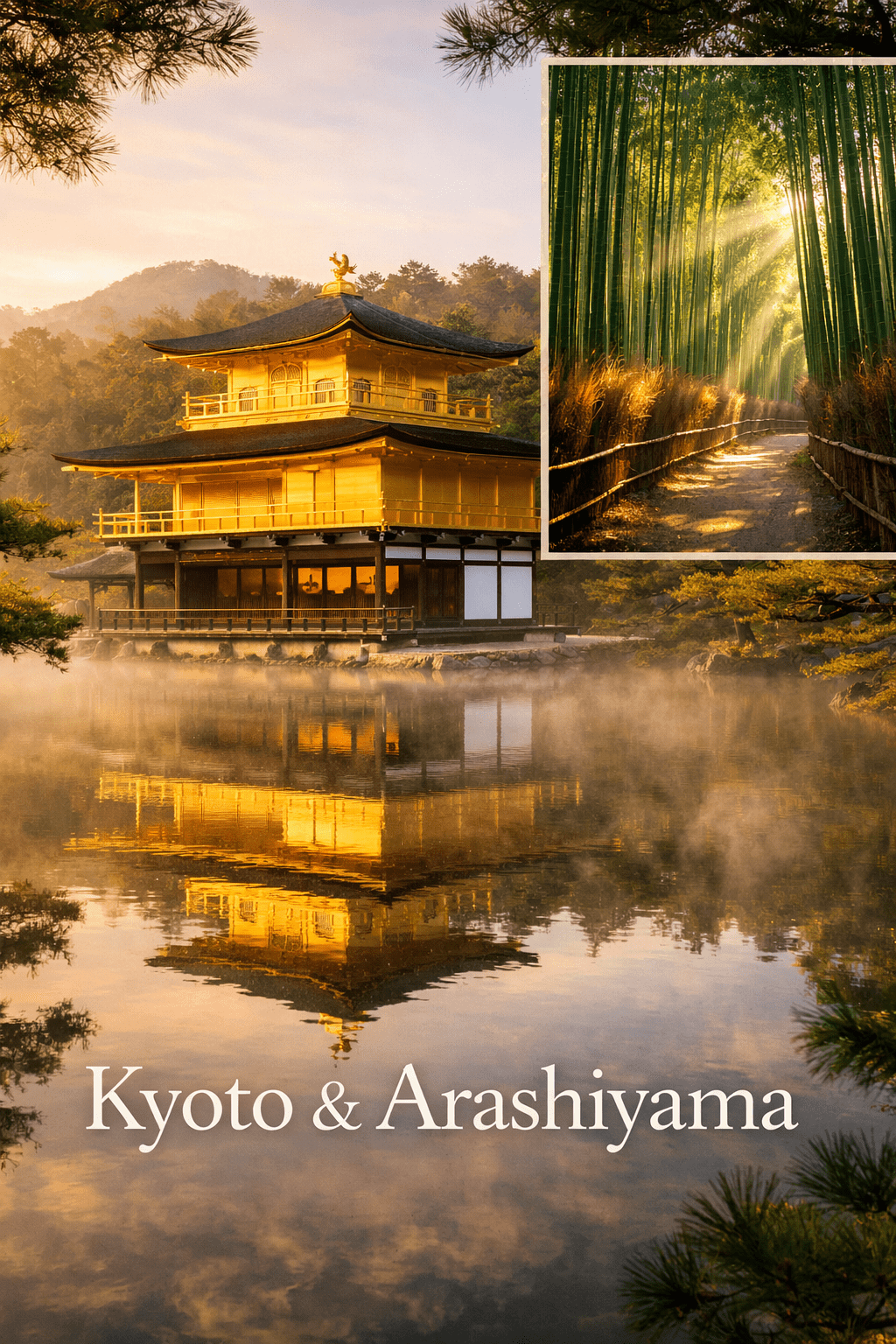
Kyoto is where Japan’s traditional culture is most concentrated. It’s home to hundreds of temples, shrines, geisha districts, and some of the country’s finest kaiseki cuisine.
Kinkaku-ji (the Golden Pavilion) is the single most photographed site in Japan — and the golden reflection in the surrounding pond is genuinely breathtaking. Arrive right at the 9am opening to see it with minimal crowds [3]. By mid-morning, tour buses arrive and the experience changes completely.
Eastern Kyoto rewards slow exploration. The route from Nanzen-ji (with its striking 19th-century working aqueduct) along the Philosopher’s Path to Ginkaku-ji (Silver Pavilion) is one of the best walks in the country, especially during cherry blossom season [1].
Fushimi Inari Shrine, with its thousands of vermilion torii gates winding up a forested mountain, is another must-see. The full hike takes about 2-3 hours, but even walking the first 30 minutes gives you the iconic shots most people come for. Go early — before 8am if possible.
In 2026, the Samurai Immersive Theme Park at Uzumasa Kyoto Village offers a hands-on cultural experience that’s worth an afternoon if you’re interested in Japanese history [5].
Common mistake: Trying to see all of Kyoto in one day. Give it at least two full days, ideally three.
Day Trips Worth Taking: Nara, Hiroshima, and Arashiyama
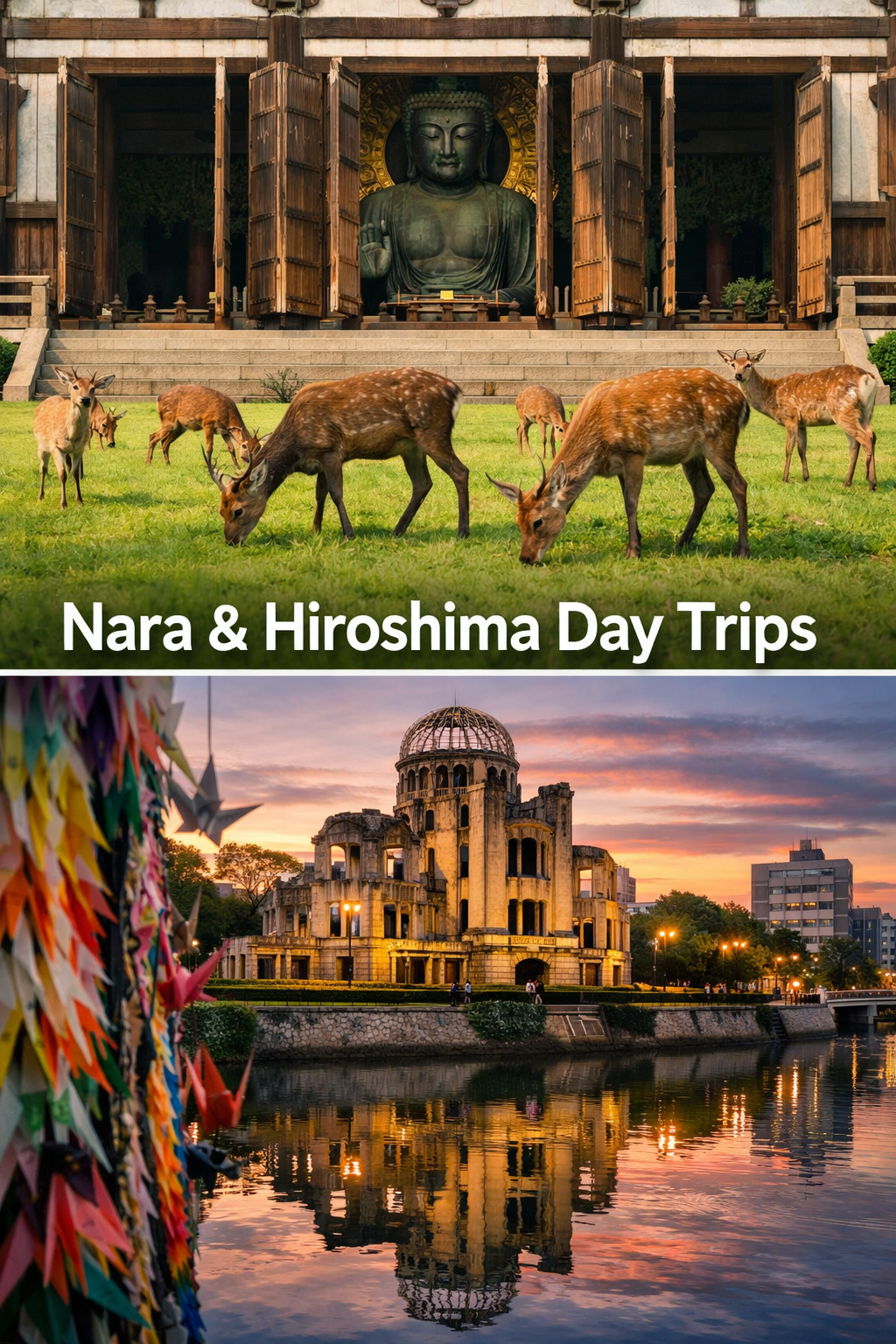
Several of Japan’s most memorable experiences are best done as day trips from Kyoto or Osaka. Here are the three that first-timers consistently say they’re glad they made time for.
Nara: Deer, Temples, and the World’s Largest Bronze Buddha
Nara is just 45 minutes from Kyoto by train and packs an enormous amount into a half-day visit. Todai-ji Temple houses a 15-meter bronze Buddha statue cast in 752 CE — the largest in the world. Entry to the main hall costs ¥600, and arriving at the 7:30am opening means you’ll have the space largely to yourself [4].
Inside the temple, there’s a wooden pillar with a hole at its base. Squeezing through is said to bring good luck, and it’s a surprisingly fun moment even for adults. The hundreds of freely roaming deer in Nara Park are also a genuine highlight — you can buy deer crackers from vendors and feed them directly.
Hiroshima: A Deeply Moving Historical Experience
Hiroshima is about 90 minutes from Kyoto by Shinkansen and offers one of the most significant historical sites in Asia. The A-Bomb Dome (Genbaku Dome) is a UNESCO World Heritage site — the skeletal remains of a building that survived the 1945 atomic bombing. The Children’s Peace Monument, surrounded by thousands of paper cranes, is equally powerful [1].
The Hondori Arcade nearby is a lively covered shopping street with excellent food options, including Hiroshima-style okonomiyaki, which is different from the Osaka version and worth trying while you’re there.
Arashiyama Bamboo Grove
The bamboo grove on Kyoto’s western outskirts is genuinely stunning — but only if you get there early. By 10am, hundreds of visitors create a congestion that makes it hard to appreciate [3]. Aim for 7am or earlier. Combine it with a visit to Tenryu-ji Temple and a walk along the riverside for a full morning.
Mount Fuji, Hakone, and Beyond: What to See in Japan Outside the Cities
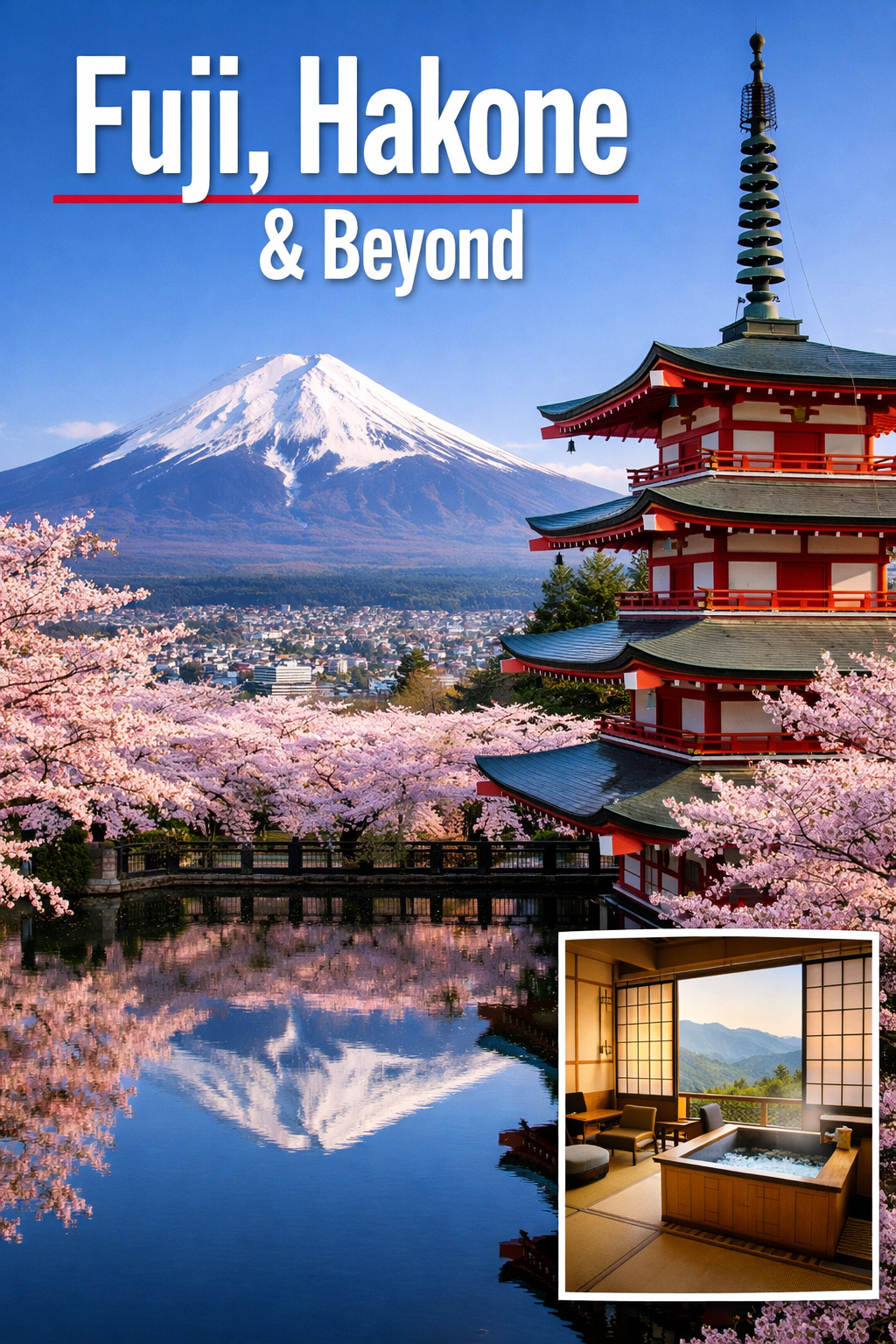
Japan’s most iconic natural landmark and its best onsen region are both within easy reach of Tokyo. Most first-timers combine them into a 1-2 night side trip.
Mount Fuji
The best views of Mount Fuji are from Lake Kawaguchiko in the Fuji Five Lakes region, about two hours from Tokyo by bus or train. The Chureito Pagoda viewpoint — with the pagoda framed against Fuji and cherry blossoms in spring — is one of the most photographed images in Japan.
One important note: Fuji is frequently obscured by clouds, especially in summer. Check fujisan.info before making the trip to see the current visibility forecast [1]. If you’re planning to climb Fuji, the official climbing season runs from early July to early September.
Hakone
Hakone sits between Tokyo and Fuji and is the best place to experience a traditional ryokan (Japanese inn) stay and soak in an onsen (hot spring). The Hakone Free Pass covers most transport in the area, including the ropeway over volcanic Owakudani and the scenic Lake Ashi boat crossing [2].
Staying overnight in a ryokan here — with a multi-course kaiseki dinner and a private or communal hot spring bath — is one of those experiences that makes Japan feel completely different from anywhere else.
Nikko and Kawagoe (Bonus Picks)
If you have extra days based in Tokyo, Nikko (about 2 hours north) offers the ornate Toshogu Shrine and the bright red Shinkyo bridge. Kawagoe (30 minutes from Tokyo) has preserved Edo Period architecture and a relaxed, less-touristed atmosphere [1][2]. Both work well as single-day excursions.
Practical Tips for Planning Your Japan Trip
Getting the logistics right makes a big difference, especially for a first visit.
| Topic | What to Know |
|---|---|
| Best time to visit | Late March–May (cherry blossoms) or October–November (autumn foliage) |
| Getting around | Japan Rail Pass for multi-city travel; IC card (Suica/Pasmo) for city transit |
| Language | English signage is common in tourist areas; Google Translate’s camera mode handles menus |
| Cash vs. card | Japan is still largely cash-based; carry yen, especially outside major cities |
| Tipping | Never tip — it can be considered rude |
| Pocket Wi-Fi / SIM | Rent a pocket Wi-Fi at the airport or buy an eSIM before departure |
How many days do you need? A first-timer covering Tokyo, Kyoto, Osaka, Nara, and a Fuji day trip needs a minimum of 10 days. Two weeks is more comfortable and allows for Hiroshima, Hakone, and a slower pace.
Before you finalize your packing, check out this travel essential list and ultimate packing guide — it covers everything from adapters to day bags that work well for temple-heavy itineraries.
If you’re comparing Japan to other first-timer destinations, our guides on what to see in Rome for first-timers and what to see in Barcelona offer similar structured starter lists for those regions.
FAQ: What to See in Japan as a First-Timer
Q: How many cities should a first-time visitor to Japan try to cover?
A: Three to four cities is the sweet spot for a 10-14 day trip. Tokyo, Kyoto, and Osaka form the classic triangle, with Nara as an easy add-on day trip from either Kyoto or Osaka.
Q: Is Kyoto or Tokyo better for a first visit?
A: They serve different purposes. Tokyo is the best starting point for its transport connections and variety. Kyoto is essential for temples, traditional culture, and slower-paced sightseeing. Most first-timers do both.
Q: When is the best time to visit Japan?
A: Late March to early May for cherry blossoms, and October to November for autumn foliage. Both periods are busy and prices rise, so book accommodation early [6].
Q: Do I need to speak Japanese to visit Japan?
A: No. Tourist areas have strong English signage, and most train stations and major attractions have English information. Google Translate’s camera function handles restaurant menus well.
Q: Is Japan expensive for first-time visitors?
A: It depends on your choices. Budget travelers can manage on $80-100 USD per day using hostels and convenience store meals. Mid-range travelers spending on ryokans, restaurants, and attractions should budget $200-300 USD per day.
Q: What is the Arashiyama Bamboo Grove really like?
A: Beautiful if you arrive before 8am. After 10am, it’s very crowded and the narrow path makes it hard to stop and appreciate. It’s still worth visiting but timing matters [3].
Q: Can I see Mount Fuji from Tokyo?
A: On a very clear day, yes — from elevated spots in the city. But for iconic views, you need to travel to the Fuji Five Lakes area or Hakone, both about 1.5-2 hours from Tokyo.
Q: Is the Japan Rail Pass worth buying?
A: For a trip covering Tokyo, Kyoto, Osaka, Hiroshima, and Hakone, a 14-day JR Pass typically pays for itself. For shorter or more localized trips, it may not be worth the cost. Calculate your expected routes before purchasing.
Q: What’s new in Japan for 2026 visitors?
A: PokéPark Kanto opened in Tokyo in 2026, and the Samurai Immersive Theme Park at Uzumasa Kyoto Village is drawing strong reviews from visitors interested in hands-on cultural experiences [5].
Q: Is Japan safe for solo travelers?
A: Japan consistently ranks among the safest countries in the world for solo travel, including for solo female travelers. Violent crime is extremely rare, and public transport is reliable and well-organized.
Conclusion: Your First Japan Trip, Done Right
Japan rewards visitors who plan ahead and prioritize depth over breadth. Start in Tokyo, spend real time in Kyoto, take the day trips to Nara and Arashiyama, and build in at least one night in Hakone or a ryokan somewhere along the route. That combination covers what to see in Japan at its most essential — and it leaves you with enough to come back for.
Your next steps:
- Decide on your travel dates and check cherry blossom or autumn foliage forecasts for your window.
- Book the Japan Rail Pass before leaving home (it cannot be purchased inside Japan at the same price).
- Reserve Kyoto accommodation early — the city fills up fast, especially in spring and autumn.
- Pre-book TeamLab tickets and any ryokan stays that include dinner.
- Download Google Translate, get a Suica IC card at the airport, and carry cash from day one.
Japan has a way of making first-time visitors immediately start planning their return trip. Go with a loose plan, stay curious, and let the country surprise you.
For more first-timer destination guides, see our roundup of top places to travel that ruin other vacations — Japan features prominently for good reason.
References
[1] 2 Weeks In Japan Itinerary First Time – https://www.theinvisibletourist.com/2-weeks-in-japan-itinerary-first-time/
[2] Best Places To Visit In Japan – https://www.neverendingvoyage.com/best-places-to-visit-in-japan/
[3] First Time Japan Travel Guide – https://whatsupcourtney.com/first-time-japan-travel-guide/
[4] Japan 10 Day Itinerary 2026 Complete First Visit Guide – https://www.machupicchu.org/japan-10-day-itinerary-2026-complete-first-visit-guide.htm
[5] Watch – https://www.youtube.com/watch?v=cCmA8BhtaAI
[6] Best Time To Visit – https://www.japanhighlights.com/japan/best-time-to-visit