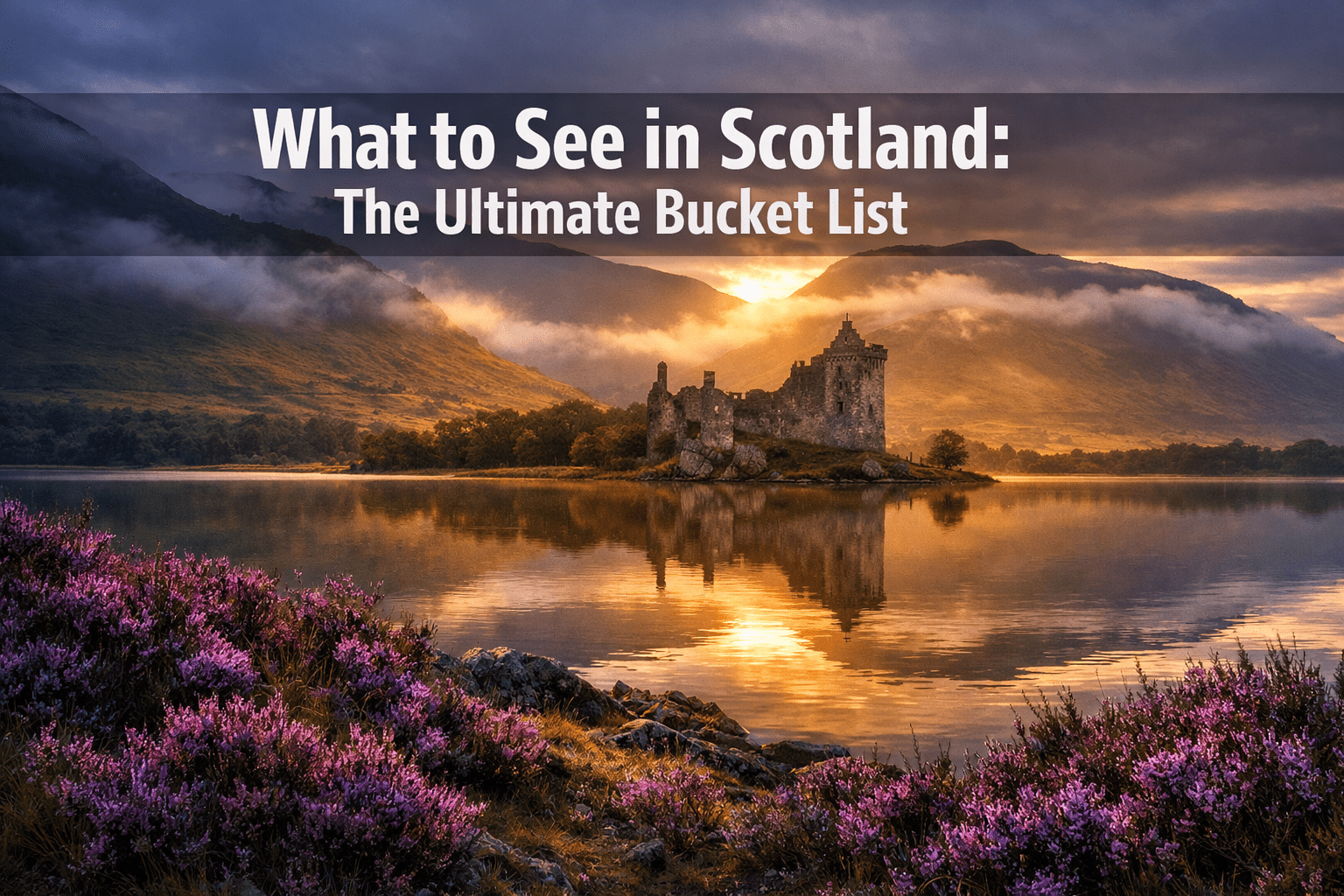
Quick Answer: Scotland packs an extraordinary range of experiences into a relatively small country — ancient castles, moody Highland landscapes, world-class cities, and remote island chains. Whether you have five days or three weeks, knowing what to see in Scotland before you go makes the difference between a good trip and one you’ll talk about for years. Start with Edinburgh and the Highlands, then layer in the Hebrides or Orkney if time allows.
Key Takeaways
- Edinburgh is the essential starting point — the Old Town, the Castle, and Arthur’s Seat alone justify the trip
- Loch Ness, Glencoe, and the Isle of Skye form the classic Highland triangle most first-timers should prioritize
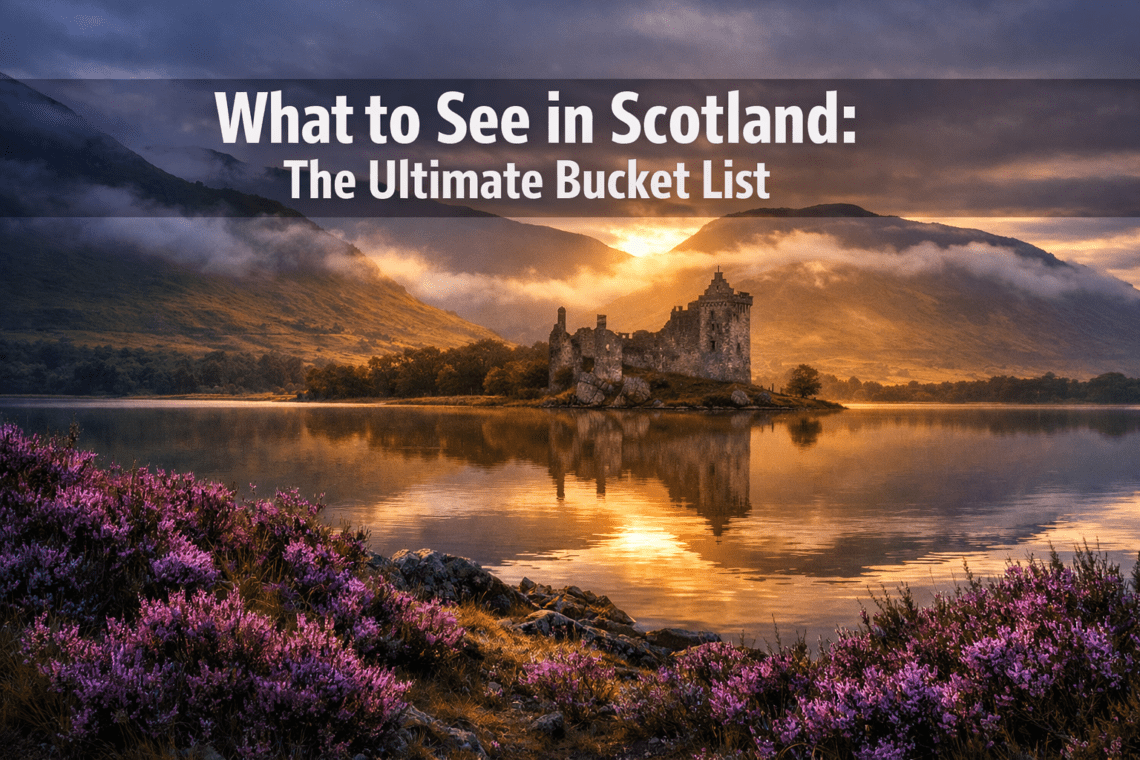
- Eilean Donan Castle is one of the most photographed spots in the world and lives up to every photo
- Scotland’s tourism continues to grow year-on-year, with international visitors increasingly drawn by landscapes and heritage [1][6]
- The North Coast 500 (NC500) road route is the most popular self-drive itinerary in the country
- Spring (April–May) and early autumn (September–October) offer the best balance of weather, crowds, and scenery
- Budget roughly £80–£150 per person per day for mid-range travel including accommodation, food, and entry fees (estimate based on typical UK travel costs)
- A 7–10 day trip covers the highlights comfortably; 14 days lets you breathe and explore the islands
- Always pack waterproofs — Scottish weather changes fast, regardless of season
What to See in Scotland: The Cities Worth Slowing Down For
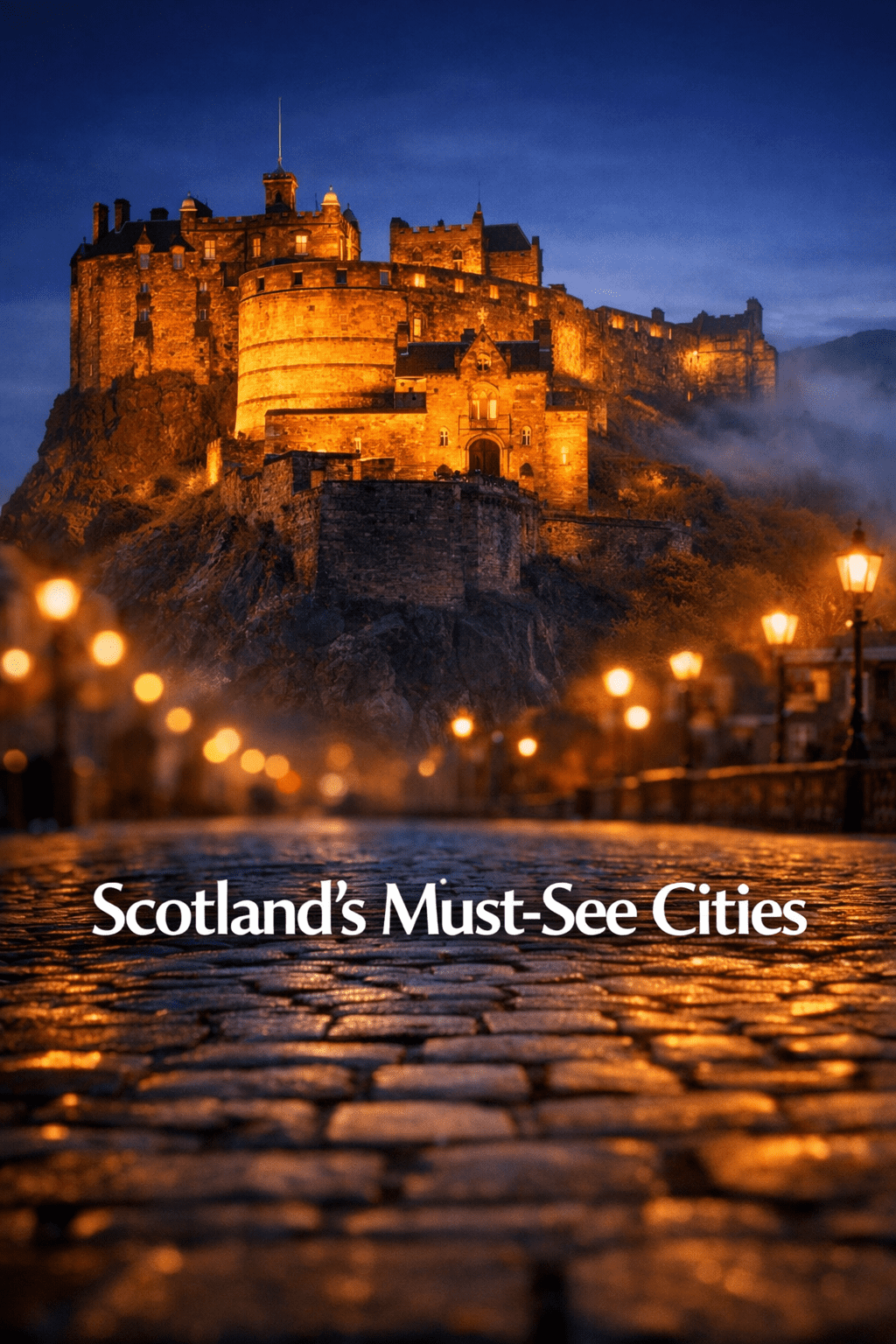
Scotland’s cities punch well above their weight. Edinburgh and Glasgow are the two you’ll want to anchor your trip around, and they’re only 50 minutes apart by train.
Edinburgh is the obvious first stop. The Old Town is a medieval maze of closes (alleyways), wynds, and tenements stacked along the Royal Mile between Edinburgh Castle and the Palace of Holyroodhouse. Spend at least a full day here. Then cross Princes Street Gardens into the Georgian New Town, a UNESCO World Heritage Site, for a completely different architectural mood.
Key Edinburgh stops:
- Edinburgh Castle — the volcanic rock fortress with the Scottish Crown Jewels and the Stone of Destiny
- Arthur’s Seat — an ancient volcano right inside the city; the 45-minute hike rewards you with panoramic views
- Greyfriars Kirkyard — one of the most atmospheric old graveyards in Europe (and the inspiration behind Harry Potter’s Hogwarts)
- The Scottish National Museum — free, excellent, and genuinely worth three hours
If you’re planning a longer stay, check out this Edinburgh 4-day itinerary for a day-by-day breakdown.
Glasgow is grittier, more creative, and often underrated. The West End’s Byres Road, the Kelvingrove Art Gallery (free entry), and the vibrant food scene around Finnieston make it a strong second city. Don’t skip it.
“Scotland welcomed a record number of international visitors in recent years, with tourism contributing significantly to the national economy.” [1][6]
What to See in Scotland’s Highlands: The Landscapes That Stop You Cold
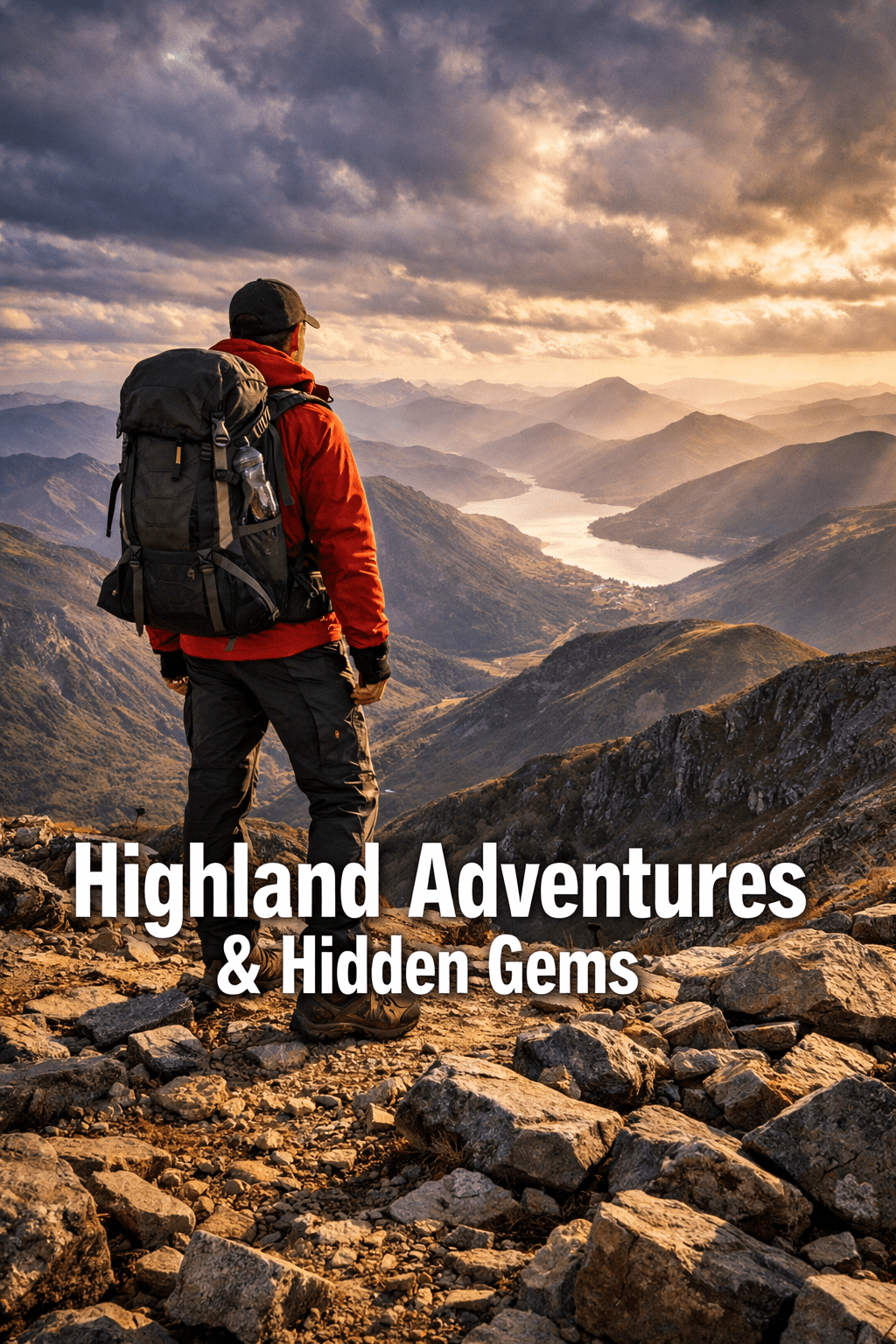
The Scottish Highlands are the reason most people book the trip. The landscapes here — wide glens, dark lochs, ancient forests, and jagged peaks — are genuinely unlike anywhere else in Europe.
Loch Ness is the most famous, and yes, it’s worth visiting even knowing you won’t spot the monster. The loch itself is dramatic: 23 miles long, over 700 feet deep, and surrounded by forested hills. Urquhart Castle on the western shore makes for a great photo stop and a solid history lesson.
Glencoe is arguably more beautiful and certainly more emotionally resonant. This glacial valley was the site of the 1692 Glencoe Massacre, and the landscape carries that weight. The Three Sisters rock formation is stunning in any weather — but especially in low cloud.
The Isle of Skye deserves its own section (see below), but getting there means driving through some of the best Highland scenery in the country.
Other Highland highlights worth your time:
- Cairngorms National Park — the UK’s largest national park, great for hiking, red squirrels, and osprey spotting
- Rannoch Moor — a vast, eerie bog plateau that looks like another planet
- Inverness — a compact, walkable city and a good base for the north
Common mistake: Many travelers rush the Highlands in a single day from Edinburgh. Give it at least two nights, ideally three, to actually feel the pace shift.
The Isle of Skye and Scotland’s Islands: What Makes Them Special
The Isle of Skye is the most visited of Scotland’s islands, and for good reason. It offers dramatic coastal scenery, fairy pools, and ancient Clan MacLeod history — all within a day’s drive of Inverness or Fort William.
Top Skye experiences:
- The Fairy Pools near Glenbrittle — crystal-clear blue-green pools fed by waterfalls from the Cuillin mountains
- The Old Man of Storr — a distinctive rock pinnacle above Loch Leathan; the hike takes about 1.5 hours return
- Neist Point Lighthouse — Scotland’s most westerly point on Skye, with sea views toward the Outer Hebrides
- Dunvegan Castle — the oldest continuously inhabited castle in Scotland, home to the Clan MacLeod for 800 years
Beyond Skye: If you have extra time, the Outer Hebrides (Lewis and Harris) offer white-sand beaches that genuinely look Caribbean in summer sun, plus the ancient Callanish Standing Stones on Lewis — older than Stonehenge.
Orkney and Shetland sit further north and reward visitors who make the effort. Orkney’s Neolithic sites (Skara Brae, the Ring of Brodgar) are UNESCO-listed and extraordinary. Shetland is wilder still, with Viking heritage and puffin colonies.
| Island | Best For | Getting There | Time Needed |
|---|---|---|---|
| Isle of Skye | Landscapes, hiking, castles | Drive or bus from Inverness | 2–3 days |
| Lewis & Harris | Beaches, standing stones | Ferry from Ullapool | 3–4 days |
| Orkney | Neolithic history, wildlife | Ferry from Scrabster or fly | 2–3 days |
| Shetland | Remote wilderness, puffins | Fly from Edinburgh/Aberdeen | 3–4 days |
Scotland’s Castles: The Bucket List Picks Beyond Edinburgh
Scotland has over 3,000 castles — more per square mile than almost any country on earth [1]. You can’t see them all, but these are the ones that genuinely earn their place on a bucket list.
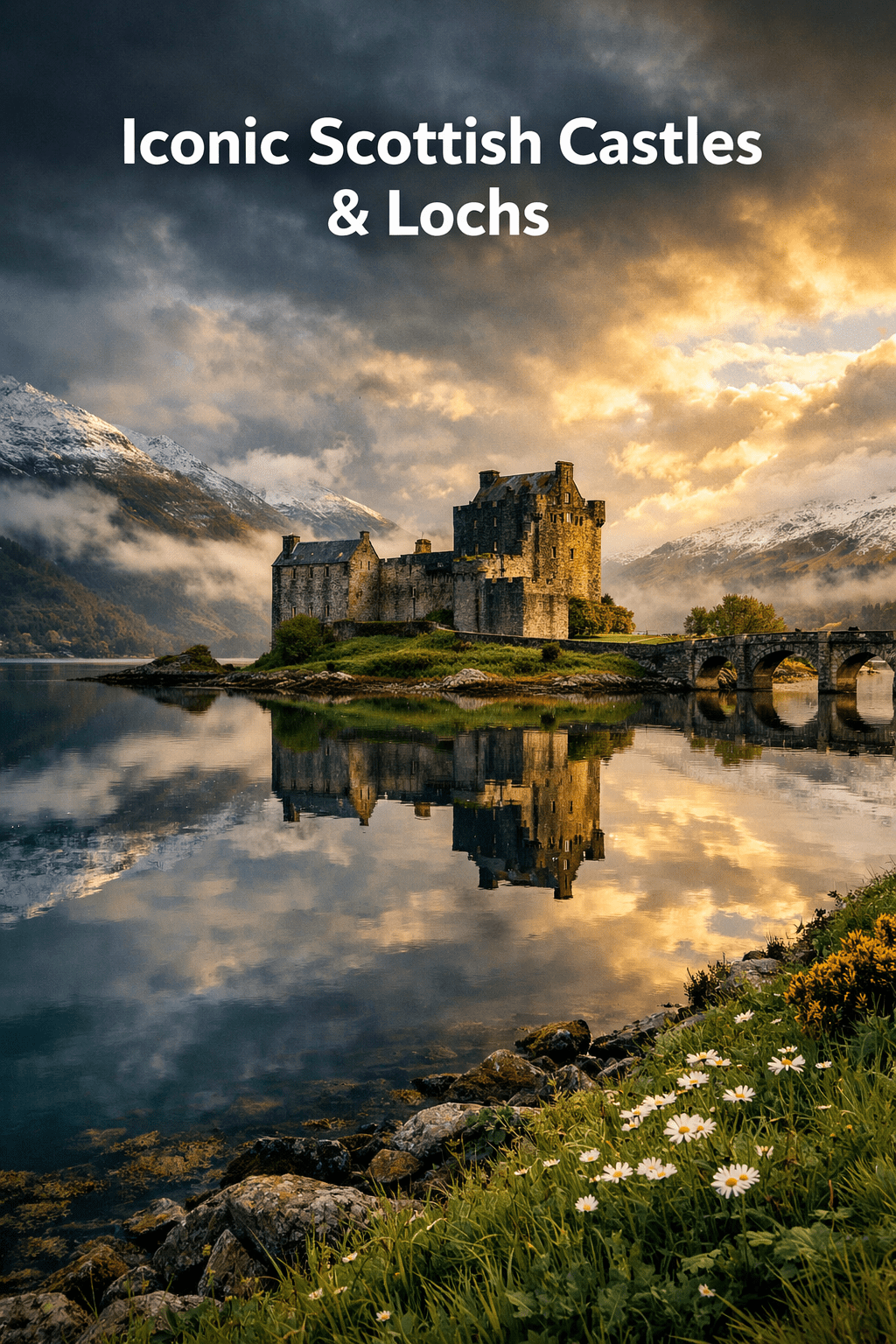
Eilean Donan Castle (near Kyle of Lochalsh) is the postcard image of Scotland. It sits at the confluence of three lochs, connected to the shore by a stone bridge. The interior is worth exploring too — the Jacobite history is fascinating.
Stirling Castle rivals Edinburgh Castle in historical importance. Mary Queen of Scots was crowned here as an infant. The Great Hall and the Royal Apartments have been beautifully restored.
Dunnottar Castle (near Stonehaven) is a ruined fortress perched on a sea cliff. It’s less visited than the big names, which makes it feel more atmospheric. The Scottish Crown Jewels were hidden here during Cromwell’s invasion.
Craigievar Castle in Aberdeenshire is a fairytale pink tower house that reportedly inspired Walt Disney’s Cinderella Castle. It’s managed by the National Trust for Scotland and worth the detour.
Choose Stirling if: you want history and easy access from Edinburgh or Glasgow (45 minutes by train).
Choose Eilean Donan if: you’re already doing the Highlands and want the iconic shot.
Choose Dunnottar if: you prefer fewer crowds and dramatic coastal settings.
The North Coast 500: Is It Worth the Hype?
Yes — with caveats. The North Coast 500 is a 516-mile circular driving route around the northern Highlands, starting and ending in Inverness. It passes sea stacks, white beaches, mountain passes, and tiny fishing villages. Tourism to Scotland has grown significantly partly because of this route’s viral popularity on social media [6].
What makes it genuinely great:
- Smoo Cave near Durness (a sea cave with a waterfall inside)
- Sandwood Bay — a remote, stunning beach accessible only by a 4-mile walk
- Bealach na Bà — a dramatic mountain pass near Applecross with hairpin bends and sea views
What to know before you go:
- Single-track roads require patience and courtesy (use passing places)
- Book accommodation 3–6 months ahead in summer — it sells out fast
- Allow 5–7 days minimum; rushing it defeats the purpose
- Campervans are popular but add to road congestion in peak season
If you’re planning a multi-country road trip, this pairs naturally with a 9-day Ireland road trip — both countries reward slow, scenic driving.
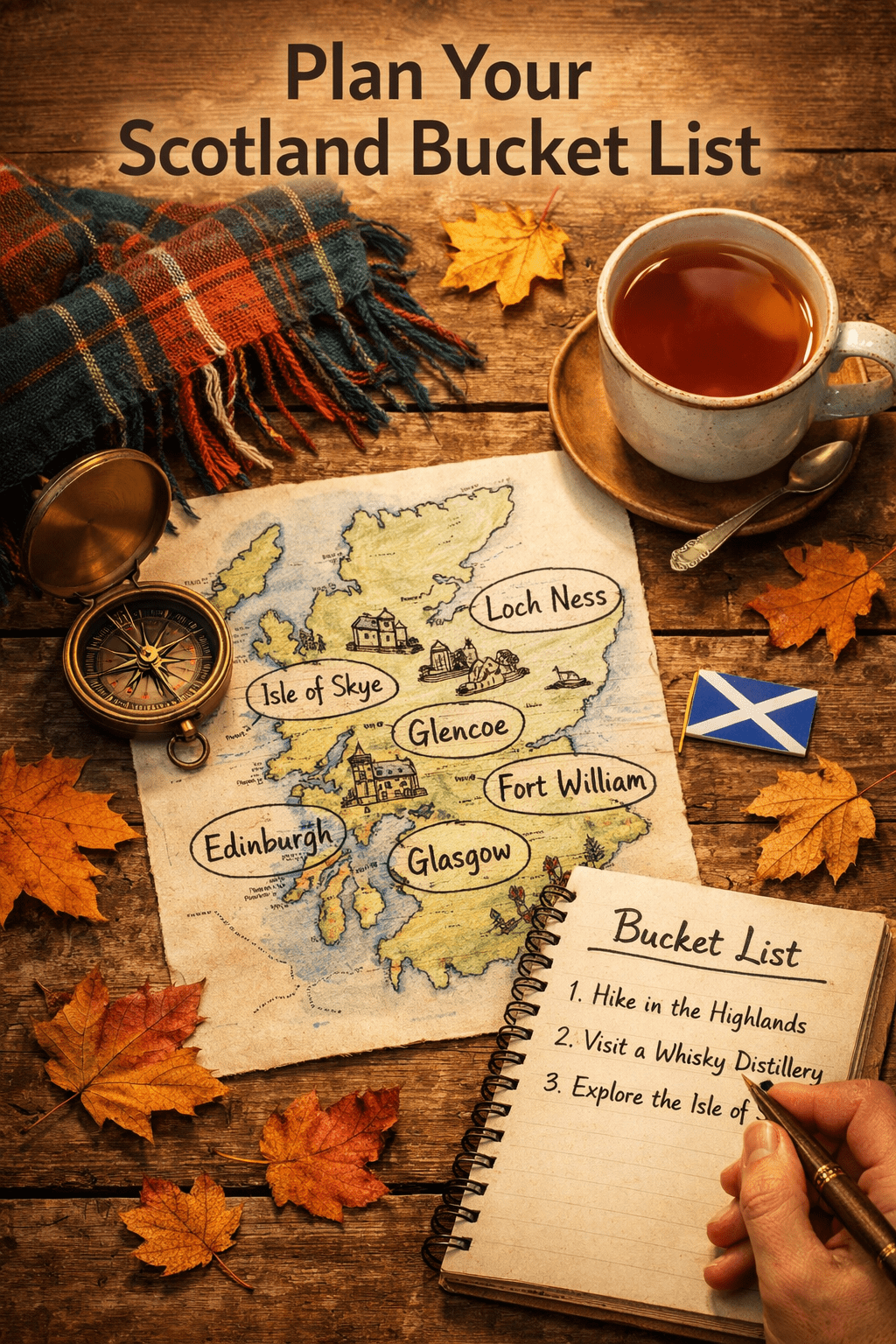
When to Visit and How to Plan Your Scotland Bucket List
The best time to visit Scotland is May–June or September–October. July and August are peak season — busier, pricier, and midgy (the Highland midge is a tiny biting insect that thrives in warm, still, humid conditions near water). Spring and early autumn avoid the worst of both.
Season breakdown:
- Spring (April–May): Wildflowers, lambs, long evenings, fewer crowds. Some Highland roads and attractions reopen after winter.
- Summer (June–August): Long daylight hours (up to 18 hours in June), all attractions open, but busy and more expensive.
- Autumn (September–October): Golden light, deer rutting season in the Highlands, quieter roads. One of the best times for photography.
- Winter (November–March): Atmospheric and dramatic, but many island ferries reduce frequency and some attractions close. Hogmanay (New Year) in Edinburgh is spectacular.
Practical planning tips:
- Book Edinburgh accommodation and popular Highland lodges early — demand consistently outpaces supply [4]
- A rental car is almost essential for the Highlands and islands
- Scotland’s weather is famously unpredictable; layers and a waterproof jacket are non-negotiable
- The Travel Essential Packing Guide has a solid checklist for variable-weather destinations
If you’re building a broader European trip, Scotland pairs well with a 2-week Europe spring packing list and itinerary.
Scotland Bucket List: Hidden Gems Most Tourists Miss
Beyond the famous spots, Scotland has quieter corners that reward curious travelers.
- Knoydart Peninsula — accessible only by boat or a 2-day hike, it’s one of the last true wildernesses in the UK. The pub in Inverie is the most remote on the British mainland.
- Cromarty — a beautifully preserved 18th-century town on the Black Isle, almost entirely overlooked by tourists
- Rosslyn Chapel (near Edinburgh) — made famous by The Da Vinci Code but genuinely worth visiting for its extraordinary medieval stone carvings
- Galloway Forest Park — Scotland’s first Dark Sky Park, in the south of the country, perfect for stargazing
- Culross — a perfectly preserved 17th-century village in Fife, used as a filming location for Outlander
Scotland’s appeal to international visitors keeps growing, with the country consistently cited for its landscape, heritage, and authenticity. [6]
For travelers who love combining bucket-list landmarks with off-the-beaten-path finds, the 30 summer bucket list ideas with friends guide has some good inspiration for building a trip around experiences rather than just sights.
Conclusion: How to Turn This Bucket List Into an Actual Trip
Scotland is one of those rare destinations where the reality matches the hype. The landscapes are as dramatic as the photos suggest, the history is everywhere, and the people are genuinely welcoming.
Your actionable next steps:
- Decide your base(s): Edinburgh for cities and history; Inverness or Fort William for the Highlands; Portree on Skye for island access.
- Choose your trip length: 7 days covers the highlights; 10–14 days lets you add islands or the NC500.
- Book accommodation early — especially for summer and any island stays.
- Rent a car if you’re going beyond Edinburgh and Glasgow.
- Pack for all weather — waterproof jacket, layers, and sturdy walking shoes are essential.
- Build in slow days — the best Scotland moments often happen when you stop rushing.
Whether this is your first trip or your fifth, knowing what to see in Scotland means you’ll spend less time deciding and more time actually standing on that cliff edge, castle rampart, or loch shore wondering why you didn’t come sooner.
Frequently Asked Questions
How many days do I need to see Scotland properly?
Seven days covers Edinburgh, the Highlands, and Loch Ness at a reasonable pace. Ten to fourteen days lets you add Skye, the NC500, or the Outer Hebrides without rushing.
Is Scotland expensive to visit?
It’s moderately priced by Western European standards. Many top attractions — national museums, most beaches, hiking trails — are free. Budget around £80–£150 per person per day for mid-range travel including accommodation and food (estimate based on typical UK costs).
Do I need a car in Scotland?
In Edinburgh and Glasgow, no. For the Highlands, Skye, and the NC500, a car is essentially essential. Public transport exists but is infrequent in rural areas.
What is the best single thing to see in Scotland?
That’s subjective, but Glencoe or the Isle of Skye consistently top traveler lists. Edinburgh Castle is the most visited paid attraction in Scotland [1].
Is Scotland safe for solo travelers?
Yes. Scotland is consistently rated one of the safest travel destinations in Europe. Solo travelers — including solo female travelers — report very positive experiences.
When should I avoid visiting Scotland?
Late July and August are the busiest and most expensive weeks. The Highland midge season peaks in July–August, particularly near lochs and forests. If crowds and midges bother you, choose May, June, or September instead.
Can I see the Northern Lights in Scotland?
Yes, particularly from the Highlands, Orkney, and Shetland between October and March. You need clear, dark skies and solar activity — it’s not guaranteed, but Scotland sits far enough north for regular sightings.
What is Hogmanay?
Hogmanay is Scotland’s New Year celebration, centered on Edinburgh. The street party on December 31 is one of the largest New Year events in the world and a genuine bucket-list experience.
Is the North Coast 500 suitable for nervous drivers?
The single-track roads require confidence and patience but aren’t technically difficult. If you’ve driven in rural areas before, you’ll manage fine. Allow extra time and never rush passing places.
What’s the difference between the Highlands and the Lowlands?
The Highlands are the mountainous northern and western regions — dramatic, remote, and sparsely populated. The Lowlands include Edinburgh, Glasgow, and the central belt — more urban, historically more industrialized, and where most of the population lives.
References
[1] Scotland Travel Statistics – https://www.venturehighland.com/scotland-travel-statistics
[2] Tourism Performance – https://www.visitscotland.org/research-insights/latest-research/tourism-performance
[3] Annual Performance Report – https://www.visitscotland.org/research-insights/about-our-visitors/international/annual-performance-report
[4] Scottish Tourism Index Q1 2026 Results Out Now – https://www.etag.org.uk/2026/03/scottish-tourism-index-q1-2026-results-out-now/
[6] Insider Places Why Tourism To Scotland Continues To Break Records – https://www.insidertravelreport.com/insider-places-why-tourism-to-scotland-continues-to-break-records/?comments