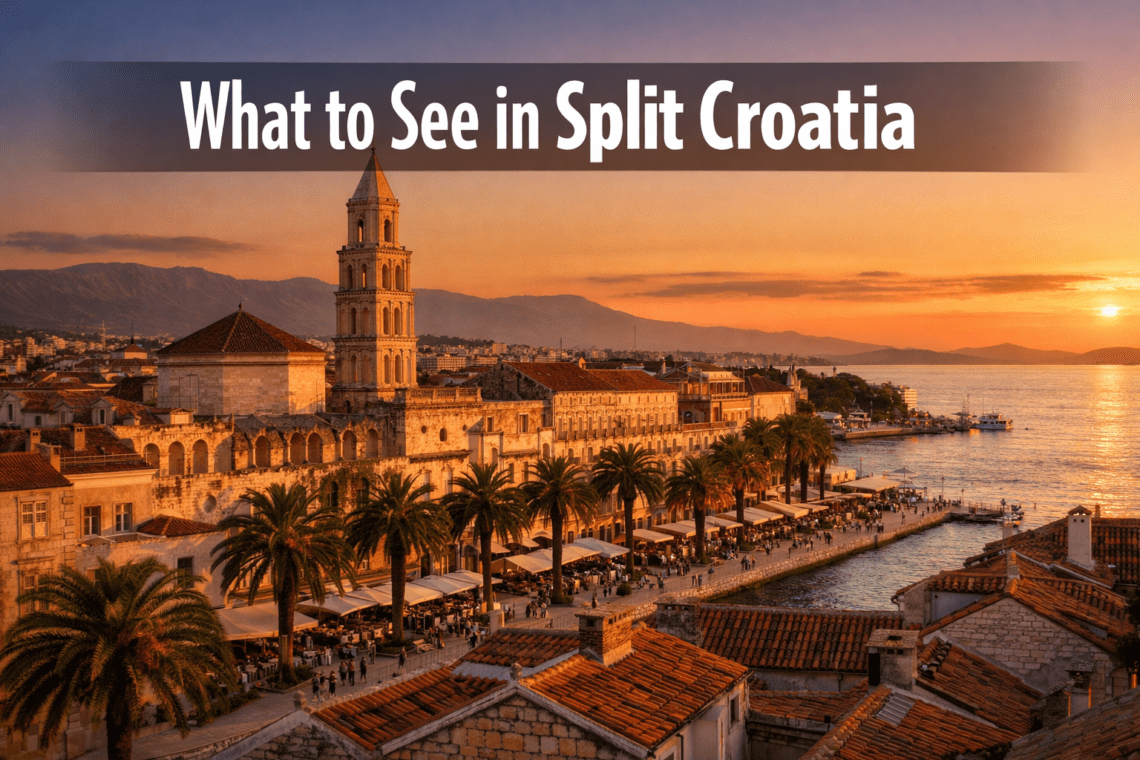
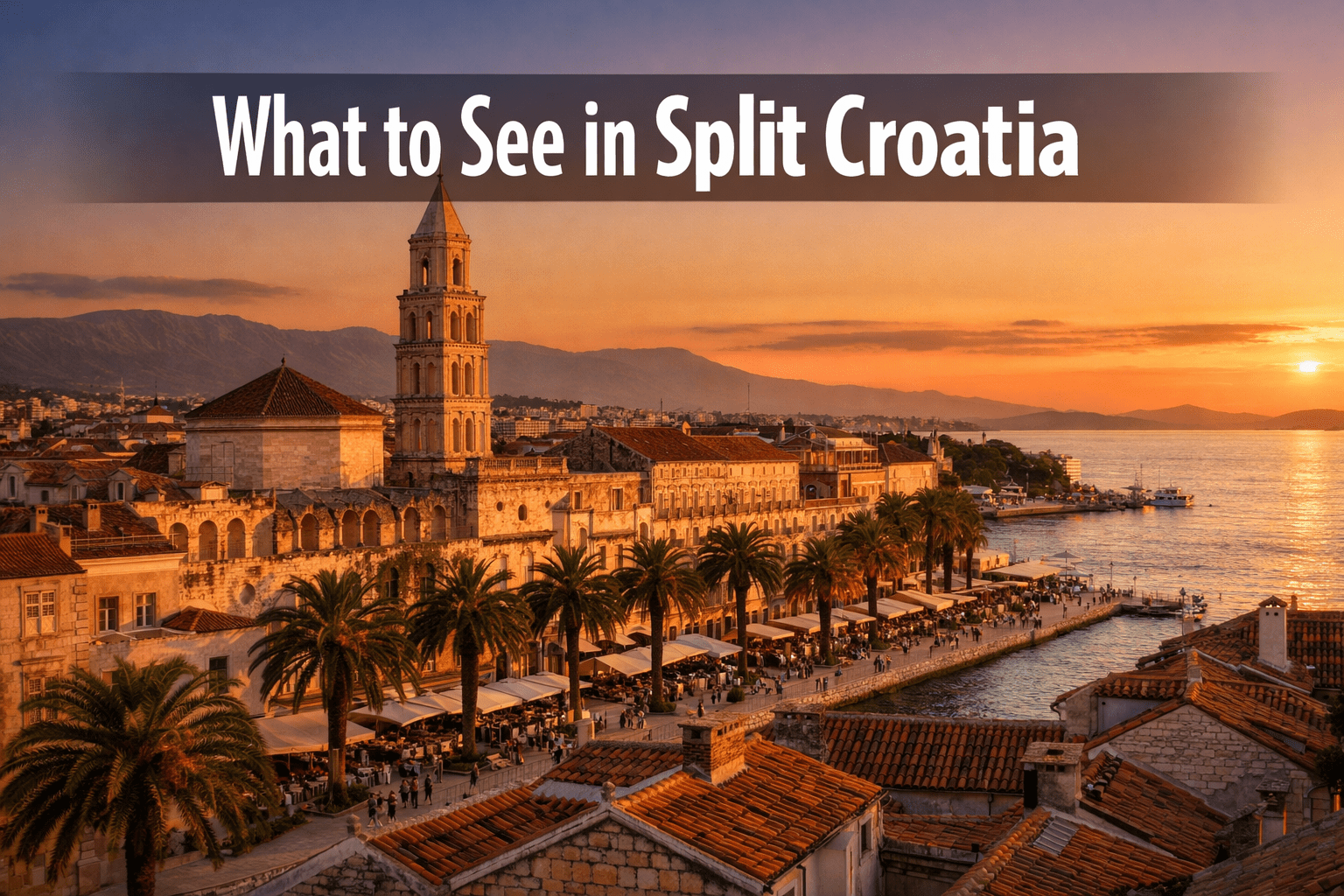
Quick Answer: Split, Croatia is one of the Mediterranean’s most rewarding cities, built around a living Roman palace that’s nearly 1,700 years old. Knowing what to see in Split Croatia means balancing its UNESCO-listed Old Town with Adriatic beaches, island day trips, and hilltop views — and you can cover the highlights in three to five days.
Key Takeaways
- Diocletian’s Palace is the non-negotiable starting point — it’s a real neighborhood, not a museum, and locals still live inside its ancient walls. [1]
- Saint Domnius Cathedral, inside the palace complex, is considered the oldest Catholic cathedral still in continuous use in its original structure. [1]
- Marjan Forest Park gives you the best panoramic views of the city and the Adriatic for free — no ticket, no crowds before 10 a.m.
- Bačvice Beach is the most famous city beach, but Kasjuni Beach on the Marjan Peninsula is quieter and more scenic. [5]
- Blue Cave boat tours run from Split and typically cost between $92 and $183 per adult for a five-island combo. [5]
- Krka Waterfalls make an excellent full-day trip with guided tours that include food and wine tastings. [1]
- Spring (March through May) is the best time to visit — comfortable temperatures, far fewer crowds than summer. [1]
- Old Town is walkable in a day, but you’ll want extra time to wander without a plan.
What to See in Split Croatia: The Old Town You Can’t Miss
Split’s Old Town is the answer to the question of what to see in Split Croatia, and Diocletian’s Palace is its beating heart. Built around 305 AD as a retirement residence for the Roman Emperor Diocletian, the palace complex is a UNESCO World Heritage Site where people actually live, work, and run restaurants inside ancient Roman walls. [1]
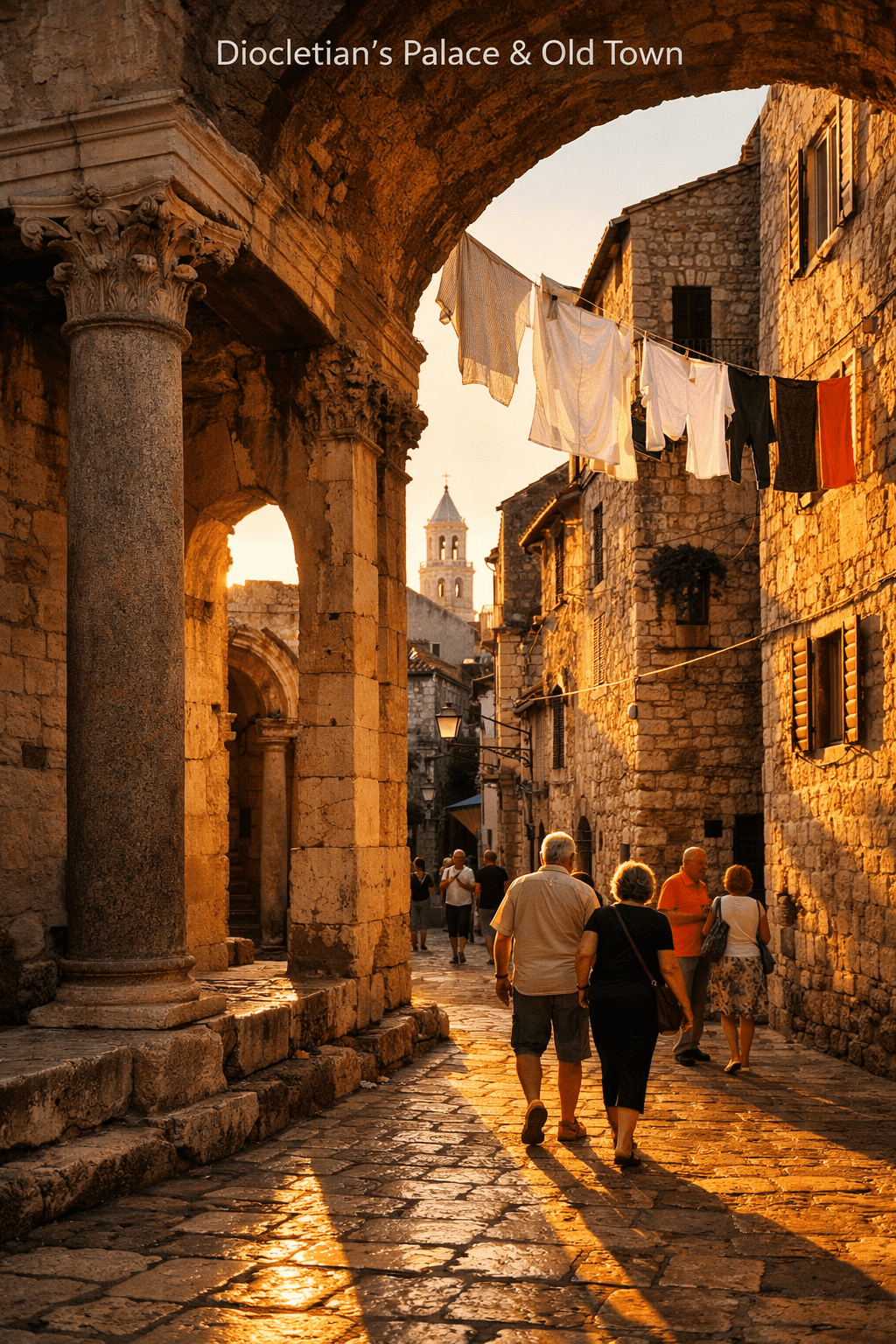
Walking through the palace feels nothing like visiting a typical ruin. You’ll find coffee shops tucked into Roman cellars, boutique clothing stores in vaulted stone corridors, and locals hanging laundry between columns that are nearly two millennia old. The Peristyle — the central ceremonial courtyard — is the best spot to pause and absorb the scale of what surrounds you.
Key stops inside and around Diocletian’s Palace:
- Saint Domnius Cathedral: Climb the bell tower for sweeping views of the Adriatic and the Old Town rooftops. Entry is inexpensive and worth every kuna. [1]
- Vestibule: A domed Roman anteroom open to the sky — dramatic and often overlooked by rushed visitors.
- Golden Gate (Porta Aurea): The best-preserved of the palace’s four original gates, facing north toward the statue of Bishop Gregory of Nin.
- Meštrović Gallery: A short walk from Old Town, this gallery showcases the work of Croatia’s most celebrated sculptor, Ivan Meštrović. [7]
- Game of Thrones Museum: If you’re a fan, this small museum near the palace displays authentic props and costumes from scenes filmed in Split. [6]
Choose this if: You love history, architecture, or simply wandering without a map. The palace district rewards slow exploration far more than a rushed guided tour.
Common mistake: Many visitors spend all their time inside the palace and skip the surrounding medieval streets of the Varoš neighborhood, which has some of the best local restaurants and a quieter, more authentic feel.
Blue Cave, Islands & Day Trips Worth Taking
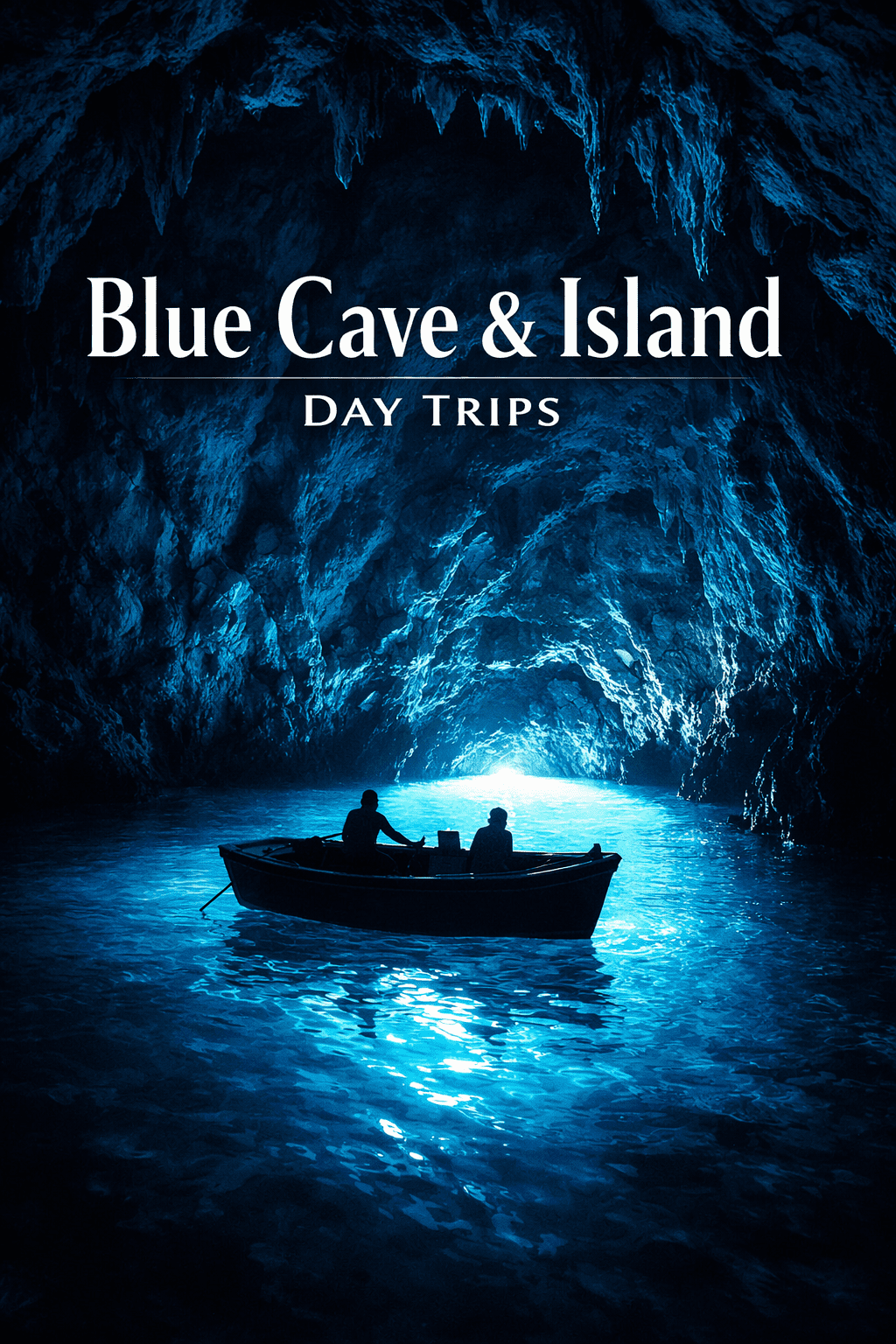
Split sits at the gateway to the Dalmatian islands, and some of the best experiences near the city require a boat. The Blue Cave on Biševo Island is the most famous attraction in the region — sunlight enters through an underwater opening and turns the entire cave interior a glowing electric blue. Tours run from Split’s harbor and typically combine five islands (Biševo, Vis, Hvar, Pakleni Islands, and Šolta) for roughly $92 to $183 per adult depending on the operator and inclusions. [5]
Top day trips from Split:
| Destination | Travel Time | Best For |
|---|---|---|
| Blue Cave (Biševo) | ~2.5 hrs by speedboat | Natural wonder, photography |
| Hvar Town | ~1 hr by catamaran | Nightlife, lavender fields |
| Krka Waterfalls | ~1.5 hrs by car/tour | Swimming, nature, wine tasting |
| Salona Amphitheater | ~20 min by bus | Roman history, fewer crowds |
| Brač Island | ~50 min by ferry | Zlatni Rat beach, quiet villages |
Krka Waterfalls deserve a special mention. Guided tours from Split often include boat cruises through the national park, lunch, and local wine tastings — it’s a full day well spent. [1] If you’re island-hopping on a budget, check out our guide to cheap islands to visit for a dream vacation for broader Adriatic planning ideas.
Salona Amphitheater, just 6 kilometers from Split, dates to the 3rd century BCE and sees a fraction of the visitors that Diocletian’s Palace gets. If you want Roman history without the selfie sticks, go here. [1]
Marjan Hill, Beaches & Outdoor Spots in Split
For outdoor lovers, Marjan Forest Park is the clear answer to what to see in Split Croatia beyond the palace walls. This pine-covered peninsula sits right next to Old Town and functions as the city’s green lung — locals jog, climb, and swim here year-round. [1]
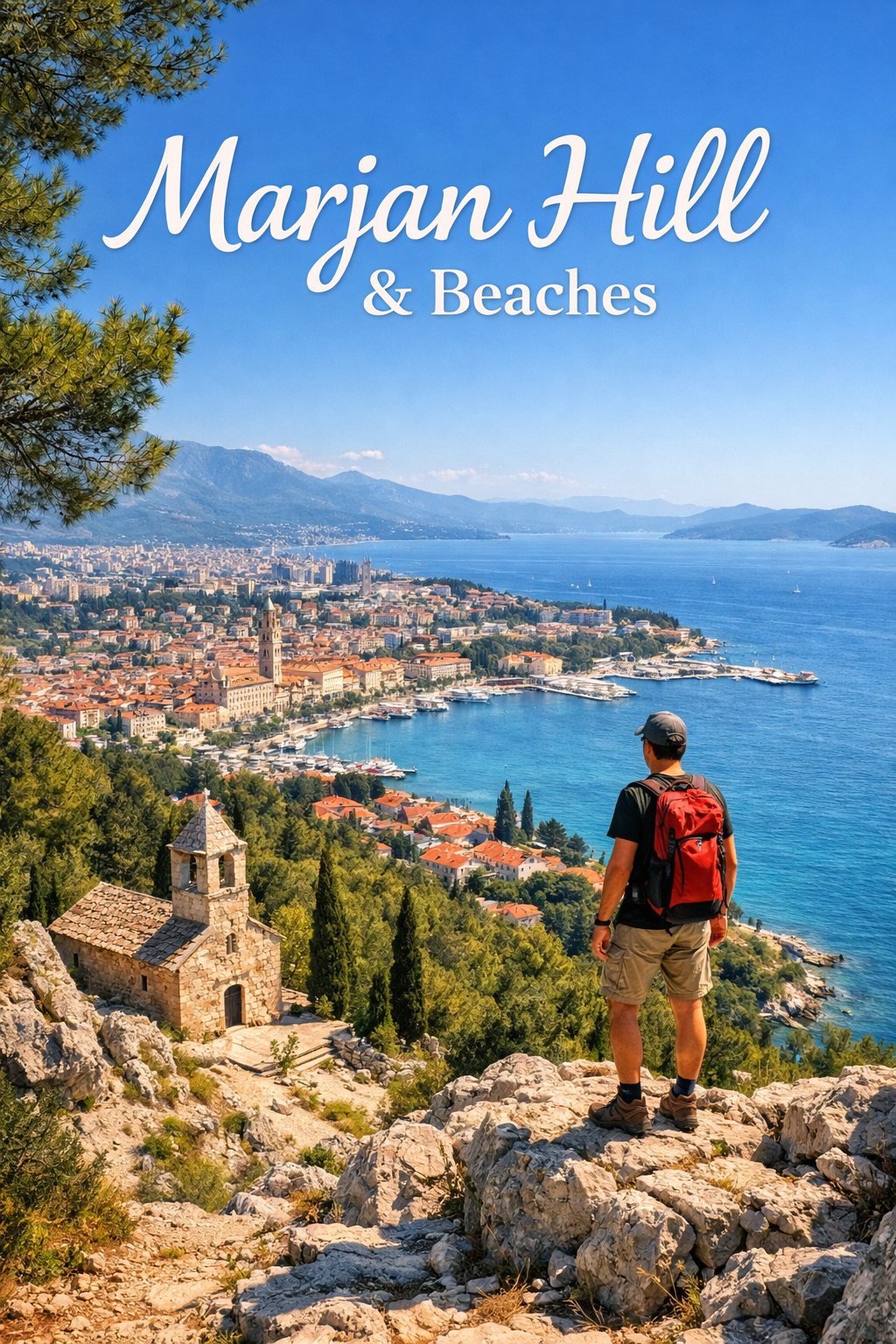
Hiking to the top of Marjan Hill takes about 30 to 45 minutes from the Old Town entrance. The reward is a panoramic view of Split’s rooftops, the Adriatic Sea, and the distant islands of Brač and Šolta. Along the trails, you’ll pass 15th-century stone churches and small chapels half-hidden in the trees. There’s also a rock-climbing wall on the park’s western face for those who want more of a challenge. [5]
Split’s best beaches, ranked by vibe:
- Bačvice Beach: The city’s most famous beach, a short walk from the ferry terminal. Sandy, social, and home to picigin — a traditional Dalmatian ball game played in shallow water. Gets crowded fast in summer.
- Kasjuni Beach: A crescent-shaped cove on the Marjan Peninsula, surrounded by trees. Quieter, cleaner, and more scenic than Bačvice. Reachable by a short bus ride or a 30-minute walk through Marjan Park. [5]
- Bene Beach: On the far end of Marjan, this pebble beach has a sports complex, calm water, and a relaxed atmosphere popular with families.
Choose Kasjuni if you want a peaceful swim away from the main tourist crowd. Choose Bačvice if you want the full local social scene and easy access to seafront cafes.
If you enjoy comparing coastal destinations, our piece on what to do in Mykonos Greece covers another stunning Adriatic-adjacent escape worth considering.
Where to Stay in Split: Accommodations for Every Budget
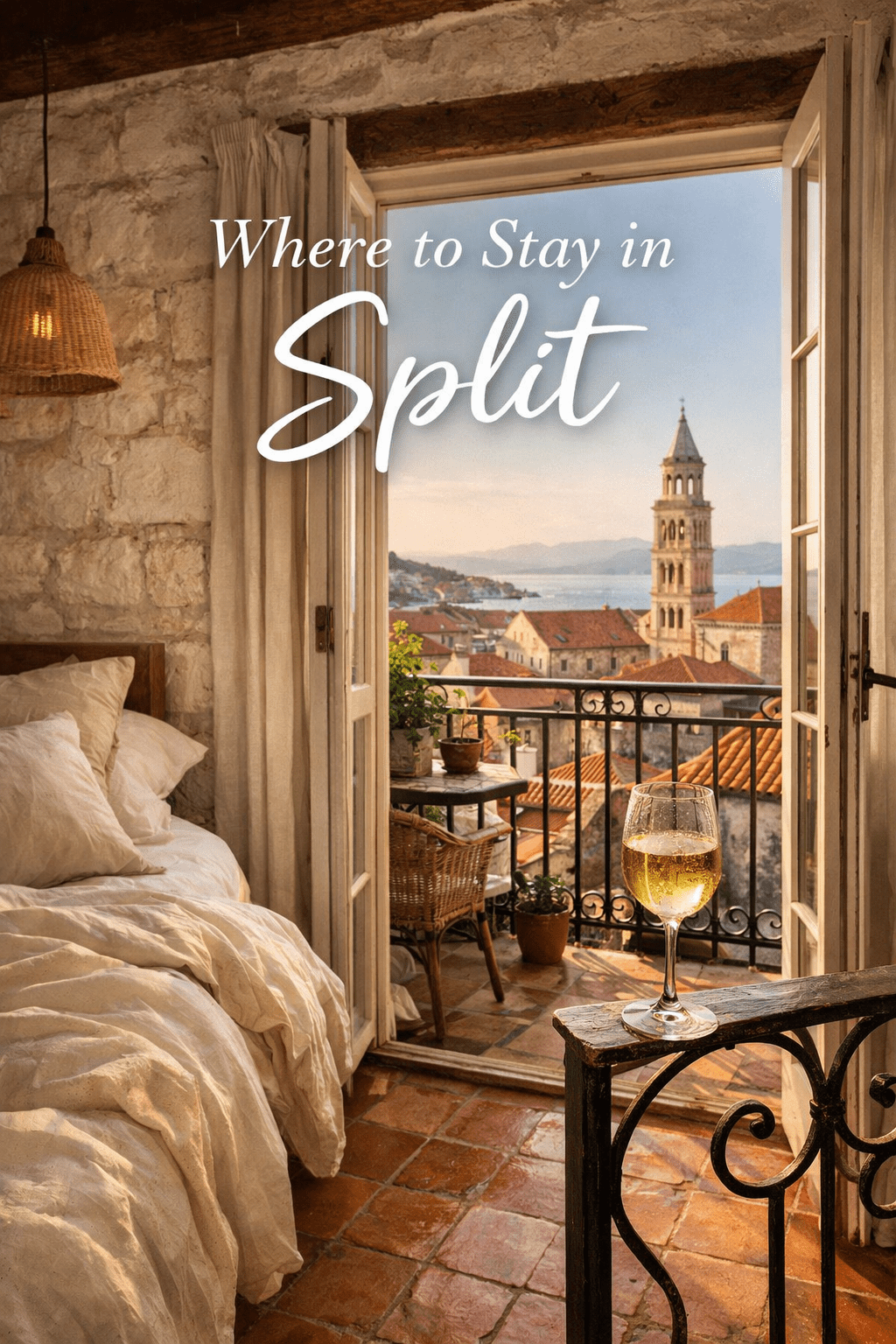
Split has a strong range of accommodations, from boutique hotels inside the palace walls to budget guesthouses a short walk from the Old Town. Location matters a lot here — staying inside or just outside the palace puts you within walking distance of almost everything.
Accommodation zones to know:
- Inside Diocletian’s Palace: The most atmospheric option. Expect smaller rooms, historic stone walls, and a premium price. Noise from late-night crowds can be an issue in summer — bring earplugs.
- Varoš neighborhood: Just west of the palace, quieter at night, with a mix of apartments and small hotels. Good value and a 5-minute walk to everything.
- Bačvice area: Near the beach and ferry terminal, practical for early departures or beach-focused trips.
- Meje/Marjan area: Residential, calm, and close to Kasjuni Beach. Best for travelers who want a local feel over a central location.
Budget breakdown (approximate, per night in 2026):
| Budget Level | Type | Estimated Cost |
|---|---|---|
| Budget | Hostel or guesthouse | $30–$60 |
| Mid-range | Boutique hotel or apartment | $80–$160 |
| Luxury | Design hotel or palace suite | $200–$400+ |
Practical tips:
- Book at least 2 to 3 months ahead for summer stays (June through August).
- Spring and autumn rates drop significantly and the city is far more pleasant.
- Self-catering apartments are a great mid-range option and widely available through local agencies.
If you’re planning a broader European trip, our guides on what to see in Athens Greece and what to see in Rome Italy can help you build a full itinerary. For other European city inspiration, what to see in Prague and what to see in Vienna are worth a look too.
What to See in Split Croatia: Practical Tips Before You Go
A few logistics make a real difference in how your trip goes.
Getting around:
- Old Town is entirely walkable. Most major sights are within a 20-minute walk of Diocletian’s Palace.
- Local buses connect the city center to Marjan Park, Kasjuni Beach, and the ferry terminal.
- Ferries to the islands depart from the main Split harbor (Trajektna luka) — book ahead in summer.
Best time to visit:
- Spring (March–May): Ideal. Comfortable temperatures (15–22°C), very few crowds, lower prices. [1]
- Summer (June–August): Peak season. Hot, crowded, and expensive, but the islands are at their best.
- Autumn (September–October): Still warm enough to swim, crowds thin out, great for Old Town exploration.
Money and costs:
- Croatia uses the euro (since January 2023).
- Budget roughly €60–€100 per day for mid-range travel including accommodation, food, and one activity.
- Dining in the Varoš neighborhood is noticeably cheaper than eating on the Riva Promenade.
Don’t miss the Riva Promenade — the waterfront boulevard lined with palm trees, cafes, and views of Marjan Hill. It’s where locals gather in the evening for the traditional korzo (evening stroll), and it’s one of the most pleasant places in the city to simply sit and watch the world go by. [1]
If you’re still working out flights, our guide on where to find cheap flights can save you real money on getting to Croatia.
FAQ: What to See in Split Croatia
How many days do you need in Split?
Three days is enough to cover the main highlights — Diocletian’s Palace, Marjan Hill, the beaches, and a day trip to the islands. Five days lets you explore at a relaxed pace and add Krka or Hvar.
Is Split worth visiting outside of summer?
Absolutely. Spring and autumn are arguably better than summer — fewer crowds, lower prices, and more comfortable temperatures for walking around Old Town.
What is the most iconic thing to see in Split?
Diocletian’s Palace. It’s a UNESCO World Heritage Site and one of the best-preserved Roman structures in the world. Walking through it is the defining Split experience. [1]
Is the Blue Cave worth the trip from Split?
Yes, if you book a reputable tour and go early in the day. The cave is small and visits are timed, so morning light and smaller groups make a big difference.
Can you swim in Split’s city center?
Yes. Bačvice Beach is a 10-minute walk from the Old Town, and Kasjuni Beach is reachable by bus in about 15 minutes. [5]
Is Split safe for solo travelers?
Split is considered very safe for solo travelers, including solo women. Standard city precautions apply — watch your belongings in crowded areas near the palace.
What food should you try in Split?
Try peka (slow-roasted meat or seafood under a bell-shaped lid), fresh grilled fish, prstaci (date mussels, though now protected — ask what’s in season), and local Dalmatian wine. The Varoš neighborhood has the best value restaurants.
Do you need to book attractions in advance?
The palace itself is free to walk through. The cathedral bell tower and some museums require tickets, which you can usually buy at the door outside peak summer. Blue Cave and island tours should be booked ahead.
Is Diocletian’s Palace a museum?
No — it’s a living neighborhood. People live and work inside the ancient walls alongside cafes, shops, and historical sites. That’s what makes it so remarkable. [1]
What’s the best viewpoint in Split?
The top of Marjan Hill offers the best free panoramic view. The Saint Domnius Cathedral bell tower gives the best view of the Old Town itself. [1]
Conclusion: Plan Your Split Trip with Confidence
Split rewards travelers who take their time. Start with Diocletian’s Palace and let yourself get lost in its ancient lanes. Climb Marjan Hill for the view, swim at Kasjuni for the quiet, and take at least one boat trip to the islands — whether that’s the Blue Cave, Hvar, or Krka.
Your actionable next steps:
- Book accommodation in or near Old Town at least 2 months ahead if visiting in summer.
- Reserve a Blue Cave or island combo tour through a reputable Split operator.
- Plan one full day for Marjan Park and Kasjuni Beach — bring a picnic.
- Walk the Riva Promenade at sunset and find a table in the Varoš neighborhood for dinner.
- If you have a fifth day, take the bus to Salona for Roman history without the crowds.
Split is one of those cities that genuinely lives up to the hype — and then some. Whether you’re a history lover, a beach person, or just someone who wants to sit in a 1,700-year-old courtyard with a glass of local wine, this city delivers.
References
[1] Split L268 – https://www.getyourguide.com/split-l268/
[2] Type Castles 71 38419 – https://us.trip.com/travel-guide/attraction/split-1642/tourist-attractions/type-castles-71-38419/
[3] The Top 10 Things To Do In Split Croatia – https://charlieswanderings.com/croatia/the-top-10-things-to-do-in-split-croatia/
[5] Attractions G295370 Activities Split Split Dalmatia County Dalmatia – https://www.tripadvisor.com/Attractions-g295370-Activities-Split_Split_Dalmatia_County_Dalmatia.html
[6] Things To Do City Split – https://www.headout.com/things-to-do-city-split/
[7] Things To Do In Split – https://www.thepackablelife.com/travel/guides/things-to-do-in-split