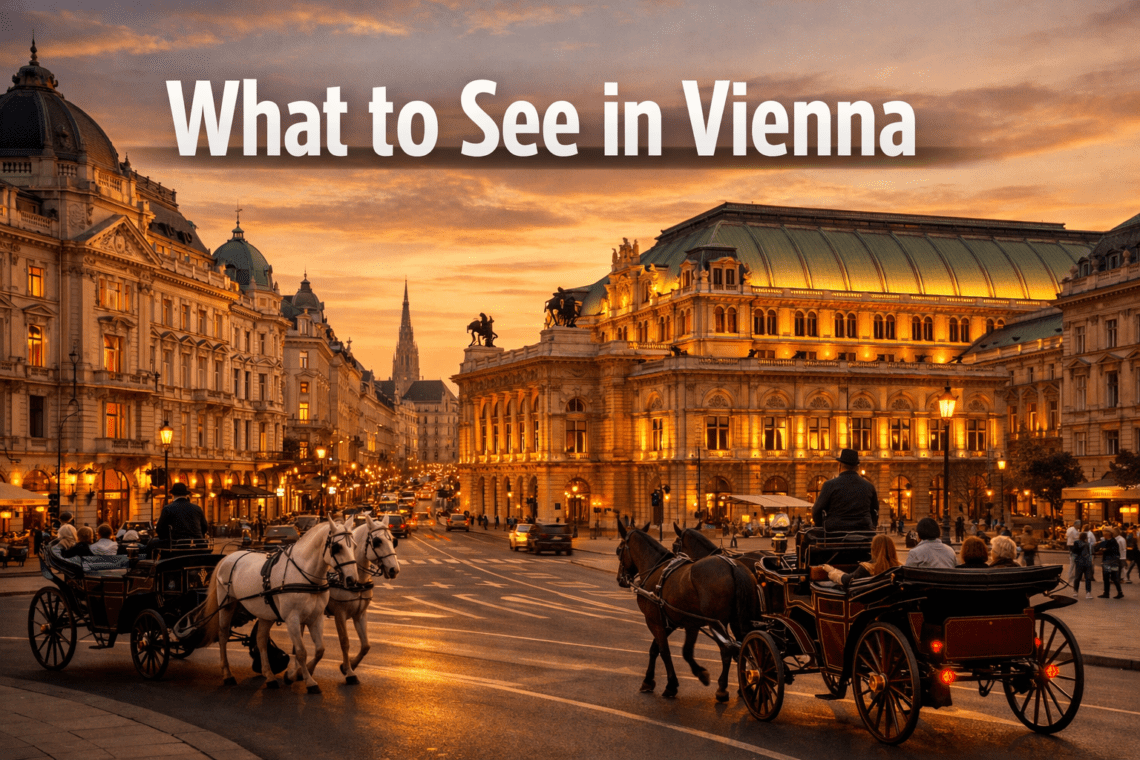
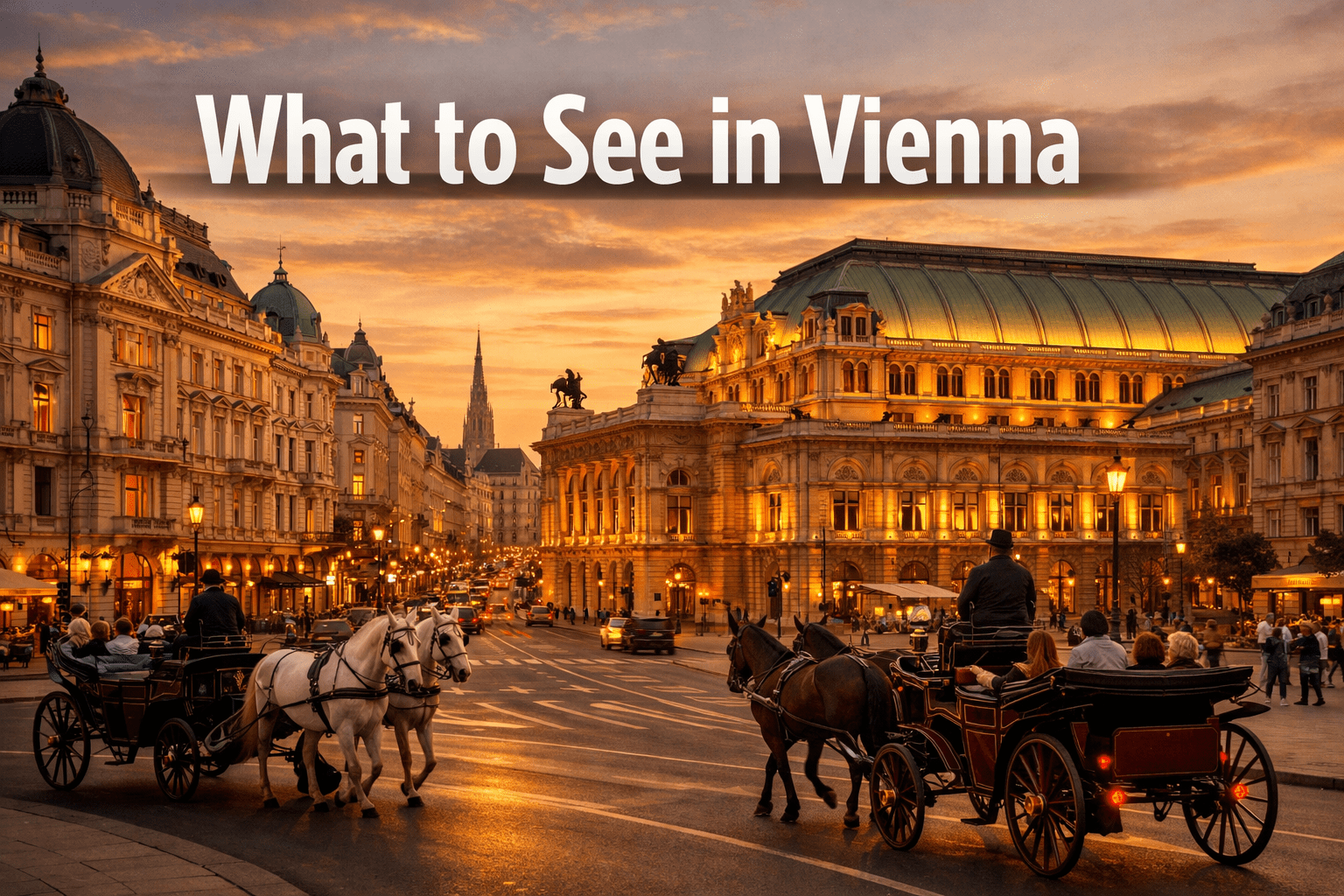
Quick Answer: Vienna is one of Europe’s most rewarding cities to visit, packed with imperial palaces, world-class museums, Gothic cathedrals, and a coffee house culture unlike anywhere else. The must-see highlights include Schönbrunn Palace, St. Stephen’s Cathedral, the Belvedere, the Kunsthistorisches Museum, and the historic Ringstrasse. Most first-timers can cover the essential sights in three to four days.
Key Takeaways
- Schönbrunn Palace is Austria’s single most-visited attraction, drawing roughly 5 million visitors a year to its imperial rooms and formal gardens [2]
- St. Stephen’s Cathedral is the city’s defining landmark, nearly 500 feet tall with a famously tiled roof and free entry to the main nave [3]
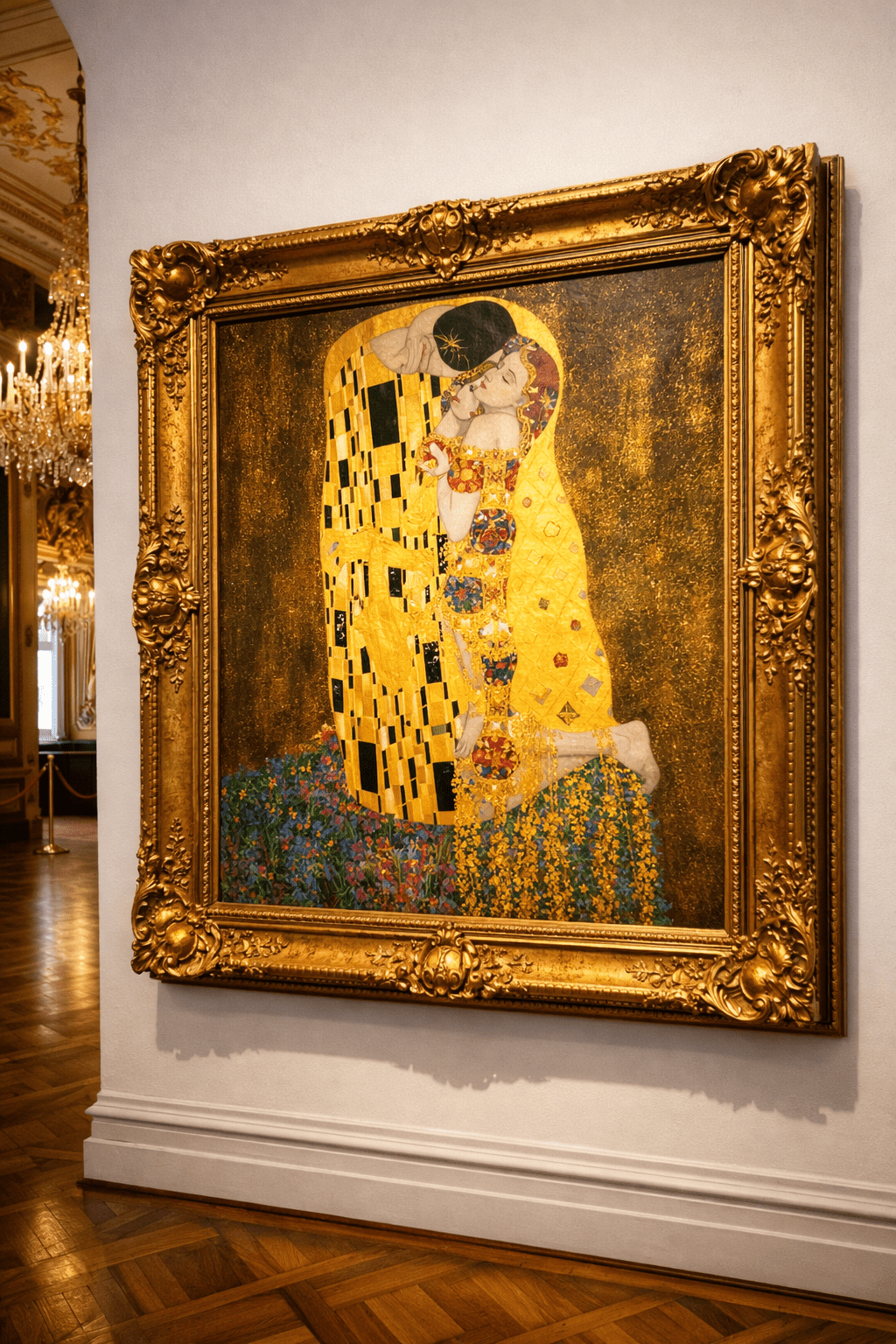
- The Belvedere Palace houses Gustav Klimt’s The Kiss, considered Austria’s most iconic artwork [4]
- The Kunsthistorisches Museum ranks among the world’s great art museums, with a collection spanning five millennia and admission starting around $25 [3]
- Vienna State Opera offers close to 300 performances a year, with tickets starting around $77 [3]
- The historic city center is a UNESCO World Heritage Site, and most top sights are walkable or a short tram ride apart
- Viennese coffee houses are a cultural institution, not just a place to grab a drink
- The Vienna Card gives unlimited public transport plus museum discounts, and it’s worth buying for stays of two or more days
- Spring (April–May) and early autumn (September–October) are the best times to visit for mild weather and manageable crowds
What to See in Vienna First: The Imperial Highlights
Vienna’s imperial core is the best place to start. The city was the seat of the Habsburg dynasty for over 600 years, and that history is visible on almost every block. Begin with Schönbrunn Palace, the Hofburg, and St. Stephen’s Cathedral, and you’ll immediately understand why Vienna feels so different from other European capitals.
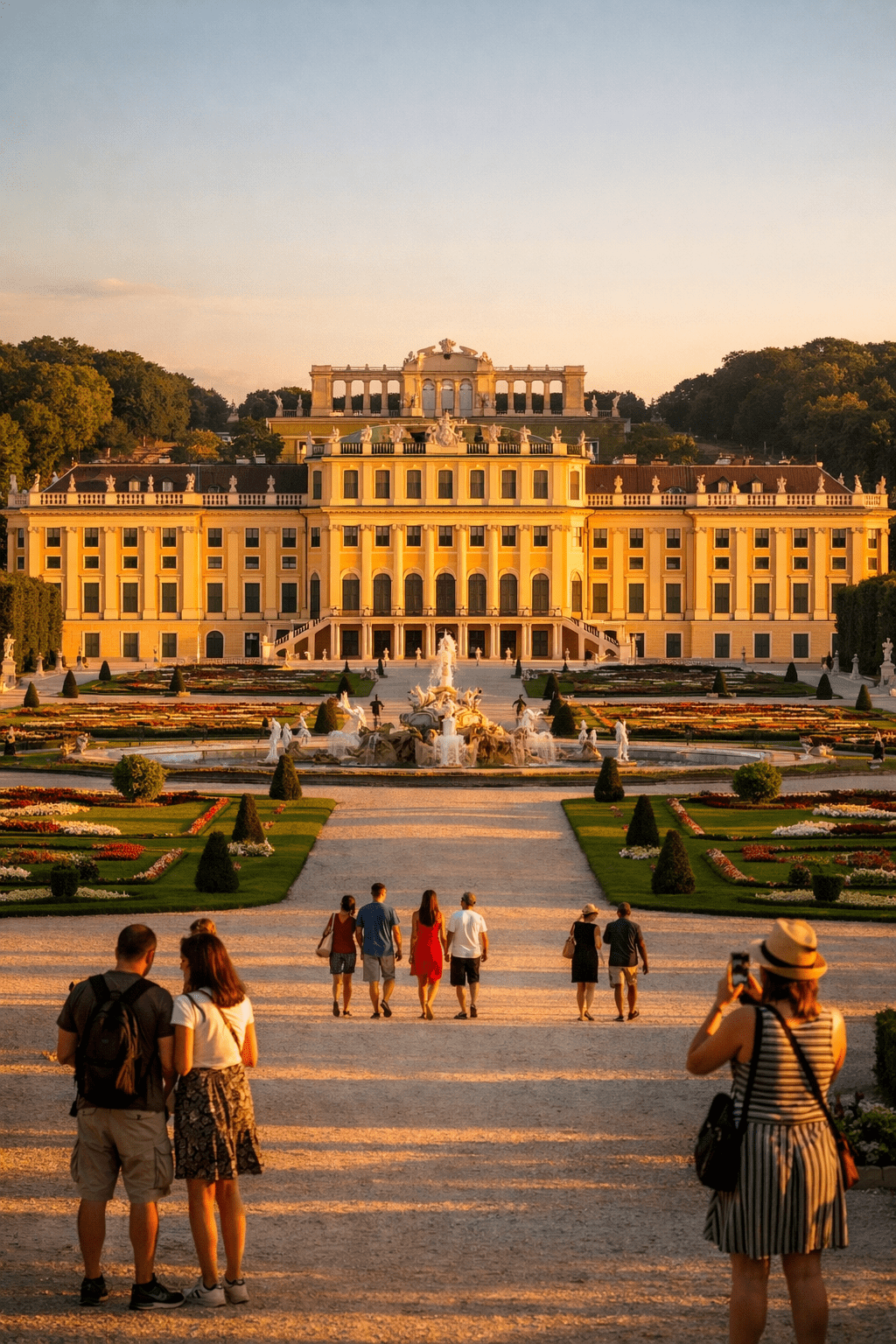
Schönbrunn Palace and Gardens
Schönbrunn Palace is Austria’s most-visited attraction, welcoming approximately 5 million visitors annually [2]. The former summer residence of the Habsburgs sits on the western edge of the city and is genuinely stunning, even if you’ve seen a lot of European palaces.
What to do here:
- Tour the Imperial Apartments (the Grand Tour covers 40 rooms and is worth the upgrade)
- Walk up to the Gloriette hilltop monument for a panoramic view over Vienna
- Explore the formal gardens, which are free to enter year-round
- Visit the Tiergarten Schönbrunn Zoo on the palace grounds, one of the world’s oldest and best-rated zoos, home to giant pandas [2]
“Schönbrunn is the kind of place where you plan to spend two hours and end up staying five.”
Choose this if: You want the single most complete “imperial Vienna” experience in one location. Skip the zoo if you’re short on time and save it for families or animal lovers.
Hofburg Palace and the Sisi Museum
The Hofburg was the Habsburgs’ winter palace and is now home to several museums, the Austrian National Library, and the official residence of Austria’s president. The Sisi Museum inside traces the life of Empress Elisabeth with an impressive collection of personal objects, portraits, and reconstructed rooms [1]. It’s one of Vienna’s most popular museum experiences and pairs naturally with a walk through the palace’s grand ceremonial halls.
St. Stephen’s Cathedral (Stephansdom)
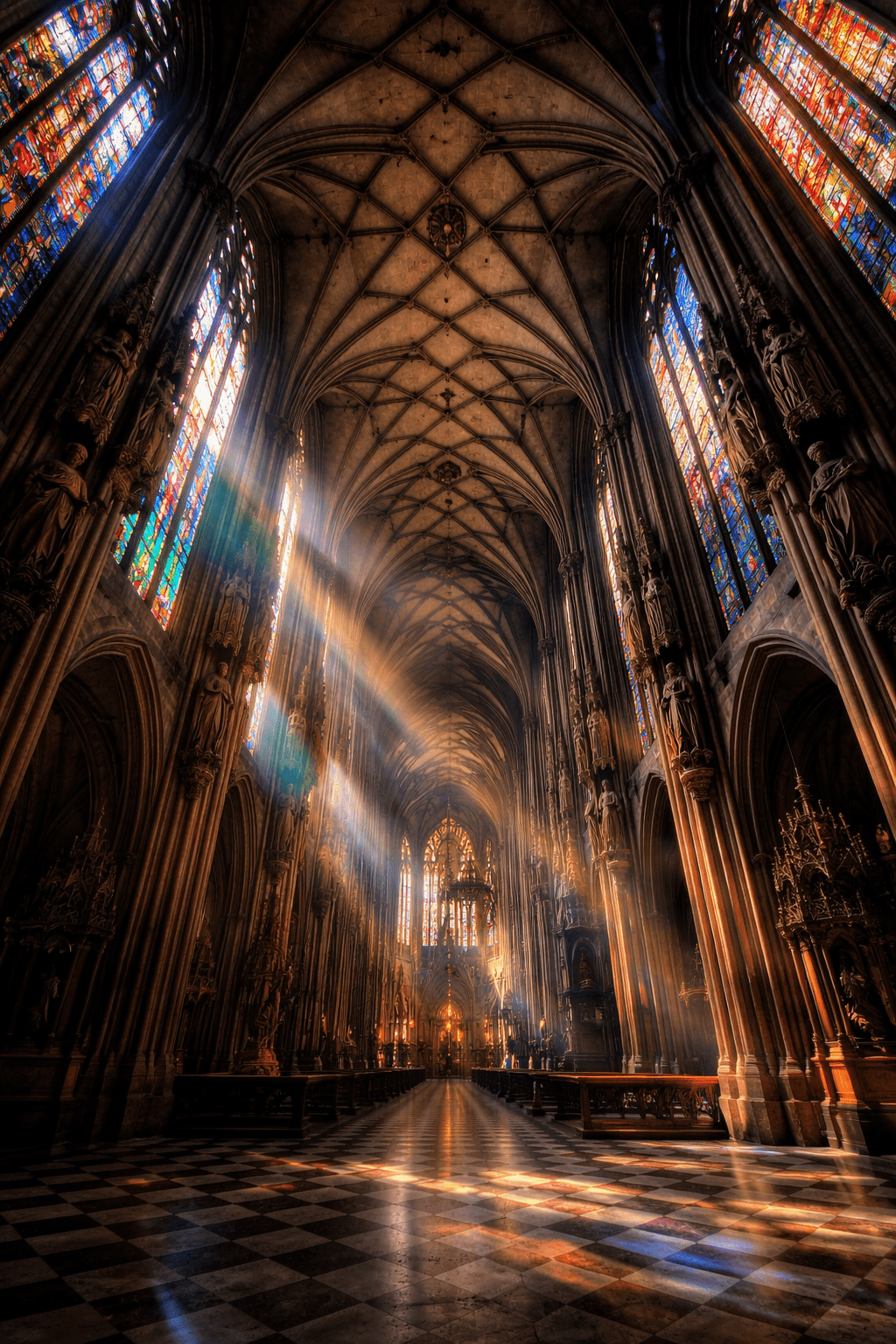
St. Stephen’s Cathedral stands at the heart of the city and is Austria’s most prominent national symbol [3]. The South Tower climb gives you one of the best views in Vienna, and the intricate geometric tile roof is worth studying up close before you go inside.
Practical notes:
- Entry to the main nave is free
- Tower climb and catacombs tours are ticketed separately
- The cathedral is most atmospheric early in the morning before tour groups arrive
The Art Museums: What to See in Vienna If You Love Culture
Vienna’s museum scene is exceptional, and you don’t need to be an art expert to enjoy it. The city has several world-class institutions that are genuinely engaging for casual visitors.
Kunsthistorisches Museum (KHM)
The Kunsthistorisches Museum is one of the world’s foremost art museums, rated 4.7/5 on TripAdvisor based on over 10,000 reviews [3]. The building itself, a grand 19th-century structure on the Ringstrasse, is as impressive as the collection inside.
| Museum | Highlight | Admission (est.) | Best For |
|---|---|---|---|
| Kunsthistorisches Museum | Dürer, Raphael, Titian | ~$25 | Art history lovers |
| Belvedere (Upper) | Klimt’s The Kiss | ~$20 | Iconic single artwork |
| Albertina | Rotating major exhibitions | ~$18 | Contemporary + classic |
| Natural History Museum | Meteorites, Venus of Willendorf | ~$15 | Families, science fans |
The KHM’s collection spans five millennia, from Ancient Egyptian artifacts to Baroque masterpieces. Budget at least two to three hours here.
Belvedere Palace
The Upper Belvedere is where you’ll find Gustav Klimt’s The Kiss, described consistently as Austria’s most famous artwork [4][5]. The palace itself is a Baroque gem set in formal gardens, and the contrast between the ornate architecture and the modernist Klimt paintings inside is genuinely striking.
The Lower Belvedere is a short walk away and focuses on Baroque art and temporary exhibitions. If time is limited, prioritize the Upper Belvedere.
Albertina Museum
The Albertina hosts some of Europe’s most prestigious rotating art exhibitions [4]. The permanent collection includes major graphic works, but the temporary shows are what draw international attention. Check the current program before your trip because the lineup changes significantly throughout the year.
The Historic Center and the Ringstrasse
Vienna’s historic city center holds a TripAdvisor rating of 4.7/5 based on nearly 20,000 reviews, making it the second-ranked attraction in the city [3]. That number reflects something real: walking through the first district feels like moving through a living museum.
The Ringstrasse is the grand boulevard that Emperor Franz Joseph I commissioned in the 1850s and 60s to replace Vienna’s old city walls. It’s lined with some of the city’s most important buildings:
- Vienna State Opera (Wiener Staatsoper)
- Parliament Building
- Burgtheater (one of the world’s most prestigious German-language theaters)
- Rathaus (City Hall)
- Kunsthistorisches and Natural History Museums (facing each other across Maria-Theresien-Platz)
A walk along the Ringstrasse takes about 45 minutes at a relaxed pace. You can also hop on Tram 1 or 2, which circles the boulevard and gives you a comfortable overview before you decide where to stop.
The Vienna State Opera deserves special mention. With close to 300 performances a year and a 4.5/5 rating from over 8,000 travelers [3], it’s one of the world’s great opera houses. Standing-room tickets are available from around $5 to $10 on performance days, which makes this accessible even on a tight budget.
If you’re planning a broader European trip, our guides to what to see in Rome and what to see in London in 3 days follow a similar approach to making the most of a short city visit.
Hidden Gems and Local Favorites Worth Adding to Your List
Beyond the headline attractions, Vienna rewards visitors who slow down and explore.
Prater Park and the Wiener Riesenrad
The Prater is Vienna’s large public park, and the Wiener Riesenrad (Giant Ferris Wheel) has been a city landmark since 1897 [2][5]. The slow rotation gives you a panoramic view over Vienna’s rooftops that’s completely different from the tower climb at Stephansdom. The park itself is free to enter and popular with locals for cycling, jogging, and picnics.
Naschmarkt
Vienna’s most famous open-air market runs along the Wienzeile and is best visited on a Saturday morning when the flea market section is also open. You’ll find fresh produce, cheeses, olives, spices, and street food from a dozen cuisines. It’s one of the most local-feeling experiences in the city.
The Viennese Coffee House
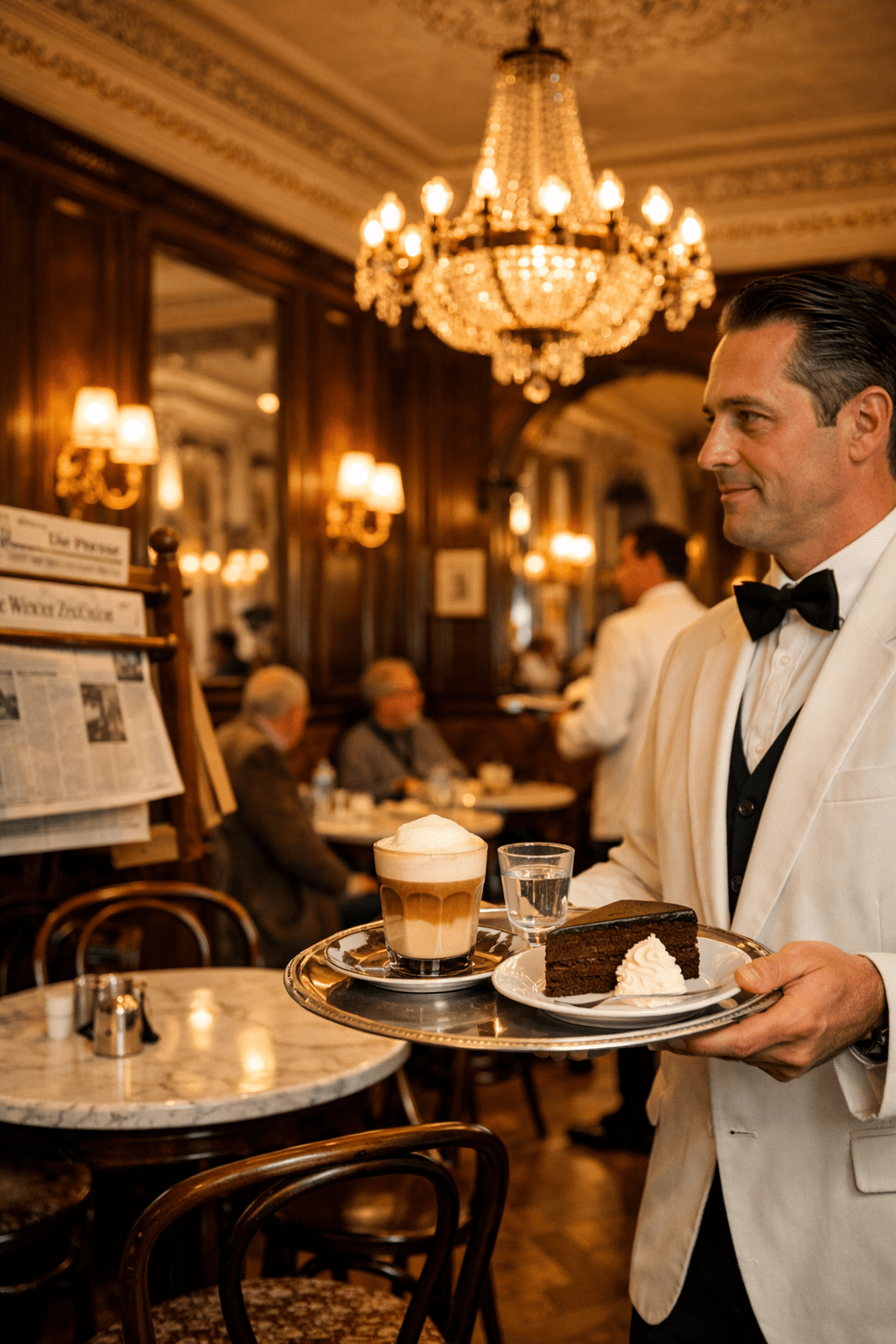
Vienna’s coffee house culture is UNESCO-listed as an intangible cultural heritage, and it genuinely deserves that status. These aren’t cafes in the modern sense. They’re institutions where you can sit for hours over a single Melange (Vienna’s version of a cappuccino), read a newspaper, and watch the city move at its own pace.
Top coffee houses worth visiting:
- Café Central (historic, grand, touristy but worth it)
- Café Hawelka (bohemian, beloved by artists and writers for decades)
- Café Landtmann (Freud’s favorite, still elegant)
- Café Schwarzenberg (on the Ringstrasse, classic atmosphere)
Pair your coffee with a Sachertorte (Vienna’s famous chocolate cake) or an Apfelstrudel and you’ve done Vienna properly.
For more European city inspiration, check out our guides to what to see in Barcelona and 3 days in Madrid, both of which share Vienna’s mix of imperial history and vibrant street culture.
What to See in Vienna on a Tight Schedule: A 2-Day Plan
If you only have 48 hours, here’s how to prioritize without feeling rushed.
Day 1: Imperial Vienna
| Time | Activity |
|---|---|
| Morning | Schönbrunn Palace (Imperial Apartments + gardens) |
| Lunch | Café at the palace or Naschmarkt nearby |
| Afternoon | Hofburg Palace + Sisi Museum |
| Evening | Walk the Ringstrasse, dinner near the Opera |
Day 2: Art and the Historic Center
| Time | Activity |
|---|---|
| Morning | St. Stephen’s Cathedral (early, before crowds) |
| Mid-morning | Kunsthistorisches Museum |
| Lunch | Coffee house near the museum district |
| Afternoon | Belvedere Palace (Upper Belvedere for Klimt) |
| Evening | Vienna State Opera performance or Prater Ferris Wheel |
Common mistake: Trying to do Schönbrunn and the Belvedere on the same day. Both deserve at least two to three hours each. Split them across two days or you’ll rush both.
If you’re building a bigger European itinerary, our Europe travel guides cover everything from Lisbon to hidden gems in Amsterdam.
Practical Tips for Visiting Vienna in 2026
- Best time to visit: April–May and September–October offer mild weather and fewer crowds than peak summer. Christmas markets (late November–December) are magical but busy.
- Getting around: Vienna’s public transport (U-Bahn, trams, buses) is excellent. The Vienna City Card covers unlimited travel plus museum discounts.
- Book in advance: Schönbrunn timed entry slots and Vienna State Opera tickets sell out weeks ahead, especially in summer.
- Language: German is the official language, but English is widely spoken in tourist areas.
- Budget: Mid-range travelers should budget roughly €100–€150 per day including accommodation, meals, and attraction entry.
- Tipping: Round up the bill or add 5–10% in restaurants. Tipping is appreciated but not mandatory.
Looking for affordable flights to get there? Our guide on where to find cheap flights covers the best booking strategies to save money on European routes.
FAQ: What to See in Vienna
Q: How many days do you need in Vienna?
Three to four days is ideal for first-timers. You can cover the major sights in two days, but three days lets you explore at a comfortable pace without rushing.
Q: Is Vienna expensive to visit?
Vienna is moderately expensive by European standards. Museum admissions typically run €15–€25, a sit-down meal costs €15–€30, and a coffee house coffee is around €4–€6. Standing-room opera tickets can be as low as €5–€10.
Q: Is the Vienna Card worth buying?
Yes, for stays of two or more days. It covers unlimited public transport and includes discounts at most major museums and attractions.
Q: What is Vienna most famous for?
Vienna is most famous for its imperial Habsburg history, classical music heritage (Mozart, Beethoven, and Brahms all lived here), world-class art museums, and its unique coffee house culture.
Q: Can you walk between the main attractions?
Many of Vienna’s top sights are within walking distance of each other in the first district. Schönbrunn Palace is about 20 minutes by U-Bahn from the city center, and the Belvedere is a 15-minute walk from the Ringstrasse.
Q: Is Vienna good for families?
Yes. Tiergarten Schönbrunn Zoo, the Natural History Museum, Prater Park, and the Ferris Wheel are all excellent for children. The city is clean, safe, and easy to navigate with kids.
Q: What’s the best museum in Vienna?
For art, the Kunsthistorisches Museum is the most comprehensive. For a single iconic experience, the Belvedere (for Klimt’s The Kiss) is hard to beat. For imperial history, the Hofburg complex and Sisi Museum are the top choices.
Q: Is Vienna safe for tourists?
Vienna consistently ranks among the world’s safest cities. Standard travel precautions apply (watch for pickpockets in crowded tourist areas), but overall it’s an extremely safe destination.
Q: What should I eat in Vienna?
Must-try dishes include Wiener Schnitzel, Tafelspitz (boiled beef), Sachertorte, Apfelstrudel, and Kaiserschmarrn (a fluffy shredded pancake dessert). Wash it down with a Melange coffee or a glass of Grüner Veltliner wine.
Q: Do I need to book Schönbrunn Palace in advance?
Yes, especially in summer. Timed entry slots for the Imperial Apartments sell out, and booking online in advance saves both time and sometimes money.
Conclusion
Vienna earns its reputation as one of Europe’s great cities the moment you step off the train. The combination of imperial grandeur, world-class art, living musical tradition, and a coffee house culture that genuinely slows you down makes it unlike anywhere else on the continent.
Your actionable next steps:
- Book Schönbrunn Palace and the Vienna State Opera as soon as your dates are confirmed, both sell out in advance
- Buy the Vienna City Card before your first full day to save on transport and museum entry
- Start your first morning at St. Stephen’s Cathedral before the crowds arrive, then work outward from there
- Allow one unplanned afternoon to wander the first district, find a coffee house, and let the city surprise you
Whether you have two days or a week, Vienna rewards curiosity. The more you look, the more you find. And if you’re building a broader European trip, our Europe travel category has guides to help you plan every stop along the way.
References
[1] D454 Ttd – https://www.viator.com/en-ZA/Vienna/d454-ttd
[2] Tourist Attractions In Vienna – https://en.wikipedia.org/wiki/Tourist_attractions_in_Vienna
[3] Attractions G190454 Activities Vienna – https://www.tripadvisor.com/Attractions-g190454-Activities-Vienna.html
[4] My Top 10 Places – https://www.visitingvienna.com/sights/my-top-10-places/
[5] Top 15 Things To Do And See In Wien Must See Attractions Experiences – https://www.adventure-life.com/austria/vienna/articles/top-15-things-to-do-and-see-in-wien-must-see-attractions-experiences