Last updated: September 10, 2026
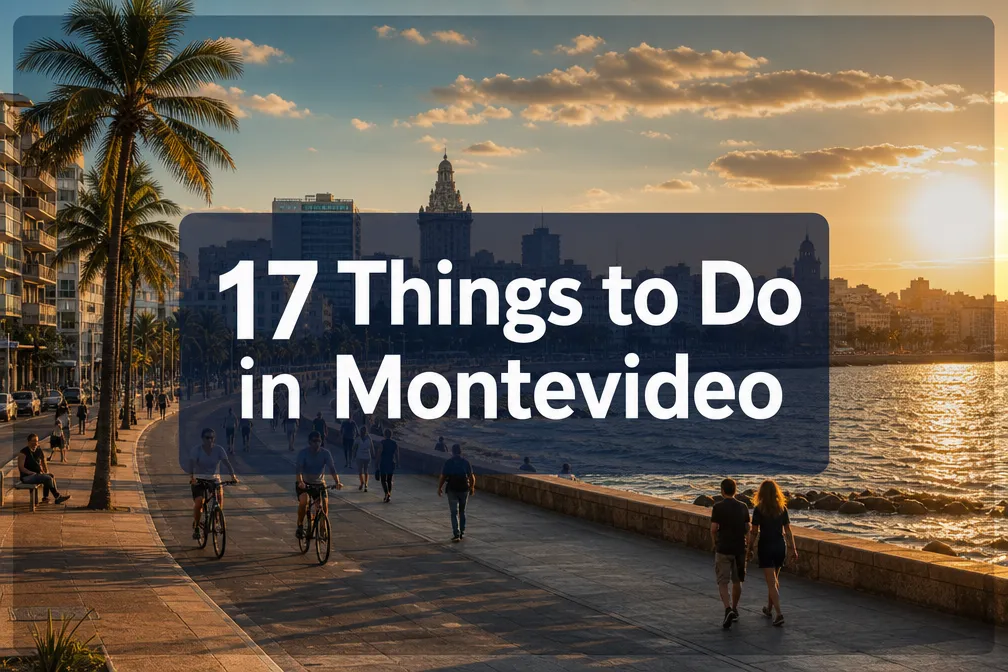
Quick Answer: Montevideo is one of South America’s most underrated capitals – a compact, walkable city where colonial architecture meets beach culture, world-class tango, and a food scene built around fire and fresh produce. The best things to do in Montevideo, Uruguay range from free coastal walks along the Rambla to late-night milongas that locals have attended for decades. Spend at least 3-4 days to scratch the surface, and lean into the city’s rhythm rather than rushing through a checklist.
Key Takeaways
- 3-4 days is the sweet spot for a first visit; 5-7 days lets you explore beyond the city center
- The Rambla – Montevideo’s 22-kilometer coastal promenade – is the city’s social backbone and completely free
- Ciudad Vieja (Old Town) is the historic core; Pocitos and Palermo are where locals actually spend weekends
- Spring (September-November) and autumn (March-May) offer the best weather and thinner crowds
- Montevideo is generally safer than most South American capitals for tourists
- The Noche de la Nostalgia on August 24 is one of Uruguay’s most distinctive annual traditions – and most visitors have never heard of it
- Budget travelers can get by on roughly $50-70 USD per day including accommodation, food, and transport
- The Descubrí Montevideo events portal is the single best tool for finding what locals are actually doing this week
What Are the Best Neighborhoods to Explore in Montevideo?
Montevideo’s neighborhoods each have a distinct personality. Ciudad Vieja is the historic heart, but the city’s real character lives in the residential barrios further east.
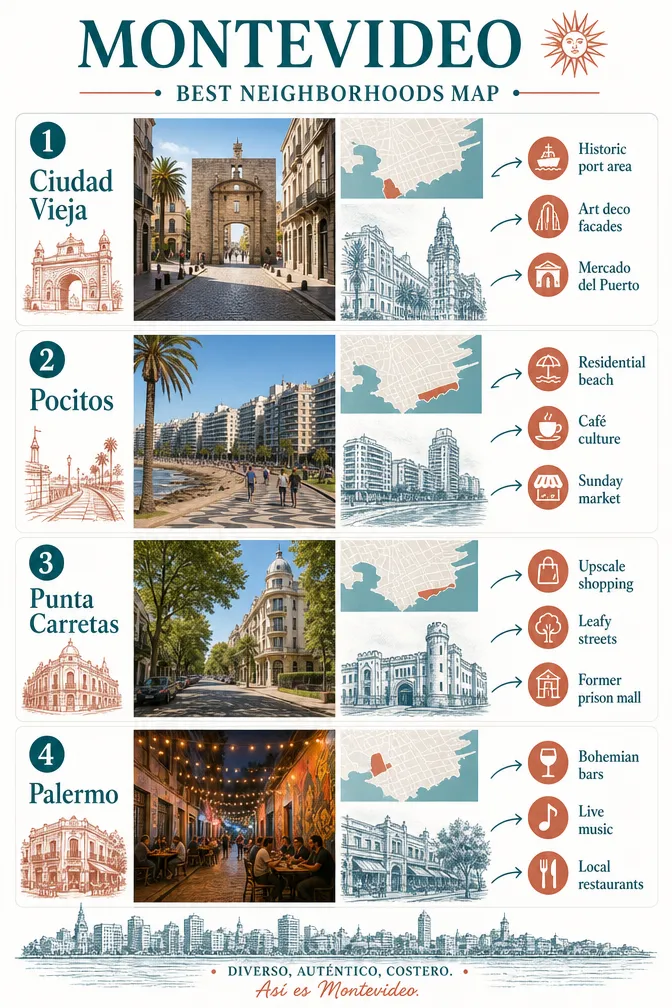
Here’s a quick breakdown:
- Ciudad Vieja – Colonial architecture, the Mercado del Puerto, art galleries, and the port. Best for mornings and lunch.
- Pocitos – A residential beach neighborhood with a Sunday market, café terraces, and a relaxed local vibe. Great for afternoons.
- Palermo – Bohemian, bar-heavy, and full of live music venues. This is where the younger crowd goes on weekends.
- Punta Carretas – A quieter, upscale area built around a former prison converted into a shopping mall. Excellent for a calm evening walk.
- Parque Rodó – A leafy park neighborhood with street performers, a small amusement park, and the MAPI museum nearby.
Choose Pocitos if you want beach access with a neighborhood feel. Choose Palermo if you want bars, live music, and late nights.
What’s the Difference Between Old Town and Modern Montevideo?
Ciudad Vieja (Old Town) is compact and walkable, packed with 19th-century architecture, plazas, and cultural institutions. Modern Montevideo – particularly the stretch from Pocitos to Carrasco – is a coastal residential city that feels more like a European seaside town than a typical South American capital.
The contrast is striking. In Ciudad Vieja, you’ll find the Mercado del Puerto (a cast-iron market hall where grill masters cook whole cuts of beef over wood fire), the Teatro Solís (Uruguay’s premier performing arts venue), and the Palacio Salvo (once the tallest building in South America). Walk 20 minutes east along the Rambla, and you’re in Pocitos – beach volleyball, dog walkers, and families sharing mate on benches.
Don’t skip the Intendencia building on Soriano 1372. The tourist office on the 22nd floor offers a panoramic city view that almost no short-term visitor knows about.
How Many Days Should I Spend in Montevideo?
Three to four days covers the essentials comfortably. Five to seven days lets you slow down, take a day trip, and actually feel like you’re living there rather than ticking boxes.
Day 1-2: Ciudad Vieja, Mercado del Puerto, Rambla walk, Teatro Solís show
Day 3-4: Pocitos, Palermo bar scene, MAPI museum, Parque Rodó
Day 5+: Day trip to Colonia del Sacramento or Punta del Este, local market, neighborhood cinema
If you’re planning a girls’ trip or a group getaway, Montevideo works beautifully as a 4-5 night base with easy day-trip options.
Best Time of Year to Visit Montevideo
Spring (September-November) and autumn (March-May) are the best times to visit Montevideo. Temperatures are mild (roughly 15-22°C), crowds are manageable, and cultural programming is at its richest.
Summer (December-February) is warmer and busier, especially along the beaches. Prices rise and accommodation books up faster. Winter (June-August) is quieter and cooler, but the city’s indoor cultural life – concerts, film cycles, tango – is excellent.
August is underrated. The city runs the Divercine International Children’s Film Festival throughout the month, free Saturday photography events run 10:00-16:00, and the Noche de la Nostalgia on August 24 turns the whole city into a decades-spanning music party.
Free Things to Do in Montevideo
Many of the best things to do in Montevideo, Uruguay cost nothing at all. The city’s public cultural infrastructure is genuinely impressive.
- Walk the Rambla – All 22 kilometers of it, from Ciudad Vieja to Carrasco, are free and open 24/7
- Mercado Ferrando – A neighborhood market with free entry and cheap food stalls
- Parque Rodó – Free entry to the park; small fee for the amusement rides
- Free Saturday photography events in August, running 10:00-16:00 across the city
- Museo Nacional de Artes Visuales – Free entry on certain days; check the official events calendar before you go
- Playa Pocitos and Playa Ramírez – Urban beaches with no entry fee
- Noche de la Nostalgia pre-parties at venues like Centro Cultural de España – some are free with limited capacity
The Descubrí Montevideo weekly agenda lists free and low-cost events updated every week. Bookmark it before your trip.
Where to Eat Authentic Uruguayan Food in Montevideo
The Mercado del Puerto is the most famous spot, and it earns the reputation. Go for lunch on a Saturday when the grill smoke fills the entire iron-frame hall and local families crowd the long communal tables.
Beyond the Mercado, here’s where locals actually eat:
- Parrillas in Pocitos – Neighborhood grill restaurants where a full asado lunch costs a fraction of tourist-zone prices
- Chivitos – Uruguay’s national sandwich (steak, egg, ham, cheese, vegetables) at any corner café
- Panaderías – Neighborhood bakeries for medialunas (croissants) and coffee in the morning
- Mercado Ferrando – A less-touristed market with local vendors and cheap, fresh food
- Bodegones in Ciudad Vieja – Old-school lunch spots serving traditional Uruguayan stews and grilled meats
Don’t miss: Tannat wine, Uruguay’s signature red grape. Order a glass at any restaurant and you’ll understand why the country punches above its weight in South American wine culture.
Hidden Gems in Montevideo Locals Actually Visit
These are the things to do in Montevideo, Uruguay that rarely make it into mainstream travel guides.
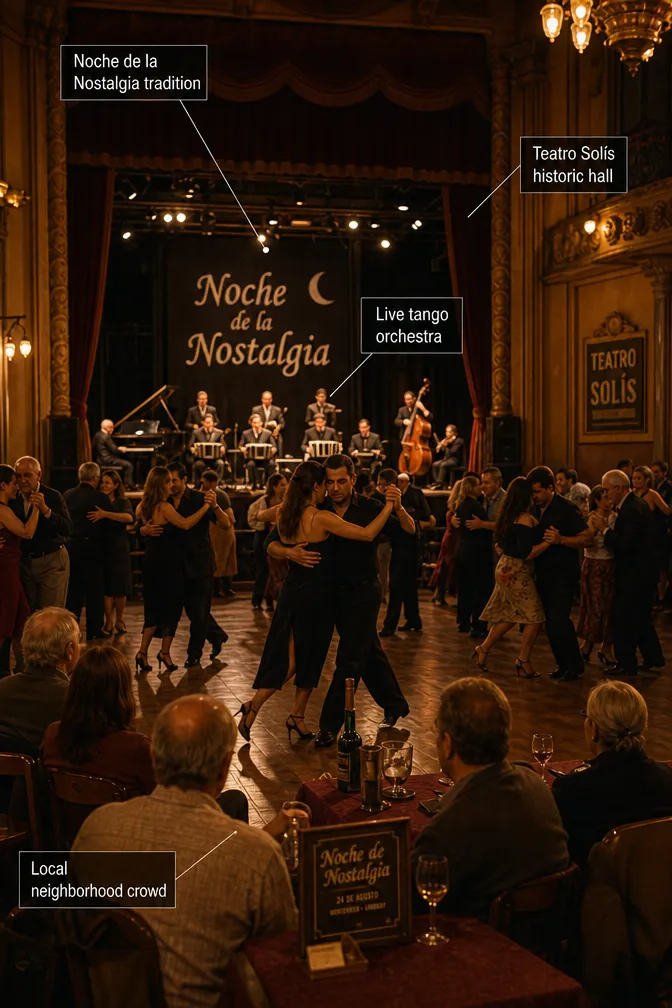
- Noche de la Nostalgia (August 24) – A legally fixed national tradition where Uruguayans party to music from past decades. Most locals skip the big commercial venues and head to smaller bar and community-center parties. Over 20 events run citywide, but the best ones aren’t marketed internationally.
- Milongas in Palermo – Tango at La Vanguardia Milonguita and Joventango draws a serious local crowd, not tourists. Show up after 10 PM.
- Rodada masiva de la Nostalgia – A mass bike ride starting from Plaza de la Bandera, organized as part of the August cultural calendar. Free, social, and completely off the tourist radar.
- Música en el Taranco – Live classical and chamber music at the Museo de Artes Decorativas – Palacio Taranco. The venue alone is worth the visit.
- Mandrágora Centro Cultural – A small live music venue that hosts local acts like genoma-uy alongside international shows. Far more intimate than Antel Arena.
- MAPI’s NINGYŌ exhibition – The Museo de Arte Precolombino e Indígena occasionally hosts Japanese cultural exhibitions that draw a quiet, curious local crowd.
- Intendencia viewpoint – Ride the elevator to the 22nd floor of the Intendencia building for a free panoramic view of the city. Almost nobody does this.
Best Museums and Galleries in Montevideo
Montevideo’s museum scene is small but genuinely good. The key is knowing which ones are worth your time.
| Museum | Why Go | Cost |
|---|---|---|
| MAPI (Museo de Arte Precolombino e Indígena) | Pre-Columbian and indigenous art, rotating cultural exhibitions | Low cost |
| Museo Nacional de Artes Visuales | Uruguay’s largest fine art collection | Free/low cost |
| Museo de Artes Decorativas – Palacio Taranco | Stunning Belle Époque palace with decorative arts | Low cost |
| Museo del Carnaval | Dedicated to Montevideo’s famous Carnaval tradition | Low cost |
| Casa de Rivera | Historic house museum in Ciudad Vieja | Low cost |
The Descubrí Montevideo imperdibles page highlights rotating seasonal exhibitions – worth checking before you visit so you don’t miss a limited-run show.
What to Do in Montevideo If It Rains
Rain in Montevideo is not a trip-killer. The city has a strong indoor cultural life that most visitors never tap into.
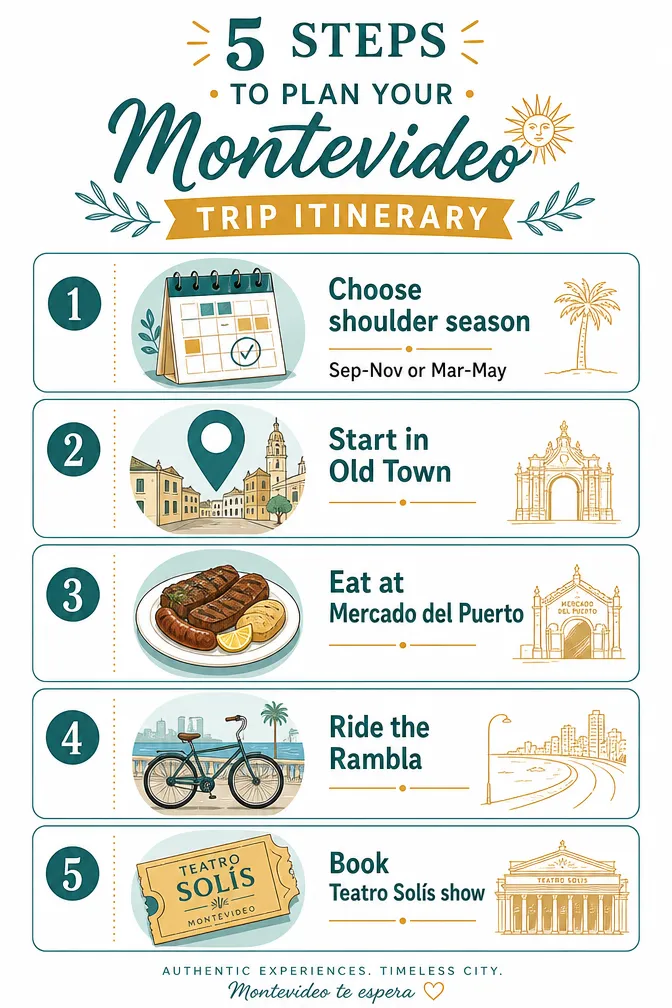
- Teatro Solís – Book a guided tour or catch an evening performance. The building is stunning.
- Cinema cycles – The Estrenos Recientes film programme runs across multiple venues and cultural spaces. Check the municipal events portal for current screenings.
- Mercado del Puerto – Covered, warm, and full of grilled meat. A rainy Saturday lunch here is one of the best things you can do in Montevideo.
- Museo Nacional de Artes Visuales – Easily fills two hours.
- Punta Carretas Shopping – Yes, it’s a mall, but it’s a converted prison with interesting architecture and good café options.
- Bodegón lunch + afternoon reading – Find a corner café in Ciudad Vieja, order a chivito and a glass of Tannat, and watch the rain from the window. This is how locals spend a wet afternoon.
If you enjoy discovering cities through their cultural calendars, Montevideo rewards that approach more than almost any other South American capital. The weekly cultural agenda from Uruguay’s public media lists theatre, music, and film options across the city.
Is Montevideo Safe for Tourists?
Montevideo is generally safe for tourists, especially compared to other major South American cities. It consistently ranks among the safer capitals in the region.
Practical tips:
- Stick to well-lit streets in Ciudad Vieja after midnight – some blocks are quieter than others
- Keep phones out of sight on public transport
- Pocitos, Punta Carretas, and Carrasco are considered the safest residential areas
- Petty theft (pickpocketing) exists, as in any city – use a crossbody bag and stay aware in crowded markets
- Avoid displaying expensive cameras or jewelry in less-trafficked areas of Ciudad Vieja at night
The short answer: most travelers report feeling comfortable walking around Montevideo at night, especially in the main neighborhoods. Use the same common sense you’d apply in any European city.
How to Get Around Montevideo – Public Transport
Montevideo’s public bus network (STM) covers the entire city and is cheap. A single bus fare costs roughly 40-50 Uruguayan pesos (under $1.50 USD at current rates). You can buy a rechargeable STM card at kiosks near major bus stops.
Getting around options:
- Bus (STM) – Best for cross-city trips. Routes are reliable and frequent during the day.
- Walking – Ciudad Vieja to Pocitos along the Rambla is a beautiful 5-6 km walk.
- Cycling – The Rambla has a dedicated bike lane. Rental bikes are available in several neighborhoods.
- Taxi / Uber – Both operate in Montevideo. Uber tends to be slightly cheaper and easier to navigate without Spanish.
- Remise (private car service) – Good for airport transfers and day trips.
Avoid renting a car unless you’re doing day trips outside the city. Parking in Ciudad Vieja is frustrating and unnecessary.
Montevideo vs Buenos Aires – Which Is Better?
These are two very different cities, and the right choice depends entirely on what you want from a trip.
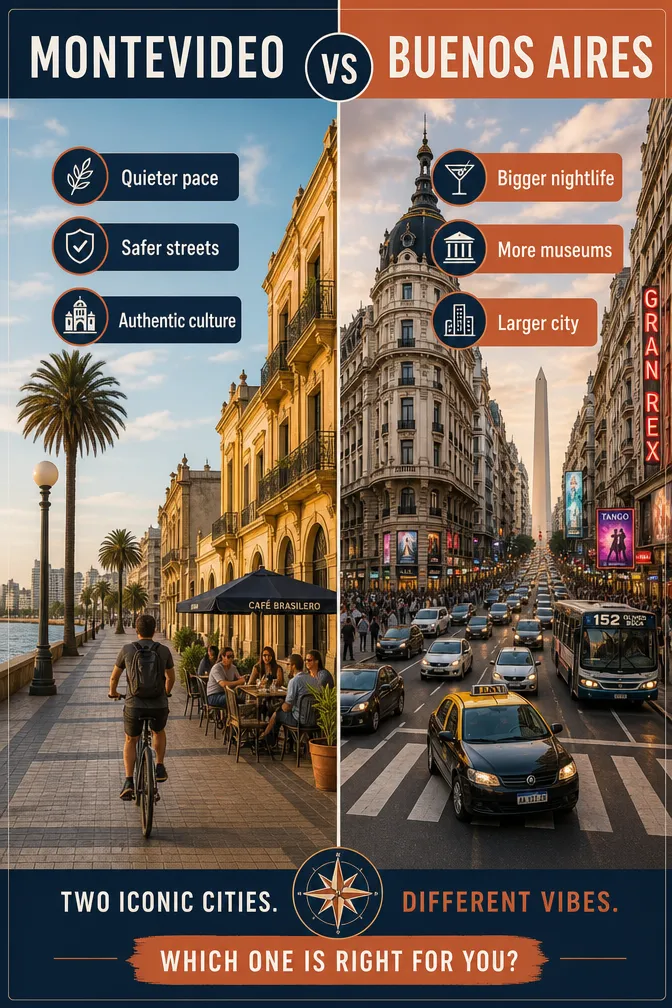
| Factor | Montevideo | Buenos Aires |
|---|---|---|
| Pace | Relaxed, small-city feel | Fast, intense, metropolitan |
| Safety | Generally safer | More variable by neighborhood |
| Cost | Slightly cheaper overall | Comparable, varies by season |
| Culture | Intimate, local-scale | World-class, large-scale |
| Crowds | Thin to moderate | Heavy in tourist zones |
| Food scene | Asado-focused, wine culture | More diverse and international |
Choose Montevideo if you want an authentic, unhurried South American city break with a genuine local atmosphere.
Choose Buenos Aires if you want a massive, buzzing metropolis with world-class nightlife, restaurants, and museums.
Many travelers do both – the ferry crossing between Montevideo and Buenos Aires takes about 2-3 hours and is a trip highlight in itself.
If you enjoy discovering underrated destinations that feel like hidden gems, you might also like our guide to hidden gems in Italy that feel absolutely magical or things to do in Bergen, Norway that tourists miss.
How Much Does a Trip to Montevideo Cost?
Montevideo is affordable by Western standards, though not as cheap as some Southeast Asian destinations. Here’s a realistic daily budget breakdown:
- Budget traveler: $45-60 USD/day (hostel, local restaurants, buses, free attractions)
- Mid-range traveler: $80-120 USD/day (3-star hotel, sit-down restaurants, some paid attractions)
- Comfortable traveler: $150+ USD/day (boutique hotel, wine dinners, taxis, day trips)
Key costs to know:
- Hostel dorm: roughly $15-25 USD/night
- Mid-range hotel: $60-100 USD/night
- Lunch at a local parrilla: $8-15 USD
- Dinner with wine: $20-40 USD per person
- Bus fare: under $1.50 USD
- Teatro Solís performance: roughly $10-30 USD depending on the show
The event aggregator Vamoseventos lists weekly events with ticket prices ranging from roughly 100 to 1,000 Uruguayan pesos, with several free options each week.
Best Day Trips from Montevideo
Montevideo is an excellent base for day trips. The two most popular options are genuinely worth it.
- Colonia del Sacramento (1.5-2 hours by ferry or bus) – A UNESCO World Heritage town with cobblestone streets and Portuguese colonial architecture. One of the most photogenic places in Uruguay.
- Punta del Este (1.5 hours by bus) – Uruguay’s famous beach resort. Worth a day trip in summer; quieter and more affordable off-season.
- Carmelo (2.5 hours) – A small wine town on the Uruguay River. Excellent for a relaxed winery visit.
- Piriápolis (1 hour) – A quieter, old-fashioned beach resort that feels frozen in the 1970s. Locals love it.
For Colonia, the Buquebus ferry is the most scenic option. Book ahead in summer.
What Should I Avoid Doing in Montevideo?
A few common mistakes can flatten the experience of visiting Montevideo.
- Don’t eat every meal in Ciudad Vieja – Prices are higher and the food is more tourist-oriented. Walk 15 minutes into Palermo or Pocitos for a better meal at half the price.
- Don’t skip the Rambla at sunset – It’s free, it’s beautiful, and it’s where the whole city seems to gather in the early evening.
- Don’t rely only on big venue listings – The best concerts and cultural events in Montevideo happen in smaller spaces. Use the municipal events portal and Songkick’s Montevideo listings to find intimate shows.
- Don’t visit only in January – The city empties out as locals head to the coast. You’ll get a hollow version of Montevideo.
- Don’t ignore the mate culture – Uruguayans carry a thermos of hot water everywhere. Accepting a shared mate is one of the quickest ways to connect with locals.
- Don’t assume Spanish isn’t needed – English is less widely spoken here than in Buenos Aires. A few basic Spanish phrases go a long way.
FAQ
Is Montevideo worth visiting?
Yes – Montevideo is one of South America’s most livable and underrated capitals. It offers a genuine local culture, walkable neighborhoods, excellent food, and a relaxed pace that many travelers find refreshing after busier cities.
How many days do I need in Montevideo?
Three to four days covers the main highlights. Five to seven days is better if you want to explore neighborhoods beyond Ciudad Vieja and take at least one day trip.
What is Montevideo best known for?
The Rambla coastal promenade, the Mercado del Puerto (a famous grill market), Teatro Solís, Carnaval (one of the longest in the world), and its mate-drinking culture.
Is Montevideo cheaper than Buenos Aires?
Broadly similar, though Montevideo can be slightly cheaper for accommodation and local food. Both cities are affordable by European or North American standards.
What language is spoken in Montevideo?
Spanish. Uruguayan Spanish has a distinct accent and some Italian-influenced vocabulary. English is spoken in larger hotels and some tourist-facing businesses, but not widely.
Can I drink tap water in Montevideo?
Yes. Tap water in Montevideo is safe to drink and considered good quality by South American standards.
What is Noche de la Nostalgia?
It’s a uniquely Uruguayan tradition held every August 24, where people celebrate with music from past decades. It’s a national party with events ranging from small bar gatherings to large concert halls.
Is the Rambla safe to walk at night?
The Rambla in Pocitos and Punta Carretas is generally safe at night and well-used by locals. Some stretches near Ciudad Vieja are quieter after midnight – use judgment.
What currency is used in Montevideo?
The Uruguayan peso (UYU). USD is widely accepted in hotels and some restaurants, but you’ll get better rates using local currency for everyday purchases.
What’s the best way to get from Buenos Aires to Montevideo?
The Buquebus ferry is the most popular and scenic option, taking about 2-3 hours from Buenos Aires to Montevideo’s port. Buses via the ferry crossing are also available and slightly cheaper.
Are there good beaches in Montevideo?
Yes – Playa Pocitos and Playa Ramírez are urban beaches within the city. They’re clean, free, and popular with locals. For better beach conditions, Punta del Este is a 1.5-hour bus ride away.
When is Carnaval in Montevideo?
Montevideo’s Carnaval runs from late January through early March – it’s the longest Carnaval in the world by duration, and unlike Rio, it’s still largely a local celebration rather than a tourist spectacle.
Conclusion
Montevideo rewards travelers who slow down. The best things to do in Montevideo, Uruguay aren’t always the ones on the first page of a search result – they’re the Saturday bike rides, the late-night milongas in Palermo, the free panoramic view from the Intendencia’s 22nd floor, and the Noche de la Nostalgia parties that locals have been attending for decades without telling anyone.
Your next steps:
- Bookmark the Descubrí Montevideo events portal and check the weekly agenda before you travel
- Plan for shoulder season – September to November or March to May for the best balance of weather, events, and crowds
- Build in at least one day trip to Colonia del Sacramento – it’s one of the most beautiful small towns in South America
- Stay at least 4 nights – the city reveals itself slowly and rewards patience
If you’re building a broader South American itinerary or looking for more underrated destinations with a similar feel, check out our guide to a Piedmont Italy itinerary that feels like Tuscany for another destination that rewards travelers who go off the beaten path.
Montevideo isn’t trying to impress you. That’s exactly why it does.