Last updated: November 15, 2026
January in Japan isn’t the month most people picture when they dream of cherry blossoms or neon-lit crossings. That’s exactly why it works. Fewer tourists, clear cold skies, steaming hot springs, and temples you can actually hear yourself think in.
A well-planned Japan itinerary for January gives you snow country, onsen towns, and quiet shrines without the spring and autumn crowds eating into your mornings. I’ve put together a realistic 10-day route based on how the season actually behaves, not a highlight reel.
Quick Answer
A 10-day Japan itinerary for January should combine 3 to 4 days in a snowy onsen region like Nagano or Hokkaido, 2 to 3 days of quiet temple sightseeing in Kyoto or Takayama, and the rest split between Tokyo and travel days. Budget for cold weather gear, book trains and ryokan early around the New Year holiday, and expect reliable snow in the mountains but only occasional light snow in Tokyo or Kyoto.
Key Takeaways
- January is one of the driest, clearest months on Japan’s Pacific side, while the Sea of Japan coast and mountains get heavy, reliable snowfall.
- A 10-day trip costs roughly $1,800 to $3,500 per person depending on ryokan choices, not counting international flights.
- Nagano, Niigata, and Hokkaido are the most dependable regions for snow and onsen combos in January.
- Tokyo and Kyoto rarely get lasting snow, though light dustings happen a few times a winter.
- Early January right after New Year’s Day sees many shrines and some shops closed or on reduced hours.
- Overall, January is one of the quietest months for tourism outside the New Year holiday itself.
- You can realistically combine a short ski or snow experience with 2 to 3 onsen soaks in a 10-day trip.
- Pack real winter layers. Japan’s indoor heating is good, but outdoor temples and train platforms are cold.
What’s the best time in January to visit Japan for snow

The second half of January, roughly January 10 through 31, is the best window for snow in a Japan itinerary for January. Early January is tied up with New Year’s travel and crowded trains, while mid to late January brings steady, heavy snowfall to the mountains and snow country regions.
The winter guide from Japan’s official tourism board notes that snowfall in areas like Hokkaido and the Japan Alps is consistent through January and into February, making it a reliable stretch for ski towns and onsen trips. Pacific coast cities like Tokyo and Osaka stay mostly dry and sunny during the same weeks.
Choose late January if your main goal is deep snow and ski resorts. Choose early-to-mid January if you want to catch some New Year cultural events alongside lighter snow activities.
How much does a 10-day Japan trip cost in January
A 10-day Japan itinerary for January typically runs $1,800 to $3,500 per person for accommodation, food, local transport and a rail pass, not including international airfare. Budget travelers staying in business hotels and simple ryokan can land near the lower end, while those booking private onsen ryokan with kaiseki dinners push toward the higher end.
Rough daily estimates:
- Budget travel: $120-$180 per day (hostels, business hotels, convenience store and ramen meals)
- Mid-range travel: $200-$320 per day (3-star hotels, one or two onsen ryokan nights, casual restaurants)
- Higher-end travel: $350+ per day (luxury ryokan with private baths, kaiseki dinners, first-class transport)
January rates for ryokan actually drop slightly compared to cherry blossom or autumn foliage season, since it’s considered an off-peak month outside the New Year holiday itself.
Where are the best onsen towns near skiing areas
The best onsen towns near ski areas for a January trip are Nozawa Onsen and Hakuba in Nagano, Yuzawa in Niigata, and Niseko in Hokkaido. Each lets you ski or snowshoe during the day and soak in a hot spring at night, all within the same small town.
- Nozawa Onsen (Nagano): a traditional ski village with free public foot baths scattered through the streets and a real onsen-town atmosphere.
- Hakuba (Nagano): larger ski resort area, good for bigger slopes, with nearby onsen ryokan.
- Yuzawa (Niigata): easy day trip from Tokyo on the Shinkansen, known for reliable powder and ski-in ryokan.
- Niseko (Hokkaido): internationally known for deep, dry powder snow, with onsen baths built right into many hotels.
Choose Nozawa Onsen if you want walkable charm and local atmosphere. Choose Niseko if snow quality and resort infrastructure matter more than convenience, since it requires a flight to Sapporo plus a transfer.
Can I see snow in Kyoto and Tokyo in January
Yes, but only occasionally and rarely for long. Kyoto and Tokyo sit on milder parts of the coast, so January snow is usually a light dusting that melts within a day, not a reliable snow experience.
If snow scenery is a priority, don’t build your Japan itinerary for January around Kyoto or Tokyo snowfall. Instead, treat any snow you catch there as a bonus, and plan your actual snow days around Nagano, Niigata, or Hokkaido. A dusting on Kyoto’s temple roofs does happen most winters, and it’s genuinely beautiful when it does, but you can’t schedule around it.
What should I pack for Japan in winter
Pack layered thermal clothing, a waterproof winter coat, wool socks, and sturdy waterproof boots for a January trip to Japan. Indoor spaces are well heated, but train platforms, temple grounds, and mountain towns get cold enough that cotton layers alone won’t cut it.
Packing checklist:
- Thermal base layers (top and bottom)
- A warm, windproof, waterproof outer jacket
- Wool or thermal socks
- Waterproof boots with good grip for icy pavement
- Gloves and a warm hat
- A small towel for onsen visits (some ryokan provide one, many don’t for public baths)
- Compact umbrella, since the Sea of Japan side gets snow showers
The JNTO winter guide also recommends checking regional forecasts closer to your trip, since conditions between Tokyo and the snow country regions can differ sharply on the same day.
Are temples closed during Japanese New Year
Most major temples stay open during Japanese New Year, but hours and crowds shift significantly. Many temples and shrines host hatsumode, the first shrine visit of the year, which brings huge crowds from December 31 through about January 3.
Some smaller shops, restaurants, and a handful of museums close for a few days around January 1 to 3, which is worth checking before you plan a tight schedule. If quiet is the goal, avoid major shrines during these first few days and instead aim for quiet temples after January 4, once New Year crowds thin out considerably.
Is January crowded or quiet for tourism in Japan
January is one of the quieter months for tourism in Japan overall, apart from the New Year holiday window itself. Once the first week passes, temples, trains, and popular sightseeing spots feel noticeably calmer than during spring or autumn.
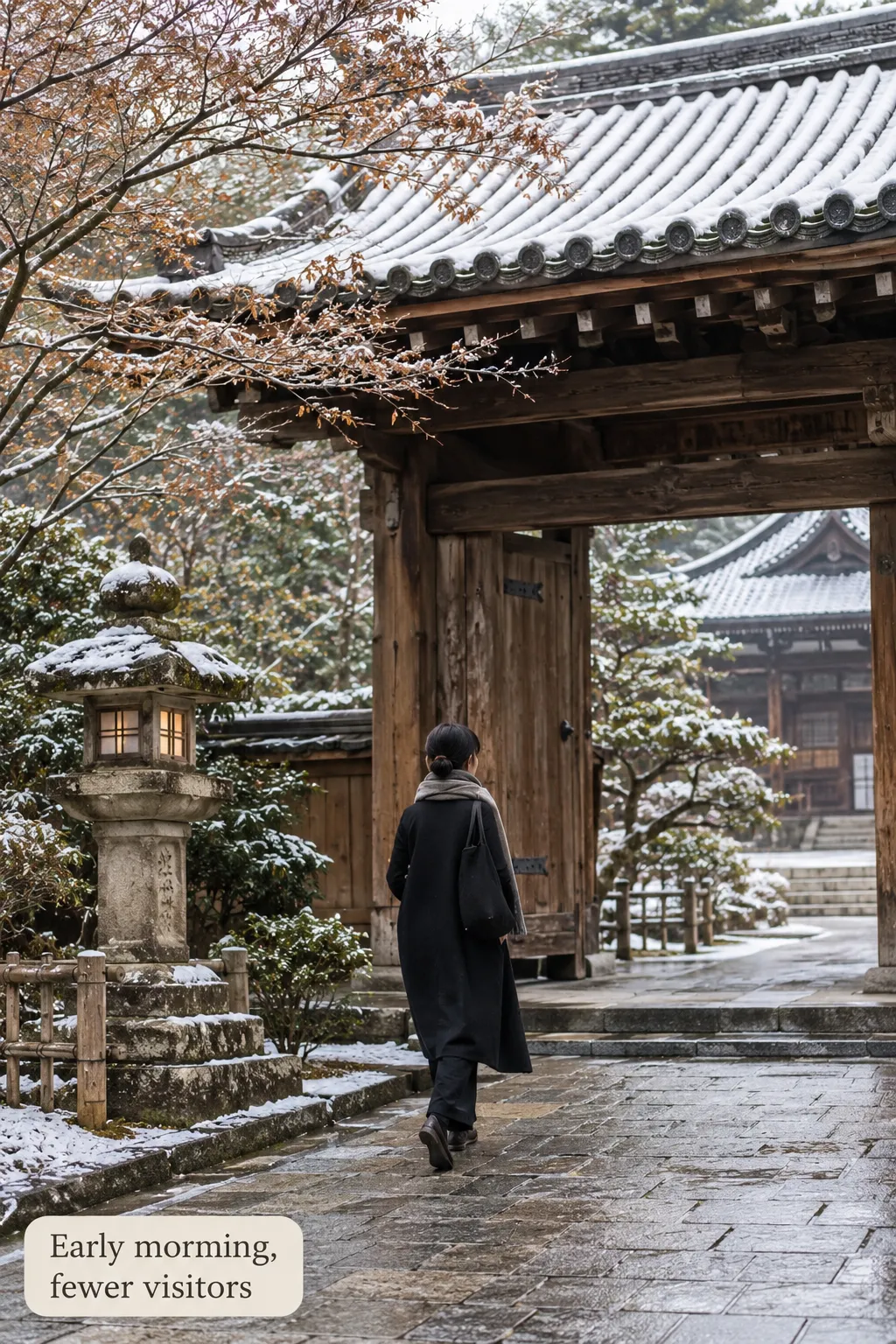
This is the biggest practical reason to plan a Japan itinerary for January: you get shorter lines at major sites, easier same-day reservations at restaurants, and a calmer pace at places that are usually mobbed in April or November. The tradeoff is cold weather and shorter daylight hours, which is a fair trade for many travelers.
Best hidden quiet temples away from tourists
The quietest temples in January tend to be smaller neighborhood temples in Kyoto’s eastern hills, lesser-known spots in Nara, and mountain temples in Takayama, far from the handful of famous sites every tour bus stops at.
A few worth considering:
- Honen-in in Kyoto, a small, mossy temple near the Philosopher’s Path, often nearly empty in winter
- Jojakko-ji in Arashiyama, quieter than the famous bamboo grove nearby
- Takayama’s old town temples in the Hida region, which get genuine snowfall and very few winter visitors
If you’re building a Kyoto leg into your trip, our 4-day Kyoto itinerary guide has a route that avoids backtracking and can be trimmed down for a shorter winter stop.
How many days should I spend at onsen vs sightseeing
For a 10-day Japan itinerary for January, plan 3 to 4 days around onsen and snow activities and the remaining 6 to 7 days for city sightseeing and temples. This ratio gives you enough time to properly unwind at a ryokan without missing Tokyo or Kyoto’s cultural sites.
Example split:
- 2 days in Tokyo (arrival, city orientation)
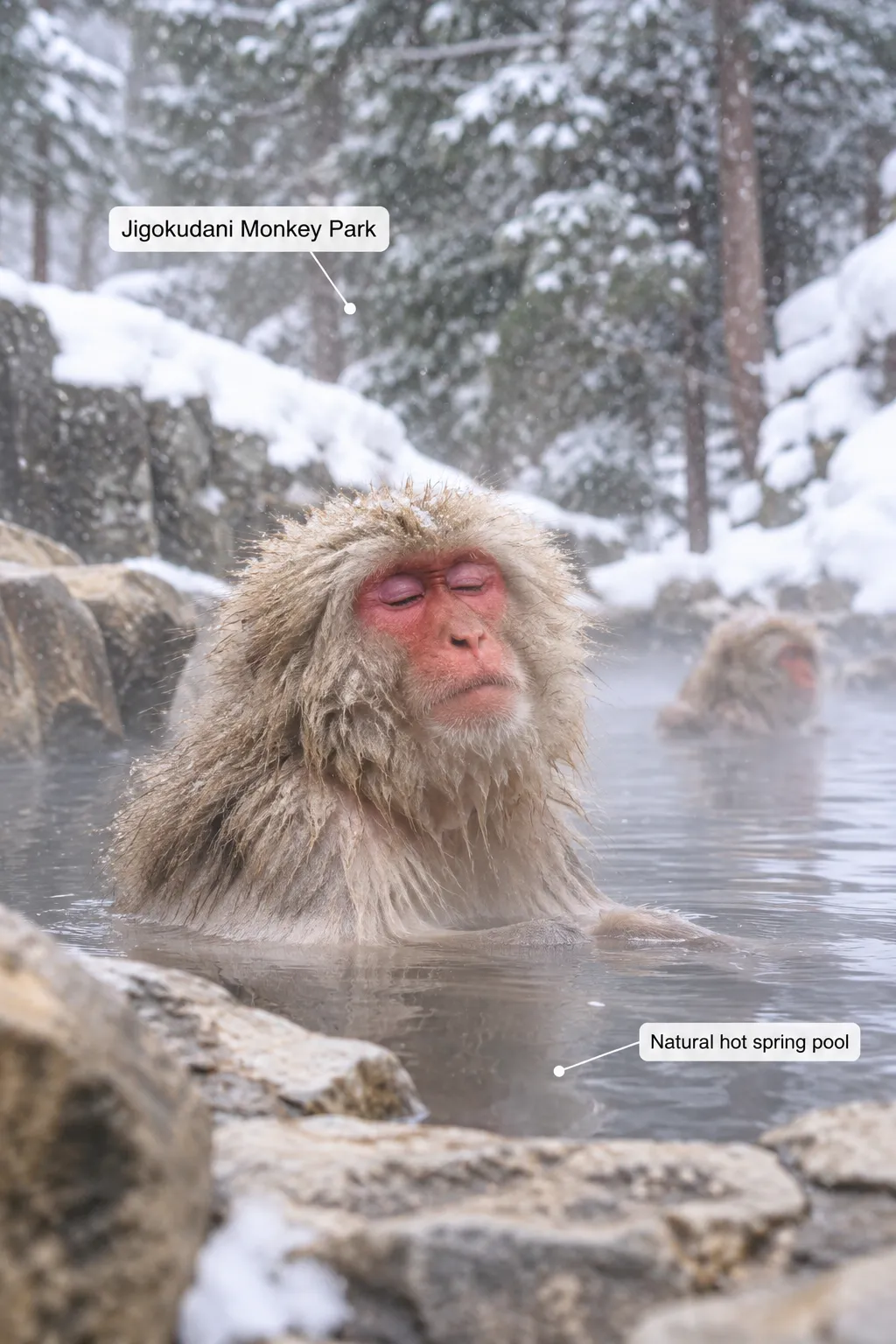
- 3 days in Nagano or Niigata (onsen, snow, Jigokudani Monkey Park)
- 1 travel day
- 3 days in Kyoto (temples, Fushimi Inari in winter light, day trip to Nara)
- 1 day buffer or Osaka add-on before departure
Can you combine a ski trip with onsen in 10 days
Yes, a 10-day trip comfortably fits 2 to 3 days of skiing or snow activity plus 1 to 2 dedicated onsen soaking days, as long as you pick a town where both exist in the same area, like Nozawa Onsen or Hakuba.

The mistake people make is trying to ski in one region and bathe in another, which eats a full extra travel day. Choose a town where the ski lift and the public bath are a 10-minute walk apart, and you save that day for Kyoto or Tokyo instead.
What’s the difference between January and February weather in Japan
January tends to be colder and drier on the Pacific side, while February brings slightly milder daytime temperatures but similar snow totals in the mountains. The main cultural difference is the Sapporo Snow Festival, held in early February, which draws much bigger crowds to Hokkaido than a typical January visit.
If you want Hokkaido’s famous snow sculptures, February is the month, but expect far more visitors and higher hotel rates than a quiet January trip. For a calmer snow country experience with similar scenery, January wins.
Which regions have the most reliable snow in January
Hokkaido, the Sea of Japan coast of Honshu (including Niigata and parts of Nagano), and the Japan Alps have the most reliable snow in January. These regions sit in the path of cold winter winds off the Sea of Japan, which dump consistent snowfall through the season.
By contrast, the Pacific coast, including Tokyo, Kyoto, Osaka, and Okinawa, stays largely dry and sunny in January, with Okinawa remaining mild enough for light jackets rather than winter coats, according to the JNTO guide on when to go.
Budget ryokan with onsen versus luxury options
| Feature | Budget ryokan | Luxury ryokan |
|---|---|---|
| Bath type | Shared public onsen bath | Private in-room or reserved bath |
| Meals | Simple set breakfast, dinner optional | Full multi-course kaiseki dinner |
| Room style | Simple tatami room, shared bathroom | Tatami suite with ensuite facilities |
| Best for | Backpackers, solo travelers, short stays | Couples, special occasions, longer soaks |
Choose a budget ryokan if your main goal is simply experiencing a traditional onsen stay without overspending. Choose a luxury ryokan if privacy and a multi-course dinner matter as much as the bath itself.
Common mistakes people make planning winter Japan trips
The most common mistake is assuming Tokyo and Kyoto weather represents the whole country, then packing too lightly for the mountain legs of the trip. Another frequent error is not booking Shinkansen seats or ryokan early enough around the New Year holiday weekend, when domestic travel spikes.
Other mistakes worth avoiding:
- Skipping travel insurance that covers winter weather delays
- Underestimating how early it gets dark, around 4:30 to 5pm in January
- Booking ski and onsen towns too far apart, wasting a travel day
- Forgetting that some rural restaurants close early or take a mid-afternoon break
If you’re also curious about other parts of Japan beyond this winter loop, our guide on what to see in Japan for first-time visitors and the Osaka things-to-do list are useful for building a side trip if you add extra days. If anime culture interests you, Japan’s anime museums are a good indoor option on a snowy afternoon in Tokyo.
FAQ
Is January a good month to visit Japan?
Yes, January is a good month for travelers who want quieter temples, reliable mountain snow, and lower off-peak ryokan rates, as long as you pack for cold weather and plan around the New Year holiday crowds.
Do I need a visa for a 10-day Japan trip in 2027?
Many nationalities, including the US, UK, and most of the EU, can enter Japan visa-free for short tourist stays, but requirements change, so check current rules on the official Japan travel tips page before booking.
Is it safe to drive or hike in snow country in January?
Mountain roads and trails can be hazardous in January, so the JNTO guide on enjoying nature responsibly recommends checking local conditions, using proper gear, and avoiding unmarked trails during heavy snow.
Can I still see the Sapporo Snow Festival in a January itinerary?
No, the Sapporo Snow Festival happens in early February, just outside a typical January trip, though Hokkaido still offers excellent snow and onsen experiences throughout January itself.
Should I book the JR Nozomi Shinkansen in advance for January travel?
Yes, especially around the New Year holiday weekend, since the fastest Nozomi trains can sell out on popular routes during peak holiday travel days.
Are onsen tattoo-friendly in 2026?
Policies vary by ryokan. Many now allow small tattoos or offer private baths, but some traditional public onsen still restrict visible tattoos, so it’s worth checking each property directly.
What’s warmer in January, Kyoto or Osaka?
Kyoto and Osaka have very similar winter temperatures, both staying mostly dry with occasional light frost, and neither is reliably snowy compared to the mountain regions.
Is Okinawa a good winter alternative within the same trip?
Okinawa stays mild in January and makes an interesting contrast if you want to add beach days, though it requires a separate flight and doesn’t fit the snow-and-onsen theme of this particular route.
Conclusion
A Japan itinerary for January rewards travelers who embrace the cold instead of fighting it. You get quiet temples, steaming onsen, and real mountain snow, all while skipping the crowds of spring and autumn.
Start by locking in your onsen and ski town, since those bookings fill up fastest. Then build Tokyo and Kyoto around them, leaving at least one buffer day for weather delays.
Pack real winter layers, book Shinkansen seats early if you’re traveling near New Year, and let the slower, quieter pace of January do the rest of the work for you.