
Last updated: September 15, 2026
Quick Answer: Most first-time visitors to Bavaria spend all their time in Munich and Neuschwanstein Castle – and miss 90% of what makes the region special. The best things to do in Bavaria, Germany include medieval towns like Regensburg and Bamberg, car-free alpine lakes, monastic breweries, and dark-sky stargazing reserves that most tourists never hear about. A week gives you enough time to go beyond the postcard stops.
Key Takeaways
- Bavaria recorded over 40 million visitors in 2024, making it Germany’s most visited region – which means the hidden spots matter more than ever
- Seven days is the ideal trip length; a weekend only scratches the surface
- Renting a car unlocks the best of rural Bavaria; public transport covers the main towns well
- Staying in one base (like Regensburg or Berchtesgaden) saves time and money
- Neuschwanstein is worth visiting – but only if you go early morning on a weekday
- Bavaria is pricier than eastern Germany but cheaper than Zurich or Paris
- Locals go to Andechs monastery, Mittenwald, and the Fuggerei in Augsburg – rarely to the tourist centers
- The Bavarian Forest is Germany’s oldest national park and almost entirely crowd-free
- Bamberg, Rothenburg ob der Tauber, and Regensburg are UNESCO-listed medieval cities most visitors skip
- Late spring (May-June) and early autumn (September) are the best times to visit for weather and smaller crowds
What Are the Best Hidden Attractions in Bavaria, Germany?
The best hidden attractions in Bavaria go well beyond Munich’s famous beer halls. Think UNESCO-listed medieval cities, a car-free alpine lake, a 15th-century monastic brewery, and a national park with some of Germany’s darkest skies.
Here are 15 things to do in Bavaria, Germany that most first-time visitors completely miss:
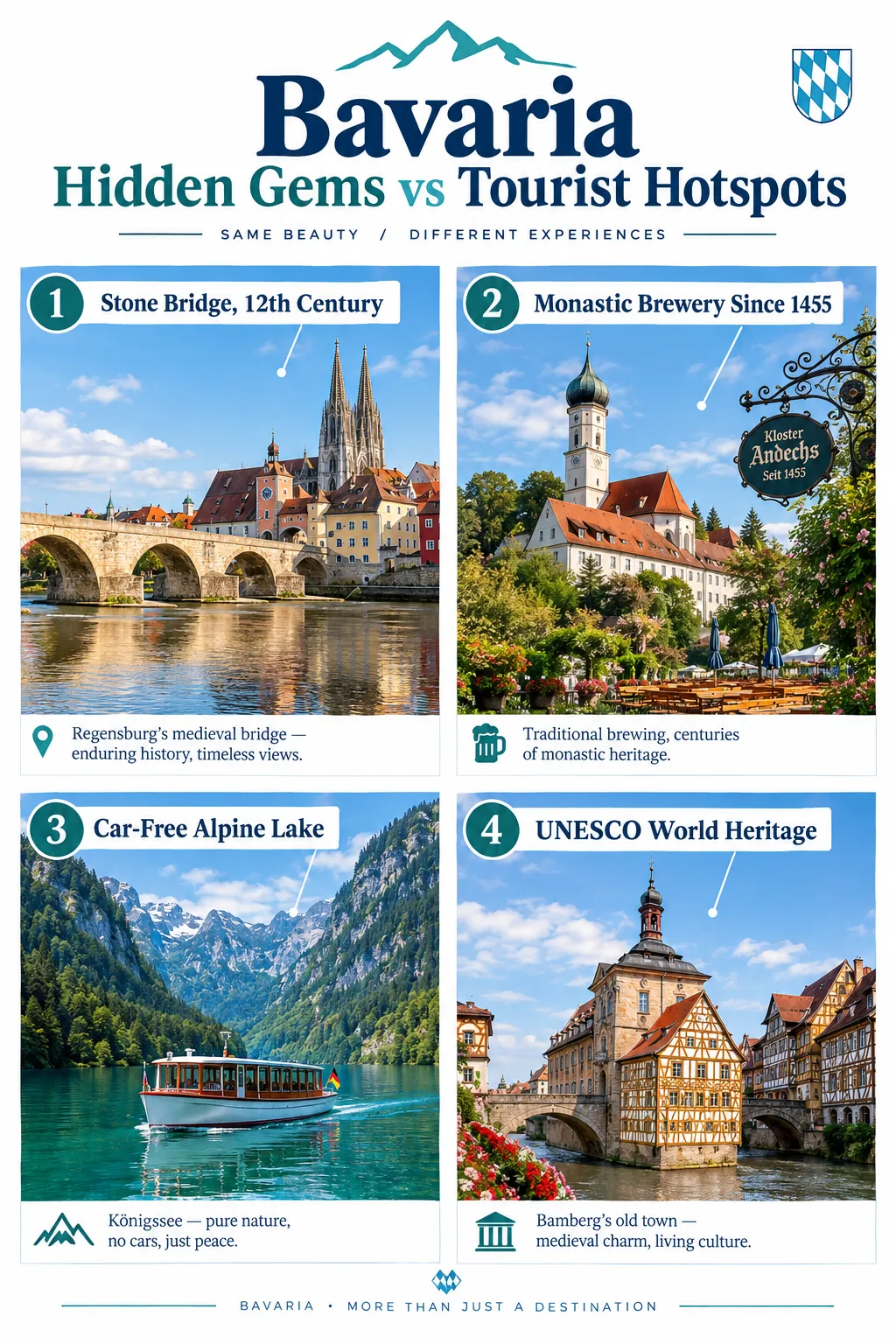
- Regensburg – A perfectly preserved medieval city on the Danube, with a 12th-century stone bridge and almost no tour buses
- Andechs Monastery Brewery – Benedictine monks have brewed beer here since 1455; the hilltop setting is stunning
- Königssee – A car-free alpine lake near Berchtesgaden, reachable only by electric boat
- Bamberg – A UNESCO World Heritage city with its own smoked beer style (Rauchbier) and zero crowds compared to Munich
- Mittenwald – A tiny alpine town famous for violin-making, with direct access to the Karwendel mountains
- The Fuggerei in Augsburg – The world’s oldest social housing complex, still in use since 1521
- Bavarian Forest Dark Sky Reserve – Germany’s oldest national park, with certified dark skies for stargazing
- Rothenburg ob der Tauber – A medieval walled town on the Romantic Road, best visited in the early morning before day-trippers arrive
- Ramsau bei Berchtesgaden – A tiny village with a postcard church and alpine meadows that photographers love
- Wieskirche – A Rococo pilgrimage church in a meadow, UNESCO-listed and often overlooked
- Hohenschwangau Castle – Neuschwanstein’s neighbor, older and quieter, with better interior access
- Chiemsee Island Palaces – King Ludwig II’s unfinished Versailles replica on an island in Bavaria’s largest lake
- Altmühltal Nature Park – Germany’s largest nature park, perfect for cycling and kayaking
- Garmisch-Partenkirchen – A ski resort town that’s surprisingly affordable and beautiful in summer
- Landsberg am Lech – A walled medieval town on the Romantic Road that almost no international tourists visit
How Many Days Should I Spend in Bavaria?
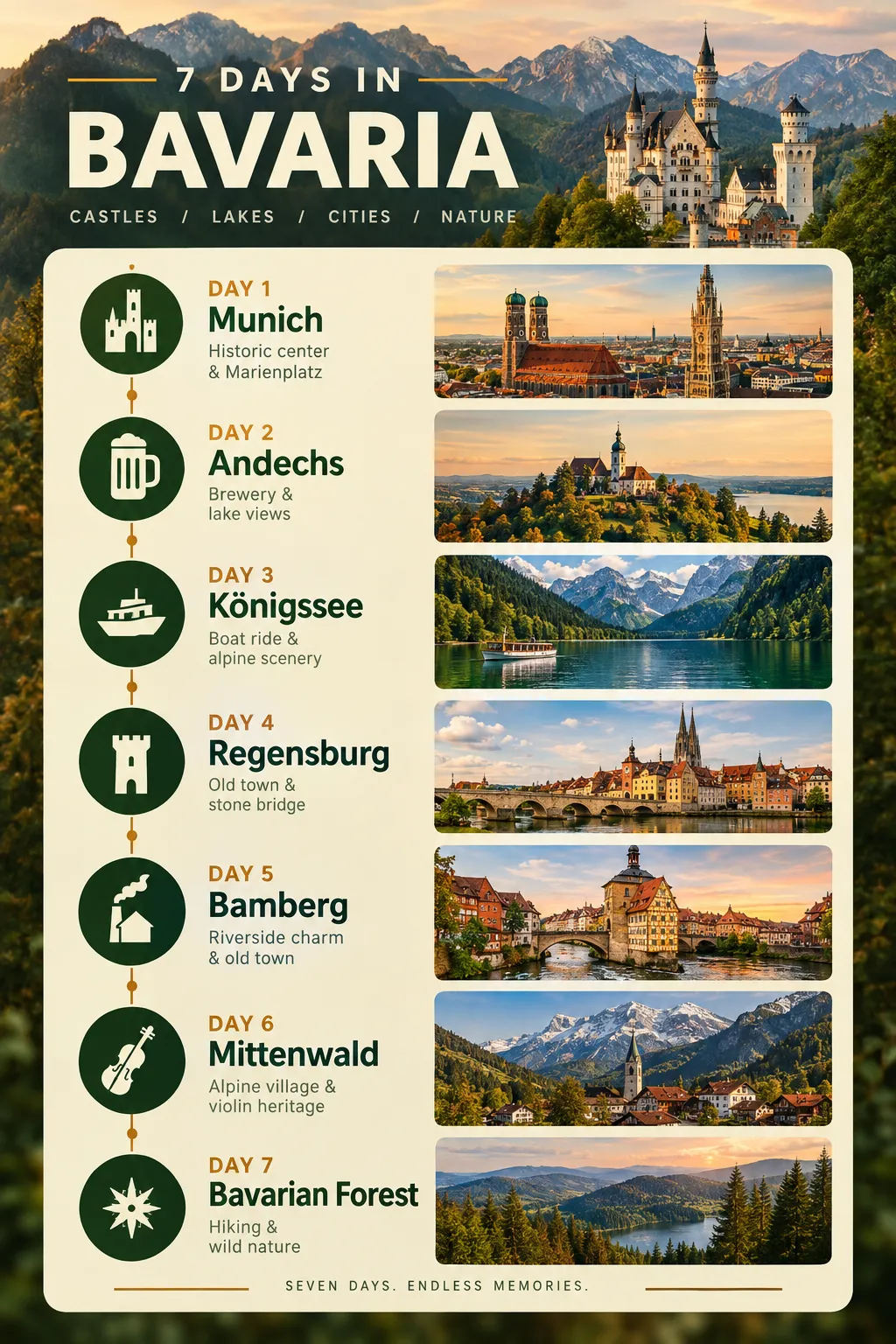
Seven days is the sweet spot for a first visit to Bavaria. That gives you two days in Munich, one day at Neuschwanstein and the surrounding lakes, and four days to explore the countryside towns and alpine areas.
A weekend (2-3 days) is only enough for Munich plus one day trip. You’ll feel rushed and miss everything rural.
| Trip Length | What You Can Realistically Cover |
|---|---|
| 2-3 days | Munich + one day trip (Neuschwanstein or Dachau) |
| 5 days | Munich + Neuschwanstein + one medieval town |
| 7 days | Munich + Alps + 2-3 medieval towns + one rural area |
| 10+ days | Full multi-region circuit including Bavarian Forest |
If you only have 3 days, prioritize: Munich’s Marienplatz and English Garden on day one, Neuschwanstein early on day two (more on that below), and Regensburg or Bamberg on day three.
Is Bavaria Expensive Compared to Other German Regions?
Bavaria is Germany’s most expensive region for travel, but it’s still more affordable than Switzerland or Paris. According to Bavaria’s official tourism statistics, the region draws a premium visitor mix, and prices reflect that.
A rough daily budget breakdown:
- Budget traveler (hostel, supermarket meals, free sights): 50-70 EUR/day
- Mid-range (3-star hotel, restaurant lunches, paid attractions): 120-180 EUR/day
- Comfortable (4-star hotel, full restaurant dining, guided tours): 250+ EUR/day
Munich is the most expensive city. Regensburg, Bamberg, and the rural areas run about 20-30% cheaper for accommodation and food. Eating lunch at a traditional Gasthof (inn) instead of a tourist restaurant cuts costs significantly.
Munich vs the Bavarian Countryside: What’s the Difference?
Munich is urban, fast-paced, and world-class for museums, nightlife, and food. The Bavarian countryside is slower, cheaper, and where the real cultural identity of the region lives.
Most first-time visitors spend too much time in Munich and not enough time in the villages and small towns. The countryside is where you find:
- Traditional Bavarian architecture untouched by modern development
- Local festivals that aren’t scaled for tourism
- Food that’s more regional and less tourist-menu generic
- Prices that are noticeably lower
That said, Munich is worth 2 full days. The Deutsches Museum, the English Garden, and the Viktualienmarkt are genuinely excellent. Just don’t let Munich eat your whole trip.
If you’re planning a European trip that mixes cities and countryside, check out our guide to 15 must-see places in Spain for first-time visitors for a useful comparison of how to balance both.
Best Time of Year to Visit Bavaria – Weather and Crowds
Late May through June and September are the best months to visit Bavaria. The weather is warm and stable, the alpine wildflowers are out, and the crowds at Neuschwanstein and Munich are noticeably smaller than in July and August.
- May-June: Green, lush, mild temperatures (15-22°C), fewer tourists
- July-August: Peak summer, hot, very crowded, highest prices
- September: Oktoberfest (late September), warm days, beautiful light
- October-November: Quieter, cooler, great for autumn foliage in the Bavarian Forest
- December: Christmas markets in Nuremberg, Rothenburg, and Munich are excellent
- January-March: Ski season in Garmisch and Berchtesgaden; most rural towns are very quiet
Avoid the last two weeks of July and all of August if you dislike crowds. Euronews Travel named Bavaria a top 2026 destination partly because of its year-round appeal – the dark-sky stargazing in the Bavarian Forest is actually best in winter.
Do You Need a Car in Bavaria, or Can You Use Public Transport?
Public transport covers Munich and the main tourist towns well, but a rental car unlocks the best of rural Bavaria. The Bayern-Ticket (a day pass valid on regional trains and buses) is excellent value and covers most of the major stops.
Without a car, you can comfortably reach:
- Neuschwanstein (bus from Füssen)
- Regensburg, Bamberg, Nuremberg (direct trains from Munich)
- Berchtesgaden (train + bus)
- Rothenburg ob der Tauber (train with one change)
With a car, you can reach:
- Ramsau, Mittenwald, and small alpine villages
- The Altmühltal cycling routes
- The Bavarian Forest interior
- Small monastery breweries like Andechs (also reachable by ferry + walk)
Choose a car if you’re spending more than 5 days and want to explore beyond the main rail corridor. Skip the car if you’re based in Munich for a short trip.
What Bavarian Towns Are Worth Visiting Besides Munich?
Several Bavarian towns deserve their own dedicated visit – not just a quick day trip. The best ones most visitors skip are:
Regensburg – Often called Germany’s best-preserved medieval city. The old town is a UNESCO World Heritage Site, the 12th-century Stone Bridge is free to walk, and the local sausage kitchen (Historische Wurstkuchl) has been operating since the 1100s.
Bamberg – Built on seven hills, with a cathedral, a stunning old town hall built on an island in the river, and a beer culture centered on smoky Rauchbier. Almost no international tourists compared to Munich.
Augsburg – Home to the Fuggerei, the world’s oldest social housing complex, still housing low-income residents for a symbolic annual rent. A genuinely moving piece of social history.
Nuremberg – A major city with a powerful WWII history, an excellent Christmas market, and a well-preserved medieval castle.
Landsberg am Lech – A walled Romantic Road town that almost no international visitors reach, despite being only 45 minutes from Munich by train.
For a similar experience of discovering underrated European towns, our Frigiliana Spain travel guide covers another hidden gem worth knowing about.
How to See Neuschwanstein Castle Without the Crowds
The single best strategy is to arrive before 8:00 AM on a weekday, ideally Tuesday through Thursday, and buy timed tickets online at least 2 weeks in advance. The castle opens at 9:00 AM and the first tours fill up fast.
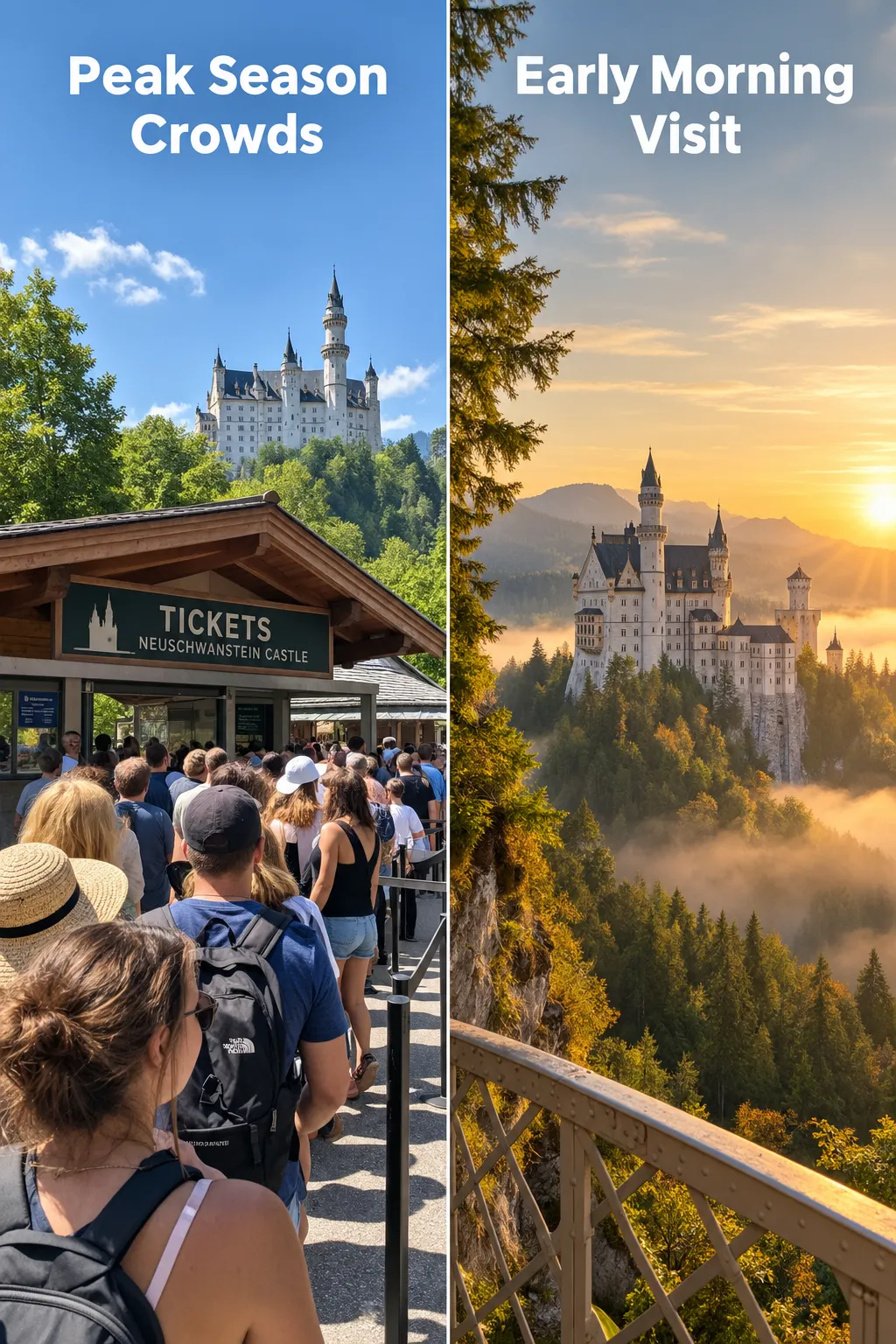
Key tips:
- Book tickets on the official Neuschwanstein ticket portal – avoid third-party resellers
- The view from Marienbrücke (Mary’s Bridge) above the castle is free and often more impressive than the interior tour
- Visit Hohenschwangau Castle next door – it’s older, has original furnishings, and usually has shorter queues
- Stay overnight in Füssen (the nearest town) to get an early start without a long morning drive
- Avoid weekends in July and August entirely if possible
In 2026, the castle grounds have introduced timed entry windows for the exterior areas as well, so even the free viewpoints are now managed during peak hours.
What Do Locals Actually Do in Bavaria That Tourists Don’t Know About?
Locals in Bavaria have a deeply rooted culture of outdoor life, community festivals, and regional food that rarely makes it onto tourist itineraries.
- Sunday hiking – Bavarians hike every weekend, even in winter. The trails around Mittenwald and the Berchtesgaden Alps are full of locals, not tourists
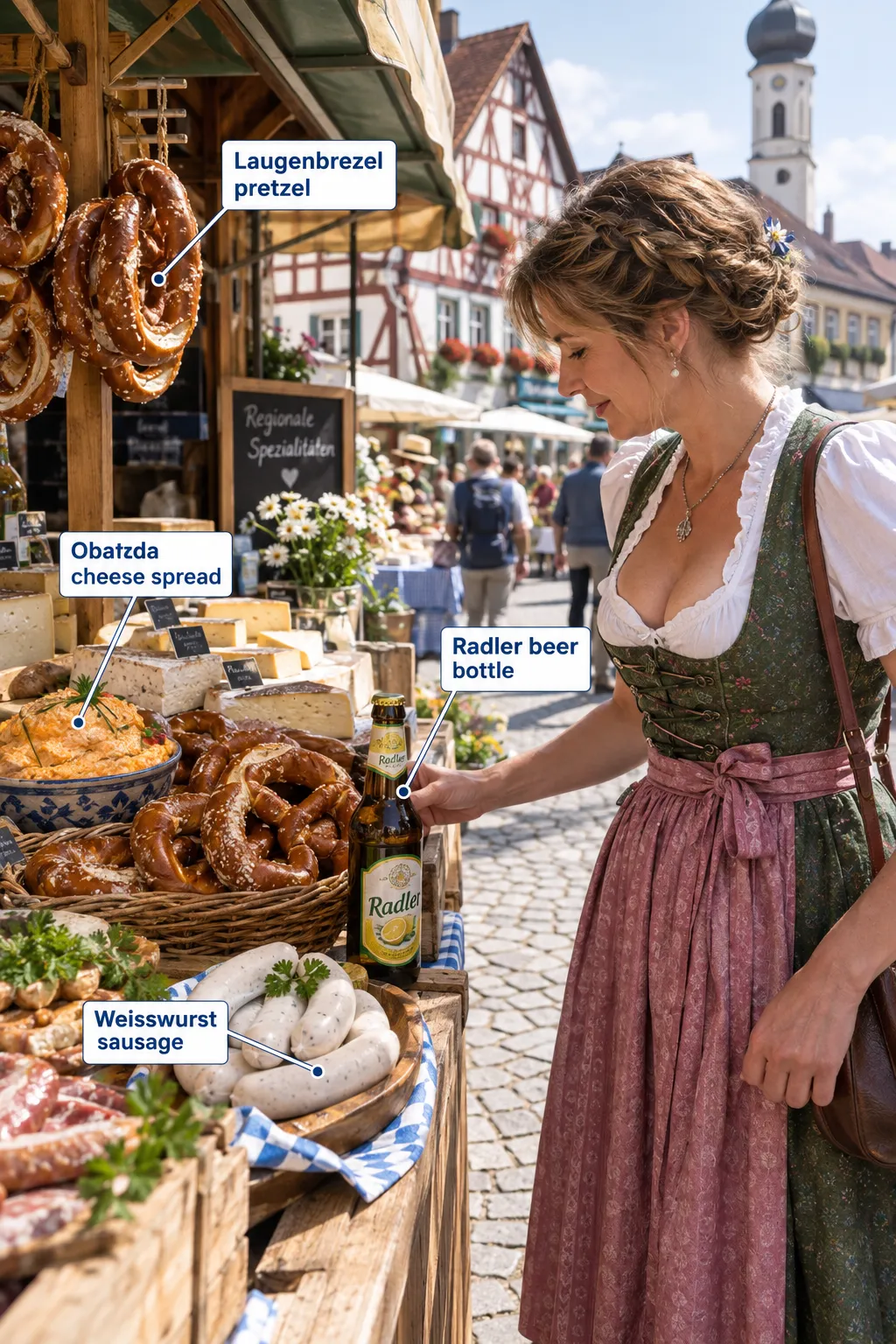
- Brotzeit – A mid-morning snack break of bread, cheese, radishes, and beer. Order it at any traditional Gasthof
- Local Volksfests – Every small town has its own beer festival in summer. These are smaller, cheaper, and far more authentic than Oktoberfest
- Swimming in alpine lakes – Locals swim in the Walchensee, Ammersee, and Chiemsee on hot days. Entry is free or very cheap
- Andechs Monastery – Bavarians make the pilgrimage to Andechs for the monastery beer garden on weekends. It’s a social ritual, not a tourist attraction
For more ideas on experiencing local culture beyond the tourist trail, our guide on what to see in Japan for first-time visitors explores a similar approach in a very different destination.
Common Mistakes First-Time Visitors Make in Bavaria
The biggest mistake is treating Bavaria as just Munich plus Neuschwanstein. That itinerary misses the region’s depth entirely.
Other common mistakes:
- Not booking Neuschwanstein tickets in advance – Walk-up tickets often sell out by 10:00 AM in summer
- Skipping the countryside – The alpine villages and medieval towns are what make Bavaria unique
- Eating only in tourist restaurants – Look for a Gasthof or Wirtshaus with a handwritten menu for real regional food
- Underestimating distances – Bavaria is large. Regensburg to Berchtesgaden is nearly 3 hours by car
- Missing the Bavarian Forest – Germany’s oldest national park is almost entirely crowd-free and has certified dark skies for stargazing
- Visiting Oktoberfest without planning – Hotel prices triple in late September; book accommodation 6-12 months ahead
If you enjoy guides that help you avoid tourist traps, our article on first-time mistakes in New Orleans follows the same approach.
Is It Better to Stay in One Base or Move Around Bavaria?
For trips of 5-7 days, pick one or two bases rather than moving every night. Constant hotel changes eat into your travel time and add stress.
Good base options:
- Munich – Best transport links, widest range of accommodation, good for day trips to Neuschwanstein, Andechs, and Dachau
- Regensburg – Central location, easy access to Nuremberg, Bamberg, and the Altmühltal; cheaper than Munich
- Berchtesgaden – Best base for alpine activities, Königssee, and Ramsau; quieter and more scenic
A two-base strategy works well: start in Munich for 2-3 nights, then move to Regensburg or Berchtesgaden for the rest of the trip.
FAQ
What is Bavaria best known for?
Bavaria is best known for Oktoberfest, Neuschwanstein Castle, the Bavarian Alps, and Munich’s beer culture. It’s Germany’s largest state and its most visited region.
Is Bavaria worth visiting outside of Oktoberfest?
Yes – most locals and experienced travelers prefer visiting outside Oktoberfest. May, June, and September offer better weather, lower prices, and smaller crowds.
How far is Neuschwanstein from Munich?
About 120 km south of Munich, roughly 2 hours by train and bus or 1.5 hours by car. It’s a doable day trip but an overnight in Füssen is more relaxed.
What language is spoken in Bavaria?
German is the official language. Bavarians also speak a distinct regional dialect, but standard German and English are widely understood in tourist areas.
Is the Bavarian Forest worth visiting?
Yes, especially for hikers, wildlife watchers, and anyone interested in stargazing. It’s Germany’s oldest national park and one of the least crowded natural areas in central Europe.
Can you visit Bavaria on a budget?
Yes, with planning. Use the Bayern-Ticket for transport, eat at local Gasthöfe, stay in smaller towns rather than Munich, and focus on free attractions like medieval old towns and alpine lakes.
What is Rauchbier and where can I try it?
Rauchbier is a smoked beer unique to Bamberg, Bavaria. It has a distinctive bacon-like flavor. The best places to try it are Schlenkerla and Spezial breweries in Bamberg’s old town.
Are Bavaria’s Christmas markets worth visiting?
Yes. Nuremberg’s Christkindlesmarkt is one of Germany’s most famous. Rothenburg ob der Tauber and Regensburg also have excellent, less crowded markets.
What’s the Fuggerei in Augsburg?
The Fuggerei is the world’s oldest social housing complex, founded in 1521 by the Fugger merchant family. It still houses low-income Augsburg residents for a symbolic annual rent of 88 euro cents plus daily prayers.
Do I need to speak German to visit Bavaria?
No. English is widely spoken in Munich, tourist towns, and most hotels and restaurants. In very rural areas, a few basic German phrases help.
Conclusion
Bavaria rewards travelers who look beyond the obvious. Yes, Neuschwanstein is worth seeing – but so is the 12th-century stone bridge in Regensburg, the smoked beer in Bamberg, and the dark sky above the Bavarian Forest on a clear night.
Your next steps:
- Decide on your trip length – aim for 7 days if you can
- Book Neuschwanstein tickets online at least 2 weeks ahead
- Pick one or two bases (Munich + Regensburg works well for most itineraries)
- Add at least one medieval town beyond Munich to your plan
- Consider renting a car for days 4-7 to reach the alpine villages
According to Bavaria’s state tourism ministry, visitor numbers continue to set records – which makes going off the beaten path not just more rewarding, but increasingly necessary. The travelers who discover Mittenwald, Andechs, and Königssee on their first trip rarely regret it.
For more first-timer guides to European destinations, check out our Tuscany Italy travel guide for first-time visitors and our guide to 17 things to do in Bergen, Norway that tourists miss.


