
Last updated: September 15, 2026
Quick Answer: Amtrak train travel is one of the most scenic and relaxed ways to cross the United States, but first-timers often hit avoidable snags – delayed trains, wrong seat classes, and forgotten snacks. These 11 Amtrak train travel tips cover everything from booking strategy and packing to handling delays, so your first trip goes smoothly.
Key Takeaways
- Book tickets 90 to 180 days in advance for the lowest fares
- Arrive at the station at least 30 minutes early (45-60 for sleeper cars)
- Coach seats work fine for short trips; book a Roomette for overnight routes
- Bring your own food – the café car has limited options
- Download the Amtrak app before you leave home
- Wi-Fi exists on most trains but is unreliable; download entertainment offline
- Delays are common on long-distance routes – build buffer time into your plans
- Join Amtrak Guest Rewards before your first booking to earn points immediately
- The observation car is free to all passengers and worth visiting
- Check train status on the app or Amtrak’s website before heading to the station
- Sleeper car passengers get meals included – a real hidden perk
What’s the Best Way to Book Amtrak Tickets?
Book directly through Amtrak’s official website or app for the most accurate fares and seat availability. Third-party booking sites rarely offer better prices and can complicate changes or cancellations.
Here’s what actually matters when booking:
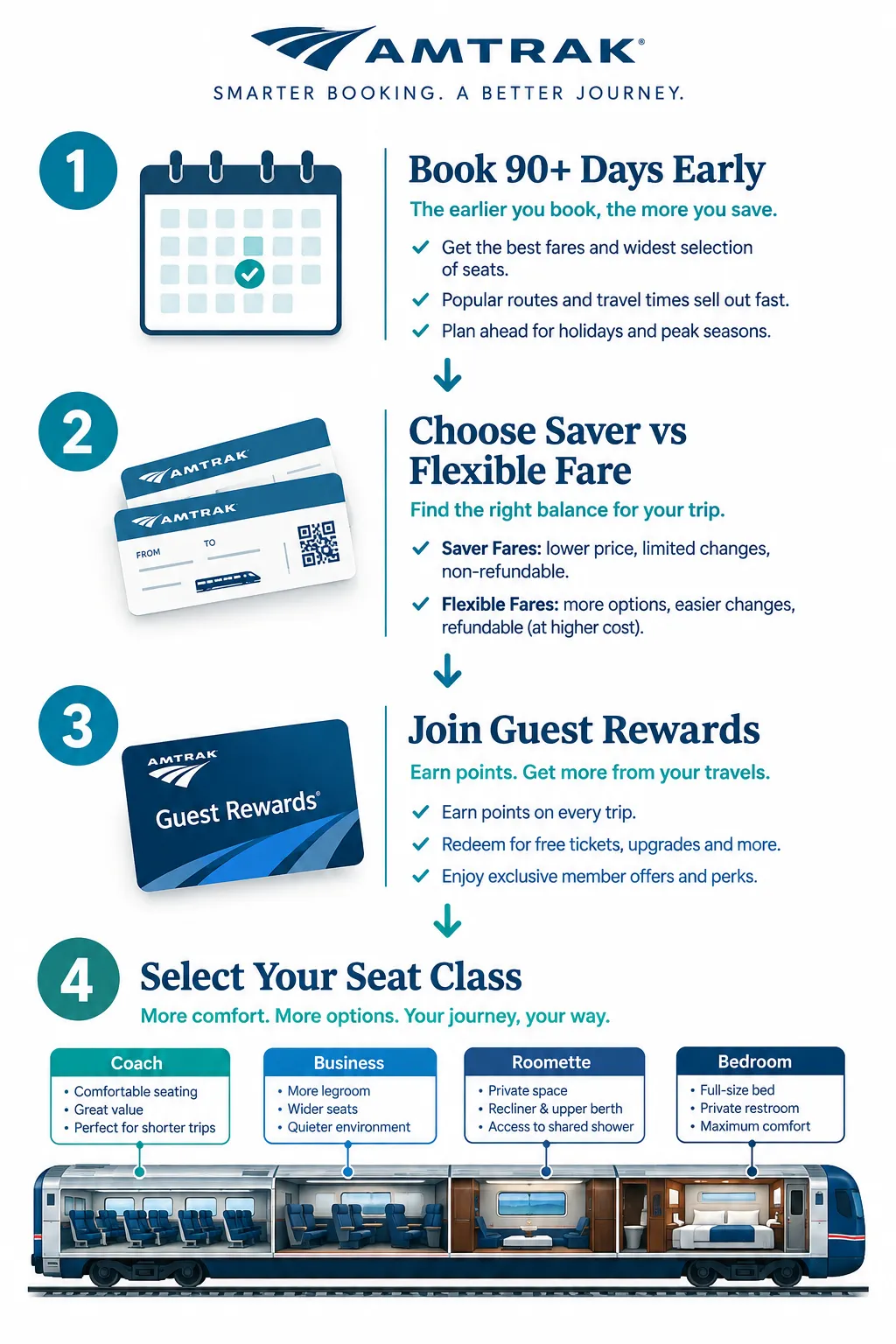
- Join Amtrak Guest Rewards first. It’s free, and you earn points on every trip. Sign up before you buy your first ticket.
- Book early. Saver fares – Amtrak’s cheapest tier – sell out fast. Aim for 90 to 180 days out on popular routes.
- Choose the right fare type. Saver fares are the lowest but non-refundable. Value and Flexible fares cost more but allow changes.
- Book direct routes when possible. Connections add risk, especially on long-distance trains that run once a day.
Pro tip: The Amtrak app lets you set fare alerts and manage your trip on the go. Download it before departure day.
Are Amtrak Tickets Cheaper If You Book in Advance?
Yes – significantly cheaper. Amtrak uses dynamic pricing, so the same seat can cost two or three times more as the departure date approaches. Saver fares are released first and disappear quickly on busy routes like the Northeast Corridor or the California Zephyr.
Booking 90 or more days out is the sweet spot for most routes. For holiday travel, go even earlier.
What’s the Difference Between Amtrak Coach and Sleeper Cars?
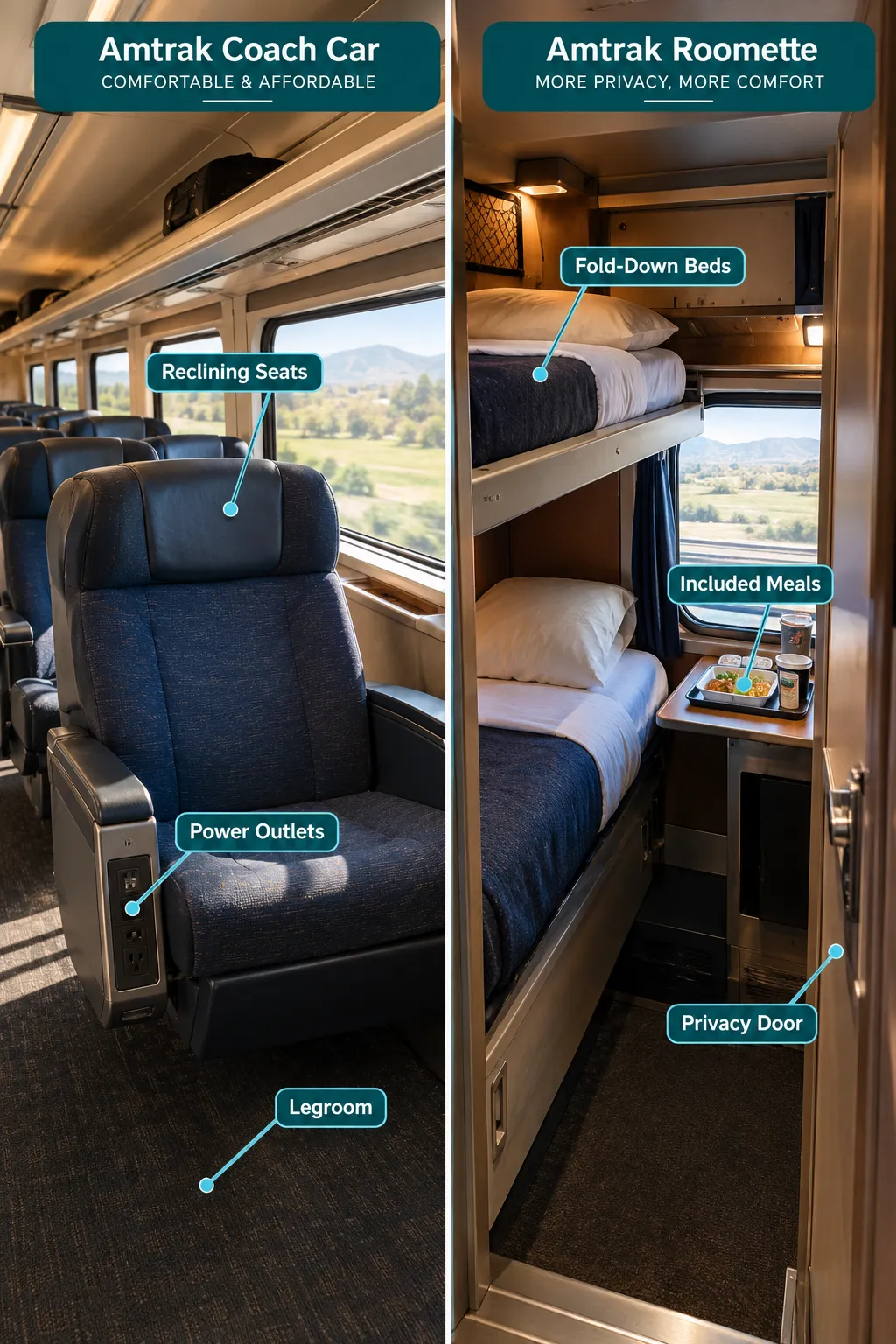
Coach is the standard seat – think airplane business class in terms of space, with wider seats and bigger windows. Sleeper cars (Roomettes and Bedrooms) are private compartments with fold-down beds, and on most long-distance routes, meals in the dining car are included with your sleeper fare.
Here’s a quick breakdown:
| Class | Best For | Meals Included | Privacy |
|---|---|---|---|
| Coach | Day trips, short routes | No | Shared car |
| Business | Northeast Corridor | No | Slightly more space |
| Roomette | Solo or couples overnight | Yes (long-distance) | Private room |
| Bedroom | Families or extra comfort | Yes (long-distance) | Larger private room |
Choose Coach if your trip is under 6 hours or you’re on a tight budget.
Choose a Roomette if you’re riding overnight and want to actually sleep and arrive rested.
How Early Should I Arrive at the Amtrak Station Before Departure?
Arrive at least 30 minutes before departure for most routes. For sleeper cars or busy stations like New York Penn Station or Chicago Union Station, aim for 45 to 60 minutes early.
Unlike airports, there’s no formal security line – but there are real reasons to arrive early:
- Checked baggage must be handled before the train boards
- Popular trains board quickly and overhead space fills up
- Some stations have multiple platforms and require extra walking time
- Sleeper car passengers often board from a separate lounge area
One thing that surprised me on my first trip: Amtrak doesn’t hold trains for late passengers. If you miss it, you’re rebooked on the next available departure – which on some routes is the next day.
What Should I Pack for a Long Amtrak Train Ride?
Pack light but pack smart. The essentials that make a long Amtrak ride genuinely comfortable are different from what you’d bring on a flight.
Must-haves for any Amtrak trip:
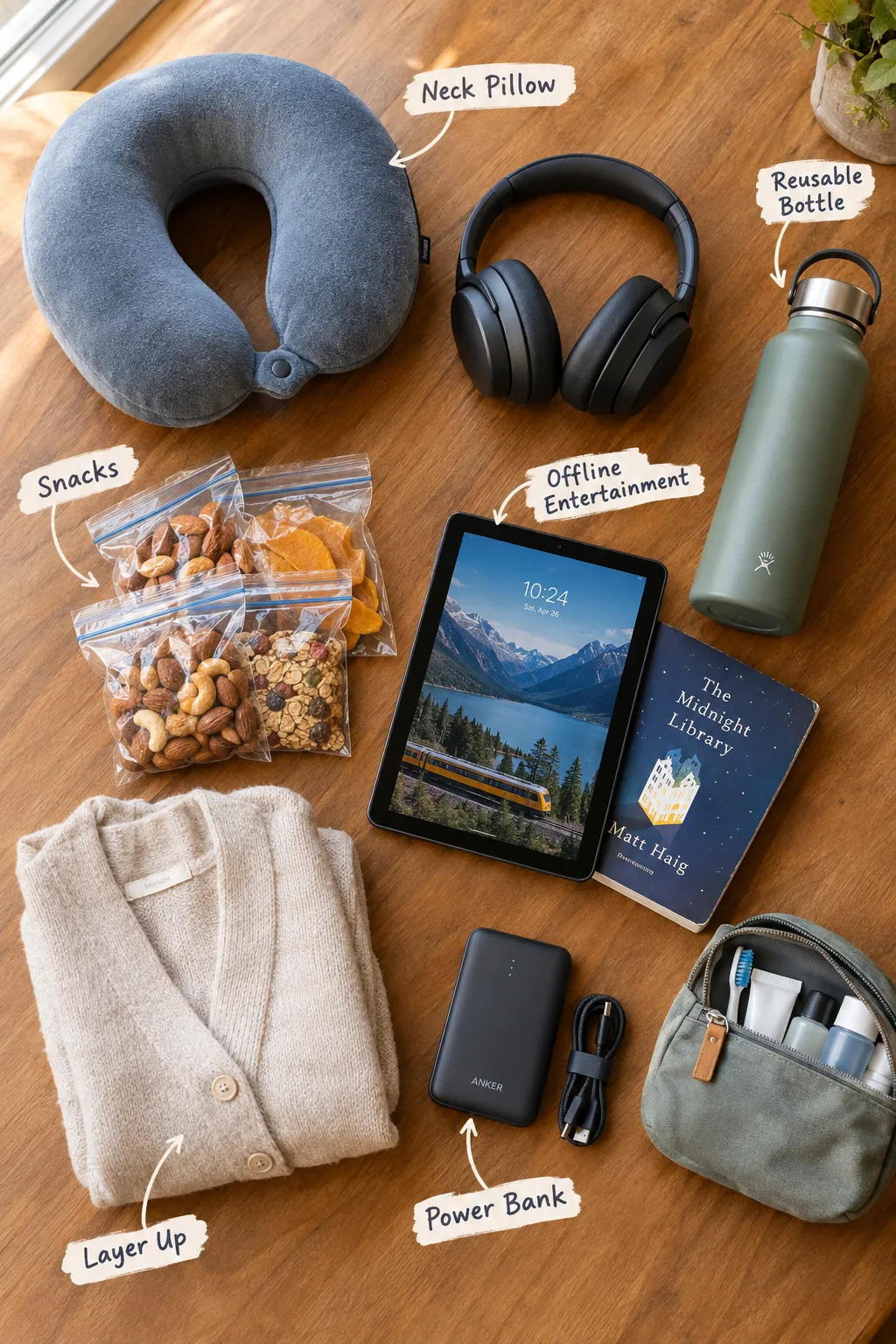
- Neck pillow and light blanket or cardigan (trains run cold)
- Noise-canceling headphones or earplugs
- Portable phone charger or power bank
- Snacks and a refillable water bottle
- Offline entertainment – downloaded shows, podcasts, or a book
- ID or passport (required for boarding)
For overnight trips, also bring:
- Travel toiletry kit (toothbrush, face wipe, dry shampoo)
- Eye mask
- Slip-on shoes for moving through the train at night
Check out the only travel essentials list you’ll ever need for a broader packing checklist that works across all trip types.
Can You Bring Your Own Food on Amtrak Trains?
Yes, and you should. Amtrak explicitly allows passengers to bring their own food and non-alcoholic beverages on board. The café car sells sandwiches, snacks, and hot drinks, but options are limited and prices are higher than you’d expect.
On long-distance routes, there’s a full dining car – but it’s only included for sleeper car passengers. Coach passengers can purchase dining car meals separately, though availability varies by route.
Smart food strategy for Coach passengers:
- Pack a real meal for any trip over 4 hours
- Bring more snacks than you think you need
- A refillable water bottle saves money and reduces waste
- Hot food from the café car is hit or miss – sandwiches and chips are the safe bet
Do Amtrak Trains Have Dining Cars on All Routes?
No – not all routes include a traditional dining car. Dining car availability depends heavily on the specific route. Long-distance trains like the Empire Builder, Southwest Chief, and California Zephyr have full dining service. Regional and corridor trains typically only have a café or lounge car with grab-and-go items.
Check your specific route’s amenities on Amtrak’s website before assuming you’ll have a sit-down meal option.
Can You Get Wi-Fi on Amtrak Trains?
Most Amtrak trains offer free Wi-Fi, but treat it as a bonus rather than a guarantee. According to Amtrak’s own guidance, Wi-Fi is available on many routes but signal quality varies depending on location, especially in rural stretches or mountain passes.
Realistic expectations for Amtrak Wi-Fi:
- Good enough for light browsing and messaging in populated areas
- Unreliable for streaming video or video calls
- Often drops completely in tunnels or remote regions
- Not available on all trains or all routes
The safest move: download your shows, playlists, and reading material before you board. Don’t count on streaming.
How Do I Know If My Amtrak Train Is Running on Time?
Check the Amtrak app or the Amtrak train status page before leaving for the station. You can track your specific train number in real time.
Amtrak long-distance trains are notorious for delays, largely because they share tracks with freight railroads that have priority. The Northeast Corridor is generally more reliable. Transcontinental routes like the Sunset Limited or Texas Eagle can run hours behind schedule.
Before your trip:
- Enable push notifications in the Amtrak app
- Check train status the morning of departure
- Don’t book tight connections on the same day as a long-distance Amtrak leg
What Should I Do If My Amtrak Train Is Delayed?
Stay calm and stay informed. Amtrak’s app sends real-time delay notifications if you have alerts enabled. Station staff can also provide updates at the gate.
If your delay causes a missed connection:
- Go directly to an Amtrak agent at the station
- Amtrak will rebook you on the next available train at no extra charge if the delay was their fault
- Keep your original ticket confirmation handy
Common mistake: booking a same-day flight connection after a long-distance Amtrak route. Build at least one full day of buffer if your Amtrak trip is the first leg of a bigger journey.
What Amenities Are Included With Amtrak Tickets?
Standard Coach tickets include your seat, carry-on baggage, and access to the café car and observation lounge. Sleeper fares on long-distance routes add private accommodations, bedding, and meals in the dining car.
Amenities by ticket type:
- All passengers: Carry-on bags, café car access, observation car access, Wi-Fi (where available), power outlets at most seats
- Sleeper passengers: Private room, fold-down beds, linens, meals included, access to the sleeper lounge at select stations
The observation car is one of the most underrated features on long-distance routes. It’s open to all passengers and offers panoramic dome windows – perfect for scenic routes like the fall foliage train rides across the USA.

Is Amtrak or Flying Cheaper for Long-Distance Travel?
It depends on the route and how far in advance you book. For corridor routes under 400 miles – like Boston to New York or Los Angeles to San Diego – Amtrak is often cheaper and faster door-to-door once you factor in airport time.
For cross-country routes, flying is usually cheaper unless you book Amtrak’s Saver fares well in advance. A Roomette on the California Zephyr from Chicago to San Francisco can cost more than a budget flight, but the experience is entirely different.
Choose Amtrak if:
- You want to see the country, not just get there
- You’re traveling city-center to city-center (no airport transfers)
- You have flexibility on timing and enjoy slower travel
Choose flying if:
- Time is the priority
- You’re crossing more than 1,500 miles
- Budget is tight and you can’t book Amtrak far in advance
If you love the idea of slow travel and scenic routes, also consider pairing an Amtrak trip with a New England road trip for a full regional adventure.
Are Amtrak Trains Comfortable for Overnight Travel?
Coach seats are manageable for one night if you bring a neck pillow and blanket – they recline more than airplane seats and have a footrest. But for anything longer than one overnight, a Roomette is worth the upgrade. First-time Amtrak travelers consistently report that the sleeper experience is one of the highlights of long-distance train travel.
Noise is the main challenge in Coach overnight. Bring earplugs or headphones. The train rocks gently, which many people find helps them sleep.
What Happens If You Miss Your Amtrak Connection?
Go immediately to an Amtrak customer service agent at the station. If you missed the connection because of an Amtrak delay on your inbound train, they will rebook you on the next available departure at no cost.
If you missed the connection due to your own timing, you’ll likely need to purchase a new ticket. This is why building buffer time into itineraries with connections matters so much.
On some routes, connections only run once per day – so a missed connection could mean an overnight wait. Always check connection frequency when planning your route.
Conclusion
These Amtrak train travel tips come from the kind of experience that only happens when things go slightly sideways – a missed café car window, a 4-hour delay through Kansas, and a Coach seat without a neck pillow. None of it was a disaster, but all of it was avoidable.
Your action steps before your first Amtrak trip:
- Sign up for Amtrak Guest Rewards before booking
- Book as early as possible and choose the right fare type
- Download the Amtrak app and enable delay notifications
- Pack snacks, a neck pillow, and offline entertainment
- Decide early whether Coach or a sleeper car fits your route
Train travel is genuinely one of the best ways to see the United States up close. The scenery alone – especially on routes like the Empire Builder through Montana or the Coast Starlight along the Pacific – makes it worth every mile.
If you’re planning a trip that combines train travel with road exploration, the Vermont fall foliage road trips guide pairs beautifully with Amtrak’s northeast routes. And if you’re a solo traveler looking to stretch your budget further, check out these solo travel budget ideas for making the most of every trip.
FAQ
Do I need to print my Amtrak ticket?
No. The Amtrak app stores your ticket digitally and conductors scan it directly from your phone. A printed copy works too, but it’s not required.
Can I bring a bike on Amtrak?
Yes, on most routes. Bikes must be boxed or bagged and checked as baggage. Some routes allow unboxed bikes in a designated car – check your specific route before traveling.
Is there a quiet car on Amtrak trains?
Yes, on many Northeast Corridor and some other routes. The quiet car has rules against phone calls and loud conversations. It’s not available on all trains.
Can I bring my pet on Amtrak?
Small dogs and cats (under 20 lbs) are allowed on trips up to 7 hours on most routes for a fee. Service animals are always permitted. Check Amtrak’s current pet policy before booking.
Are there power outlets on Amtrak trains?
Most Amtrak trains have power outlets at or near seats, but availability varies by train and car age. Bringing a power bank is still the safest backup.
How many bags can I bring on Amtrak?
Coach passengers can bring 2 carry-on bags (up to 50 lbs each) and 2 personal items for free. Checked baggage is available on routes with baggage service for a fee.
Is there a kids’ discount on Amtrak?
Yes. Children ages 2-12 ride at a 50% discount on most fares when accompanied by a paying adult.
Can I change my Amtrak ticket after booking?
It depends on your fare type. Flexible fares allow free changes. Value fares charge a fee. Saver fares are non-refundable and changes may not be allowed.


