Last updated: September 16, 2026
Quick Answer: St. Vincent and the Grenadines (SVG) is a chain of 32 islands and cays in the Eastern Caribbean, offering volcano hikes, world-class sailing, coral reef snorkeling, and uncrowded beaches. The best things to do in St. Vincent and the Grenadines range from trekking La Soufriere volcano to island-hopping by sailboat through the Tobago Cays. It suits adventurous travelers, couples, and families who want the real Caribbean without the crowds.
Key Takeaways
- SVG is one of the least crowded yet most rewarding destinations in the Caribbean in 2026
- Strong tourism growth continues, but the islands still feel intimate compared to mass-market destinations
- La Soufriere volcano hike is a bucket-list experience unique to the region
- The Tobago Cays Marine Park is among the best snorkeling in the entire Caribbean
- Bequia is the most accessible and charming of the Grenadine islands for first-timers
- Budget travelers can visit for under $150/day; luxury villa stays push costs much higher
- The dry season (January to May) is the best time to visit
- Getting around requires ferries, small planes, or chartered boats – plan ahead
- SVG is generally safe for tourists, with normal urban precautions in Kingstown
- Most visitors say their biggest regret is not staying longer
What’s the Difference Between St. Vincent and the Grenadines Islands?
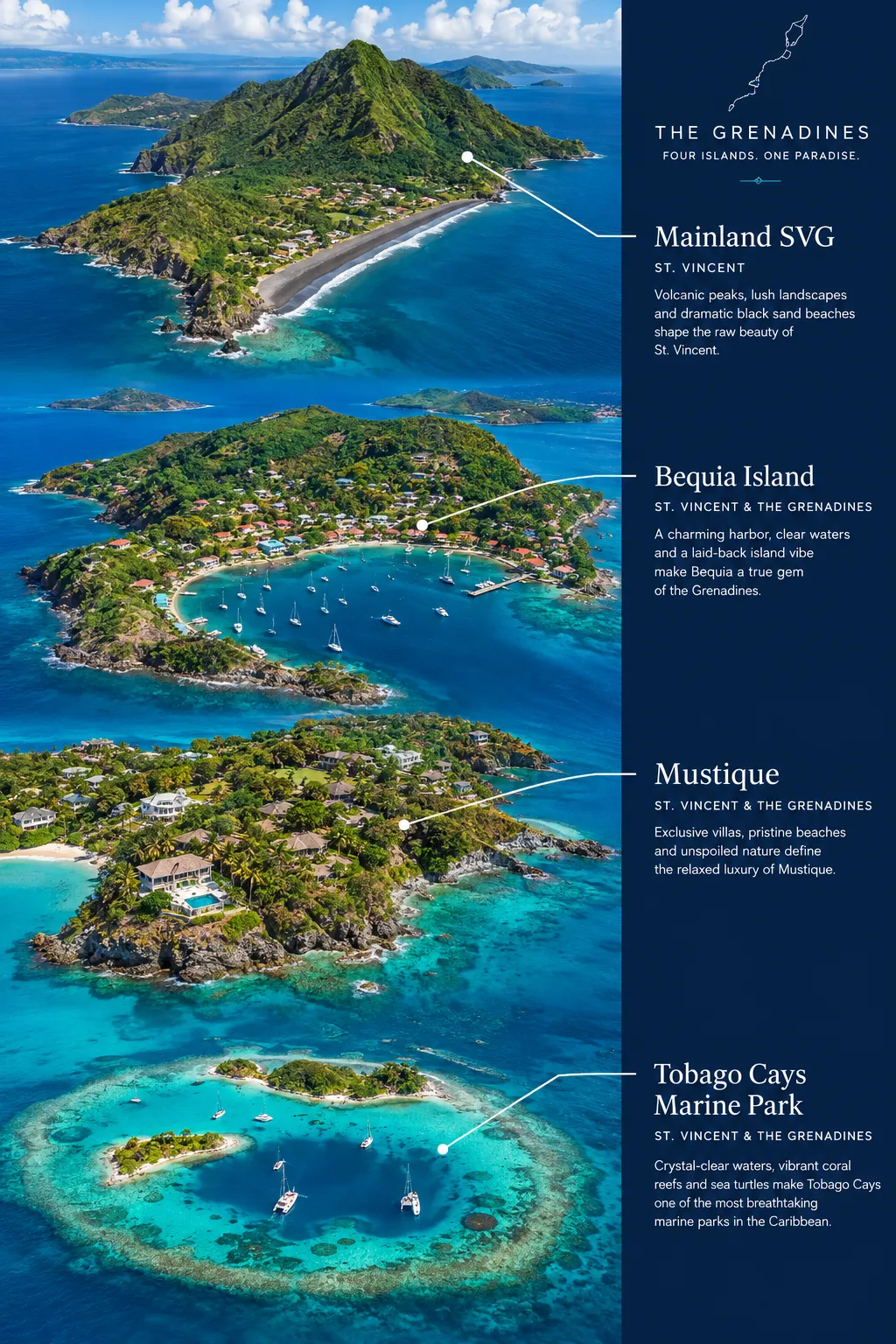
St. Vincent is the main island – volcanic, lush, and home to the capital Kingstown. The Grenadines are the 31 smaller islands and cays stretching south toward Grenada, each with its own personality.
Here’s a quick breakdown:
| Island | Best For | Vibe |
|---|---|---|
| St. Vincent | Hiking, culture, local life | Authentic, rugged |
| Bequia | First-time visitors, beaches | Relaxed, charming |
| Mustique | Luxury, privacy | Exclusive, quiet |
| Canouan | Upscale resort stays | Polished, calm |
| Union Island | Kite surfing, sailing | Adventurous |
| Tobago Cays | Snorkeling, turtles | Wild, pristine |
| Palm Island | Honeymoon escapes | Secluded, romantic |
The SVG Tourism Authority positions the destination around this island diversity – each one offering a genuinely different experience.
Is St. Vincent and the Grenadines Worth Visiting Compared to Other Caribbean Islands?
Yes – especially if you’ve already done Barbados, St. Lucia, or Antigua and want something that feels less packaged. SVG has no mega-resorts dominating the shoreline, no cruise ship crowds on most beaches, and a rawness that feels increasingly rare in the Caribbean.
SVG earned multiple 2026 World Travel Awards nominations, signaling growing recognition without yet triggering the overtourism that plagues more famous neighbors.
Choose SVG if you want:
- Unspoiled nature and real local culture
- Sailing and adventure over pool bars
- A destination that still surprises you
Skip SVG if you need:
- All-inclusive resorts with nonstop entertainment
- Easy direct flights from most North American cities
- A beach-only, low-effort trip
If you enjoy the best things to do in St. Lucia for first-time visitors, SVG is the logical next step deeper into the Eastern Caribbean.
What Are the Best Beaches in St. Vincent and the Grenadines?
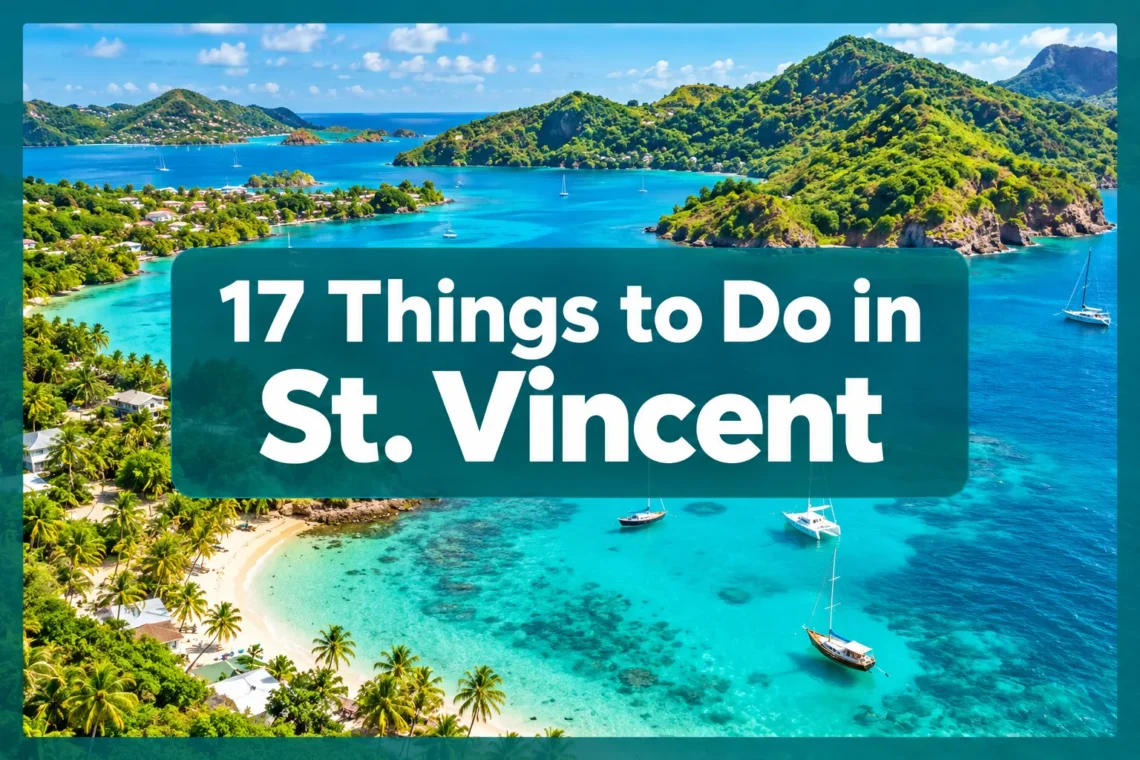
The Grenadines hold some of the finest beaches in the Caribbean – most of them uncrowded. St. Vincent’s beaches are darker (volcanic sand), which surprises some visitors but charms most.
Top beaches worth the trip:
- Princess Margaret Beach, Bequia – soft white sand, calm water, low-key beach bars
- Lower Bay, Bequia – local favorite, excellent for swimming
- Saltwhistle Bay, Mayreau – a near-perfect crescent of white sand between two bays
- Tobago Cays beaches – uninhabited, surrounded by reef, sea turtles visible from shore
- Chatham Bay, Union Island – remote, wild, almost no development
- Villa Beach, St. Vincent – the main island’s most popular stretch, calm and accessible
The volcanic black sand beaches on St. Vincent’s windward coast, like Rawacou, are dramatic and photogenic even if they’re not classic postcard material.
Can You Hike to the Volcano in St. Vincent?
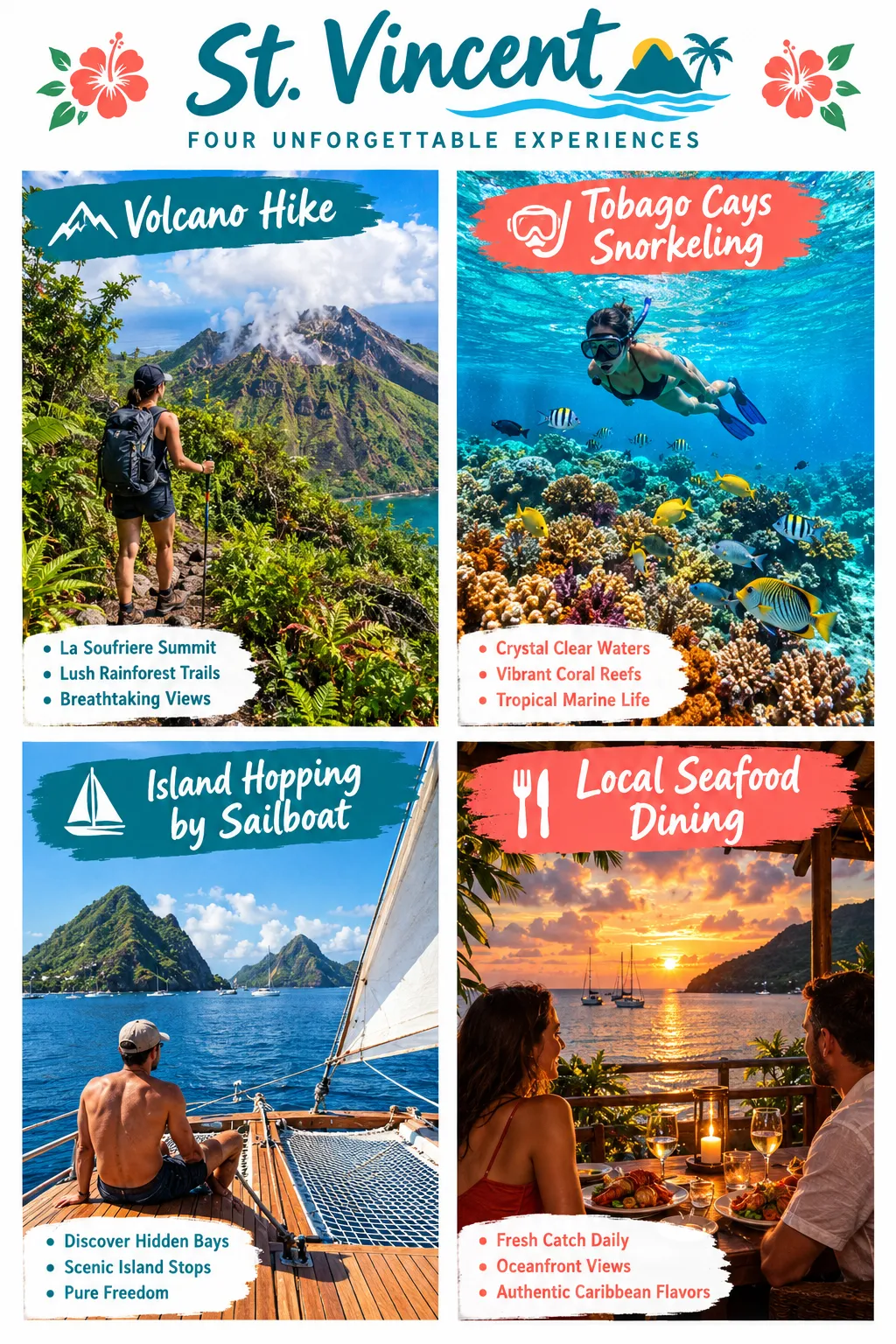
Yes – hiking La Soufriere is one of the top things to do in St. Vincent and the Grenadines, and it’s genuinely spectacular. La Soufriere is an active stratovolcano rising to 1,234 meters (4,048 feet), making it the highest peak in the Eastern Caribbean.
The hike takes roughly 4-6 hours round trip depending on fitness level. The trail starts at the Georgetown trailhead on the windward side.
What to know before you go:
- Hire a licensed local guide – trails can be slippery and foggy near the summit
- Start early (before 7am) to avoid afternoon clouds blocking crater views
- Wear proper hiking shoes and bring rain gear
- The volcano erupted significantly in April 2021; check current activity status before visiting
- The crater lake and steam vents at the top are genuinely awe-inspiring
This is not a casual stroll – it’s a real hike with elevation gain. But it’s accessible to most reasonably fit travelers.
Best Snorkeling and Diving Spots in St. Vincent and the Grenadines
The Tobago Cays Marine Park is the crown jewel for snorkeling and diving in SVG. It’s a protected area of five uninhabited islands surrounded by the Horseshoe Reef, with hawksbill turtles, rays, and hundreds of reef fish species.
Best spots by activity:
- Tobago Cays – snorkeling with sea turtles, best in the Caribbean for accessibility
- The Bite, Bequia – excellent shore snorkeling, colorful coral
- New Guinea Reef, St. Vincent – advanced diving, dramatic wall dives
- Bottle Reef, Bequia – good for beginners, clear water
- Kick ’em Jenny – an underwater volcano north of Grenada accessible from SVG, for certified divers only
Visibility in the Tobago Cays regularly exceeds 20 meters. Most sailing charters include a stop here.
What Activities Can You Do in Bequia Island?
Bequia (pronounced “Beck-way”) is the most visited of the Grenadine islands and the best base for first-timers. It’s a 7-square-mile island with a strong maritime heritage, excellent beaches, and a genuinely welcoming local community.
Top things to do in Bequia:
- Walk the waterfront in Port Elizabeth – the main town, full of cafes and boat builders
- Snorkel at The Bite or Friendship Bay
- Visit the Old Hegg Turtle Sanctuary – a conservation project protecting hawksbill turtles
- Hike to the Hamilton Battery for panoramic views
- Watch the boat builders at work – Bequia has a centuries-old tradition of wooden boat building
- Take a water taxi to neighboring islands
- Eat fresh lobster at any of the harbor restaurants
Bequia is reachable by a 1-hour ferry from Kingstown, making it an easy day trip or overnight stay.
How Do You Get Around St. Vincent and the Grenadines?
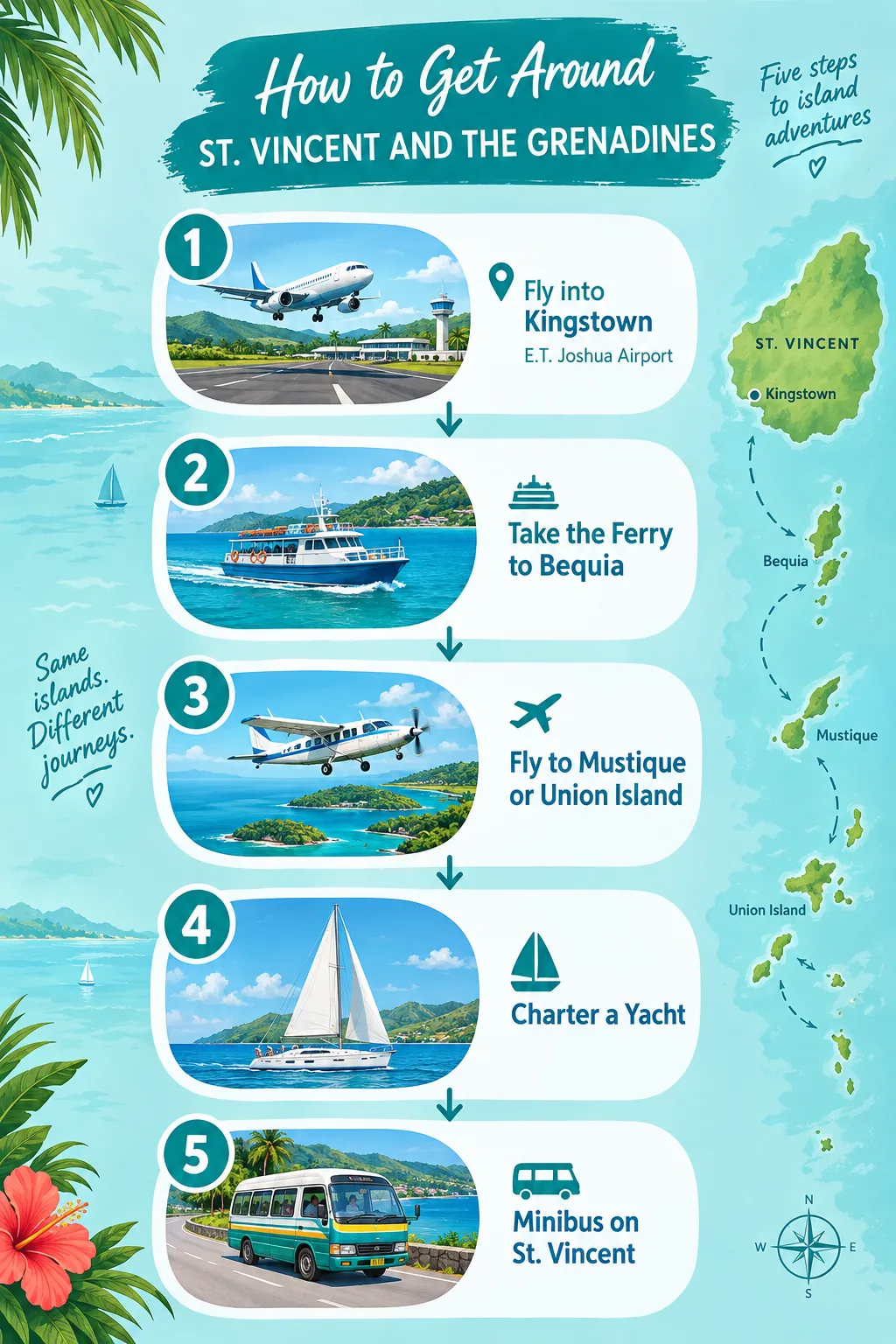
Getting around SVG requires planning – there are no bridges between islands, and transport options vary. Improving airlift and accessibility is a top priority for the SVG Tourism Authority in 2026.
Your main options:
- Ferries – the Admiralty Transport ferries connect St. Vincent to Bequia, Canouan, Mayreau, and Union Island. Affordable and scenic.
- Small planes – SVG Air and Mustique Airways fly between islands. Fast but weather-dependent.
- Chartered sailboats or catamarans – the classic way to explore. Bareboat or crewed charters available.
- Water taxis – flexible, fast, and widely available between nearby islands
- Minibuses on St. Vincent – cheap and frequent, but routes can be confusing for first-timers
- Rental cars on St. Vincent – useful for exploring the main island; drive on the left
Tip: If you’re island-hopping, a crewed sailing charter covering 7-10 days is the single best way to experience SVG. It’s not cheap, but it’s transformative.
How Much Does It Cost to Visit St. Vincent and the Grenadines?
SVG sits in the mid-to-high range for Caribbean destinations. Budget travelers can manage on roughly $100-150 USD per day by using guesthouses, local restaurants, and ferries. Mid-range travelers spending on boutique hotels and some activities should budget $200-350/day.
Rough cost breakdown:
- Guesthouse/budget hotel: $60-120/night
- Mid-range boutique hotel: $150-300/night
- Luxury villa or Mustique stay: $500-2,000+/night
- Ferry between islands: $10-25 USD each way
- La Soufriere hike with guide: $40-60 USD
- Tobago Cays day sail: $80-150 USD per person
- Local meal (roti, fish): $5-12 USD
- Restaurant dinner: $25-60 USD per person
Mustique is in a different price category entirely – it’s one of the most exclusive islands in the world. For luxury Caribbean escapes, also check out the best adults-only all-inclusive resorts in the Caribbean for comparison.
What’s the Best Time of Year to Visit St. Vincent and the Grenadines?
The dry season from January to May is the best time to visit. Skies are clearer, seas are calmer for sailing, and the hiking trails are in better condition.
- January to May – dry season, best weather, peak sailing season
- June to August – start of hurricane season, still mostly good weather, fewer crowds
- September to November – highest hurricane risk, some businesses close on smaller islands
- December – transitional, good weather returning, festive atmosphere in Kingstown
The Vincy Mas Carnival happens in late June/early July – a fantastic time to experience local culture, though accommodation books up fast.
Is St. Vincent and the Grenadines Good for Families or Couples?
Both – but for different reasons and different islands.
For couples: Mustique, Palm Island, and Petit St. Vincent offer secluded luxury that’s hard to beat anywhere in the Caribbean. Bequia’s harbor sunsets and sailing charters are deeply romantic.
For families: Bequia’s calm beaches and the Old Hegg Turtle Sanctuary are excellent for kids. The Tobago Cays snorkeling is safe and accessible for children who can swim. St. Vincent’s botanical gardens (the oldest in the Western Hemisphere) are a great half-day stop with kids.
The SVG Tourism Authority’s “Love SVG” initiative is actively developing eco-adventure learning experiences for families, making the destination increasingly kid-friendly beyond just beach time.
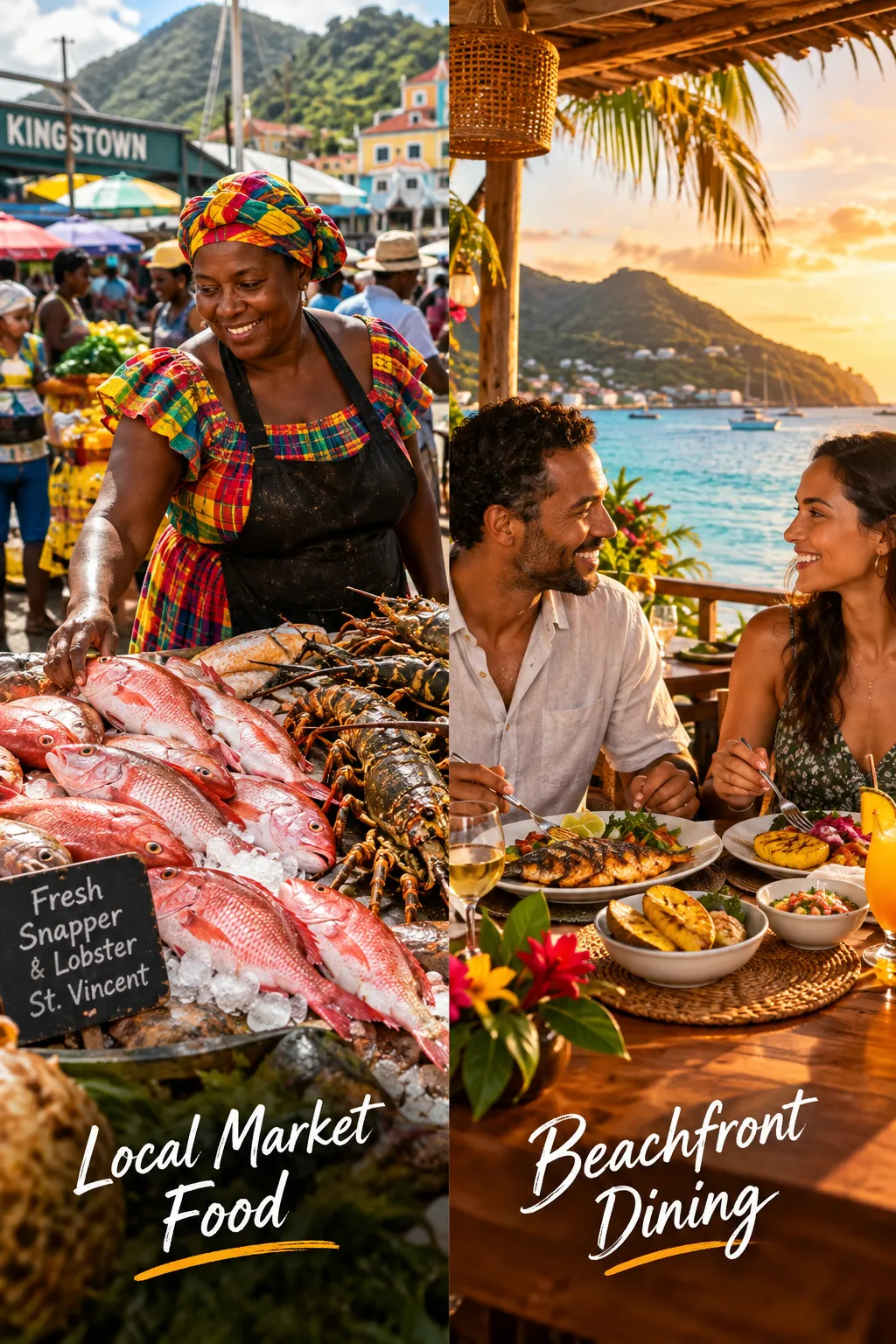
What’s the Food and Dining Scene Like in St. Vincent and the Grenadines?
Vincentian food is honest, fresh, and deeply tied to the sea. The best things to do in St. Vincent and the Grenadines always include eating well – this is not a destination where you settle for resort buffets.
Must-try dishes:
- Roasted breadfruit and jackfish – the national dish, simple and delicious
- Callaloo soup – a thick, savory soup made from dasheen leaves
- Lobster – fresh, affordable by Caribbean standards, especially in Bequia
- Roti – a Trinidadian-influenced flatbread wrap with curried filling, perfect street food
- Coconut water – straight from the vendor on the roadside
Kingstown’s fish market is worth a morning visit. In Bequia, Mac’s Pizzeria and the Frangipani Hotel restaurant are local institutions. On Mustique, dining is more formal and expensive.
Is St. Vincent and the Grenadines Safe for Tourists?
SVG is generally safe for tourists. The islands have a low profile compared to larger Caribbean nations, and violent crime targeting visitors is rare.
Practical safety tips:
- Kingstown has petty theft like any city – keep valuables secured
- Avoid walking alone in unfamiliar areas of Kingstown after dark
- The smaller Grenadine islands are extremely safe and relaxed
- Water safety matters more than crime – always use a guide for the volcano hike and respect ocean conditions
- Check La Soufriere’s volcanic activity status before hiking
The SVG Tourism Authority under new CEO Shafia London is actively working to improve visitor experience and safety infrastructure across the island chain.
How Many Days Do You Need in St. Vincent and the Grenadines?
Most visitors regret not staying longer. A minimum of 7 days is needed to scratch the surface – 10 to 14 days is ideal for a proper island-hopping experience.
Sample itinerary by length:
- 4-5 days: St. Vincent + Bequia only
- 7 days: St. Vincent, Bequia, Tobago Cays, Union Island
- 10-14 days: Full sailing circuit including Mustique or Canouan
SVG saw over 120,000 stay-over arrivals in 2025, with the average stay increasing as visitors discover how much there is to explore. That number is still tiny compared to Barbados or Jamaica – which tells you how uncrowded it remains.
What Do People Regret Not Doing in St. Vincent and the Grenadines?
The most common regrets from travelers who’ve visited SVG:
- Not hiring a guide for La Soufriere – many underestimate the hike and turn back
- Skipping the Tobago Cays – some itineraries cut it out due to time; don’t let yours
- Not trying local food – staying in resort dining and missing the fish market and roti shops
- Rushing through Bequia – one night is never enough
- Not booking a sailing charter – many wish they’d splurged on even a one-day sail
- Missing the windward coast of St. Vincent – the lush, dramatic Atlantic side that most tourists skip
- Not talking to locals – Vincentians are exceptionally warm and knowledgeable guides to their own island
If you love finding hidden gems in destinations that haven’t been overrun yet, you might also enjoy hidden gems in Italy that feel absolutely magical or Turks and Caicos hidden gems and secret beaches for comparison.
The Full List: 17 Things to Do in St. Vincent and the Grenadines
Here’s the complete list to bookmark before you go:
- Hike La Soufriere volcano
- Snorkel the Tobago Cays Marine Park with sea turtles
- Sail between the Grenadine islands on a crewed charter
- Explore Bequia’s Port Elizabeth waterfront
- Visit the Old Hegg Turtle Sanctuary in Bequia
- Swim at Saltwhistle Bay, Mayreau
- Eat fresh lobster at a Bequia harbor restaurant
- Tour the St. Vincent Botanical Gardens in Kingstown
- Watch traditional wooden boat building in Bequia
- Kite surf at Union Island
- Dive the New Guinea Reef wall off St. Vincent
- Take a water taxi to Chatham Bay, Union Island
- Explore the windward coast of St. Vincent by car
- Shop and eat at Kingstown’s fish market
- Watch the sunset from Hamilton Battery, Bequia
- Day trip to Mustique for a glimpse of Caribbean luxury
- Attend Vincy Mas Carnival in late June (if timing works)
Conclusion
St. Vincent and the Grenadines is one of the few places in the Caribbean where the word “secret” still applies. The islands are gaining recognition – new tourism leadership is pushing SVG toward becoming the Caribbean’s premier adventure destination – but the crowds haven’t arrived yet.
Your actionable next steps:
- Book flights into Argyle International Airport on St. Vincent – connections via Barbados, Trinidad, or Antigua are your main options
- Decide on your base – Bequia for first-timers, St. Vincent for hikers, Mustique for luxury
- Reserve a sailing charter early – the best boats book out months ahead in peak season
- Plan for at least 7 days – 10 is better
- Pack for both hiking and beach – you’ll need both
The window to experience SVG before it becomes widely discovered is still open. Go while it feels like a secret.