


Last updated: September 28, 2026
Quick Answer
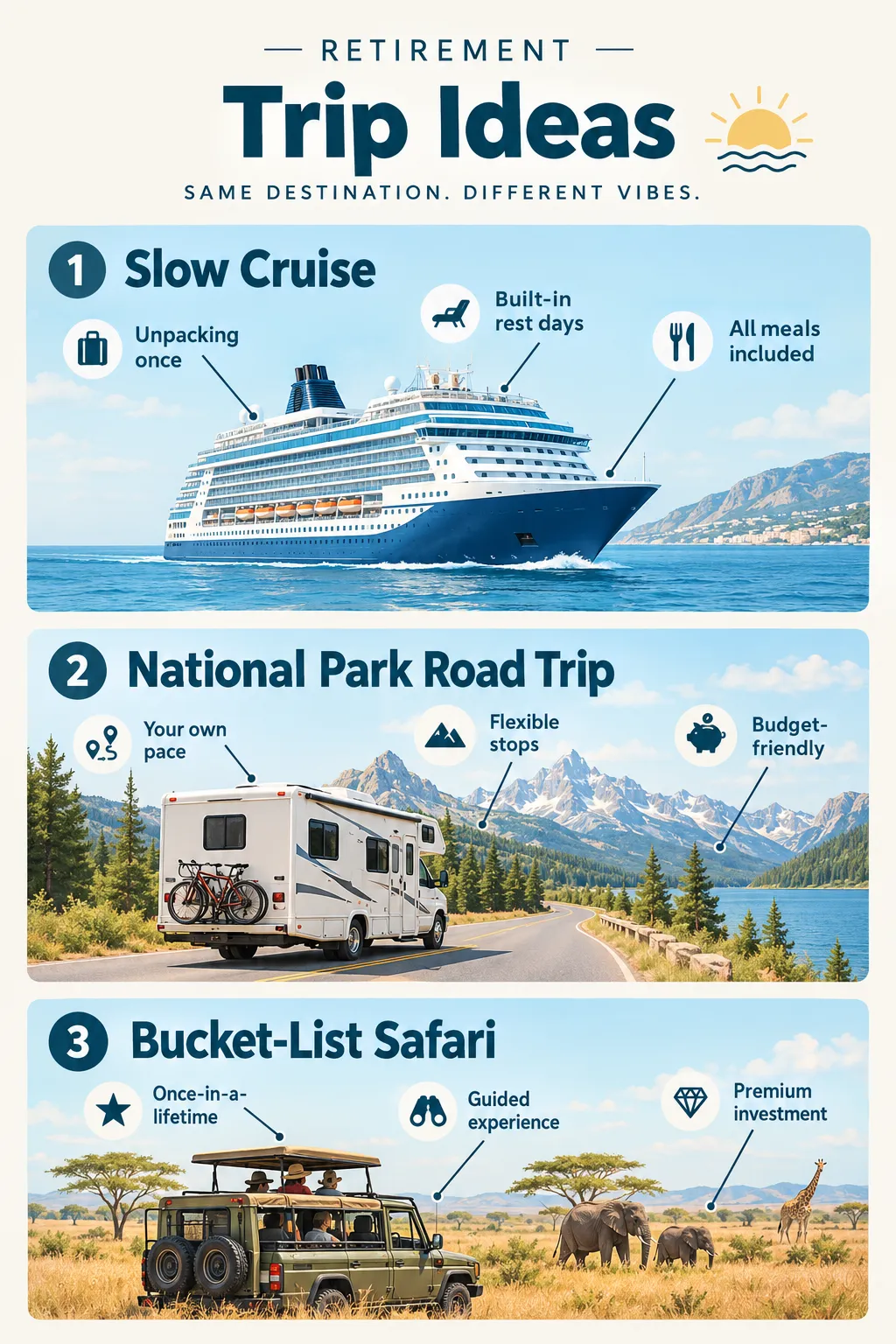
The best retirement trip ideas match your energy level, budget, and travel style, whether that’s a slow cruise, a national park road trip, or a bucket-list safari. Nearly two-thirds of adults 50 and over plan at least one leisure trip in 2026, and many retirees now treat travel as an ongoing lifestyle rather than a one-time splurge, according to AARP’s Travel Trends Survey. This guide covers 12 specific retirement trip ideas for couples, solo travelers, active adventurers, and grandparents, plus how to budget, pack, and plan around your comfort level.
Key Takeaways
- Retirement trip ideas work best when they match your pace. Slow travel, fewer stops, and built-in rest days beat packed itineraries.
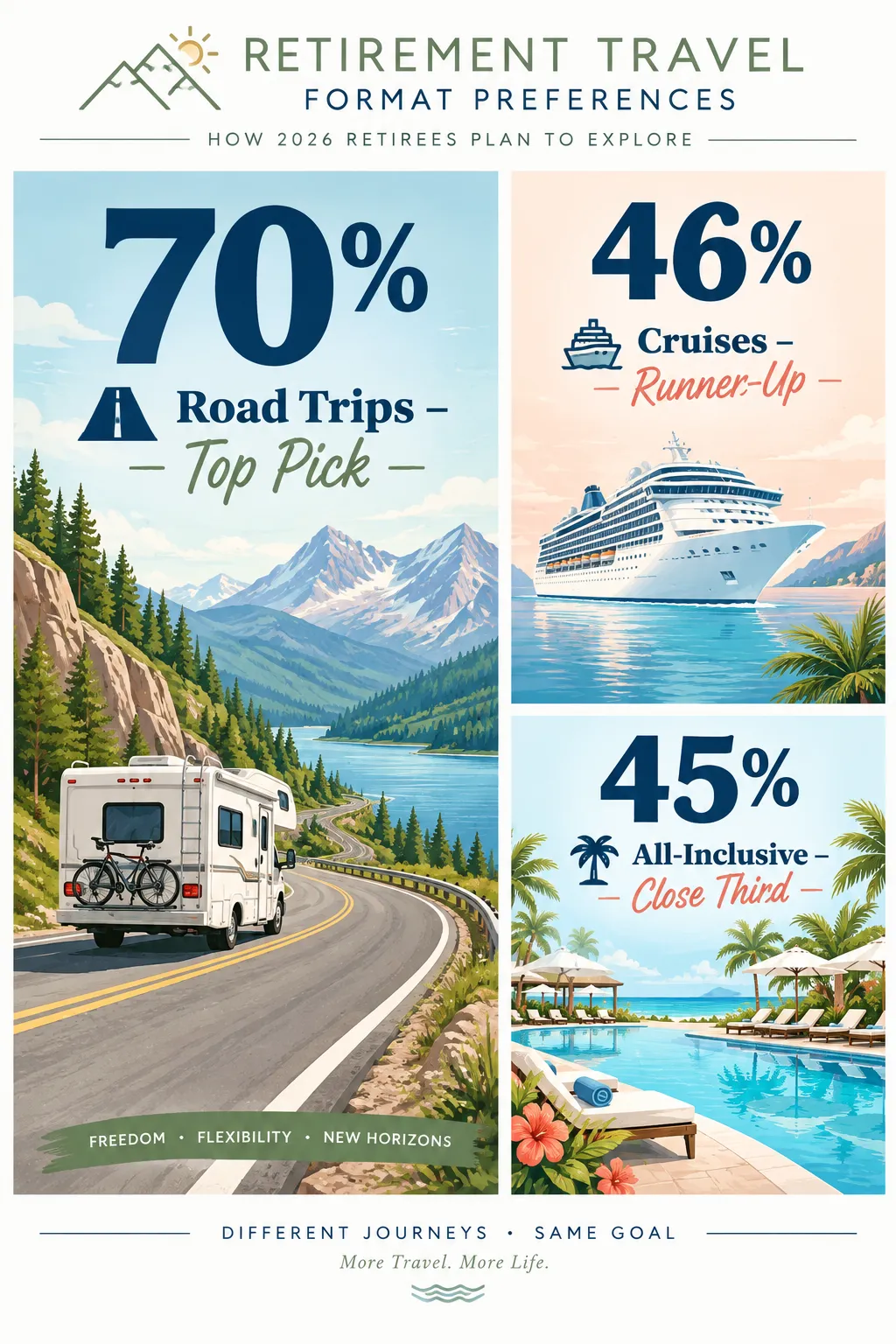
- Road trips remain the top pick. About 70% of retirees prefer road trips, followed by cruises at 46% and all-inclusive resorts at 45%, per a 2026 retiree preferences study.
- Shoulder season (May-June, September-October) offers better weather and smaller crowds for both domestic and international retirement travel.
- Splurge trips can double as retirement-relocation research, letting you test a destination before committing to it long-term.
- Florida, California, Las Vegas, and Arizona remain top senior travel hubs thanks to established senior-friendly infrastructure.
- Long-term cruises are gaining traction, with 18% of current retirees and 32% of future retirees interested in multi-week or multi-month sailings.
- Mobility-friendly options exist for nearly every trip style, from accessible cruise cabins to slow-paced river tours.
What Makes a Good Retirement Trip Idea
A good retirement trip idea gives you enough structure to feel cared for, but enough flexibility to skip a day if you’re tired. It should match your physical ability, budget, and the company you’re keeping.
I learned this the hard way helping my parents plan their first big post-work trip. They booked a whirlwind seven-country tour and came home more exhausted than when they left. The next year, they picked one region and stayed put for two weeks. That trip is still the one they talk about.
Look for trips that offer:
- Built-in rest days between activities
- Comfortable, walkable lodging near key sights
- Predictable costs, so you’re not guessing at daily spending
- Room for spontaneity, like an extra afternoon at a museum you loved
Choose slower, fewer-stop itineraries if you’re newly retired and still adjusting to unstructured time. Choose action-packed multi-country tours only if you’ve already traveled extensively and know your stamina.
Best Retirement Destinations for Couples
The best retirement destinations for couples combine romance with ease, think wine country river cruises, warm-weather resorts, or a redo of your honeymoon spot with better amenities. Couples traveling together in retirement often want shared novelty without logistical stress.
Idea 1: A river cruise through wine country. Portugal’s Douro Valley or France’s Bordeaux region let couples wake up in a new town daily without repacking.
Idea 2: An overwater bungalow anniversary trip. Many couples use retirement to finally book the honeymoon-style trip they postponed, often to the Caribbean or Mexico.
For couples who prefer active togetherness over lounging, a mountain-based getaway works well too. Our guide to couple ski trip ideas beyond the slopes covers options that don’t require athletic skiing skills, just cozy lodges and shared adventure.
Choose a river cruise if you want minimal planning. Choose a private villa or resort if you’d rather settle into one place.
How Much Should You Budget for a Retirement Trip
Budget for a retirement trip based on trip type: road trips and domestic stays cost the least, while cruises and all-inclusive resorts offer predictable mid-range pricing, and bucket-list splurges like safaris or polar cruises cost the most. Senior travelers currently average close to $6,847 per person annually across all trips combined, according to senior travel spending data.
A useful way to think about budgeting:
| Trip type | Typical planning effort | Cost predictability |
|---|---|---|
| Road trip | Low | High |
| Cruise | Low | Very high |
| All-inclusive resort | Low | Very high |
| Guided tour | Medium | High |
| Bucket-list splurge (safari, polar cruise) | High | Medium |
A common mistake is booking one enormous trip and running out of travel budget for years afterward. Advisors increasingly recommend budgeting modestly for frequent trips, then saving separately for one true splurge, an approach detailed in a 2026 retirement travel ideas guide.
Retirement Trip Ideas for Active Seniors
Active seniors do best with trips built around movement, hiking trails, walking tours, or multi-day cycling routes with a support vehicle nearby. These trips reward physical stamina without requiring extreme fitness.
Idea 3: A national park lodge-to-lodge hiking trip. Places like Glacier or Zion offer moderate trails and comfortable lodges each night.
Idea 4: A guided multi-country walking tour. Portugal, Croatia, and Italy all offer well-paved, senior-friendly walking routes through historic towns.
If you’d rather drive than fly, a classic American road trip hits the same active-but-relaxed sweet spot. Consider a route like our Mount Rushmore road trip, which mixes short hikes with scenic driving days.
Choose walking tours if you want cultural immersion. Choose national park trips if you want nature and fewer crowds.
Relaxing Retirement Vacation Spots
Relaxing retirement vacation spots prioritize low effort and high comfort, think beach resorts, spa towns, or slow-paced coastal stays where the biggest decision each day is lunch. These trips suit retirees who spent decades on tight schedules and now want the opposite.
Idea 5: A week at an all-inclusive beach resort. Punta Cana remains a favorite for its warm water and simple logistics; our stress-free Punta Cana itinerary shows how little planning it actually requires.
Other calm options include Gulf Coast Florida towns, Arizona desert spa resorts, or a quiet cabin stay. If a cabin sounds appealing, our romantic cabin getaway ideas work well for retired couples too, not just weekend trips.
Choose beach resorts if warmth and swimming matter most. Choose a cabin or spa town if quiet and solitude matter more.
Retirement Trip Ideas on a Budget
Budget-friendly retirement trips lean on road trips, off-season travel, and value-focused U.S. destinations rather than cutting corners on comfort. About 70% of retirees already choose road trips as their top format, based on the 2026 retiree preferences study.
Idea 6: A national park road trip using an annual pass. Multiple parks in one loop spreads the cost of the pass across many stops.
Idea 7: An off-season stay on Mexico’s Riviera. Traveling outside peak winter months cuts lodging costs significantly while keeping the weather warm.
Las Vegas also stands out as a genuinely good-value destination for retirees in 2026, according to a ranking of the most valuable vacation destinations for retirees, thanks to affordable lodging and free entertainment options.
A common mistake is assuming “budget” means fewer comforts. Timing and location matter more than what you cut.
Best Time of Year to Take a Retirement Trip
The best time for most retirement trips is shoulder season, roughly May through June and September through October, when weather is milder, crowds are smaller, and prices drop in both the U.S. and Europe. This applies especially to newly retired travelers planning longer trips.

Retirement travel experts increasingly recommend shoulder-season dates for Europe specifically, along with a focus on secondary cities rather than capital hubs, based on 2026 travel trend forecasting. Roughly 45% of travelers now also factor heat and weather risk into their planning, making shoulder season a practical choice, not just a cost-saving one.
Choose spring or fall if you’re visiting Europe or the Southwest desert. Choose winter only for warm-weather Caribbean or Southeast Asia trips, where peak season aligns with better weather, not worse.
Retirement Trip Ideas for Solo Travelers
Solo retirement travel works best with structured formats that build in social opportunity, small-ship cruises, guided tours, or long-stay rentals in walkable towns. These formats remove the loneliness risk without sacrificing independence.
Idea 8: A small-ship expedition cruise. These trips group solo travelers naturally around shared meals and excursions, unlike massive cruise ships.
If you’re solo and budget-conscious, the planning logic overlaps with general solo travel budget strategies, which apply just as well to retirees as to younger solo travelers.
Choose a small-ship cruise if you want built-in companionship. Choose a long-stay rental if you prefer independence and routine.
Adventure Trips for Retirees
Adventure trips for retirees include safaris, dive trips, and polar cruises, higher-intensity experiences that reward decades of saving with genuinely rare access. These are often the “someday” trips people finally book after retiring.
Idea 9: An African safari. Watching wildlife at close range remains one of the most frequently cited retirement bucket-list trips, according to a 2026 compendium of retirement bucket-list ideas.
Idea 10: A Galápagos Islands cruise. Following Darwin’s route by small ship pairs adventure with an easy pace, since most excursions are short.
A common mistake is booking an adventure trip that’s physically mismatched to your current fitness. Ask outfitters for daily activity levels in advance, not just marketing photos.
How to Plan a Retirement Trip
Planning a retirement trip well means starting with written goals, then building the itinerary around timing, budget, and health needs rather than picking a destination first. This order prevents overspending on the wrong trip.

A simple planning checklist:
- Write down what you actually want (rest, adventure, culture, family time)
- Pick shoulder-season dates when possible
- Set a per-trip budget, separate from your annual travel fund
- Check health insurance and travel insurance coverage before booking
- Choose a trip format (cruise, tour, road trip, long-stay rental)
- Book flexible cancellation options where available
This structured approach mirrors advice from a 2026 guide to retirement travel planning, which stresses insurance and budgeting as the two most skipped steps.
Retirement Trip Ideas for Grandparents and Grandkids
Multigenerational retirement trips work best when built around one central hub with easy day trips, rather than a packed multi-city itinerary. Grandparents need rest breaks; kids need built-in activity.
Idea 11: A classic theme park trip. Central Florida remains a top choice, and our Disney World travel tips include pacing advice that works well for grandparent-led trips specifically.
Choose a single-resort trip if grandkids are young. Choose a national park or coastal town if grandkids are older and want more outdoor freedom.
All-Inclusive Resorts for Retirees
All-inclusive resorts suit retirees who want predictable costs and minimal daily decisions, meals, drinks, and often excursions are bundled into one upfront price. Roughly 45% of retirees already choose this format, per the 2026 retiree preferences study.
Idea 12: A one-week all-inclusive stay in the Caribbean or Mexico. This remains the lowest-effort way to get warm weather, ocean views, and no cooking for seven straight days.
Choose all-inclusive if you want zero daily planning. Skip it if you prefer exploring local restaurants and markets on your own schedule.
What to Pack for a Long Retirement Trip
Packing for a long retirement trip means prioritizing comfort, medication access, and document backups over trying to bring everything you might need. Long trips punish overpacking fast.
Core packing list:
- Medications in original labeled bottles, plus a written list of dosages
- Comfortable, broken-in walking shoes, not new ones
- A lightweight first-aid pouch
- Copies of passports and insurance cards, both digital and paper
- Sun protection: hat, sunscreen, sunglasses
A common mistake is packing for every possible weather scenario. Layer-friendly basics almost always work better than a suitcase full of specialty items.
Retirement Trip Ideas if You Have Mobility Issues
Retirement trips with mobility issues in mind work best on cruises, river cruises, and guided tours designed with accessible transport and minimal walking between stops. These formats remove the physical strain of constant repacking and transfers.
Good options include:
- Ocean cruises with accessible cabins and elevator access to all decks
- River cruises, which dock centrally so excursions involve less walking
- Guided coach tours with door-to-door transport at each stop
Choose a cruise if standing for long periods is difficult. Choose a coach tour if you want more land-based sightseeing without driving yourself.
Frequently Asked Questions
What is the most popular retirement trip idea right now?
Road trips remain the most popular format, chosen by about 70% of retirees, followed by cruises and all-inclusive resorts.
How many trips do most retirees take per year?
Most retirees take one to two trips a year, with about 30% taking three to five trips annually.
Is it better to book one big splurge trip or several smaller trips?
Both work, but many advisors now recommend one strategic splurge trip paired with several smaller, budget-friendly trips throughout the year.
What’s the best season for retirement travel?
Shoulder season, generally May-June and September-October, offers the best mix of good weather, smaller crowds, and lower prices.
Are long-term cruises worth it for retirees?
Interest is rising fast, with 18% of current retirees and 32% of future retirees interested in multi-week or multi-month cruises, largely because they combine travel with stable daily routines.
Do I need travel insurance for retirement trips?
Yes, especially for longer or international trips, since health coverage and trip cancellation protection matter more as trips get longer or more remote.
Can a retirement trip help me decide where to retire abroad?
Yes. About one in five retirees are open to relocating abroad, and extended trips are a practical way to test daily life and healthcare access before committing.
Conclusion
The best retirement trip ideas aren’t about spending the most money, they’re about matching the trip to your energy, your budget, and the people you want beside you. Start small if you’re not sure what you want yet. A short road trip or an all-inclusive week can tell you a lot about your travel style before you book a bigger adventure.
Write down your top three trip goals this week. Then pick one idea from this list, whether that’s a river cruise, a safari, or a quiet cabin stay, and set a realistic budget around it. The reward you’ve earned doesn’t need to be extravagant. It just needs to fit the life you actually want to live now.