Last updated: October 22, 2026
Most Japan winter packing lists tell you to bring a coat and gloves. They skip the part where you’ll be taking your shoes off ten times a day, sitting on cold tatami floors, and standing naked in a hot spring wondering what to do with your towel. That’s the gap this guide fills.
Quick Answer
A proper Japan winter packing list needs layered clothing (thermal base, fleece mid-layer, warm coat), slip-on shoes for temples and ryokan, hole-free socks, and a small towel plus hair tie for onsen visits. Winter in Japan ranges from mild in Osaka and Nagoya to genuinely harsh in Hokkaido, so your packing guide should match your specific route, not a generic travel checklist.
Key Takeaways
- Layering beats bulk: thin thermal tops, a sweater, and one packable coat work better than one heavy jacket for Japan’s warm indoor spaces.
- Shoes-off etiquette applies at temples, ryokan, tatami rooms, and many restaurants, so pick shoes you can slip off fast.
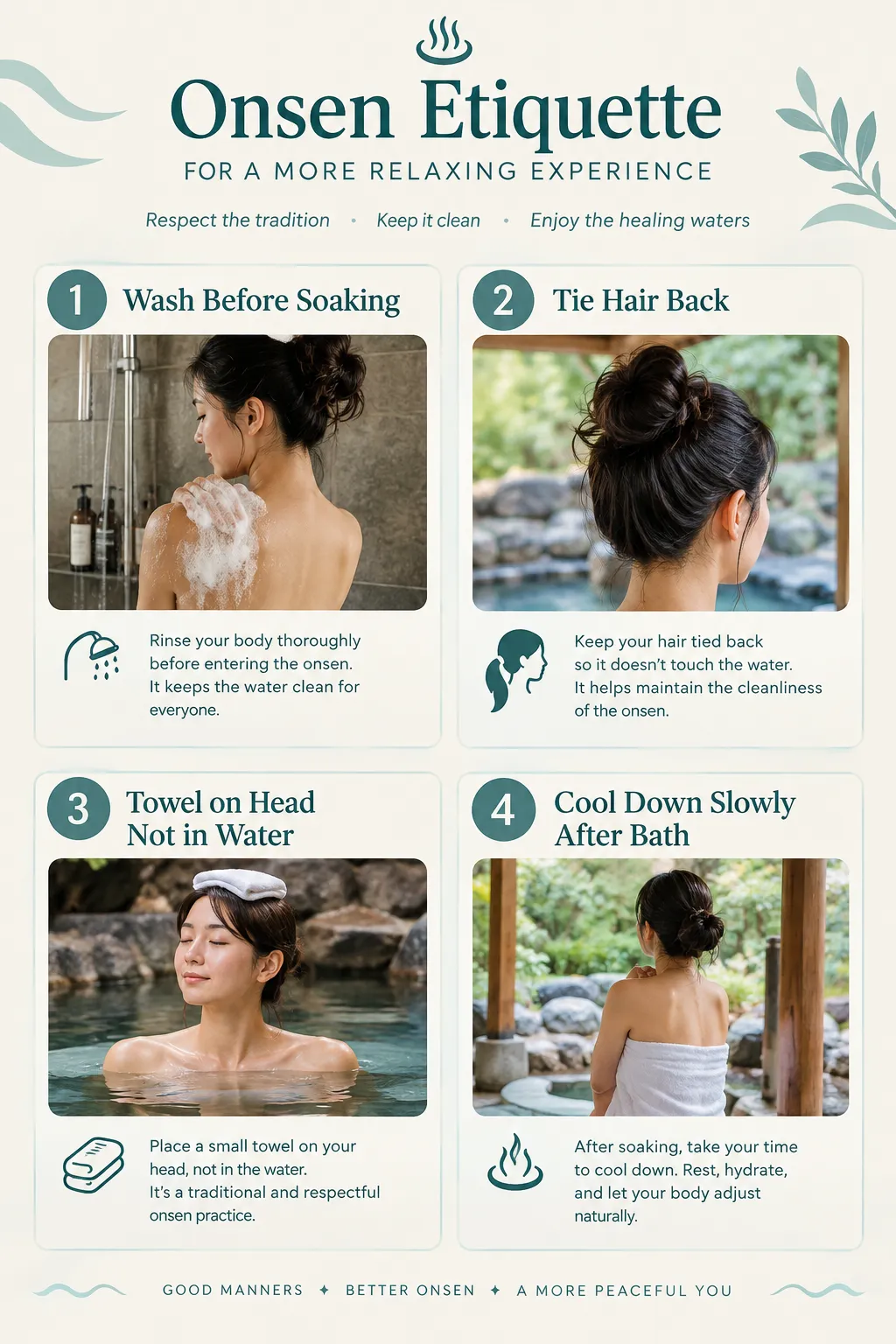
- Onsen etiquette requires no swimsuit, a small towel kept out of the water, and tied-back hair.
- Nagoya and Osaka stay milder than Tokyo in deep winter, but nights still dip near freezing.
- Hokkaido and the Japan Alps need true ski gear: insulated boots, thermal base layers, waterproof trousers.
- Clean, hole-free socks matter more than people expect since you’ll be in socks constantly.
- Hand warmers and vending machine hot drinks are cheap, local ways to stay warm during winter strolls.
- Indoor heating is strong, so pack clothing you can remove layer by layer on trains and in shops.
Winter Weather in Japan: Temperature Comparison by Region
Japan’s winter weather varies enormously by region, so your packing guide should start with where you’re actually going. Tokyo and Osaka stay relatively mild, while Hokkaido and the Japan Alps see heavy snow and sub-zero cold for months.
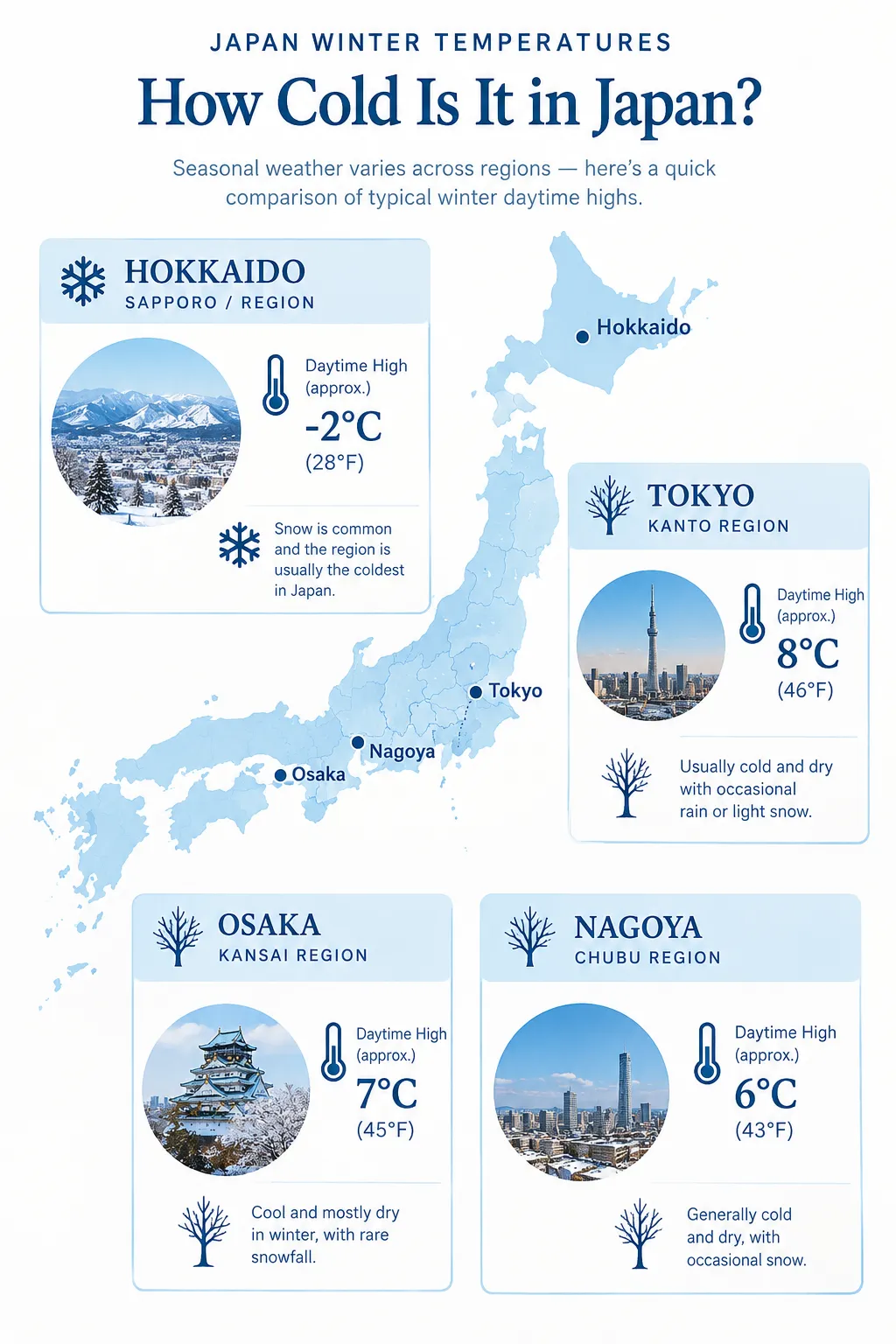
Southern cities like Fukuoka rarely drop below freezing during the day. Central hubs such as Tokyo, Osaka, and Nagoya typically see daytime highs around 4.5 to 15.5°C (40-60°F) in deep winter, according to recent 2026 city packing guides. Nagoya, often used as a travel hub between Tokyo and Osaka, follows a similar pattern: cold mornings, mild afternoons, and the occasional cold snap.
Hokkaido is a different story entirely. Expect consistent snow cover, temperatures well below freezing, and wind chill that makes a thin coat useless.
Decision rule: if your trip stays in Tokyo, Osaka, Kyoto, or Nagoya, pack city-winter clothing. If you’re adding Hokkaido skiing or Japan Alps hot spring trips, pack separately for snow conditions.
What Clothes Should I Pack for Japan Winter
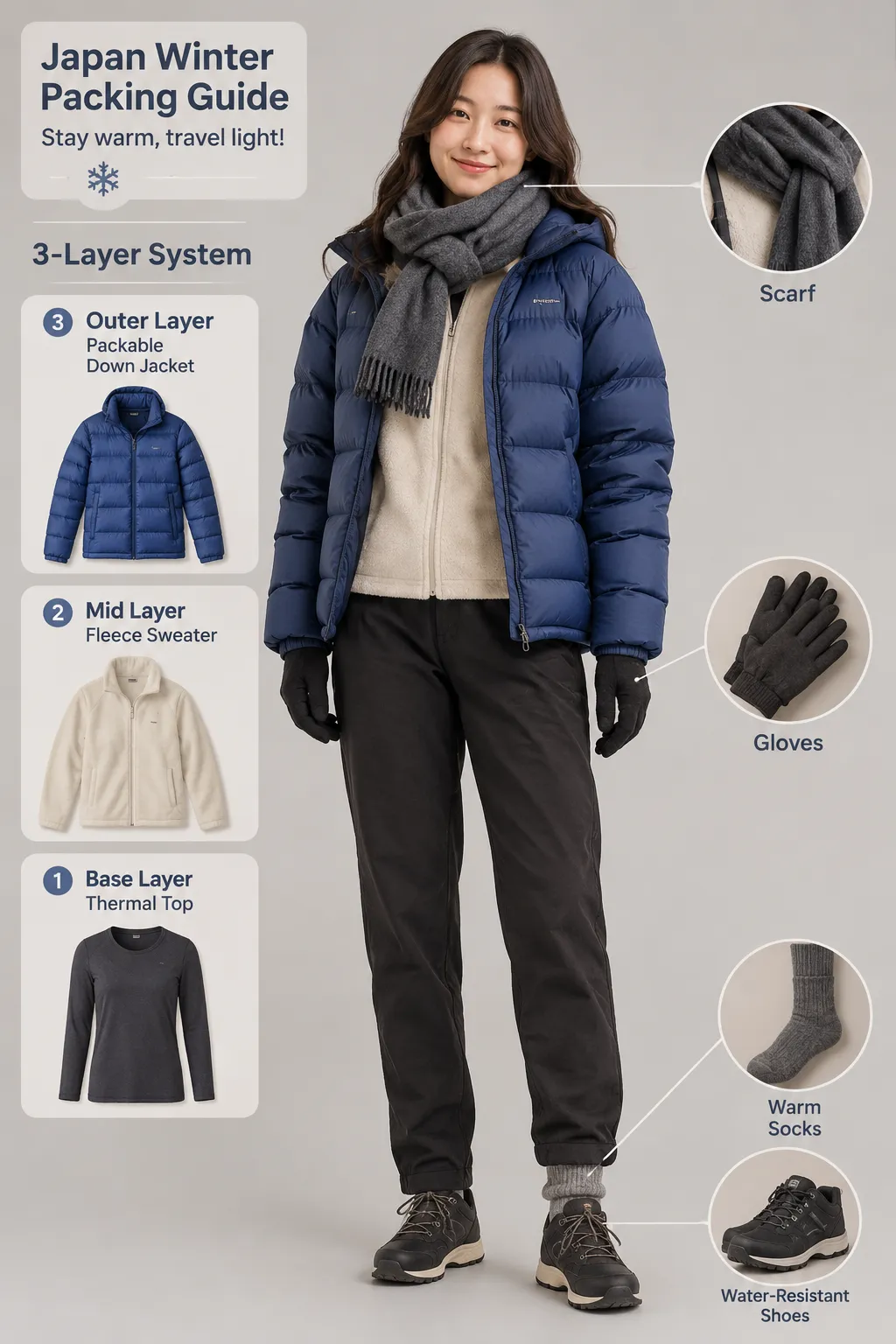
The core Japan winter packing list is a three-layer system: thermal base layer, insulating mid-layer, and a windproof outer coat. This setup works for Tokyo, Osaka, Nagoya, and most of the main island during winter Dec-Feb.
Japan’s official winter guide notes that a proper coat is “a necessity regardless of where you’re traveling,” even in milder southern cities. Recent 2026 packing lists for Tokyo, Kyoto, and Osaka recommend:
- Long-sleeve thermal top (2-3)
- Sweater or light fleece (1-2)
- One warm, packable coat
- Scarf and gloves for mornings and evenings
- Long trousers, ideally with a thermal layer underneath
Common mistake: packing one giant parka instead of layers. Japan’s indoor heating and crowded heated trains make a single bulky coat miserable to manage all day.
Do I Need Thermal Underwear for Japan Winter
Yes, thermal underwear is worth packing for most Japan winter trips, especially if you feel the cold easily or you’re visiting Hokkaido, the Japan Alps, or doing early-morning temple visits. For milder cities like Nagoya or Osaka, one or two sets usually cover the trip.
Heattech-style tops and thermal leggings worn under jeans or trousers are recommended by multiple 2026 winter clothing guides for the coldest days. They’re thin enough to layer under regular clothing without looking bulky, which matters since you’ll remove layers constantly indoors.
Edge case: if you run warm naturally, skip thermal underwear for city-only itineraries and rely on a sweater plus coat instead.
What Shoes Work Best for Temples and Onsen
Shoes that slip on and off easily beat heavy lace-up boots for Japan winter travel, because you’ll remove them constantly at temples, ryokan, and some restaurants. A water-resistant walking shoe without complicated laces is the practical choice for most of Honshu.
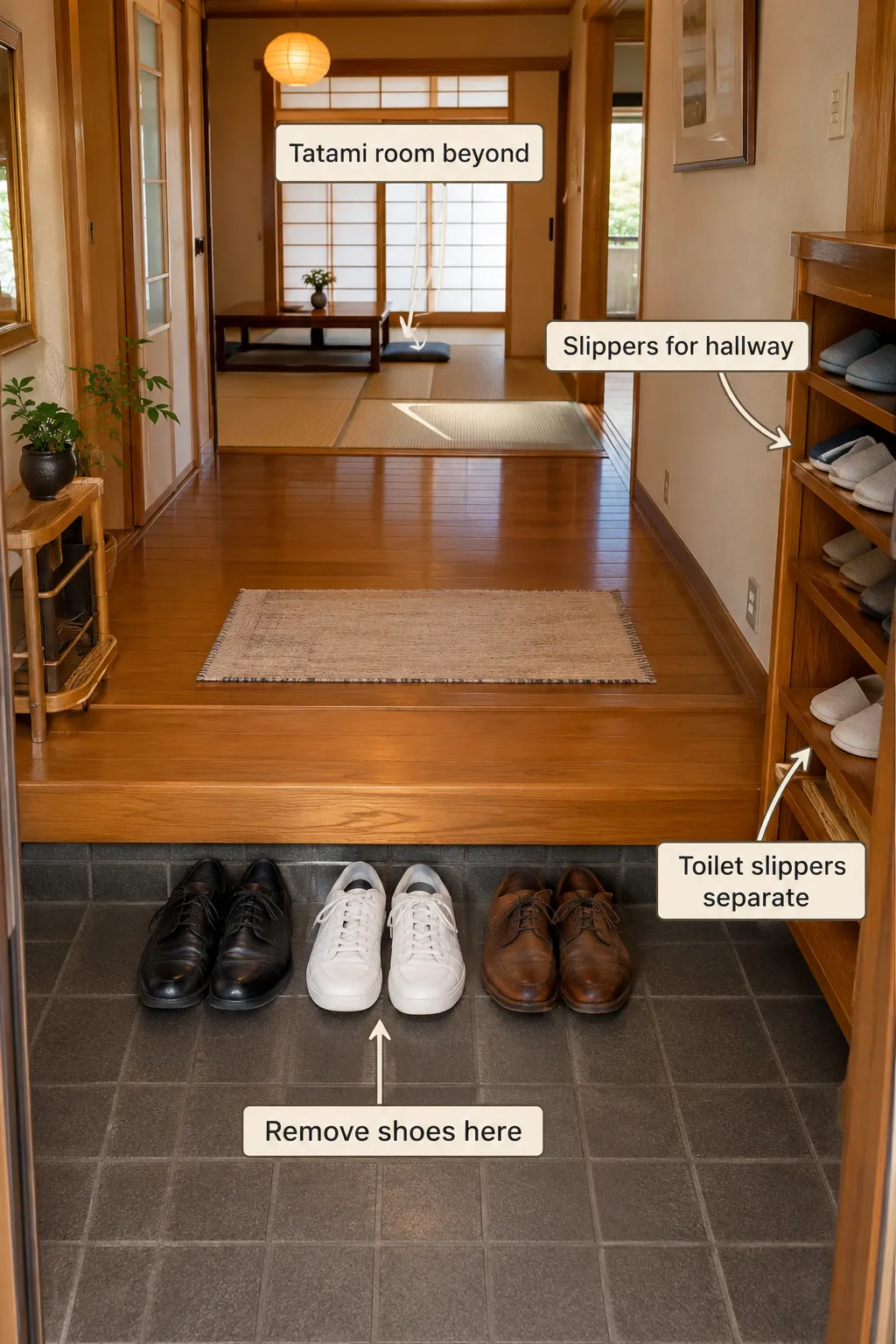
Multiple 2026 packing and etiquette guides highlight footwear as the single biggest thing travelers get wrong. Guides for taking shoes off in Japan stress watching for a genkan, which is an entrance with a step up or a visible change in flooring. That’s your signal to remove shoes.
If you’re doing a heavy-snow trip to Hokkaido, insulated winter boots with good grip on ice take priority, but even then, slip-on ease still matters for temple and ryokan stops.
Choose slip-on sneakers or loafers if you’re doing lots of temples and city walking. Choose insulated waterproof boots if skiing or visiting snow country.
Should I Pack Fewer Shoes if Visiting Lots of Temples
Yes, packing fewer shoe styles and relying on one or two versatile, easy-to-remove pairs simplifies temple-heavy itineraries. Carrying multiple bulky shoes adds weight without adding comfort when you’re removing footwear all day.
One pair of comfortable walking shoes plus a backup pair of warm boots (for ski or onsen trips) covers most travel scenarios. This also matches advice from etiquette guides that recommend shoes easy to slip on at thresholds without disrupting the flow of other visitors.
Can You Wear Regular Socks to Onsen or Do They Need to Be Special
Regular socks are fine for getting to and from the onsen, but you won’t wear socks inside the bath itself since onsen bathing is done barefoot and naked. What matters more is bringing clean, hole-free socks for the ryokan hallways and tatami areas around the bath.
Because you’ll spend a lot of time in socks on cold floors during winter, etiquette guides recommend packing several pairs of well-kept socks, not just enough for one wear. Moisture-wicking socks help if your feet sweat inside heated indoor spaces, though plain cotton socks work for most travelers.
Do You Need Special Slippers for Onsen or Can You Use Regular Ones
You don’t need to bring your own slippers for onsen since ryokan and hot spring facilities provide them. However, you will use the ryokan’s own slippers in hallways, and separate toilet slippers in the bathroom, which travelers often forget to swap back.
Most ryokan stays require minimal extra packing because they supply a yukata robe, towels, slippers, and basic toiletries, according to Lonely Planet’s Japan packing guide. What people actually forget is small: a hair tie, a compact towel for drying before re-entering the changing room, and coins for onsen lockers.
Common mistake: wearing toilet slippers back into the hallway. Watch where they’re placed and swap immediately when leaving.
Clothing and Preparation for Hot Spring Trips
Hot spring trips need light, easy-to-remove clothing plus a small towel and hair tie, not special gear. Onsen etiquette requires entering the bath naked, with no swimsuit, after washing thoroughly at the seated showers.
Updated onsen etiquette guides stress that your small towel never goes into the water. Most guests place it on their head or the bath’s edge instead. Long hair should be tied back so it doesn’t touch the water.
Pack a warm robe-friendly outfit for walking between your room and the bath in colder ryokan, since hallways aren’t always heated the same as guest rooms.
Clothing and Preparation for Ski Trips
Ski trips in Hokkaido or the Japan Alps require true snow gear, not city-winter clothing. This means an insulated winter coat, waterproof trousers, insulated gloves, a warm hat, and waterproof boots with solid grip on ice.
Expert Japan winter travel guides stress thermal base layers and warm wool socks for these regions, since temperatures regularly sit below freezing for weeks. City travelers skip most of this, but anyone adding a hot springs amp ski trips combo to their itinerary should pack separately for the snow leg.
Example: a Tokyo-to-Hokkaido trip means packing city layers for Tokyo days and swapping into full snow gear once you arrive north.
Clothing for Tokyo Winter Strolls
Tokyo winter strolls call for a warm coat, scarf, and gloves during the day, with layers you can shed once you’re inside a heated shop, museum, or train. Tokyo rarely drops into extreme cold, but wind along the waterfront and evening temperature drops can feel sharp.
If your Tokyo days include attractions like Shibuya Sky or Tokyo Skytree, where you’ll be outdoors on observation decks, bring gloves and a scarf even if the street-level weather feels mild. For art experiences like teamLab Borderless or teamLab Planets, where you’ll remove shoes and walk through water exhibits, pack socks you don’t mind getting a little damp.
For broader first-visit planning, our guide to what to see in Japan for first-time visitors covers how to sequence Tokyo days around weather.
How Is Packing for Japan Winter Different From Europe Winter
Japan winter packing differs from Europe winter packing mainly because of indoor heating intensity and the shoes-off culture. European winter trips usually mean keeping your coat on indoors; in Japan, strong indoor heating means you’ll remove layers constantly.
Compare this with packing for places like France in winter or New York at Christmas, where heavy coats stay on for most indoor public spaces too. In Japan, you’ll want breathable layers you can open on heated trains, plus slip-on shoes you don’t need in most European cities.
Winter Essential Checklist
| Category | Item | Why it matters |
|---|---|---|
| Base layer | Thermal top & leggings | Thin warmth under regular clothes |
| Outer layer | Packable warm coat | Easy to remove indoors |
| Footwear | Slip-on walking shoes | Fast at temple and ryokan entrances |
| Footwear (snow) | Insulated boots | Needed for Hokkaido, Japan Alps |
| Socks | Clean, hole-free pairs | Visible during shoes-off moments |
| Onsen kit | Small towel, hair tie, coins | Often forgotten but essential |
| Accessories | Scarf, gloves, hand warmers | Cheap comfort for outdoor stretches |
| Skin care | Lip balm, moisturizer | Japan’s winter air is very dry |
Dealing With Indoor Heating and Dryness in Japan
Indoor heating in Japan is strong, which means you’ll go from cold streets to warm shops and trains constantly, and the dry air can affect your skin and lips. Pack moisturizer and lip balm, and favor layers you can open rather than one sealed coat.
This heating pattern is one reason 2026 winter clothing guides stress breathable layers over single heavy coats. If you’re sensitive to dry air, a small travel humidifier or hydrating sheet mask for hotel nights helps too.
Local Tips: How to Enjoy a Warmer Winter in Japan
Small local habits make a bigger difference to warmth than extra clothing. Convenience stores sell disposable hand warmers for about a dollar, and vending machines across Japan sell hot canned drinks you can hold for warmth before drinking.
- Convenience store hand warmer strategy: grab a pair before a long outdoor day, tuck them into gloves or pockets.
- Vending machine warm drinks: look for red-labeled buttons, these are usually the warm options.
- Temperature management after hot springs: cool down slowly after an onsen soak rather than stepping straight into cold air, since the temperature shock can make you dizzy.
For travelers combining a Nagoya stop with onsen country, our Osaka things to do guide and Japan anime museums guide pair well with a winter itinerary that mixes culture, nagoya local food, and warm indoor stops.
How Cold Does Japan Actually Get in Winter
Japan’s winter temperature spread is wide: southern cities stay mild, central hubs like Tokyo and Nagoya hover near freezing at night, and Hokkaido sees deep sub-zero cold with heavy snow. This spread is why a single generic Japan winter packing list often fails travelers doing multi-region trips.
According to Japan’s official travel guide, winter severity varies widely by location, but a proper coat remains necessary everywhere you travel in Japan during Dec-Feb.
What Do Most People Forget to Pack for a Japan Winter Trip
The most commonly forgotten items are small: a hair tie, a compact towel for onsen, coins for lockers, and enough clean socks for constant shoes-off moments. People over-pack coats and under-pack these small essentials.
Guides on what to wear in Japan and common shoe etiquette mistakes both point to the same pattern: travelers focus on big clothing items and forget the small logistics of Japanese daily life.
Is It True Temples Aren’t Heated During Winter
Yes, many temple interiors in Japan are unheated, especially older wooden halls, so warm socks matter more than you’d expect once you step inside. Outdoor temple grounds are usually fine in regular shoes, but interior halls with tatami or wood floors require shoes off.
Etiquette guides note that shoes should never go onto tatami or raised wooden floors, and the cold floor is a real factor, not a minor detail, during winter visits.
Can I Wear Bulky Winter Coats If I’ll Be Taking Them Off Indoors Constantly
You can, but a bulky coat becomes awkward once you’re removing it at every temple, restaurant, and heated train. A slimmer, packable coat that compresses easily is more practical for a trip involving constant shoes-off and coat-off moments.
If you also plan hot spring trips or ski days, bring one packable city coat plus a separate insulated layer for snow regions rather than one oversized coat meant to do everything.
What Winter Accessories Are Actually Worth Bringing
Scarves, thin gloves, and a compact umbrella earn their space in a Japan winter packing list, while bulky accessories rarely get used. Hand warmers are cheap and available at any convenience store, so you don’t need to pack many from home.
A small day bag for carrying your coat once indoors, plus a spare tote for shoes when visiting multiple shoes-off locations in one day, also helps.
Spring in Japan: What to Wear, Pack, and Buy
Spring travel in Japan (April-May) needs lighter layers than winter: a light jacket, long-sleeve tops, and a scarf for cool mornings, since temperatures swing more than most travelers expect. Many of the same shoes-off and onsen rules apply, so slip-on shoes remain useful beyond winter trips too.
If your trip bridges winter into spring, or you’re deciding between the two seasons, our guide to the ultimate two weeks in Europe spring packing offers a layering logic that transfers well to Japan’s shoulder seasons.
Frequently Asked Questions (FAQ)
Q: What is the winter weather like in Japan?
Winter weather in Japan ranges from mild in southern cities to genuinely cold in Tokyo, Nagoya, and Osaka at night, with Hokkaido and the Japan Alps seeing heavy snow and sub-zero days throughout Dec-Feb.
Q: What are the must-have items for a winter trip to Japan?
Must-have items include a packable warm coat, thermal base layers, slip-on shoes, clean socks, scarf and gloves, plus small onsen essentials like a hair tie and compact towel.
Q: How is the indoor heating in Japan?
Indoor heating in Japan is strong and consistent, which means you’ll remove layers often moving between cold streets and heated trains, shops, and restaurants.
Conclusion: A Warm Start to Your Winter Japan Trip
A good Japan winter packing list isn’t about packing more, it’s about packing the right small things: layers you can remove, shoes you can slip off fast, and a few onsen basics most travel guides skip. Match your gear to your actual route, keeping city layers for Tokyo, Nagoya, and Osaka, and true snow gear only if Hokkaido or the Japan Alps are on your trip.
Before you go, double-check your socks are hole-free, your coat compresses well, and you’ve packed a hair tie and small towel for onsen stops. These small details solve the problems most packing guides forget, and they’ll make your winter Japan trip noticeably smoother from the first temple visit to your last soak in a hot spring.