Last updated: August 25, 2026
Quick Answer: Osaka is Japan’s most underrated major city for travelers. The best things to do in Osaka Japan range from exploring a 430-year-old castle and neon-lit canal districts to eating your way through street food markets and catching world-class theme park events. Most visitors need 3 to 4 days to cover the highlights without feeling rushed.
Key Takeaways
- 🏯 Osaka Castle, Dotonbori, and Universal Studios Japan are the top three must-see attractions
- 🍢 Budget around 40% of your daily spend on food – Osaka’s street food scene is the whole point
- 🎟️ The Osaka Amazing Pass (about ¥3,500/day) covers unlimited transport plus 40+ attractions and saves serious money
- 🗓️ Best time to visit: late March to mid-April (cherry blossoms) or October to November (autumn colors, cooler weather)
- 🚇 Osaka’s subway and JR loop line cover almost every major attraction – no taxis needed
- 💴 Budget travelers can manage on roughly ¥8,000 to ¥12,000 per day including food and entry fees
- 🌸 Avoid Golden Week (late April to May) and Obon (mid-August) – prices spike and crowds are intense
- 🎡 USJ’s 25th anniversary events in 2026 make it especially worth visiting this year
- 🏙️ Osaka beats Tokyo for food, nightlife value, and a more relaxed local vibe
- 🗺️ Day trips to Kyoto, Nara, and Kobe are all under 30 minutes by train
Is Osaka Worth Visiting or Should You Skip It?
Osaka is absolutely worth visiting – and for many travelers, it ends up being the highlight of their Japan trip. It’s louder, cheaper, and more food-obsessed than Tokyo, with a local culture that genuinely welcomes tourists.
International visitor spending in Osaka-Kansai hit a record ¥580 billion in Q1 2026 – about 30% higher than the same period in 2019. That number tells you something: people are coming back, and they’re spending more, which usually means they’re finding it worthwhile.
The city works for solo travelers, couples, families, and food lovers equally well. If you’re already visiting Japan, skipping Osaka would be a real mistake.
What Are the Must-See Attractions in Osaka?
The five core attractions most visitors should prioritize are Osaka Castle, Dotonbori, Universal Studios Japan, Shinsekai with Tsutenkaku Tower, and Kuromon Ichiba Market.
Here’s a quick breakdown:
| Attraction | Entry Cost | Best For |
|---|---|---|
| Osaka Castle | ~¥1,200 | History, views, cherry blossoms |
| Dotonbori | Free | Nightlife, food, neon lights |
| Universal Studios Japan | ¥8,900-¥14,200 | Families, anime fans |
| Tsutenkaku Tower | ~¥900 | Retro Osaka, city views |
| Kuromon Market | Free entry | Street food, local produce |
2026 travel guides consistently rank these five as the foundation of any Osaka itinerary, with the Osaka Amazing Pass making it cost-effective to combine several in one day.
Common mistake: Trying to do all five in a single day. Spread them across at least two days so you actually enjoy each one.
Osaka Castle – What to Know Before You Go
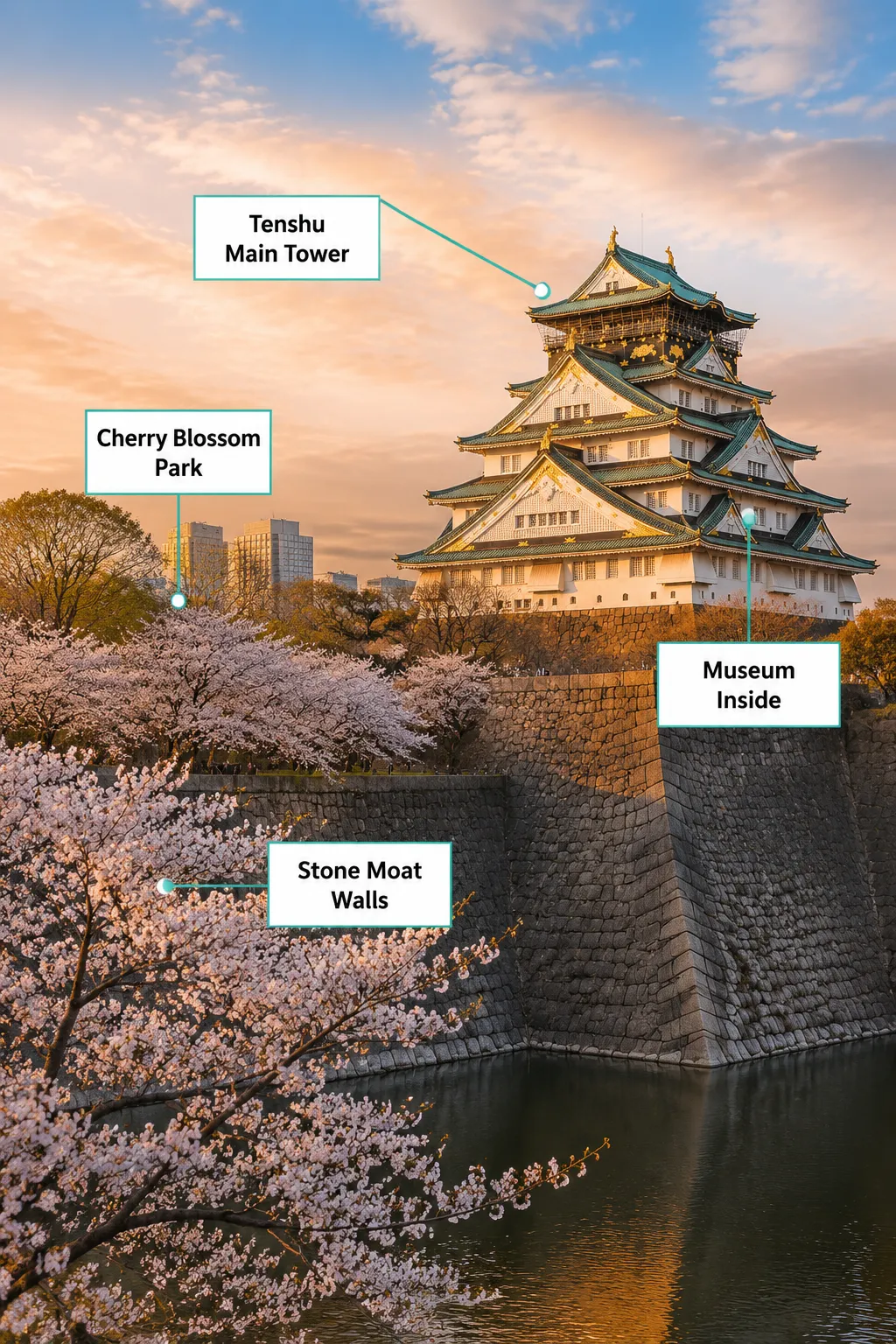
Osaka Castle is a working museum inside a reconstructed castle tower, set in one of the city’s best public parks. Entry costs around ¥1,200 and the main tower has eight floors of exhibits covering the castle’s roughly 430-year history.
A few things worth knowing before you arrive:
- The castle tower itself is a 1931 reconstruction – the original burned down. The interior is modern, not ancient.
- The surrounding park is free and one of the best cherry blossom spots in the city (late March to early April).
- Go early morning to avoid tour groups – by 10am it gets crowded.
- The Nishinomaru Garden inside the park charges a small separate fee but offers the best photo angles of the tower.
The castle is about a 10-minute walk from Tanimachi 4-chome or Osakajokoen stations. Budget 2 to 3 hours total.
Dotonbori Osaka – What to Expect and How to Navigate It
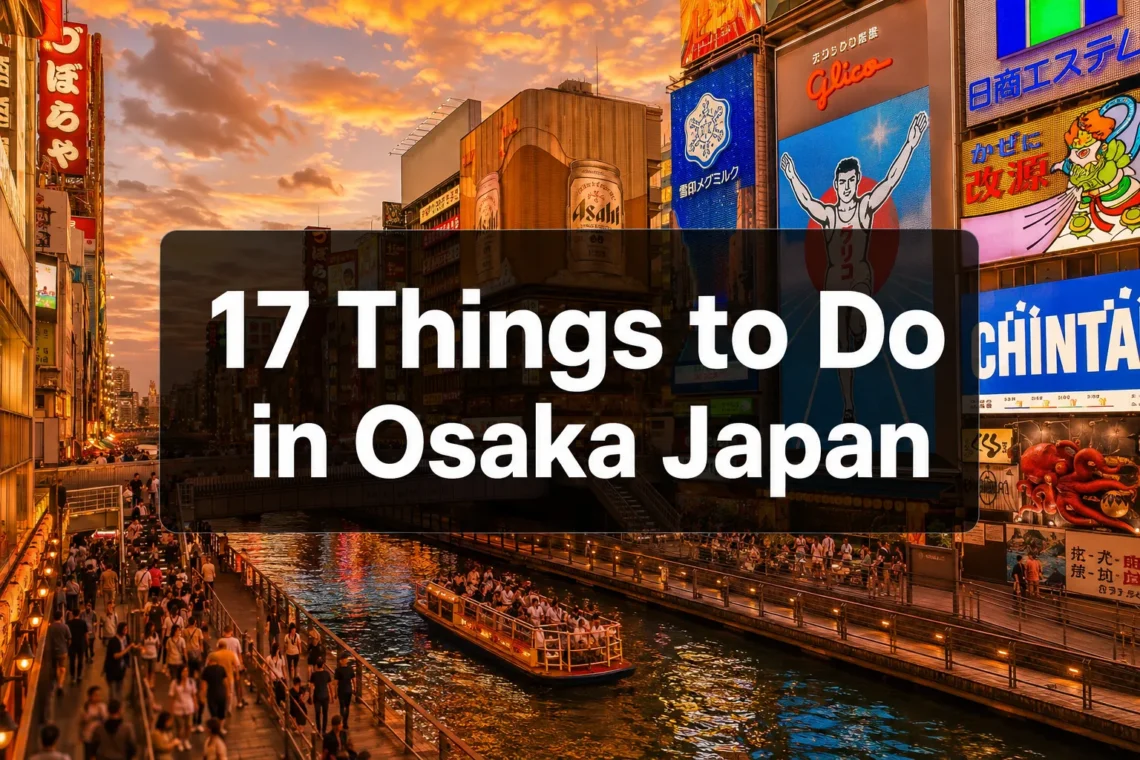
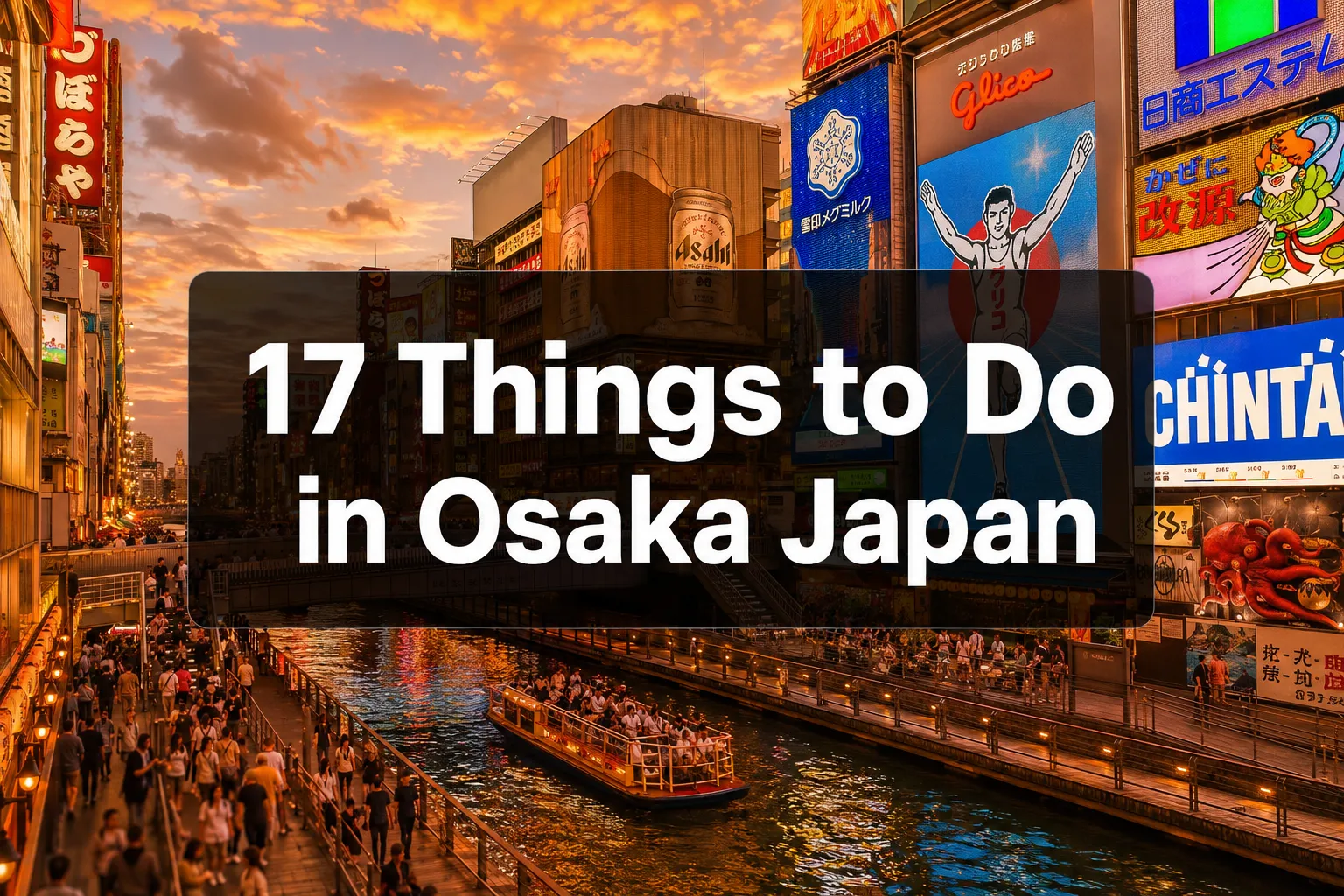
Dotonbori is Osaka’s most famous entertainment district – a dense stretch of neon signs, restaurants, and street food stalls running along a canal in the Namba area. It’s free to walk through and best experienced after dark when the lights are fully on.
The Glico running man sign is the iconic photo spot, but the real draw is the food. Expect to eat takoyaki (octopus balls), ramen, and kushikatsu within a few blocks of each other.
How to navigate it without getting overwhelmed:
- Enter from Ebisubashi Bridge for the classic canal view and Glico sign photo
- Walk east along Dotonbori-dori for restaurant options
- Turn into the Hozenji Yokocho alley for a quieter, more traditional atmosphere
- Head south into Namba for covered shopping arcades (Shinsaibashi, Amerika-Mura)
Dotonbori is walkable in 30 minutes, but most people spend 2 to 3 hours eating and exploring. It connects easily to Namba Station on multiple lines.
Best Neighborhoods to Explore in Osaka
Osaka’s neighborhoods each have a distinct personality. Knowing which area fits your interests saves a lot of time.
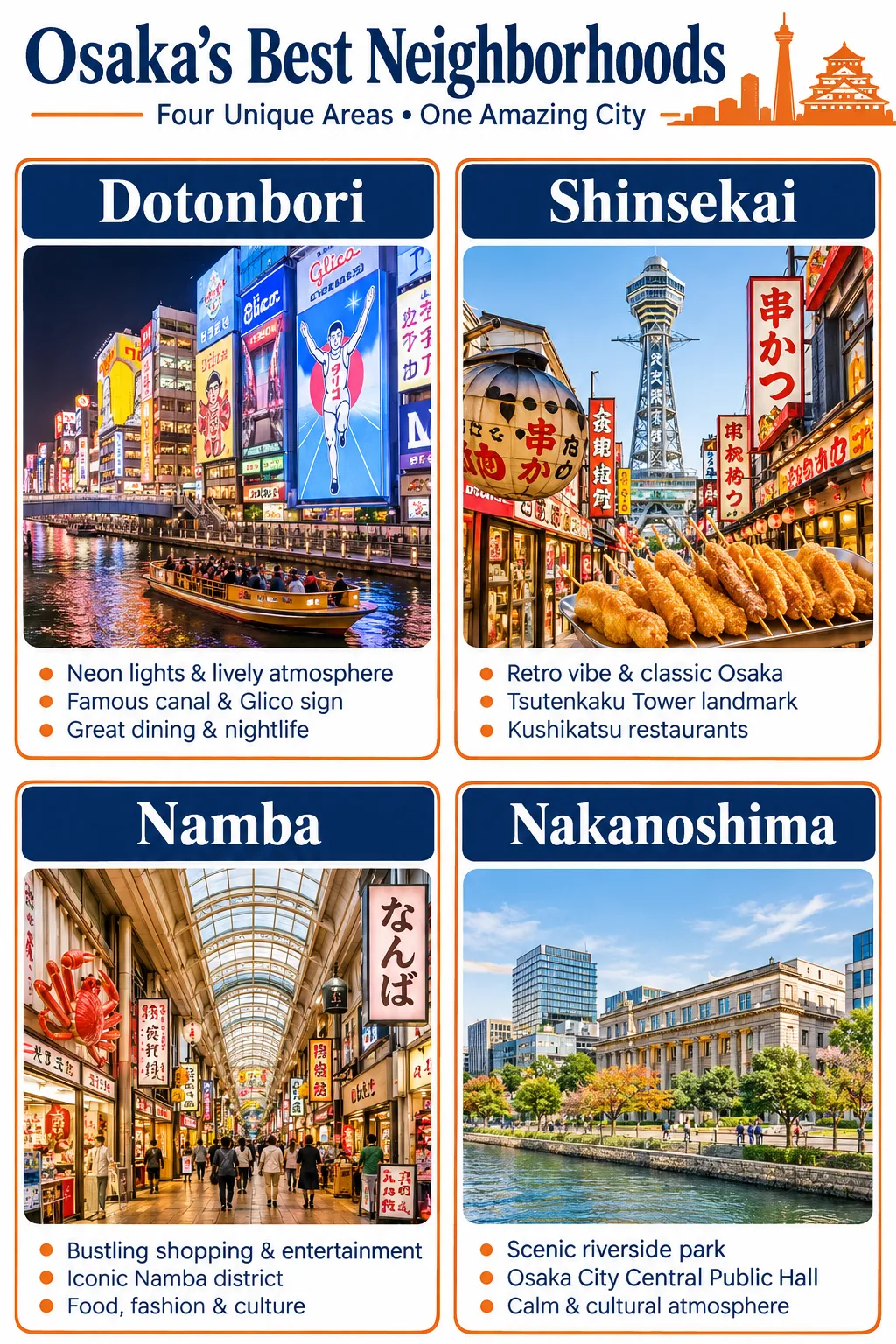
Dotonbori / Namba – The tourist and nightlife hub. Best for first-timers, street food, and evening energy.
Shinsekai – A retro working-class district built in the early 1900s. Cheap kushikatsu restaurants, the Tsutenkaku Tower, and a gritty-but-charming vibe. Very different from the polished tourist areas.
Nakanoshima – A riverside island between two canals with museums, parks, and upscale restaurants. Good for a quieter afternoon.
Umeda / Kita – Osaka’s business and shopping hub in the north. Great for department stores, the Umeda Sky Building, and the Hep Five Ferris wheel.
Tennoji – Home to Tennoji Zoo, Abeno Harukas (Japan’s tallest building), and the Tennoji Park area. Less touristy and genuinely local.
Choose Shinsekai if you want to see a side of Osaka that feels nothing like a tourist brochure. It’s one of the most distinctive neighborhoods in Japan.
If you’re planning a first trip to Japan more broadly, check out this guide on what to see in Japan for first time visitors for a helpful overview of the whole country.
How Many Days Should I Spend in Osaka?
Three to four days is the sweet spot for most travelers. Two days is possible but rushed; five or more days works well if you add day trips.
Here’s a rough framework:
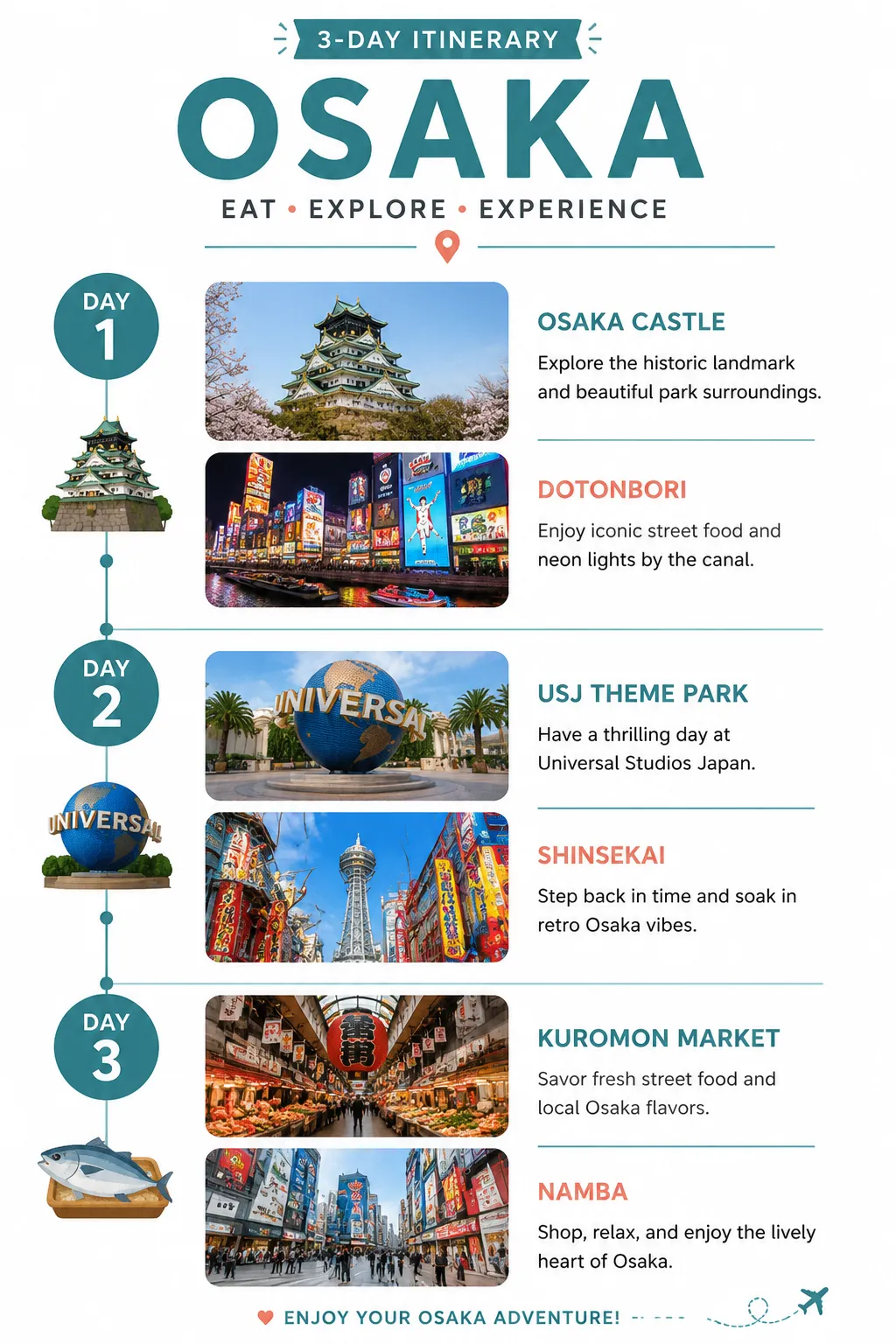
- 2 days – Osaka Castle, Dotonbori, Shinsekai, Kuromon Market, Namba
- 3 days – Add USJ or Umeda, plus a half-day in Tennoji
- 4 days – Add a day trip to Kyoto or Nara, plus slower exploration of neighborhoods
The Osaka Tourism Bureau’s 2026 visitor target of over 18 million people means popular spots will be busy. Building buffer time into your schedule is smart, especially at Osaka Castle and USJ.
If you’re visiting Japan for the first time, three nights in Osaka paired with two nights in Kyoto is one of the most efficient combinations possible.
Free Things to Do in Osaka Japan
Several of the best things to do in Osaka Japan cost nothing at all. Free doesn’t mean low-quality here.
Top free experiences:
- Dotonbori canal walk – Best at night, completely free
- Osaka Castle Park grounds – The outer park and moat area are free (castle tower charges entry)
- Kuromon Ichiba Market – Free to enter; you pay only for what you eat
- Shinsekai neighborhood walk – Wander the retro streets for free
- Nakanoshima Park – Riverside green space with rose gardens, free entry
- Shinsaibashi shopping arcade – Covered pedestrian shopping street, free to browse
- Expo’70 Commemorative Park – Worth visiting especially during the Expo Summer Festival 2026 running July 24 to September 23
The COOL OSAKA campaign launched by the Osaka Tourism Bureau in July 2026 also highlights indoor and evening activities designed to help visitors enjoy the city during hot summer months without spending a lot.
Osaka Food Scene – What Are the Must-Try Dishes?
Osaka is called “Japan’s kitchen” for good reason. The food here is richer, cheaper, and more abundant than almost anywhere else in the country.
Must-try dishes in Osaka:
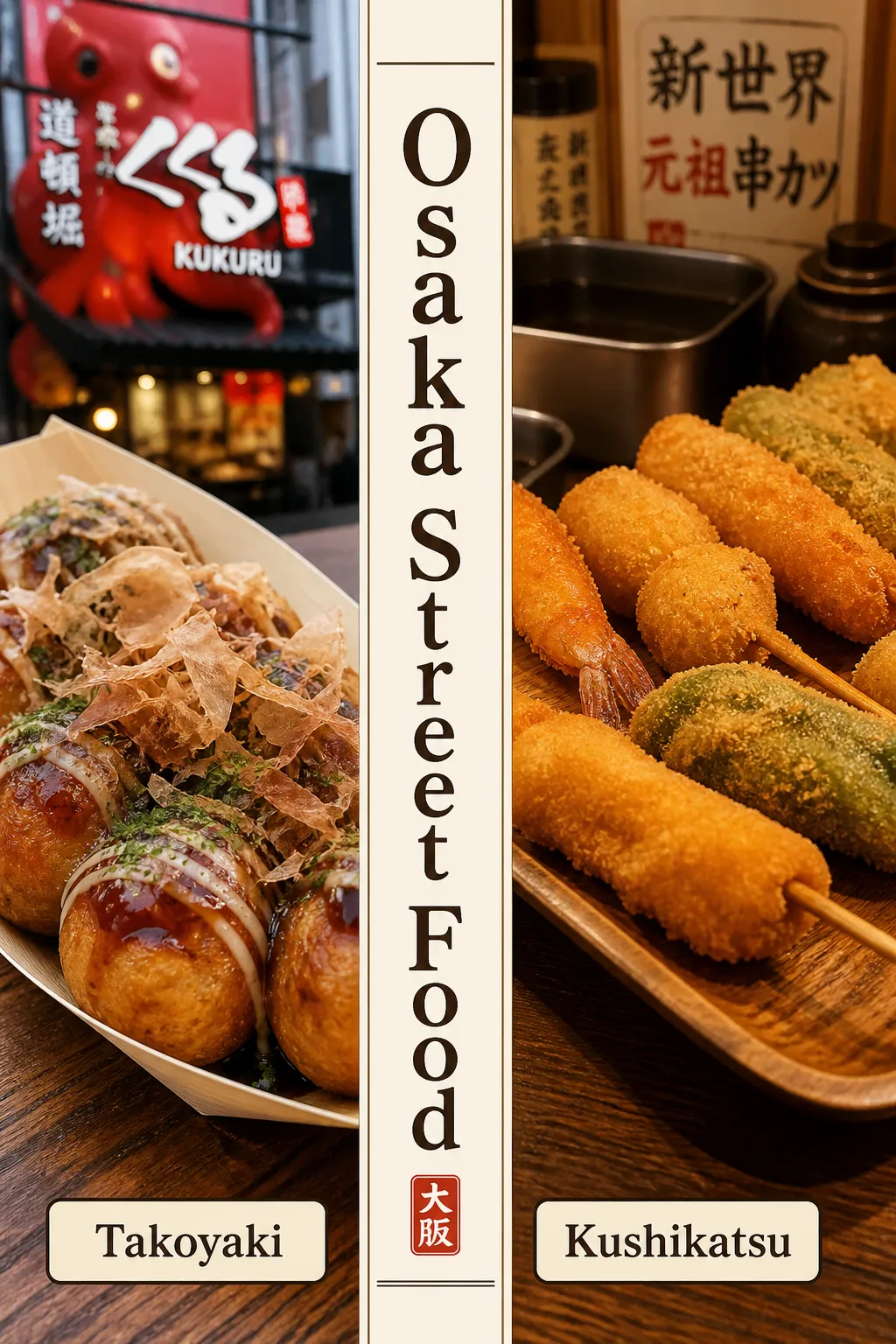
- 🐙 Takoyaki – Crispy octopus balls, best at Wanaka or Aizuya in Dotonbori
- 🍢 Kushikatsu – Deep-fried skewers, a Shinsekai specialty (never double-dip the sauce)
- 🥞 Okonomiyaki – Savory pancake with cabbage, meat, and toppings
- 🍜 Osaka-style ramen – Lighter broth than Tokyo, often with a pork base
- 🦐 Kani (crab) – Upscale option, especially around Dotonbori’s famous crab signs
Travel guides for 2026 recommend allocating around 40% of your daily budget to food experiences. That’s not an exaggeration – the food is genuinely one of the main reasons to come here.
Kuromon Ichiba Market is the best single destination for food exploration. It’s a 600-meter covered market with fresh seafood, grilled skewers, and fruit stalls. Go mid-morning before tour groups arrive.
Universal Studios Japan in 2026 – Is It Worth It?
USJ is worth it in 2026 specifically because of the park’s 25th anniversary celebrations. Limited-time events started March 4, 2026, including Universal Cool Japan 2026 with Detective Conan, Jujutsu Kaisen, and Frieren collaborations. For anime fans, this is a rare opportunity.
Entry tickets range from ¥8,900 to ¥14,200 depending on the date and tier. Super Nintendo World is the headline area – plan to arrive at park opening and head there first.
Tips for USJ:
- Book tickets online in advance – same-day tickets often sell out on weekends
- The Express Pass (sold separately) is expensive but worth it for Super Nintendo World
- Arrive 30 minutes before opening for the best shot at popular rides
- Weekday visits are significantly less crowded than weekends
USJ is a full-day commitment. Don’t try to combine it with other major attractions on the same day.
Osaka vs Tokyo – Which City Is Better to Visit?
Osaka and Tokyo serve different travel moods. Neither is objectively better, but they’re genuinely different experiences.
Choose Osaka if you want:
- Cheaper food and drinks
- A more relaxed, talkative local culture
- Better street food per square kilometer
- A smaller, more walkable city center
Choose Tokyo if you want:
- World-class museums and galleries
- More international dining options
- Cutting-edge fashion and tech districts
- A larger, more cosmopolitan experience
Most first-time Japan visitors do both. Osaka works well as a 3 to 4 day base with day trips to Kyoto and Nara, while Tokyo deserves 4 to 5 days on its own.
The honest take: Osaka tends to win on food, nightlife value, and personality. Tokyo wins on scale and variety. If you only have one week in Japan, do 3 nights in Tokyo and 4 nights in the Kansai region (Osaka base, day trips to Kyoto and Nara).
Day Trips From Osaka – Where to Go
Osaka’s location in the Kansai region makes it one of the best bases for day trips in Japan. Most major destinations are under 30 minutes by train.
Best day trips from Osaka:
- Kyoto – 15 minutes by Shinkansen, 75 minutes by regular train. Temples, geisha districts, bamboo groves.
- Nara – 45 minutes by express train. Free-roaming deer, Todai-ji temple with the world’s largest bronze Buddha.
- Kobe – 30 minutes by train. Harborfront, Chinatown, and some of Japan’s best beef.
- Hiroshima + Miyajima – 90 minutes by Shinkansen. Peace Memorial Museum and the floating torii gate.
- Himeji – 60 minutes by Shinkansen. Japan’s most impressive original castle.
The JR Pass or an Icoca card makes all of these easy to access. Kyoto and Nara work well as a combined day trip if you start early.
Best Time of Year to Visit Osaka
Late March to mid-April and October to November are the two best windows. Both offer comfortable temperatures, manageable crowds (relative to peak times), and strong seasonal visuals.
Seasonal breakdown:
- Late March to mid-April – Cherry blossoms at Osaka Castle Park and Expo’70 Park. Busy but worth it.
- May to June – Warm, some rain. Less crowded after Golden Week ends.
- July to August – Hot and humid. The COOL OSAKA campaign helps visitors plan around the heat. Tenjin Matsuri (July 24-25) is one of Japan’s top three festivals.
- October to November – Best overall weather. Autumn colors, fewer crowds, comfortable for walking.
- December to February – Cold but quiet. Winter illuminations along Midosuji and Nakanoshima are genuinely beautiful.
Avoid: Golden Week (late April to early May) and Obon (mid-August). Prices spike, trains are packed, and major attractions have long waits.
How to Get Around Osaka – Public Transportation
Osaka’s subway system is efficient, affordable, and covers every major attraction. You don’t need taxis or rental cars.
Key lines to know:
- Midosuji Line (red) – Runs north-south through Umeda, Shinsaibashi, Namba, and Tennoji. The most useful line for tourists.
- JR Osaka Loop Line – Circles the city, connecting Osaka Station, Tennoji, and Osaka-jo Park.
- Osaka Metro – Eight lines covering the full city grid.
Payment options:
- Icoca card – Rechargeable IC card, works on all trains and buses. Buy at any major station.
- Osaka Amazing Pass – A one-day pass costs about ¥3,500 and a two-day pass ¥5,000, covering unlimited transport and free entry to 40+ attractions. Best value if you’re hitting multiple paid attractions.
Most attractions are within a 5 to 15 minute walk from a subway station. Google Maps works perfectly for navigation in Osaka.
Osaka Budget – How Much Money Do I Need Per Day?
A realistic daily budget in Osaka depends on your travel style. Here’s a practical breakdown:
Budget traveler (¥8,000-¥12,000/day):
- Hostel or budget hotel
- Convenience store breakfasts, ramen and street food for meals
- 1 to 2 paid attractions
Mid-range traveler (¥15,000-¥25,000/day):
- 3-star hotel in Namba or Umeda
- Mix of restaurant meals and street food
- 2 to 3 attractions including the Osaka Amazing Pass
Splurge traveler (¥30,000+/day):
- 4 to 5-star hotel
- Restaurant dinners, USJ Express Pass
- Guided tours or cooking classes
Note: Japan’s international departure tax increased from ¥1,000 to ¥3,000 per person on July 1, 2026, built into outbound ticket prices. Factor this into your overall trip budget.
Food is genuinely cheap in Osaka compared to other major Asian cities. A filling bowl of ramen costs ¥800 to ¥1,200. Takoyaki runs ¥500 to ¥700 for a full portion.
Osaka Travel Tips – What Do Tourists Get Wrong?
Most first-time visitors to Osaka make the same handful of mistakes. Here’s what to avoid:
Common mistakes:
- Underestimating USJ – It needs a full day. Don’t book it as a half-day activity.
- Skipping Shinsekai – It looks rough on the surface but it’s one of the most authentic neighborhoods in the city.
- Only eating in Dotonbori – The tourist-facing restaurants there are often overpriced. Walk one block back for better value.
- Ignoring the Osaka Amazing Pass – If you’re doing more than two paid attractions, it almost always saves money.
- Visiting Osaka Castle at midday – Go early morning or late afternoon for better light and smaller crowds.
- Not carrying cash – Many smaller restaurants and market stalls are cash-only.
- Booking Golden Week travel last minute – Hotels and trains sell out months in advance.
One more thing: Osaka locals are famously direct and friendly. If you’re lost, ask someone – you’ll almost always get help, often with hand gestures and a smile.
For a broader look at planning a Japan trip, the guide on what to see in Japan for first time visitors covers the full country context well.
If you enjoy city travel guides like this one, you might also find these helpful: first time in Bangkok starter guide, top things to do in Seville Spain, and 17 best things to do in Positano Italy.
FAQ
Is Osaka safe for tourists?
Yes. Osaka is one of the safest major cities in the world. Petty crime is rare, and the city is easy to navigate solo, including at night.
Do I need to speak Japanese to visit Osaka?
No. Most subway stations, tourist attractions, and major restaurants have English signage. Google Translate handles menus and signs well.
What is the Osaka Amazing Pass and is it worth buying?
It’s a transit and attraction pass costing about ¥3,500 for one day or ¥5,000 for two days. It covers unlimited subway rides and free entry to 40+ attractions. It’s worth it if you plan to visit more than two paid attractions in a day.
How far is Osaka from Kyoto?
About 15 minutes by Shinkansen (bullet train) or 75 minutes by regular express train. It’s an easy and affordable day trip.
What is Dotonbori known for?
Dotonbori is Osaka’s neon-lit entertainment district along a canal in the Namba area. It’s famous for the Glico running man sign, street food stalls, and dense restaurant options. Best visited at night.
Is Universal Studios Japan worth the price?
Yes, especially in 2026 during the park’s 25th anniversary with special anime events. Plan a full day and book tickets in advance.
What currency does Japan use and can I pay by card?
Japan uses the Japanese Yen (¥). Cards are increasingly accepted, but many smaller restaurants and market stalls are cash-only. Carry at least ¥5,000 to ¥10,000 in cash daily.
What is the best area to stay in Osaka?
Namba is the most convenient for first-timers – central, walkable, and close to Dotonbori and the subway. Umeda (Kita area) is better for business travelers and shoppers.
Can I do a day trip from Osaka to Tokyo?
Technically yes by Shinkansen (about 2.5 hours each way), but it’s expensive and tiring. Better to allocate separate nights in each city.
What is kushikatsu and where should I eat it?
Kushikatsu is deep-fried meat and vegetable skewers, a Shinsekai specialty. The rule is no double-dipping the communal sauce. Head to Shinsekai for the most authentic experience at the lowest prices.
Conclusion
Osaka rewards travelers who show up with a little planning and a big appetite. The things to do in Osaka Japan range from free canal walks and castle parks to anime theme park events and some of the best street food in Asia.
Your next steps:
- Decide your dates – aim for late March to April or October to November
- Book accommodation in Namba or Umeda at least 6 to 8 weeks ahead
- Purchase your Osaka Amazing Pass in advance online to save time
- Reserve USJ tickets early, especially for weekends or holiday periods
- Build a loose 3 to 4 day itinerary with one day trip to Kyoto or Nara
Osaka doesn’t need to be complicated. Pick your neighborhoods, follow your hunger, and let the city do the rest.