I’ve watched too many first-time visitors to Spain stick to the same tired Barcelona-Madrid circuit, only to hear them say later, “I wish I’d known about…” Spain offers far more than its two biggest cities, and the must see places in Spain that travelers skip often become the experiences they regret missing most.
Key Takeaways
- Barcelona earned TripAdvisor’s 2026 “Best of the Best” award, ranking 14th globally and cementing its status as Spain’s top destination for architecture and culture[3][5]
- Sagrada Familia is now the world’s tallest church, making Gaudí’s masterpiece an even more significant architectural landmark to visit[3]
- Granada’s Alhambra Palace offers sunset views from an 82-foot watchtower overlooking the city against Sierra Nevada mountain backdrops[1][4]
- Seville Cathedral holds the title of world’s largest Gothic cathedral and delivers a once-in-a-lifetime experience for its UNESCO-recognized grandeur[4]
- Northern Spain’s hidden gems like Playa de las Catedrales and Jaén’s Renaissance towns remain among Spain’s better-kept secrets that reward adventurous first-timers[1][2]
- The 2026 Fallas de Valencia festival runs March 15-19, offering a UNESCO-recognized cultural spectacle with monumental sculptures and ceremonial burnings[1]
- Segovia’s 2,000-year-old Roman aqueduct remains perfectly intact, standing alongside a 13th-century castle that reportedly inspired Walt Disney[1]
Quick Answer
The must see places in Spain extend far beyond Barcelona and Madrid. First-time visitors consistently regret skipping Granada’s Alhambra Palace, Seville’s Gothic cathedral, the Guggenheim Museum in Bilbao, and coastal gems like Playa de las Catedrales in Galicia. These destinations offer architectural masterpieces, UNESCO World Heritage Sites, and authentic Spanish experiences that define the country’s cultural richness and geographic diversity.
Why Barcelona Tops the Must See Places in Spain for 2026
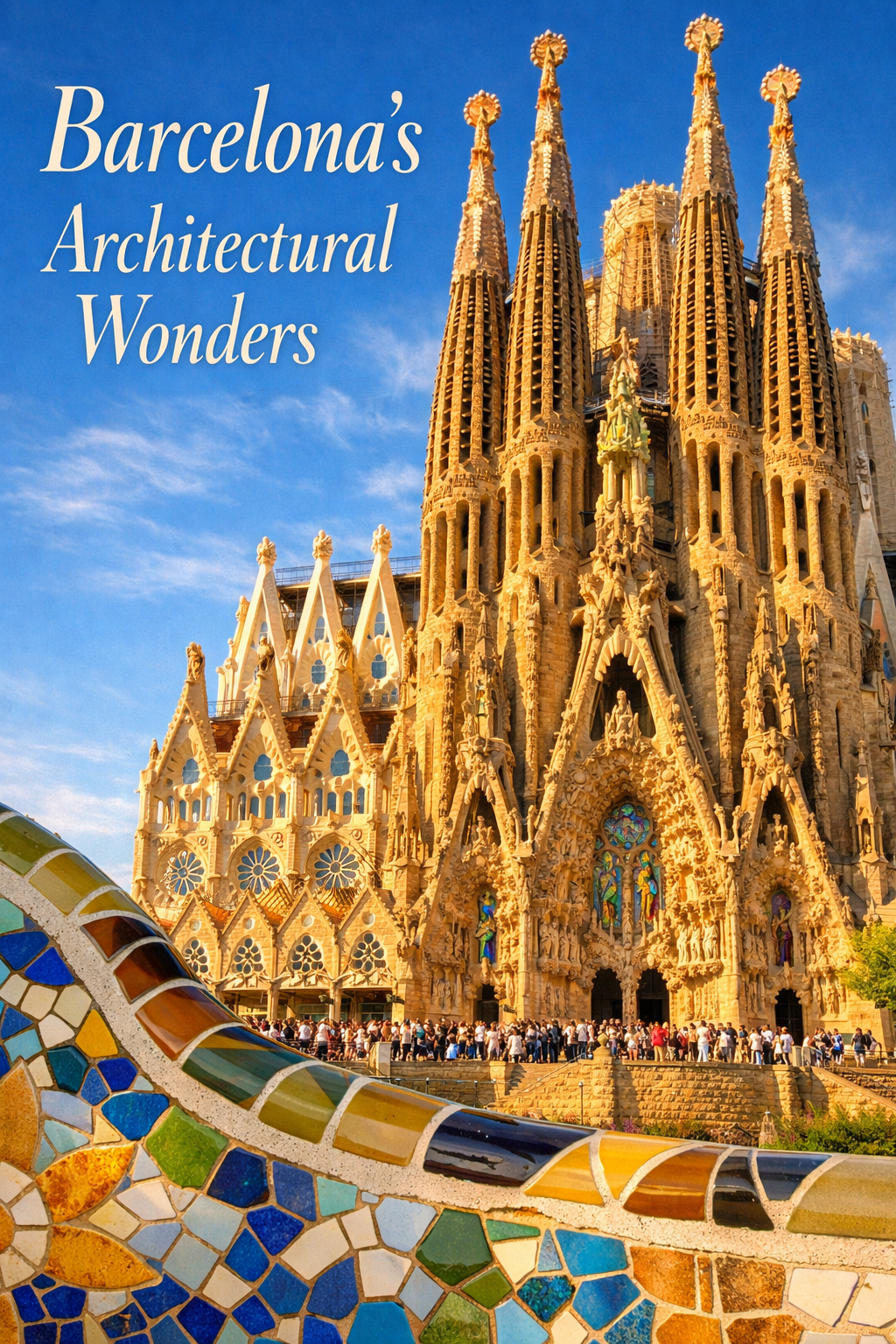
Barcelona just earned TripAdvisor’s 2026 “Best of the Best” destination award, ranking 14th worldwide based on millions of authentic traveler reviews. It’s the only Spanish city to achieve this top-tier global recognition[3][5].
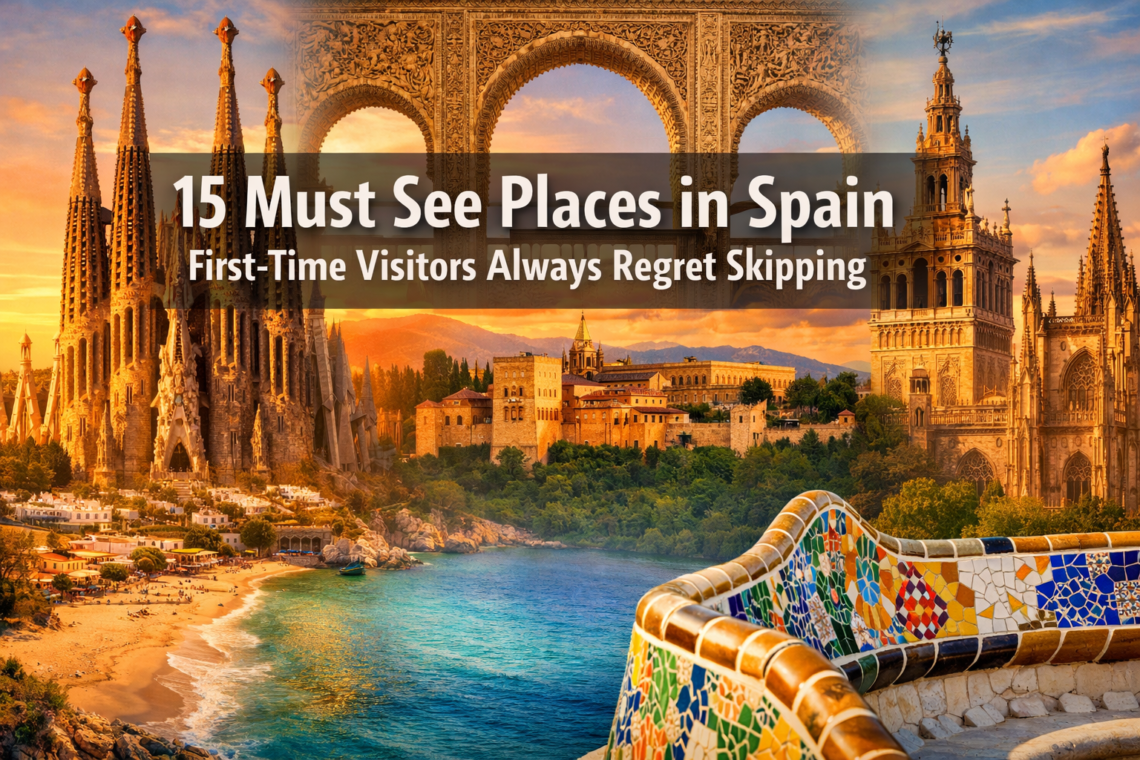
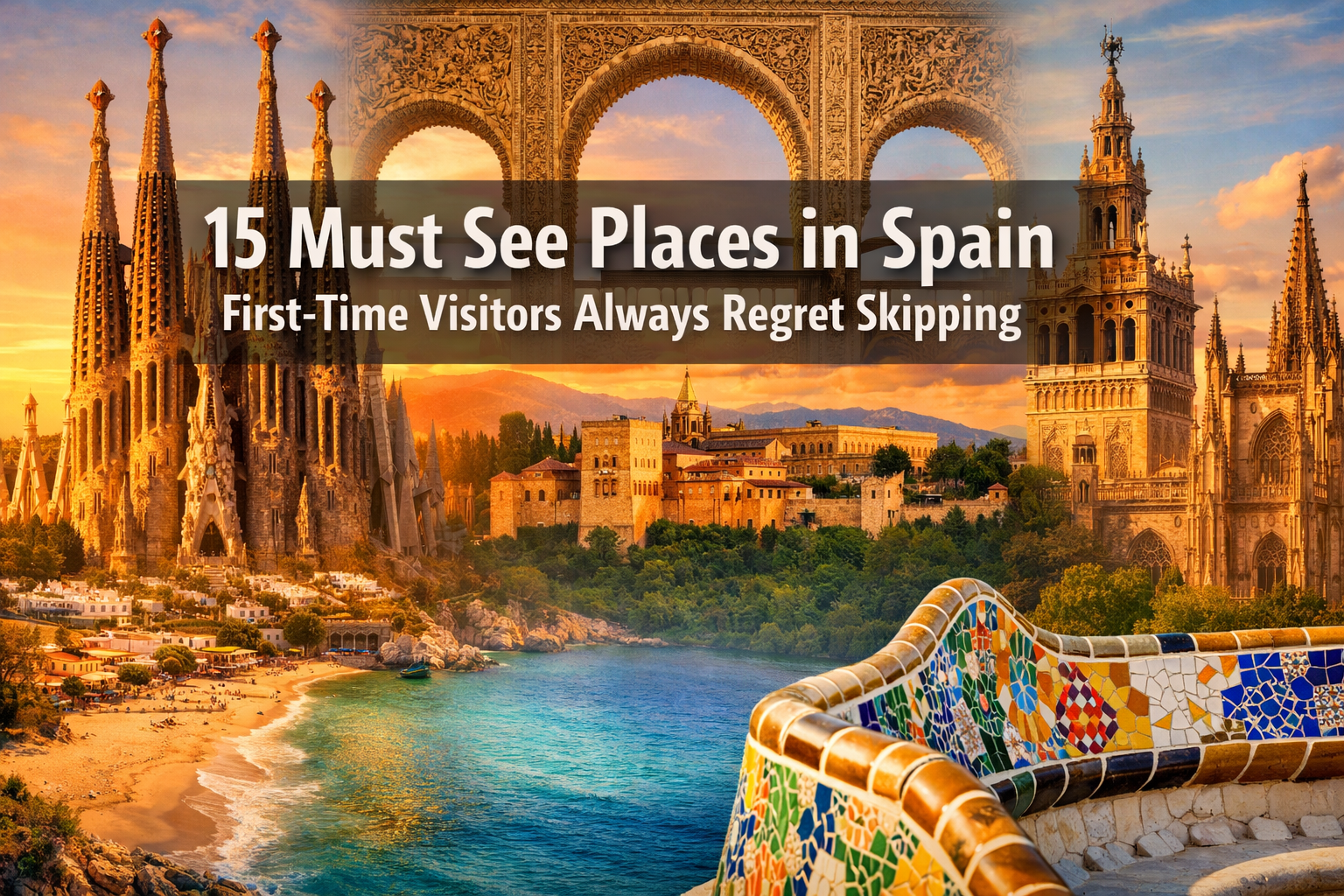
The city’s Gaudí masterpieces represent the cornerstone of Spanish architecture tourism. Sagrada Familia recently became the world’s tallest church, surpassing all previous record-holders and solidifying its status as an unmissable architectural marvel[3]. The basilica showcases Gaudí’s unique blend of Gothic and Art Nouveau styles that define Barcelona’s Modernisme movement.
Essential Barcelona landmarks include:
- Sagrada Familia – World’s tallest church with intricate organic facades
- Park Güell – Whimsical mosaic gardens overlooking the city
- Casa Batlló – Skeletal balconies and colorful tile work on Passeig de Gràcia
- La Pedrera (Casa Milà) – Undulating stone facade with rooftop warrior sculptures
Choose Barcelona if you want world-class architecture combined with Mediterranean beaches, vibrant neighborhoods like the Gothic Quarter, and a food scene that ranges from traditional tapas to Michelin-starred innovation. Skip it only if you’re specifically seeking small-town Spain or avoiding crowds entirely.
Similar to how Rome rewards first-time visitors with layered history, Barcelona delivers centuries of architectural evolution in a walkable city center.
What Makes Granada’s Alhambra Palace Unforgettable
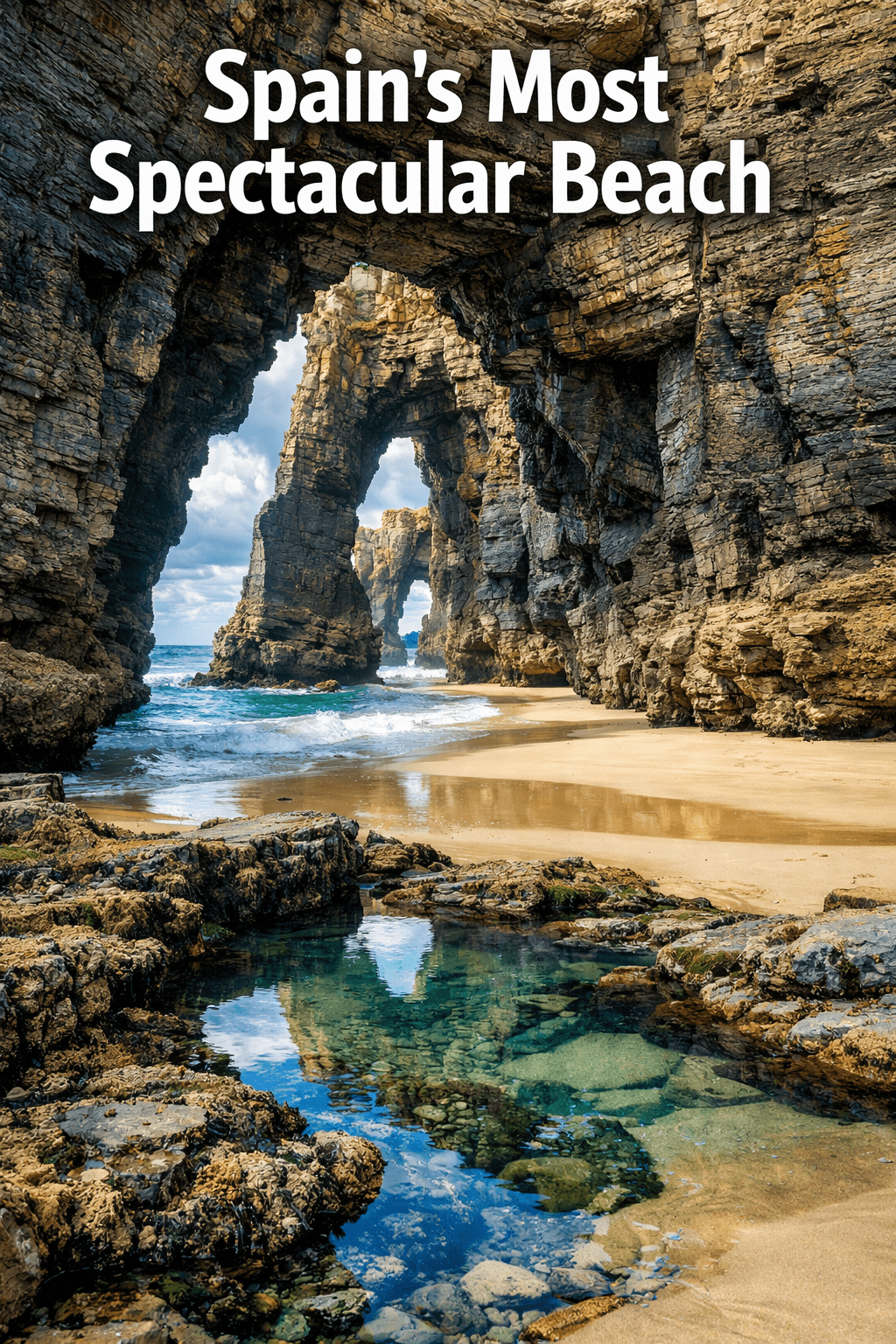
Granada’s Alhambra Palace consistently ranks among Spain’s top attractions for good reason. This Moorish fortress-palace sits dramatically against the Sierra Nevada mountains, offering sunset views from its 82-foot-high watchtower that overlook the entire city[1][4].
The palace complex showcases intricate Islamic geometric tile work, arabesque patterns, and the famous Court of the Lions with its fountain supported by twelve marble lion sculptures. The adjacent Generalife gardens feature fountains, cypress trees, and pathways that provided summer retreat for Nasrid sultans.
Plan your Alhambra visit carefully:
- Book tickets 2-3 months in advance (daily visitor limits apply)
- Allocate 3-4 hours minimum for the palace and gardens
- Visit in late afternoon for golden hour photography and cooler temperatures
- Combine with Granada’s Albaicín neighborhood for white-washed streets and tea houses
Common mistake: Treating the Alhambra as a quick stop. The palace rewards slow exploration of its detailed craftsmanship, and rushing through means missing the intricate stucco work, tile patterns, and garden design that make it a UNESCO World Heritage Site.
The Gothic Grandeur of Seville Cathedral
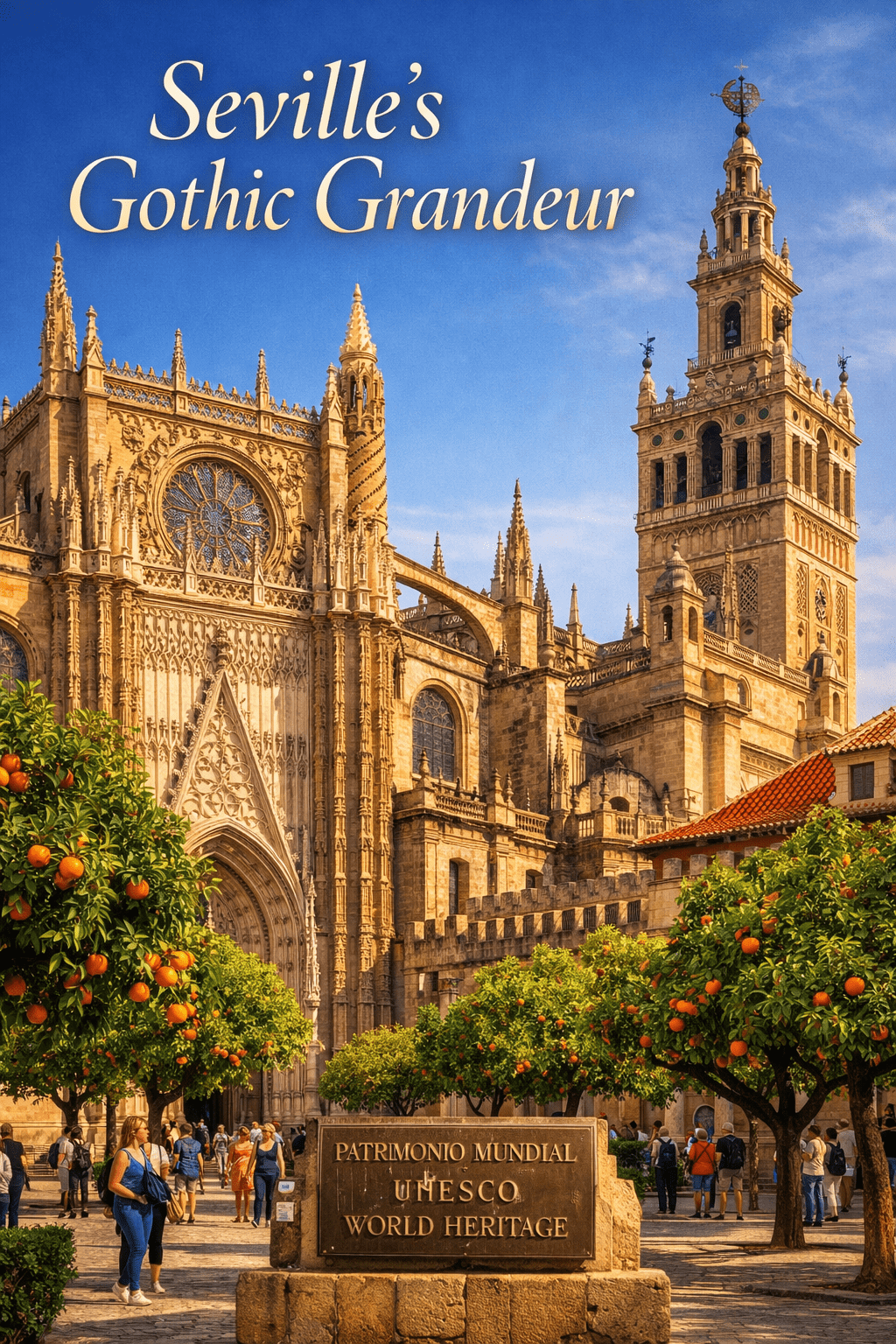
Seville Cathedral holds the record as the world’s largest Gothic cathedral and delivers what travelers describe as a “once-in-a-lifetime experience” for its sheer scale and craftsmanship[4]. The cathedral occupies the site of a former mosque, and its Giralda bell tower originated as the mosque’s minaret.
Inside, you’ll find Christopher Columbus’s tomb, supported by four statues representing the kingdoms of Spain. The main altar’s retablo features over 1,000 carved figures covered in gold leaf, standing as one of Christianity’s largest altarpieces.
What sets Seville Cathedral apart:
- Size: Covers 11,520 square meters with five naves
- Giralda Tower: Climb 34 ramps (not stairs) to panoramic city views
- Patio de los Naranjos: Orange tree courtyard from the original mosque
- UNESCO status: Recognized alongside Alcázar palace and Archivo de Indias
Visit Seville during Semana Santa (Holy Week) or the April Fair if you want to experience Andalusian culture at its most vibrant. The cathedral serves as the centerpiece for religious processions that fill the streets with elaborate floats and traditional costumes.
Why Bilbao’s Guggenheim Museum Changed Spanish Tourism
The Guggenheim Museum Bilbao functions as both an architectural landmark and art museum. The building itself, designed by Frank Gehry, features titanium curves that reflect light differently throughout the day, creating a structure that works as a massive sculpture[1].
Outside the museum, Jeff Koons’ 1992 “Puppy” sculpture stands 43 feet tall, covered in real flowers maintained by an internal irrigation system. This floral terrier has become Bilbao’s most photographed icon alongside the museum’s metallic facade.
Guggenheim essentials for sculpture enthusiasts:
- Permanent collection includes works by Richard Serra, Anselm Kiefer, and Louise Bourgeois
- Rotating exhibitions bring international contemporary art to northern Spain
- Riverfront location in revitalized industrial district
- Combine with pintxos (Basque tapas) crawl through Casco Viejo old town
Choose Bilbao if: You appreciate modern architecture and contemporary art. Skip it if you prefer classical museums and historical art periods, which Madrid’s Prado Museum serves better.
The Guggenheim transformed Bilbao from declining industrial city to cultural destination, proving architecture alone can drive tourism when executed at this level.
Playa de las Catedrales: Spain’s Most Spectacular Beach
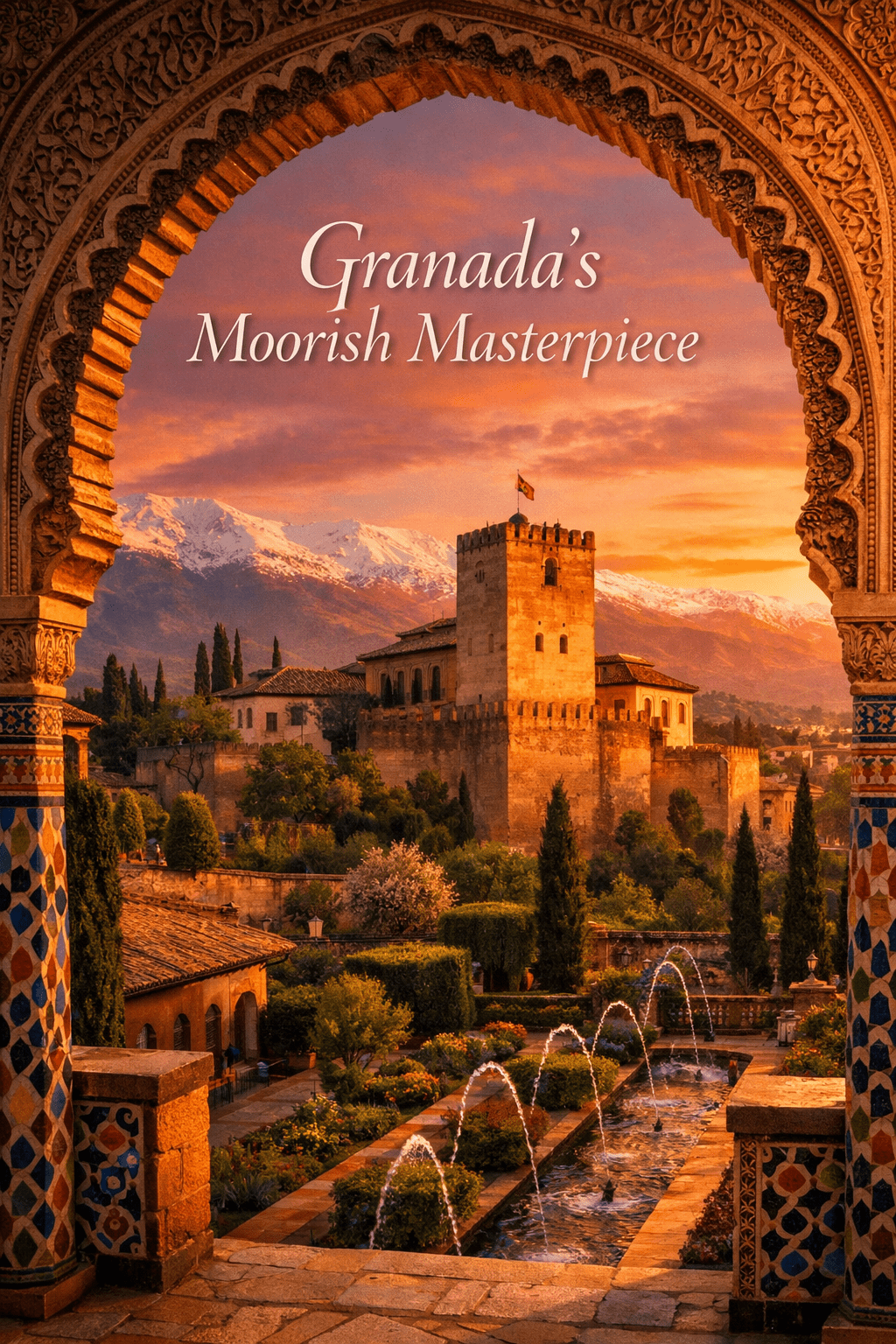
Playa de las Catedrales in Galicia features dramatic natural rock formations that mimic Gothic cathedral architecture, with arches, flying buttresses, and vaulted ceilings carved by Atlantic Ocean waves over millennia[1]. The beach earned its name from these cathedral-like stone structures that tower over golden sand.
Visit during low tide to walk through the caves and beneath the massive arches. High tide covers the beach entirely, transforming the landscape from accessible wonderland to crashing surf against cliff walls.
Timing your Playa de las Catedrales visit:
- Check tide tables before planning (low tide access only)
- Free entry October-March; permit required April-September
- Book permits online 2-4 weeks ahead during summer
- Best photography in late afternoon when sun illuminates the arches from the west
Edge case: Winter visits offer fewer crowds and dramatic stormy seas, but colder temperatures and unpredictable weather. Summer guarantees better conditions but requires advance permits and means sharing the beach with hundreds of other visitors.
This Galician coastline remains one of Spain’s better-kept secrets, far from the Mediterranean crowds that pack Costa del Sol beaches.
The Renaissance Twins: Úbeda and Baeza in Jaén Province
Úbeda and Baeza in Jaén province offer world-class Renaissance architecture alongside outdoor activities like hiking in the Sierra de Segura mountains. These UNESCO-noted twin towns remain “one of Spain’s better kept secrets” according to travel experts[2].
Both towns showcase 16th-century Renaissance palaces, churches, and plazas built during Spain’s Golden Age. Úbeda’s Vázquez de Molina Square features five Renaissance monuments surrounding a central plaza, while Baeza’s Cathedral of the Nativity blends Gothic and Renaissance styles.
Why first-timers skip Jaén province:
- Located inland between Madrid and Granada (not on typical coastal routes)
- Requires rental car or complex bus connections
- Less international name recognition than major cities
- Perceived as “just architecture” without understanding the outdoor options
What you gain by visiting:
- Authentic Spanish towns without tourist crowds
- Renaissance architecture rivaling Italy’s famous cities
- Olive grove landscapes (Jaén produces one-third of Spain’s olive oil)
- Sierra de Segura hiking, rock climbing, and river activities
- Local cuisine featuring game meats and olive oil-based dishes
Combine Úbeda and Baeza with a Granada visit, as they’re only 90 minutes apart by car. This creates a cultural triangle that showcases Moorish, Renaissance, and contemporary Spanish heritage.
Segovia’s Castle and Roman Engineering Marvel
Segovia’s 13th-century Alcázar castle sits on a rocky outcrop between two rivers, reportedly inspiring Walt Disney’s castle designs[1]. The fortress features a distinctive ship’s bow shape, pointed turrets, and a moat that made it one of medieval Spain’s most defensible positions.
Just a 15-minute walk away stands one of the world’s best-preserved Roman aqueducts, remaining perfectly intact for 2,000 years. The structure stretches 2,388 feet and reaches 93 feet at its highest point, built entirely without mortar using precisely cut granite blocks.
Segovia’s dual attractions:
- Alcázar Castle: Royal palace, military fortress, artillery school, and state prison throughout history
- Roman Aqueduct: Engineering masterpiece that carried water 10 miles from mountains to city
- UNESCO World Heritage Site: Entire old town recognized for historical significance
- Day trip accessibility: 30 minutes from Madrid by high-speed train
Practical tip: Visit the castle first (opens at 10 AM), then explore the old town and aqueduct during midday, finishing with cochinillo (roast suckling pig) at Mesón de Cándido, a restaurant operating since 1786.
The combination of Roman engineering and medieval architecture in one compact city makes Segovia essential for history enthusiasts, yet many first-timers skip it in favor of spending extra days in Madrid.
Valencia’s Fallas Festival and City of Arts and Sciences
Valencia hosts the Fallas de Valencia festival March 15-19, 2026, a UNESCO-recognized Intangible Heritage of Humanity celebration featuring monumental artistic sculptures displayed throughout the city before being ceremonially burned[1]. These elaborate papier-mâché and wood structures, some reaching 100 feet tall, satirize politicians, celebrities, and current events.
Beyond the festival, Valencia’s City of Arts and Sciences showcases futuristic architecture by Santiago Calatrava. The complex includes an opera house, science museum, planetarium, and Europe’s largest aquarium, all set within reflecting pools that create stunning photography opportunities.
Valencia essentials:
- Fallas Festival: Five days of fireworks, parades, and sculpture burnings
- City of Arts and Sciences: Modern architectural landmark
- Paella birthplace: Try authentic Valencian paella with rabbit and snails
- Beach access: Mediterranean coastline within city limits
- Central Mercado: Art Nouveau market building with fresh produce and seafood
Choose Valencia if: You want a major Spanish city that feels less touristy than Barcelona, combines beaches with culture, and offers excellent food scenes. The 2026 Fallas festival provides a specific reason to prioritize Valencia this year.
Valencia also serves as a gateway to exploring Spain’s eastern coast, positioned between Barcelona and the southern beaches, making it a logical stop that too many first-timers skip in favor of the Barcelona-Madrid axis.
Northern Spain’s Hidden Coastal Treasures
Northern Spain’s Atlantic and Cantabrian coastlines offer experiences that differ dramatically from Mediterranean Spain. La Coruña features the Torre de Hércules, the world’s oldest Roman lighthouse dating from the first or second century and still functioning today[2].
Cantabria combines Picos de Europa mountain hiking with charming fishing villages and unexpected Gaudí architecture. The region offers green landscapes, cooler temperatures, and seafood-focused cuisine that showcases percebes (goose barnacles), octopus, and fresh fish.
Northern Spain highlights often missed:
- Torre de Hércules (La Coruña): Climb the 2,000-year-old lighthouse for coastal views
- Picos de Europa: Dramatic mountain range with hiking, cable cars, and traditional villages
- San Sebastián: Michelin-starred restaurants and La Concha beach
- Burgos Cathedral: One of Spain’s most impressive Gothic structures[2]
- Asturian cider culture: Traditional sidrerías with cider poured from height
Common mistake: Assuming Spain means hot, dry Mediterranean climate. Northern Spain offers lush green landscapes, cooler summers, and Celtic cultural influences that feel more like Ireland than Andalusia.
This region rewards travelers who want hiking, surfing, and mountain scenery alongside cultural experiences, but it requires more time and planning than southern Spain’s concentrated attractions.
Toledo: The City of Three Cultures
Toledo served as Spain’s capital until 1561 and preserves a unique blend of Christian, Jewish, and Islamic heritage within its medieval walls. The city sits on a hill surrounded on three sides by the Tagus River, creating a natural fortress that protected centuries of cultural exchange.
Toledo’s cathedral ranks among Spain’s finest Gothic structures, while the city’s former synagogues and mosques showcase the peaceful coexistence of three religions during medieval Spain. El Greco lived and worked in Toledo, and his paintings fill the city’s museums and churches.
Toledo’s cultural layers:
- Cathedral of Saint Mary: Gothic masterpiece with works by El Greco, Goya, and Velázquez
- Synagogue of Santa María la Blanca: 12th-century Jewish temple with Mudéjar architecture
- Alcázar fortress: Hilltop stronghold with military museum
- Damascene metalwork: Traditional craft of inlaying gold and silver into steel
Day trip or overnight? Toledo works as a day trip from Madrid (30 minutes by train), but staying overnight lets you experience the city after tour groups leave. Evening walks through the Jewish Quarter and sunset views from the Mirador del Valle reveal Toledo’s magic.
The city’s compact size and proximity to Madrid make it accessible, yet many first-timers skip it because they underestimate how much history and culture pack into Toledo’s hilltop streets.
Córdoba’s Mezquita and Flower-Filled Patios
Córdoba’s Mezquita (Mosque-Cathedral) represents one of the world’s most unusual religious buildings. The structure began as a mosque in 784 AD, featuring 856 columns of jasper, onyx, marble, and granite supporting red and white striped arches that create a mesmerizing forest of stone.
After the Christian reconquest, a Renaissance cathedral was built directly into the mosque’s center, creating a unique architectural hybrid that preserves both Islamic and Christian elements. The result challenges visitors to process two competing architectural styles occupying the same sacred space.
Beyond the Mezquita:
- Patios Festival (May): Private courtyards open to public, filled with flowers and traditional tiles
- Jewish Quarter: Narrow streets with whitewashed walls and the Synagogue of Córdoba
- Roman Bridge: 16 arches spanning the Guadalquivir River since the 1st century BC
- Medina Azahara: Ruins of 10th-century palace-city outside Córdoba
Edge case: Visit during the Patios Festival in May if you want to see Córdoba’s private courtyards transformed into floral masterpieces. Outside this period, you’ll still see public patios, but the festival offers access to dozens of competition entries that residents spend months preparing.
Córdoba sits between Seville and Granada, making it a logical stop that completes Andalusia’s cultural triangle, yet travelers often skip it to spend extra time in the larger cities.
San Sebastián’s Culinary Excellence and Belle Époque Charm
San Sebastián (Donostia in Basque) holds more Michelin stars per capita than anywhere except Kyoto. The city’s pintxos bars serve elaborate small plates that elevate the tapas concept to art form, while restaurants like Arzak, Akelarre, and Martín Berasategui have earned three Michelin stars each.
La Concha beach curves through the city center, creating a Belle Époque resort atmosphere with grand hotels overlooking golden sand. The beach’s protected bay offers calm swimming, while nearby Zurriola beach attracts surfers with Atlantic swells.
San Sebastián for food enthusiasts:
- Pintxos crawl: Start in Parte Vieja (Old Town) hitting Bar Nestor, La Cuchara de San Telmo, and Gandarias
- Michelin dining: Book 2-3 months ahead for three-star restaurants
- Cider houses: Traditional sagardotegiak in nearby hills serve set menus with unlimited cider
- Basque Culinary Center: Cooking classes and food tours
Choose San Sebastián if: Food drives your travel decisions and you appreciate sophisticated dining in a beach setting. Skip it if you’re on a tight budget, as the city ranks among Spain’s most expensive destinations.
The combination of world-class cuisine, beautiful beaches, and Basque cultural identity makes San Sebastián unique in Spain, yet it’s often skipped by first-timers who prioritize southern Spain’s Moorish heritage and warmer weather.
Ronda’s Dramatic Gorge and White Villages
Ronda sits atop a 390-foot gorge carved by the Guadalevín River, with the Puente Nuevo (New Bridge) spanning the chasm and connecting the old Moorish town with the newer sections. The bridge took 42 years to build (1751-1793) and has become one of Spain’s most photographed landmarks.
The town’s bullring, Plaza de Toros, dates from 1785 and represents the birthplace of modern bullfighting. Even if you oppose bullfighting, the architecture and museum showcase an important aspect of Spanish cultural history.
Ronda and surrounding pueblos blancos:
- Puente Nuevo viewpoints: Walk down to the river for bridge photography from below
- White villages route: Zahara de la Sierra, Grazalema, and Setenil de las Bodegas (houses built into rock overhangs)
- Wine region: Ronda’s microclimate produces excellent reds and rosés
- Hiking: Surrounding mountains offer trails through cork oak forests
Practical consideration: Ronda works best with a rental car, allowing you to explore the white villages scattered through the mountains. Public transportation reaches Ronda from Seville or Málaga, but limits access to the surrounding pueblos blancos that make this region special.
First-timers often skip Ronda because it requires detouring from the coastal route or major cities, but the dramatic setting and authentic Andalusian atmosphere reward the extra effort.
Salamanca’s Golden Stone and University Legacy
Salamanca’s university, founded in 1134, ranks among Europe’s oldest and most prestigious. The city’s golden sandstone buildings glow at sunset, earning Salamanca the nickname “La Dorada” (The Golden One). The historic center achieved UNESCO World Heritage status for its architectural unity and cultural significance.
The Plaza Mayor, completed in 1755, represents Spain’s finest example of a grand square. Unlike Madrid’s Plaza Mayor, which feels touristy, Salamanca’s version functions as the city’s living room where locals meet for coffee, drinks, and evening paseos (strolls).
Salamanca’s academic and architectural highlights:
- University facade: Intricate Plateresque stonework with hidden frog sculpture (finding it supposedly brings good luck)
- New and Old Cathedrals: Two cathedrals sharing a wall, showcasing Gothic and Romanesque styles
- Casa de las Conchas: Palace decorated with 300+ scallop shell carvings
- Student atmosphere: Lively nightlife and affordable dining driven by university population
Choose Salamanca if: You want a beautiful Spanish city with authentic atmosphere, excellent food at reasonable prices, and architectural grandeur without overwhelming crowds. The city works well as a stop between Madrid and Portugal.
Many first-timers skip Salamanca because it doesn’t appear on the typical Spain highlights list, but locals and repeat visitors consistently rank it among Spain’s most beautiful and livable cities.
The Canary Islands: Spain’s Volcanic Paradise
The Canary Islands offer year-round warm weather, volcanic landscapes, and beaches ranging from golden sand to black lava rock. Tenerife’s Mount Teide rises 12,198 feet, making it Spain’s highest peak and creating a snow-capped volcano visible from beaches below.
Each island offers distinct character: Tenerife balances resorts with natural beauty, Lanzarote showcases otherworldly volcanic fields and César Manrique’s artistic interventions, Gran Canaria combines beaches with mountainous interior, and La Palma attracts hikers and stargazers to its dark skies.
Canary Islands highlights:
- Teide National Park (Tenerife): Cable car to near-summit with lunar landscapes
- Timanfaya National Park (Lanzarote): Active volcanic fields with geothermal demonstrations
- Roque Nublo (Gran Canaria): Iconic rock formation and hiking destination
- Caldera de Taburiente (La Palma): Massive erosion crater with waterfalls and forests
Common misconception: The Canary Islands are just beach resorts. While coastal areas feature developed tourism infrastructure, the islands’ interiors offer hiking, volcanic landscapes, and traditional villages that feel worlds away from the beaches.
Choose the Canaries if: You’re visiting Spain in winter and want warm weather, or if volcanic landscapes and outdoor activities interest you more than cultural sightseeing. Skip them if your Spain trip focuses on history, architecture, and cultural immersion, as the islands feel culturally distinct from mainland Spain.
The islands require flights from mainland Spain (2.5-4 hours), making them a separate trip rather than an add-on to a Barcelona-Madrid itinerary, which explains why many first-timers skip them despite their unique appeal.
Planning Your Must See Places in Spain Itinerary
Most first-time visitors need 10-14 days minimum to experience Spain’s diversity without rushing. A Madrid-Barcelona route with 1-2 stops between covers the basics, while 3 weeks allows for deeper regional exploration.
Sample 14-day itinerary covering must-see places:
- Days 1-3: Barcelona (Gaudí architecture, Gothic Quarter, beaches)
- Days 4-5: Valencia (City of Arts and Sciences, paella, beaches)
- Days 6-8: Granada (Alhambra, Albaicín neighborhood, tapas culture)
- Days 9-11: Seville (Cathedral, Alcázar, flamenco shows)
- Days 12-14: Madrid (Prado Museum, Retiro Park, day trip to Toledo or Segovia)
Regional focus alternatives:
- Andalusia deep dive: Seville, Córdoba, Granada, Ronda, white villages (10-12 days)
- Northern Spain route: Bilbao, San Sebastián, Picos de Europa, Santiago de Compostela (10-14 days)
- Mediterranean coast: Barcelona, Valencia, Alicante, Cartagena, Málaga (12-14 days)
Transportation considerations:
- High-speed AVE trains connect major cities efficiently (Madrid-Barcelona 2.5 hours, Madrid-Seville 2.5 hours)
- Rental cars work best for white villages, northern coast, and rural areas
- Domestic flights save time for Canary Islands, Bilbao from southern Spain, or Barcelona-Seville
Match your itinerary to your interests rather than trying to see everything. Architecture enthusiasts should prioritize Barcelona, Bilbao, and Seville. Food lovers need San Sebastián and Valencia. History buffs shouldn’t miss Toledo, Córdoba, and Granada.
Similar to planning a trip through Ireland’s best places, Spain rewards focused regional exploration over country-wide sprints.
FAQ
How many days do I need to see the must-see places in Spain?
Plan for 10-14 days minimum to cover Barcelona, Madrid, and 2-3 Andalusian cities without rushing. Three weeks allows for northern Spain, white villages, or the Canary Islands. Most first-timers underestimate Spain’s size and diversity.
Is it better to visit Spain in spring or fall?
April-May and September-October offer ideal weather, smaller crowds, and lower prices than summer. Spring brings festivals like Fallas (Valencia) and Semana Santa (Seville). Fall provides harvest season in wine regions and comfortable temperatures for sightseeing.
Do I need to speak Spanish to visit Spain?
English works in major tourist areas, hotels, and restaurants in Barcelona, Madrid, and coastal resorts. Learn basic Spanish phrases for smaller towns, markets, and authentic local experiences. Northern regions like Basque Country and Galicia have their own languages alongside Spanish.
Should I book Alhambra tickets in advance?
Yes, book 2-3 months ahead for specific dates and time slots. The palace limits daily visitors to protect the site, and tickets sell out weeks in advance during peak season (April-October). Purchase directly from the official Alhambra website.
Can I do a day trip from Madrid to Barcelona?
Technically yes (2.5 hours by high-speed train each way), but it’s not recommended. You’d spend 5 hours traveling for maybe 6 hours in Barcelona, barely scratching the surface. Allocate at least 2-3 full days for Barcelona.
What’s the best way to travel between Spanish cities?
High-speed AVE trains connect major cities efficiently and comfortably. Rent a car for rural areas, white villages, and northern coast exploration. Domestic flights make sense for long distances like Madrid to Canary Islands or Barcelona to Seville if time is limited.
Is Seville or Granada better for first-time visitors?
Both are essential Andalusian cities with different appeals. Granada offers the Alhambra (Spain’s most visited monument) and mountain views. Seville provides the world’s largest Gothic cathedral, vibrant flamenco culture, and classic Andalusian atmosphere. Visit both if possible; choose Granada if you must pick one.
How much does a trip to Spain cost?
Budget €80-120 per person daily for mid-range travel including accommodation, meals, local transport, and attractions. Major cities like Barcelona and San Sebastián cost more (€120-180 daily). Smaller towns and Andalusian cities run cheaper (€60-100 daily). High-speed trains add €50-80 per journey.
What should I skip in Spain to save time?
Skip the Costa del Sol resort towns unless beaches are your priority (better beaches exist elsewhere). Don’t try to cover all of Spain in one trip. Skip bullfights if animal welfare concerns you. Avoid August in major cities when locals vacation and temperatures peak.
Is Madrid worth visiting or should I skip it for more time in Barcelona?
Madrid deserves 2-3 days for world-class art museums (Prado, Reina Sofía, Thyssen-Bornemisza), Royal Palace, Retiro Park, and tapas culture. It offers a different vibe than Barcelona—more Spanish, less touristy, better for art and food. Don’t skip it unless your trip is very short.
Do I need travel insurance for Spain?
Yes, especially for trip cancellation, medical emergencies, and lost luggage. Spain has excellent healthcare, but travel insurance covers unexpected costs. EU citizens should bring their European Health Insurance Card. Non-EU visitors need comprehensive travel medical insurance.
What’s the best base for exploring Andalusia?
Seville works best as a central base with day trips to Córdoba (45 minutes by train), Ronda, and white villages. Alternatively, split time between Seville (3 nights), Granada (2 nights), and Córdoba (1 night) to avoid repetitive packing and maximize evening exploration in each city.
Conclusion
The must see places in Spain extend far beyond the Barcelona-Madrid circuit that dominates most first-time itineraries. From Gaudí’s architectural masterpieces in Barcelona (recently crowned TripAdvisor’s 2026 “Best of the Best” destination) to Granada’s Alhambra Palace with its mountain-backed sunset views, from Seville’s record-breaking Gothic cathedral to the dramatic coastal arches of Playa de las Catedrales, Spain rewards travelers who venture beyond the obvious.
The destinations you skip often become the experiences you regret most. Northern Spain’s green coastlines, Jaén’s Renaissance twin towns, Ronda’s gorge-spanning bridge, and Valencia’s 2026 Fallas festival offer experiences as memorable as the famous cities, just with fewer crowds and more authentic atmosphere.
Start planning your Spain trip by:
- Deciding your primary interests (architecture, food, beaches, history, or nature)
- Choosing a region or route that matches those interests rather than trying to see everything
- Booking Alhambra tickets and any Michelin-starred restaurants 2-3 months ahead
- Reserving high-speed train tickets between major cities
- Building in flexibility for spontaneous discoveries and slower exploration
Spain’s diversity means your perfect itinerary won’t match anyone else’s. The country offers enough must-see places to fill multiple trips, so focus on quality experiences over quantity of destinations checked off a list.
For more first-timer guidance on European destinations, check out our guide to hidden gems in Italy or our 7-day South of France itinerary. If you’re planning a broader European trip, our 15 best places to visit in Ireland and Venice travel guide offer similar first-timer perspectives.
References
[1] Best Things To Do In Spain 2026 – https://www.trafalgar.com/real-word/best-things-to-do-in-spain-2026/
[2] Top Places To Visit In Spain In 2026 – https://www.spainlesstraveled.com/blog/top-places-to-visit-in-spain-in-2026
[3] 885776 A Spanish City Earns Tripadvisor 2026 Best Of The Best Destination Award – https://www.idealista.com/en/news/lifestyle-in-spain/2026/02/24/885776-a-spanish-city-earns-tripadvisor-2026-best-of-the-best-destination-award
[4] Type Flight Experiences 70 113 – https://www.trip.com/travel-guide/attraction/spain-100035/tourist-attractions/type-flight-experiences-70-113
[5] Spanish City Makes Tripadvisors Global Best Of The Best List For 2026 – https://euroweeklynews.com/2026/02/25/spanish-city-makes-tripadvisors-global-best-of-the-best-list-for-2026/