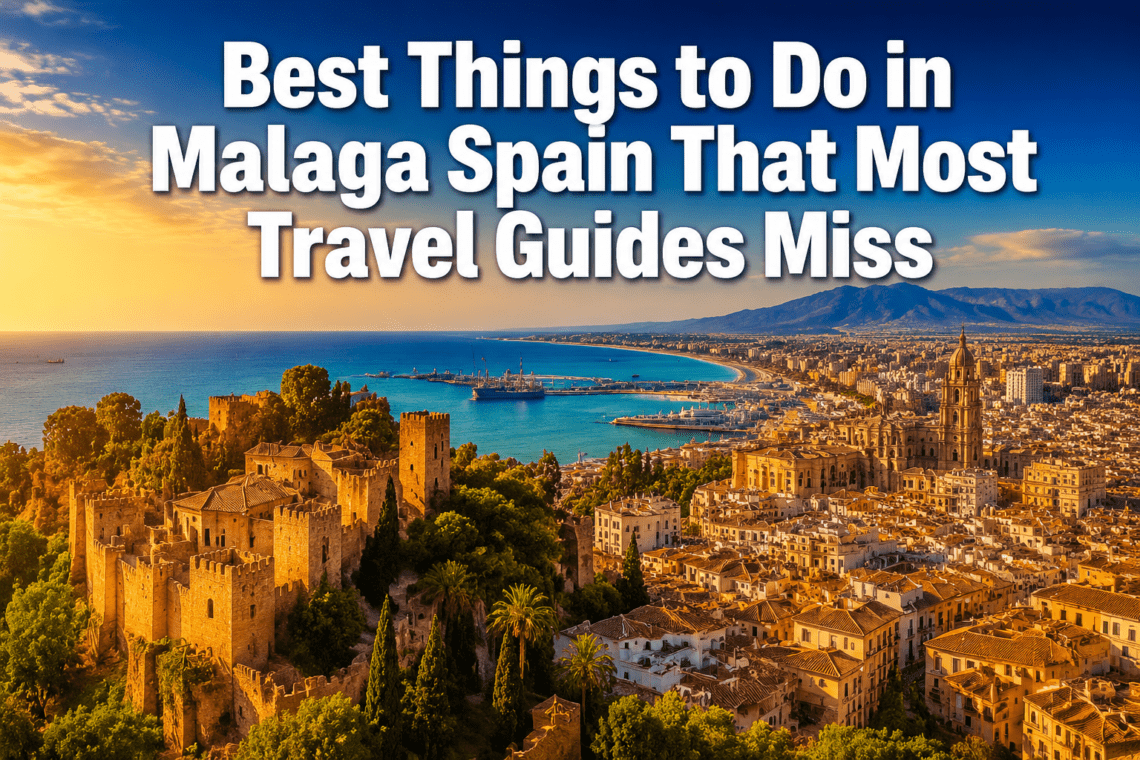
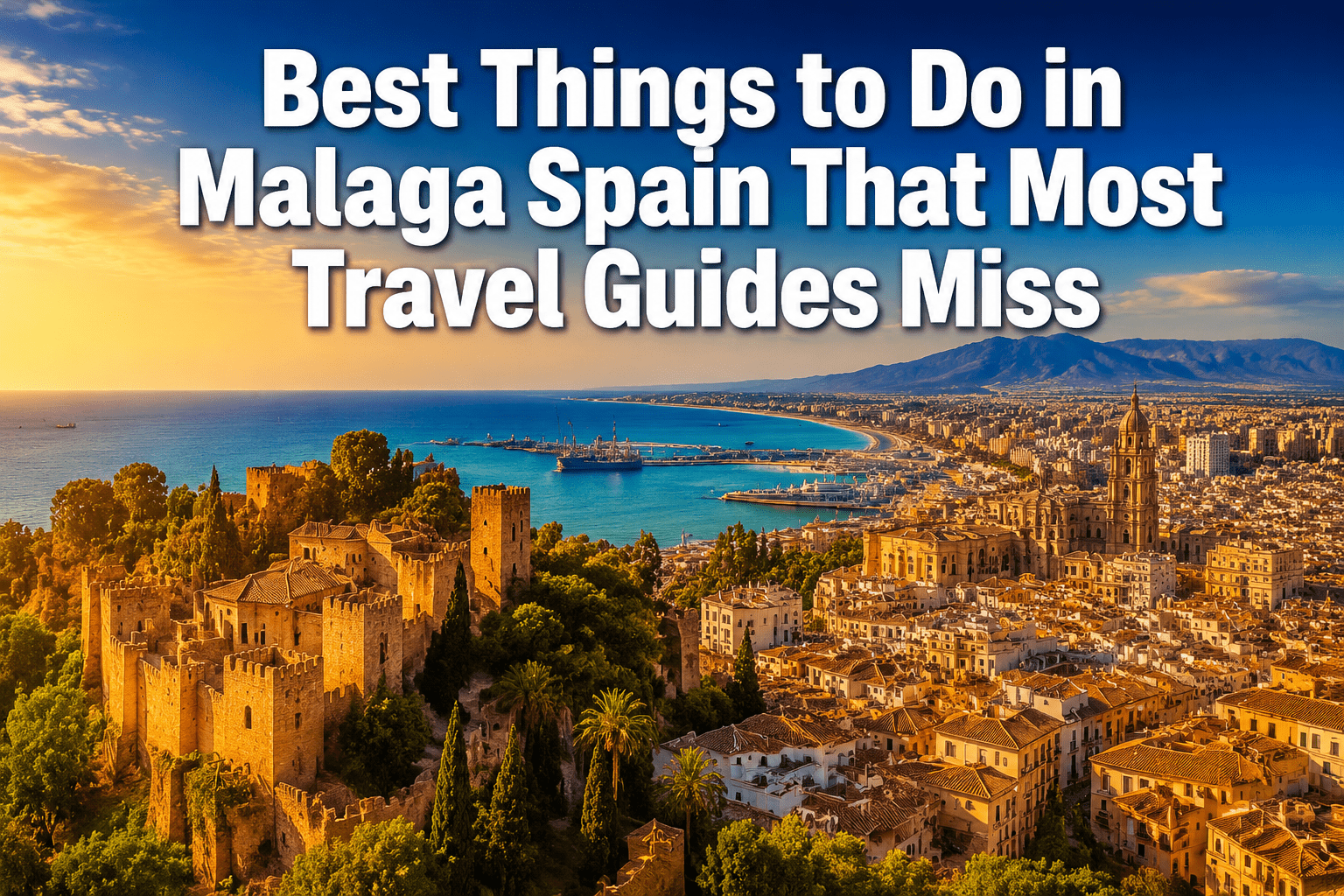
Quick Answer: Malaga is far more than a Costa del Sol transit hub. Beyond the Alcazaba and Picasso Museum, the city rewards travelers who look a little harder with a suspended gorge walkway, a half-finished cathedral with a fascinating backstory, authentic neighborhood dining, and a rooftop bar scene that most guides completely overlook. This article covers the best things to do in Malaga Spain, including the experiences that rarely make standard itineraries.
Key Takeaways
- 🏛️ Combine the Alcazaba and Roman Theatre on a single ticket for exceptional historical value
- 🥘 The Pedregalejos district offers authentic local dining that most tourists never find
- 🎭 Authentic flamenco shows exist in Malaga, but knowing how to spot them matters
- 🏔️ Caminito del Rey is one of the best day trips from Malaga and is frequently skipped by travel guides
- 🍷 El Pimpi bodega now requires advance reservations — book before you arrive
- 🎨 A self-guided Picasso heritage trail covers four distinct sites beyond the museum alone
- 🌅 La Terraza de la Alcazaba rooftop bar at sunset is one of the city’s best-kept secrets
- 🏖️ Playa La Malagueta functions as a multi-activity hub, not just a beach
- 🕌 La Manquita Cathedral’s unfinished architecture tells a story most visitors walk past without knowing
- 🛍️ Calle Larios connects major attractions and doubles as a cultural thoroughfare
Why Most Travel Guides Get Malaga Wrong
Most travel guides treat Malaga as a one-day stop between Seville and Granada. That’s a mistake. Malaga is Andalusia’s second-largest city, a genuine cultural capital with more museums per square kilometer than almost any other Spanish city, a thriving food scene rooted in Moorish and Mediterranean traditions, and a coastline that extends well beyond the tourist-facing promenade.
The best things to do in Malaga Spain aren’t hidden in the sense of being secret — they’re simply overlooked because standard itineraries default to the obvious. This guide fixes that.
If you’re also planning to explore other parts of Spain, the Top Things to Do in Seville Spain: Hidden Gems guide and the 3 Days in Madrid Spain: Perfect First-Timer Itinerary are worth reading alongside this one.
The Alcazaba and Roman Theatre: One Ticket, Two Civilizations
The combined Alcazaba and Roman Theatre experience is one of the best-value cultural stops in all of Spain. Most visitors photograph the Roman Theatre from the street and move on. That’s a missed opportunity.
The Roman Theatre dates to the first century BC and was only rediscovered in 1951 during construction work. The Alcazaba, built by the Moorish Hammudid dynasty in the 11th century, rises directly above it — meaning you’re standing at the intersection of Roman, Visigoth, and Moorish civilizations within a single site. [4]
Practical details:
- Opening hours: 9:00 AM, last entry 7:30 PM [4]
- Combined ticket available at the entrance
- Best time to visit: late afternoon for golden-hour photography and cooler temperatures
- The climb to the top takes roughly 20–30 minutes at a relaxed pace
“The Alcazaba is one of the best-preserved Moorish fortresses in Spain, and the Roman Theatre below it is genuinely impressive — yet most people spend more time at the gift shop than the ruins.” [7]
Choose this if: You want maximum historical depth in minimum time. The combined site works well as a morning anchor before heading to Calle Larios for lunch. [1]
Mercado de Atarazanas: More Than a Food Market
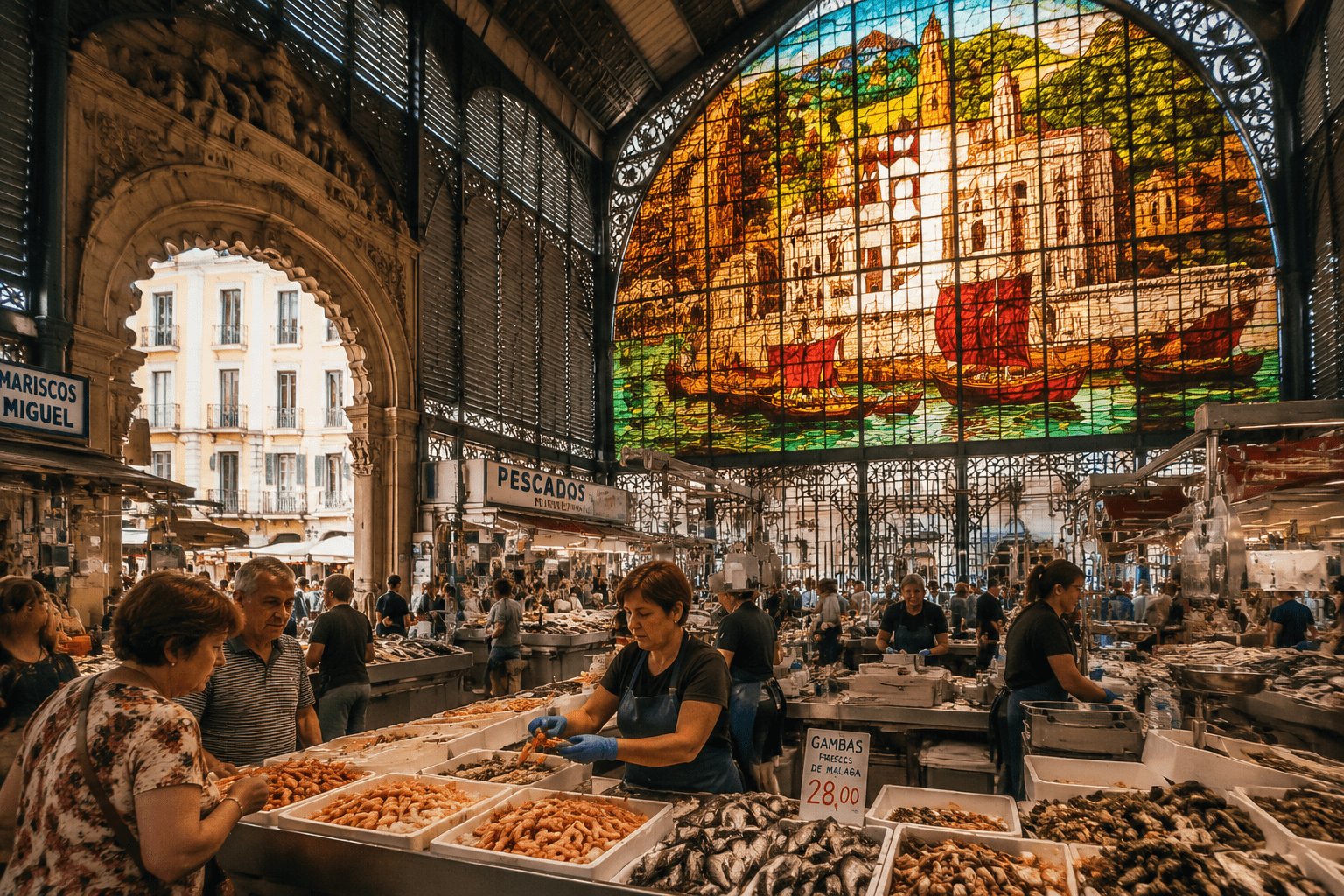
Malaga’s Central Market is housed in a 14th-century Moorish shipyard, and the stained-glass window alone is worth the visit. Most guides mention it as a place to buy jamón. That undersells it considerably.
The market’s main arch is original Nasrid architecture — the same style used in Granada’s Alhambra. The enormous stained-glass window at the far end depicts scenes of Malaga’s coast and floods the interior with colored light on sunny mornings. Arrive before 11:00 AM to see it at its best and to catch the freshest produce. [5]
What to do inside:
- Order a glass of local Málaga sweet wine (vino dulce) at one of the standing bars
- Try fresh anchovies (boquerones) — Malaga’s most iconic ingredient
- Browse the spice stalls for locally blended ras el hanout, a nod to the city’s Moorish past
- Pick up olive oil from nearby Antequera as an affordable, high-quality souvenir
Common mistake: Visiting after noon on a weekday. Many stalls begin closing around 2:00 PM, and the atmosphere is much quieter. Weekend mornings are busiest but also most atmospheric.
The Picasso Heritage Trail: Beyond the Museum
Malaga is Picasso’s birthplace, and a self-guided walking route connecting four distinct sites gives you far more context than the museum alone. The route takes two to three hours and costs very little. [2]
The trail runs as follows:
- Casa Natal de Picasso (Plaza de la Merced) — the house where he was born in 1881, now a museum with original family furniture and rotating exhibitions
- Plaza de la Merced — a life-size bronze statue of Picasso sits on a bench here; it’s one of the most photographed spots in the city and easy to miss if you don’t know it’s there
- Church of Santiago Apóstol — where Picasso was baptized; the Mudéjar tower is architecturally significant in its own right
- Museo Picasso Málaga — the main collection, housed in the 16th-century Buenavista Palace [2]
Tip: Buy the Museo Picasso ticket online in advance, especially in summer. The museum draws long queues and timed entry slots fill quickly.
Caminito del Rey: The Day Trip Most Guides Skip
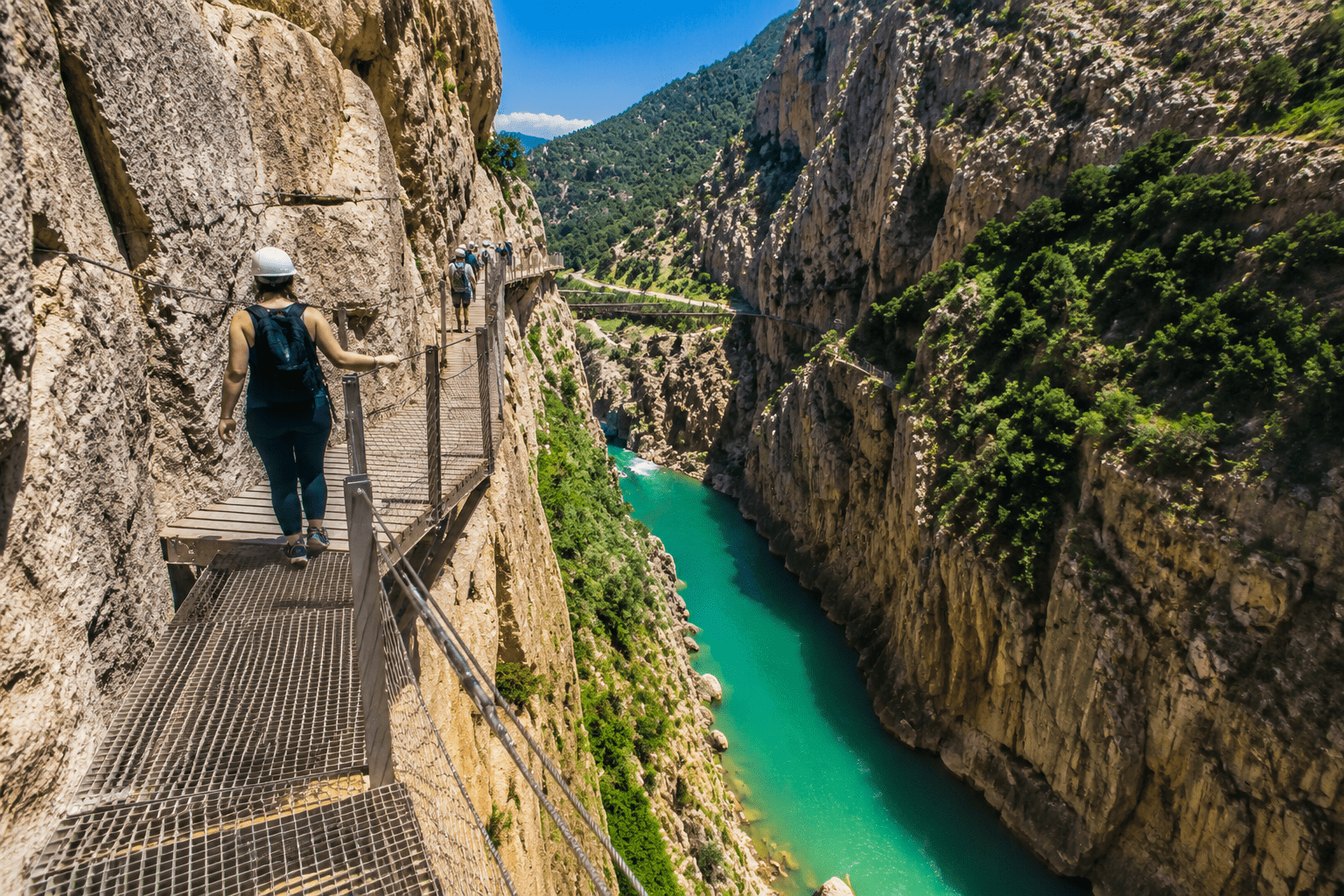
Caminito del Rey is a 7.7-kilometer walkway suspended 100 meters above the Gaitanes Gorge, roughly an hour from Malaga by car or train, and it’s one of the most dramatic experiences in southern Spain. Standard city guides rarely include it because it’s technically outside the city limits. That’s their loss to pass on to you.
The path was originally built in the early 1900s for workers at a hydroelectric dam. After decades of disrepair, it was fully restored and reopened in 2015. The route is mostly one-directional and takes two to three hours to complete. [3]
Logistics:
- Book tickets in advance at caminitodelrey.info — they sell out weeks ahead in spring and summer
- Nearest train station: El Chorro (Álora line from Malaga María Zambrano)
- Helmets are provided at the entrance; sturdy shoes are required
- Not suitable for visitors with a fear of heights or limited mobility
Choose this if: You want a half-day adventure that feels completely different from city sightseeing. It pairs well with an afternoon return to Malaga for tapas in Pedregalejos.
For travelers who enjoy active, scenery-heavy experiences, this type of excursion also appears in guides like our Vietnam Travel Guide: Hidden Gems Tourists Always Miss — the principle of going slightly off-script almost always pays off.
Authentic Flamenco, El Pimpi, and the Nightlife Locals Actually Enjoy
Malaga has a genuine flamenco tradition, but tourist-oriented shows and authentic performances are not the same thing. Knowing the difference saves you both money and disappointment. [6]
For authentic flamenco in Malaga, look for:
- Smaller venues with fewer than 50 seats
- Shows that start after 9:00 PM (earlier shows often cater to tour groups)
- Venues in the Soho or Centro Histórico neighborhoods rather than on the seafront promenade
- Performances without a fixed dinner-and-show package (a common sign of a tourist-oriented product)
El Pimpi is the city’s most famous bodega, operating since 1971. The walls are covered in photos of celebrity visitors, including Antonio Banderas — a Malaga native. The wine is local, the atmosphere is genuine, and the tapas are good. [3]
One critical update for 2026: El Pimpi now requires advance reservations, especially on weekends and during summer. Walk-ins face waits of an hour or more. Book online at least 48 hours ahead.
La Terraza de la Alcazaba and the Rooftop Bar Scene
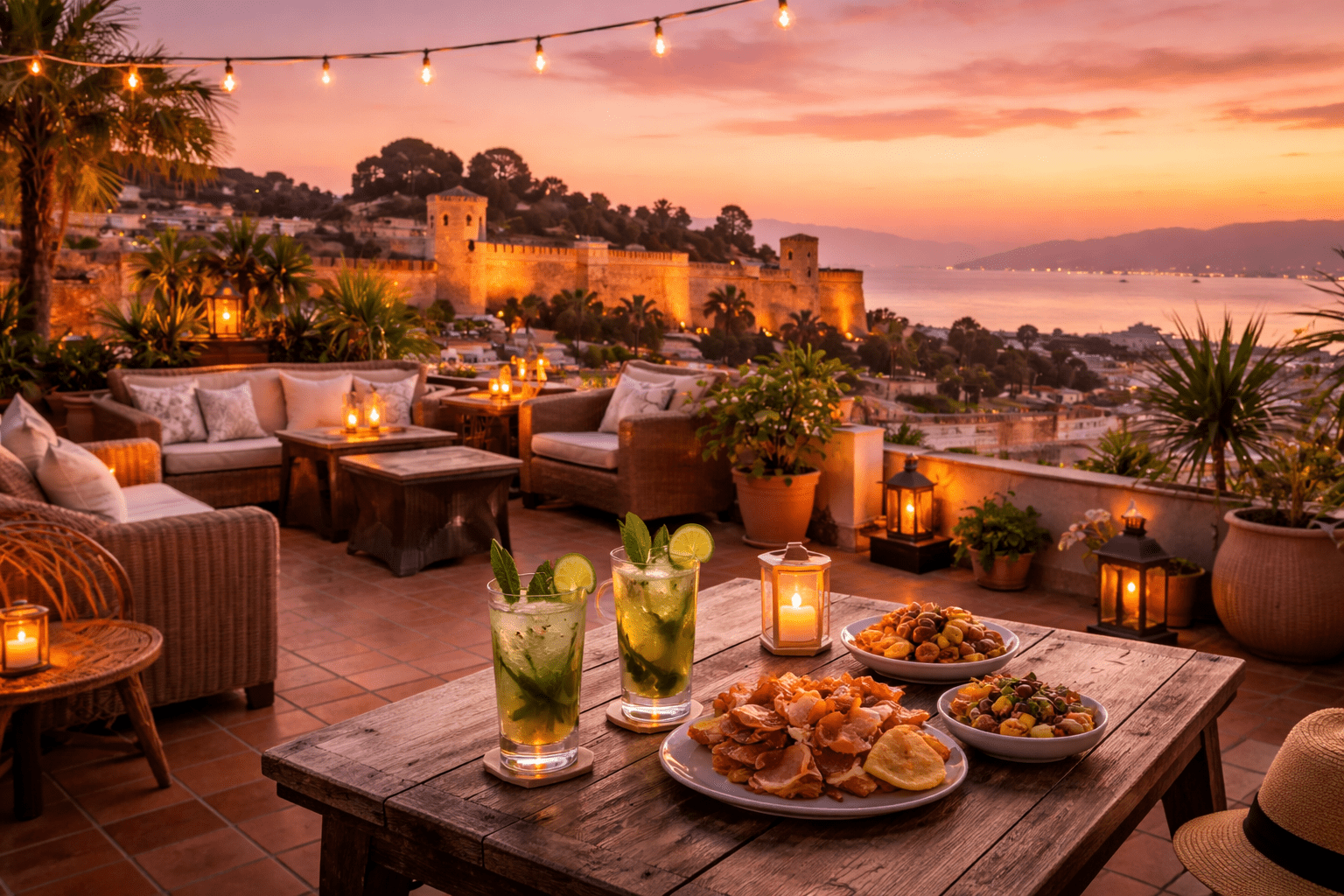
Malaga’s rooftop bar scene is one of the best things to do in Malaga Spain at sunset, and La Terraza de la Alcazaba is the standout option. Positioned directly beside the fortress walls, it offers unobstructed views of both the old town and the Mediterranean. [3]
Most travel guides focus on Malaga’s beach bars. The rooftop scene is less documented but significantly more atmospheric, especially between 7:00 PM and 9:00 PM when the light is best.
Other rooftop options worth knowing:
- AC Hotel Málaga Palacio — the rooftop pool bar has panoramic city views and is open to non-guests for drinks
- Soho Boutique Ciudad de Málaga — a more relaxed option in the Soho arts district, popular with a younger local crowd
Edge case: Many rooftop bars in Malaga operate seasonally and may have reduced hours or close entirely between November and March. Always check current hours before visiting.
Pedregalejos: Where Malaga Actually Eats
Pedregalejos is a former fishing village absorbed into Malaga’s eastern suburbs, and it’s where locals go for seafood. Most tourists never make it here. [1]
The neighborhood sits about 4 kilometers east of the city center — a 15-minute taxi ride or a pleasant 40-minute walk along the coastal path. The main draw is a string of chiringuitos (beach restaurants) serving espeto de sardinas: fresh sardines grilled on bamboo skewers over an open fire on the beach. It’s one of Malaga’s most distinctive culinary traditions and nearly impossible to find done well in the tourist center.
What to order:
- Espeto de sardinas (grilled sardines on skewers)
- Fritura malagueña (mixed fried fish platter)
- Local Málaga wine or cold Cruzcampo beer
- Ajoblanco (cold almond and garlic soup) as a starter
Best time to go: Lunch, between 2:00 PM and 4:00 PM, when the beach restaurants are at their liveliest and the espeto fires are burning at full capacity.
La Manquita Cathedral and Calle Larios: The Stories Most Visitors Miss
Malaga’s cathedral is famously unfinished — one of its two planned towers was never built, earning it the local nickname “La Manquita” (the one-armed lady). Construction began in 1528 and the missing tower was never completed, reportedly because funds were diverted to support the American Revolution. [1]
Most visitors walk past it without knowing this. The interior is genuinely impressive, with 15 ornate chapels and a carved choir stall considered one of the finest in Spain. Entry costs around €6 and includes access to the rooftop walkway.
Calle Larios, Malaga’s main pedestrian boulevard, connects the cathedral area to the port and functions as more than a shopping street. It’s the spine of the historic center, and walking its full length while ducking into the side streets reveals the city’s best tapas bars, independent bookshops, and the entrance to the Museo Carmen Thyssen. [1]
For travelers planning a broader Iberian itinerary, the Lisbon Portugal Travel Guide: First Timer’s Guide 2026 and What to See in Barcelona Spain: Fall in Love Guide pair well with a Malaga visit.
Where to Stay in Malaga: Accommodations by Neighborhood
Choosing the right neighborhood matters more in Malaga than in many Spanish cities because the historic center, beach areas, and local neighborhoods each offer a very different experience.
| Neighborhood | Best For | Price Range (per night, est.) | Notes |
|---|---|---|---|
| Centro Histórico | Culture, walkability, nightlife | €80–€200 | Closest to Alcazaba, Picasso sites, Calle Larios |
| Soho | Arts scene, boutique hotels, younger crowd | €70–€160 | Street art district, good restaurant access |
| La Malagueta | Beach access, families | €90–€180 | 10-min walk to center; quieter evenings |
| Pedregalejos | Authentic local feel, seafood | €60–€130 | Further from main sights; best for longer stays |
| El Palo | Budget, residential | €50–€100 | Very local; limited English spoken |
Top accommodation picks:
- Parador de Málaga Gibralfaro — A historic parador inside a castle above the city with unmatched views. Book months in advance; it sells out consistently.
- Room Mate Valeria — A well-designed boutique hotel in the historic center, good value for the location.
- Hotel Molina Lario — Directly opposite the cathedral, rooftop pool, reliable mid-range option.
- Soho Boutique Málaga — Good for solo travelers and couples who want a design-forward stay in a walkable area.
Choose Centro Histórico if you want to walk everywhere and stay close to the main cultural sites. Choose La Malagueta if beach access in the morning matters more than nightlife proximity.
If you’re traveling independently, the Solo Travel in Spain Guide: Step-by-Step Planning Guide has practical advice on booking strategies and neighborhood safety that applies directly to Malaga.
Playa La Malagueta: More Than a Beach
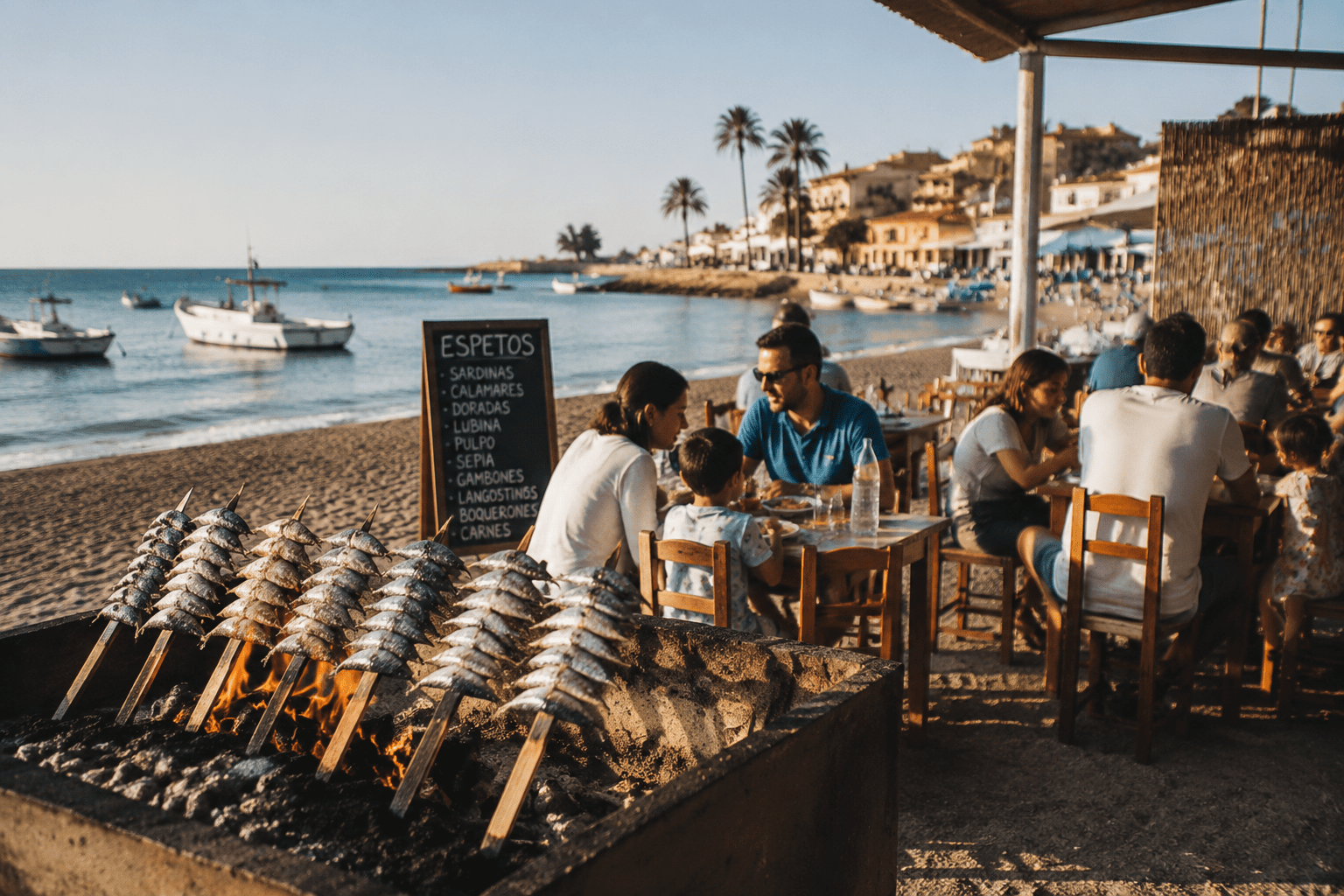
Playa La Malagueta is Malaga’s main urban beach and one of the best things to do in Malaga Spain for a half-day of varied activity. It’s not just a place to sunbathe — it’s a multi-use hub within walking distance of several major attractions. [5]
What you can do here:
- Stand-up paddleboarding and kayak rental (available from beach concessions, roughly €15/hour)
- Beach volleyball (free public courts)
- Jogging along the seafront promenade toward Pedregalejos
- Visit the Centre Pompidou Málaga, a five-minute walk from the beach
- Browse Muelle Uno, the renovated port area with independent shops and restaurants
The beach itself is Blue Flag certified, well maintained, and has good facilities including showers and sun lounger rentals. It gets crowded in July and August; arrive before 10:00 AM or after 5:00 PM for a more relaxed experience.
Frequently Asked Questions
How many days do you need in Malaga?
Three days is the sweet spot for most travelers. Day one covers the historic center (Alcazaba, cathedral, Picasso trail). Day two adds Pedregalejos for lunch and an evening flamenco show. Day three works well as a Caminito del Rey excursion.
Is Malaga worth visiting or is it just a transit city?
Malaga is absolutely worth visiting on its own merits. It has more museums than almost any other Spanish city of comparable size, a world-class food scene, and a coastline that extends well beyond the tourist promenade.
What is the best time of year to visit Malaga?
April through June and September through October offer the best balance of warm weather, manageable crowds, and lower accommodation prices. July and August are very hot (regularly above 35°C) and significantly more crowded.
Is Malaga safe for solo travelers?
Yes. Malaga is generally safe for solo travelers, including solo female travelers. The usual urban precautions apply — be aware of pickpockets in crowded areas like Calle Larios and the Central Market.
How do you get from Malaga Airport to the city center?
The Cercanías train (Line C1) runs directly from the airport to Malaga Centro-Alameda station in about 12 minutes and costs around €1.80. Taxis take roughly 15–20 minutes and cost €15–€25 depending on traffic.
Do you need to book the Alcazaba in advance?
Advance booking is not strictly required for the Alcazaba, but it’s recommended in peak summer months to avoid queues. The Picasso Museum, however, should always be booked online in advance.
What is Malaga’s most underrated restaurant area?
Pedregalejos, without question. The chiringuitos along the beach serve some of the best fresh seafood in Andalusia, and the area is almost entirely frequented by locals rather than tourists.
Can you visit Caminito del Rey without a car?
Yes. The Álora commuter train from Malaga María Zambrano station stops at El Chorro, the nearest station to the trail entrance. The journey takes about an hour. Check the Renfe schedule in advance as trains are infrequent.
What language do people speak in Malaga?
Spanish (Castilian) is the primary language. Andalusian Spanish has a distinct accent and some local vocabulary. English is widely spoken in tourist areas, hotels, and restaurants near the center.
Is Malaga expensive compared to other Spanish cities?
Malaga is moderately priced — more affordable than Barcelona or Madrid, roughly comparable to Seville. Tapas and local wine are very good value; accommodation in the historic center can be pricier in peak season.
Conclusion: How to Actually Experience Malaga
The best things to do in Malaga Spain are not the ones that appear on every generic list. They’re the ones that require a slightly longer walk, an advance reservation, or the willingness to eat where locals eat rather than where tour groups are directed.
Your actionable next steps:
- Book Caminito del Rey tickets now — they sell out weeks ahead in spring and summer
- Reserve El Pimpi at least 48 hours before your visit
- Plan your Picasso trail as a morning walk before the museum opens
- Stay in Centro Histórico for your first visit; consider Pedregalejos for a longer stay
- Visit the Alcazaba in late afternoon for the best light and smaller crowds
- Go to Pedregalejos for at least one lunch — it’s the single most authentic meal you’ll have in Malaga
Malaga rewards travelers who treat it as a destination rather than a stopover. Give it three days and it will likely become one of your favorite cities in Spain.
For more Spain inspiration, explore the What to See in Alicante: First-Timer’s Complete Guide and the 15 Best Things to Do in Palma de Mallorca for your broader Iberian itinerary.
References
[1] Watch – https://www.youtube.com/watch?v=_peL0BkSrbs
[2] Things To Do In Malaga Spain – https://www.wandersmiles.com/things-to-do-in-malaga-spain/
[3] Things To Do In Malaga – https://insidetheupgrade.com/post/things-to-do-in-malaga
[4] Things To Do In Malaga – https://www.bigworldsmallpockets.com/things-to-do-in-malaga/
[5] Unique Things To Do In Malaga – https://www.intrepidescape.com/unique-things-to-do-in-malaga/
[6] Watch – https://www.youtube.com/watch?v=cYRc1-sHF9I
[7] Malaga Community Forum – https://community.ricksteves.com/travel-forum/spain/malaga-f3291784-dc8d-4202-ae66-26cf9874ed43