
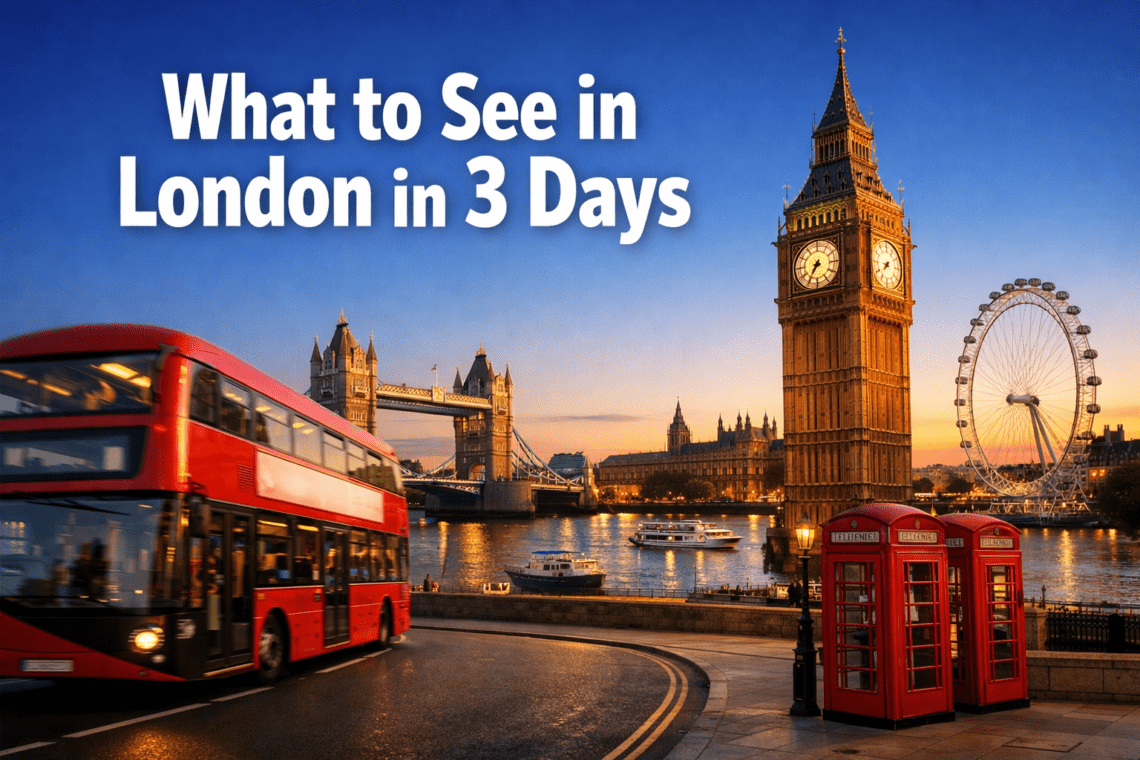
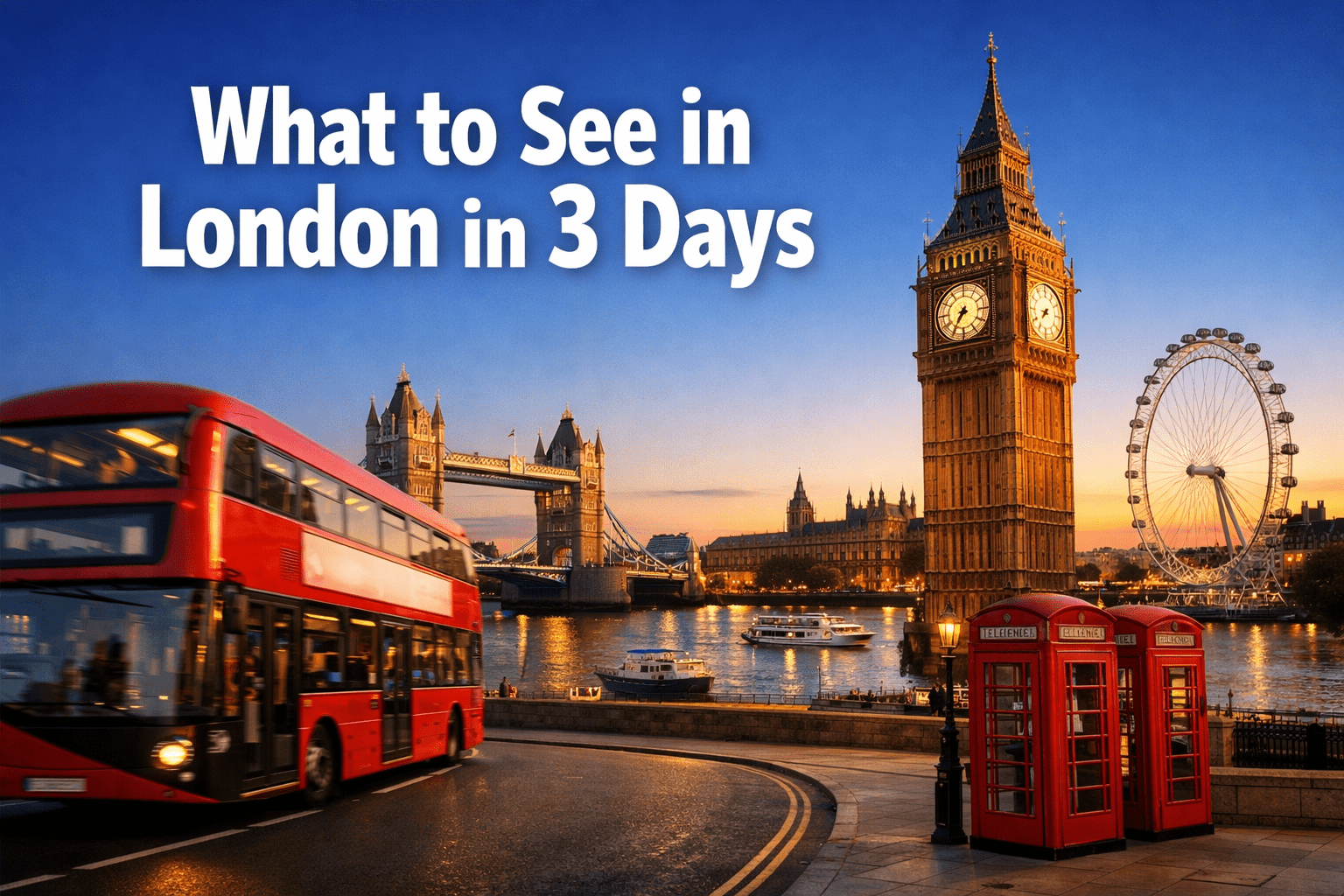
Planning your first trip to London and wondering what to see in London in 3 days? You’re not alone. The British capital packs centuries of history, world-class museums, royal palaces, and iconic landmarks into one sprawling city. I’ve spent years exploring London’s neighborhoods and testing different itineraries, and I can tell you that three days is just enough time to experience the essential highlights without feeling rushed.
This guide breaks down what to see in London in 3 days into a practical, tested itinerary that covers the must-visit attractions while leaving room to soak in the city’s atmosphere. You’ll visit the Tower of London, explore free world-class museums, see Big Ben and Westminster Abbey, and discover charming neighborhoods—all organized to minimize backtracking and maximize your experience.
Key Takeaways
- Start early at ticketed attractions (Tower of London, Westminster Abbey) to beat crowds and enjoy guided tours
- Free museums including the British Museum and Natural History Museum require 3-4 hours each and work best during midday when paid sites are busiest
- Westminster’s UNESCO heritage circuit (Big Ben, Parliament, Westminster Abbey) clusters together for efficient morning exploration
- South Bank riverside walk connects major landmarks and provides evening entertainment with street performers and river views
- Strategic neighborhood pairing (Notting Hill with South Kensington, Covent Garden with British Museum) reduces transit time
- Book tickets online for Tower of London and Westminster Abbey to skip queues and save up to 30 minutes
- Weekday visits to markets like Borough and Portobello Road offer different experiences than weekend crowds
- Evening activities along South Bank and Covent Garden extend your sightseeing beyond standard museum hours
Quick Answer
What to see in London in 3 days centers on three strategic zones: Day 1 covers the Tower of London, Tower Bridge, and the Westminster heritage sites (Big Ben, Parliament, Westminster Abbey). Day 2 focuses on free world-class museums (British Museum, Natural History Museum) paired with neighborhood exploration in South Kensington and Notting Hill. Day 3 combines St. Paul’s Cathedral, Borough Market, South Bank cultural venues, and Covent Garden’s shopping and entertainment district. This routing minimizes backtracking while hitting London’s essential landmarks and providing authentic neighborhood experiences.
How Should You Spend Day 1 in London?
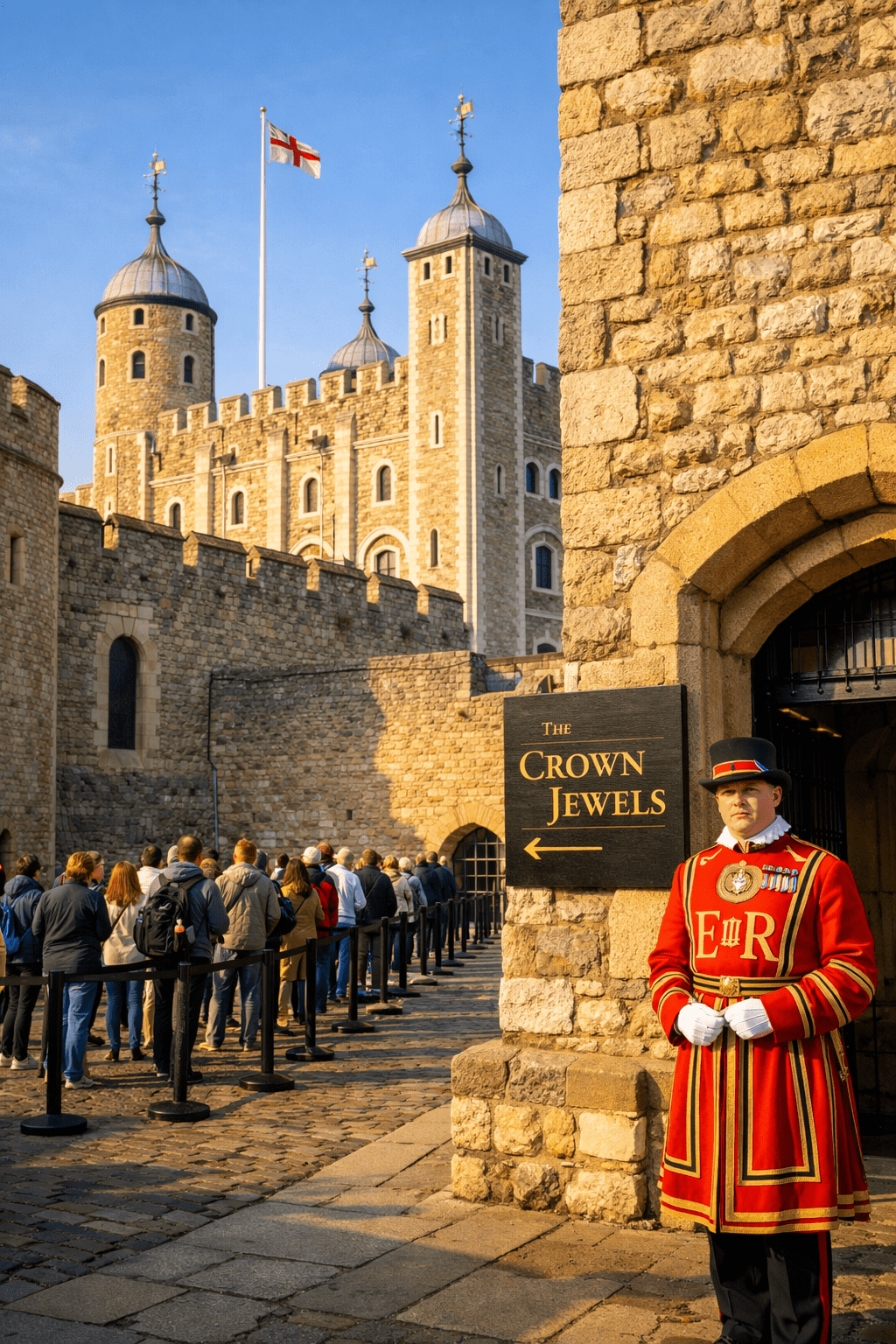
Day 1 focuses on London’s historic core, combining the Tower of London with Westminster’s iconic landmarks. Start at the Tower of London when it opens at 9:00 AM to experience the Crown Jewels and medieval fortress before crowds arrive, then move to Westminster for Big Ben, Parliament, and Westminster Abbey in the afternoon.
Morning: Tower of London and Tower Bridge
Arrive at the Tower of London right at opening (9:00 AM) to join a complimentary Yeoman Warder tour. These 60-minute tours led by ceremonial guards cover 1,000 years of royal history, including tales of executions, escapes, and royal intrigue. The £34.80 admission includes:
- Crown Jewels exhibition featuring coronation regalia and the Imperial State Crown
- White Tower museum with royal armor collections dating to Henry VIII
- Medieval Palace showing how royalty lived in the 13th century
- Tower Green execution site where Anne Boleyn and Catherine Howard died
After the Tower, walk 5 minutes to Tower Bridge. You can admire the iconic Victorian Gothic architecture from ground level for free, or pay £12.30 to walk the glass floor walkways 42 meters above the Thames.
Pro tip: Book Tower of London tickets online to skip the ticket office queue. Arrive 15 minutes before opening to be first in line for the Yeoman Warder tour, which fills quickly.
Afternoon: Westminster Abbey and Big Ben
Take the Tube from Tower Hill to Westminster (15 minutes on the District or Circle line). The Westminster UNESCO heritage circuit clusters several major landmarks within a 10-minute walk:
Westminster Abbey (£29 admission) requires 90-120 minutes to explore properly. This Gothic masterpiece hosts coronations and royal weddings, and contains tombs of 17 monarchs plus memorials to Shakespeare, Darwin, and Stephen Hawking. Visit between 2:00-4:00 PM when morning tour groups have cleared.
Big Ben and Parliament stand directly across the street. While you can’t tour Big Ben’s Elizabeth Tower currently, the exterior views and Parliament Square provide classic photo opportunities. The Houses of Parliament offer guided tours on Saturdays and during summer recess (£28.50).
Walk through St. James’s Park to Buckingham Palace for the 4:00 PM Changing of the Guard ceremony (check schedule, as it doesn’t occur daily in winter). The palace exterior and Victoria Memorial create the quintessential royal London experience.
Evening: South Bank or Covent Garden
End Day 1 with dinner and evening strolls in either:
- South Bank: Walk along the Thames past street performers, browse bookstalls under Waterloo Bridge, and enjoy river views of illuminated Parliament
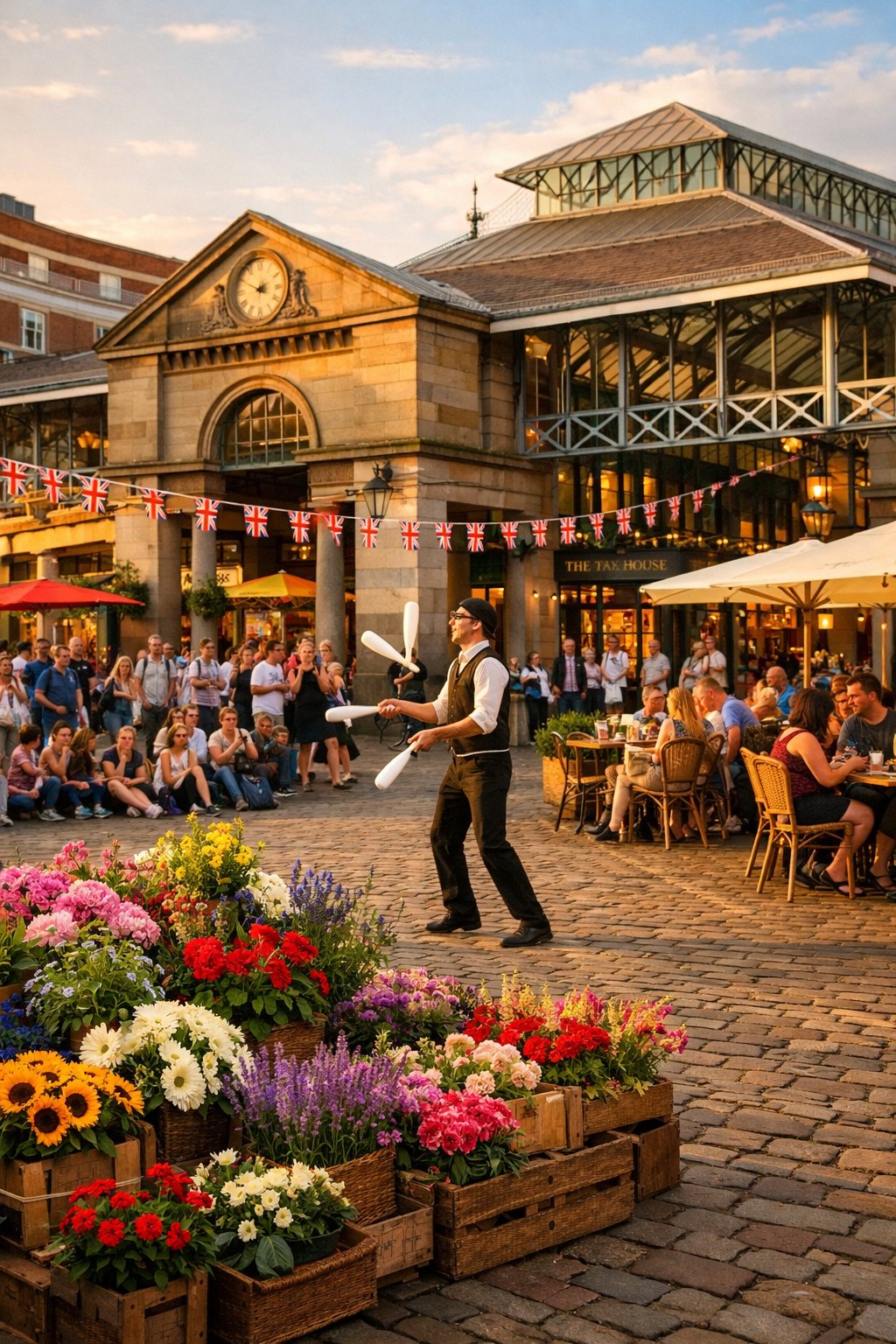
- Covent Garden: Experience street performers in the historic market piazza, browse boutique shops, and choose from dozens of restaurants
Both areas stay lively until 10:00 PM with free entertainment and dining options ranging from budget-friendly chains to upscale restaurants.
What Museums and Neighborhoods Define Day 2?
Day 2 maximizes London’s free world-class museums while exploring charming neighborhoods. The British Museum anchors your morning, followed by South Kensington’s museum district and Notting Hill’s colorful streets in the afternoon—a combination that delivers cultural depth without admission costs.
Morning: British Museum
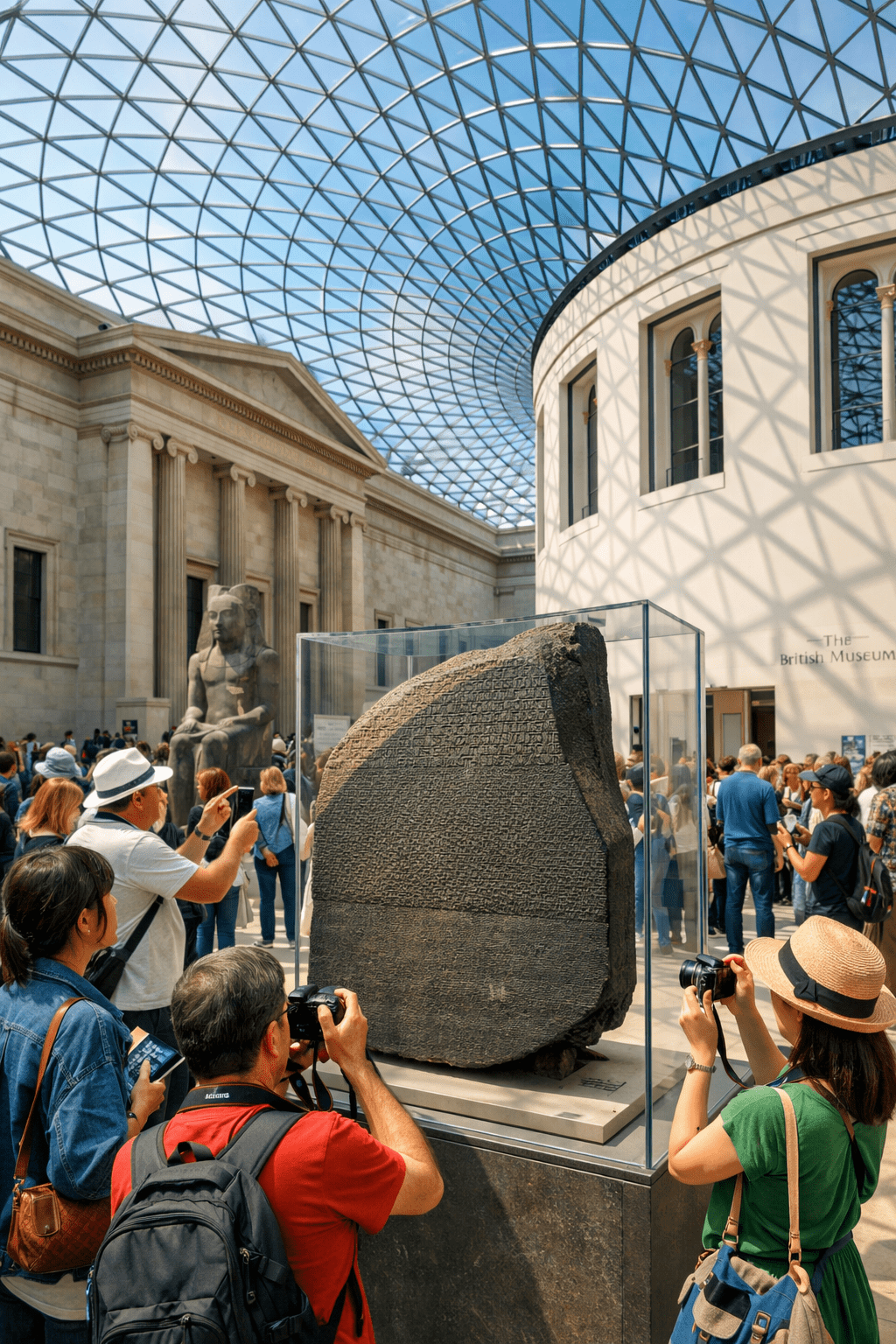
The British Museum houses 8 million objects spanning 2 million years of human civilization across 94 galleries. Arrive when doors open at 10:00 AM and allocate 3-4 hours minimum. Free 40-minute guided tours depart hourly and provide excellent orientation.
Must-see highlights include:
- Rosetta Stone (Room 4) – the key to deciphering Egyptian hieroglyphics
- Parthenon Marbles (Room 18) – classical Greek sculptures from Athens
- Egyptian mummies (Rooms 62-63) – including Cleopatra’s era artifacts
- Sutton Hoo treasures (Room 41) – Anglo-Saxon royal burial goods
- Lewis Chessmen (Room 40) – medieval Viking chess pieces
The museum’s Great Court features a stunning glass roof designed by Norman Foster, with cafes and the Reading Room at its center. Admission is free, though special exhibitions require tickets.
Common mistake: Trying to see everything. Focus on 2-3 civilizations that interest you most, or follow a themed trail (Ancient Egypt, Ancient Greece, or Medieval Europe).
Afternoon: South Kensington Museums
Take the Tube to South Kensington (20 minutes from Russell Square) to explore two more exceptional free museums:
Natural History Museum impresses with its Romanesque architecture and dinosaur galleries. The 25-meter blue whale skeleton suspended in Hintze Hall creates an unforgettable entrance. Top galleries include:
- Dinosaur exhibits with animatronic T-Rex
- Earth’s Treasury gem and mineral collection
- Darwin Centre with 22 million preserved specimens
Victoria & Albert Museum next door specializes in decorative arts and design, from Renaissance sculpture to contemporary fashion. The Cast Courts displaying plaster copies of Michelangelo’s David and Trajan’s Column are particularly impressive.
Both museums require 2-3 hours each. Choose one based on your interests, or spend 90 minutes in each for highlights.
Late Afternoon: Notting Hill and Portobello Road
Walk 15 minutes or take bus 52 from South Kensington to Notting Hill. This West London neighborhood gained fame from the 1999 film but offers authentic charm beyond its movie reputation.
Portobello Road stretches nearly a mile with antique shops, vintage clothing boutiques, and food stalls. Saturday brings the full antiques market with 1,000+ vendors, but weekday visits provide easier browsing without tourist crowds. The colorful pastel houses along Westbourne Grove create Instagram-worthy backdrops.
Browse independent bookshops, grab coffee at local cafes, and explore the side streets like Colville Terrace and Lancaster Road for the most photogenic Victorian townhouses.
Similar to planning a trip to Rome or Edinburgh, London rewards travelers who balance major landmarks with neighborhood exploration.
What Should You Prioritize on Day 3 in London?
Day 3 combines St. Paul’s Cathedral, Borough Market’s food scene, South Bank cultural venues, and Covent Garden’s entertainment district. This final day provides architectural grandeur, culinary exploration, and shopping opportunities while filling gaps from the previous two days.
Morning: St. Paul’s Cathedral
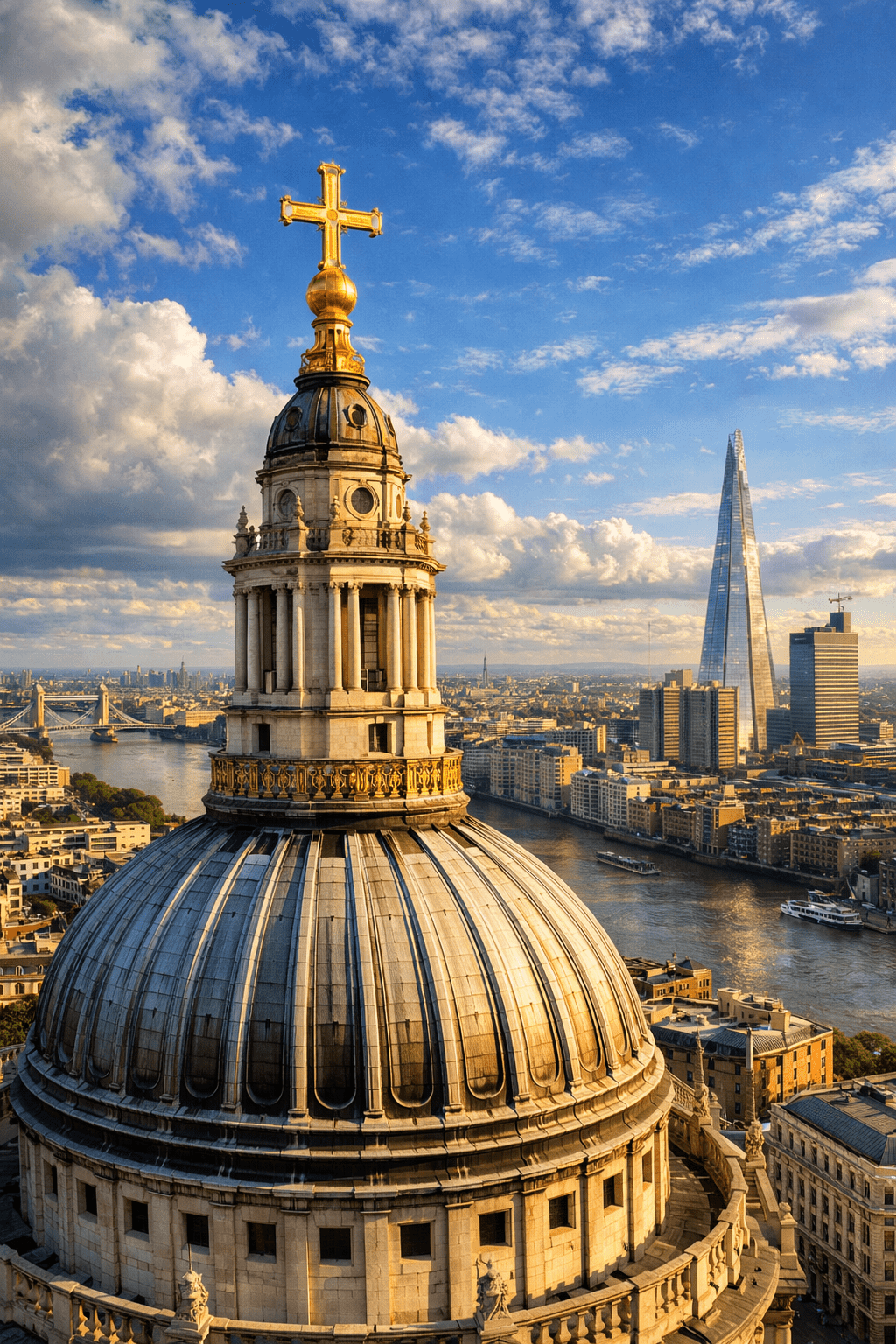
St. Paul’s Cathedral represents Sir Christopher Wren’s baroque masterpiece, rebuilt after the Great Fire of London in 1666. Arrive at 8:30 AM opening to climb the dome before crowds (£23 admission includes audio guide).
The climb involves three stages:
- Whispering Gallery (259 steps) – acoustic phenomenon where whispers carry across the 30-meter dome
- Stone Gallery (378 steps) – exterior walkway with 360-degree city views
- Golden Gallery (528 steps) – highest public viewpoint at 85 meters
The cathedral interior features stunning mosaics, the Duke of Wellington’s tomb, and the American Memorial Chapel honoring WWII casualties. Budget 2-3 hours total including the climb.
Choose St. Paul’s if: You want panoramic London views and appreciate religious architecture. Skip if: You have mobility limitations (no elevators) or already visited Westminster Abbey.
Midday: Borough Market
Walk 15 minutes south across the Millennium Bridge (with perfect St. Paul’s views) to Borough Market. This 1,000-year-old food market operates Wednesday-Saturday with 100+ vendors selling everything from artisan cheese to international street food.
Lunch here costs £8-15 and provides authentic London food culture. Top picks include:
- Kappacasein’s grilled cheese sandwiches
- Roast for traditional British fare
- Gujarati Rasoi for vegetarian Indian food
- Bread Ahead for fresh doughnuts
The market sits under Victorian railway arches near London Bridge, creating atmospheric covered shopping even in rain.
Afternoon: South Bank Walk and Cultural Venues
Follow the Thames Path west from Borough Market along the South Bank. This 2-mile riverside walk connects several free and paid attractions:
- Tate Modern (free admission) – contemporary art museum in converted power station
- Shakespeare’s Globe (£19 tours) – faithful reconstruction of Elizabethan theater
- National Theatre – often offers free foyer performances and exhibitions
- London Eye (£32) – 30-minute rotation providing aerial city views
The South Bank buzzes with street performers, bookstalls, and pop-up food markets. Stop at Gabriel’s Wharf for independent craft shops or continue to the Southbank Centre for free art exhibitions.
Time-saving tip: If you’re not interested in the London Eye, the view from St. Paul’s Golden Gallery provides better value and fewer crowds.
Evening: Covent Garden
End your three days at Covent Garden, London’s entertainment and shopping hub. The converted 19th-century market hall hosts:
- Apple Market (Tuesday-Sunday) – handmade crafts and antiques
- Jubilee Market (daily) – budget goods and tourist souvenirs
- Street performers – professional musicians, magicians, and acrobats perform in the piazza
Surrounding streets contain the Royal Opera House, Theatre Royal Drury Lane, and dozens of West End theaters. Book last-minute theater tickets at TKTS booth in Leicester Square (30-50% off same-day shows).
Dining options range from Dishoom (upscale Indian) to Flat Iron (affordable steak) to chains like Wagamama and Five Guys. The area stays lively until midnight with pubs and cocktail bars.
How Do You Navigate London’s Transportation System?
London’s public transport network ranks among the world’s most comprehensive, connecting all major attractions via Tube (subway), buses, and trains. First-time visitors should purchase an Oyster Card or use contactless payment cards for the simplest, most cost-effective travel.
Oyster Card vs. Contactless Payment
Both options charge the same fares and apply daily caps, meaning you never pay more than the day pass price regardless of trips taken:
| Payment Method | Daily Cap (Zones 1-2) | Where to Get It |
|---|---|---|
| Oyster Card | £8.10 | Tube stations, newsagents |
| Contactless Card | £8.10 | Use your existing debit/credit card |
| Paper Ticket | No cap (£6.70 per trip) | Not recommended |
Choose Oyster if: You want a London souvenir (£7 deposit, refundable) or don’t have contactless payment.
Choose contactless if: You’re visiting short-term and want one less card to carry.
Essential Tube Lines for This Itinerary
The London Underground (Tube) operates 11 color-coded lines. For this three-day itinerary, you’ll primarily use:
- District/Circle Line (green/yellow) – Tower Hill to Westminster
- Central Line (red) – Notting Hill Gate to St. Paul’s
- Piccadilly Line (dark blue) – South Kensington to Covent Garden
- Northern Line (black) – London Bridge to Covent Garden
Trains run 5:30 AM to 12:30 AM weekdays, with Night Tube on weekends on select lines. Download the Citymapper app for real-time directions combining Tube, bus, and walking routes.
When to Walk vs. Ride
Many London attractions sit closer together than Tube maps suggest. Walk instead of riding for:
- Tower of London to Tower Bridge (5 minutes)
- Westminster Abbey to St. James’s Park to Buckingham Palace (15 minutes)
- British Museum to Covent Garden (12 minutes)
- St. Paul’s to Borough Market via Millennium Bridge (15 minutes)
Walking saves time avoiding station stairs and provides street-level neighborhood context you miss underground. The Thames Path riverside walk connects South Bank attractions seamlessly.
What Are Common Mistakes First-Timers Make?
First-time London visitors often waste time and money on avoidable errors. Learning from these common mistakes helps you maximize your three days and avoid frustration.
Trying to See Too Much
London contains enough attractions for weeks of exploration. First-timers often create exhausting itineraries trying to “see everything,” resulting in rushed visits and museum fatigue.
Better approach: This three-day itinerary intentionally limits you to 2-3 major attractions daily, with built-in flexibility. If you love the British Museum, spend 5 hours there and skip the Natural History Museum. Quality beats quantity.
Not Booking Tickets in Advance
Walk-up ticket lines at Tower of London and Westminster Abbey can consume 30-45 minutes during peak season (May-September). Online tickets cost the same and include dedicated entry lanes.
Book ahead for:
- Tower of London
- Westminster Abbey
- St. Paul’s Cathedral
- London Eye (if visiting)
Free attractions (British Museum, Natural History Museum, Tate Modern) don’t require tickets, though special exhibitions do.
Underestimating Distances
London spans 607 square miles. First-timers often assume attractions are walkable when they’re actually miles apart. The Tube map distorts geography, making distant stations appear close.
Reality check: Notting Hill to Tower of London is 6 miles (45 minutes by Tube). Plan realistic itineraries that group nearby attractions, like this guide does with South Kensington museums and Notting Hill on the same afternoon.
Eating Only in Tourist Areas
Restaurants around Leicester Square, Piccadilly Circus, and near major attractions charge premium prices for mediocre food. A meal that costs £25 in Covent Garden runs £15 in neighborhoods like Borough or Shoreditch.
Smarter dining: Eat lunch at Borough Market, grab coffee in Notting Hill’s local cafes, and choose restaurants on side streets rather than main tourist thoroughfares.
Skipping Free Museums
London’s free museums (British Museum, Natural History Museum, V&A, Tate Modern, National Gallery) rival the world’s best collections. Some visitors pay for mediocre attractions while missing these exceptional free options.
Prioritize free museums on your itinerary, especially on Day 2 when you can explore two world-class collections without admission costs.
Much like travelers planning New York City or New Orleans visits, London first-timers benefit from avoiding tourist traps and focusing on authentic experiences.
Where Should You Stay in London for This Itinerary?
Your accommodation location significantly impacts how efficiently you can execute this three-day itinerary. Central London neighborhoods provide easy access to attractions while offering distinct character and price points.
Best Neighborhoods for First-Timers
Westminster/Victoria puts you within walking distance of Day 1’s attractions (Westminster Abbey, Big Ben, Buckingham Palace). Hotels here skew expensive but save significant transit time. Choose this if you prioritize convenience over budget.
South Kensington offers excellent value with direct access to Day 2’s museum district. The neighborhood features elegant Victorian architecture, good restaurants, and the Piccadilly/District/Circle Tube lines connecting to all major attractions. Mid-range hotels here cost 20-30% less than Westminster.
Covent Garden/Holborn provides central positioning between the British Museum and West End theaters. The area buzzes with energy but can be noisy at night. Budget £150-250 per night for hotels here.
King’s Cross/St. Pancras delivers the best budget-to-location ratio. Recently regenerated, this area offers modern hotels, excellent transport links (6 Tube lines), and proximity to the British Museum. Hotels run £100-180 per night.
Budget Considerations
London accommodation ranks among Europe’s most expensive. Expect to pay:
- Budget hostels: £25-45 per bed in dorms
- Budget hotels: £80-120 per night (small rooms, basic amenities)
- Mid-range hotels: £150-220 per night (comfortable, central locations)
- Upscale hotels: £250+ per night (luxury amenities, prime locations)
Money-saving strategies:
- Book 2-3 months ahead for best rates
- Stay slightly outside Zone 1 (Bayswater, Earl’s Court) and commute 15 minutes
- Visit during off-peak months (January-March, November) for 30-40% discounts
- Consider Airbnb apartments for groups of 3-4 people
Location vs. Price Trade-offs
Choose central Zone 1 (Westminster, South Kensington, Covent Garden) if:
- This is a short trip where time matters more than money
- You want to walk to attractions and return to your hotel easily
- You’re visiting during winter when you’ll appreciate shorter outdoor transit
Choose Zone 2 (Bayswater, Earl’s Court, Shoreditch) if:
- You’re budget-conscious and don’t mind 15-20 minute commutes
- You want more authentic neighborhood experiences
- You’re comfortable navigating public transport
The Tube’s efficiency means a Zone 2 hotel adds only 10-15 minutes to most journeys compared to Zone 1, while potentially saving £50-80 per night.
How Can You Customize This Itinerary?
This three-day framework adapts to different interests, travel styles, and circumstances. Here’s how to modify the itinerary based on your priorities.
For Art and Museum Lovers
Replace Day 1’s Buckingham Palace and St. James’s Park with the National Gallery in Trafalgar Square (free admission, 2,300+ paintings including Van Gogh, Monet, and da Vinci). Add the Tate Britain on Day 3 for British art from 1500 to present.
Extend Day 2’s museum time by choosing either the Natural History Museum or V&A and spending 4-5 hours exploring in depth rather than rushing through both.
For Royal History Enthusiasts
Add Kensington Palace (£19.50) to Day 2’s afternoon instead of Notting Hill. The palace includes State Apartments, the King’s Gallery, and exhibits about Queen Victoria and Princess Diana.
Book a Buckingham Palace State Rooms tour (£33, summer only) for Day 1 instead of just viewing the exterior. Tours run July-September when the Royal Family vacations in Scotland.
Replace St. Paul’s on Day 3 with Hampton Court Palace (£28.50, 35 minutes by train from Waterloo). Henry VIII’s former residence features Tudor kitchens, the famous maze, and 60 acres of gardens.
For Families with Children
Swap Day 2’s British Museum for the Science Museum next to the Natural History Museum. Interactive exhibits, flight simulators, and the IMAX theater engage children better than ancient artifacts.
Add the London Zoo in Regent’s Park (£33 adults, £21 children) on Day 3 morning instead of St. Paul’s. The zoo houses 750+ species and includes the Land of the Lions exhibit.
Replace Borough Market with Covent Garden’s street performers for lunch and entertainment that appeals to all ages.
For Budget Travelers
Focus exclusively on free attractions: British Museum, Natural History Museum, V&A, Tate Modern, National Gallery, changing of the guard, and neighborhood walks. This eliminates £100+ in admission fees.
Pack picnic lunches from supermarkets (Tesco, Sainsbury’s) and eat in parks rather than restaurants. A meal that costs £15 at a restaurant runs £4-5 from a supermarket.
Walk more and ride less. The 2-mile Westminster to Tower of London walk along the Thames costs nothing and provides better views than the Tube.
For Short on Time (2 Days Only)
Combine Day 1 and Day 3: Tower of London in the morning, Westminster Abbey midday, St. Paul’s afternoon, and South Bank evening. This hits the major landmarks in one intense day.
Use Day 2 for the British Museum morning and South Kensington museums afternoon, skipping Notting Hill and Borough Market.
This compressed version sacrifices neighborhood exploration but covers the absolute must-see attractions.
What Practical Tips Make Your Visit Smoother?
Small practical considerations significantly improve your London experience. These tested tips address common questions and situations first-timers encounter.
Best Times to Visit Attractions
Tower of London: Arrive at 9:00 AM opening or after 3:00 PM when tour groups depart. Mid-morning (10:30 AM-12:30 PM) brings peak crowds.
Westminster Abbey: Visit 2:00-4:00 PM after morning tour groups clear. Avoid Sundays when the abbey closes for worship.
British Museum: Weekday mornings (10:00-11:00 AM) or Friday late nights (open until 8:30 PM) offer the quietest browsing.
Borough Market: Thursday-Friday provide full vendor selection without Saturday’s tourist crowds. Wednesday offers limited stalls.
Weather and What to Pack
London weather remains unpredictable year-round. Pack:
- Waterproof jacket: Rain occurs 50% of days, usually as brief showers
- Comfortable walking shoes: Expect 15,000-20,000 steps daily
- Layers: Temperature swings of 10-15°F within a single day are common
- Small umbrella: Compact models fit in daypacks
Summer (June-August) averages 70°F but can reach 85°F. Winter (December-February) hovers around 45°F with occasional snow. Spring and fall provide the most pleasant weather with fewer crowds.
Money and Tipping
The British pound (£) typically trades at $1.25-1.30 USD. Most establishments accept contactless payment, making cash optional. However, carry £20-40 for:
- Small shops and market vendors
- Public restrooms (20p-50p)
- Street food vendors
- Tipping (cash preferred)
Tipping customs:
- Restaurants: 10-12.5% if service not included
- Pubs: No tipping at the bar
- Taxis: Round up to nearest pound
- Hotels: £1-2 per bag for porters
Safety and Common Scams
London ranks as one of Europe’s safest major cities, but standard urban precautions apply:
Watch for pickpockets on crowded Tube trains, especially at tourist stations (Westminster, Leicester Square, Piccadilly Circus). Keep valuables in front pockets or cross-body bags.
Avoid unlicensed taxis (minicabs) waiting outside train stations. Use licensed black cabs or apps like Uber and Bolt.
Ignore street vendors selling “discounted” theater tickets or attraction passes. Buy from official sources only.
Emergency number: Dial 999 for police, fire, or ambulance. The NHS provides free emergency medical care regardless of citizenship.
Connectivity and Apps
Most hotels, cafes, and museums offer free WiFi. For constant connectivity, purchase a UK SIM card (£10-20 for 2-3GB data) at Heathrow Airport or any phone shop.
Essential apps:
- Citymapper: Best transport directions combining Tube, bus, and walking
- Google Maps: Offline maps and attraction information
- TfL Go: Official Transport for London app with real-time updates
- Trainline: Book train tickets to destinations outside London
Download these before arrival and save offline maps of central London for areas with spotty signal (Tube tunnels, some museums).
Just as travelers benefit from planning guides for destinations like the Amalfi Coast or Lisbon, London visitors maximize their experience with practical preparation.
FAQ
How much does a 3-day London trip cost?
A budget 3-day London trip costs £300-400 per person (hostel, street food, free attractions). Mid-range travelers spend £600-800 (decent hotel, restaurant meals, paid attractions). Luxury visits run £1,200+ with upscale hotels and dining. Transportation adds £25-30 regardless of budget level.
Do you need to book London attractions in advance?
Book Tower of London, Westminster Abbey, and St. Paul’s Cathedral online to skip ticket queues and guarantee entry during peak season. Free museums (British Museum, Natural History Museum, V&A) don’t require booking except for special exhibitions. Summer visitors should book 2-4 weeks ahead for popular attractions.
Is the London Pass worth it for 3 days?
The 3-day London Pass costs £124 and includes 80+ attractions. You’d need to visit 4-5 paid attractions daily to break even, which creates an exhausting schedule. Most first-timers get better value buying individual tickets for 3-4 must-see sites and visiting free museums otherwise.
What’s the best area to stay in London for first-timers?
South Kensington offers the best balance of location, value, and neighborhood character for first-timers. It provides walking access to three world-class museums, excellent Tube connections, and costs 20-30% less than Westminster while maintaining a safe, attractive environment with good restaurants.
Can you see London in 3 days without feeling rushed?
Yes, if you focus on 2-3 major attractions daily and accept you won’t see everything. This itinerary provides a comprehensive introduction covering essential landmarks, world-class museums, and authentic neighborhoods without the exhausting pace of trying to “do it all.” Quality experiences beat quantity.
How much walking should you expect in London?
Expect 15,000-20,000 steps (7-10 miles) daily following this itinerary. Comfortable, broken-in walking shoes are essential. The Tube reduces walking between neighborhoods, but attractions themselves require significant on-foot exploration. Build in afternoon rest breaks at cafes or parks.
Is London safe for solo travelers?
London is very safe for solo travelers, including women. Use standard urban precautions: watch belongings on public transport, avoid unlicensed taxis, stay in well-lit areas at night, and trust your instincts. The Tube runs until midnight, and neighborhoods in this itinerary remain busy and safe throughout evening hours.
What’s the best month to visit London?
May-June and September-October provide the best weather-to-crowd ratio. Summer (July-August) brings warmest weather but peak crowds and prices. Winter (November-March) offers lowest prices and fewer tourists but shorter daylight hours and frequent rain. Avoid visiting during major holidays when attractions close.
Do London museums really cost nothing?
Yes, major national museums (British Museum, Natural History Museum, V&A, Tate Modern, National Gallery) offer completely free admission to permanent collections. Special temporary exhibitions require tickets (£12-18). The free collections alone contain world-class artifacts rivaling any paid museum globally.
How do you get from Heathrow to central London?
The Heathrow Express train reaches Paddington Station in 15 minutes (£25-37). The Piccadilly Tube line takes 50-60 minutes to central London (£5.50 with Oyster/contactless). The Elizabeth Line offers a middle option at 30 minutes and £12.80. Taxis cost £50-70 depending on traffic and destination.
Should you visit Windsor Castle or Hampton Court Palace?
Windsor Castle (£28.50, 40 minutes from Waterloo) offers grander royal atmosphere with State Apartments and St. George’s Chapel. Hampton Court Palace (£28.50, 35 minutes from Waterloo) provides better historical depth with Tudor kitchens, the maze, and extensive gardens. Choose Windsor for royal grandeur, Hampton Court for interactive history.
What should you eat in London?
Try traditional fish and chips, Sunday roast (roasted meat with Yorkshire pudding), and afternoon tea. Borough Market offers international options from Indian to Middle Eastern. Skip tourist-trap restaurants around Leicester Square. Budget £8-12 for casual meals, £20-30 for sit-down restaurants, £50+ for upscale dining.
Conclusion
What to see in London in 3 days comes down to strategic planning that balances iconic landmarks with authentic experiences. This itinerary takes you from the Tower of London’s medieval fortress to the British Museum’s ancient civilizations, from Westminster’s royal heritage to Notting Hill’s colorful streets. You’ll experience world-class museums without admission fees, climb St. Paul’s dome for panoramic views, and explore neighborhoods where Londoners actually live.
The key to a successful first London visit is accepting you can’t see everything. Focus on quality over quantity, book major attractions in advance, and build in flexibility for spontaneous discoveries. Start each day early at ticketed sites, explore free museums during midday crowds, and end evenings along the South Bank or in Covent Garden.
Next steps: Book your accommodation in South Kensington or King’s Cross for optimal access to this itinerary. Purchase advance tickets for Tower of London and Westminster Abbey. Download Citymapper for navigation and save offline maps of central London. Pack comfortable walking shoes and a waterproof jacket regardless of season.
London rewards visitors who dig beneath the surface of tourist attractions to discover the neighborhoods, markets, and riverside walks that give the city its character. Three days provides just enough time to experience both the essential landmarks and the authentic atmosphere that makes London one of the world’s greatest cities. Your first visit won’t be your last—London has a way of calling travelers back for deeper exploration.