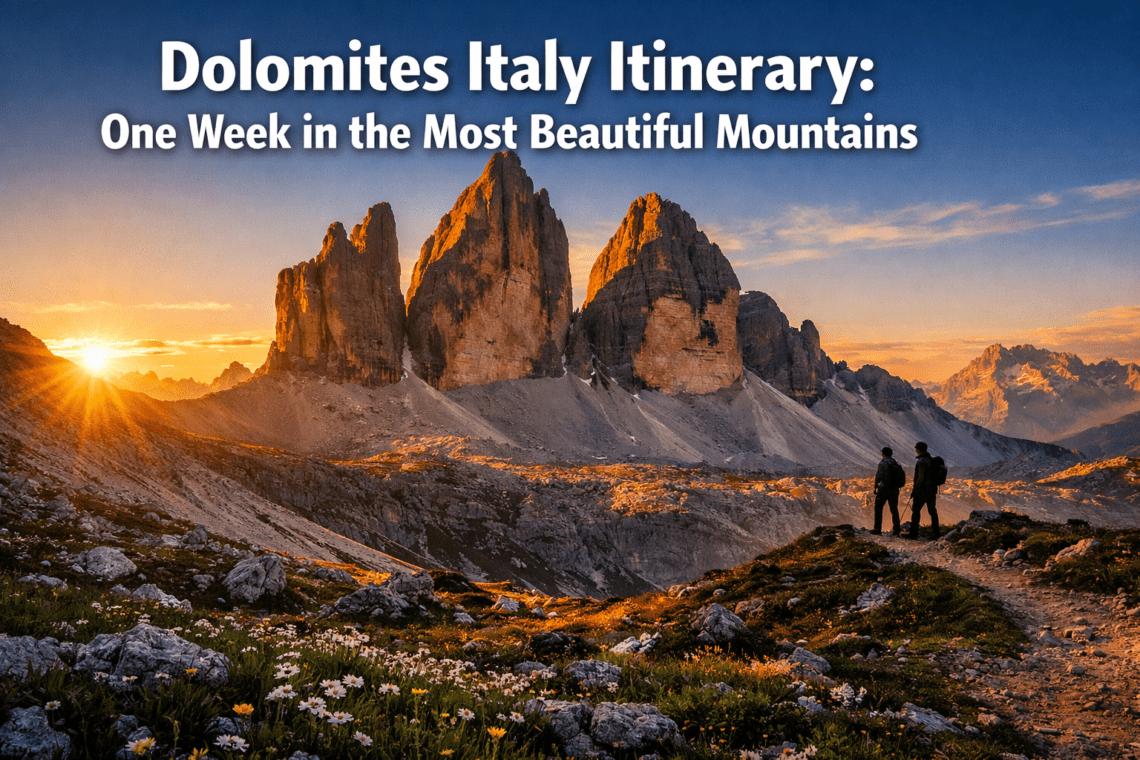
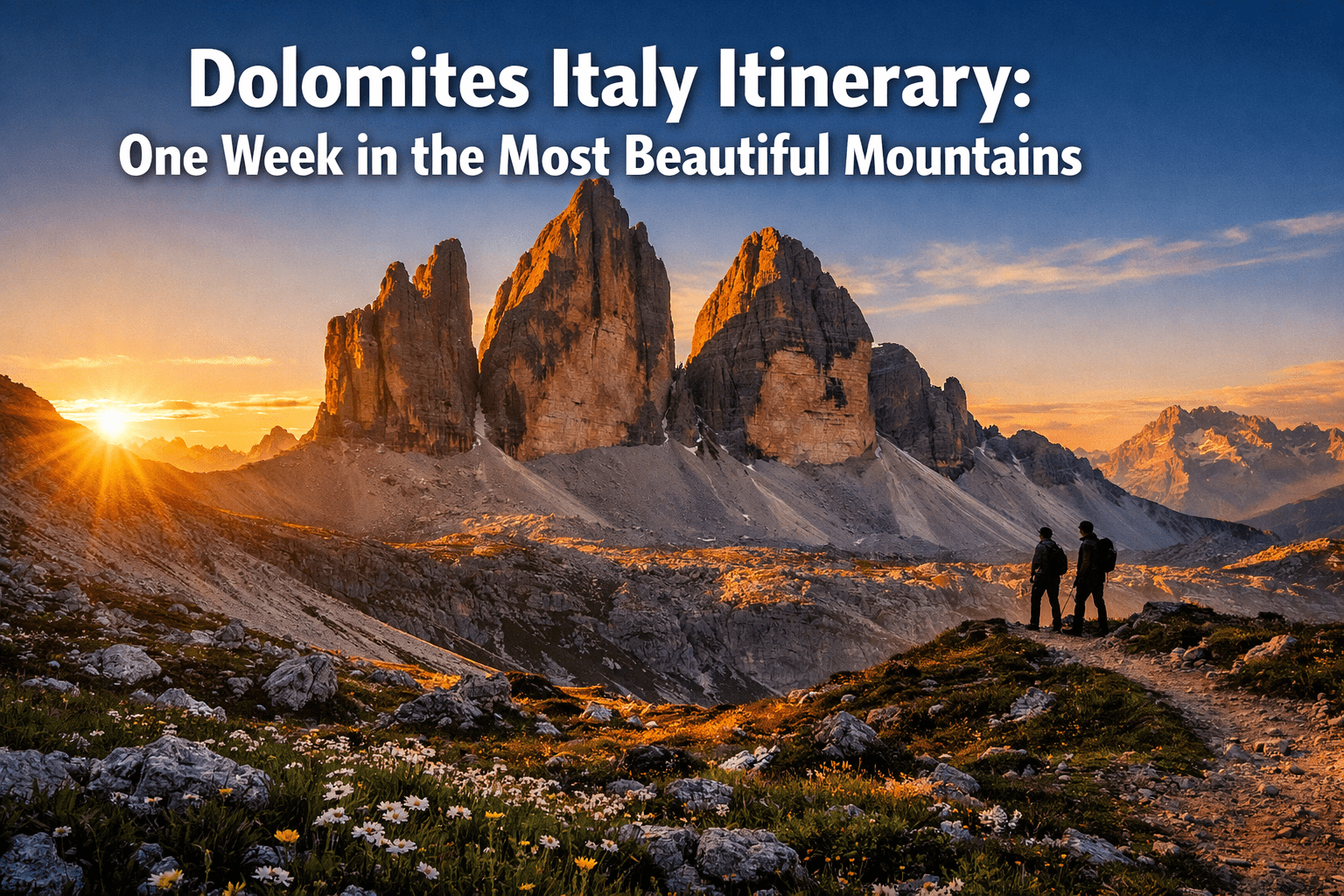
I’ll never forget the moment I first saw the Tre Cime di Lavaredo at sunrise. The three jagged limestone towers glowed golden against a deep blue sky, and I realized why the Dolomites are called the most beautiful mountains on Earth. If you’ve got just one week to explore this UNESCO World Heritage region in northern Italy, you can absolutely hit the highlights without feeling rushed.
A well-planned Dolomites Italy itinerary for seven days lets you hike iconic trails, visit turquoise alpine lakes, stay in charming mountain towns, and experience the unique blend of Italian and Austrian culture that makes this region so special. You’ll base yourself in Cortina d’Ampezzo, take day trips to the most photogenic spots, and return each evening to comfortable accommodations with incredible mountain views.
Key Takeaways
- Base yourself in Cortina d’Ampezzo for easy access to the Dolomites’ most famous peaks and trails
- Start with Tre Cime di Lavaredo on Day 1 (arrive early to avoid crowds and secure the 30 EUR parking fee)
- Plan hikes for 4-5 hours each including Lago di Sorapis, Seceda, and the Adolf Munkel Trail
- Visit iconic lakes like Lago di Braies and Lake Misurina as photo stops between major hikes
- Book rifugio (mountain hut) lunches in advance during peak season for authentic alpine dining
- Explore Val Gardena and Alta Badia for the postcard-perfect St. Magdalena church view
- Use cable cars strategically at Passo Falzarego and Seceda to save energy and gain elevation quickly
- Pack layers and rain gear since mountain weather changes rapidly even in summer
Quick Answer
A one-week Dolomites Italy itinerary should center on Cortina d’Ampezzo as your base, with day trips to Tre Cime di Lavaredo, Lago di Sorapis, Seceda, Val Gardena, and Lago di Braies. Plan 4-5 hour hikes each day, start early to beat crowds, and budget for the 30 EUR Tre Cime access fee. This schedule covers the region’s most stunning peaks, turquoise alpine lakes, and iconic viewpoints without requiring you to change hotels constantly.
Why Choose Cortina d’Ampezzo as Your Base for a Dolomites Italy Itinerary?
Cortina d’Ampezzo is the ideal hub for a week-long Dolomites adventure because it sits centrally among the region’s most famous peaks and offers excellent infrastructure for travelers.
This elegant mountain town hosted the 1956 Winter Olympics and maintains that sophisticated alpine resort atmosphere. You’ll find quality hotels, excellent restaurants serving both Italian and Ladin cuisine, and gear shops if you need hiking equipment. Most importantly, Cortina puts you within 20-45 minutes of the Dolomites’ top attractions.
Choose Cortina if you want:
- Easy access to Tre Cime, Lago di Sorapis, and Cinque Torri
- A range of accommodation options from budget hotels to luxury resorts
- Walkable town center with shops and restaurants
- No need to change hotels during your week
The town does get busy during peak summer (July-August) and winter ski season, so book accommodations at least 2-3 months ahead. If Cortina feels too touristy, consider staying in nearby Dobbiaco or San Candido, though you’ll add 15-20 minutes to your daily drives.
What Should You Do on Day 1 of Your Dolomites Italy Itinerary?
Start your first day with the Tre Cime di Lavaredo loop hike, the single most iconic experience in the Dolomites, followed by photo stops at Lake Misurina and Lago di Dobbiaco.
Wake up early (aim to arrive at the parking area by 7:00 AM) and drive from Cortina to Rifugio Auronzo. You’ll pay a 30 EUR fee to access the toll road that winds up the mountain. This fee is absolutely worth it because it saves you hours of uphill hiking and gets you to the trailhead with energy to spare.
The Tre Cime loop trail:
- Distance: 10 km (6 miles) round trip
- Duration: 3-4 hours at a moderate pace
- Difficulty: Easy to moderate with well-maintained paths
- Best photo spots: Rifugio Lavaredo for the classic three-peak view
After completing the loop, stop at Rifugio Auronzo for lunch. The polenta with mushrooms and speck is excellent. Then drive down to Lake Misurina for photos (15 minutes from Tre Cime) and finish the afternoon at the peaceful Lago di Dobbiaco, where you can walk the easy lakeside trail.
Common mistake: Arriving at Tre Cime after 9:00 AM means fighting for parking and hiking with hundreds of other tourists. The early start makes all the difference.
How Do You Spend Days 2-3 Around Cortina on Your Dolomites Itinerary?
Days 2 and 3 focus on the incredible hiking around Passo Falzarego and the stunning turquoise waters of Lago di Sorapis, both less than 30 minutes from Cortina.
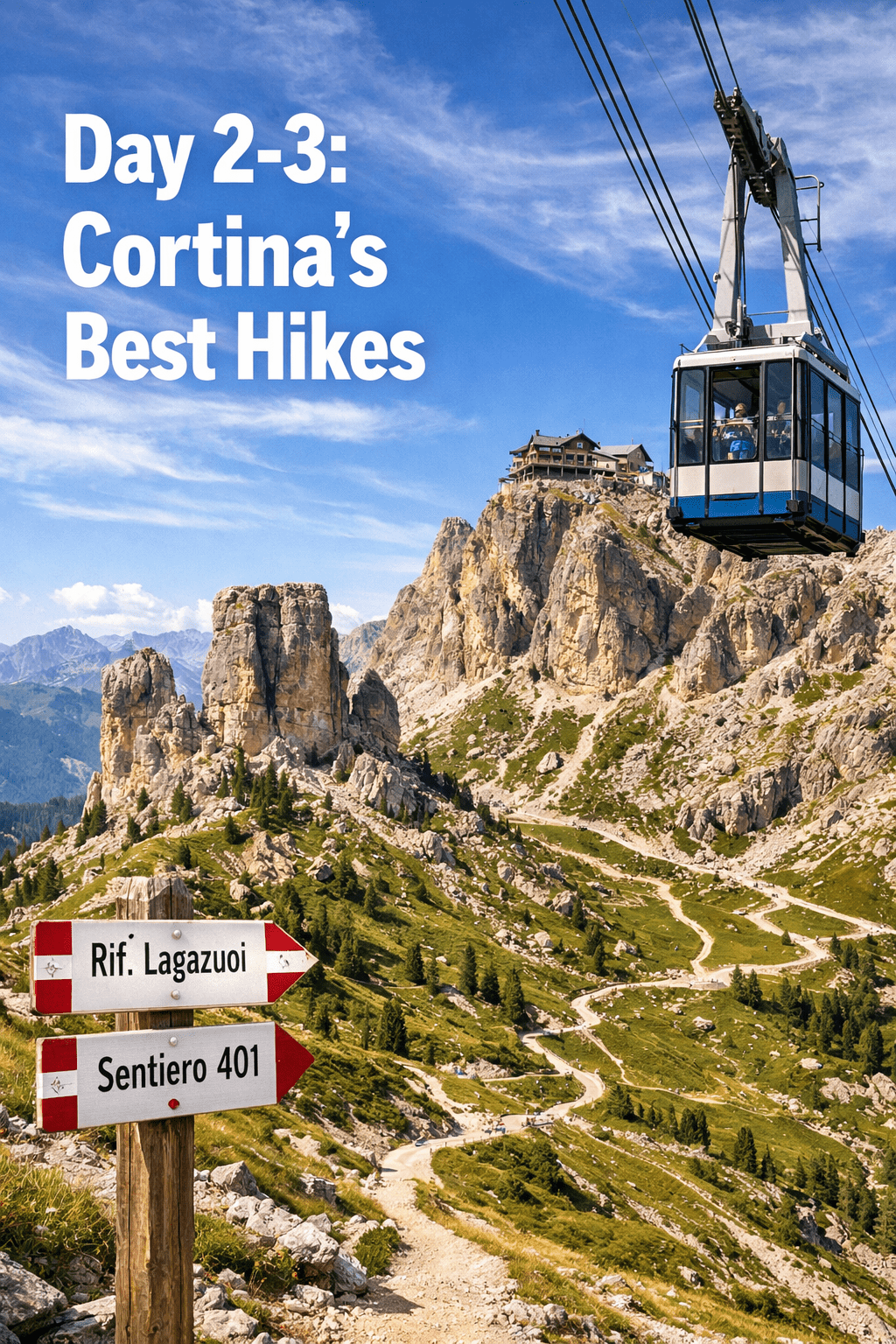
On Day 2, drive to Passo Falzarego (20 km from Cortina, about 30 minutes). Take the cable car up Mount Lagazuoi to access high-altitude trails with panoramic views. You can hike to the summit (another 45 minutes from the cable car top station) or explore the WWI trenches and tunnels carved into the mountain. Lunch at Rifugio Lagazuoi offers 360-degree views.
In the afternoon, hike around Cinque Torri, five distinctive rock towers that are perfect for photography. This area is less crowded than Tre Cime but equally photogenic.
Day 3 itinerary:
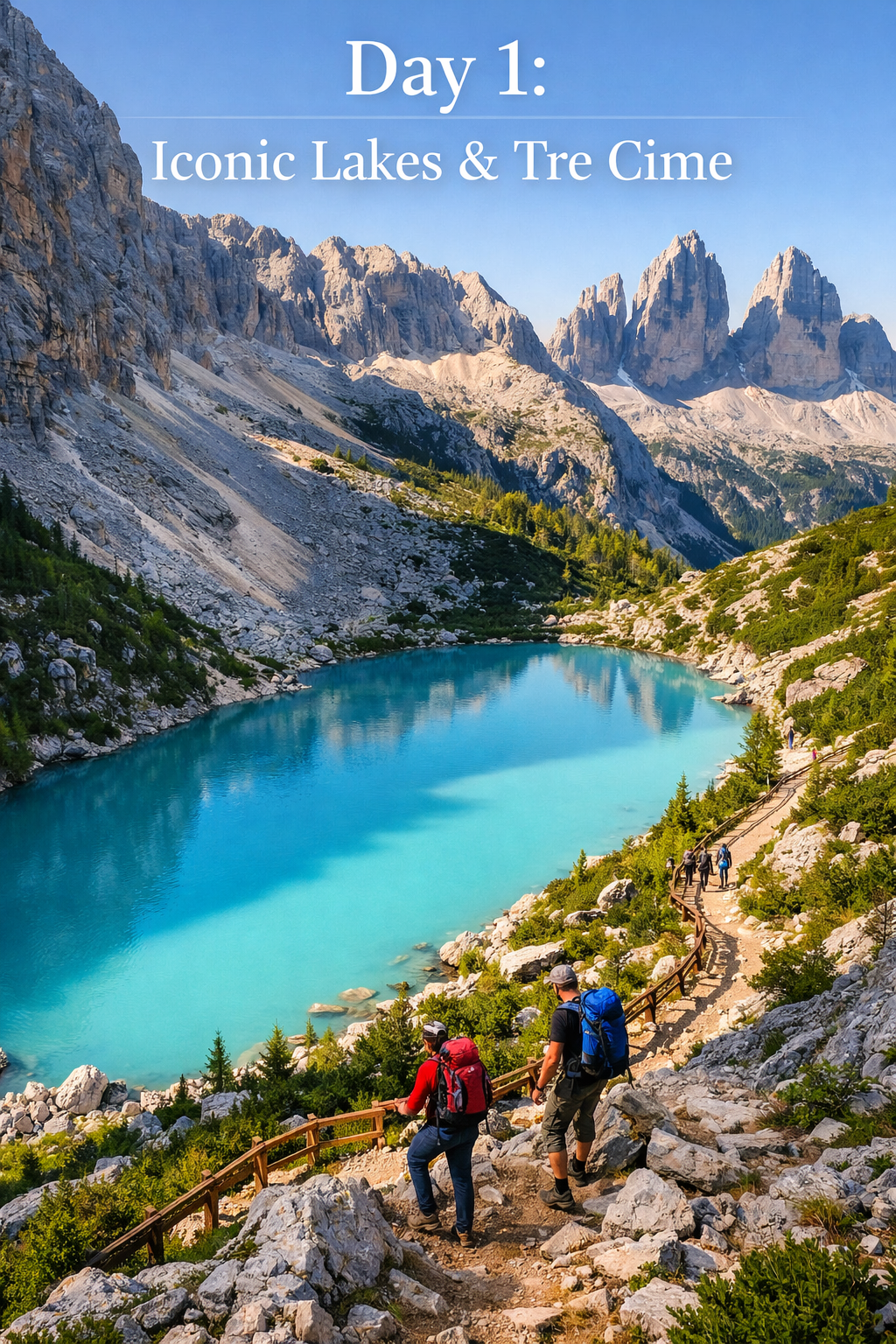
- Morning: Lago di Sorapis hike (4-5 hours round trip)
- Afternoon: Relax in Cortina or visit the Museo Paleontologico
The Lago di Sorapis trail is more challenging than Tre Cime, with steep sections and some exposed areas, but the reward is a surreal turquoise lake surrounded by dramatic peaks. Start early again because parking at the trailhead fills up by 8:30 AM in summer.
Choose Lago di Sorapis if: You want fewer crowds than Tre Cime and don’t mind a more strenuous hike with elevation gain.
Similar to planning my dream Amalfi Coast itinerary, timing your Dolomites hikes early in the day transforms the experience from crowded to magical.
What Are the Must-See Spots in Val Gardena for Days 4-5?
Val Gardena and the neighboring Alta Badia region deliver the most iconic Dolomite viewpoint at St. Magdalena church, plus the dramatic Seceda ridgeline hike.
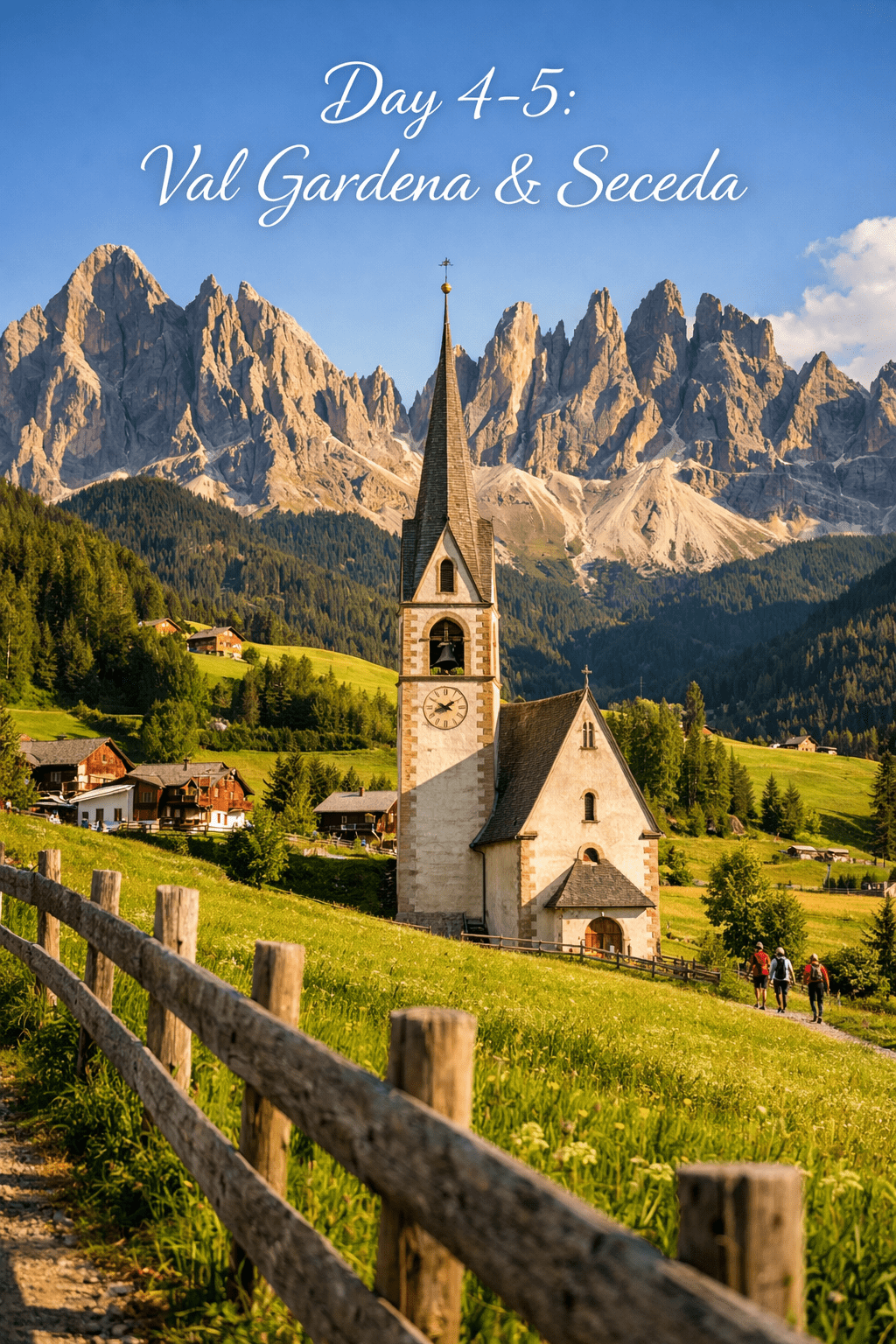
Drive from Cortina to Val Gardena (about 1.5 hours) on Day 4. Your first stop is the village of Santa Maddalena in Val di Funes. The small white church with its pointed bell tower, framed by the jagged Odle mountain range, creates what many consider the single most photographed view in the Dolomites. Arrive before 9:00 AM for the best light and fewer tour buses.
After photos, drive to Ortisei and take the cable car up to Seceda. The hike along the Pieralongia ridge is relatively easy but offers jaw-dropping views of the valley below and the surrounding peaks.
Day 5 activities:
- Adolf Munkel Trail (3-4 hours, moderate difficulty)
- Explore the town of Ortisei for shopping and lunch
- Optional: Alpe di Siusi, Europe’s largest high-altitude alpine meadow
The Adolf Munkel Trail starts near St. Magdalena and loops through meadows with constant views of the Odle peaks. It’s less strenuous than previous days, making it perfect for mid-week when your legs need a break.
Edge case: If weather turns bad in Val Gardena, the Messner Mountain Museum in Kronplatz makes an excellent rainy-day alternative (about 45 minutes from Val Gardena).
Where Should You Go on Days 6-7 to Complete Your Dolomites Italy Itinerary?
Finish your week with Lago di Braies (Pragser Wildsee), the Prato Piazza plateau, and a leisurely drive through the Dolomite valleys you haven’t yet explored.
Lago di Braies is the most famous lake in the Dolomites, and for good reason. The emerald-green water, wooden boat dock, and surrounding peaks create a scene straight from a postcard. The lake gets extremely crowded, so either arrive before 7:00 AM or after 5:00 PM. The walk around the lake takes about 1.5 hours and is completely flat.
Day 6 full itinerary:
- Early morning: Lago di Braies (arrive by 7:00 AM)
- Mid-morning: Prato Piazza hike (2-3 hours, easy)
- Afternoon: Return to Cortina via the scenic route through Carbonin
Prato Piazza is a high-altitude plateau with gentle trails, grazing horses, and stunning views. It’s accessible by car (with a small toll) or via a longer hike from the valley.
On Day 7, take it easy before your departure. Visit any spots you missed, do some shopping in Cortina, or take a short morning hike before heading to the airport. If you’re flying out of Venice, budget 2.5-3 hours for the drive.
This final day structure works well whether you’re continuing to other parts of Italy (like exploring hidden gems in Italy) or heading home.
What’s the Best Way to Structure Your Dolomites Italy Itinerary Week?
The most efficient structure alternates challenging hikes with easier days, groups geographically close attractions, and builds in flexibility for weather changes.
Here’s the recommended weekly flow:
| Day | Location | Activity Level | Highlights |
|---|---|---|---|
| 1 | Tre Cime area | Moderate | Tre Cime loop, Lake Misurina |
| 2 | Passo Falzarego | Moderate-High | Lagazuoi cable car, Cinque Torri |
| 3 | Near Cortina | High | Lago di Sorapis hike |
| 4 | Val Gardena | Moderate | St. Magdalena, Seceda |
| 5 | Val di Funes | Easy-Moderate | Adolf Munkel Trail, Alpe di Siusi |
| 6 | Lago di Braies area | Easy | Lake walk, Prato Piazza |
| 7 | Flexible/Travel | Easy | Shopping, short hike, departure |
Decision rule: If you’re not a strong hiker, swap Day 3’s Lago di Sorapis for an easier option like the Dürrensee lakes or extend your time at Cinque Torri. If you want more challenge, add the Alta Via 1 section between rifugios.
This structure also works well for couples (check out more couples trip ideas) because it balances adventure with relaxation and includes plenty of scenic spots for photos.
What Practical Tips Make Your Dolomites Itinerary Smoother?
Success in the Dolomites comes down to early starts, proper gear, understanding rifugio culture, and having backup plans for weather.
Essential packing list:
- Hiking boots (broken in before your trip)
- Layered clothing (mornings are cold even in summer)
- Rain jacket and pants (afternoon thunderstorms are common)
- Sunscreen and sunglasses (high altitude = intense sun)
- Refillable water bottle (fountains available at most rifugios)
- Cash (many rifugios don’t accept cards)
Rifugio etiquette: These mountain huts serve food and drinks to hikers. You don’t need reservations for lunch in shoulder season, but in July-August, popular rifugios like Auronzo fill up. It’s polite to order something if you sit at a table. Expect to pay 12-18 EUR for a meal.
Transportation: Renting a car is essential for this itinerary. Public buses exist but don’t run frequently enough for efficient sightseeing. Book your rental from Venice or Innsbruck airport.
Weather strategy: Mountain weather changes fast. Check forecasts the night before and be ready to swap days around. If thunderstorms threaten, do valley activities or museum visits instead of high-altitude hikes.
Common mistake: Underestimating how much time you need at each location. Add 30 minutes to every estimated driving time for photo stops and traffic.
How Much Does a Week-Long Dolomites Italy Itinerary Cost?
A one-week Dolomites trip typically costs 1,200-2,500 EUR per person, depending on accommodation choices, dining preferences, and activity selection.
Estimated budget breakdown (per person):
- Accommodation (7 nights): 500-1,200 EUR
- Car rental: 200-350 EUR (split between travelers)
- Fuel: 80-120 EUR
- Food (mix of rifugio lunches and restaurant dinners): 300-500 EUR
- Cable cars and parking fees: 100-150 EUR
- Miscellaneous (souvenirs, snacks): 50-100 EUR
Budget-saving tips:
- Stay in guesthouses or apartments instead of hotels (saves 40-50%)
- Pack lunch for some hikes instead of eating at every rifugio
- Travel in June or September for lower accommodation rates
- Share a car rental among 3-4 people
Splurge options: Upgrade to a luxury hotel in Cortina (300+ EUR per night), book a helicopter tour over the peaks (250-400 EUR per person), or hire a mountain guide for technical via ferrata routes (150-200 EUR for a half-day).
The Dolomites offer better value than many European mountain destinations because rifugio meals are reasonably priced and most trails are free to access (except Tre Cime’s toll road).
For comparison, this week costs roughly the same as a 7-day South of France itinerary but delivers completely different scenery and experiences.
What Are Common Mistakes to Avoid on Your Dolomites Italy Itinerary?
The biggest mistakes include poor timing, inadequate preparation for mountain conditions, and trying to pack too much into each day.
Top mistakes and solutions:
- Starting hikes too late: Arrive at popular trailheads by 7:00-8:00 AM to avoid crowds and afternoon thunderstorms. This single change improves your experience dramatically.
- Underestimating weather variability: Mountain temperatures can drop 15-20°C from valley to peak. Always carry warm layers even if it’s sunny at your hotel.
- Skipping travel insurance: Mountain rescue operations are expensive. Get coverage that includes helicopter evacuation (costs can exceed 5,000 EUR without insurance).
- Not checking road conditions: Some mountain passes close in bad weather or early/late season. Check current conditions before driving.
- Overpacking the itinerary: Don’t try to hit every famous spot. This seven-day plan already covers the highlights. Adding more creates stress and reduces enjoyment.
- Ignoring the Tre Cime parking fee: Some travelers get frustrated by the 30 EUR charge, but it’s mandatory and worth every euro for the access it provides.
Edge case: If you’re visiting in late September or early October, some rifugios close for the season and cable cars run limited schedules. Call ahead to confirm operating hours.
FAQ
How many days do you need in the Dolomites?
Seven days is ideal for seeing the main highlights without rushing. You can cover Tre Cime, major lakes, and Val Gardena comfortably. Five days works if you’re short on time, but 10 days allows for additional areas like the Tre Valli Dolomiti or Sesto region.
What is the best month to visit the Dolomites?
Late June through September offers the best hiking weather, with July-August being warmest but most crowded. September is my favorite because of smaller crowds, lower prices, and beautiful fall colors, though some rifugios start closing after mid-September.
Do I need hiking experience for a Dolomites Italy itinerary?
No advanced experience is needed for the trails in this itinerary. They’re well-marked and maintained. Basic fitness to walk 4-5 hours with elevation gain is sufficient. If you can comfortably walk 10 km with a daypack, you’ll be fine.
Can you visit the Dolomites without a car?
It’s possible but significantly limits your flexibility. Public buses connect major towns and some trailheads, but schedules don’t align well with early morning starts. A car is strongly recommended for a one-week itinerary.
Where should I fly into for the Dolomites?
Venice Marco Polo Airport (2.5 hours to Cortina) and Innsbruck Airport (2 hours to Cortina) are the closest major airports. Munich works too but adds an extra hour of driving. Venice offers more flight options and better rental car availability.
Are the Dolomites expensive to visit?
Moderate compared to other Alpine regions. Accommodation is the biggest expense (50-150 EUR per night for mid-range hotels). Food, activities, and transportation are reasonably priced. Budget 150-250 EUR per day per person for a comfortable trip.
What should I pack for a week in the Dolomites?
Hiking boots, layered clothing, rain gear, sunscreen, hat, daypack, refillable water bottle, basic first aid kit, and cash. Even in summer, bring a warm fleece or down jacket for early mornings and high elevations.
Is Tre Cime di Lavaredo worth the 30 EUR fee?
Absolutely yes. The fee covers the toll road that saves you 3-4 hours of uphill hiking and gets you to one of the world’s most spectacular mountain landscapes. It’s one of the best values in the entire itinerary.
Can I do this itinerary in winter?
The summer hiking itinerary doesn’t work in winter when trails are snow-covered and many rifugios are closed. Winter in the Dolomites is for skiing and snowshoeing, requiring completely different planning and equipment.
How difficult is the Lago di Sorapis hike?
It’s more challenging than Tre Cime with steeper sections, some rocky terrain, and about 200 meters more elevation gain. Anyone in decent shape can complete it, but it’s not suitable for very young children or those uncomfortable with some exposure on mountain trails.
Should I book rifugio accommodation for hut-to-hut hiking?
If you want to do multi-day hut-to-hut hiking instead of day trips from Cortina, book rifugio beds 3-6 months ahead for summer season. This itinerary uses Cortina as a base, so rifugio accommodation isn’t necessary.
What’s the best alternative to Cortina as a base?
Dobbiaco or San Candido work well if you want a quieter, more authentic mountain village atmosphere. They’re 30-40 minutes from Cortina’s attractions but offer better value and fewer tourists. Ortisei is excellent if you prefer to focus on the Val Gardena area.
Conclusion
A week in the Dolomites gives you enough time to experience the region’s most breathtaking landscapes without feeling rushed. By basing yourself in Cortina d’Ampezzo and following this Dolomites Italy itinerary, you’ll hike iconic trails like Tre Cime di Lavaredo, photograph turquoise alpine lakes, and witness the dramatic peaks that make this UNESCO World Heritage site so special.
The key to success is starting early each day, being flexible with weather, and not trying to pack too much into your schedule. The seven-day structure I’ve outlined balances challenging hikes with easier days, groups nearby attractions efficiently, and includes the absolute must-see spots like St. Magdalena church and Lago di Braies.
Your next steps:
- Book your flights to Venice or Innsbruck 2-3 months ahead
- Reserve accommodation in Cortina (or Dobbiaco/San Candido)
- Rent a car and download offline maps for the region
- Check weather forecasts a week before departure
- Pack proper hiking gear and layers for mountain conditions
The Dolomites deliver some of the most spectacular mountain scenery on Earth, and with this itinerary, you’ll experience the very best of it in just one week. Start planning your trip today, and I promise you’ll come home with photos and memories that last a lifetime.