
Picture yourself standing in front of the Trevi Fountain, gelato melting faster than you can eat it, while a pickpocket quietly unzips your backpack. Or maybe you’re stuck in bumper-to-bumper Roman traffic, cursing the rental car you thought would give you freedom. I’ve watched countless first-time visitors make the same mistakes in Italy, and honestly, most of them are completely avoidable. The biggest mistakes to avoid in Italy aren’t about missing a museum or choosing the wrong hotel—they’re the planning errors that drain your budget, waste your precious vacation time, and turn dream moments into frustrating memories. After years of exploring every corner of this beautiful country, I’ve identified the 15 most common mistakes that trip up first-timers, and trust me, number 7 catches almost everyone off guard.
Key Takeaways
- Visit during shoulder season (May, June, or September) instead of August to avoid extreme heat, massive crowds, and inflated prices
- Skip renting a car in major cities like Rome, Florence, and Venice where driving creates more problems than it solves
- Book popular tours and restaurants at least 3-5 days in advance, especially for Mount Etna, Cinque Terre, and coastal dining spots
- Match your arrival airport to your actual itinerary rather than just choosing the cheapest flight option
- Plan for longer travel times between destinations—Sicily and rural areas take 2-3 times longer than GPS estimates suggest
- Embrace the midday break culture by planning early morning and late afternoon activities during hot summer months
- Research regional differences because Northern Italy operates very differently from Sicily or Southern regions
- Validate train tickets before boarding to avoid hefty fines from ticket inspectors
- Dress appropriately for churches and religious sites or risk being turned away at the entrance
- Learn basic Italian phrases for restaurants and small towns where English isn’t widely spoken
Quick Answer
The most critical mistakes to avoid in Italy include visiting during August (the worst month for crowds and heat), renting a car in major cities, underestimating travel distances, and failing to book popular tours in advance. Most travelers also make mistake #7: expecting the same infrastructure and pace across all of Italy, when regions like Sicily operate completely differently from Northern cities. Success comes from matching your timing, transportation, and expectations to Italy’s regional realities rather than treating the entire country as one uniform destination.
What Are the Biggest Timing Mistakes to Avoid in Italy?
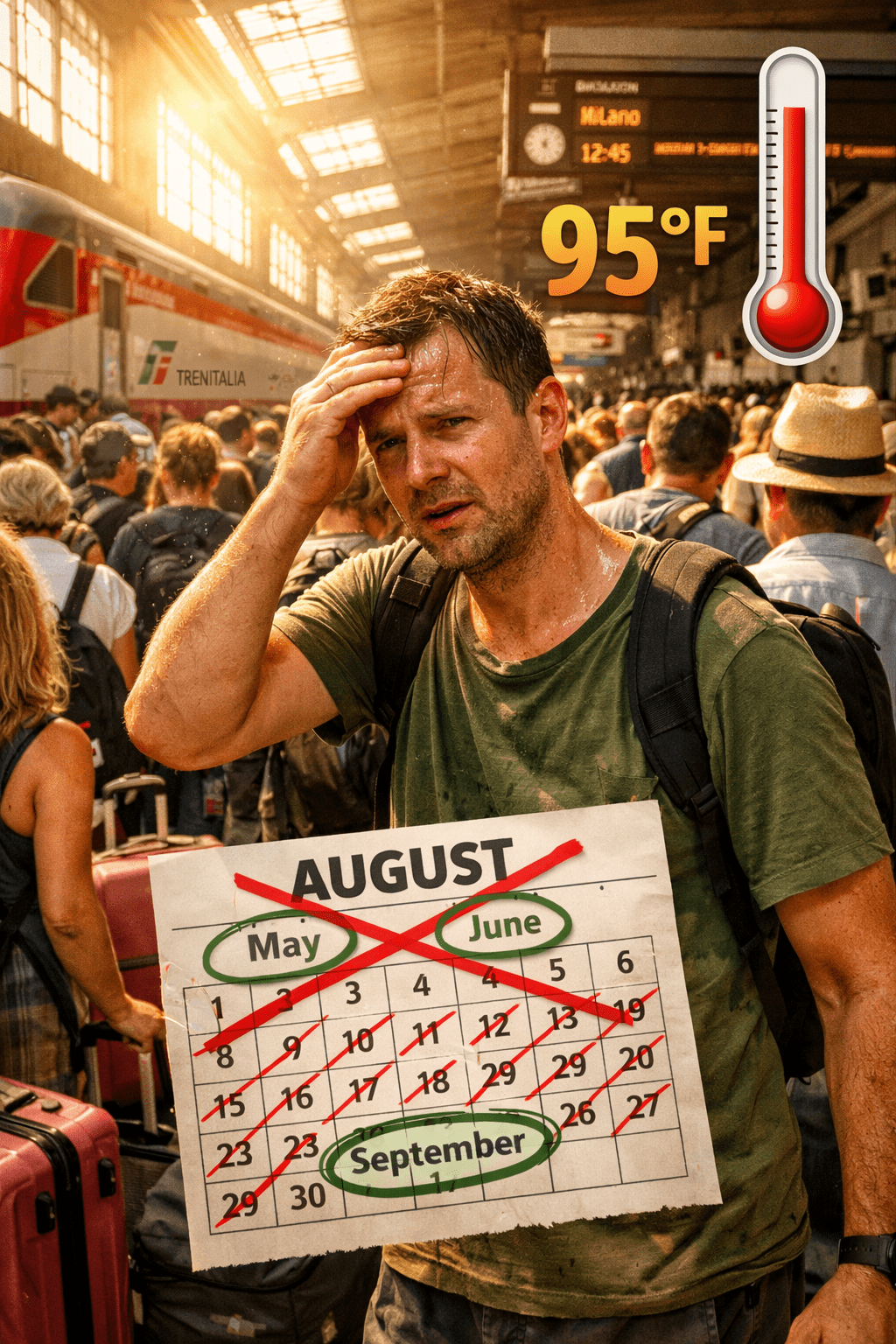
Choosing the wrong time to visit Italy ruins your experience before you even arrive. August stands out as the single worst month for first-time visitors, combining extreme heat (regularly exceeding 95°F), maximum crowds at every major attraction, and peak-season pricing that inflates accommodation costs by 40-60% compared to shoulder months.[1]
Why August is particularly problematic:
- Italians take their own vacations in August, meaning many local restaurants and shops close for 2-3 weeks
- Temperatures make midday sightseeing genuinely exhausting and sometimes dangerous
- Popular sites like the Colosseum, Uffizi Gallery, and Vatican Museums hit maximum capacity daily
- Coastal destinations and islands become overcrowded with both international tourists and Italian families
Better timing alternatives:
- May and early June: Warm weather (70-80°F), fewer crowds, spring blooms in Tuscany and Umbria
- September and early October: Still warm enough for beaches, harvest season in wine regions, comfortable walking temperatures
- Late October through November: Lowest prices, authentic local experience, though some coastal businesses close
Choose late April through early June or September through mid-October if you want the best balance between weather, prices, and crowd levels. Winter (December-February) works well for budget travelers who don’t mind cooler temperatures and shorter daylight hours, plus you’ll experience authentic Italian life without tourist masses.
What Transportation Mistakes Cost First-Timers the Most Money and Time?
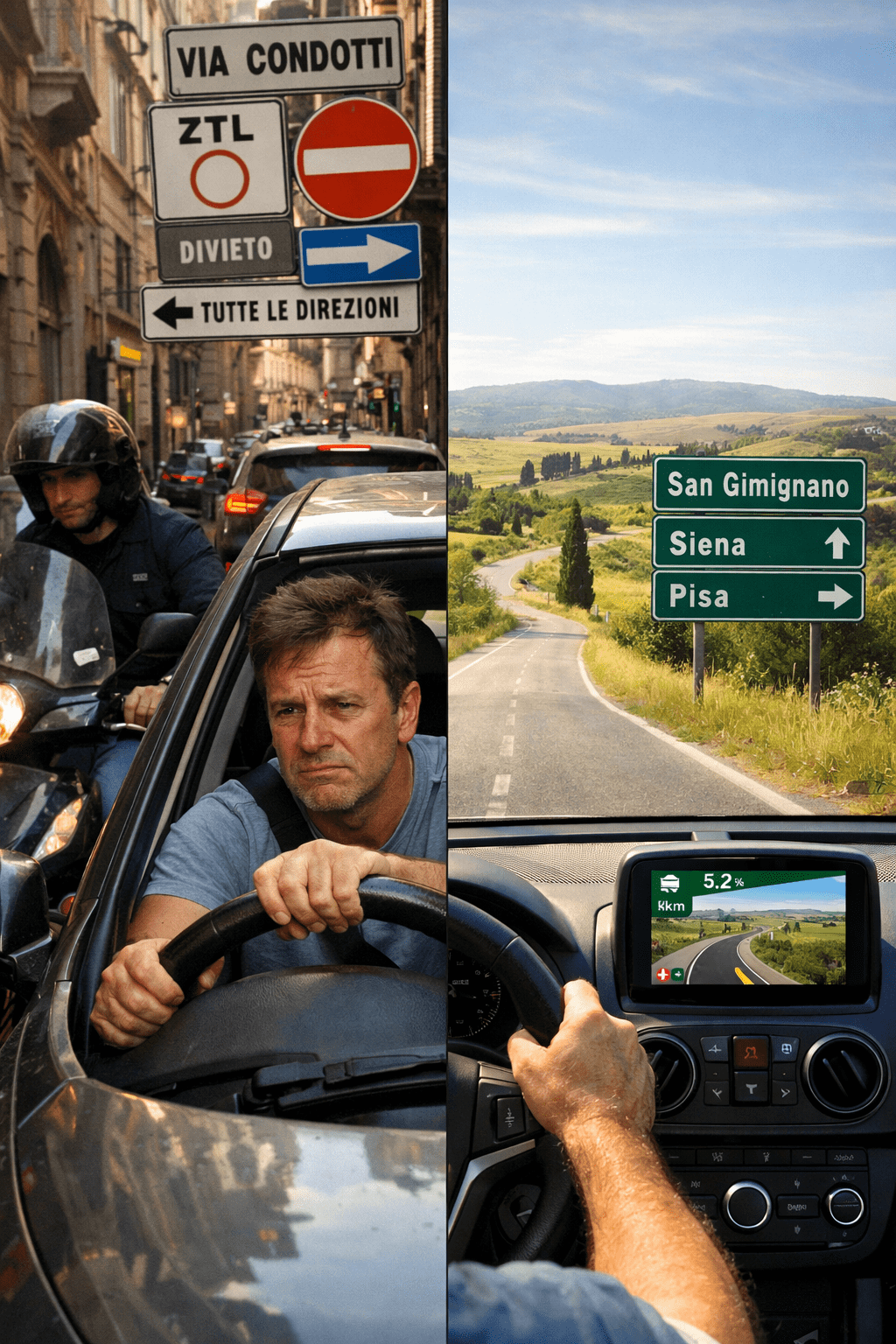
Renting a car for your entire Italian trip ranks among the most expensive and stressful decisions first-timers make. While cars provide essential freedom in rural Tuscany, the Dolomites, or Sicily, driving in Rome, Florence, Venice, or Milan creates nothing but headaches.[2]
Major cities where you should never drive:
- Rome: Ancient narrow streets, aggressive drivers, confusing ZTL (limited traffic zones) that automatically fine you €100+ per entry
- Florence: Entire historic center is a ZTL with cameras that ticket rental cars
- Venice: No cars allowed—you’ll park in expensive lots and take water taxis anyway
- Milan: Complex traffic patterns, expensive parking (€30-50 daily), excellent public transit makes cars unnecessary
When you actually need a car:
Choose a rental only for specific regions where public transportation doesn’t efficiently connect destinations. Sicily requires a car because buses between small towns run infrequently and waste valuable vacation time.[1] The same applies to rural Tuscany, Umbria, Puglia, and the Amalfi Coast if you want to explore beyond main towns.
Smart transportation strategy:
Use trains for city-to-city travel (Rome to Florence takes 90 minutes), then rent a car only when you reach regions that benefit from driving freedom. Book rentals from downtown offices rather than airports to avoid premium location fees. For exploring Tuscany’s countryside, pick up your car in Florence and drop it in Siena or vice versa.
How Do Distance Miscalculations Ruin Italy Itineraries?
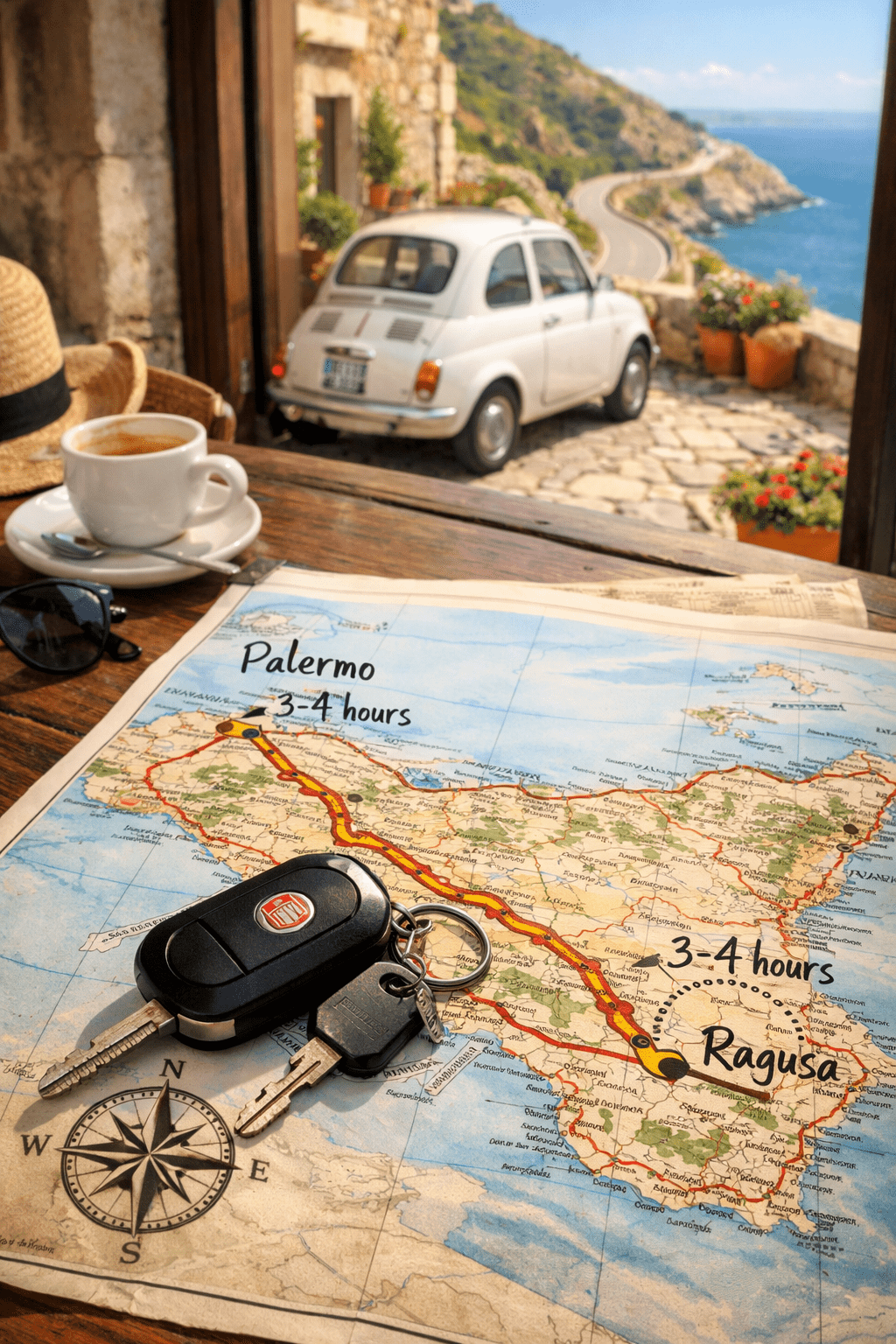
Italy looks deceptively small on maps, leading first-timers to create impossible itineraries that spend more time in transit than actually experiencing destinations. Sicily particularly tricks travelers—driving from Palermo to Ragusa or Trapani to Syracuse easily takes 3-4 hours despite appearing close on a map.[1]
Why Italian travel takes longer than expected:
- Mountain roads wind extensively with 30-40 mph speed limits
- Highways don’t always connect directly between cities
- Small town centers have narrow streets where you crawl at 15 mph
- Popular routes experience heavy traffic, especially near coastal areas in summer
- GPS estimates assume ideal conditions that rarely exist
Realistic travel time examples:
| Route | GPS Estimate | Actual Time | Why It Takes Longer |
|---|---|---|---|
| Palermo to Ragusa | 2.5 hours | 3.5-4 hours | Winding mountain roads, limited highway access |
| Rome to Amalfi Coast | 2.5 hours | 3.5-4.5 hours | Coastal traffic, narrow cliff roads |
| Florence to Cinque Terre | 2 hours | 3-3.5 hours | Mountain passes, small town navigation |
| Venice to Dolomites | 2 hours | 3-4 hours | Alpine roads, seasonal weather delays |
Better planning approach:
Limit yourself to 2-3 major bases for a week-long trip rather than trying to see everything. If you’re visiting Rome, Florence, and Venice, plan minimum 2-3 nights in each location. Add buffer time for getting lost, stopping for photos, and spontaneous discoveries that make Italy magical.
Why Does Choosing the Wrong Airport Waste Entire Days?
Booking the cheapest flight without considering your actual itinerary adds unnecessary hours of driving and stress. Landing in Palermo when you plan to spend most of your time near Mount Etna or Taormina means starting your vacation with a 3-4 hour drive across Sicily.[1]
Strategic airport selection:
- Planning Northern Italy (Venice, Verona, Dolomites): Fly into Venice Marco Polo or Verona
- Tuscany-focused trip: Florence or Pisa airports put you immediately in wine country
- Rome and south: Rome Fiumicino serves as the gateway, but Naples works better for Amalfi Coast trips
- Sicily east coast (Taormina, Syracuse, Catania): Catania airport is essential
- Sicily west coast (Palermo, Trapani): Palermo airport makes sense
Multi-city flight strategy:
Book open-jaw tickets (flying into one city, out of another) to avoid backtracking. Fly into Milan and out of Rome, or into Catania and out of Palermo. This costs roughly the same as round-trip tickets but saves 4-8 hours of retracing your route.
Consider that saving €50 on a flight to the wrong airport often costs you €100+ in extra rental car days, fuel, and highway tolls, plus an entire day of vacation time sitting in a car instead of exploring.
What Booking Mistakes Do Most Travelers Make? (#7 – The One Everyone Makes)
Here’s mistake #7 that catches almost everyone: expecting Italy to operate with the same infrastructure, efficiency, and pace across all regions, then getting frustrated when Sicily, Puglia, or Calabria don’t match Northern Italian standards.[1]
The reality of regional differences:
Northern Italy (Milan, Venice, Verona) operates with Germanic efficiency—trains run on time, roads are well-maintained, and services meet international standards. Sicily and Southern regions embrace a completely different pace, with roads that have potholes, confusing signage, restaurant service that takes 30-45 minutes longer, and a general “domani” (tomorrow) attitude toward schedules.[1]
What this means for your planning:
- Don’t compare Sicily to Rome: Different regions, different experiences, different expectations
- Build in extra time: Southern Italy requires patience and flexibility
- Embrace the slower pace: The relaxed atmosphere is part of the authentic experience
- Adjust your mindset: You’re not dealing with poor service, just a different cultural approach
Other critical booking mistakes:
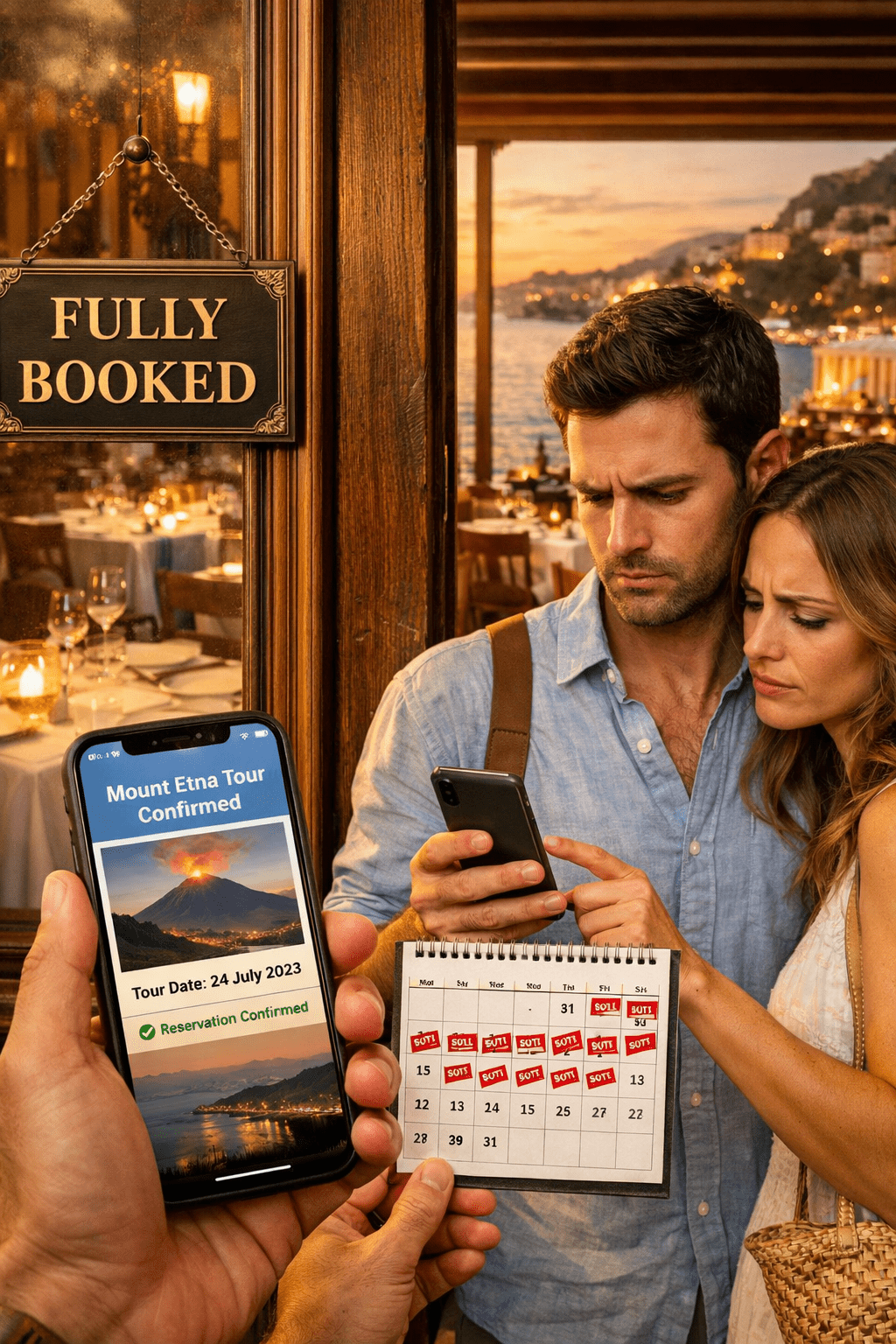
Waiting too long to reserve popular experiences costs you the best options. Mount Etna tours, boat excursions to Capri or Cinque Terre, and seaside restaurants in Taormina, San Vito Lo Capo, and Ortigia sell out during high season.[1] Book main tours at least 3-5 days in advance, or up to 2 weeks ahead for July-August travel.
Popular restaurants in tourist areas require reservations. That charming trattoria you spotted in Trastevere or Positano? It’s fully booked by 6 PM. Make dinner reservations that morning or the day before.
How Does Underestimating Heat Impact Your Italy Experience?
Sicily and Southern Italy become genuinely oppressive during summer months, with temperatures regularly exceeding 95°F and humidity making it feel even hotter.[1] First-timers plan full-day sightseeing schedules without accounting for heat that makes midday exploration miserable and potentially dangerous.
Smart heat management strategy:
- Start early: Begin sightseeing by 8-9 AM when temperatures are comfortable and light is beautiful
- Take the midday break: Return to your accommodation between 12:30-4:30 PM for rest, swimming, or air conditioning
- Resume late afternoon: Head out again around 5 PM when heat subsides and golden hour creates perfect photo lighting
- Plan indoor activities: Schedule museums, churches, and shopping for the hottest hours
Practical heat survival tips:
Carry a refillable water bottle and use Italy’s numerous public fountains (most provide safe drinking water). Wear breathable fabrics, comfortable walking shoes, and always pack sunscreen. Choose accommodations with air conditioning, especially in Southern regions where it’s not always standard.
The traditional Italian schedule exists for good reasons—locals avoid midday heat, take long lunches, and resume activities in the evening. Following this rhythm transforms your experience from exhausting to enjoyable.
What Cultural and Practical Mistakes Frustrate First-Time Visitors?
Beyond timing and transportation, several practical mistakes create unnecessary frustration. Not validating train tickets before boarding results in €50+ fines from ticket inspectors, even if you purchased your ticket legally. Those green validation machines at station platforms aren’t optional—they’re mandatory for regional trains.
Church dress code violations:
Major religious sites (St. Peter’s Basilica, Duomo di Milano, churches throughout Italy) enforce strict dress codes. Shoulders must be covered, shorts and skirts must reach below the knee, and hats come off inside. Security turns away hundreds of tourists daily for wearing tank tops, short shorts, or mini skirts. Carry a light scarf or shawl to cover shoulders if needed.
Restaurant and tipping confusion:
- Coperto charge: The €2-4 per person “cover charge” is standard, not a scam
- Service included: “Servizio incluso” means tip is included; additional tipping is optional
- No rush: Restaurants don’t bring the check until you ask (“Il conto, per favore”)
- Cappuccino timing: Italians drink cappuccino only before 11 AM; ordering one after dinner marks you as a tourist
Language preparation:
Major cities have English speakers, but small towns and family-run restaurants often don’t. Learn basic phrases: “Buongiorno” (good morning), “Grazie” (thank you), “Per favore” (please), “Il conto” (the check), and “Dov’è il bagno?” (where’s the bathroom). Making an effort earns you better service and authentic interactions.
ATM and payment tips:
Always choose to be charged in euros rather than your home currency when using cards (dynamic currency conversion adds 3-8% fees). Notify your bank before traveling to avoid card blocks. Carry some cash since small shops and rural areas don’t always accept cards.
What Hidden Costs and Scams Should You Watch For?
Tourist-heavy areas around the Colosseum, Trevi Fountain, and Venice’s San Marco Square harbor predictable scams. “Friendly” locals offering to take your photo may demand €20 afterward. “Free” bracelet weavers tie string on your wrist then aggressively demand payment. Restaurant touts offering “special menus” lead you to overpriced tourist traps.
Common scams to avoid:
- Taxi flat rates: Only accept metered taxis from official stands; “flat rate” offers always cost more
- Fake police: Real police don’t stop tourists to “check” wallets or passports on the street
- Gladiator photos: Those costumed characters at the Colosseum charge €20+ per photo
- Rose sellers: Accepting a “free” rose at restaurants leads to aggressive payment demands
- Petition scams: People with clipboards asking for charity signatures pickpocket while you’re distracted
Hidden legitimate costs:
Museum reservations often require €2-4 booking fees on top of admission. Many beaches charge for umbrella and chair rentals (€15-30 daily). Highway tolls add up quickly on road trips. ZTL traffic fines arrive months later, charged to your credit card by rental companies plus administrative fees.
How Should You Structure a First-Time Italy Itinerary?
The classic mistake is trying to see everything in one trip. A well-paced first visit focuses on 2-3 regions maximum, allowing time to actually experience places rather than just photographing them from bus windows.
Sample 10-day first-timer itinerary:
- Days 1-3: Rome (Colosseum, Vatican, Trastevere neighborhood)
- Days 4-6: Tuscany (Florence base with day trips to Siena, San Gimignano)
- Days 7-8: Cinque Terre (coastal hiking, village exploration)
- Days 9-10: Venice (canals, islands, getting lost in alleys)
Alternative 7-day Sicily focus:
- Days 1-2: Palermo (street food, markets, Norman Palace)
- Days 3-4: Taormina and Mount Etna
- Days 5-6: Syracuse and Ortigia island
- Day 7: Ragusa or Noto (Baroque architecture)
Planning principles:
- Spend minimum 2 nights in each location (3+ is better)
- Choose one base and take day trips rather than changing hotels constantly
- Build in flexibility for spontaneous discoveries
- Don’t schedule activities for arrival or departure days
- Leave room for simply wandering and absorbing the atmosphere
Consider whether you want a couples trip, family vacation, or solo adventure since this affects your pace and priorities.
What Packing Mistakes Create Problems in Italy?
Overpacking ranks as the top physical mistake. Italy’s charming hotels often lack elevators, and you’ll navigate countless stairs, cobblestone streets, and train platforms with your luggage. That heavy suitcase becomes your enemy.
Essential packing strategy:
- One carry-on: Limit yourself to a 22-inch wheeled bag plus personal item
- Versatile layers: Italy’s weather varies dramatically by region and elevation
- Comfortable walking shoes: You’ll walk 6-10 miles daily on uneven surfaces
- Modest clothing: Pack options that work for churches and nice restaurants
- Electrical adapter: Italy uses Type L plugs (three round pins)
What to skip:
Don’t pack beach towels (accommodations provide them), hair dryers (hotels have them), or excessive toiletries (buy basics at Italian pharmacies). Skip fancy jewelry that makes you a pickpocket target. Leave the guidebook at home and use your phone for maps and information.
Check out our complete travel essentials list for detailed packing guidance.
What Food and Dining Mistakes Ruin Authentic Experiences?
Eating near major tourist attractions guarantees mediocre food at inflated prices. That restaurant with a view of the Colosseum or directly on Piazza San Marco charges premium location fees while serving reheated tourist meals.
Finding authentic dining:
- Walk 5-10 blocks away from major attractions
- Look for Italian diners: If the restaurant is full of locals, it’s probably good
- Check the menu: Authentic places have seasonal offerings, not 50-item menus in 6 languages
- Avoid touts: Good restaurants don’t need people on the street pulling in customers
- Ask locals: Hotel staff and shop owners know the real neighborhood gems
Meal timing matters:
Lunch runs 12:30-2:30 PM, dinner starts at 7:30 PM or later. Arriving at 6 PM marks you as a tourist and means you’re eating with other tourists rather than locals. Many restaurants close between lunch and dinner service.
Regional specialties to seek:
- Rome: Cacio e pepe, carbonara, amatriciana (avoid places offering “Alfredo”)
- Florence: Bistecca alla Fiorentina, ribollita, lampredotto
- Sicily: Arancini, pasta alla Norma, cannoli (only eat fresh, never pre-filled)
- Naples: Pizza (the birthplace deserves multiple visits)
- Venice: Cicchetti (small plates), fresh seafood, risotto
What Safety and Health Precautions Do First-Timers Overlook?
Italy is generally safe, but tourist areas attract pickpockets who are genuinely skilled professionals. The crowded Metro in Rome, packed vaporettos in Venice, and busy markets anywhere create perfect conditions for theft.
Theft prevention basics:
- Anti-theft bags: Use bags with slash-proof material and locking zippers
- Front pockets only: Never keep wallets, phones, or passports in back pockets
- Separate valuables: Don’t carry everything together; leave passports in hotel safes
- Stay alert: Distraction techniques (spilled drinks, dropped items, arguments) often precede pickpocketing
- Bag awareness: Keep bags in front of you in crowds, never hanging on chair backs
Health considerations:
Tap water is safe throughout Italy (except where marked “non potabile”). Pharmacies (“farmacia” with green cross signs) provide excellent advice for minor health issues and sell medications over the counter that require prescriptions elsewhere.
Travel insurance covering medical emergencies is essential. European Health Insurance Cards help EU citizens, but international visitors need private coverage. Emergency number is 112 throughout Italy.
Summer heat risks:
Heat exhaustion and dehydration affect tourists who underestimate Southern Italian summers. Symptoms include dizziness, nausea, and excessive fatigue. Drink water constantly, seek shade during peak hours, and don’t push through feeling unwell.
FAQ
What is the worst month to visit Italy?
August is the worst month for first-time visitors due to extreme heat (95°F+), maximum crowds at all major attractions, peak-season pricing, and many local businesses closing for Italian vacation season. Choose May, June, or September instead for better weather, fewer tourists, and lower prices.
Should I rent a car for my first trip to Italy?
Only rent a car for specific rural regions like Tuscany, Sicily, Umbria, or the Dolomites. Never drive in Rome, Florence, Venice, or Milan where cars create expensive problems with ZTL fines, parking costs, and traffic stress. Use trains for city-to-city travel and rent cars only when you reach countryside areas.
How far in advance should I book Italy tours and restaurants?
Book popular tours (Mount Etna, Pompeii, Cinque Terre boats) at least 3-5 days ahead, or 2 weeks during July-August. Make restaurant reservations the morning of or day before for tourist areas. Last-minute bookings during high season often mean sold-out tours and full restaurants.
Do I need to speak Italian to visit Italy?
Major cities and tourist areas have English speakers, but learning basic Italian phrases dramatically improves your experience. Small towns, family restaurants, and rural areas often have limited English. Know greetings, please/thank you, how to order food, and ask for directions.
What should I wear to visit churches in Italy?
Cover your shoulders and knees at all religious sites. Tank tops, shorts above the knee, and mini skirts result in denied entry at St. Peter’s Basilica, the Duomo, and churches throughout Italy. Carry a light scarf or shawl to cover shoulders when needed. Hats must be removed inside.
How much cash should I carry in Italy?
Carry €50-100 daily in small bills for markets, small shops, cafes, and tipping. Major restaurants and hotels accept cards, but rural areas and small family businesses often prefer cash. Use ATMs for better exchange rates than currency exchange offices.
Are Italian trains reliable?
High-speed trains (Frecciarossa, Italo) between major cities are punctual and efficient. Regional trains can run late, especially in Southern Italy. Always validate regional train tickets in green machines before boarding to avoid €50+ fines, even if you purchased tickets legally.
What’s the biggest cultural difference in Southern Italy versus Northern Italy?
Southern Italy and Sicily operate at a much slower, more relaxed pace than Northern regions. Expect longer restaurant service, less punctual schedules, more informal interactions, and infrastructure that doesn’t match Northern Italian standards. This isn’t poor service—it’s a different cultural approach that requires patience and flexibility.
Can I drink tap water in Italy?
Yes, tap water is safe throughout Italy unless marked “non potabile.” Public fountains in Rome and other cities provide free drinking water. Restaurants may charge for bottled water, but you can request tap water (“acqua del rubinetto”) though some servers discourage it.
How do I avoid tourist traps in Italy?
Walk 5-10 blocks away from major attractions before choosing restaurants. Avoid places with photo menus, aggressive touts, or English-only signs. Look for restaurants full of Italian diners, seasonal menus, and no-frills atmospheres. Ask hotel staff and local shop owners for recommendations.
What’s the coperto charge on Italian restaurant bills?
Coperto is a standard €2-4 per person cover charge for bread and table service. It’s not a scam—it’s how Italian restaurants operate. This appears as a separate line item on your bill and is charged regardless of whether you eat the bread.
Should I buy skip-the-line tickets for Italian museums?
Absolutely yes for the Colosseum, Vatican Museums, Uffizi Gallery, and other major attractions. Regular lines can take 2-3 hours during peak season. The €4-6 reservation fee saves hours of standing in heat and guarantees entry at your chosen time slot.
Conclusion
The mistakes to avoid in Italy boil down to three core principles: match your timing to shoulder seasons, choose transportation based on specific regions rather than one-size-fits-all solutions, and adjust your expectations to embrace regional differences instead of fighting them. Your first Italian adventure succeeds when you plan for Italy’s actual rhythms—the midday breaks, the slower Southern pace, the winding roads that take twice as long as GPS suggests, and the cultural differences that make each region unique.
Start planning your trip by choosing May, June, or September for ideal conditions. Map out a realistic itinerary focusing on 2-3 regions maximum with adequate time in each location. Book your main tours and popular restaurants 3-5 days ahead. Skip the rental car in cities but embrace it in rural areas. Most importantly, build flexibility into your schedule for the spontaneous discoveries that transform a good trip into an unforgettable experience.
Italy rewards travelers who arrive prepared but remain flexible, who research thoroughly but stay open to surprises, and who plan strategically but leave room for getting wonderfully lost in medieval alleys. Avoid these 15 common mistakes, and you’ll spend less time frustrated and more time falling in love with one of the world’s most captivating countries.
Ready to start planning? Check out our detailed guides for Rome, Tuscany, and hidden gems throughout Italy to build your perfect itinerary. And don’t forget our essential packing list to make sure you bring everything you need and nothing you don’t.
References
[1] Watch – https://www.youtube.com/watch?v=njSNa6GZc3w
[2] Top Tourist Mistakes In Italy And How You Can Avoid Them – https://www.pintspoundsandpate.com/visitingfranceanditaly/top-tourist-mistakes-in-italy-and-how-you-can-avoid-them