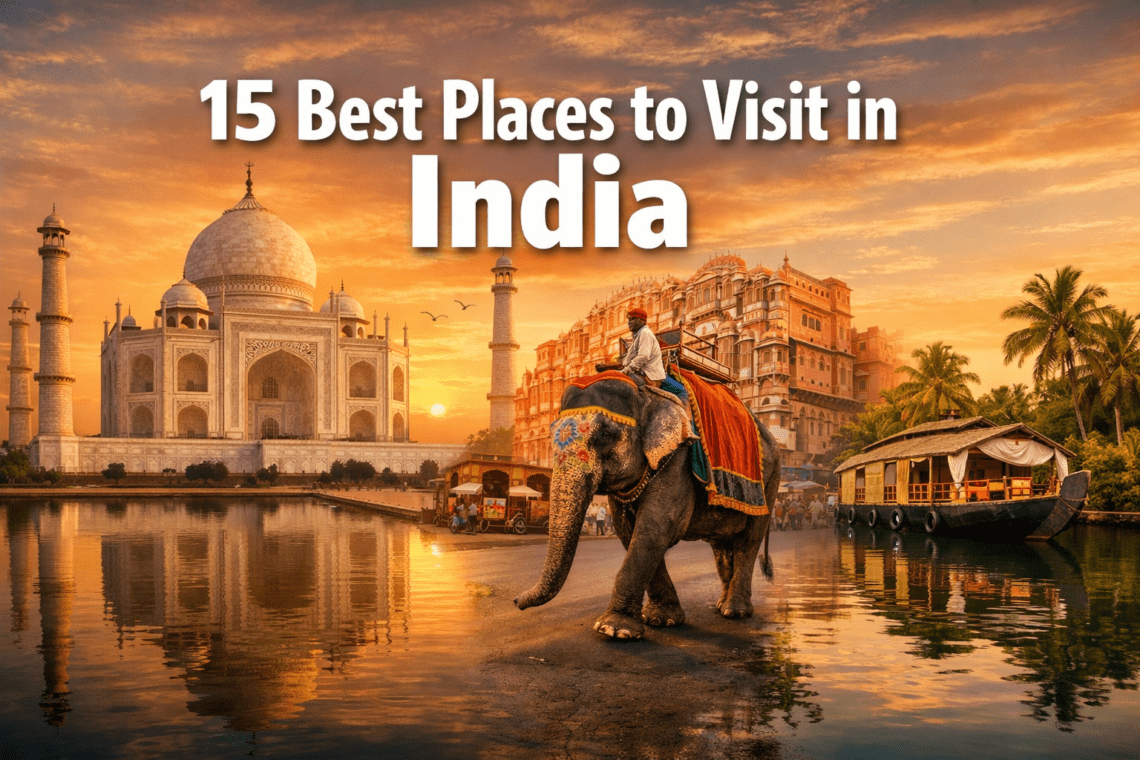
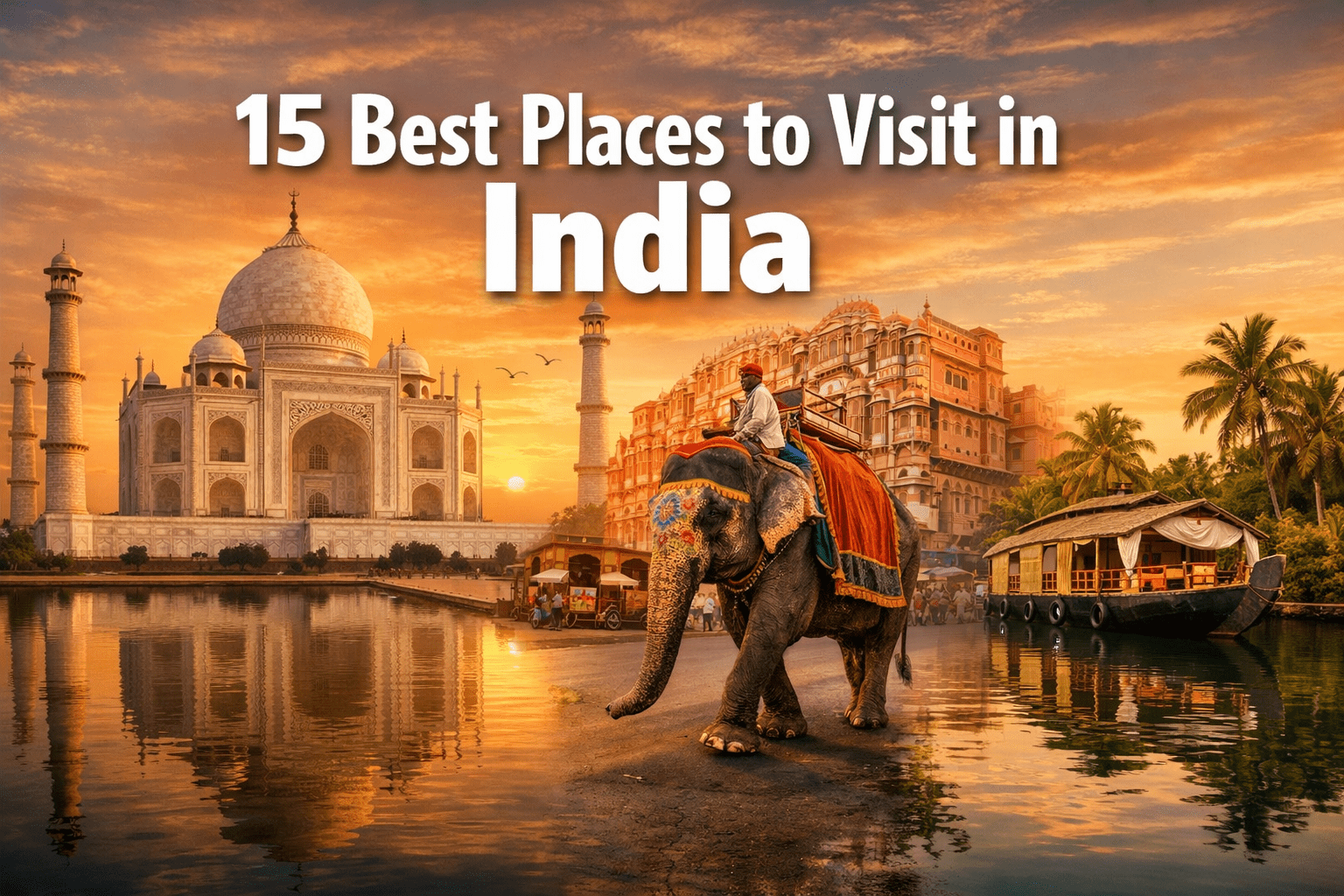
Quick Answer: The best places to visit in India for first-time travelers are the Golden Triangle (Delhi, Agra, Jaipur), Varanasi, Kerala, Rishikesh, and the Andaman Islands. These destinations cover India’s cultural, spiritual, natural, and coastal highlights while remaining accessible and well-connected for newcomers. A 2–3 week trip hitting 5–7 of these spots gives you a genuinely representative taste of the country.
Key Takeaways
- Start with the Golden Triangle (Delhi → Agra → Jaipur) — it’s the most logical entry route for first-timers and connects easily by train or road.
- Varanasi is intense but unmissable — go in the morning for the Ganges boat ride and stay for the evening Ganga Aarti ceremony.
- Kerala is the best “slow travel” region — houseboats, backwaters, and hill stations reward travelers who aren’t rushing.
- Rishikesh suits both adventure seekers and yoga lovers — it’s one of the few places that genuinely delivers on both promises.
- The Andaman Islands require advance planning — flights book out fast, and permits are needed for some islands.
- Hill stations like Manali and Shimla are best visited April–June or September–October to avoid monsoon road closures.
- Budget travelers can do India very affordably — accommodation, food, and trains are all competitively priced compared to most international destinations.
- India rewards slow travel — trying to see too many regions in one trip is the most common first-timer mistake.
What Are the Best Places to Visit in India for First-Time Travelers?
For first-time visitors, the best places to visit in India fall into four broad regions: the north (Delhi, Agra, Jaipur, Varanasi), the Himalayan foothills (Rishikesh, Manali, Shimla, Mussoorie), the south (Kerala), and the islands (Andaman). Each region has a distinct personality, and the right choice depends on your travel style, time available, and what you most want to experience.
Here’s a quick overview of all 15 destinations covered in this guide:
| Destination | Region | Best For | Ideal Trip Length |
|---|---|---|---|
| Delhi | North India | History, food, city life | 2–3 days |
| Agra | North India | Taj Mahal, Mughal history | 1–2 days |
| Jaipur | Rajasthan | Forts, culture, bazaars | 2–3 days |
| Varanasi | North India | Spirituality, Ganges rituals | 2–3 days |
| Kolkata | East India | Art, literature, colonial history | 2–3 days |
| Rishikesh | Uttarakhand | Yoga, adventure, spirituality | 2–4 days |
| Haridwar | Uttarakhand | Pilgrimage, evening aarti | 1–2 days |
| Manali | Himachal Pradesh | Mountains, adventure sports | 3–4 days |
| Shimla | Himachal Pradesh | Colonial charm, hill walks | 2–3 days |
| Mussoorie | Uttarakhand | Scenic escapes, forest trails | 2 days |
| Munnar | Kerala | Tea gardens, hill views | 2–3 days |
| Alleppey (Alappuzha) | Kerala | Backwaters, houseboats | 1–2 days |
| Thekkady | Kerala | Wildlife, Periyar National Park | 2 days |
| Havelock Island | Andaman Islands | Beaches, diving, snorkeling | 3–4 days |
| Neil Island | Andaman Islands | Quiet beaches, relaxation | 2 days |
The Golden Triangle: Why Delhi, Agra, and Jaipur Are the Perfect Starting Point
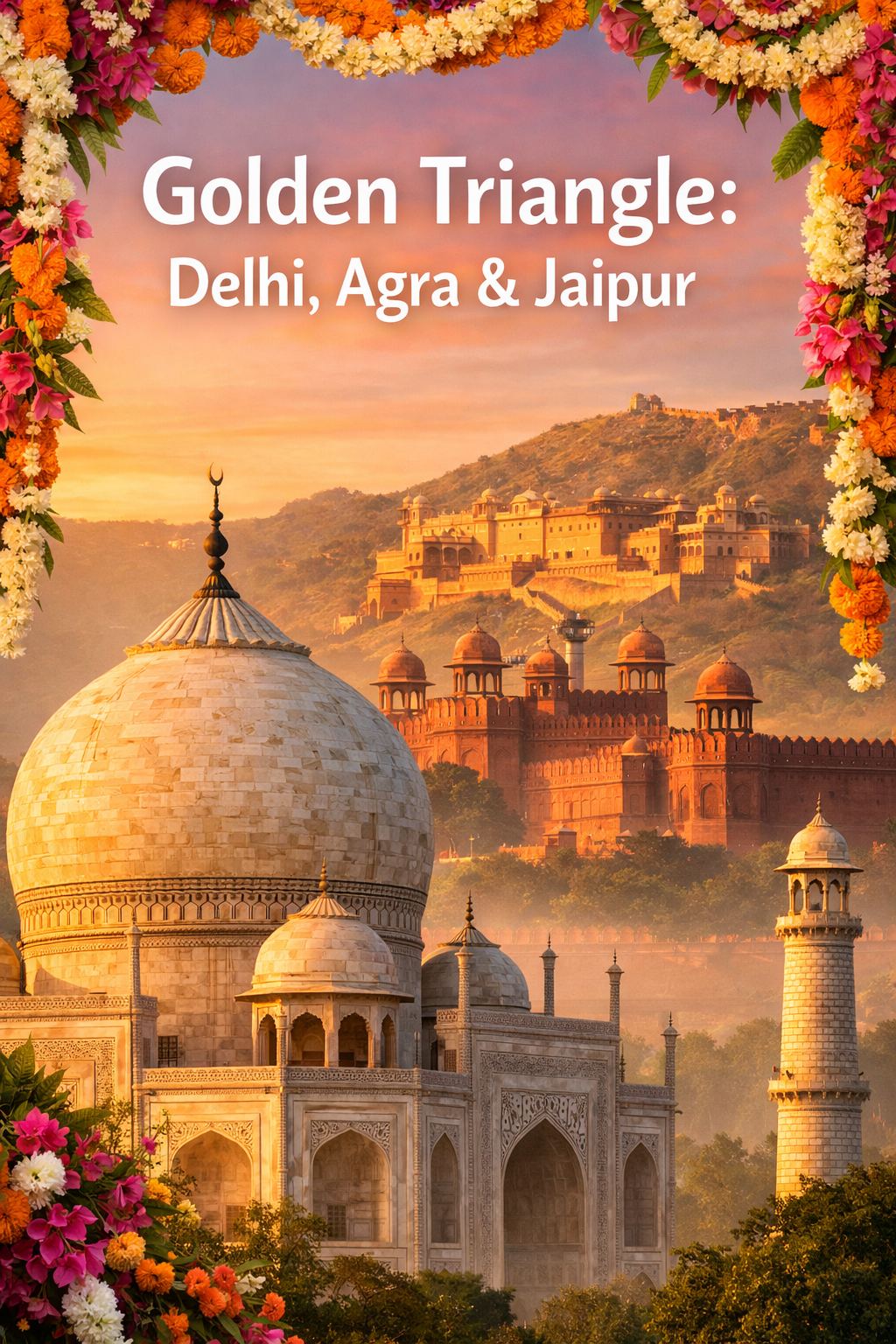
The Golden Triangle is the single best starting circuit for first-time visitors to India. Delhi gives you a solid orientation to the country’s scale and complexity, Agra delivers the Taj Mahal (which genuinely lives up to the hype), and Jaipur wraps the circuit with Rajasthan’s royal architecture and color.
Delhi (2–3 days): India’s capital is chaotic in the best way. Old Delhi’s Chandni Chowk market and Jama Masjid mosque are essential. New Delhi’s Humayun’s Tomb and Qutub Minar offer quieter, UNESCO-listed history. The food scene alone justifies the visit — street chaat, butter chicken, and parathas from roadside dhabas are some of the best meals you’ll have in India.
Agra (1–2 days): The Taj Mahal is the reason most people come to India, and it earns every superstition. Visit at sunrise to beat the crowds. Also worth your time: Agra Fort, just 2 km away, and the often-overlooked Fatehpur Sikri, a deserted Mughal city about 40 km from Agra.
Jaipur (2–3 days): Called the Pink City because its old town buildings are painted terracotta pink, Jaipur is one of India’s most visually striking cities. Amber Fort (a 45-minute drive from the city center) is the highlight. The City Palace, Jantar Mantar observatory, and Hawa Mahal (Palace of Winds) are all within easy reach of the old city.
Common mistake: Many first-timers spend too long in Delhi and rush Jaipur. Flip the ratio — Jaipur rewards an extra day.
Varanasi and Haridwar: India’s Spiritual Heart
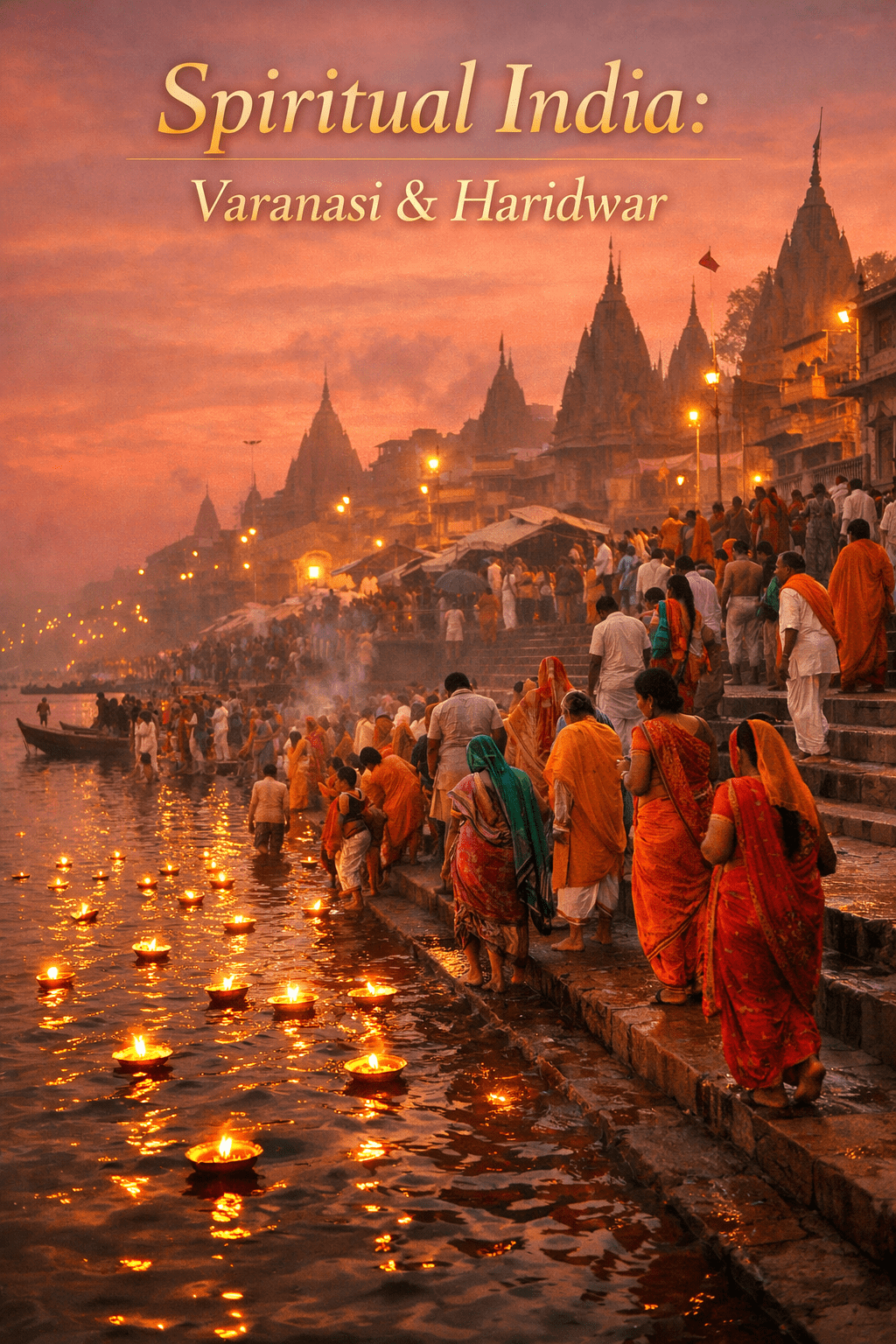
Varanasi is raw, spiritual, and unlike anywhere else on earth. For first-time travelers to India, it’s often the most memorable stop on the entire trip — and also the most overwhelming. Haridwar, about 6 hours away by train, offers a gentler introduction to the same Ganges pilgrimage culture.
Varanasi: The city sits on the western bank of the Ganges and has been a center of Hindu pilgrimage for thousands of years. The ghats (stone steps leading to the river) are where daily life, death, and ritual all happen in public view. A dawn boat ride on the Ganges is non-negotiable. The evening Ganga Aarti at Dashashwamedh Ghat — a fire ceremony with priests, bells, and incense — is one of the most visually spectacular things you’ll see in India.
Haridwar: The evening Ganga Aarti at Har Ki Pauri ghat is equally beautiful and slightly less crowded than Varanasi’s version. Haridwar also serves as the gateway to Rishikesh, so it pairs naturally with a Himalayan foothills itinerary.
- Choose Varanasi if: you want full cultural immersion and don’t mind sensory intensity.
- Choose Haridwar if: you prefer a calmer introduction to Hindu pilgrimage culture.
Himalayan Foothills: Rishikesh, Manali, Shimla, and Mussoorie
The Himalayan foothills region is one of the best places to visit in India if you want a mix of adventure, scenery, and spiritual calm. These four destinations each have a distinct character, and most first-timers pick two or three based on their interests and time.
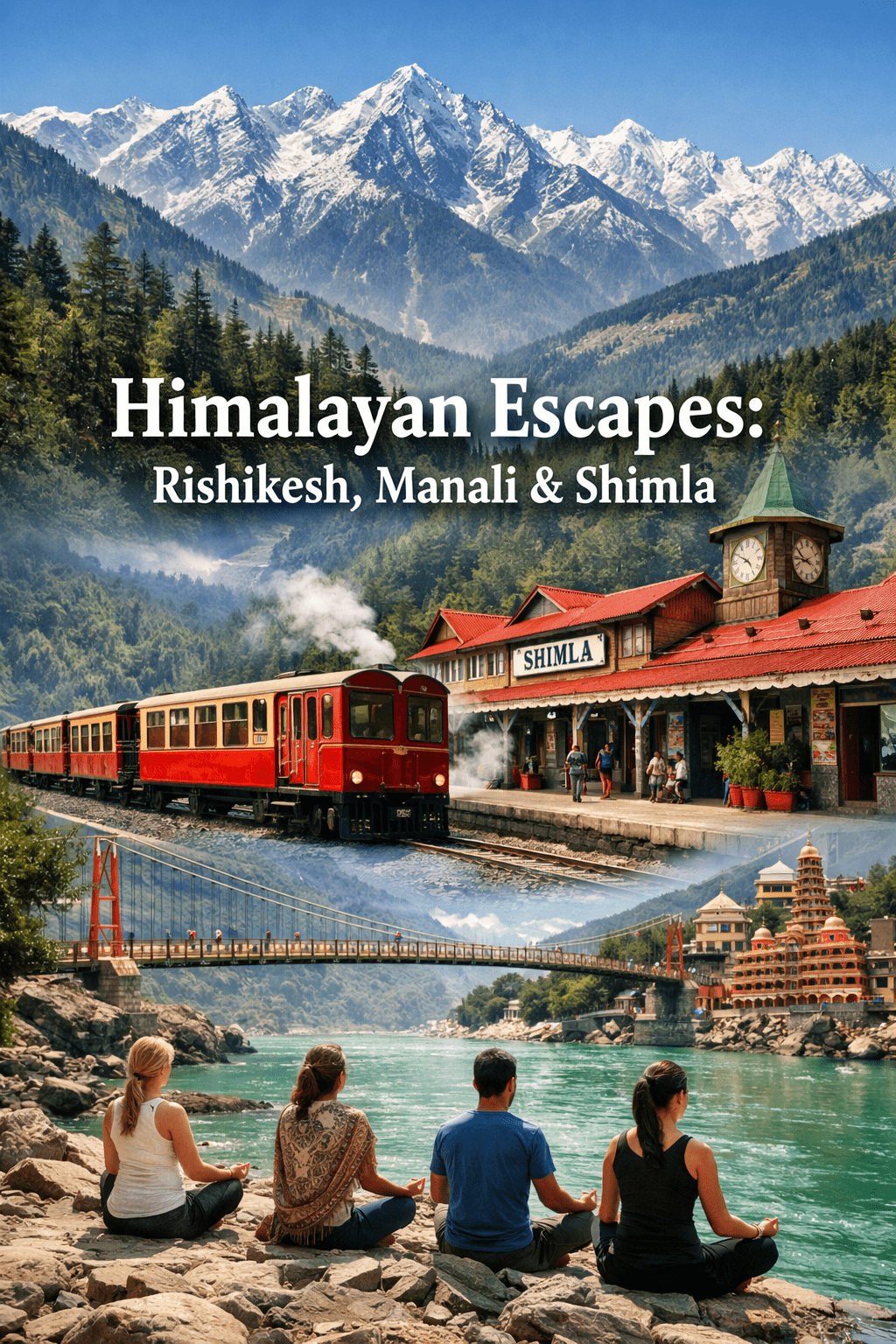
Rishikesh: Known worldwide as the Yoga Capital of the World, Rishikesh sits where the Ganges emerges from the Himalayas. It’s genuinely excellent for yoga retreats and meditation at ashrams like Parmarth Niketan. But it also has white-water rafting, bungee jumping, and a lively café scene in the Laxman Jhula area. The two iconic suspension bridges — Laxman Jhula and Ram Jhula — are worth crossing at sunset. Triveni Ghat hosts a beautiful evening aarti ceremony.
Manali: A mountain town in Himachal Pradesh at roughly 2,050 meters elevation, Manali is the go-to destination for adventure sports and Himalayan scenery. Solang Valley is the hub for paragliding, zorbing, and skiing (in winter). Rohtang Pass (open June–October) offers dramatic high-altitude views. Hadimba Temple, a 16th-century cave temple surrounded by cedar forest, is one of the most atmospheric stops in the region. Old Manali has a relaxed backpacker vibe with good cafés and guesthouses.
Shimla: India’s most famous hill station carries strong colonial-era character — the British used it as their summer capital. The Ridge (a large open esplanade), Mall Road, and the heritage Kalka–Shimla toy train are the main draws. It’s a good choice for travelers who want scenic mountain surroundings without the intensity of Manali’s adventure scene.
Mussoorie: Often called the Queen of the Hills, Mussoorie sits above Dehradun in Uttarakhand. Misty mornings, forest walks, and panoramic Himalayan views make it a popular weekend escape from Delhi. It’s more relaxed than Shimla and less crowded than Manali — a good choice if you want to slow down.
If you enjoy planning multi-destination itineraries like this, our guide to planning a first-timer’s trip to Japan follows a similar structure for another complex, multi-region destination.
Kerala: The Best Region in India for Slow Travel
Kerala is consistently ranked among the top destinations in India for first-time international visitors, and for good reason. The state’s backwaters, hill stations, wildlife reserves, and beaches are all within a few hours of each other, and the infrastructure for tourism is excellent.
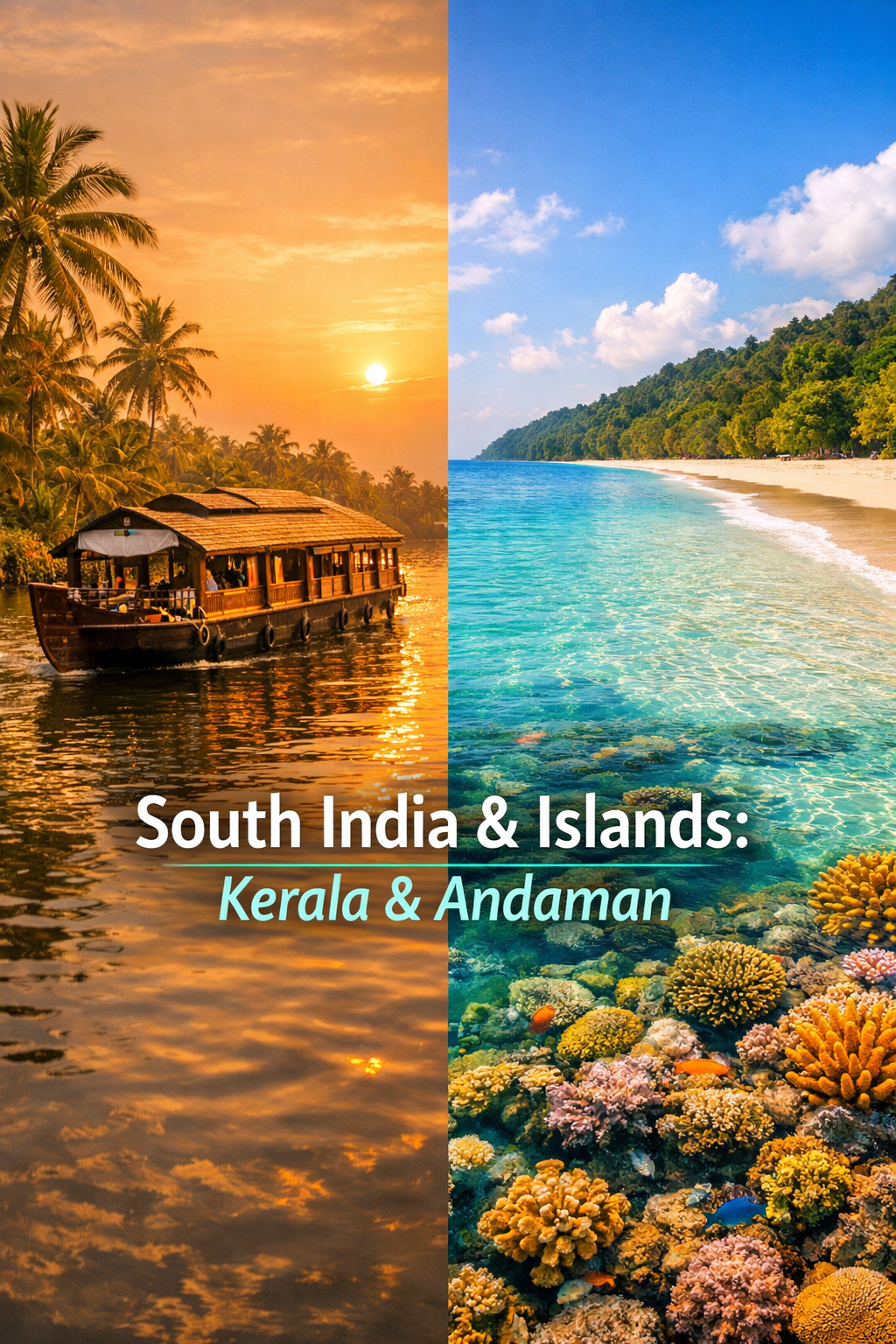
Alleppey (Alappuzha) — Backwaters and Houseboats: Spending a night on a traditional Kerala houseboat (kettuvallam) drifting through palm-lined canals is one of the most unique experiences India offers. Book a private houseboat for the full experience rather than a day-trip boat. The backwater network around Alleppey is the most accessible entry point.
Munnar — Tea Gardens and Hill Views: About 4 hours from Alleppey by road, Munnar sits at around 1,600 meters and is covered in tea plantations. The views on the drive up are spectacular. Visit the KDHP Tea Museum for context, and hike to Eravikulam National Park to spot Nilgiri tahr (a mountain goat endemic to the region).
Thekkady — Wildlife and Periyar National Park: Thekkady is the base for Periyar National Park, one of India’s best wildlife reserves for first-time visitors. Boat rides on Periyar Lake offer good chances of spotting elephants, bison, and deer. Bamboo rafting and guided jungle walks are also available.
Tip for first-timers: Kerala’s roads are narrow and winding. Build extra travel time between destinations, and consider hiring a driver for the hill sections rather than renting a car.
Andaman Islands: India’s Best Beach Destination
The Andaman Islands are the best beach destination in India for first-time travelers who want world-class snorkeling, diving, and white-sand beaches. The islands sit in the Bay of Bengal, about 1,400 km from the Indian mainland, and require a domestic flight from Chennai, Kolkata, or Delhi.
Havelock Island (Swaraj Dweep): Radhanagar Beach on Havelock is regularly listed among Asia’s best beaches — the water is clear turquoise, the sand is white and fine, and it rarely feels overcrowded. Elephant Beach, accessible by boat or a jungle trek, is the best snorkeling spot on the island. Havelock also has the best diving infrastructure in the Andamans, with multiple PADI-certified operators.
Neil Island (Shaheed Dweep): Smaller and quieter than Havelock, Neil Island suits travelers who want to slow down. The beaches (Bharatpur, Laxmanpur, and Natural Bridge) are beautiful, and the island has a relaxed, unhurried pace that’s rare in popular Indian tourist destinations.
Practical notes for the Andamans:
- Fly into Port Blair (the capital) and take a ferry or seaplane to Havelock and Neil.
- Some islands require a Restricted Area Permit (RAP) — check current regulations before booking.
- The best time to visit is October to May; monsoon season (June–September) brings rough seas and ferry cancellations.
- Book ferries and accommodation well in advance, especially for December–January.
If the Andamans appeal to you, you might also enjoy our roundup of cheap islands to visit for a dream vacation for more island options around the world.
Kolkata: For Culturally Curious First-Timers
Kolkata is often skipped by first-time visitors in favor of the more famous north India circuit, but it’s one of India’s most rewarding cities for travelers interested in art, literature, and colonial history. The city has a distinctive character — slower-paced than Delhi or Mumbai, deeply intellectual, and proud of its Bengali cultural heritage.
The Victoria Memorial (a white marble monument built during British rule) is the obvious landmark. But the real Kolkata is in the neighborhoods: the crumbling grandeur of North Kolkata’s Kumartuli district, the book stalls of College Street, the art galleries of Park Street, and the fish markets of New Market. The city’s food scene — particularly its sweets (mishti doi, rasgulla, sandesh) and street food (kathi rolls, puchka) — is among the best in India.
How to Build Your First India Itinerary: Practical Tips
Building a first India itinerary comes down to choosing a region and going deep rather than trying to cover the whole country. India is the size of Western Europe — treating it like a single destination is the most common planning mistake.
Recommended starter itineraries by trip length:
- 10 days: Golden Triangle (Delhi → Agra → Jaipur) + Varanasi. Travel by train between cities.
- 2 weeks: Golden Triangle + Varanasi + Rishikesh, or Golden Triangle + Kerala (Alleppey + Munnar + Thekkady).
- 3 weeks: Golden Triangle + Varanasi + Kerala, or Golden Triangle + Rishikesh + Manali + Shimla.
- 3+ weeks: Add the Andaman Islands as a final beach leg before flying home.
Getting around:
- Trains are the best way to travel between major north India cities — book on IRCTC (India’s official rail booking platform) at least 2–4 weeks in advance.
- Domestic flights are affordable and essential for reaching Kerala and the Andamans from north India.
- Auto-rickshaws and app-based taxis (Ola, Uber) work well within cities.
Best time to visit India:
- October to March is the best window for north India and Rajasthan — cool, dry, and clear.
- April to June suits hill stations (Manali, Shimla, Mussoorie) as the plains get very hot.
- October to May is ideal for Kerala and the Andamans.
- Avoid the full monsoon season (July–August) for your first trip unless you specifically want to experience it.
For more help planning a complex multi-stop trip, the travel planning and tips section at Traveeler has practical guides worth bookmarking.
FAQ: Best Places to Visit in India for First-Timers
Q: How many days do I need to see India properly as a first-timer?
A minimum of 10 days lets you cover the Golden Triangle and one additional region meaningfully. Two weeks is better. Three weeks gives you enough time to add Kerala or the Andamans without feeling rushed.
Q: Is India safe for first-time solo travelers?
India is generally safe for solo travelers, including solo women, with the right precautions. Stick to well-traveled tourist routes for your first trip, use app-based taxis rather than unmarked cabs, and book accommodation in advance. The Golden Triangle and Kerala are the most beginner-friendly regions.
Q: What’s the best city to fly into for a first India trip?
Delhi is the best entry point for most first-timers — it connects directly to the Golden Triangle circuit and has the most international flight options. Mumbai is a good alternative if you’re focusing on west India or starting with a different route.
Q: Do I need a visa to visit India?
Most nationalities need a visa. India’s e-Visa system is straightforward — apply online at least 4–7 days before travel. Check the official Indian government e-Visa portal for your specific nationality and current requirements.
Q: What vaccinations do I need for India?
Consult a travel health clinic at least 6–8 weeks before departure. Commonly recommended vaccines include hepatitis A, typhoid, and tetanus. Malaria prophylaxis may be advised depending on your specific itinerary and the season.
Q: What’s the best way to get from Delhi to Agra?
The Gatimaan Express and Shatabdi Express trains are the fastest and most comfortable options (roughly 1.5–2 hours). Book in advance on IRCTC. Taxis and private drivers are also popular for day trips.
Q: Is the Taj Mahal worth visiting?
Yes, unambiguously. It’s one of those rare landmarks that exceeds expectations in person. Visit at sunrise for the best light and smallest crowds. The Taj is closed on Fridays.
Q: How much does a trip to India cost?
India can be done on almost any budget. Budget travelers can manage on $30–50 USD per day (including accommodation, food, and local transport). Mid-range travelers spending $80–150 per day will be comfortable. Luxury travel is also excellent value compared to Western Europe or the US.
Q: What should I pack for India?
Lightweight, modest clothing (shoulders and knees covered for temple visits), comfortable walking shoes, a scarf or shawl for religious sites, sunscreen, insect repellent, and a good water bottle. See our complete travel essentials packing guide for a full checklist.
Q: Can I drink the tap water in India?
No. Drink bottled or filtered water throughout your trip. Most hotels and restaurants catering to tourists provide safe drinking water, but always confirm.
Q: What’s the single best experience for a first-time visitor to India?
A dawn boat ride on the Ganges in Varanasi. It’s unlike anything else in the world and captures something essential about India that’s difficult to describe before you’ve seen it.
Q: Should I hire a guide or explore independently?
A mix works best. Hire a licensed local guide for major sites like Amber Fort in Jaipur and Agra Fort — the historical context they provide genuinely enriches the experience. Explore cities independently for the rest.
Conclusion: Your First India Trip Starts Here
India is one of the most rewarding destinations in the world for first-time international travelers — and also one of the most misunderstood. The key is to stop trying to “do India” and instead choose a region, build a focused itinerary, and leave room for the unexpected.
Your actionable next steps:
- Pick your entry point — Delhi for north India, Kochi for Kerala, Port Blair for the Andamans.
- Choose 5–7 destinations from this list based on your interests and trip length.
- Book trains early — Indian Railways fills up fast, especially for popular routes like Delhi–Agra and Delhi–Varanasi.
- Apply for your e-Visa at least a week before departure.
- Plan your best time to travel — October to March is the safest bet for a first trip covering north India.
The best places to visit in India will surprise you, challenge you, and stay with you long after you’ve come home. Start with the Golden Triangle if you’re unsure — and let India do the rest.
If you’re still in the early stages of planning your international travel calendar, our guide to the top places to travel that ruin other vacations is a great place to find your next destination after India.