
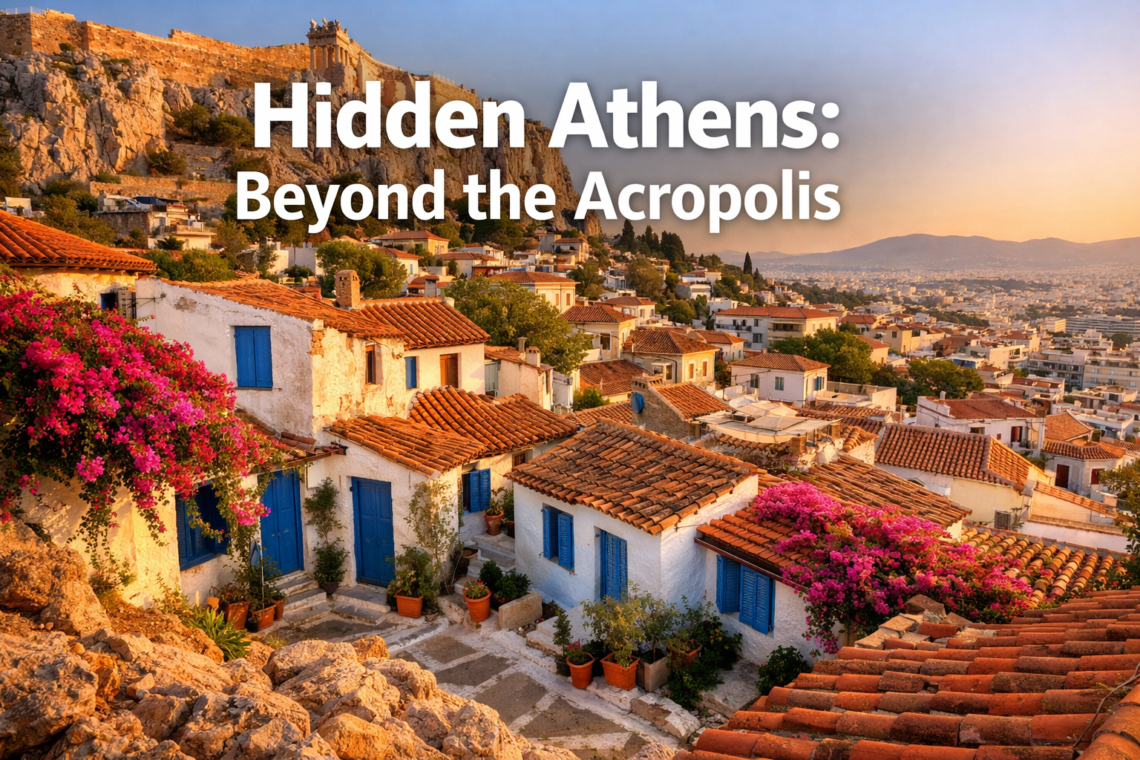
Quick Answer: Athens has far more to offer than the Acropolis. From the Cycladic-style alleyways of Anafiotika to the ancient democracy site at Pnyx Hill, the city is packed with underrated neighborhoods, archaeological treasures, and local hangouts that most tourists walk right past. If you want to see Athens like a local, step away from the main sites and explore what’s hiding in plain sight.
Key Takeaways
- Anafiotika is a whitewashed, car-free neighborhood on the Acropolis slopes that feels like a Greek island village dropped into the city.
- The Ancient Agora contains the Temple of Hephaestus, considered the best-preserved ancient temple in all of Greece.
- Pnyx Hill is where Athenian democracy was literally born, and it offers some of the best free Acropolis views in the city.
- Kaisariani Monastery gives you 11th-century Byzantine architecture surrounded by pine forest on Mt. Hymettus, with almost no crowds.
- The First Cemetery of Athens is a surprisingly beautiful, peaceful site filled with neoclassical sculptures and notable monuments.
- Psyrri and Metaxourgio neighborhoods offer free street art, authentic local cafes, and a creative atmosphere far from tourist traps.
- Lycabettus Hill and Filopappou Hill both offer panoramic city views at no cost.
- Most of these spots are free or very affordable, making Athens one of Europe’s best value destinations.
Why Athens Is So Much More Than Its Famous Landmark
Most visitors to Athens spend the bulk of their time at the Acropolis and then wonder what’s next. The honest answer: a lot. When thinking about what to see in Athens Greece, the Acropolis is just the beginning. The city has layered history, distinct neighborhoods, and local culture that rewards anyone willing to wander a little further.
Athens is also genuinely walkable in its historic core. Many of the hidden gems covered in this guide sit within 20 to 30 minutes of Syntagma Square on foot. You don’t need a tour bus or a packed itinerary — just comfortable shoes and some curiosity.
Before you go, it’s worth sorting out where you’ll stay. Our guide to the best hotels in Athens Greece covers options across different budgets and neighborhoods, which can make a real difference in how easily you reach these spots.
What to See in Athens Greece: The Hidden Neighborhoods Worth Exploring
The neighborhoods of Anafiotika, Psyrri, and Metaxourgio reveal a side of Athens that feels genuinely local. Each one has its own personality, and none of them require an entrance fee.
Anafiotika: A Cycladic Village in the City
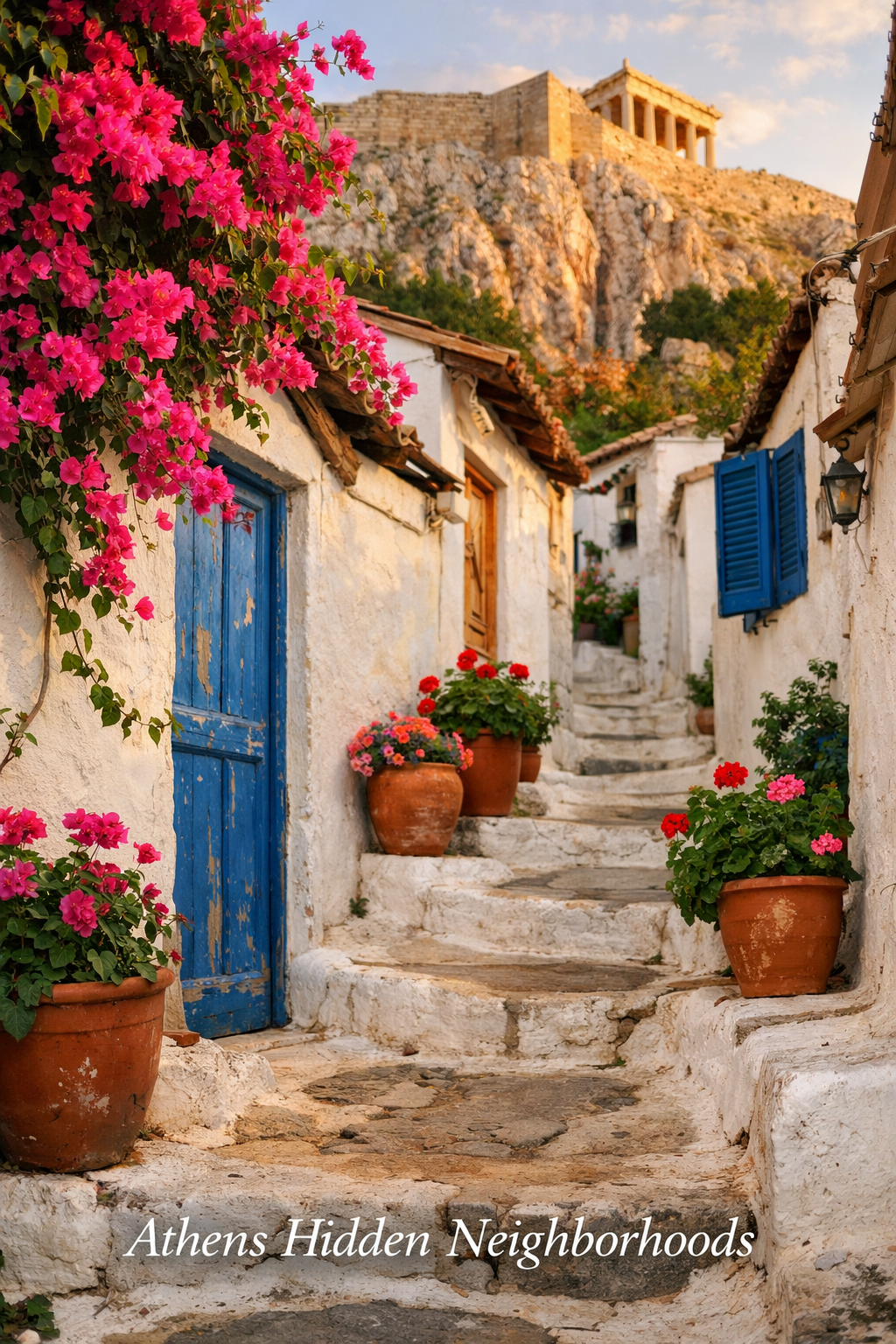
Tucked into the northeastern slopes of the Acropolis rock, Anafiotika is one of the most surprising places in Athens. It was built in the 19th century by craftsmen who came from the Cycladic island of Anafi, and they recreated the architecture of home: narrow whitewashed paths, blue-painted doors and shutters, flower pots spilling over every ledge, and streets too narrow for any car.
Walking through Anafiotika takes maybe 20 minutes, but most people linger much longer. It’s quiet, photogenic, and completely unlike the tourist-heavy streets just below it. Go in the morning before the crowds arrive from the Acropolis entrance.
Psyrri and Metaxourgio: Street Art and Real Athenian Life
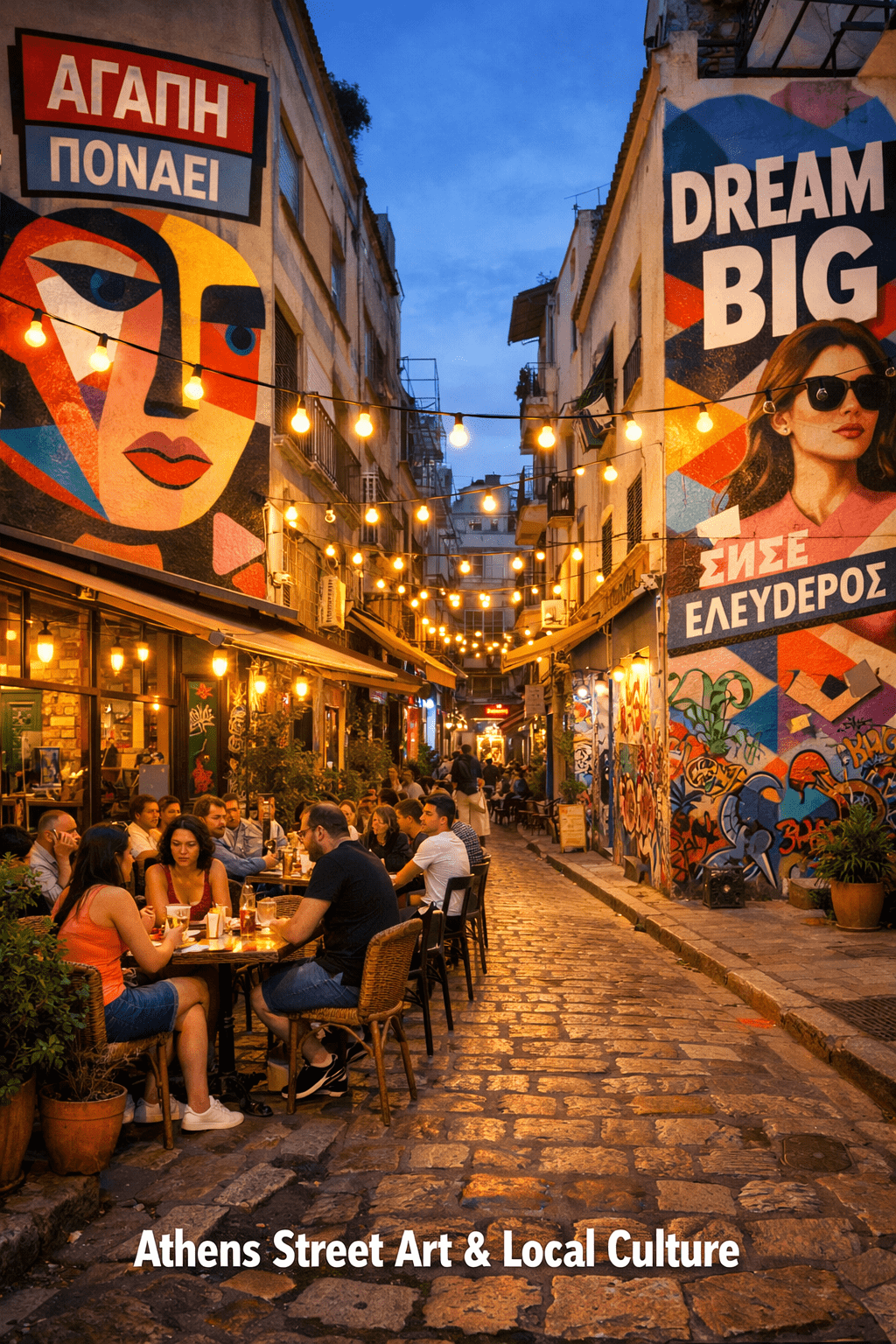
These two adjacent neighborhoods southwest of Monastiraki are where Athens’ creative scene lives. Psyrri has been the city’s arts and nightlife district for years, with murals covering entire building facades and independent galleries tucked between tavernas. Metaxourgio is grittier and more residential, but it’s become a canvas for large-scale street art that rivals anything you’d find in Berlin or Lisbon.
Both neighborhoods are free to explore, and the street art changes regularly, so even repeat visitors find something new. If you enjoy this kind of urban discovery, you might also appreciate our look at hidden gems in Amsterdam for comparison.
Ancient Athens Off the Beaten Path: Sites Most Tourists Skip
The Ancient Agora and Pnyx Hill are two of the most historically significant sites in Athens, yet they’re far less crowded than the Acropolis. Both are worth a dedicated visit.
The Ancient Agora and Temple of Hephaestus
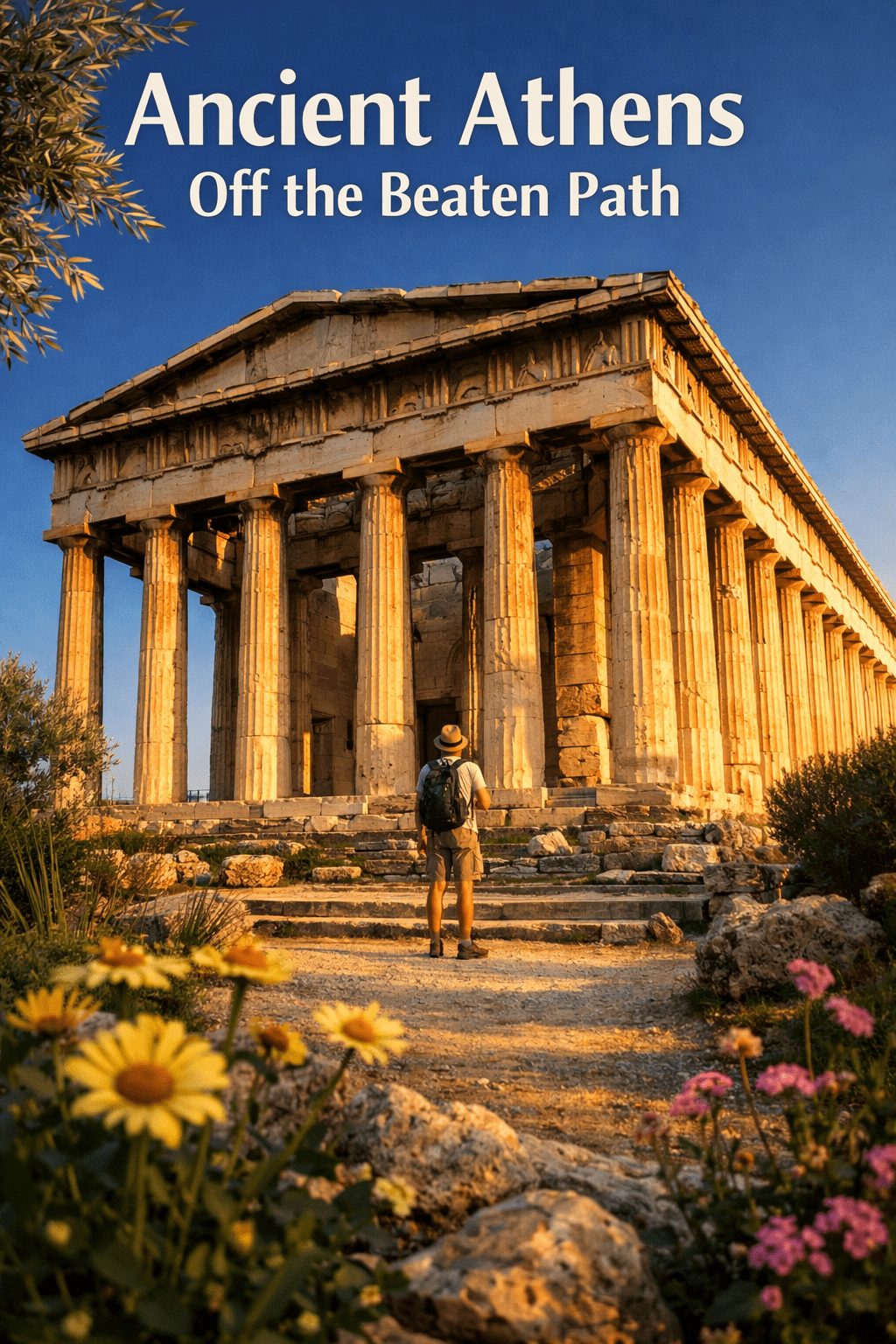
The Ancient Agora was the civic heart of classical Athens — the marketplace, the courthouse, the place where Socrates argued philosophy with anyone who’d listen. Today, it’s a peaceful archaeological park with a remarkable centerpiece: the Temple of Hephaestus, widely considered the best-preserved ancient temple in Greece. Its Doric columns are almost entirely intact, which makes it arguably more impressive up close than the Parthenon.
Admission to the Ancient Agora is separate from the Acropolis ticket (though a combined ticket covers multiple sites). Pair your visit with a walk through the nearby Monastiraki Flea Market for a good mix of ancient and modern Athens.
Also worth noting: the Roman Agora’s Gate of Athena Archegetis, a 1st-century BC marble gateway with a four-column Doric facade, is fully visible from the public sidewalk along Markou Avrilou Street. It costs nothing to see it from outside.
Pnyx Hill: Where Democracy Was Born
Pnyx Hill sits just west of the Acropolis and is one of the most historically loaded spots in the world. This is where ancient Athenian citizens gathered to debate and vote — the literal birthplace of democratic governance. Today, it’s a quiet, wooded hill with almost no crowds and some of the cleanest, most unobstructed views of the Acropolis you’ll find anywhere in the city.
Locals come here for sunset. It’s free, peaceful, and genuinely moving when you think about what happened on that rocky slope 2,500 years ago.
“Pnyx Hill gives you the Acropolis view without the crowds, and the history without the ticket queue. It’s one of those places that makes you stop and think.”
What to See in Athens Greece: Byzantine Heritage Beyond the City Center
Athens has significant Byzantine history that most visitors miss entirely. The Kaisariani Monastery and Dafni Monastery are two standout examples, both easily reachable from the city.
Kaisariani Monastery
Located on the slopes of Mt. Hymettus, about 5 km east of central Athens, Kaisariani Monastery dates to the 11th century. The Byzantine church at its center is beautifully preserved, with frescoes that have survived for centuries. Surrounding the monastery is a pine forest with walking trails — a genuinely refreshing escape from the city heat.
This is a great choice if you’re traveling between late spring and early autumn, when the forest shade makes the walk comfortable. Combine it with a picnic and you have a full half-day out of the city center.
Dafni Monastery
Dafni Monastery holds UNESCO World Heritage status and is recognized as one of the finest examples of middle Byzantine architecture in Greece. It sits about 10 km west of Athens and is accessible by metro. The golden mosaics inside are the main draw — they date to the 11th century and are considered masterworks of Byzantine art.
If you’re planning to explore more of Greece after Athens, our guide on what to do in Mykonos Greece can help you plan the next leg of your trip.
Underrated Athens Attractions That Locals Actually Love
Beyond the major archaeological sites, Athens has a handful of quieter spots that locals return to regularly but rarely appear on tourist itineraries.

The First Cemetery of Athens
This isn’t a morbid suggestion — the First Cemetery of Athens is genuinely beautiful. It’s filled with neoclassical marble tombs, intricate sculptures, and shaded pathways. Many of Greece’s most notable poets, politicians, and war heroes are buried here, and the craftsmanship of the monuments is extraordinary.
The standout piece is sculptor Yannoulis Chalepas’ Sleeping Female Figure, a marble sculpture considered one of the finest works of Greek neoclassical art. The cemetery is free to enter and sits near the Panathenaic Stadium, so it pairs well with a visit there.
Diomidous Botanical Garden
Located in the Haidari suburb west of central Athens, the Diomidous Botanical Garden is reportedly the largest botanical garden in southeastern Europe. It contains thousands of plant species, shaded walking trails, and open picnic areas. Locals treat it as a weekend retreat, but it’s almost completely off the tourist radar.
This is a great option if you’re traveling with kids or simply need a break from marble and museums.
Lycabettus Hill and Filopappou Hill
Both hills offer panoramic views of Athens and the Acropolis at no cost. Lycabettus is the taller of the two and has a small chapel and a cafe at the summit. Filopappou is closer to the Acropolis and offers a different angle on the city, plus the Filopappos Monument at the top. Either one works well for a morning or evening walk.
Practical Tips for Exploring Athens Beyond the Acropolis
A few logistics make a real difference when visiting Athens’ lesser-known sites.
| Spot | Cost | Best Time to Visit | Getting There |
|---|---|---|---|
| Anafiotika | Free | Early morning | Walk from Monastiraki |
| Pnyx Hill | Free | Sunset | Walk from Acropolis |
| Ancient Agora | Paid (combo ticket available) | Morning | Thissio metro |
| Kaisariani Monastery | Small fee | Spring/Autumn | Bus from city center |
| First Cemetery | Free | Anytime | Near Panathenaic Stadium |
| Psyrri / Metaxourgio | Free | Evening | Walk from Monastiraki |
| Lycabettus Hill | Free (funicular costs extra) | Sunset | Taxi or walk from Kolonaki |
A few practical notes:
- The Athens multi-site ticket covers the Acropolis, Ancient Agora, Roman Agora, Kerameikos, and several other sites. It’s valid for five days and offers good value if you plan to visit multiple paid sites.
- Most hidden neighborhoods and viewpoints are completely free. Athens is one of the more affordable European capitals for sightseeing.
- Avoid midday in summer (July/August). The heat is intense, and most outdoor sites become uncomfortable between noon and 4 PM. Early morning or late afternoon visits are far better.
- Athens’ metro system is clean, reliable, and cheap. The Monastiraki and Thissio stops put you within walking distance of most sites in this guide.
If you’re still planning the broader trip, is Santorini worth it is a question worth answering before you book your island hop. And if you want to compare Athens to other European city experiences, our guides on what to see in Rome Italy and what to see in Barcelona Spain cover similar hidden-gem territory.
FAQ: What to See in Athens Greece Beyond the Acropolis
Q: How many days do I need to explore Athens beyond the Acropolis?
Two to three extra days gives you enough time to visit the main hidden gems without rushing. If you only have one extra day, prioritize the Ancient Agora, Anafiotika, and Pnyx Hill — all walkable from each other.
Q: Is Anafiotika hard to find?
Not really. Head to the north slope of the Acropolis rock, near the entrance to the Acropolis Museum area, and look for signs pointing uphill. Most people stumble into it by accident, which is part of the charm.
Q: Are any of these sites free?
Yes — Anafiotika, Pnyx Hill, Filopappou Hill, Lycabettus Hill, the First Cemetery, and the street art neighborhoods all cost nothing to visit. The Ancient Agora and Kaisariani Monastery charge small admission fees.
Q: What’s the best viewpoint in Athens for Acropolis photos?
Pnyx Hill and Filopappou Hill both offer excellent, unobstructed views. For a higher vantage point, Lycabettus Hill gives you a bird’s-eye perspective of the entire city with the Acropolis in the middle distance.
Q: Is the Temple of Hephaestus really better preserved than the Parthenon?
In terms of structural completeness, yes. The Temple of Hephaestus retains most of its original columns and roof structure, while the Parthenon suffered significant damage over the centuries. Both are extraordinary, but Hephaestus surprises most visitors.
Q: Can I visit Kaisariani Monastery as a day trip from central Athens?
Yes. It’s about 5 km from the city center and reachable by bus. Allow half a day to visit the monastery and walk some of the forest trails on Mt. Hymettus.
Q: What neighborhood should I stay in to access these hidden gems easily?
Monastiraki, Psyrri, or Thissio put you within walking distance of most sites in this guide. Check our best hotels in Athens Greece guide for specific recommendations by neighborhood.
Q: Is Athens safe for solo travelers exploring off the beaten path?
Athens is generally safe for solo travelers, including in neighborhoods like Psyrri and Metaxourgio. As with any city, stay aware of your surroundings, especially at night in less-lit areas.
Conclusion: Your Athens Adventure Starts Beyond the Obvious
The Acropolis is magnificent, and you should absolutely visit it. But if that’s all you see, you’ll leave Athens having missed the city’s real character. The whitewashed lanes of Anafiotika, the democratic history of Pnyx Hill, the Byzantine beauty of Kaisariani, the street art of Psyrri — these are the places that make Athens feel alive rather than just ancient.
Here’s what to do next:
- Pick two or three spots from this guide that genuinely interest you and build your days around them rather than trying to see everything.
- Book accommodation in Monastiraki or Thissio so you can walk to most of these sites without transit hassle.
- Go early or go late — morning light is best for photography, and sunset from Pnyx Hill or Lycabettus is worth planning your whole evening around.
- Leave room to wander. Athens rewards the unplanned detour more than almost any other European city.
For more European hidden-gem inspiration, take a look at our guides on what to see in Prague beyond Charles Bridge and what to see in Vienna — both cities share Athens’ quality of rewarding curious travelers who look past the obvious.
Athens has been surprising visitors for thousands of years. It’ll surprise you too, if you let it.