
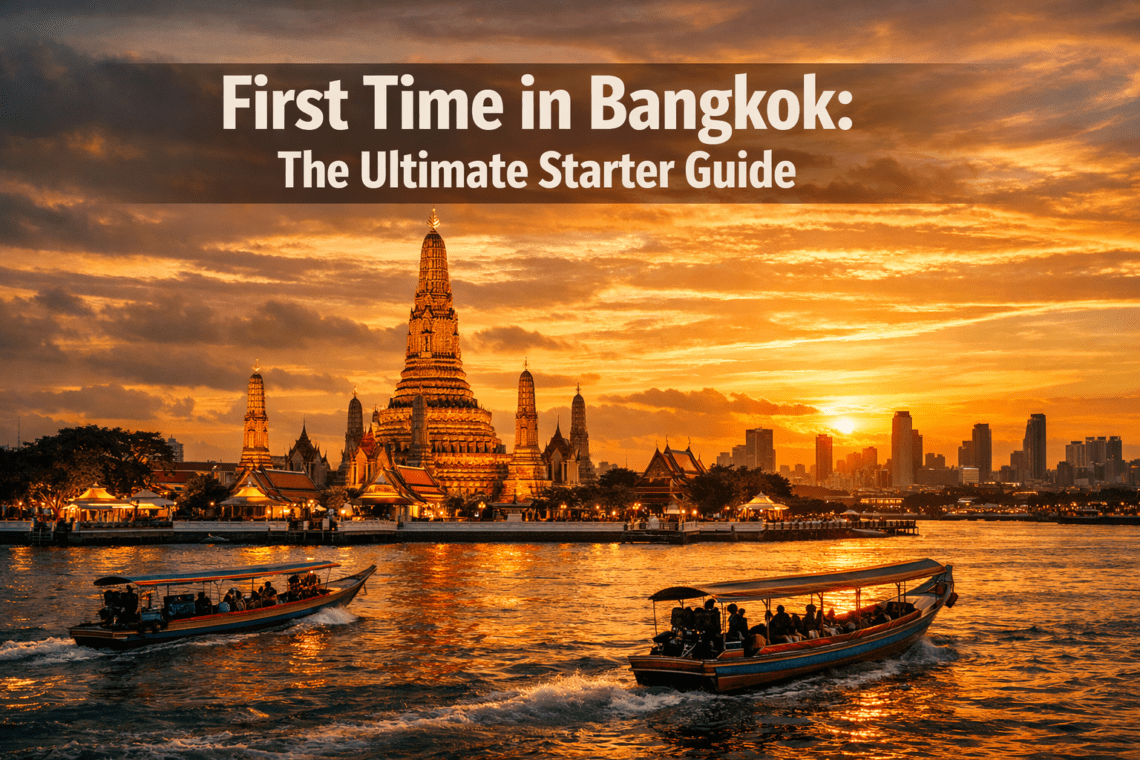
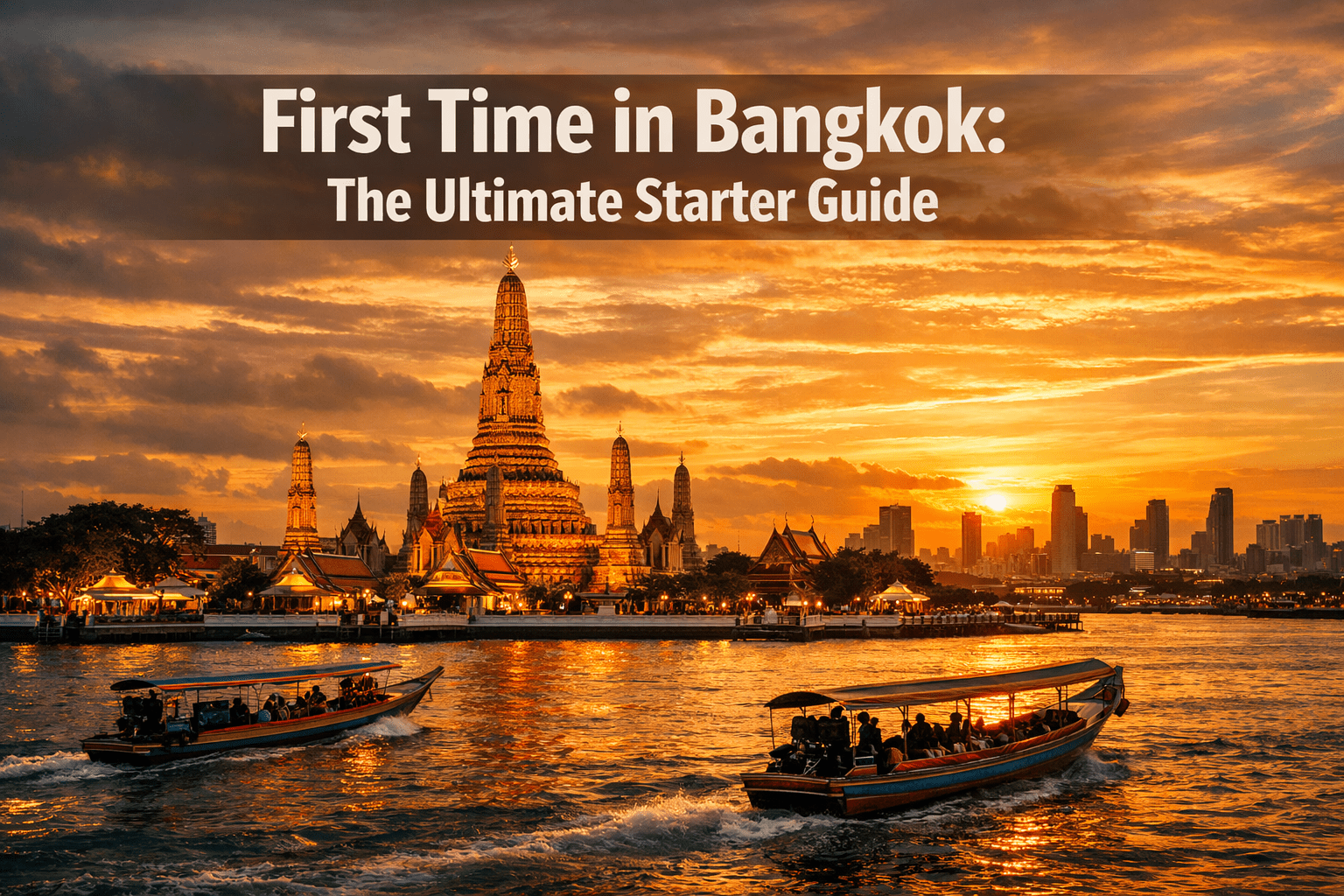
Quick Answer: Bangkok is one of the most rewarding cities for first-time visitors — but it can feel overwhelming without a plan. The key is knowing where to stay, how to get around, and what to expect from the culture, food, and weather. This guide covers everything you need to walk off the plane feeling ready.
Key Takeaways
- Stay in Sukhumvit for your first visit — it has the best transport links, food, and nightlife for newcomers.
- Get a Rabbit Card at any BTS station to pay for the Skytrain and save time at ticket machines.
- Visit temples in the morning (before 10am) to beat the heat and the crowds.
- December through February is the best time to visit — cooler temperatures, low humidity, and almost no rain.
- Street food is safe and delicious — look for busy stalls with high turnover for the freshest food.
- Always carry small bills (20–100 baht notes) for tuk-tuks, street food, and market stalls.
- Dress modestly when entering temples — shoulders and knees must be covered.
- Negotiate tuk-tuk fares before you get in — always agree on a price upfront.
- Bangkok works well for 3 to 5-day trips, with day trips to Ayutthaya or floating markets possible on a 5-day itinerary.
- Talat Noi is one of the best under-the-radar neighborhoods — far fewer crowds than the main tourist spots.
What Should You Know Before Your First Time in Bangkok?
Bangkok rewards travelers who do a little homework. It’s a huge city of roughly 10 million people, but the areas most relevant to first-timers are compact and well-connected.
A few basics to lock in before you land:
- Currency: Thai Baht (THB). ATMs are widely available, but many charge a foreign transaction fee (around 220 baht per withdrawal as of 2026 — check with your bank). Exchange booths at Suvarnabhumi Airport offer decent rates.
- Language: Thai is the official language. English is spoken in most tourist areas, hotels, and malls — but less so in local markets and residential neighborhoods.
- SIM card: Buy one at the airport on arrival. AIS, DTAC, and True Move all offer tourist SIMs with solid data coverage for around 300–500 baht.
- Visa: Many nationalities receive a visa-on-arrival or visa exemption for stays up to 30 days. Check Thailand’s official immigration website before you travel, as policies update regularly.
- Power: Thailand uses 220V with Type A, B, and C outlets. Most modern chargers handle the voltage automatically, but bring an adapter if needed.
Practical tip: Download Google Maps offline for Bangkok before you land. It works well with the BTS and MRT transit layers and saves you from relying on airport Wi-Fi.
How Do You Get Around Bangkok Without Getting Lost?
Bangkok’s public transit system is genuinely good, and for first-timers it’s the fastest and cheapest way to move around the city.
The main options:
| Transport | Best For | Approx. Cost |
|---|---|---|
| BTS Skytrain | Sukhumvit, Siam, Silom | 17–59 THB per trip |
| MRT Subway | Old City, Chinatown, Lumpini | 17–42 THB per trip |
| Chao Phraya Express Boat | Riverside temples, Old City | 15–40 THB |
| Grab (ride-hailing app) | Late nights, heavy luggage | Varies by distance |
| Tuk-tuk | Short hops, experience | Negotiate — 60–150 THB typical |
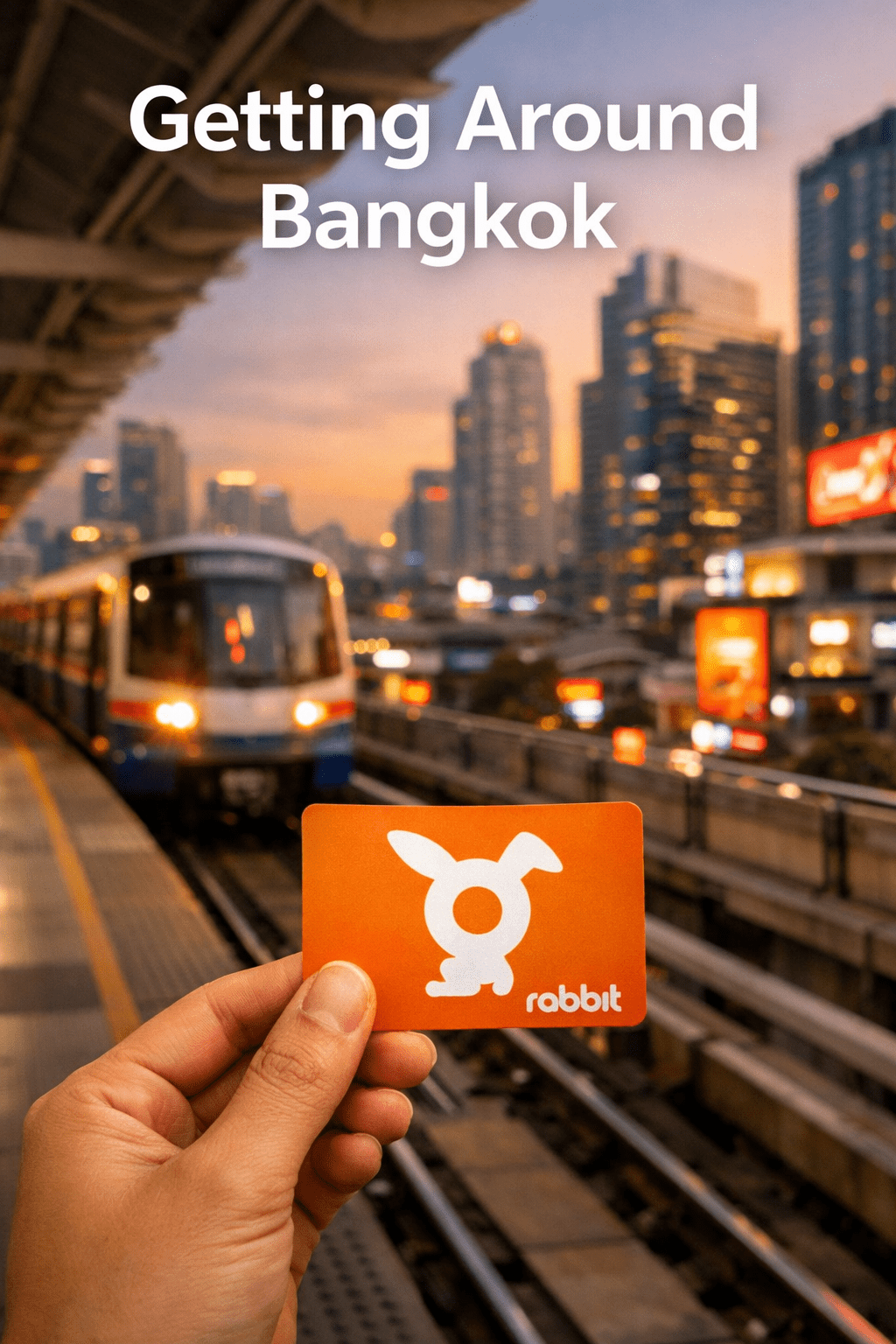
Get a Rabbit Card at any BTS station (costs 100 THB deposit + top-up amount). It works across the BTS network and some partner services, and it’s much faster than buying single tickets. The expanded BTS and MRT networks in 2026 now cover more of the city than ever, including better connections between the Sukhumvit corridor and the Old City area.
Choose Grab over taxis when you can. Metered taxis are fine, but some drivers refuse to use the meter with tourists. Grab shows you the price upfront and is consistently reliable.
Common mistake: Trying to walk between major sights in the midday heat. Bangkok’s humidity is brutal from March through October. Use the Skytrain or a river boat even for distances that look short on a map.
Where Should First-Time Visitors Stay in Bangkok?
Sukhumvit is the best base for most first-time visitors to Bangkok. It has direct BTS access, hundreds of restaurant and hotel options at every price point, and a lively atmosphere without being chaotic.
The three best neighborhoods for first-timers:
Sukhumvit (Nana to Thong Lo)
- Best for: nightlife, international food, shopping, easy transit
- Stay near BTS Asok or Phrom Phong for the sweet spot between convenience and calm
- Budget to luxury options all within walking distance of the station
Old City (Rattanakosin)
- Best for: temple immersion, budget guesthouses, authentic Bangkok feel
- Walking distance to the Grand Palace, Wat Pho, and Wat Arun
- Fewer transit links — you’ll rely more on river boats and tuk-tuks
Siam
- Best for: shoppers and families
- Central location with Siam Paragon, CentralWorld, and MBK all walkable
- Good BTS connections in every direction
Choose Sukhumvit if this is your first visit and you want convenience. Choose Old City if you’re more interested in culture and history and don’t mind a slightly slower pace of getting around.
What Are the Must-See Sights for Your First Time in Bangkok?
Every first-time Bangkok visit should include the Grand Palace area, at least one working temple, and one authentic market. Beyond that, the city has plenty of new experiences worth adding in 2026.
The non-negotiables:
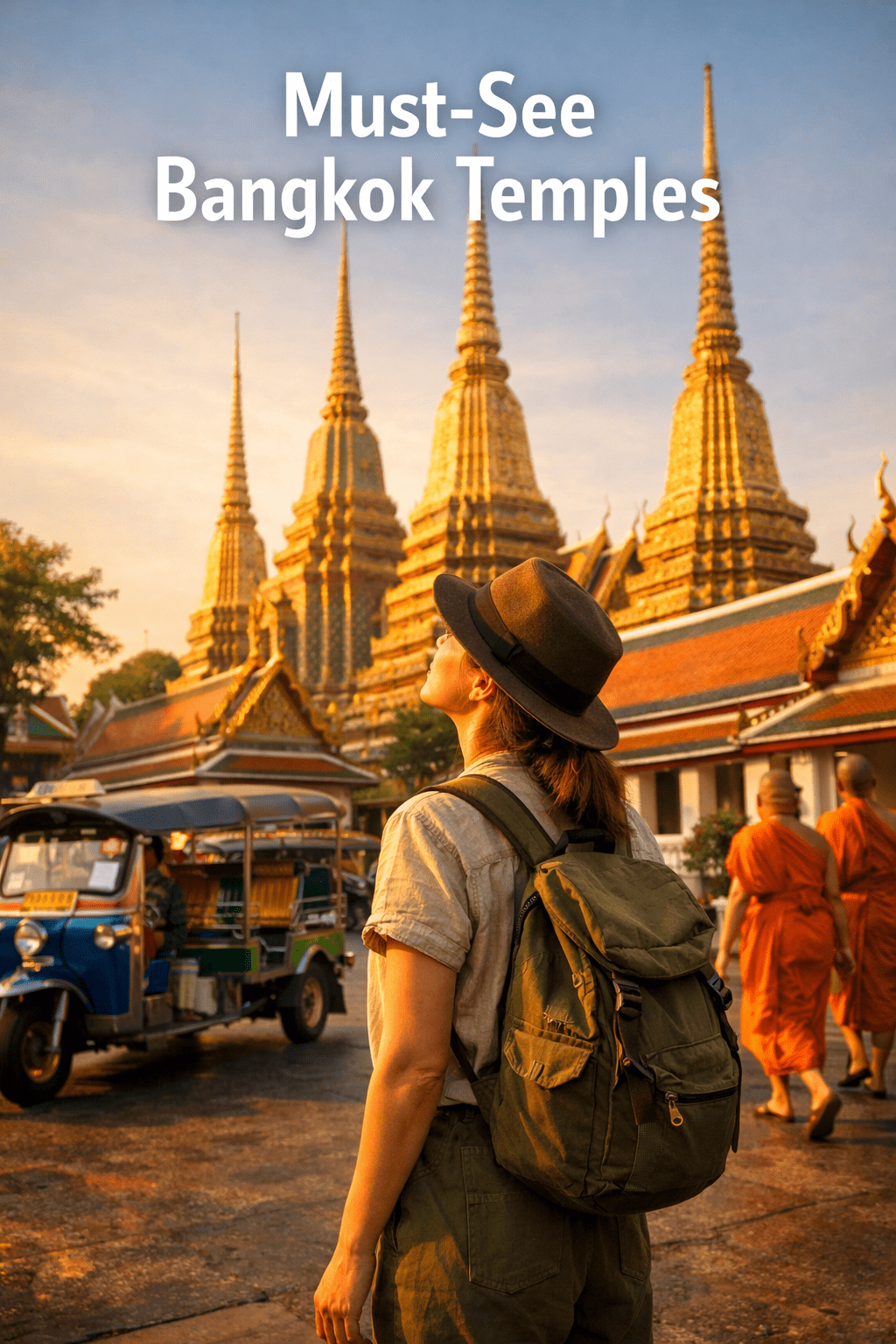
- Grand Palace and Wat Phra Kaew — Bangkok’s most iconic landmark. Go early (opens at 8:30am) and dress modestly. Entry is 500 THB.
- Wat Pho — Home to the massive Reclining Buddha. Just a short walk from the Grand Palace and less crowded.
- Wat Arun — Best viewed from across the river at sunset, or climb it for panoramic views.
- Chatuchak Weekend Market — One of the world’s largest weekend markets, with renovated sections that make it easier to navigate than before. Go Saturday or Sunday morning before the heat peaks.
- Talat Noi — A genuinely underrated neighborhood with old shophouses, street art, tiny cafés, and river views. Take the MRT to Wat Mangkon or Hua Lamphong and walk in. Far fewer tourists than the main spots.
New in 2025–2026:
- Central Park Bangkok (opened September 2025) — An 8-story mega-mall on Rama IV with Thailand’s largest urban rooftop garden. Worth a visit even if you’re not a mall person.
- Lumpini Park Hawker Centre (opened early 2026) — 88 food vendors in two shifts, modeled after Singapore’s hawker centers. A cleaner, more organized street food experience.
If you’re planning a longer trip, a day excursion to Ayutthaya (the ancient capital, about 1.5 hours north by train) is one of the best things you can do on a 5-day itinerary.
What Should You Eat (and Where) on Your First Bangkok Trip?
Bangkok’s food scene is one of the best in the world, and you don’t need to spend much to eat incredibly well.
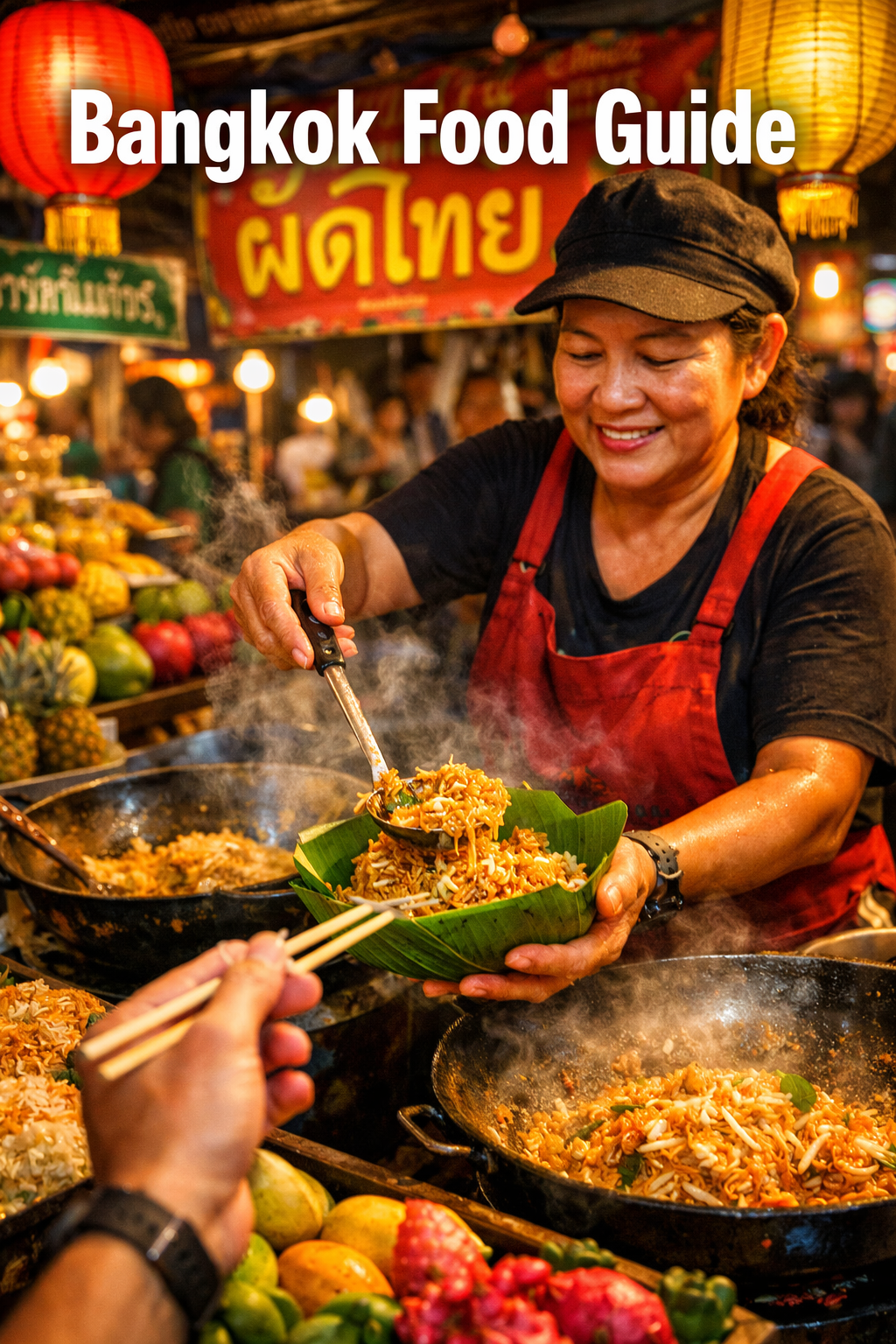
Start with these dishes:
- Pad Thai — The classic stir-fried noodle dish. Order it from a street stall, not a tourist restaurant.
- Som Tum — Green papaya salad, spicy and fresh. Ask for “mai pet” (not spicy) if you need to ease in.
- Khao Man Gai — Poached chicken over rice with broth. Simple, cheap, and deeply satisfying.
- Mango Sticky Rice — The dessert you’ll want every day.
- Boat Noodles — Small bowls of rich, slightly dark broth with noodles and meat. Found near the old canals.
Where to eat:
- Street stalls with high turnover are almost always safe. Busy = fresh.
- Lumpini Park Hawker Centre is a great option for first-timers who want variety in a clean setting.
- Or Tor Kor Market near Chatuchak is a premium fresh market with excellent prepared food and no haggling needed.
- Yaowarat (Chinatown) is the best place for a street food dinner — go after 6pm when the stalls set up.
Budget guide: A street food meal costs 50–80 THB. A sit-down local restaurant runs 100–200 THB. A meal at a mid-range Western-style restaurant is 300–600 THB.
If you’re planning other Southeast Asia adventures, our 2 Weeks in Bali Itinerary has a similar food-first approach that pairs well with a Bangkok trip.
When Is the Best Time to Visit Bangkok for the First Time?
December through February is the best time for a first visit to Bangkok. Temperatures are cooler (around 25–30°C / 77–86°F), humidity is lower, and rain is rare. It’s also peak tourist season, so book accommodation early.
Season breakdown:
| Season | Months | What to Expect |
|---|---|---|
| Cool & Dry (Best) | Dec–Feb | Comfortable, sunny, busy |
| Hot Season | Mar–May | Very hot (35–40°C), manageable with AC |
| Rainy Season | Jun–Oct | Heavy afternoon downpours, fewer tourists, lower prices |
| Shoulder Season | Nov | Transitioning — still good, less crowded |
If you can only visit during rainy season: It’s still worth going. Rain usually comes in short, heavy bursts in the afternoon. Plan outdoor activities for the morning and use the rain as an excuse to explore malls, museums, and indoor markets.
For packing tips that apply to any warm-weather destination, our Travel Essential List covers everything you’ll want to bring.
Is Bangkok Safe for First-Time Travelers?
Bangkok is generally very safe for tourists, including solo travelers. Violent crime against visitors is rare. The main risks are petty theft, scams, and traffic.
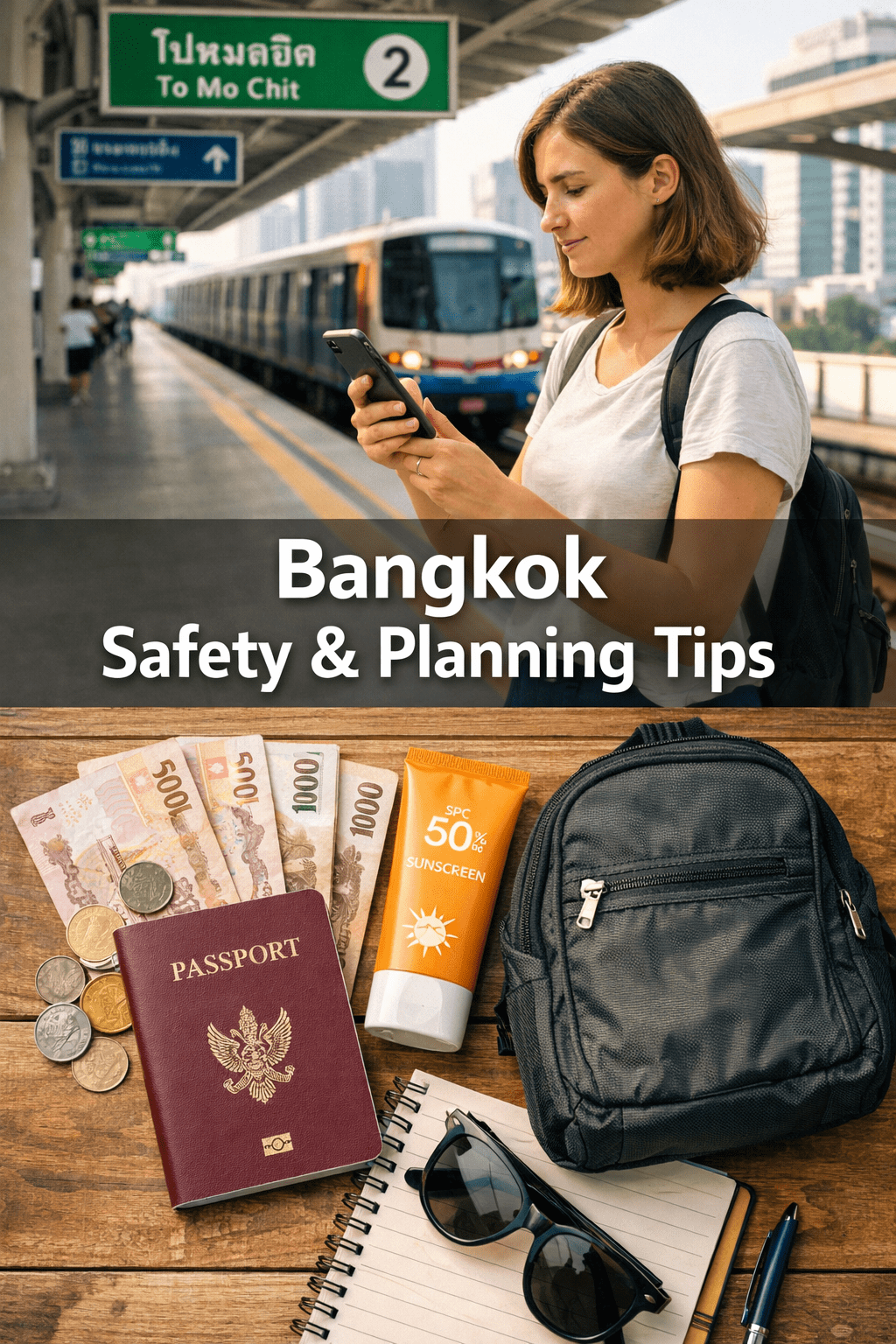
Common scams to know:
- The Grand Palace is closed today — It’s not. Anyone who tells you this and offers to take you somewhere else is running a scam.
- Tuk-tuk “sightseeing tour” — A driver offers a cheap tour that ends at a gem shop or tailor where you’re pressured to buy. Decline any unsolicited tour offers.
- Taxi refuses the meter — Walk away and find another cab or use Grab.
Safety basics:
- Keep your passport copy separate from the original.
- Use hotel safes for valuables.
- Be cautious around Khao San Road late at night — it’s lively but can attract pickpockets.
- Carry a small amount of cash but don’t flash large bills.
Bangkok is also a fantastic destination for solo travelers. If you’re traveling alone for the first time, our Solo Travel guides have practical tips that apply across destinations.
FAQ: First Time in Bangkok
How many days do I need in Bangkok?
Three days covers the highlights — Grand Palace, Wat Pho, a market, and street food. Four to five days lets you add Chatuchak, Chinatown, a day trip, and more relaxed exploration.
Do I need to speak Thai?
No. English is widely spoken in tourist areas, hotels, and malls. A few basic Thai phrases (hello = “Sawasdee kha/khrap,” thank you = “Khob khun kha/khrap”) go a long way in terms of goodwill.
What should I wear in Bangkok?
Light, breathable clothing is essential. For temples, carry a light scarf or sarong to cover shoulders and knees — many temple entrances have loaners, but it’s easier to bring your own.
Is tap water safe to drink?
No. Drink bottled or filtered water. Most hotels provide complimentary bottles. Buying a large refillable bottle and using filtered water stations (common in malls and hotels) cuts down on plastic waste.
Can I use credit cards in Bangkok?
Yes, in malls, mid-range restaurants, and hotels. Street food, markets, and tuk-tuks are cash only. Always have baht on hand.
Is Bangkok good for first-time solo travelers?
Yes — it’s one of the most solo-friendly cities in Asia. The transit system is easy, English is widely spoken, and the solo traveler community is large.
What’s the best way to get from the airport to the city?
The Suvarnabhumi Airport Rail Link connects to the city center in about 30 minutes for 45 THB. Grab is also reliable and costs around 300–500 THB to Sukhumvit depending on traffic.
Are there dress codes at temples?
Yes. Shoulders and knees must be covered. Sleeveless tops, shorts, and short skirts are not allowed. Sarongs are available to borrow or buy near most major temples.
What’s the currency situation like?
Thailand is still largely cash-based for everyday spending. ATMs are everywhere but charge fees. Exchange booths (especially SuperRich and Vasu) offer better rates than airport counters.
Is Bangkok good for families?
Yes. The city has excellent malls with kids’ attractions, safe street food options, and new immersive experiences like Jurassic World: The Experience and Cave Fantasy that opened in 2025–2026.
Conclusion: Your First Time in Bangkok, Done Right
Bangkok doesn’t have to be overwhelming. With the right neighborhood (Sukhumvit for most people), a Rabbit Card in your pocket, and a rough plan for your first morning, the city opens up fast.
Your actionable next steps:
- Book accommodation in Sukhumvit near a BTS station — Asok or Phrom Phong are ideal starting points.
- Check your visa requirements on Thailand’s official immigration portal before you book flights.
- Download Google Maps offline and add the Grand Palace, Wat Pho, and Chatuchak to your saved places.
- Plan your first morning at the Grand Palace — arrive at 8:30am before the heat and crowds build.
- Set a daily food budget of 300–500 THB for street food and local restaurants — you’ll eat incredibly well.
Bangkok is one of those cities that gets better every time you visit. Your first trip is just the beginning. If you’re building a bigger Southeast Asia itinerary, our 2 Weeks in Bali Itinerary and 15 Best Places to Visit in India are natural next stops to explore. And if you’re new to international travel altogether, our First Time in Airplane Guide covers everything from check-in to landing so you feel prepared before you even board.
Go explore. Bangkok is worth every minute.