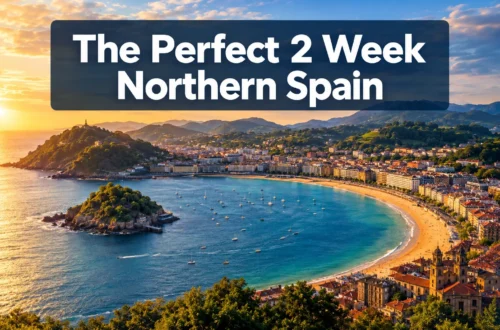


Quick Answer: Alicante is one of Spain’s most rewarding coastal cities for first-time visitors. The must-see highlights are Castillo de Santa Bárbara, La Explanada de España promenade, Playa del Postiguet, and the Barrio de Santa Cruz old quarter. You can cover the core attractions comfortably in 2 to 3 days without a car.
Key Takeaways
- Castillo de Santa Bárbara is the single most important landmark — don’t skip it. It sits 166 meters above the city with sweeping coastal views.
- La Explanada de España is the city’s iconic promenade, famous for its 6 million colorful marble tiles arranged in a wave pattern.
- Playa del Postiguet is the best central beach for families, with calm, shallow water and easy access to the promenade.
- Barrio de Santa Cruz is Alicante’s oldest neighborhood — narrow streets, tapas bars, and colorful facades make it ideal for an evening stroll.
- MARQ Archaeological Museum is the top pick for history lovers, covering the region from the Bronze Age onward.
- Tabarca Island is the best day trip from Alicante — take the ferry for a quieter coastal experience.
- Playa de San Juan (7 km long) is the better choice if you want a full beach day with restaurants and space to spread out.
- The city is very walkable. Most landmarks cluster near the port and old town, so you won’t need taxis for the main sights.
What to See in Alicante: The Non-Negotiable Landmarks
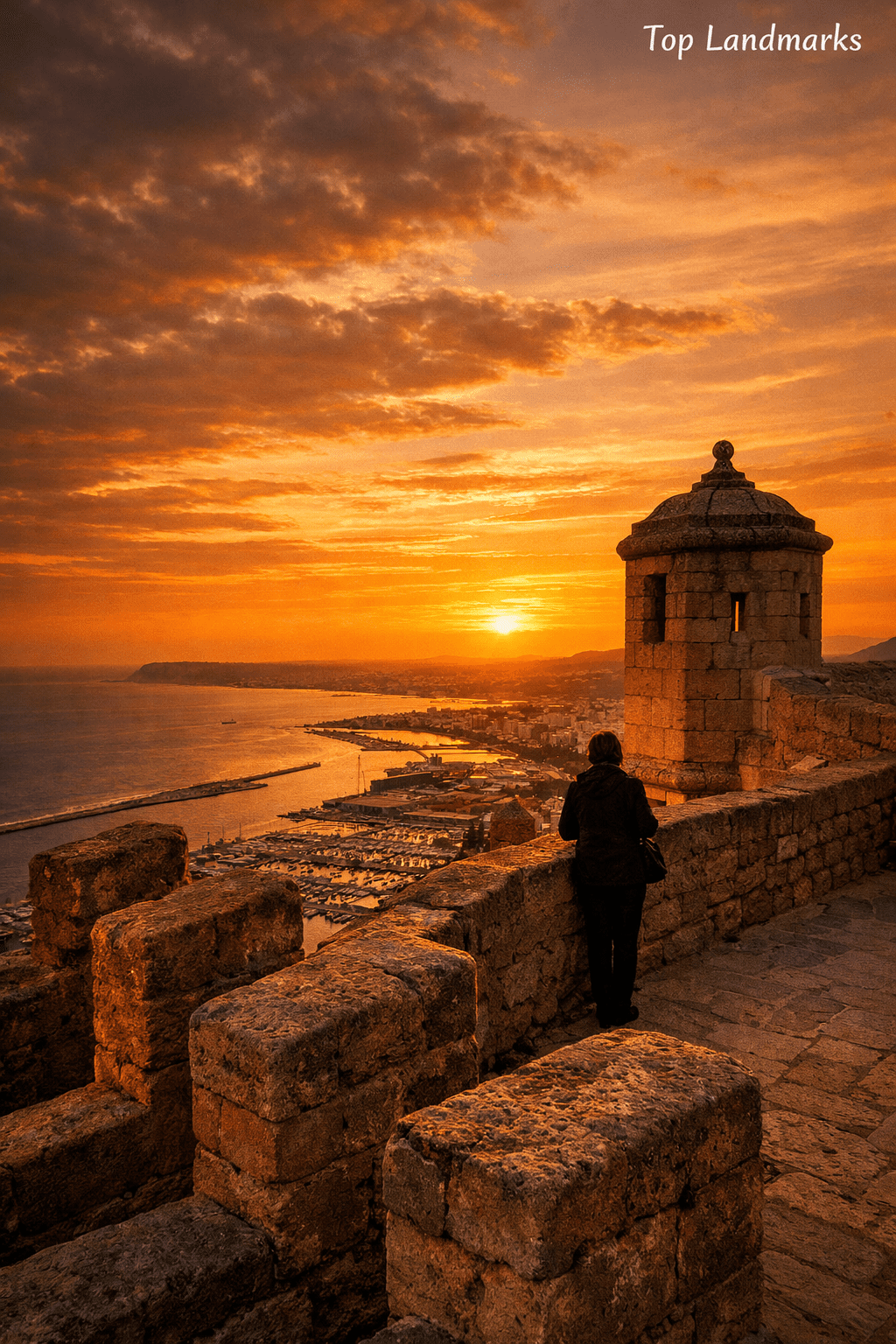
Start with Castillo de Santa Bárbara and La Explanada de España — these two define the city. Everything else builds around them. If you only have one day, these are your anchors.
Castillo de Santa Bárbara
This is Alicante’s crown jewel, and it earns that title. The castle sits 166 meters above sea level on Mount Benacantil, overlooking the entire city and the Mediterranean coast. Archaeological remains inside span the Bronze Age, Iberian settlements, and Roman occupation, and the castle itself was built at the end of the 9th century [1].
Getting up there is easy: take the free elevator (lift entrance on Avenida Jovellanos, near Playa del Postiguet) or hike the path if you enjoy a bit of a climb. Budget at least 90 minutes to explore properly.
Choose a guided tour if: you want context. Guided castle tours typically run around €75 per person for a 3-hour experience that also includes Casa Carbonell, the Basilica of St Mary, and Alicante Town Hall, with groups capped at 10 people [3]. That’s genuinely good value for a packed morning.
“The view from the top of Castillo de Santa Bárbara is the kind that makes you stop mid-sentence. The whole coastline just opens up in front of you.”
La Explanada de España
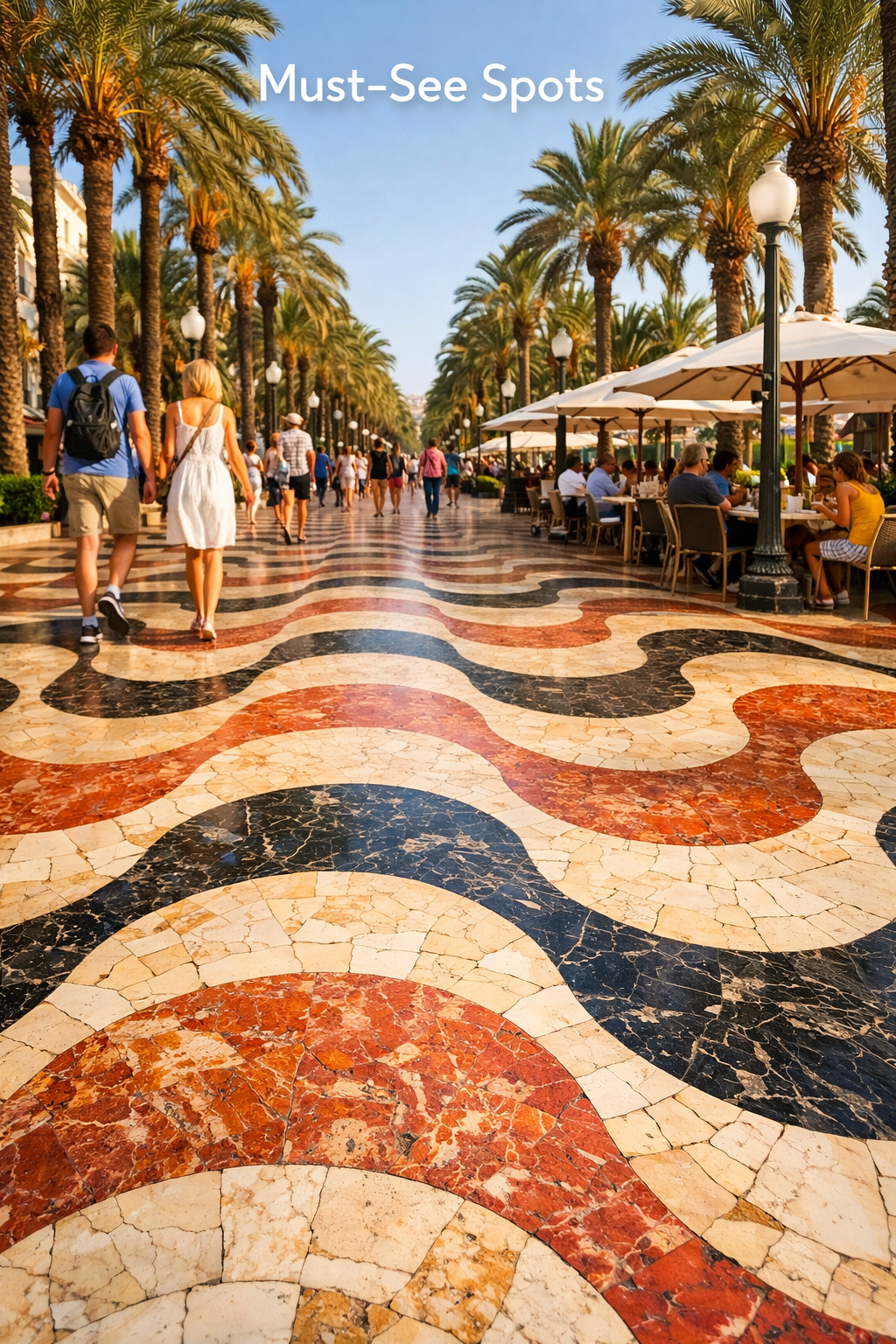
Walk this promenade on your first evening in Alicante. The marble tile floor — made up of 6 million tiles in a wave-like pattern — is genuinely stunning up close and is considered one of the city’s most iconic symbols [3]. Palm trees line both sides, and the bars and restaurants along the boulevard are where locals actually eat and drink, not just tourists. It’s a great place to get your bearings and settle into the pace of the city.
The Best Beaches to See in Alicante (And Which One Fits You)
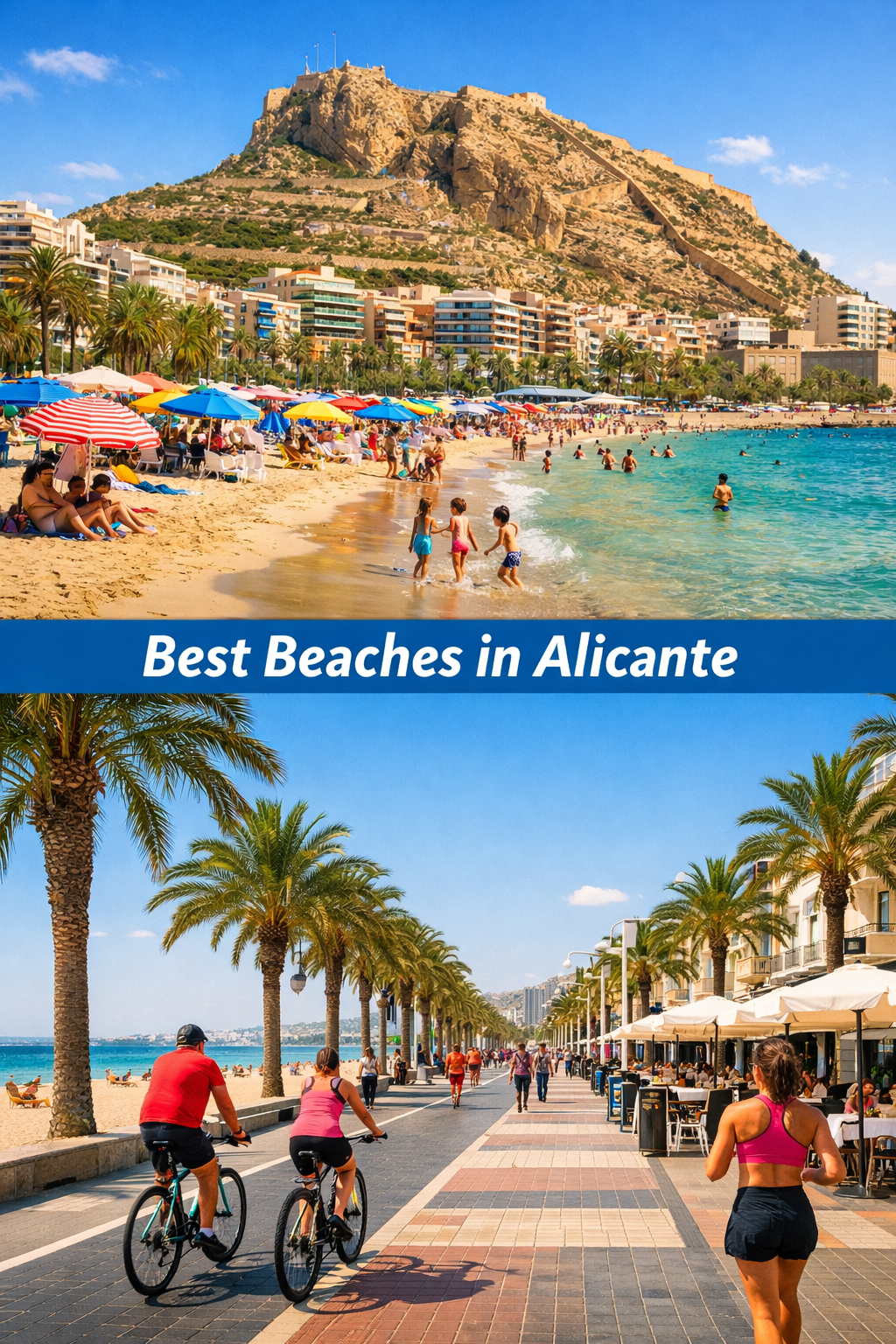
Alicante has two main beaches worth knowing: Playa del Postiguet for convenience, and Playa de San Juan for space. Pick based on what kind of beach day you want.
| Beach | Best For | Distance from Center | Key Feature |
|---|---|---|---|
| Playa del Postiguet | Families, day visitors | Walking distance | Shallow water, playground, promenade access |
| Playa de San Juan | Long beach days, dining | ~15-minute drive | 7 km long, restaurants, more space |
Playa del Postiguet is the most central option. It has soft golden sand, calm shallow water that’s safe for children, and playground facilities right on the beach [1]. The promenade runs alongside it, so ice cream, snacks, and restaurants are seconds away. It gets busy in peak summer, but the location makes it hard to beat for a first visit.
Playa de San Juan stretches 7 kilometers and sits about 15 minutes from the city center. A promenade lined with restaurants and cafés runs the length of it, making it ideal if you want a full day of sunbathing and dining without feeling cramped [3]. Take the tram (Line 1) from Alicante’s TRAM station — it’s cheap, direct, and drops you right there.
Hidden Gems: What to See in Alicante Beyond the Main Sights
The Barrio de Santa Cruz and the Central Market are where Alicante’s real character lives. Most first-timers walk past them on the way to the castle. Don’t.
Barrio de Santa Cruz
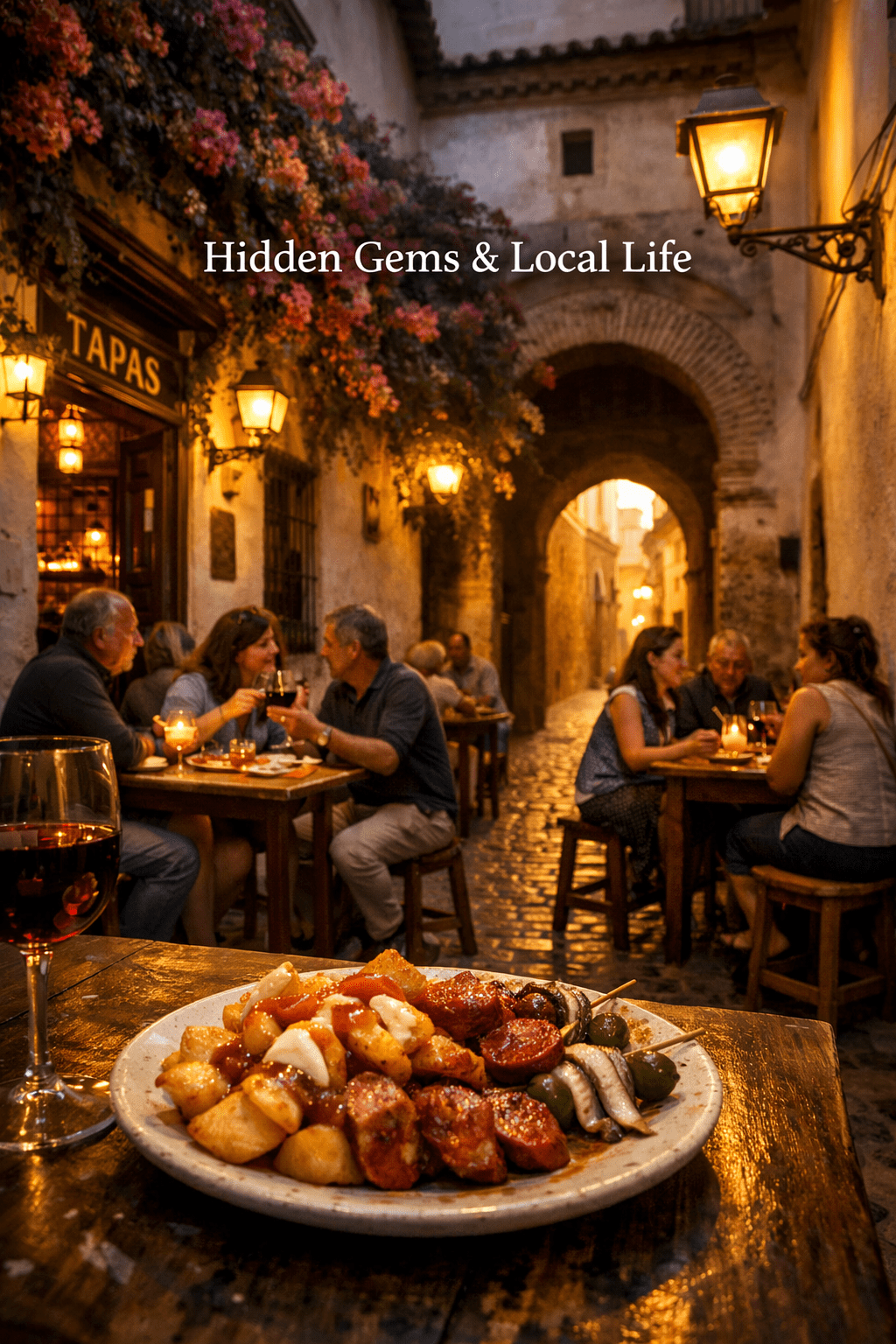
This is the oldest part of the city, and it looks the part: narrow winding streets, whitewashed walls draped in bougainvillea, and a warm, lived-in atmosphere that feels genuinely old [3]. In the evenings, the neighborhood fills up with locals at the tavernas, and the tapas here tend to be better and cheaper than anything near the tourist waterfront.
Common mistake: visiting at midday when it’s quiet and hot. Come back after 7 PM and it transforms completely.
Mercado Central (Central Market)
Built in 1912, the Central Market is where local farmers, fishermen, and vendors have sold their produce for decades [3]. Most of the city’s restaurants source their daily ingredients here. Arrive before 10 AM on a weekday for the full experience — stalls packed with fresh fish, local olives, cured meats, and seasonal vegetables. It’s free to enter and one of the most authentic things you can do in Alicante.
MARQ Provincial Archaeological Museum
If history is your thing, MARQ is a proper museum — not a dusty one. It covers the region’s ancient heritage from prehistoric times through the Moorish period and beyond, and the presentation is genuinely engaging [1]. Pair it with a visit to the nearby Basilica de Santa Maria for a solid history-focused half-day.
Parc de l’Ereta
This nature reserve sits on Mount Benacantil, just below the castle. Winding paths cut through pine and olive trees, and the sea views are excellent without the crowds at the top [1]. It’s also a good spot for birdwatching — kestrels are common here. A quiet alternative if you want the views without the castle entrance queue.
Day Trips and Outdoor Spots Worth Adding to Your Alicante Visit
Tabarca Island and El Palmeral Park are the two best additions if you have extra time. Both are easy to reach and offer something genuinely different from the city center.
Tabarca Island is accessible by ferry from Alicante’s port, and the crossing takes roughly 45 minutes. It’s Spain’s only inhabited fortified island and has a small, car-free village, clear water for snorkeling, and a calmer vibe than the main city beaches [1]. It works well for couples or families looking for a different kind of coastal day. Book ferry tickets in advance during summer — they sell out.
El Palmeral Park is a large urban green space with walking paths, a small lake with boat rentals, picnic spots, and playgrounds [2]. It’s popular with local families and joggers, and it’s a good option if you need a break from sightseeing. Entry is free.
If you’re planning more time in Spain after Alicante, check out this 3-day Madrid itinerary or browse the must-see places in Spain that first-timers often skip for ideas on where to go next.
Practical Tips for Planning Your Alicante Trip
The best time to visit Alicante is April through June or September through October. July and August are peak season — beaches are packed, prices rise, and the heat (often above 35°C) can be intense for sightseeing.
Getting around: The city center is very walkable. The TRAM connects the center to Playa de San Juan and further north along the Costa Blanca. Taxis and rideshares are affordable for short trips.
Budget estimates (per person, approximate):
- Castle elevator: Free
- MARQ museum entry: Around €3
- Guided castle tour: Around €75 (includes multiple sites)
- Ferry to Tabarca Island: Around €20 round trip
- Tapas meal in Barrio de Santa Cruz: €10–€18
What to eat: Order arroz a banda (rice cooked in fish broth), fresh grilled fish at the port, and turrón (nougat) — Alicante is famous for it across Spain.
For those flying for the first time or navigating an unfamiliar airport, this first-time airplane guide covers everything from check-in to landing.
Planning a broader Mediterranean trip? The Lisbon Portugal travel guide and what to see in Barcelona are worth reading alongside this one.
FAQ: What to See in Alicante for First-Time Visitors
How many days do I need in Alicante?
Two to three days is enough to see the main highlights comfortably. Add a fourth day if you want a full beach day at Playa de San Juan and a Tabarca Island ferry trip.
Is Alicante worth visiting for first-timers?
Yes. It’s more relaxed than Barcelona and more affordable than many Spanish coastal cities, with a strong mix of history, beaches, and food.
What is the most famous landmark in Alicante?
Castillo de Santa Bárbara is the most iconic landmark. It’s visible from almost everywhere in the city and offers the best panoramic views of the coast.
Is Alicante good for families?
Yes. Playa del Postiguet has shallow, calm water and playground facilities. El Palmeral Park has boat rentals and picnic areas. The castle is engaging for older kids.
Can I visit Alicante without a car?
Absolutely. The city center, castle, beaches, old town, and Central Market are all walkable or reachable by tram. You only need a car if you’re exploring the wider Costa Blanca region.
What is La Explanada de España known for?
It’s Alicante’s signature promenade, famous for its floor made of 6 million colorful marble tiles in a wave pattern. It’s the most photographed spot in the city.
Is Tabarca Island worth the trip?
Yes, especially for couples and families. The island is car-free, the water is clear, and it offers a quieter experience than the city beaches. Allow a full day.
When should I avoid visiting Alicante?
July and August are the most crowded and expensive months. The heat can also make extended sightseeing uncomfortable. September is often the sweet spot — warm, less crowded, and cheaper.
What neighborhood is best for tapas in Alicante?
Barrio de Santa Cruz is the best area for authentic, affordable tapas. The tavernas here are frequented by locals rather than tourists, and the atmosphere in the evening is excellent.
Is the MARQ museum worth visiting?
Yes, particularly if you’re interested in the region’s history. It’s well-presented, affordable, and easy to combine with a visit to the Basilica de Santa Maria nearby.
Conclusion: Your Alicante First Visit, Done Right
Alicante rewards visitors who take a little time to look beyond the beach. The castle, the promenade, the old quarter, and the Central Market together give you a genuinely complete picture of the city — its history, its food culture, and its coastal character.
Here’s how to approach your first visit:
- Day 1: Castillo de Santa Bárbara in the morning (take the elevator), La Explanada de España in the evening, dinner in Barrio de Santa Cruz.
- Day 2: Central Market before 10 AM, MARQ museum mid-morning, Playa del Postiguet in the afternoon.
- Day 3: Ferry to Tabarca Island for a full day, or Playa de San Juan if you prefer a longer beach.
If you’re building a bigger Spain itinerary, the must-see places in Spain for first-timers is a great next read. And if you’re comparing Mediterranean destinations, take a look at what to see in Rome for first-timers or what to see in Barcelona to help you decide where to go next.
Alicante is one of those cities that doesn’t try too hard to impress you — and that’s exactly why it does.
References
[1] Best Places To Visit In Alicante – https://www.getyourguide.com/explorer/alicante-ttd414/best-places-to-visit-in-alicante/
[2] DoTravel YouTube Guide – https://www.youtube.com/watch?v=eL7FnNpwIj4
[3] 12 Best Things To Do In Alicante Spain – https://snaphappytravel.com/12-best-things-to-do-in-alicante-spain/