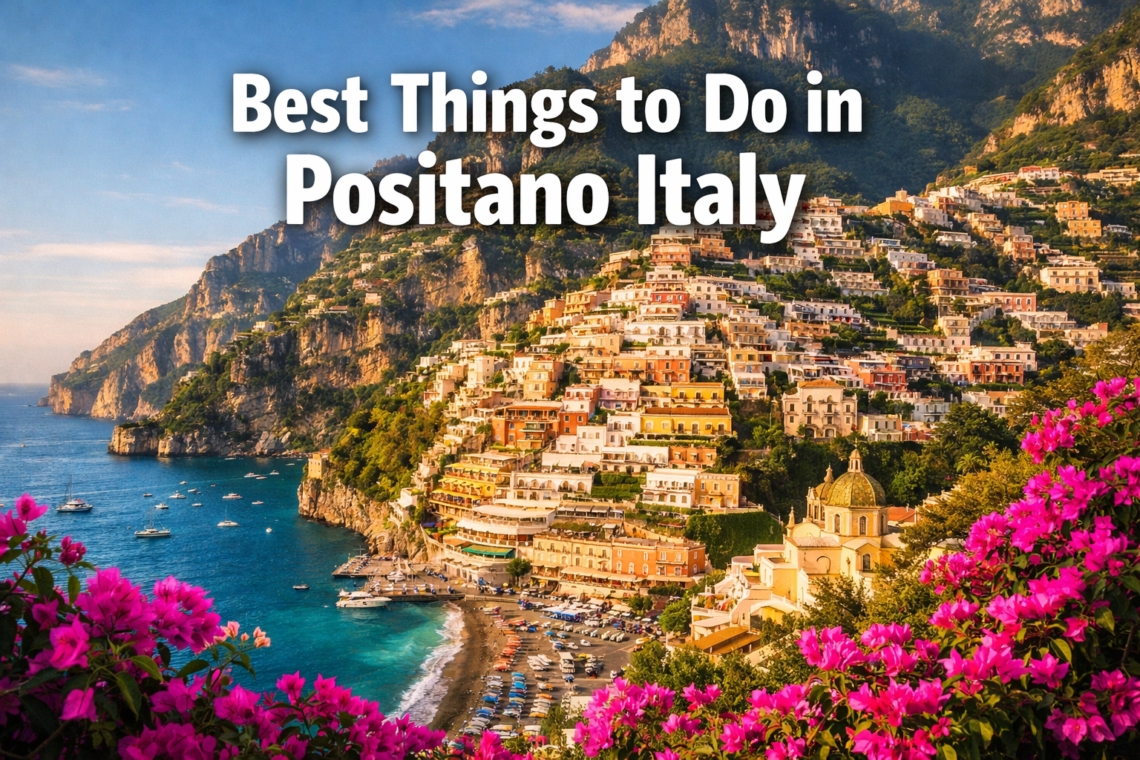
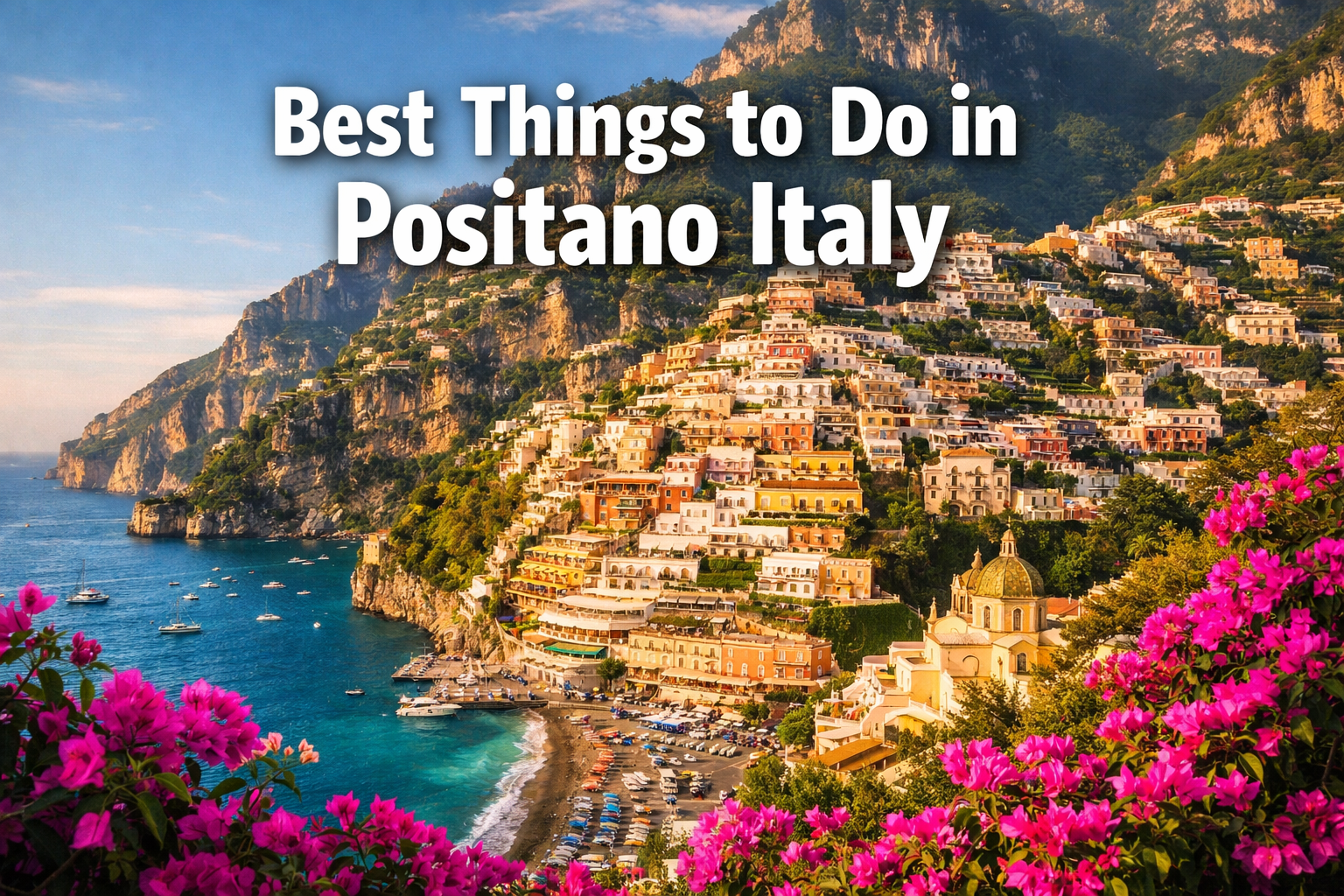
Quick Answer: The best things to do in Positano Italy include swimming at Spiaggia Grande, hiking the Path of the Gods, taking a sunset boat tour, visiting the Church of Santa Maria Assunta, and exploring the winding village streets. Plan at least 2–4 days to experience the highlights without rushing. Peak season runs May through September, so book accommodations and tours early.
Key Takeaways
- Spiaggia Grande is the main beach and the heart of Positano — start here on your first morning.
- Fornillo Beach is quieter and more local; it’s a short walk from the main beach and worth the effort.
- The Path of the Gods hike is one of the most spectacular walks in all of Italy, with bird’s-eye views of the coast.
- Boat tours to Li Galli islets and the Emerald Grotto are bucket-list experiences — book in advance.
- The Church of Santa Maria Assunta and the small archaeology museum beneath it are free or low-cost and genuinely fascinating.
- Praiano, a quiet village nearby, is worth a half-day trip if you want to escape the crowds.
- 2–4 days is the sweet spot for first-timers; any less and you’ll feel rushed.
- Wear comfortable shoes — Positano is built on steep stairs and narrow lanes.
- Avoid driving into Positano if you can; the roads are narrow and parking is nearly impossible.
- Visit in May, June, or early September for good weather without the peak-August crowds.
What Are the Best Things to Do in Positano Italy for Beaches and Swimming?
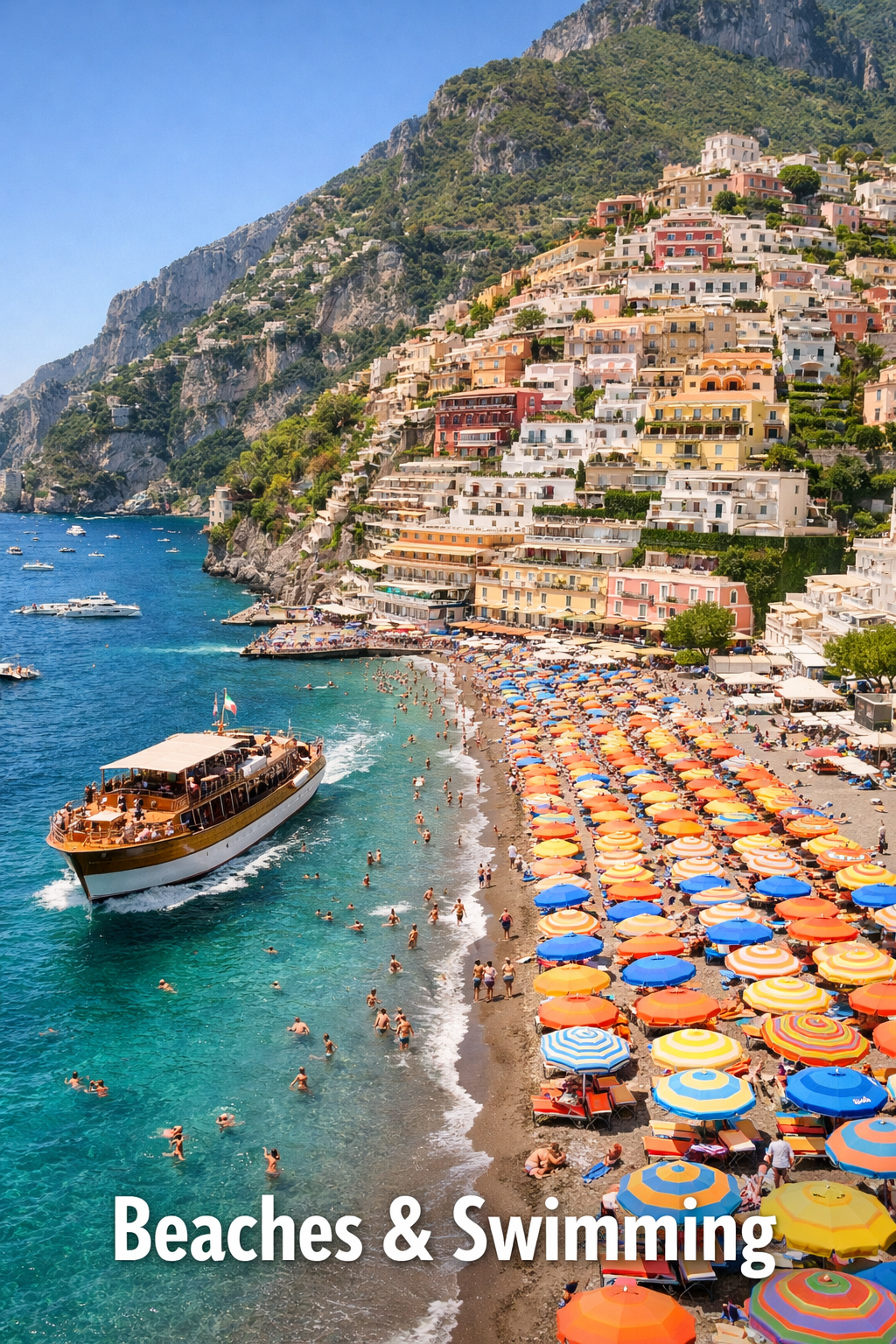
Positano has two main beaches, and each offers a different experience. Spiaggia Grande is the central beach where ferries dock, and it’s the easiest place to start your trip. Fornillo Beach is the local favorite — less crowded, equally beautiful, and a 10-minute walk west along a coastal path.
Spiaggia Grande
- The main beach, right in the center of the village
- You can rent sun loungers and umbrellas from the lidos (beach clubs) or use the free public section
- Ferries to Amalfi, Capri, and other coastal towns depart from here [1]
- Best for: people-watching, swimming, and easy access to restaurants
Fornillo Beach
- Positano’s second-largest beach, accessible via a scenic coastal path from Spiaggia Grande [1][2]
- Crystal-clear water and a more relaxed atmosphere
- Features traditional lidos and a couple of casual beach bars
- Best for: travelers who want fewer crowds and a more local feel
Arienzo Beach
- Reached by boat or via 300 steps from the road
- More secluded and worth the effort if you want a quieter swim
- Best for: adventurous travelers willing to earn their beach spot
Choose Spiaggia Grande if you want convenience and easy access to the rest of the town. Choose Fornillo if you’d rather have a quieter morning with fewer tourists around you.
How Do You Hike the Path of the Gods Near Positano?
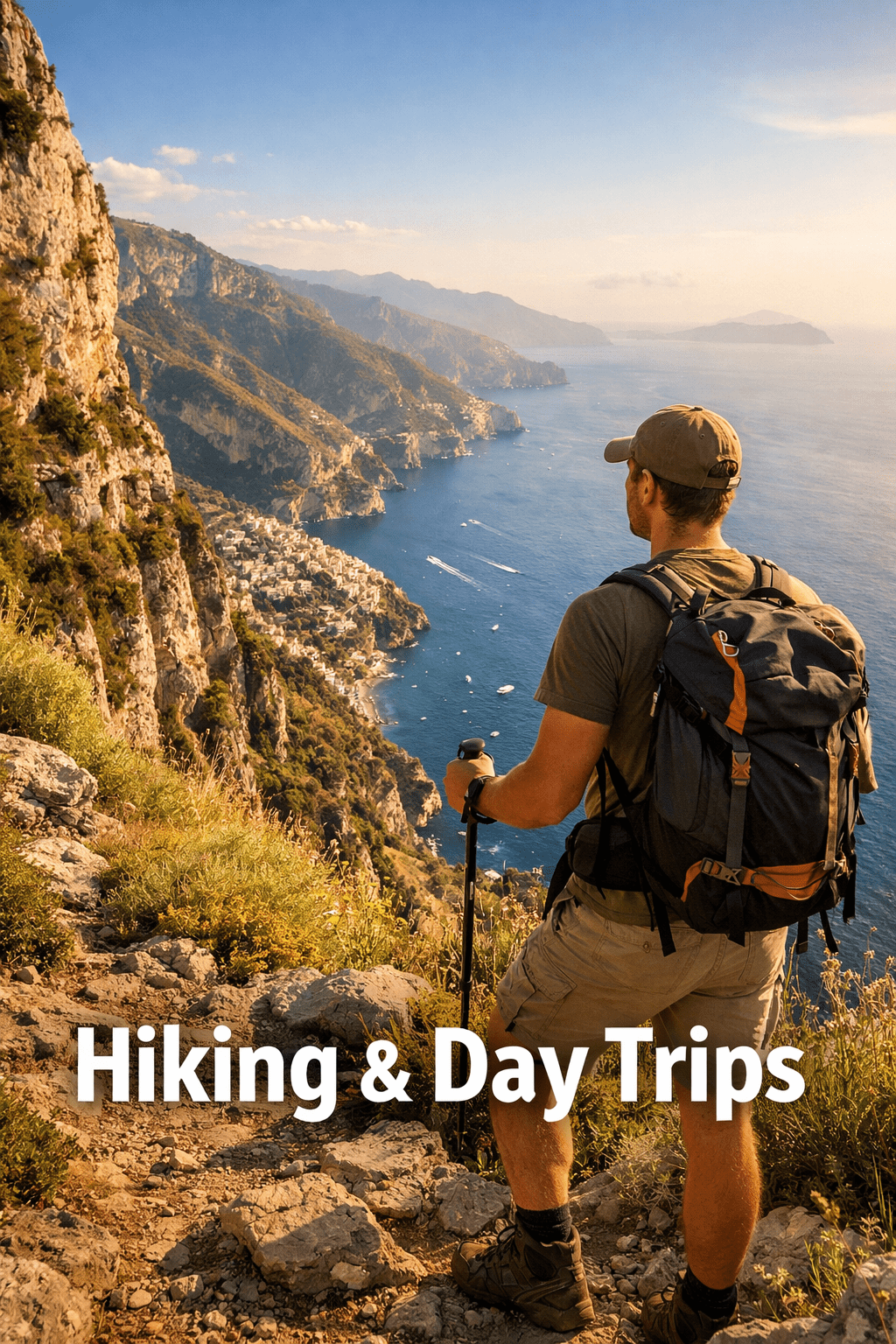
The Path of the Gods (Sentiero degli Dei) is a one-way hiking trail that runs along the cliffs above the Amalfi Coast, offering some of the most dramatic views you’ll find anywhere in Europe. Most hikers walk from Agerola to Nocelle, then descend into Positano via a long staircase. [1][5]
Key details:
- Distance: roughly 7.5 km one-way (Agerola to Nocelle)
- Difficulty: moderate — some uneven terrain, but no technical climbing required
- Time: 3–4 hours at a relaxed pace
- Best season: April through October (avoid wet winter months when paths can be slippery)
- What to bring: sturdy shoes, water, sunscreen, and a light snack
“The Path of the Gods earns its name. Standing on the ridge looking down at the Amalfi Coast below, it genuinely feels like you’re watching the world from somewhere else entirely.”
Common mistake: Many first-timers try to hike both ways. Don’t. Take the SITA bus from Positano to Agerola, hike downhill to Nocelle, then walk the steps into Positano. That’s the smart way to do it.
If you’re planning a broader Italian adventure, our Tuscany Italy travel guide and Dolomites Italy itinerary cover other excellent hiking and sightseeing options across the country.
What Cultural Landmarks Should First-Timers Visit in Positano?
Positano isn’t just beaches — it has genuine history worth exploring. The Church of Santa Maria Assunta is the most iconic landmark in the village, recognizable by its colorful majolica-tiled dome. Inside, you’ll find the Byzantine Madonna Nera (Black Madonna), an icon that legend says was discovered on the beach after a violent storm guided a ship to shore. [3]
Directly beneath the church is the MAR Positano (Museo Archeologico Romano), housed in the crypt. It displays frescoes, mosaics, and artifacts from an ancient Roman villa buried under the village — a genuinely surprising find for a town this small. [1][3]
Practical info:
- The church is free to enter; the museum has a small admission fee
- Dress modestly (cover shoulders and knees)
- Visit early morning or late afternoon to avoid tour groups
Also worth seeing:
- Piazza dei Mulini — the main square, good for coffee and people-watching [2]
- Via Cristoforo Colombo — the main shopping street with local ceramics, lemon products, and fashion
- The hilltop viewpoints above the village for panoramic photography [4]
For more on exploring Italy’s cultural depth, check out our guide on what to see in Rome Italy and our list of hidden gems in Italy.

What Are the Best Boat Tours and Sea Adventures Near Positano?
Boat tours are among the most popular activities in Positano, and for good reason. The coastline looks completely different from the water, and several sea-based experiences simply can’t be replicated from land.
Top boat experiences:
| Experience | What You’ll See | Best For |
|---|---|---|
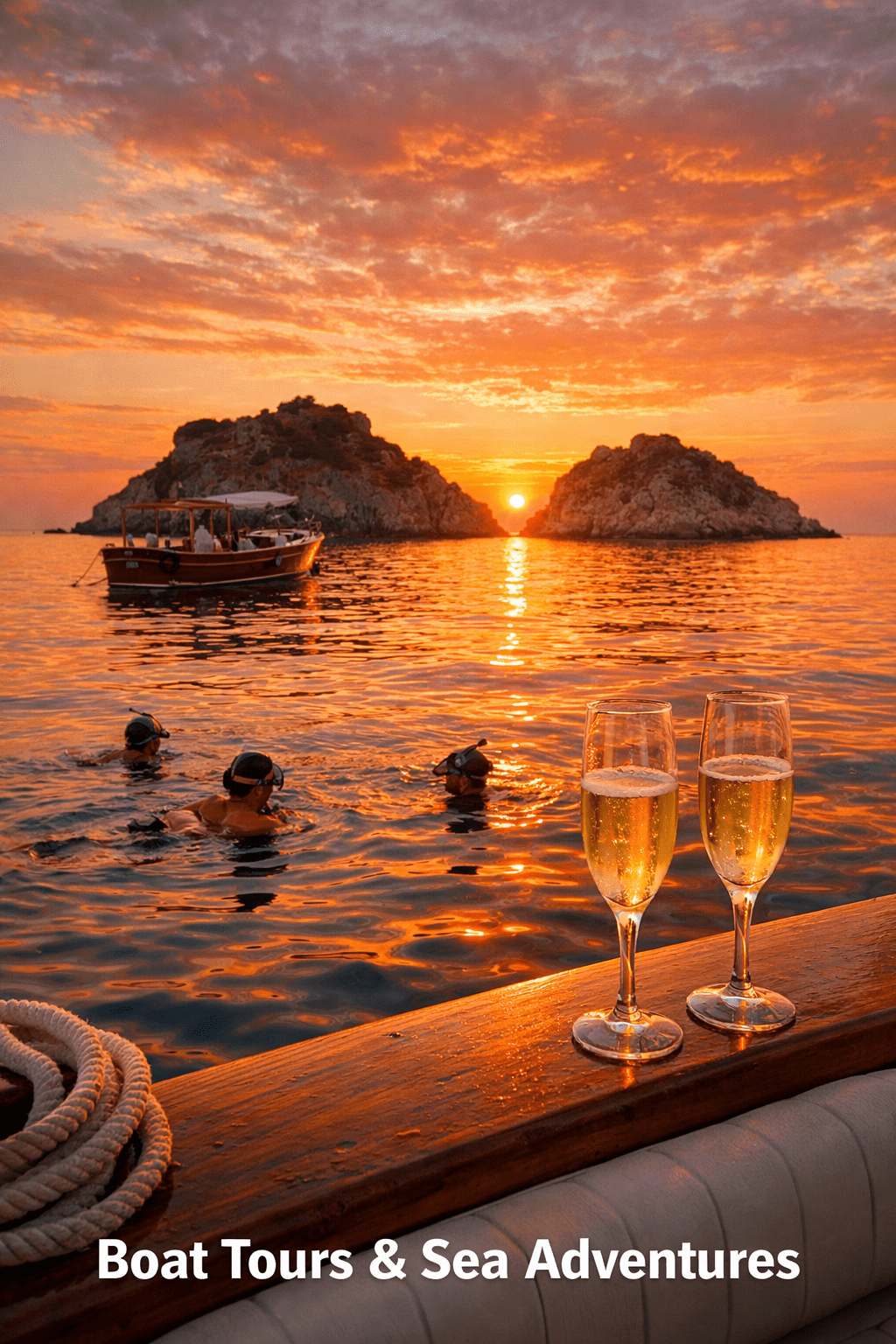
| Sunset boat tour with snorkeling | Coastline, caves, snorkeling stops | Couples, groups |
| Li Galli islets cruise | Legendary “Sirens” rock formations, offshore swimming | History lovers, swimmers |
| Emerald Grotto visit | Emerald-green water, stalactites, underwater nativity | Unique natural sights |
| Full Amalfi Coast day tour | Positano, Amalfi, Ravello, coastal villages | First-timers wanting the full picture |
The Emerald Grotto (Grotta dello Smeraldo) sits beneath the Amalfi Coast highway. When sunlight filters through the water, the cave glows a vivid green. It also contains an unusual underwater nativity scene. [1]
The Li Galli islets (also called the Sirenuse) are privately owned rock formations steeped in Greek mythology — said to be where the Sirens lured sailors in Homer’s Odyssey. Boats anchor offshore so passengers can swim in the clear water around them. [1]
One of the most-reviewed tours in the area is the “Amalfi Coast & Positano: Boat Tour with Snorkeling & Drinks”, which has earned a 4.9 rating from hundreds of travelers. [7]
Book boat tours at least 2–3 days in advance during peak season (June–August). Spots fill fast.
For a fuller picture of the region, our Amalfi Coast itinerary covering Positano and Ravello maps out how to combine these experiences over several days.
What Day Trips From Positano Are Worth Your Time?
Positano is a great base for exploring the wider Amalfi Coast. A 2–4 day stay gives you enough time to take at least one or two day trips. [2]
Best day trips from Positano:
- Praiano — A 15-minute drive or short ferry ride away, this quiet fishing village has barely changed in decades. The Piazza San Gennaro has beautiful tiled floors, and you can see the Li Galli formations from the shore. Far fewer tourists than Positano. [1]
- Amalfi town — The historic capital of the coast, with a stunning cathedral and a lively piazza. Reachable by ferry from Spiaggia Grande.
- Ravello — Perched high above the coast with spectacular gardens at Villa Rufolo and Villa Cimbrone. A completely different atmosphere from the beach towns below.
- Capri — A full-day ferry trip. Worth it for the Blue Grotto and the dramatic scenery, though it gets very crowded in summer.
- Naples — About 1.5 hours by ferry or bus. Good for pizza, the National Archaeological Museum, and a taste of urban southern Italy.
Edge case: If you’re visiting in July or August, Amalfi town and Capri get extremely crowded. Praiano is the better choice for a peaceful day out during peak season.
What Are the Best Things to Do in Positano Italy for Photography and Exploring the Village?
Positano itself is a destination for wandering. The village is built on a steep hillside, and every staircase, alley, and terrace offers a new angle on the pastel buildings and blue sea below.
Best spots for photos and exploration:
- Via Cristoforo Colombo — The main road down to the beach, lined with bougainvillea and colorful facades [4]
- The hilltop above the village — Walk uphill from the church for elevated views looking back down at the whole town [4]
- Fornillo coastal path — The walk between Spiaggia Grande and Fornillo Beach passes through a tunnel and along a cliff path with great sea views
- Church of Santa Maria Assunta dome — Best photographed from the beach or from the steps leading down to the seafront [3]
- Ceramic shops on Via dei Mulini — Colorful and photogenic, especially in morning light
Practical tip: The best light for photography is early morning (7–9am) before the crowds arrive and the harsh midday sun flattens everything. Late afternoon golden hour is also excellent.
Common mistake: Wearing flip-flops or sandals without grip. The steps in Positano are steep, sometimes slippery, and numerous. Wear shoes with actual soles.
Before your trip, it’s worth reading our guide on 15 mistakes to avoid in Italy — several of them apply directly to Positano.
When Is the Best Time to Visit Positano, and How Long Should You Stay?
The best time to visit Positano is May, June, or early September. You get warm weather, calm seas, and significantly fewer crowds than July and August. Peak season runs May through September overall, with August being the busiest and most expensive month. [2]
Quick breakdown:
| Month | Pros | Cons |
|---|---|---|
| April | Fewer crowds, mild weather | Some boat tours not yet running |
| May–June | Warm, beautiful, manageable crowds | Prices rising |
| July–August | Hottest, all activities running | Very crowded, expensive |
| September | Still warm, crowds thinning | Can get occasional rain |
| October | Quiet, atmospheric | Some businesses closing |
How long to stay: 2–4 days is the recommended range for first-timers. Two days covers the main beach, the church, a boat trip, and a walk around the village. Four days lets you add the Path of the Gods hike, a day trip to Praiano or Amalfi, and a more relaxed pace overall. [2]
If you’re building a longer European trip, our 2 weeks in Europe spring packing list and 7-day South of France itinerary can help you plan the surrounding days.
FAQ: Best Things to Do in Positano Italy
Q: Is Positano worth visiting for just one day?
A: Yes, but you’ll only scratch the surface. One day is enough for the beach, the church, and a walk around the village. For boat tours and hiking, you need at least two days.
Q: How do you get to Positano from Naples?
A: The most common options are the SITA bus (about 2 hours, very scenic but slow), a private transfer (about 1.5 hours), or a ferry from Naples Molo Beverello (about 1.5 hours, seasonal). The ferry is the most enjoyable option if it’s running.
Q: Is Positano expensive?
A: Yes, it’s one of the pricier destinations on the Amalfi Coast. Budget travelers can save by eating at takeaway spots (friggitorie) rather than sit-down restaurants, using the public section of the beach, and visiting in shoulder season.
Q: Can you swim in Positano?
A: Absolutely. Both Spiaggia Grande and Fornillo Beach have clear, swimmable water. The beaches are pebbly rather than sandy, so water shoes are useful.
Q: Is Positano good for families with kids?
A: Yes, with some caveats. The beaches are great for kids, but the steep stairs and narrow lanes can be challenging with strollers. Older children who can walk independently will enjoy it.
Q: Do you need to book activities in advance?
A: For boat tours during June–August, yes — book at least 2–3 days ahead. The Path of the Gods hike doesn’t require booking. Beach clubs fill up on busy days, so arrive early or reserve a lounger online.
Q: What should I wear in Positano?
A: Light, breathable clothing for the heat, plus comfortable walking shoes with grip for the stairs. Bring a cover-up for visiting the church. Positano is also known for its local fashion boutiques if you want to shop.
Q: Is there a free beach in Positano?
A: Yes. Both Spiaggia Grande and Fornillo have a small public section that’s free. The lido sections (with loungers and umbrellas) charge a fee, typically €20–€40 per person per day depending on the season.
Q: Can you drive to Positano?
A: You can, but it’s not recommended. The road is extremely narrow, traffic is heavy in summer, and parking is scarce and expensive. Use public buses, ferries, or private transfers instead.
Q: What’s the Path of the Gods difficulty level?
A: Moderate. The trail is mostly well-marked and doesn’t require technical skill, but it involves uneven rocky terrain and some exposed cliff edges. It’s not suitable for very young children or people with mobility issues.
Conclusion: Plan Your Positano Trip the Right Way
Positano is one of those places that genuinely lives up to the hype — but only if you plan it well. The best things to do in Positano Italy combine beach time, cultural exploration, outdoor adventure, and sea-based experiences. Don’t try to cram everything into a single day, and don’t skip the boat tour just because it seems like a splurge.
Your action plan:
- Book accommodation and boat tours early, especially for June–August visits.
- Arrive by ferry from Naples or Amalfi for the best first impression of the village from the water.
- Spend your first morning at Spiaggia Grande, then walk to Fornillo in the afternoon.
- Visit the Church of Santa Maria Assunta and the MAR museum on your second morning.
- Do the Path of the Gods hike on a clear day — it’s the highlight of many visitors’ entire Italy trip.
- Take a half-day in Praiano if you want a break from the crowds.
For more Italy inspiration, explore our guide to hidden gems in Italy and our complete Amalfi Coast itinerary. Positano will earn its place as one of the best trips you’ve ever taken — go see it for yourself.
References
[1] Viator Positano – https://www.viator.com/Positano/d33602
[2] GetYourGuide Positano – https://www.getyourguide.com/positano-l697/ttd/
[3] Positano.com – https://www.positano.com
[4] What To See In Positano Italy – https://joujoutravels.com/what-to-see-in-positano-italy/
[5] TripAdvisor Positano Attractions – https://www.tripadvisor.com/Attractions-g194863-Activities-Positano_Amalfi_Coast_Province_of_Salerno_Campania.html
[6] Expedia Positano Things To Do – https://www.expedia.com/Things-To-Do-In-Positano.d4330.Travel-Guide-Activities
[7] Trip.com Positano Experiences – https://ph.trip.com/things-to-do/experiences/positano-ticket2/