
Quick Answer: Milan is far more than the Duomo and designer boutiques. The real hidden gems in Milan Italy include frescoed churches with zero queues, underground crypts, canal-side markets, and art-filled villas that most visitors walk right past. If you know where to look, you’ll find a quieter, richer version of the city that locals actually love.
Key Takeaways
- Chiesa di San Maurizio al Monastero Maggiore is ranked the #1 hidden gem on Tripadvisor’s Milan listings and rivals the Sistine Chapel in visual impact [3]
- The Navigli district holds multiple secret spots beyond the main canal strip, including a 15th-century laundry courtyard and a church designed with Leonardo da Vinci’s canal system in mind [7]
- San Bernardino alle Ossa features a genuine ossuary chapel decorated with human skulls and bones — one of Milan’s most unusual and overlooked sights [5]
- Fondazione Prada transforms a historic distillery into world-class contemporary art, with major 2026 exhibitions already scheduled [4]
- Villa Necchi Campiglio offers a serene, art-filled escape from the crowds with a beautifully preserved 1930s interior [8]
- Parco Sempione is Milan’s largest green space and includes Torre Branca, a climbable steel tower with panoramic city views [4]
- With the 2026 Winter Olympics bringing extra visitors to Milan, exploring lesser-known spots is smarter than ever [8]
- Most of these spots are free or under €10 to enter, and several require no advance booking
Why Bother Looking Beyond the Obvious Sights?
Milan’s famous attractions — the Duomo, Leonardo’s Last Supper, the Galleria — are genuinely worth seeing. But they’re also genuinely crowded, especially in 2026 with the Winter Olympics drawing record visitor numbers to the city [8]. The hidden gems in Milan Italy covered in this guide give you breathing room, better photos, and stories that most tourists simply don’t get to tell.
If you’re already planning a broader Italian trip, check out our guide to 10 hidden gems in Italy that feel absolutely magical for inspiration beyond Milan. And before you book flights, it’s worth reading where to find cheap flights to keep your budget in check.
The 12 Hidden Gems in Milan Italy You Need to Visit
Here are the 12 spots, organized by category so you can plan your days efficiently.
Secret Churches and Underground Wonders
1. Chiesa di San Maurizio al Monastero Maggiore
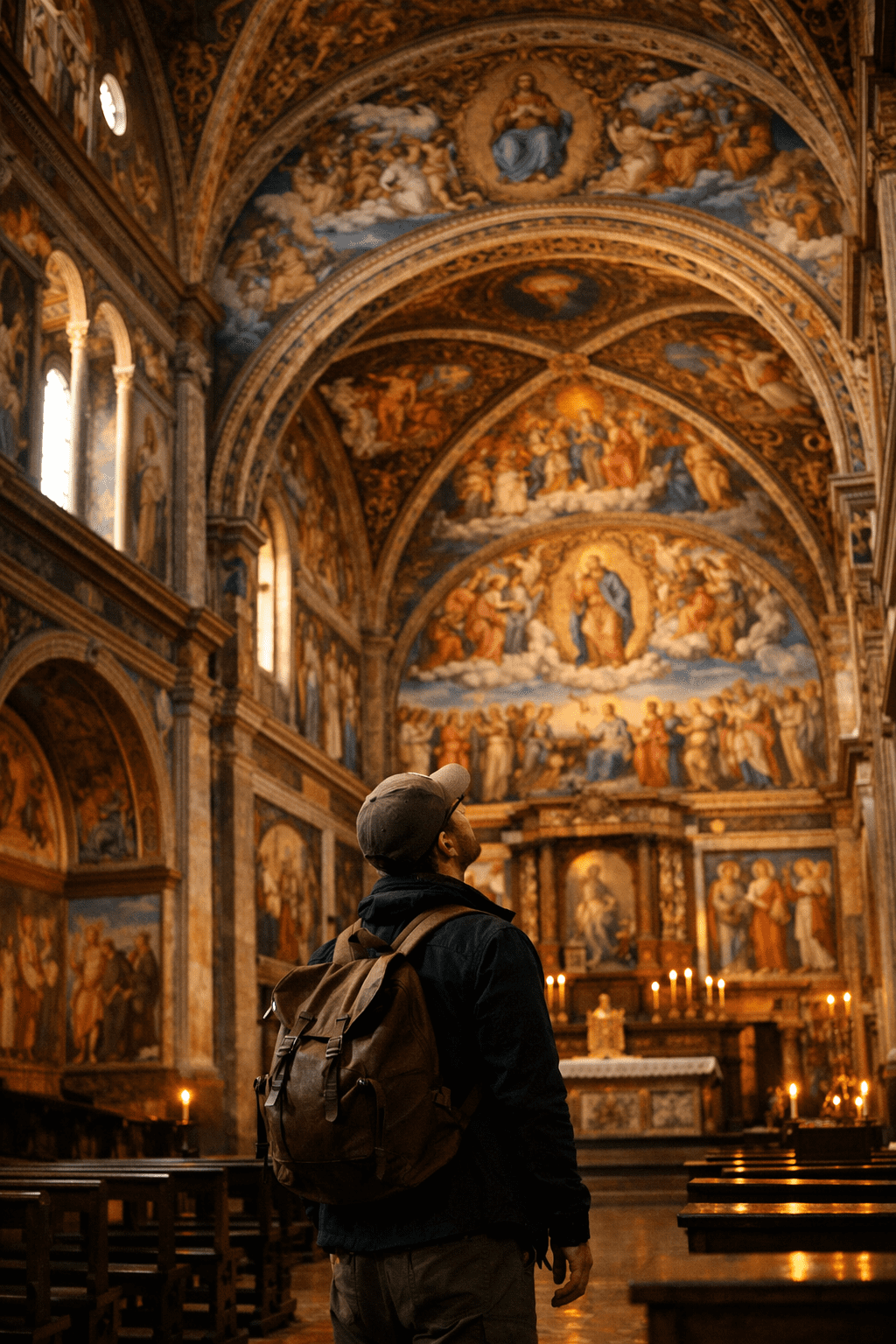
Often called “Milan’s Sistine Chapel,” this 16th-century church is covered floor to ceiling in stunning Renaissance frescoes. It’s ranked the #1 hidden gem on Tripadvisor’s Milan listings [3], yet most visitors walk straight past it on their way to the nearby Castello Sforzesco. Entry is free. Go on a weekday morning for the best light and fewest people.
2. The Crypt of San Sepolcro
Beneath the Church of San Sepolcro lies an underground archaeological tour featuring millennia-old white cobblestones, ancient frescoes, and a vaulted ceiling painted with a starry sky — believed to have been created by early Christians who worshipped in secret [1]. It’s one of the most atmospheric spots in the entire city, and almost nobody knows it exists.
3. San Bernardino alle Ossa
This small chapel near the Duomo is decorated with human skulls and bones arranged in intricate patterns on the walls [5]. It sounds macabre, but it’s genuinely fascinating — a reminder of medieval Milan’s relationship with death and devotion. Atlas Obscura lists it among 39 unusual attractions in Milan, and it’s free to visit [5].
“Milan rewards the curious. The city’s best experiences aren’t always the loudest ones.”
Canal District Secrets
4. Vicolo dei Lavandai
Hidden just off the main Navigli strip, this narrow courtyard contains a covered 15th-century washing area where Milanese women once did laundry in the canal water. It’s quiet, photogenic, and almost always empty of tourists. GetYourGuide’s hidden gems tours specifically highlight this spot as one of the Navigli’s best-kept secrets [7].
5. Chiesa San Cristoforo sul Naviglio
This double-nave church sits right on the canal bank and dates back to the 14th century. The canal network it overlooks was partly shaped by Leonardo da Vinci’s engineering work [7]. Most visitors to the Navigli never notice it.
6. Navigli in Fiore (Seasonal)
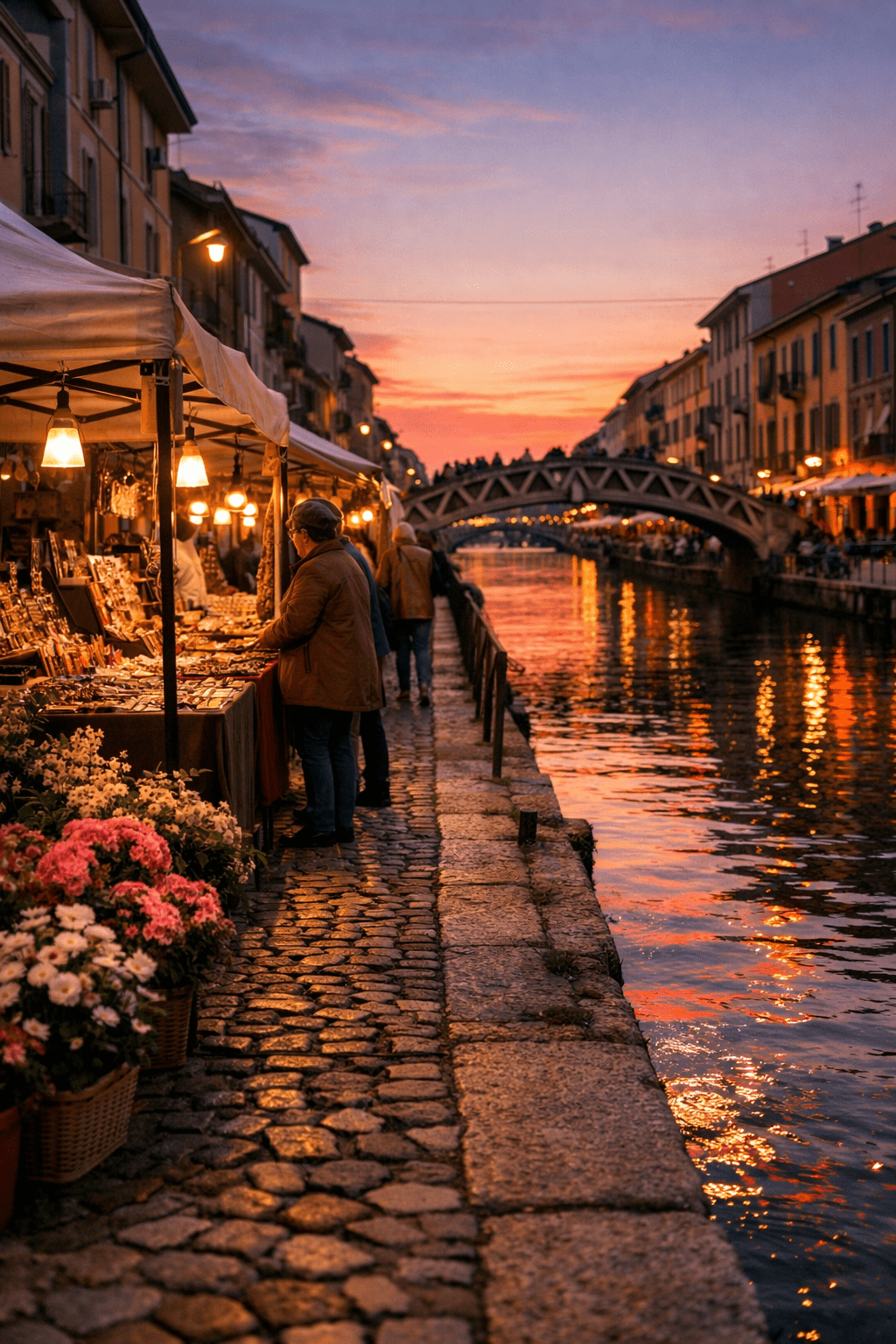
During spring, the Navigli towpaths fill with flower stalls and live music as part of the Navigli in Fiore event [4]. If your trip falls between March and May, this is one of the most charming free experiences in the city. Pair it with a browse through the artisan boutiques and vintage markets that line the canal paths year-round [4].
Art and Architecture Off the Beaten Path
7. Villa Necchi Campiglio
This 1930s villa is one of Milan’s best-kept secrets — a beautifully preserved Art Deco home with original furnishings, a private garden, and a rotating collection of Italian art [8]. It’s quiet, elegant, and gives you a genuine sense of how Milan’s wealthy families actually lived. Admission is around €10, and booking ahead is recommended on weekends.
8. Fondazione Prada
Housed in a transformed 1910s distillery in the Porta Romana neighborhood, Fondazione Prada blends industrial architecture with bold contemporary art [4]. It’s not technically a secret — fashion insiders know it well — but most general tourists skip it entirely. Major international exhibitions are scheduled throughout 2026 [4]. Allow at least two hours.
9. Brera District’s Hidden Courtyards
The Brera neighborhood is known for its art gallery, but the real discovery is wandering its side streets. Push open unmarked wooden doors and you’ll often find private courtyards (called cortili) with fountains, ivy, and total silence [6]. There’s no map for this — just walk slowly and stay curious.
Green Spaces and Panoramic Views
10. Parco Sempione and Torre Branca
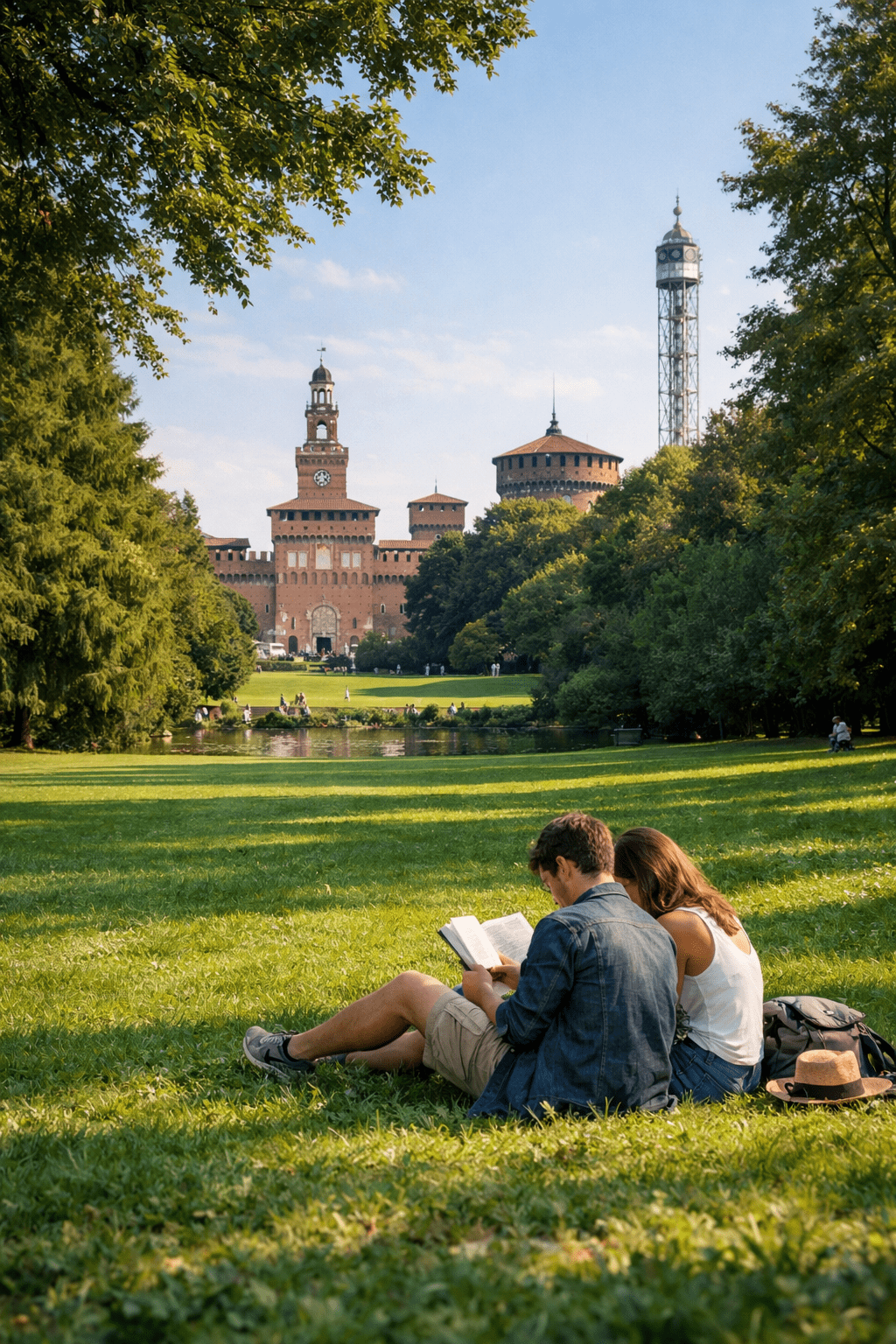
Parco Sempione is Milan’s largest park, sitting directly behind Castello Sforzesco [4]. Most tourists photograph the castle and leave. But inside the park, the Torre Branca — a slender steel tower designed by Gio Ponti in 1933 — offers some of the best panoramic views in the city for a small fee. The park also hosts seasonal outdoor events and is a favorite local escape on weekends [4].
11. Giardini della Guastalla
Milan’s oldest public garden is a five-minute walk from the Duomo but feels like a different world. There’s a small baroque fish pond, a 17th-century oratory, and almost no tourists. It’s the kind of place where locals eat lunch on a bench and pigeons outnumber people.
12. The Egyptian Museum (Museo Egizio di Milano)
Milan actually has an Egyptian Museum, separate from the more famous one in Turin. It’s small, specialized, and genuinely interesting for history lovers [2]. Entry is affordable and the crowds are minimal — a sharp contrast to the lines outside the Duomo just a few blocks away.
How to Explore These Hidden Spots Without Wasting Time
A few practical tips for making the most of these locations:
- Cluster by neighborhood. Group the Navigli spots (4, 5, 6) into one afternoon. Combine Villa Necchi Campiglio with Fondazione Prada for an art-focused day.
- Go early or late. Even lesser-known spots get busier between 11am and 2pm. Aim for opening time or late afternoon.
- Use the Metro. Milan’s Metro is fast and cheap. Line 2 (green) covers the Navigli area; Line 1 (red) connects Brera and Parco Sempione.
- Book the Crypt of San Sepolcro in advance. Guided tours fill up, especially in spring and summer.
- Avoid common Italy travel mistakes — read our guide on 15 mistakes to avoid in Italy before your trip.
| Spot | Neighborhood | Cost | Booking Needed? |
|---|---|---|---|
| Chiesa di San Maurizio | Magenta | Free | No |
| Crypt of San Sepolcro | City Center | €5–8 (est.) | Yes |
| San Bernardino alle Ossa | City Center | Free | No |
| Vicolo dei Lavandai | Navigli | Free | No |
| Villa Necchi Campiglio | Porta Venezia | ~€10 | Recommended |
| Fondazione Prada | Porta Romana | ~€15 | Recommended |
| Torre Branca | Parco Sempione | ~€4 | No |
| Egyptian Museum | City Center | ~€5 | No |
Where to Stay: Accommodations Near Milan’s Hidden Gems
Choosing the right neighborhood makes a real difference when you’re trying to explore off-the-beaten-path spots. Here’s a quick breakdown:
Brera District — Best for art lovers and walkers. You’re within easy reach of the Brera courtyard scene, Parco Sempione, and the Egyptian Museum. Boutique hotels here tend to be mid-range to upscale, with a strong local atmosphere.
Navigli — Best for nightlife and canal culture. Stay here if spots 4, 5, and 6 are your priority. It’s lively in the evenings and quieter in the mornings — perfect for early exploration.
Porta Romana / Porta Venezia — Best for Fondazione Prada and Villa Necchi Campiglio. These neighborhoods are residential and authentic, with good local restaurants and fewer tourist traps.
City Center (near the Duomo) — Convenient but pricier. Good if you want to balance the main sights with hidden spots like San Bernardino alle Ossa and the Crypt of San Sepolcro.
Choose Brera or Navigli if you want the most walkable access to the hidden gems in this guide. Choose City Center if you’re balancing a first-time visit with some of the main attractions.
For a broader look at how to find affordable stays in European cities, our guide to best hotels in Paris that are surprisingly affordable has useful booking strategies that apply across Europe.
FAQ: Hidden Gems in Milan Italy
What is the most underrated thing to see in Milan?
Chiesa di San Maurizio al Monastero Maggiore. It’s free, stunning, and almost always quiet — yet it rivals some of Italy’s most famous frescoed interiors [3].
Is the Navigli district worth visiting beyond the main canal?
Yes. The real finds are off the main strip: Vicolo dei Lavandai, Chiesa San Cristoforo, and the seasonal Navigli in Fiore event are all better than the tourist-facing bar scene [7].
Are Milan’s hidden gems free to visit?
Many are. Chiesa di San Maurizio, San Bernardino alle Ossa, Vicolo dei Lavandai, and Giardini della Guastalla are all free. Fondazione Prada and Villa Necchi Campiglio charge admission but are worth it [4].
When is the best time to visit Milan’s secret spots?
Weekday mornings are best for avoiding crowds. Spring (March to May) adds the bonus of Navigli in Fiore and pleasant temperatures [4].
Is Milan worth visiting in 2026 despite the Olympics crowds?
Yes — and the hidden gems covered here are specifically useful for avoiding the extra crowds that the 2026 Winter Olympics will bring to the city’s main attractions [8].
How long do I need to see all 12 spots?
Realistically, three full days. You can cover the church and underground spots in one day, the Navigli area in another, and art/parks on a third.
Do I need to speak Italian to visit these places?
Not at all. Most spots have English signage or audio guides. For the Crypt of San Sepolcro, book an English-language guided tour in advance.
What neighborhood should I stay in to access the most hidden gems?
Brera or Navigli give you the best walking access to the majority of spots on this list.
Is Fondazione Prada suitable for non-art-lovers?
Yes. The building itself — a converted distillery with gold-leaf facades and industrial spaces — is interesting even if contemporary art isn’t your thing [4].
Are these spots suitable for kids?
Most are. San Bernardino alle Ossa (the skull chapel) might be too intense for young children, but the parks, canals, and gardens are great for families.
Conclusion
The hidden gems in Milan Italy aren’t hard to find — they just require stepping slightly off the tourist path. From the jaw-dropping frescoes of San Maurizio to the eerie beauty of San Bernardino alle Ossa, and from the canal-side secrets of the Navigli to the panoramic views from Torre Branca, Milan has a second layer that most visitors never see.
Your next steps:
- Pick your neighborhood base (Brera or Navigli for best access)
- Cluster the spots by area to avoid backtracking
- Book the Crypt of San Sepolcro and Fondazione Prada in advance
- Go early — most of these spots are best before 10am
- Leave one afternoon unplanned for wandering Brera’s courtyards
If Milan is part of a bigger Italian adventure, our Tuscany Italy travel guide and Dolomites Italy itinerary are great next reads. And if you love discovering secret spots in European cities, you’ll enjoy our guide to hidden gems in Amsterdam too.
Milan is a city that rewards the curious. Go find its quieter side.
References
[1] Best Things To Do In Milan – https://www.timeout.com/milan/things-to-do/best-things-to-do-in-milan
[2] Things To Do In Milan Italy – https://www.thebrokebackpacker.com/things-to-do-in-milan-italy/
[3] Attractions G187849 Activities Zft12156 Milan Lombardy – https://www.tripadvisor.com/Attractions-g187849-Activities-zft12156-Milan_Lombardy.html
[4] Milan What To See – https://yourcustomjourney.com/milan-what-to-see/
[5] Milan Italy – https://www.atlasobscura.com/things-to-do/milan-italy
[6] Watch – https://www.youtube.com/watch?v=7ZoMJf7a99o
[7] Hidden Gems Tc268 – https://www.getyourguide.com/milan-l139/hidden-gems-tc268/
[8] Explore Milans Hidden Gems Lesser Known Spots To Explore Between Ice Hockey Matches At The 2026 Winter Olympics – https://www.travelandtourworld.com/news/article/explore-milans-hidden-gems-lesser-known-spots-to-explore-between-ice-hockey-matches-at-the-2026-winter-olympics/