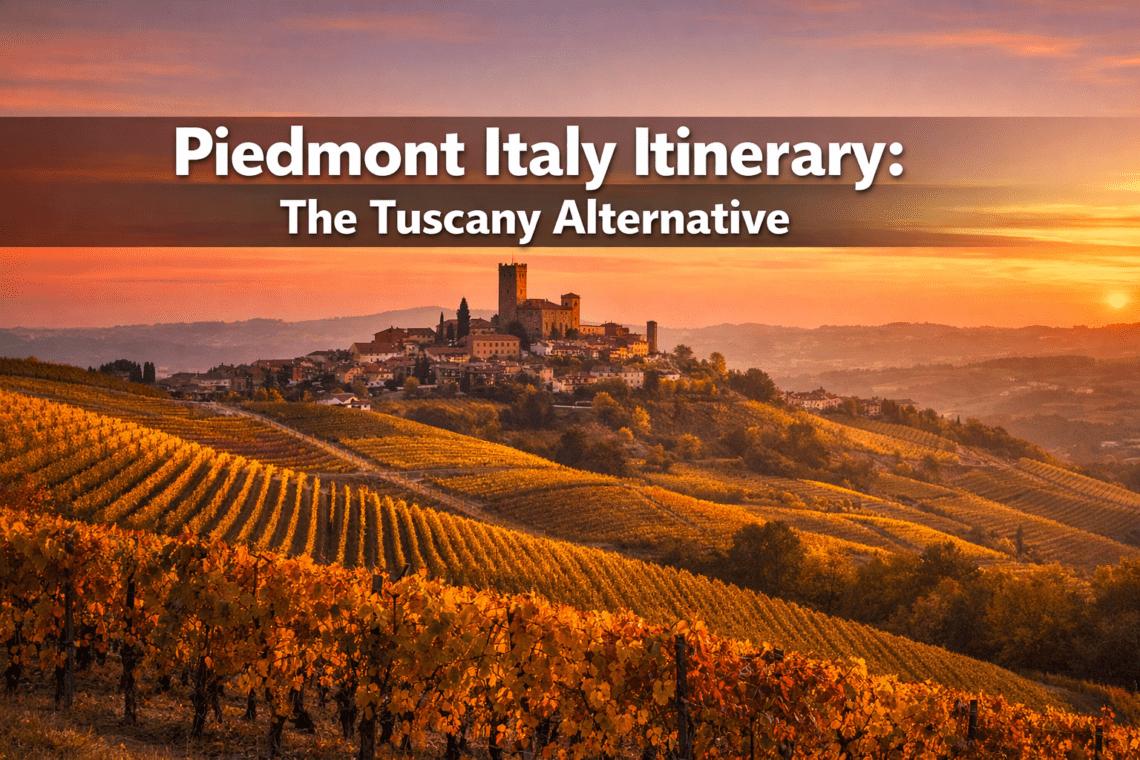
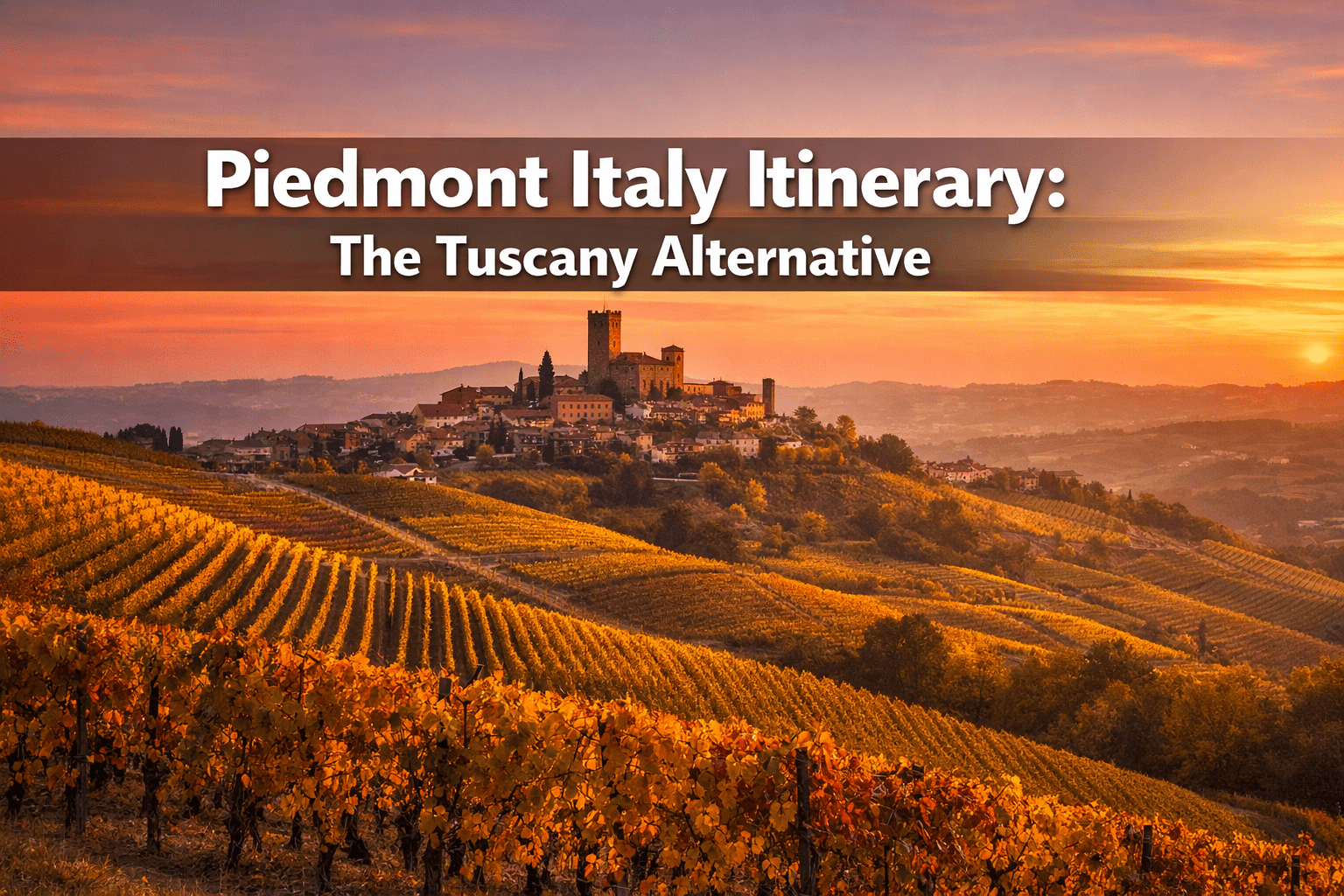
Quick Answer: A Piedmont Italy itinerary gives you rolling vineyard hills, medieval villages, world-class wine, and truffle-scented trattorias — everything you love about Tuscany — but with far fewer tourists and more authentic encounters. Plan for 5 to 7 days, base yourself in or near Alba, and build your days around the Langhe wine region, the hilltop villages of Monferrato, and the city of Asti. Spring (April–May) and autumn (September–November) are the sweet spots for visiting.
Key Takeaways
- Piedmont is Italy’s best-kept secret for wine lovers and slow travelers who want the Tuscan vibe without the tour buses.
- The Langhe Monferrato Roero region scores 89.9/100 in visitor satisfaction, outperforming Burgundy in hospitality, food, wine, and attractions [1].
- Alba is the ideal base — central, walkable, and surrounded by Barolo and Barbaresco wine country.
- Truffle season (October–November) is the most atmospheric time to visit, but spring is less crowded and equally beautiful.
- A 7-day itinerary covers the Langhe hills, Asti, Monferrato villages, and a day trip to Turin comfortably.
- Accommodation quality in Piedmont exceeds Italian national averages, with strong agriturismo and boutique hotel options [1].
- Village tourism is one of Italy’s fastest-growing travel trends for 2025–26, making this the right time to visit before Piedmont gets discovered [5].
- Avoid the common mistake of treating Piedmont as a quick add-on to Milan — it deserves at least 5 full days.
Why Piedmont Beats Tuscany for the Crowd-Averse Traveler
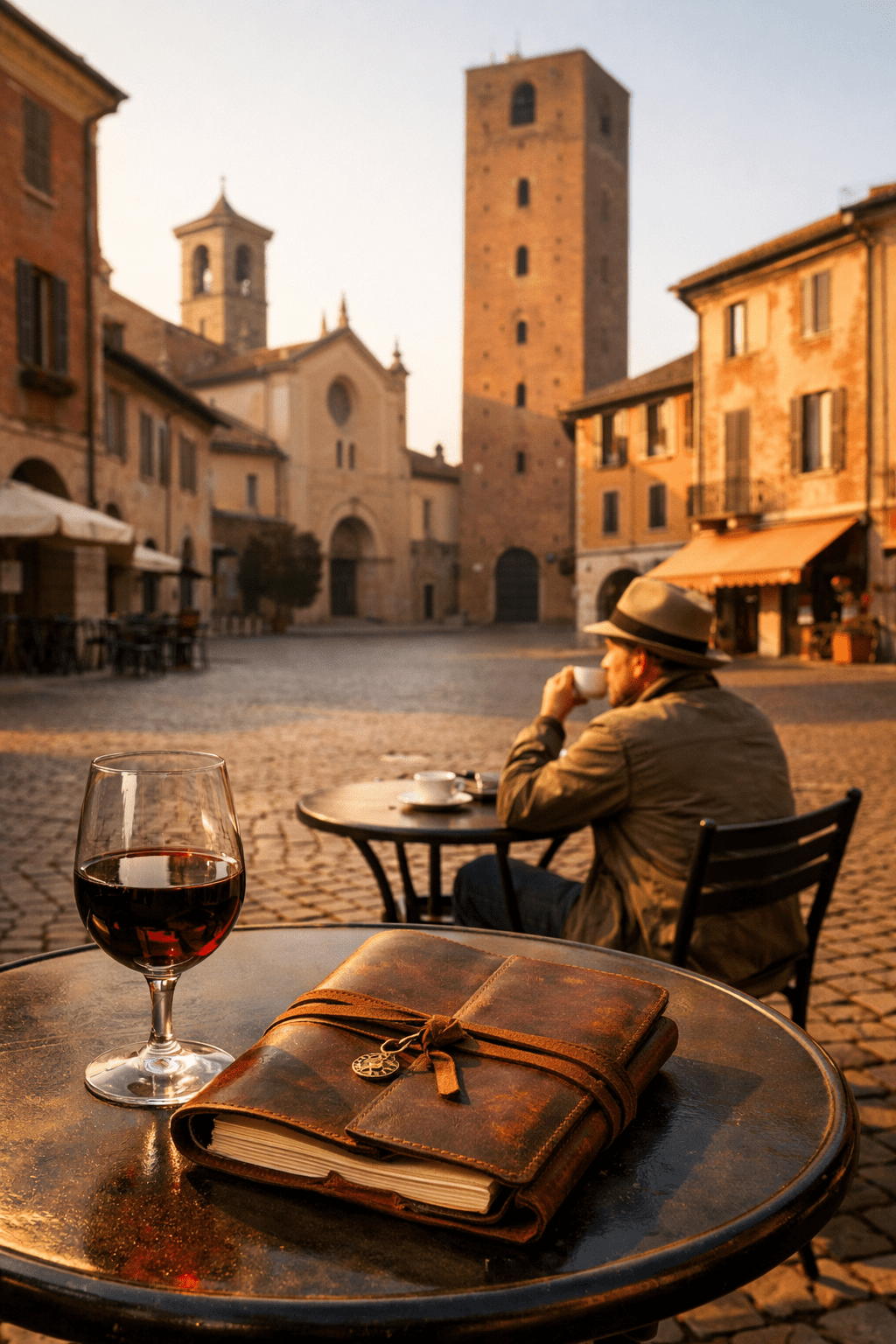
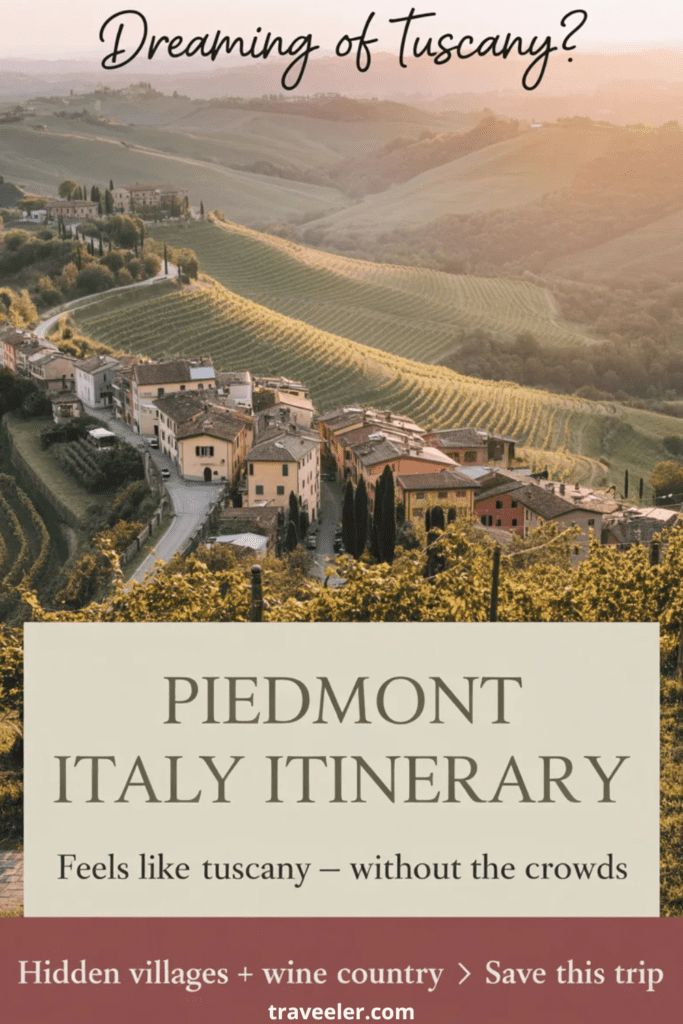
Piedmont delivers the same core appeal as Tuscany — vine-covered hills, historic wine estates, truffle-rich cuisine, and charming medieval towns — but without the crowds that pack San Gimignano or Siena from June through August.
Piedmont ranks 11th among Italian regions for overnight stays (around 14.4 million annually), while Tuscany consistently sits in the top three [7]. That gap translates directly into emptier piazzas, easier restaurant reservations, and locals who are genuinely happy to see you.
If you’ve already done the Tuscany Italy travel guide route and want something equally beautiful but more personal, Piedmont is the logical next step.
Choose Piedmont if you:
- Love wine but want to explore beyond Chianti
- Prefer slow mornings at a village café over queuing for a famous viewpoint
- Are traveling in October or November for truffle season
- Want to combine a city (Turin) with countryside without renting a car for every single day
Tuscany may still suit you better if you’re a first-time Italy visitor who wants the most iconic imagery and the most developed tourist infrastructure.
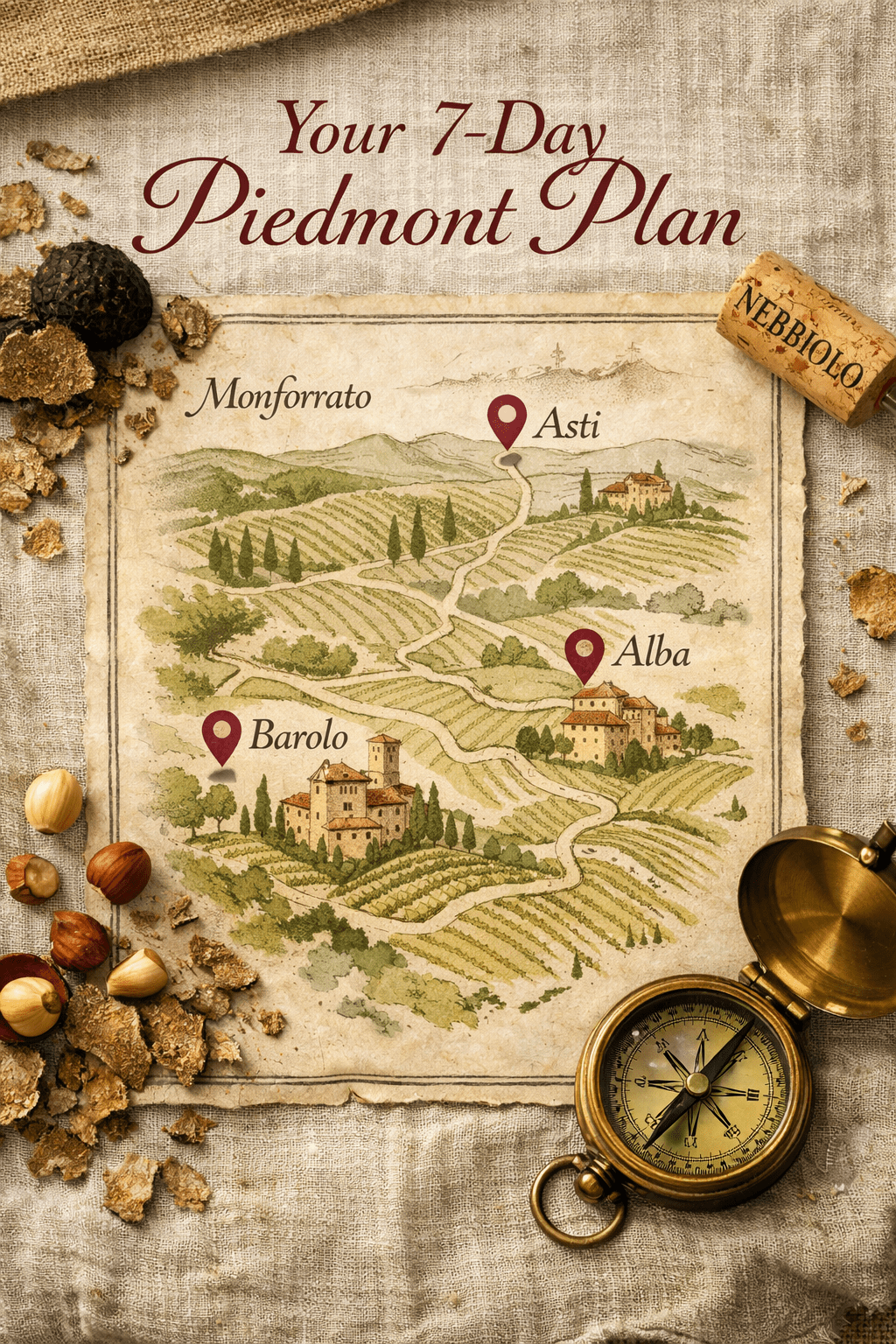
Your 7-Day Piedmont Italy Itinerary: Day-by-Day Breakdown
This Piedmont Italy itinerary is designed for travelers flying into Milan (Malpensa or Linate) and spending a full week in the region. You can do it with a rental car, which I’d strongly recommend for the Langhe hills.
Day 1: Arrive in Turin
Turin is Piedmont’s capital and a genuinely underrated city. Don’t rush through it.
- Check into your hotel and walk the Quadrilatero Romano neighborhood for aperitivo
- Visit the Egyptian Museum (second largest Egyptian collection in the world after Cairo)
- Dinner at a classic Turin trattoria — order vitello tonnato and agnolotti dal plin
“Turin has the grandeur of Paris and the food culture of Bologna, but almost none of the tourist crowds.”
For a deeper look at what Italy’s cities offer beyond the obvious, the hidden gems in Milan Italy guide is worth reading before your trip — many of those tips apply to Turin too.
Day 2: Turin to Alba — Settle Into the Langhe
Drive south from Turin to Alba (about 60 km, roughly an hour). Alba is your base for the next several days.
- Walk Alba’s medieval center and the Via Vittorio Emanuele
- Stop at an enoteca and order a glass of Barolo or Barbaresco
- Visit the White Truffle Market if you’re traveling October–November
Days 3–4: Barolo Wine Country and the Langhe Villages
These two days are the heart of any Piedmont Italy itinerary.
| Village | Why Go | Best For |
|---|---|---|
| Barolo | The wine village itself, castle museum | Wine lovers |
| La Morra | Panoramic vineyard views | Photographers |
| Serralunga d’Alba | Dramatic medieval castle | History buffs |
| Castiglione Falletto | Quiet, authentic, fewer visitors | Slow travelers |
Spend one morning doing a cellar tasting at a small producer — book in advance. Afternoon: walk the vine rows and eat lunch at a trattoria in La Morra.
Day 5: Asti and Monferrato
Asti is famous for its sparkling Moscato d’Asti and its medieval towers. Monferrato, the rolling hill region between Asti and Casale Monferrato, is even less visited than the Langhe.
- Morning: Asti’s Piazza Alfieri and the Collegiata di San Secondo
- Afternoon: Drive through Monferrato villages like Moncalvo or Grazzano Badoglio
- Evening: Back to Alba for dinner
Day 6: A Slower Day — Cooking Class or Winery Deep-Dive
Build in one unscheduled day. Options:
- A half-day truffle hunting experience with a local trifolao (truffle hunter) and their dog
- A Piedmontese cooking class focused on fresh pasta (tajarin) and braised meats
- A longer tasting at a larger estate like Gaja or Marchesi di Barolo (book weeks ahead)
Day 7: Drive Back to Turin or Milan
Stop at Bra (home of the Slow Food movement) on your way back. Browse the cheese shops and grab lunch before heading to the airport.
What to Eat and Drink on a Piedmont Italy Itinerary
Piedmontese food is rich, seasonal, and deeply regional — it’s one of the strongest arguments for choosing this region over anywhere else in northern Italy.
The Langhe Monferrato Roero region scores 90.1/100 for food and wine in visitor satisfaction surveys, outperforming Burgundy (84.2/100) — a meaningful benchmark given Burgundy’s global reputation [1].
Must-eat dishes:
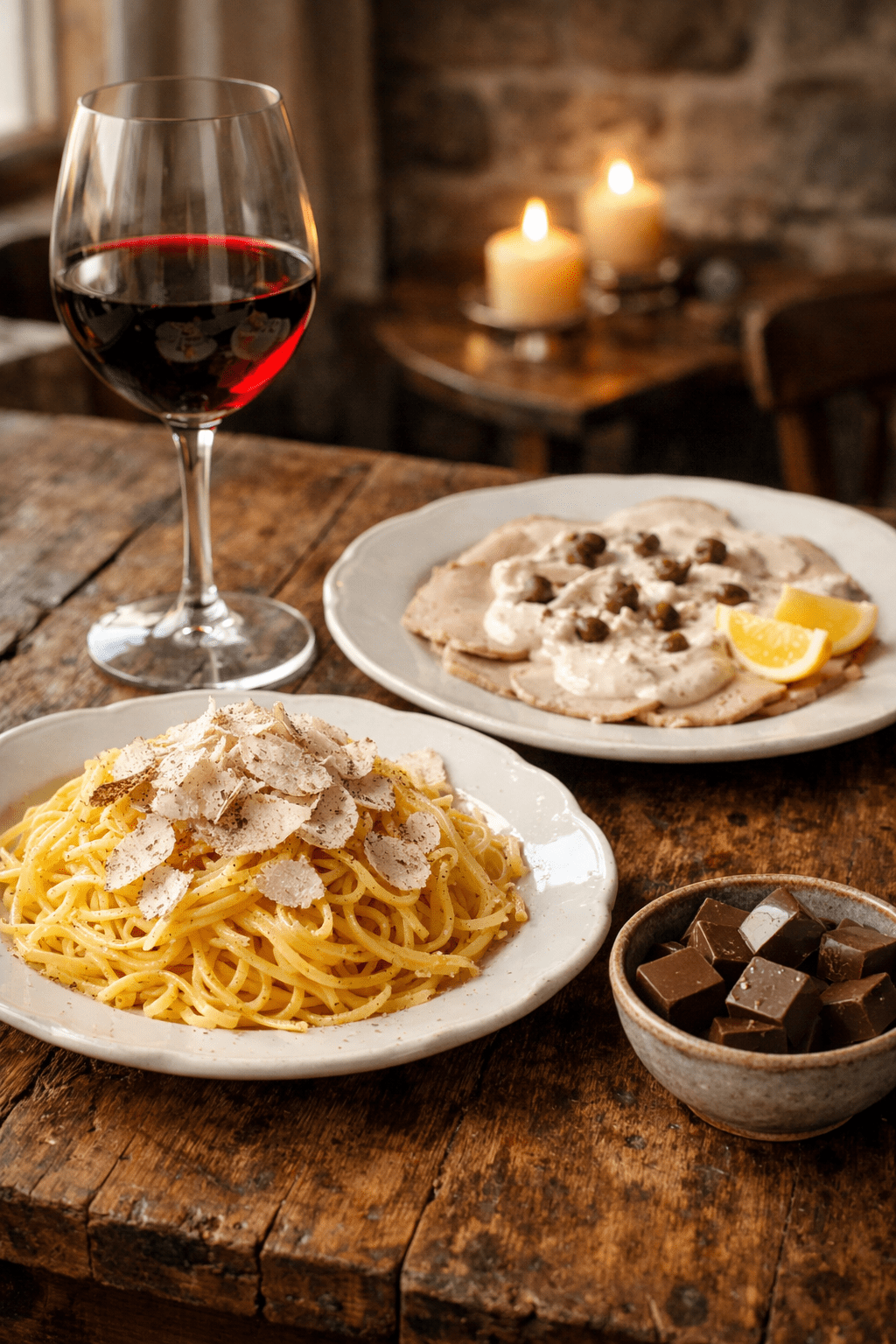
- Tajarin — thin egg-yolk pasta, often served with butter and shaved truffle or a meat ragù
- Vitello tonnato — cold sliced veal with a tuna-caper sauce (sounds odd, tastes extraordinary)
- Agnolotti dal plin — tiny pinched pasta parcels filled with braised meat
- Bagna cauda — warm anchovy-garlic dip for raw vegetables, a communal winter dish
- Gianduja — the original hazelnut chocolate that inspired Nutella
Wines to try:
- Barolo — the “King of Italian wines,” big and tannic, needs food
- Barbaresco — similar grape (Nebbiolo), slightly more elegant
- Moscato d’Asti — lightly sparkling, sweet, perfect with dessert
- Dolcetto d’Alba — easy-drinking, great for lunch
Common mistake: Ordering Barolo by the glass at a tourist-facing restaurant. Instead, go to a proper enoteca and ask the owner what’s drinking well right now.
Where to Stay: Accommodations for Every Budget
Accommodation quality in Piedmont is strong — in fact, it exceeds Italian national averages, with the Langhe region scoring 93.6/100 for hospitality [1]. You have real options across price points.
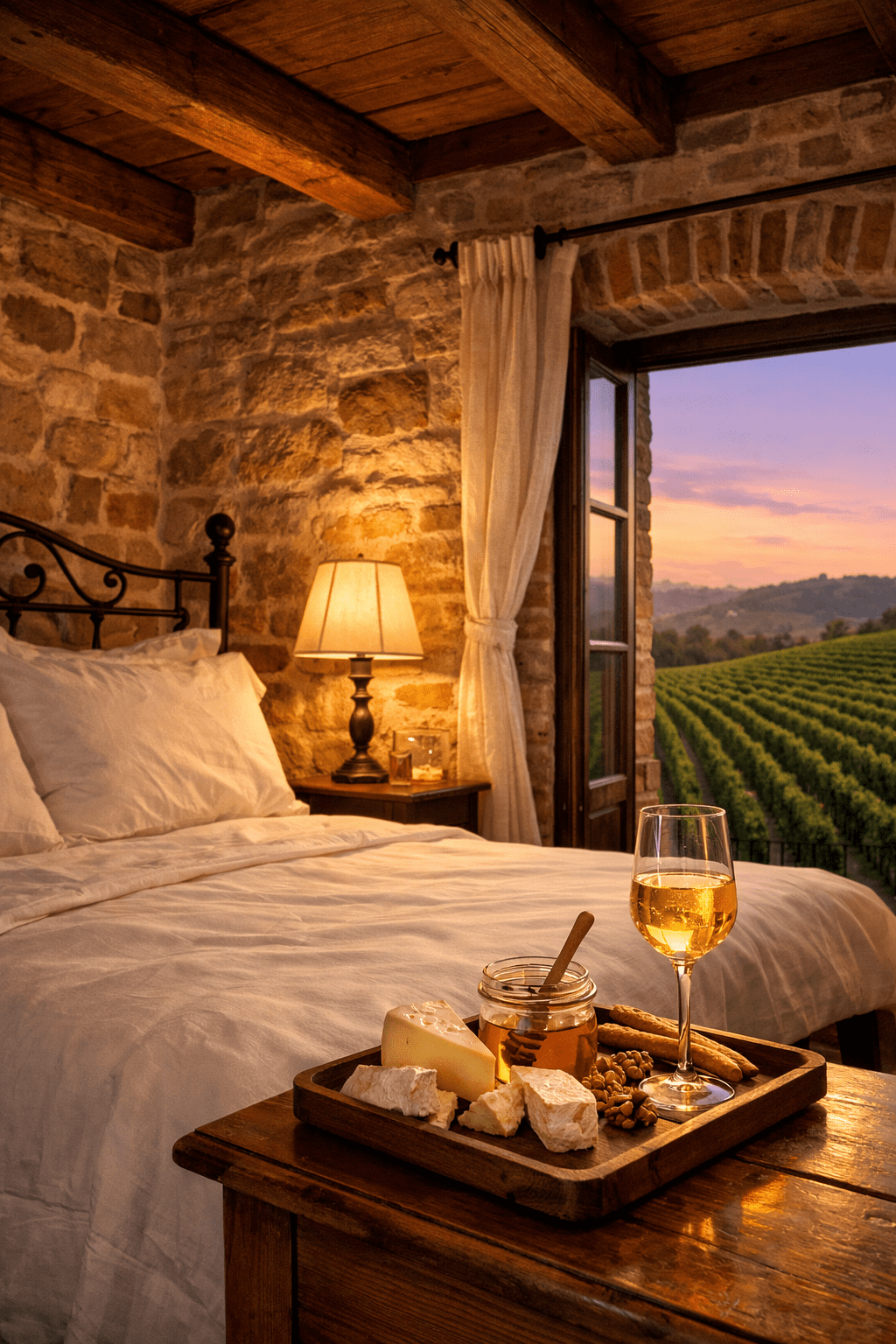
Agriturismo (Farm Stays) — Best Overall Pick
Agriturismos are working farms or wine estates that offer rooms, often with breakfast and dinner included. This is the most authentic way to experience the Langhe.
What to expect: Stone farmhouses, vineyard views, home-cooked dinners, and hosts who know every producer in the valley. Prices typically range from €100–€200 per night for a double room with breakfast.
Good areas to look: Around La Morra, Castiglione Falletto, and the hills above Alba.
Boutique Hotels in Alba — Best for Comfort and Convenience
Alba has a small but solid selection of boutique hotels within walking distance of restaurants, wine bars, and the truffle market.
Budget range: €120–€250 per night depending on season. October (truffle season) is peak — book at least 2 months ahead.
Vacation Rentals — Best for Groups or Extended Stays
If you’re traveling with family or a group of friends, renting a farmhouse for the week makes sense. The Stresa area of Piedmont (Lake Maggiore) has a mature vacation rental market with average daily rates around $215 and properties primarily designed for 4–6 guests [3].
For the Langhe specifically, look for rentals that include a kitchen — buying local cheese, wine, and bread from the Alba market for a self-catered lunch is one of the best experiences in the region.
Quick Accommodation Comparison
| Type | Best For | Avg. Nightly Cost | Book How Far Ahead |
|---|---|---|---|
| Agriturismo | Authentic experience, couples | €100–€200 | 4–8 weeks |
| Boutique hotel (Alba) | Convenience, solo travelers | €120–€250 | 6–10 weeks (Oct) |
| Vacation rental | Groups, families | €150–€350 | 6–12 weeks |
| Turin city hotel | Urban base, first night | €90–€180 | 2–4 weeks |
When Is the Best Time to Visit Piedmont?
The best times for a Piedmont Italy itinerary are late September through November and April through June. Each has a distinct character.
Autumn (Sept–Nov): The grape harvest happens in September and October. The International White Truffle Fair in Alba runs through October and November — this is the most atmospheric time to visit, but also the busiest (relatively speaking) and most expensive.
Spring (April–June): Wildflowers, green vines, fewer visitors, and cooler temperatures for walking. Prices are lower and you’ll have a better chance of getting last-minute restaurant reservations.
Avoid July–August if you dislike heat. The Langhe hills get warm, and while it’s still far less crowded than Tuscany, it’s not Piedmont at its best.
Italy’s village and inland tourism is growing fast as a trend for 2025–26, with travelers actively seeking alternatives to overcrowded coastal and urban destinations [5]. Piedmont is well-positioned to benefit — which also means visiting sooner rather than later if you want it truly to yourself.
Practical Tips for Planning Your Piedmont Trip
Getting there: Fly into Milan Malpensa (MXP) or Turin (TRN). Turin airport is more convenient if you’re starting in the city. Milan works if you want to add a day in Milan first — check the hidden gems in Milan guide for ideas.
Getting around: Rent a car. Public transport between Langhe villages is limited and infrequent. Alba is a good hub, but you’ll want the flexibility to stop at a roadside enoteca or pull over for a view.
Language: English is spoken at most hotels and wine estates, but less so at village trattorias. Learn a few phrases — it goes a long way.
Tipping: Not expected in the same way as in North America. Rounding up the bill or leaving a euro or two is appreciated but not required.
Avoid these mistakes: Don’t skip booking restaurants in advance (especially in October), don’t underestimate driving times on the winding hill roads, and don’t try to cram in too many wineries in one day. Two or three tastings is plenty. For a broader list of pitfalls, the 15 mistakes to avoid in Italy guide covers the essentials.
If you’re planning a broader Italian trip, you might also want to look at a Dolomites Italy itinerary to combine the north of the country, or check out 10 hidden gems in Italy for more inspiration beyond the tourist trail.
FAQ: Piedmont Italy Itinerary
How many days do I need in Piedmont?
Five to seven days is ideal. Five days covers the Langhe and Alba well. Seven days lets you add Turin, Asti, and Monferrato without rushing.
Is Piedmont worth visiting if I’ve already been to Tuscany?
Yes — especially if you’re a wine or food lover. The landscapes are similar but the cuisine, wines, and overall vibe are distinctly different. Piedmont feels less polished and more genuinely local.
Do I need to speak Italian to visit Piedmont?
Not at hotels or wine estates, where English is common. At local trattorias and markets, basic Italian phrases help and are warmly received.
What’s the difference between Barolo and Barbaresco?
Both are made from the Nebbiolo grape in the Langhe. Barolo is bigger, more tannic, and needs more aging. Barbaresco is slightly lighter and approachable a bit earlier. Both are world-class.
Can I visit Piedmont without a car?
You can base yourself in Alba and take taxis or organized wine tours to the villages. But a rental car gives you much more freedom and is strongly recommended.
Is Piedmont expensive?
It’s more affordable than comparable wine regions like Burgundy or Napa. A good dinner with wine costs €35–€60 per person. Wine tasting fees at estates are typically €15–€30 per person.
When is the Alba Truffle Fair?
It runs throughout October and into November each year. The main market is open on weekends. Book accommodation months in advance if you’re going during this period.
What’s the closest airport to the Langhe wine region?
Turin (TRN) is about 60 km from Alba. Milan Malpensa (MXP) is about 130 km. Both work; Turin is slightly more convenient.
Is Piedmont good for solo travelers?
Yes. It’s safe, easy to navigate, and the food and wine culture makes it easy to meet people at tastings and markets. Many agriturismos welcome solo guests warmly.
How does Piedmont compare to other northern Italy destinations?
It’s less dramatic than the Dolomites and less urban than Milan, but it’s the strongest destination in northern Italy for food, wine, and slow travel combined.
Conclusion
A Piedmont Italy itinerary gives you something that’s getting harder to find in Italy: the full sensory experience of rolling vineyard hills, centuries-old villages, and extraordinary food and wine — without the feeling that you’re sharing it with half the world.
The Langhe region consistently earns some of the highest visitor satisfaction scores in all of Italy [1], and with village tourism growing as a major travel trend for 2025–26 [5], this is genuinely the right moment to go — before Piedmont becomes the next Tuscany in terms of crowds.
Your next steps:
- Decide your dates — aim for October (truffle season) or May (spring, fewer crowds, lower prices).
- Book accommodation first — agriturismo spots and boutique hotels in Alba fill up fast, especially in autumn.
- Reserve at least two restaurant dinners in advance — the best places in the Langhe are small and fill up weeks ahead.
- Rent a car — it’s the single best thing you can do for this trip.
- Read up on common Italy travel mistakes before you go, so you can avoid the pitfalls that trip up first-timers.
Piedmont is waiting. Go while it’s still a secret.
References
[1] Destination Piedmont – https://datappeal.io/destination-piedmont/
[3] Stresa – https://www.airroi.com/report/world/italy/piedmont/stresa
[5] Turismo Italiano 2025/26 Numeri Record Grandi Eventi E Nuove Tendenze – https://www.initaly.it/en/articolo/turismo-italiano-202526-numeri-record-grandi-eventi-e-nuove-tendenze-6423
[7] Tourism In Italy – https://en.wikipedia.org/wiki/Tourism_in_Italy