Quick Answer: Sardinia is a stunning Italian island in the Mediterranean with turquoise beaches, ancient ruins, and a culture unlike anywhere else in Italy. First-timers should rent a car, aim for late spring or early fall to avoid peak crowds, budget around $87 per day [3], and use Cagliari, Olbia, or Alghero as their base. One week is enough to get a real feel for both the north and south.
Key Takeaways
- Rent a car. Public transport is limited outside major towns, and the island’s best spots are only reachable by road [2].
- Best bases for first-timers: Cagliari (south), Olbia (north), or Alghero (northwest) depending on your flight options [5].
- Best travel window: May–June and September–October for good weather without the August crowds.
- Budget baseline: Approximately $87/day covers accommodation, food, and transport at a moderate level [3].
- Flights connect through Rome or Milan — book early, as international routes to Sardinia are limited [2].
- Shops close mid-afternoon (roughly 1 PM to 4 PM), so plan sightseeing and errands around this schedule [2].
- GPS can fail in mountain areas — download offline maps and don’t hesitate to ask locals for directions [2].
- One week is realistic for hitting both the north and south if you plan your route in advance [5].
- 2026 update: New sections of the Sardinia Cycle Route are opening this year, and road infrastructure improvements are making driving easier for visitors [1].
What Makes Sardinia Different From the Rest of Italy?
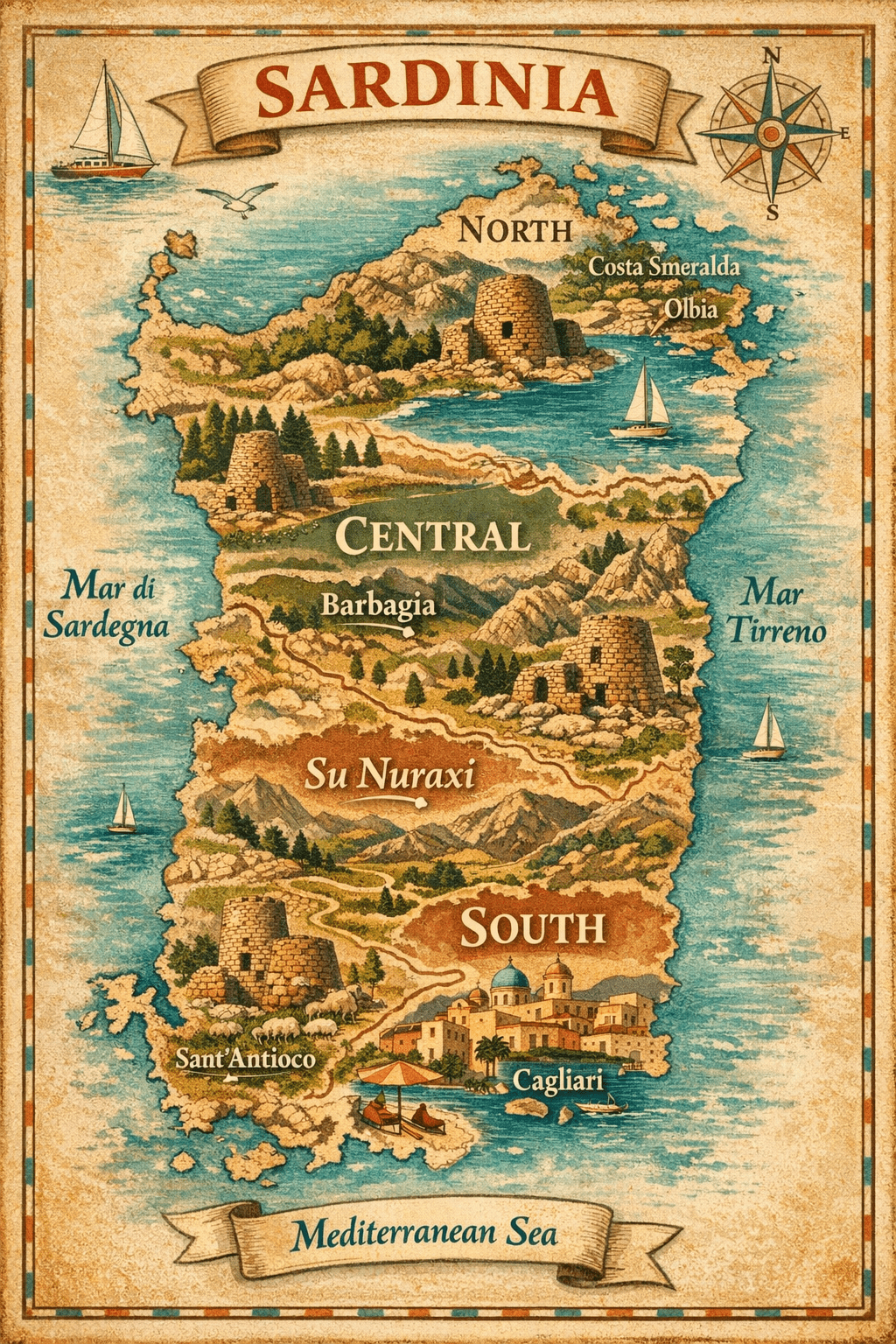
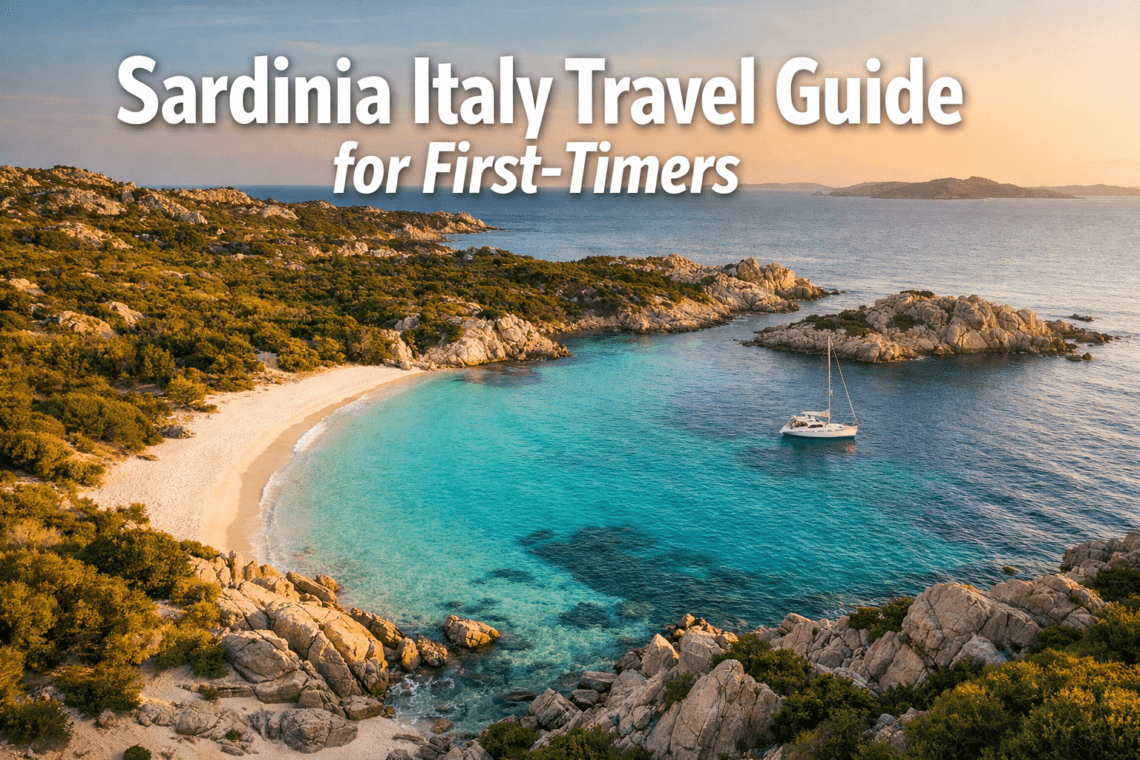
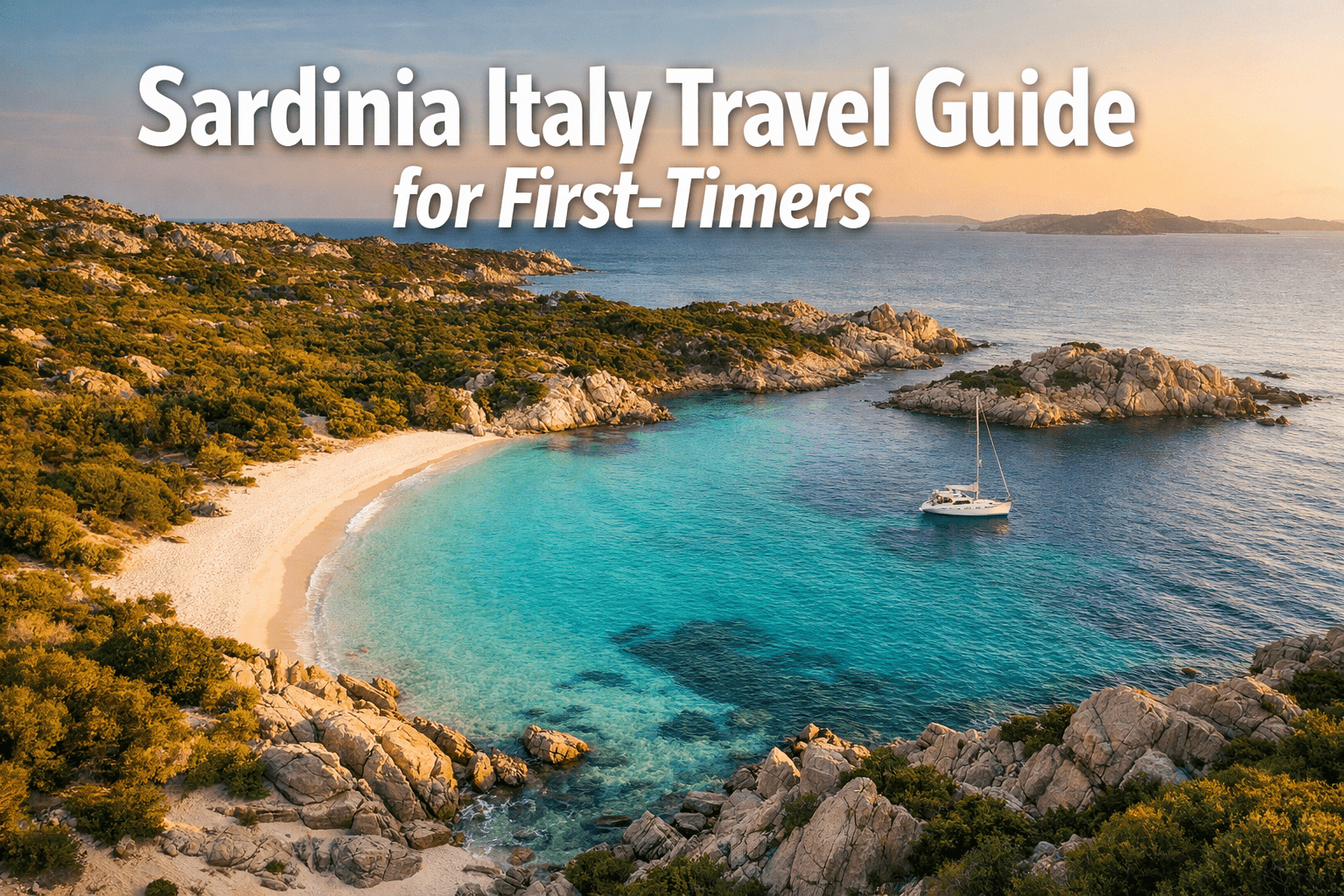
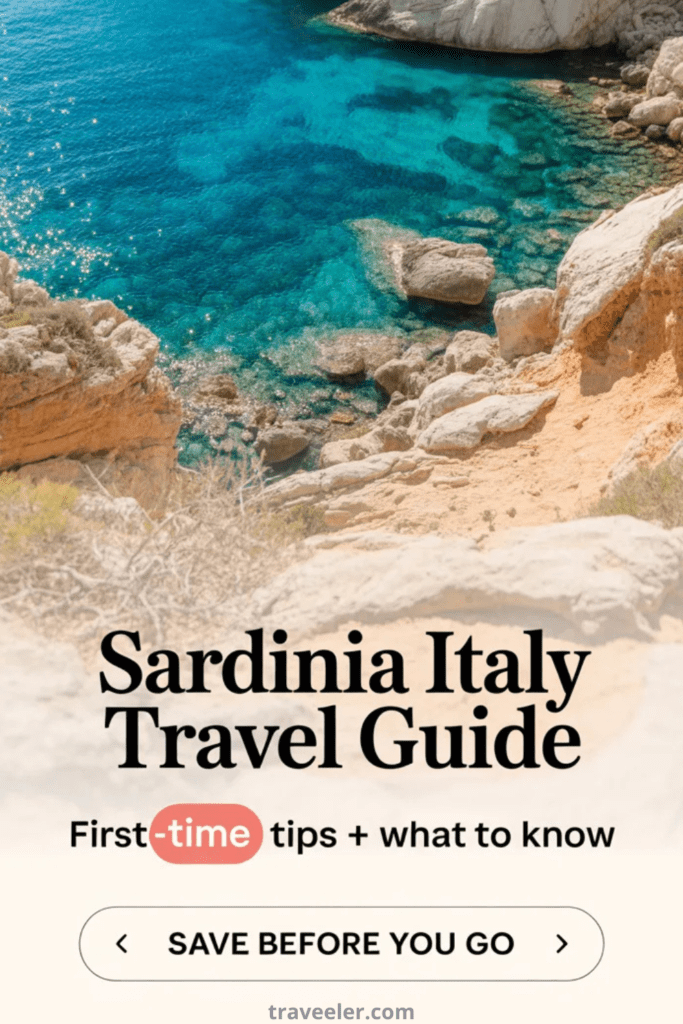
Sardinia isn’t just another Italian destination with pizza and pasta. It’s a world of its own — with a distinct language (Sardinian), Bronze Age stone towers called nuraghi, and beaches that rival the Maldives.
Unlike the mainland, Sardinia moves at a slower pace. Locals are warm but private. The food leans heavily on sheep’s cheese, roasted meats, and seafood rather than the tomato-heavy dishes you’d expect. The landscape shifts from dramatic granite coastlines in the north to rugged mountain villages in the interior.
If you’re already planning an Italian trip and want to compare, check out our Tuscany Italy Travel Guide or the hidden gems across Italy — but know that Sardinia is genuinely different from both.
“Sardinia feels like Italy designed a secret island and forgot to tell everyone about it.”
What makes it stand out:
- Ancient nuraghi (over 7,000 prehistoric stone structures across the island)
- Water so clear you can see the bottom at 10 meters depth
- A cuisine and dialect that evolved largely in isolation
- Far less tourist infrastructure than Tuscany or the Amalfi Coast — which is both a challenge and a charm
When Is the Best Time to Visit Sardinia?
The sweet spot is May–June or September–October. You get warm weather, open beaches, and manageable crowds. August is peak season — prices spike, popular beaches get packed, and accommodation books out months in advance.
| Month | Weather | Crowds | Notes |
|---|---|---|---|
| April–May | Warm, mild | Low | Wildflowers, green hills, great for hiking |
| June | Hot, sunny | Moderate | Best balance of weather and crowd levels |
| July–August | Very hot | Very high | Peak prices, book everything early |
| September–October | Warm, sunny | Low–Moderate | Ideal for beaches and cultural visits |
| November–March | Cool, some rain | Very low | Many coastal resorts close |
Choose September if: you want beach weather without the August chaos. Many locals consider it the best month on the island.
Avoid August if: you’re on a budget or dislike crowds. Accommodation costs can double or triple compared to June.
How Do You Get to Sardinia and Get Around?
Fly into Cagliari, Olbia, or Alghero — then rent a car immediately. International flights typically route through Rome (Fiumicino) or Milan (Malpensa), so factor in a connection [2]. Book flights as early as possible since direct international routes are limited.
The three main airports:
- Cagliari (CAG) — best for exploring the south and central regions
- Olbia (OLG) — gateway to Costa Smeralda and the north
- Alghero (AHO) — good for the northwest, with Ryanair connections from several European cities
Getting around the island:
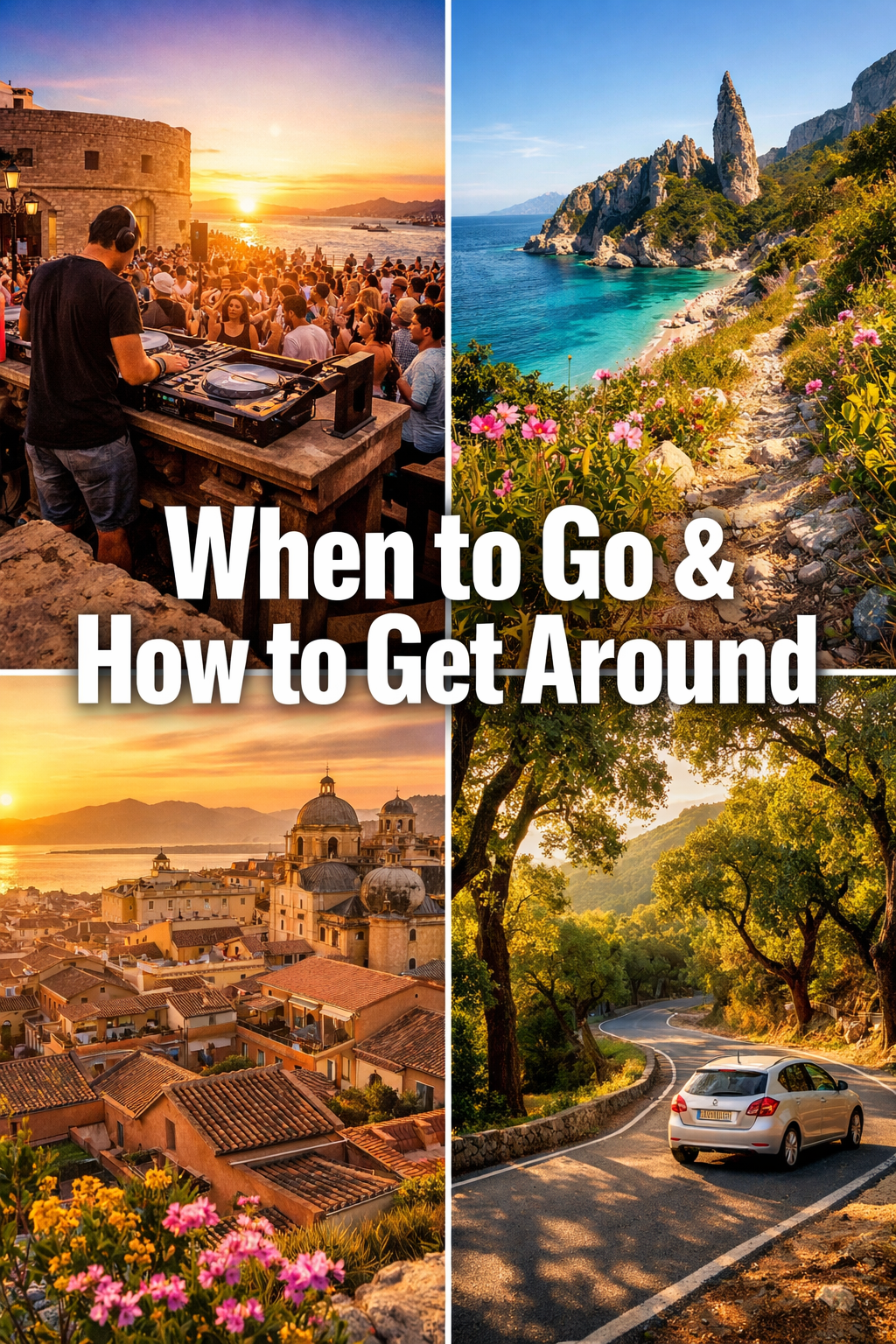
A rental car is non-negotiable unless you’re staying in one town the entire trip [2]. Roads are scenic but winding, especially in the interior. GPS works fine on main roads but can lose signal in mountain areas — download Google Maps or Maps.me offline before you go [2].
In 2026, road infrastructure improvements are making driving more convenient for visitors, and new sections of the Sardinia Cycle Route are also opening for those who want to explore by bike [1].
Common mistake: Assuming you can rely on buses between coastal towns. Buses exist but run infrequently and won’t get you to the best beaches.
If this is your first time flying internationally, our first-time airplane guide covers everything from check-in to landing.
What Are the Best Places to Visit in Sardinia?
Sardinia splits naturally into three zones: north, central, and south. Each has a distinct character, and a one-week trip can realistically cover highlights from at least two of them [5].
North Sardinia
The north is famous for its glamorous coastline and crystal-clear water. Key stops include:
- Costa Smeralda — the famous “Emerald Coast,” lined with luxury resorts and designer boutiques
- Porto Cervo — the upscale hub of the north, great for people-watching
- La Maddalena Archipelago — a national park of small islands with some of the best snorkeling in the Mediterranean
- Palau — home to Bear’s Rock (Roccia dell’Orso), a granite formation shaped like a bear
- Phi Beach — a sunset bar built into a former military fort, with DJ sets and dramatic views [1]
The coastal drive along the SS125 from Olbia is one of the most scenic roads in Italy [1].
Central Sardinia
This is Sardinia’s soul — ancient, quiet, and largely untouched by tourism.
- Su Nuraxi di Barumini — a UNESCO-listed Bronze Age fortress, one of the best-preserved nuraghi on the island [1]
- Cala Goloritzé — a stunning beach accessible only by boat or a 2-hour hike, often called one of the world’s most beautiful beaches [1]
- Barbagia and Ogliastra regions — ideal for horseback riding and village exploration
- Oliena and Dorgali — where local artisans teach weaving and ceramics workshops [2]
South Sardinia
The south balances culture, history, and quieter beaches.
- Cagliari’s Castello District — the medieval hilltop quarter with panoramic views over the city [1]
- Nora Archaeological Site — Roman ruins right on the coast, partially submerged by the sea [1]
- Sant’Antioco island — connected to the mainland by a causeway, with Phoenician ruins and a laid-back vibe
- Path of Saint Barbara — a roughly 500 km circular route through historic mining sites, split into 30 stages [1]
- Tuerredda Beach — calm, shallow water with sunbed rentals available [2]
Where to Stay in Sardinia: Accommodation Options for Every Budget
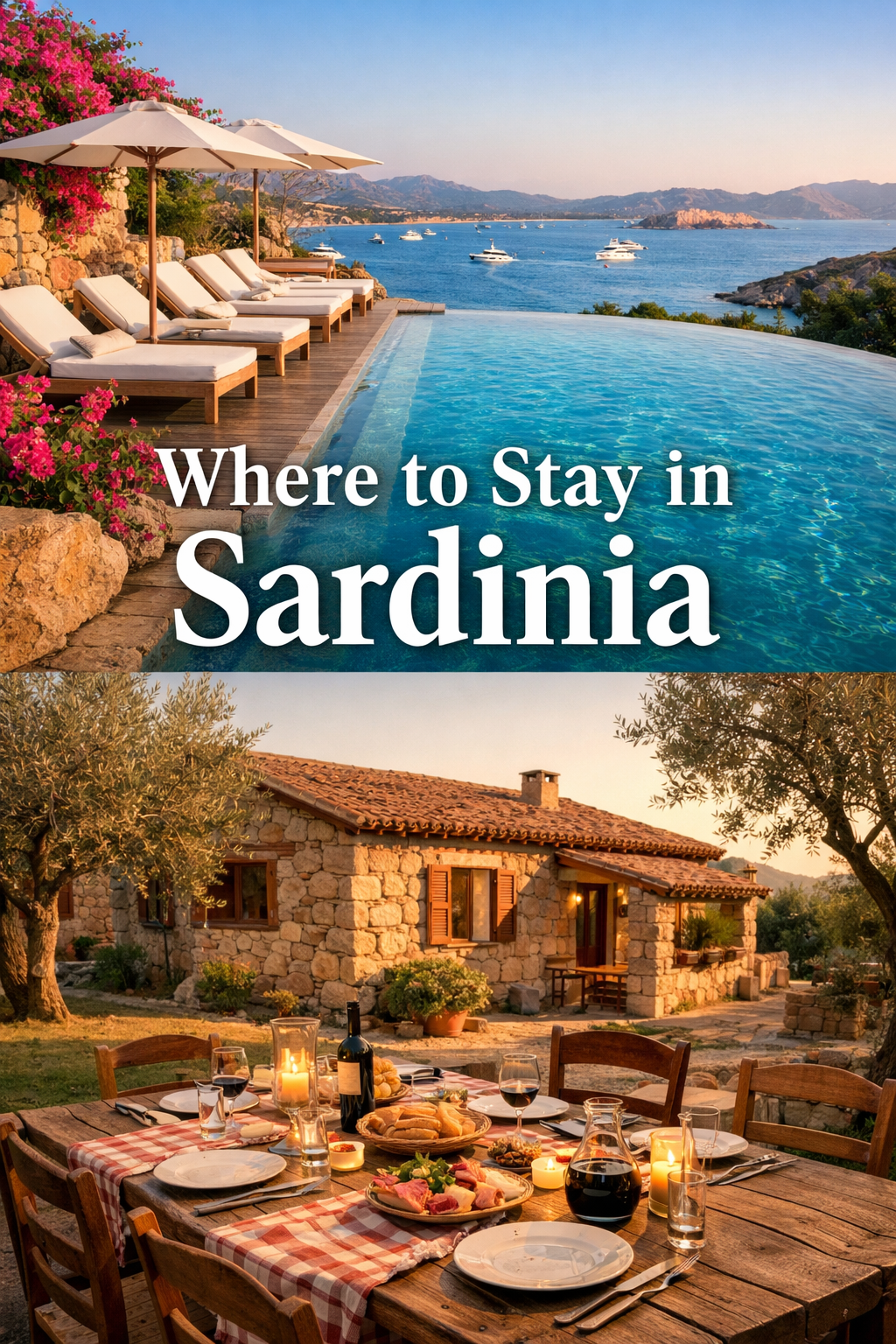
Sardinia has accommodation for every budget, from luxury resorts on Costa Smeralda to family-run agriturismos in the hills. The key is booking early — especially for summer travel, when good mid-range options sell out months ahead.
Accommodation Types at a Glance
| Type | Best For | Price Range (per night, est.) | Where to Find Them |
|---|---|---|---|
| Luxury resort | Honeymoons, splurge trips | €300–€1,000+ | Costa Smeralda, Porto Cervo |
| Boutique hotel | Couples, design lovers | €120–€300 | Cagliari, Alghero, Olbia |
| Agriturismo | Authentic experience, families | €60–€150 | Interior regions, Barbagia |
| B&B / guesthouse | Budget-conscious travelers | €50–€100 | All major towns |
| Apartment rental | Longer stays, self-catering | €70–€180 | Cagliari, coastal towns |
| Camping | Adventure travelers | €15–€40 | Near beaches, national parks |
Choose an agriturismo if: you want to eat the best home-cooked Sardinian food, sleep in a stone farmhouse, and wake up to olive groves. Many include breakfast and dinner in the rate.
Choose Costa Smeralda if: budget isn’t a concern and you want the full luxury beach experience. For context on what luxury travel looks like at this level, browse our luxury travel section.
Choose Cagliari as your base if: you want a real city with restaurants, nightlife, and easy access to southern beaches.
Booking tip: For July and August, book accommodation at least 3–4 months in advance. For shoulder season (May–June, September–October), 4–6 weeks is usually fine.
What Should You Eat and Drink in Sardinia?
Sardinian food is hearty, local, and completely different from what most visitors expect from Italy. Forget carbonara — here it’s all about slow-roasted suckling pig, handmade pasta, and aged sheep’s cheese.
Must-try foods and drinks:
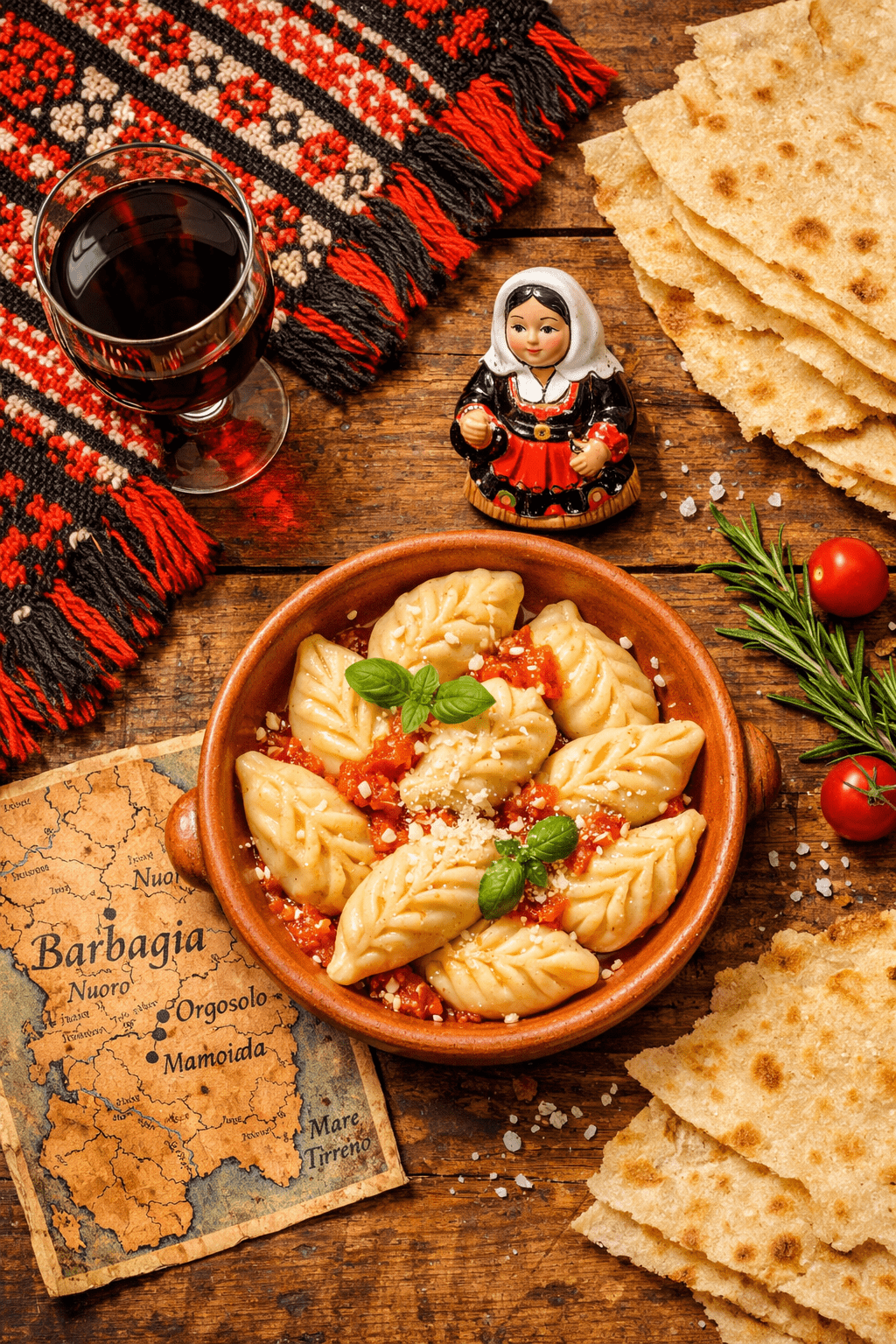
- Culurgiones — stuffed pasta parcels filled with potato, pecorino, and mint, sealed with a decorative braid
- Porceddu — slow-roasted suckling pig, the island’s most iconic dish
- Pane carasau — paper-thin flatbread, eaten with everything
- Pecorino Sardo — aged sheep’s cheese, sharper and more complex than mainland varieties
- Cannonau wine — a robust red made from Grenache grapes, grown in the Ogliastra region; some researchers have linked it to the island’s high number of centenarians (Sardinia is one of the world’s Blue Zones)
- Mirto — a liqueur made from myrtle berries, served as a digestif after meals
Dining tip: Lunch is the main meal of the day. Many restaurants don’t open for dinner until 7:30 PM or later. And remember — shops and some restaurants close from roughly 1 PM to 4 PM [2].
Sardinia Italy Travel Guide: Practical Tips Before You Go
A few practical details will save you real headaches on the ground. Here’s what first-timers consistently wish they’d known.
- Cash matters. Smaller towns and markets often don’t accept cards. Carry some euros.
- Sun protection is serious. The Sardinian sun is intense, especially in July and August. SPF 50 is not overkill.
- Respect the beaches. Taking sand, shells, or pebbles from Sardinian beaches is illegal and carries heavy fines.
- Learn a few words of Italian. English is spoken in tourist areas but not reliably in villages.
- Afternoon closures are real. Plan shopping and errands for mornings or after 4 PM [2].
- Book ferry crossings early if you plan to visit La Maddalena or Sant’Antioco by boat.
- Pack a travel essentials kit. Our ultimate travel packing guide covers everything you shouldn’t leave home without.
Also worth reading before your trip: 15 mistakes to avoid in Italy — several of them apply directly to Sardinia.
Sardinia Italy Travel Guide: Sample 7-Day First-Timer Itinerary
One week is enough to see the highlights of both north and south Sardinia, as long as you plan your driving routes in advance [5].
Day 1–2: Cagliari
Arrive, explore the Castello District, visit the Nora Archaeological Site, and settle in.
Day 3: South Coast
Drive to Tuerredda Beach, stop at Su Giudeu Beach for a picnic, and visit Sant’Antioco island.
Day 4: Central Sardinia
Head to Su Nuraxi di Barumini (UNESCO site), then drive through Barbagia for a taste of village life.
Day 5: East Coast
Make the effort to reach Cala Goloritzé — hike or take a boat from Baunei. It’s worth every step.
Day 6: North — La Maddalena and Palau
Take the ferry to La Maddalena Archipelago, visit Bear’s Rock in Palau, and drive the SS125 coastal road.
Day 7: Costa Smeralda
Spend your last day at Spiaggia del Principe (a free public beach on Costa Smeralda), then catch the sunset at Phi Beach [1].
FAQ: Sardinia Travel for First-Timers
Is Sardinia safe for tourists?
Yes. Sardinia is considered one of Italy’s safest regions. Petty theft exists in busy tourist areas, as in any destination, but violent crime is rare. Use standard travel precautions.
Do I need to speak Italian to visit Sardinia?
Not fluently, but a few basic phrases help a lot in villages and smaller towns. English is widely spoken in coastal resorts and major cities.
How much does a trip to Sardinia cost?
A baseline budget of approximately $87 per day covers modest accommodation, meals, and transport [3]. Luxury resorts and peak-season travel can push costs significantly higher.
Is one week enough for Sardinia?
Yes, one week is a solid first visit. You can cover the south and north with a car and a planned route [5]. Two weeks lets you go deeper into the interior.
What’s the best beach in Sardinia for first-timers?
Spiaggia del Principe on Costa Smeralda is free, stunning, and accessible. Tuerredda in the south is great for calm water. Cala Goloritzé is the most dramatic but requires more effort to reach [1][2].
Can I visit Sardinia without a car?
Technically yes, but you’ll miss most of the island’s best spots. If you’re staying in one city (like Cagliari or Alghero), you can manage without one. Otherwise, rent a car [2].
When should I book flights to Sardinia?
As early as possible. International routes are limited and fill up fast, especially for summer travel. Flights connect through Rome or Milan [2].
Is Sardinia good for solo travelers?
Yes. It’s safe, welcoming, and easy to navigate solo. For more ideas on traveling alone in Mediterranean destinations, see our solo travel guides.
What currency is used in Sardinia?
The euro (€). Credit cards are accepted in most hotels and restaurants, but smaller towns and markets often prefer cash.
Are there cultural events worth planning around?
Yes. The Barbagia Jazz Festival features performances in village courtyards and is a genuine local experience. The Thursday artisan market in San Pantaleo village is also worth timing your trip around [2].
Conclusion
Sardinia rewards travelers who show up prepared. Rent a car, book early, and go in May, June, or September for the best experience. Start with Cagliari or Olbia as your base, work your way around the coast, and make time for at least one inland detour into Barbagia or the UNESCO nuraghi sites.
Your next steps:
- Choose your base (Cagliari for the south, Olbia for the north)
- Book flights through Rome or Milan as early as possible
- Reserve your rental car before you arrive
- Plan your accommodation — agriturismo for authenticity, resort for luxury
- Download offline maps for mountain driving
If you’re building a broader Italy itinerary, pair Sardinia with our Tuscany travel guide or explore Positano and the Amalfi Coast for a complete southern Italy experience.
Sardinia is one of those places that genuinely surprises people. Go in with an open mind, slow down a little, and let the island do the rest.
References
[1] Sardinia Travel Guide 2026 – https://www.visititaly.eu/places-and-tours/sardinia-travel-guide-2026
[2] Sardinia Luxury Travel Guide – https://www.sebastianluxetravel.com/blog/sardinia-luxury-travel-guide
[3] Sardinia It – https://gotripzi.com/destinations/sardinia-it
[5] Sardinia Mid September 2026 – https://community.ricksteves.com/travel-forum/italy/sardinia-mid-september-2026