Last updated: October 29, 2026
Most people driving Scotland’s famous NC500 route blink and miss it completely. A jagged stone silhouette on a cliff edge, gone in three seconds through the car window, no signpost telling them what they just passed.
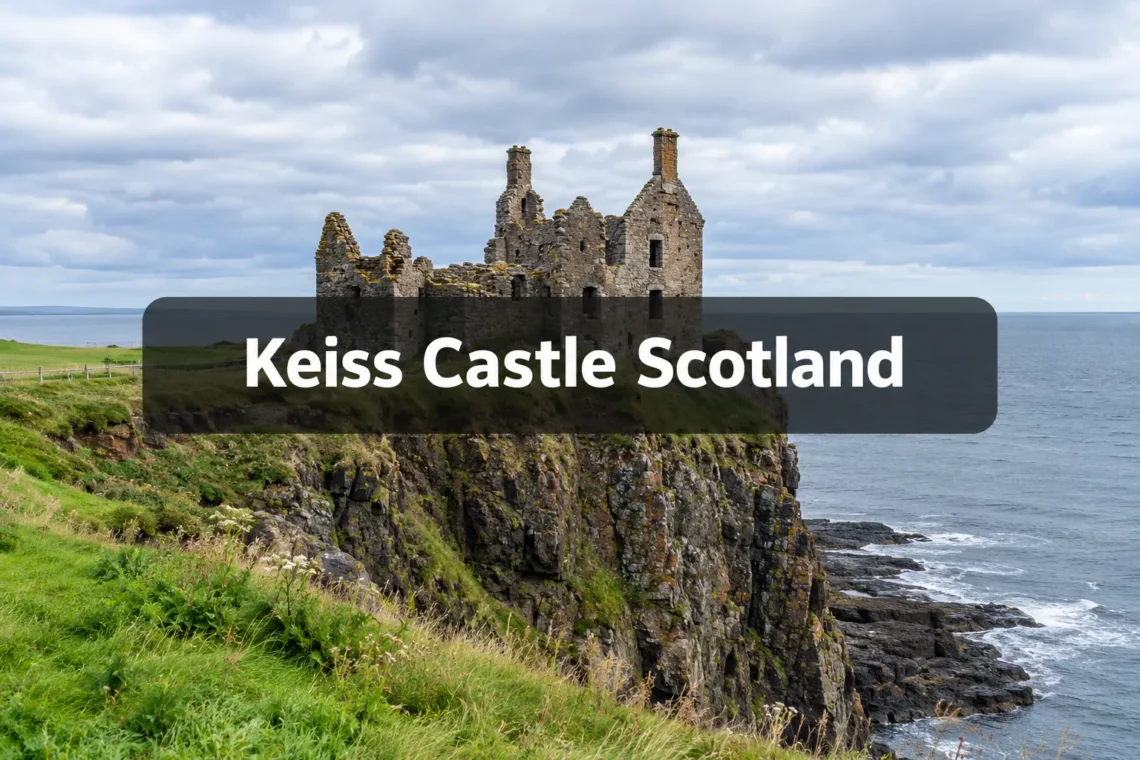
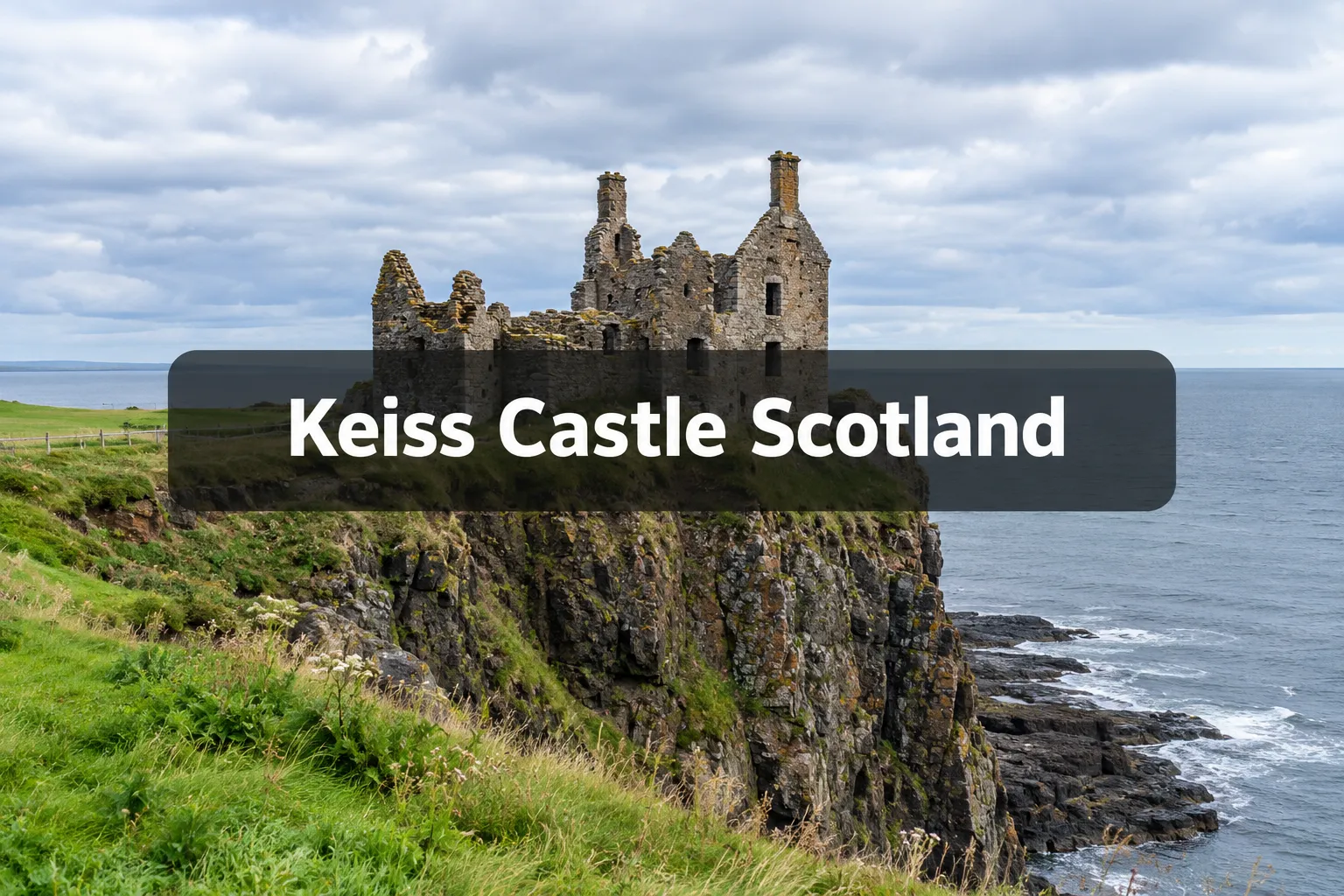
That silhouette is Keiss Castle Scotland, and it deserves more than a glance. This crumbling tower house sits above Sinclair’s Bay in Caithness, slowly losing ground to the sea below it, and almost nobody stops to see it properly.
I think that’s exactly why it’s worth the detour.
Quick Answer
Keiss Castle Scotland is a late-16th-century ruined tower house on cliffs above Sinclair’s Bay, about one mile north of Keiss village in Caithness. It’s free to view from outside a fenced perimeter, reachable by a short coastal walk from Keiss Harbour, and it’s structurally dangerous, so you cannot go inside. Most NC500 travelers skip it in favor of John o’Groats, which is exactly why it still feels undiscovered.
Key Takeaways
- Location: Caithness, Highland Council area, about 1 mile north of Keiss village, overlooking Sinclair’s Bay.
- Cost: Free to visit and view from the outside.
- Access: No entry allowed inside the structure due to safety risk.
- Walk time: Roughly 15 minutes each way from the harbour car park.
- History: Built around 1600 for George Sinclair, 5th Earl of Caithness.
- Current threat: Coastal erosion is actively eating into the cliff beneath it.
- Crowd level: Low. It’s a niche stop for photographers and walkers, not coach tours.
- Nearby: A separate 18th-century “new” Keiss Castle (Keiss House) stands inland and is privately occupied.
What is Keiss Castle and why do most tourists miss it
Keiss Castle is a ruined Z-plan tower house from around 1600, standing right on the edge of a sea cliff in Caithness. Most tourists miss it because it has no visitor center, no official parking lot, and barely any roadside signage pointing drivers toward it.
It sits just off the main road, but the turning is easy to overlook if you’re not specifically looking for it. There’s no gift shop, no ticket booth, nothing that screams “attraction” the way Dunnottar Castle or Eilean Donan do.
Regional travel sites describe it as a favorite for photographers and walkers rather than mainstream tour groups, which tells you something about who actually makes the stop (according to Venture North). If you’re driving the NC500 on a tight schedule, it’s easy to drive straight past without ever knowing what you missed.
I’ll be honest, I almost did the same thing. A friend who’d done the route before told me to watch for a gap in the hedges just past the village, and that was the only reason I slowed down at all.
Where exactly is Keiss Castle located in Scotland
Keiss Castle sits in Caithness, in the Highland Council area of far northern Scotland, roughly one mile north of the village of Keiss. It perches directly on cliffs overlooking Sinclair’s Bay and the North Sea (according to Scotland.org.uk).
Caithness itself occupies the northeastern tip of mainland Scotland, not far from John o’Groats. For orientation:
- Nearest village: Keiss
- Nearest larger town: Wick, about 8 miles south
- Grid reference: Approximately ND 3569 6164 (according to Undiscovered Scotland)
If you’re mapping out a wider Scotland itinerary, this far-north stretch is a very different flavor from the cities. It’s windswept, quiet, and sparsely populated compared to somewhere like Glasgow or Edinburgh.
How do I get to Keiss Castle from the nearest town
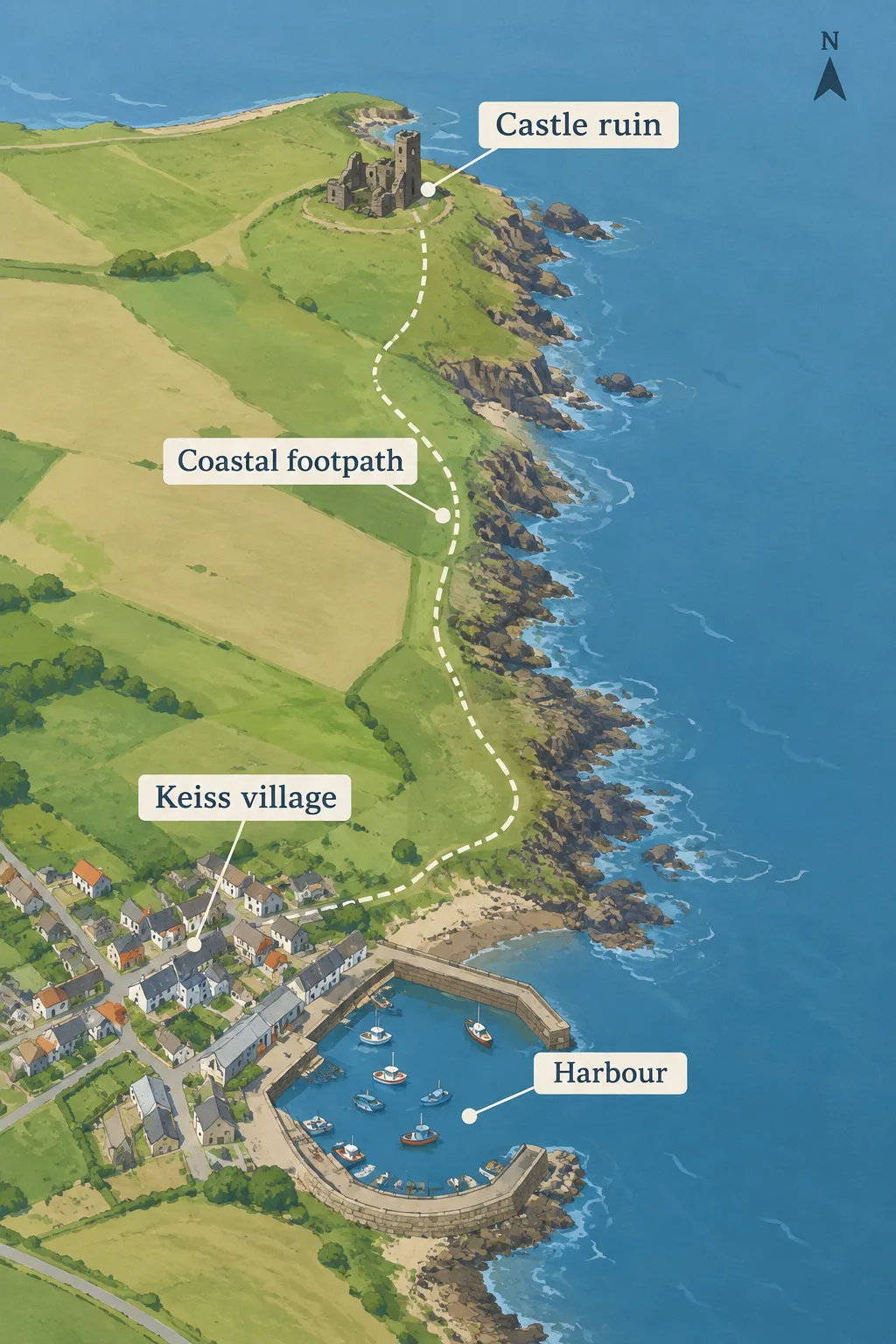
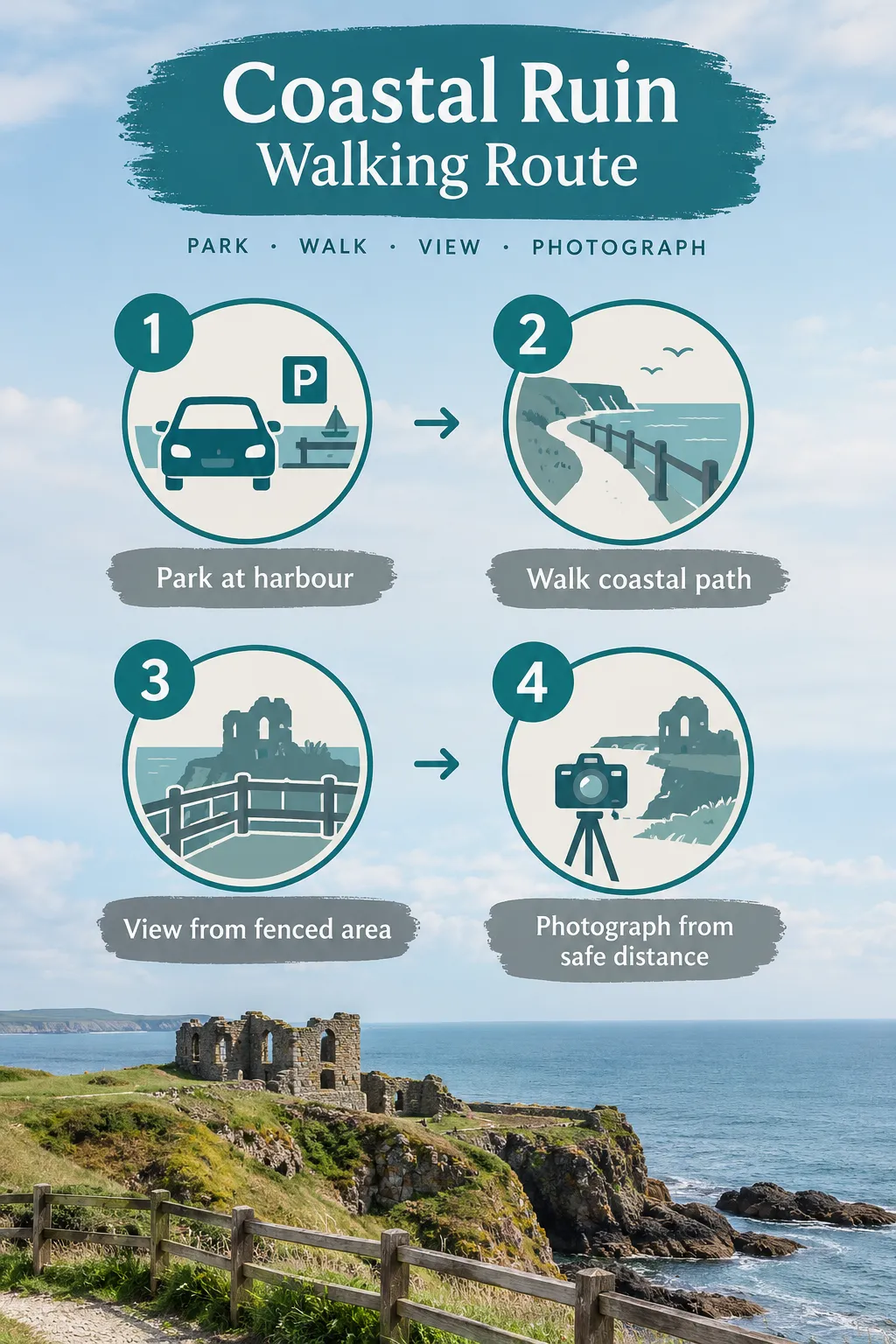
The easiest way to reach Keiss Castle is to drive to Keiss village, park near the harbour, then walk the coastal path north for about 15 minutes. There’s no vehicle access directly to the ruin itself.
Here’s the basic route breakdown:
- Drive to Keiss village along the A99, north of Wick.
- Park at Keiss Harbour or near the pier.
- Follow the coastal footpath north, roughly 0.5 to 0.75 miles.
- Arrive at the fenced viewpoint overlooking the ruin.
The walk is on rough coastal ground, not a paved trail, so trainers or walking shoes with decent grip matter here (according to Venture North and Undiscovered Scotland). There’s no public transport stop right at the castle, so you really do need a car to get to Keiss village first.
Common mistake: people park at the wrong pull-off along the main road and end up walking through private farmland. Stick to the harbour parking area and the marked coastal path.
Is Keiss Castle free to visit or is there an admission fee
Keiss Castle is free to visit. There are no tickets, no staffed entrance, and no booking required (according to Scotland.org.uk).
That said, “visiting” here means viewing the ruin from the fenced perimeter, not walking through rooms or climbing towers. Compare that to paid attractions like Edinburgh Castle, and Keiss is a completely different kind of experience. It’s closer to a scenic coastal walk with a dramatic ruin as the reward, similar in spirit to how travelers chase hidden coastal stops elsewhere, like the overlooked corners covered in our Portland Maine coastal gems guide.
What’s the actual history of Keiss Castle
Keiss Castle was built around 1600 for George Sinclair, 5th Earl of Caithness, and first shows up in records under Sinclair ownership in 1623. It functioned as a stronghold during a turbulent period in the history of the Sinclair earls in Caithness (according to Wikipedia and The Castles of Scotland).
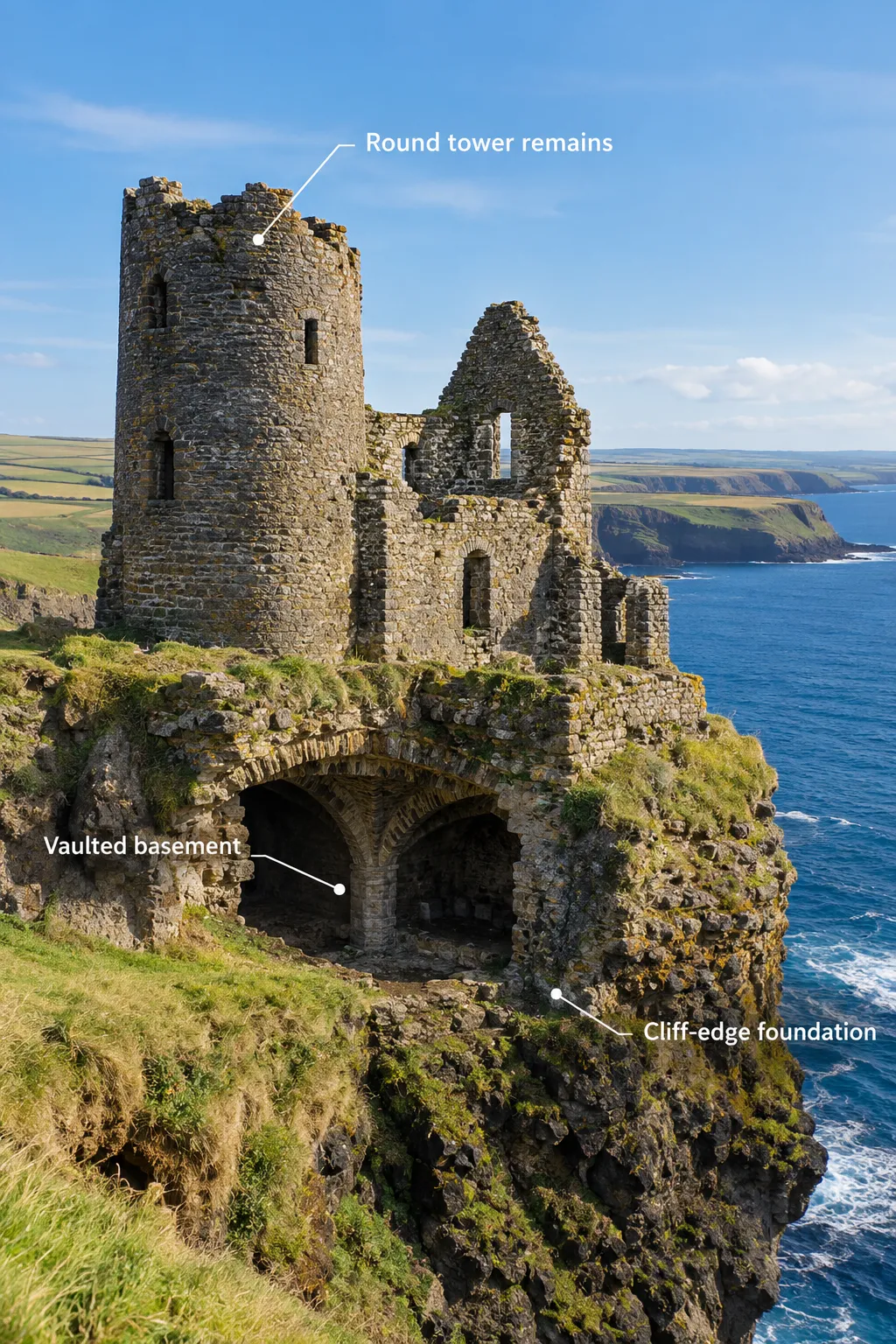
Architecturally, it was built as a Z-plan tower house:
- Four floors originally
- A vaulted basement
- Diagonally opposed round towers at two corners
This design was fairly standard for defensive late-Renaissance houses in northern Scotland at the time (according to The Castles of Scotland). It’s worth noting there’s a second, separate Keiss Castle nearby. The 18th-century “new” Keiss Castle, also called Keiss House, is a B-listed Scottish Baronial house inland on the Keiss Estate, and it’s still a private residence, not a ruin (according to Strutt & Parker).
Is Keiss Castle really haunted or just a tourist story
There’s no verified historical documentation confirming ghost sightings or hauntings at Keiss Castle. The “haunting” reputation comes more from its appearance and setting than from any recorded paranormal history.
The ruin’s jagged broken towers, its isolated clifftop position, and the sound of waves crashing below create an atmosphere that feels eerie even in broad daylight. I stood at the fence on a grey afternoon and genuinely felt a chill that had nothing to do with the wind. That’s the honest appeal here: it looks and feels haunting, whether or not anything supernatural is actually going on.
If you’re expecting documented ghost stories the way you’d find at somewhere like Edinburgh’s vaults, you won’t find much of that at Keiss. What you will find is a genuinely atmospheric, moody ruin that earns its reputation through looks alone.
Can you go inside Keiss Castle or just look at it from outside
No, you cannot go inside Keiss Castle. The site is fenced off and visitors are instructed not to enter the structure because of instability and recent collapses in the masonry and ground around it (according to Scotland.org.uk and Scotland’s Finest).
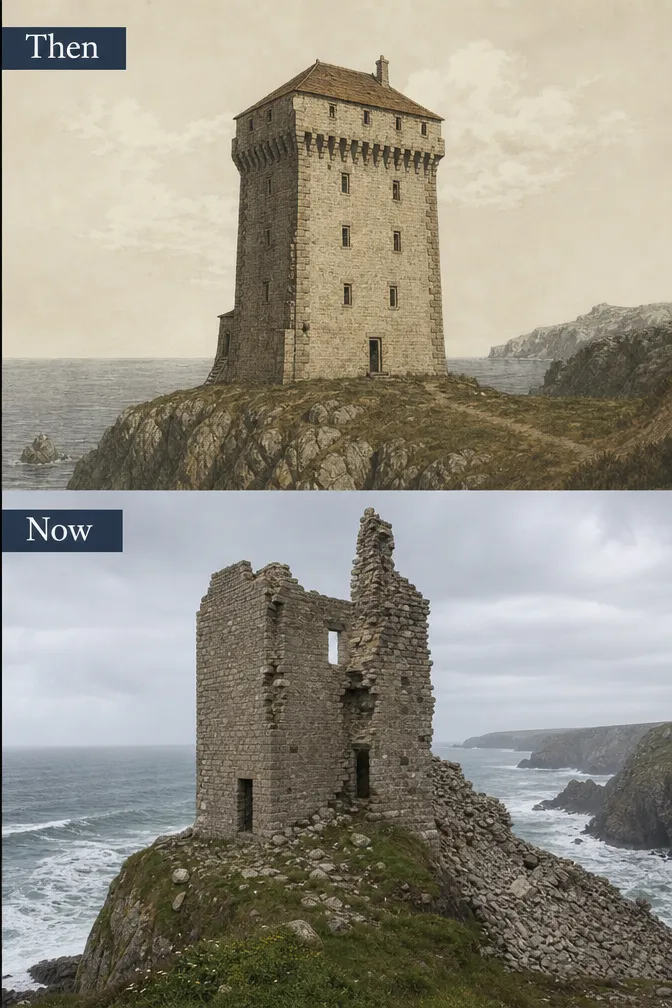
Walking guides mention a clear “Danger” warning posted at the approach (according to Venture North). This isn’t a minor caution sign. Sections of the cliff have already fallen into the sea, and the ruin’s remaining walls are standing on ground that’s actively eroding.
Decision rule: if you’re hoping for an explorable castle interior with staircases and towers to climb, choose somewhere else, like Dunnottar Castle. If you’re fine viewing a dramatic ruin from a safe distance and photographing it, Keiss delivers.
How long does it take to visit Keiss Castle
Plan for about 45 minutes to an hour total, including the walk there and back from Keiss Harbour. The castle viewpoint itself only takes 10 to 15 minutes to fully appreciate once you arrive.
A rough breakdown:
| Activity | Time |
|---|---|
| Park and start walk | 5 minutes |
| Walk to viewpoint | 15 minutes |
| Photos and viewing | 15-20 minutes |
| Walk back | 15 minutes |
This makes it an easy add-on stop if you’re already driving the NC500 or exploring Caithness, rather than a destination that needs a half-day commitment.
What should I bring when visiting Keiss Castle
Bring sturdy footwear, weatherproof layers, and a camera. The coastal path is uneven and exposed to wind, and Caithness weather shifts quickly even in summer.
A short practical list:
- Waterproof jacket, even if the forecast looks clear
- Walking shoes or boots with grip, not sandals
- A fully charged phone or camera for photos
- Water, especially if combining this with other Caithness stops
There are no facilities at the castle itself, so use the harbour area in Keiss village beforehand if you need a restroom.
Best time of year to visit Keiss Castle Scotland
Late spring through early autumn, roughly May to September, is the most comfortable window to visit Keiss Castle Scotland. Daylight hours are longer, and the coastal path is less likely to be muddy or windswept.
Winter visits are possible but the weather in far northern Scotland can be harsh, with strong coastal winds and short daylight hours. If moody, dramatic skies for photography matter more to you than comfort, an overcast autumn day can actually make the ruin look even more striking. I’d avoid visiting right after heavy rain though, since the cliff path gets slick.
How does Keiss Castle compare to other Scottish ruins like Dunnottar
Keiss Castle is smaller, free, far less visited, and strictly view-only compared to Dunnottar Castle, which charges admission and allows visitors to walk through much of its grounds and structure. They serve very different purposes for travelers.
| Feature | Keiss Castle | Dunnottar Castle |
|---|---|---|
| Admission | Free | Paid entry |
| Can enter structure | No | Partially, yes |
| Visitor facilities | None | Gift shop, paths, signage |
| Crowd level | Low | High, especially summer |
| Setting | Remote Caithness cliff | Aberdeenshire coast, more accessible |
Choose Keiss if you want a quiet, off-the-radar stop with dramatic scenery and no crowds. Choose Dunnottar if you want a fuller castle experience with explorable ruins and visitor infrastructure.
Are there other abandoned castles near Keiss Castle worth visiting
Yes, Caithness has several other ruined strongholds within a short drive of Keiss, reflecting the area’s dense history of clan rivalries and coastal defense. The Caithness Broch Project and regional heritage groups continue highlighting these lesser-known sites (according to Hidden Scotland).
If you’re building out a longer Caithness detour, pairing Keiss with nearby ruins turns a quick stop into a half-day heritage trail. It’s worth checking current access conditions locally before setting out, since several of these sites share the same erosion and safety concerns as Keiss.
For travelers planning a broader Scotland trip around stops like this, it can help to anchor your days around a base city first, something covered well in our 4-day Edinburgh itinerary guide or our Glasgow sightseeing guide, before heading north into Caithness territory.
What are common mistakes people make when visiting Keiss Castle
The most common mistake is trying to get close to or inside the ruin despite the fencing and danger signage. The structure is genuinely unstable, and the erosion beneath it is ongoing (according to Scotland’s Finest).
Other frequent mistakes:
- Expecting a visitor center or staffed entrance that doesn’t exist
- Underestimating how exposed and windy the coastal path can be
- Confusing the ruined “Old Keiss Castle” with the inland, inhabited Keiss House
- Visiting at high tide expecting beach access right at the base of the cliffs
Edge case: if broadband or mobile signal matters for navigation, know that connectivity in this part of Caithness remains limited, with a planned fibre rollout to villages including Keiss recently scaled back (according to ISPreview). Download offline maps before you go.
Is Keiss Castle worth the drive if you’re limited on time
Yes, if you’re already passing through Caithness on the NC500 or exploring the far north, Keiss Castle is worth a 45-to-60-minute detour. It’s not worth a dedicated multi-hour drive on its own if you’re based far away in central Scotland.
It earns its spot because it delivers a genuinely striking, photogenic ruin without crowds, cost, or a long commitment. If your itinerary is packed with bigger-name stops like Edinburgh or Glasgow, treat Keiss as a bonus stop on the Caithness leg rather than a must-reroute destination. For travelers stacking up scenic coastal detours in general, it sits comfortably alongside other “most tourists miss it” finds, similar in spirit to the overlooked spots in our Athens walking tour guide or Rome’s free hidden stops guide.
FAQ
Is Keiss Castle the same as Keiss House?
No. Keiss Castle is the ruined 16th-century tower on the cliff edge. Keiss House is a separate, inhabited 18th-century building further inland.
Can I fly a drone near Keiss Castle?
There’s no specific published rule for this site, so follow standard UK drone regulations and avoid flying over the fenced danger zone or near other people.
Is the path to Keiss Castle wheelchair accessible?
No. The coastal path is uneven, grassy, and exposed, making it unsuitable for wheelchairs or limited mobility without assistance.
How old is Keiss Castle?
It was built around 1600, making it roughly 426 years old as of 2026.
Is Keiss Castle part of the NC500 route?
Yes, it sits just off the NC500 road near Keiss village in Caithness.
Why is Keiss Castle collapsing?
Ongoing coastal erosion is undermining the cliff beneath the castle, with sections already having fallen into the sea.
Do I need to book a tour to see Keiss Castle?
No, it’s an independent, self-guided stop. No tours or bookings are required.
Is there a restaurant or cafe near Keiss Castle?
Keiss village has limited amenities. Plan to eat in Wick or bring supplies with you.
Conclusion
Keiss Castle Scotland isn’t going to compete with Edinburgh Castle for crowds, and honestly, that’s the whole point. It’s a free, quiet, slightly eerie clifftop ruin that rewards anyone willing to park at the harbour and walk fifteen minutes along the coast.
Go for the views, respect the fencing, and bring proper shoes. If you’re mapping out the rest of your Scotland trip, pair this stop with time in Glasgow or build it into a longer northern loop off your Edinburgh base. Either way, don’t be the driver who blinks and misses it.