

Quick Answer: Glasgow, Scotland’s largest city, packs world-class museums (most of them free), stunning Victorian architecture, a legendary food and music scene, and one of the UK’s most welcoming atmospheres into a compact, walkable city. It’s consistently overlooked in favor of Edinburgh, but travelers who visit almost always say Glasgow surprised them the most. In 2026, with the city hosting the Commonwealth Games, there’s never been a better time to go.
Key Takeaways
- 🏛️ Glasgow has more free museums per capita than almost any other UK city, including Kelvingrove and the Burrell Collection
- 🎨 The Gallery of Modern Art (GoMA) is Scotland’s most visited contemporary art gallery and costs nothing to enter
- 🏙️ The city’s Victorian and Art Nouveau architecture (especially Charles Rennie Mackintosh’s work) rivals anything in Europe
- 🍺 The West End neighborhood is the best base for first-timers: great cafes, restaurants, and walkable attractions
- 🏟️ Glasgow is hosting the 2026 Commonwealth Games, bringing new energy and infrastructure to the city
- 🚆 Glasgow Cathedral is the only medieval cathedral on mainland Scotland to survive the Reformation nearly intact
- 🛳️ The Riverside Museum, designed by Zaha Hadid, houses Scotland’s most impressive transport collection
- 🌿 Pollok Country Park and the Botanic Gardens offer free green space right in the city
- 🎵 Glasgow has one of the UK’s best live music scenes, with more venues per head than London
- 💷 Budget travelers do well here: many top attractions are free, and accommodation is cheaper than Edinburgh
What to See in Glasgow Scotland: The Must-Visit Attractions
Glasgow’s top attractions are genuinely world-class, and most of them won’t cost you a penny. Start with the big three: Kelvingrove, GoMA, and the Burrell Collection, then build outward from there.
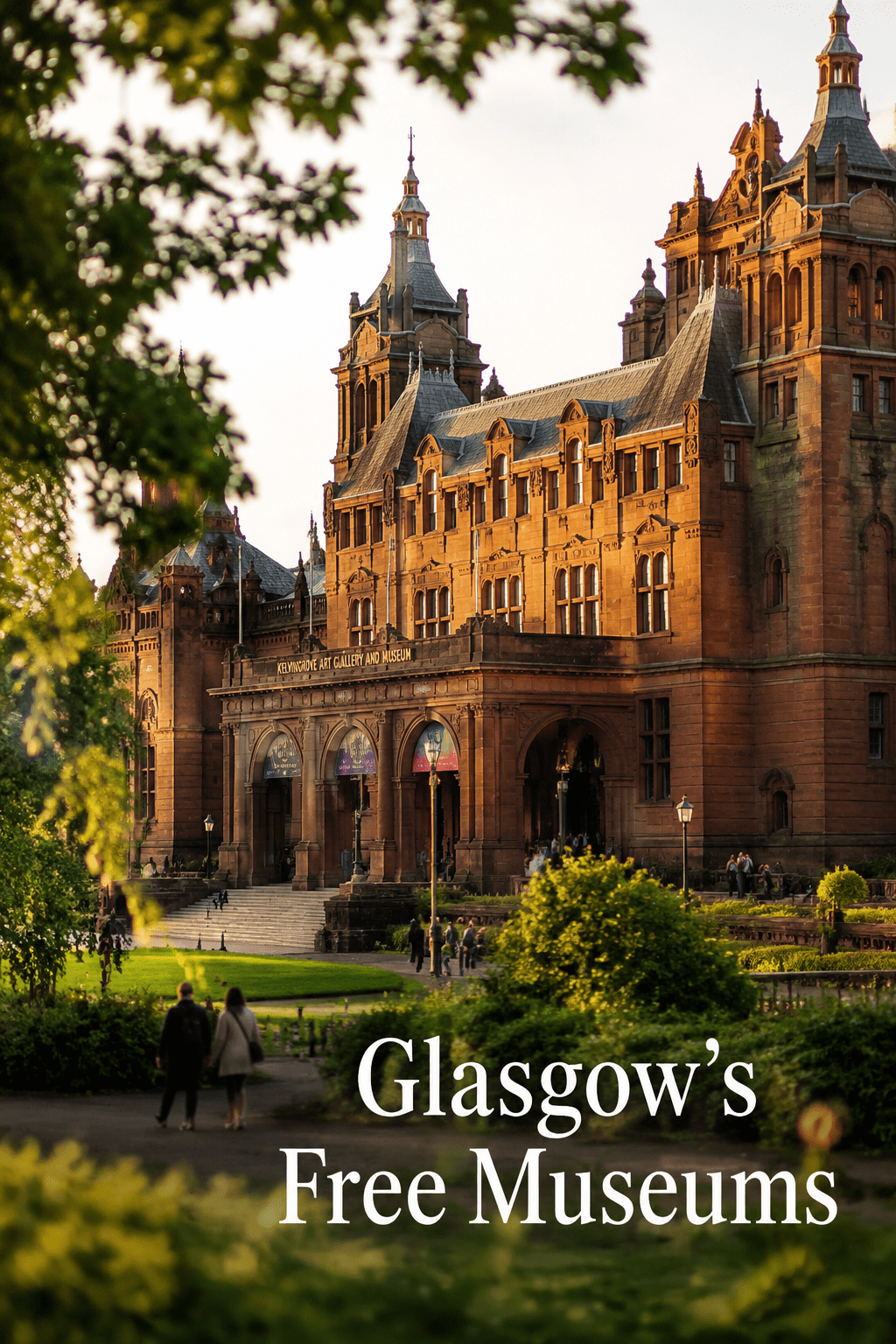
Kelvingrove Art Gallery and Museum
This is the one attraction every visitor should see. Kelvingrove holds over 8,000 objects across more than 20 themed galleries, including paintings by Dalí, Botticelli, and Monet. But what makes it special is the mix: a Spitfire airplane hangs from the ceiling in the same building as a taxidermy elephant and a magnificent Lewis pipe organ that still plays live recitals [3]. Admission is completely free.
Tip: Go on a weekday morning to avoid school groups. The café inside is excellent for lunch.
Glasgow Gallery of Modern Art (GoMA)
GoMA sits in Royal Exchange Square and is Scotland’s most visited contemporary art gallery [2]. It covers work from the 1950s to today, with pieces by Andy Warhol, David Hockney, and David Shrigley. Outside the entrance stands the famous Duke of Wellington Statue, almost always wearing a traffic cone on his head — a Glasgow tradition that’s been going on for decades. Free entry.
The Burrell Collection
Recently refurbished and reopened, the Burrell Collection is housed in Pollok Country Park and contains thousands of objects spanning over 6,000 years of history across 24 galleries [2]. You’ll find Rodin sculptures, Degas paintings, medieval tapestries, Chinese ceramics, and Islamic art all under one roof. The park itself is free to walk through, and Highland cattle roam the grounds.
Glasgow Cathedral
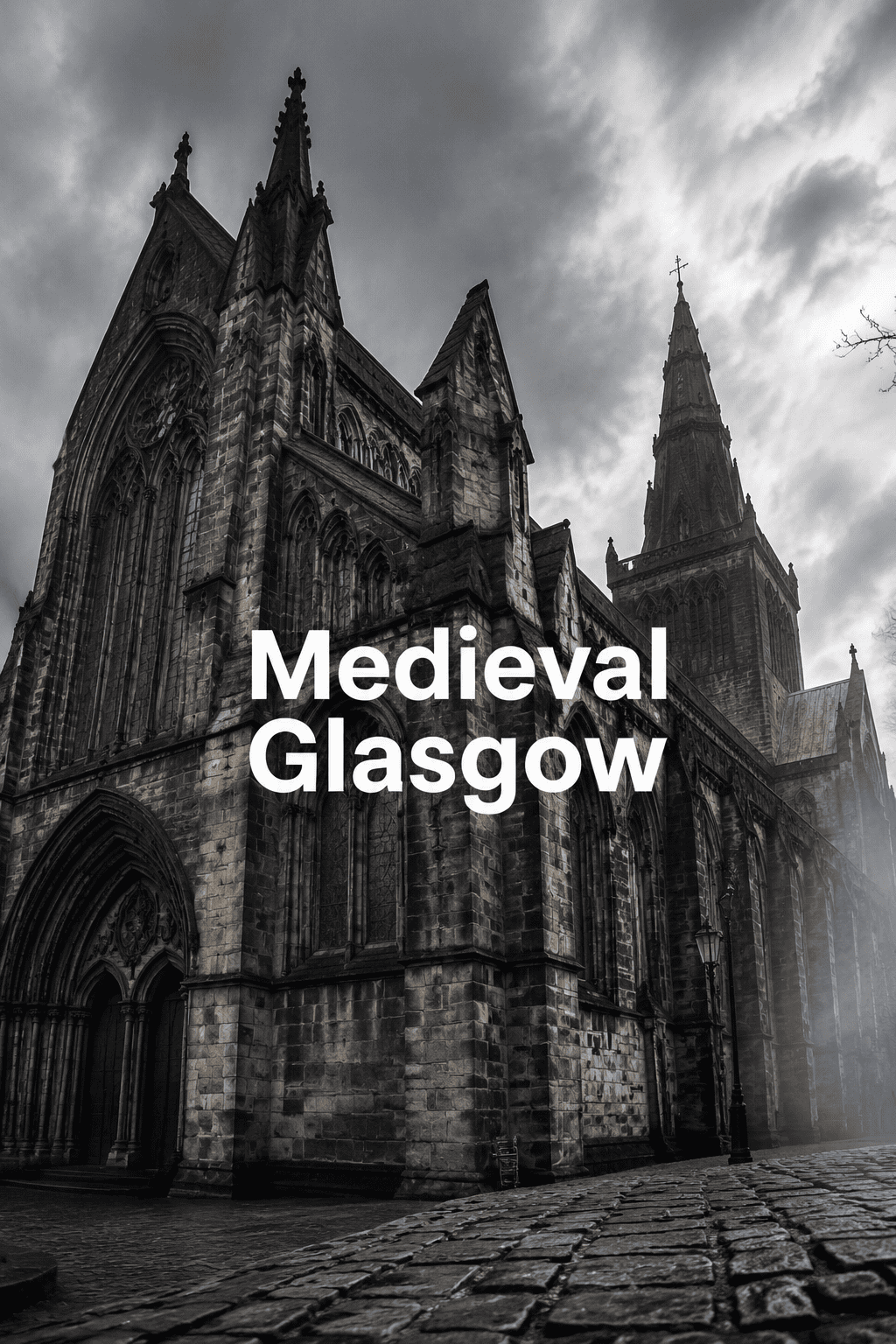
Dating back to the 12th century, Glasgow Cathedral is the only medieval cathedral on mainland Scotland to have survived the Reformation almost fully intact [3]. The Gothic architecture is extraordinary, with a 15th-century stone choir screen and the tomb of St. Mungo, the city’s patron saint, in the lower church. It’s free to visit and sits next to the fascinating Necropolis, a Victorian cemetery with sweeping city views.
Riverside Museum
Designed by the late Zaha Hadid, the Riverside Museum has one of the most distinctive buildings in Scotland — a zig-zagging zinc roof that looks like it belongs in the future [3]. Inside, you’ll find vintage cars, locomotives, bicycles, and a recreated 1900s Glasgow street. Moored outside is the Glenlee, a restored 19th-century tall ship you can board. Free admission.
Glasgow’s Neighborhoods: Where to Spend Your Time
Beyond the headline attractions, knowing which neighborhoods to explore makes a huge difference to your trip.
The West End
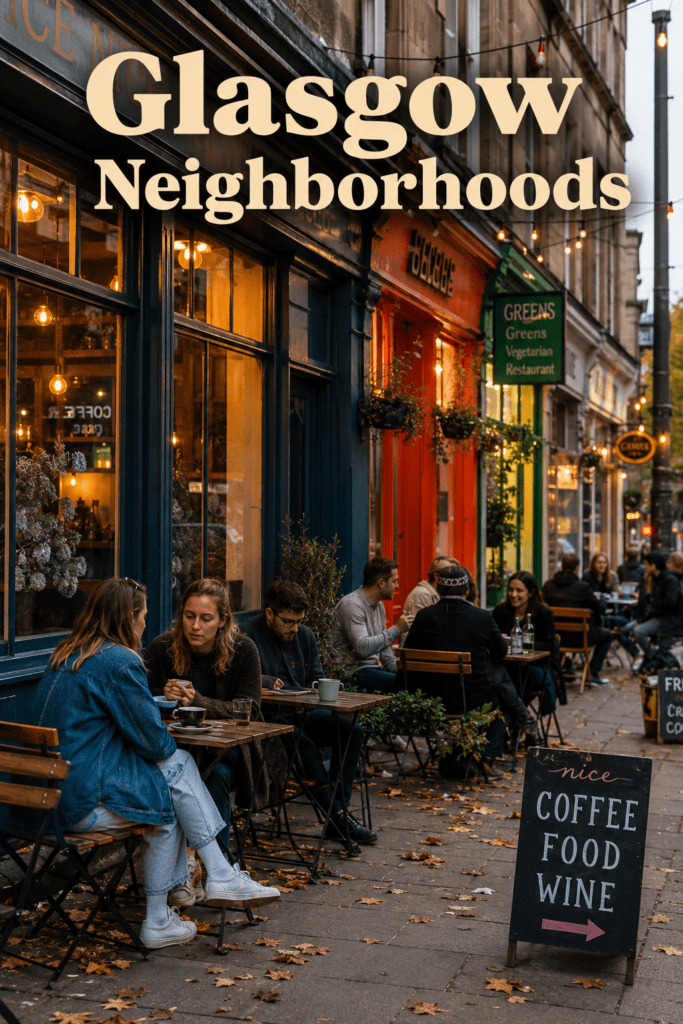
This is where most first-time visitors feel most at home. The West End is centered around Byres Road and the area around Kelvingrove Park, packed with independent cafes, bookshops, restaurants, and bars. The Glasgow Botanic Gardens and the Victorian glasshouse known as Kibble Palace are here too — both free and beautiful on a clear day.
Best for: First-timers, food lovers, those staying near Kelvingrove.
Merchant City
Just east of the city center, Merchant City is Glasgow’s historic trading district, now full of design studios, galleries, restaurants, and weekend markets. The architecture here is stunning: 18th and 19th-century warehouses converted into stylish spaces. It connects directly to George Square, the city’s main civic hub established in 1781 and named after King George III [3].
Southside
Less touristy but genuinely worth a visit. The Southside is home to Pollok Country Park (where the Burrell Collection sits), the excellent Tramway arts venue, and some of the city’s best independent restaurants. It’s also where you’ll find Victoria Road, a street that locals love for its vintage shops and cafes.
The City Centre
Buchanan Street is Glasgow’s main shopping street and a good orientation point. The Lighthouse, Charles Rennie Mackintosh’s first public commission, sits just off here and serves as Scotland’s Centre for Design and Architecture [6]. It’s the ideal starting point for a Mackintosh architectural tour of the city.
Charles Rennie Mackintosh: Glasgow’s Architectural Genius
If you have any interest in architecture or design, Glasgow is one of the best cities in the world to visit. Charles Rennie Mackintosh (1868–1928) left a remarkable legacy here, and his work is unlike anything else in the UK.
Key Mackintosh sites to visit:
- The Lighthouse (Mitchell Street) — free entry to the permanent exhibition
- Mackintosh at the Willow (Sauchiehall Street) — a restored tea room with guided tours
- House for an Art Lover (Bellahouston Park) — built posthumously from his original 1901 designs
- Glasgow School of Art — partially restored after fires; check current access before visiting
“Glasgow’s Mackintosh buildings feel like they were designed a century ahead of their time. Standing inside one is genuinely unlike any other architectural experience in Britain.”
If you’re planning a broader Scotland trip, our Scotland ultimate bucket list guide covers the best destinations across the whole country, including how Glasgow fits into a longer itinerary.
What to See in Glasgow Scotland With Kids and Families
Glasgow is genuinely family-friendly, especially because so many of its best attractions are free. Here’s what works well with children:
| Attraction | Age Range | Cost |
|---|---|---|
| Kelvingrove Museum | All ages | Free |
| Riverside Museum | 5+ | Free |
| Burrell Collection | 8+ | Free |
| Pollok Country Park | All ages | Free |
| Go Ape, Aberfoyle | 6+ | Paid |
| Glasgow Science Centre | All ages | Paid |
Pollok Country Park has adventure playgrounds and Highland cattle that kids love [1]. Kelvingrove Park has play areas and a duck pond. For older kids and teens, the Glasgow Science Centre on the south bank of the Clyde has interactive exhibits and an IMAX cinema.
If you’re looking for day trips, the Trossachs National Park is about an hour away and has walking trails and outdoor activities suitable for families [1].
Glasgow Food, Drink, and Music Scene
Glasgow’s food scene has changed dramatically in the last decade. The city now has a strong independent restaurant culture, with particular strengths in:
- Scottish seafood: Crabshakk in the West End is a local institution
- South Asian food: Glasgow has some of the best curry in the UK, particularly along the “Curry Mile” on Sauchiehall Street
- Craft beer: Drygate Brewery and Tennent’s Wellpark Brewery both offer tours
- Coffee: The West End has a thriving specialty coffee scene
For live music, Glasgow punches well above its weight. King Tut’s Wah Wah Hut, Barrowland Ballroom, and the O2 Academy all have strong reputations, and the city is consistently ranked among the UK’s best live music destinations [8].
Good to know: Glasgow’s nightlife centers around the West End and Merchant City. Most venues stay open until 3am on weekends.
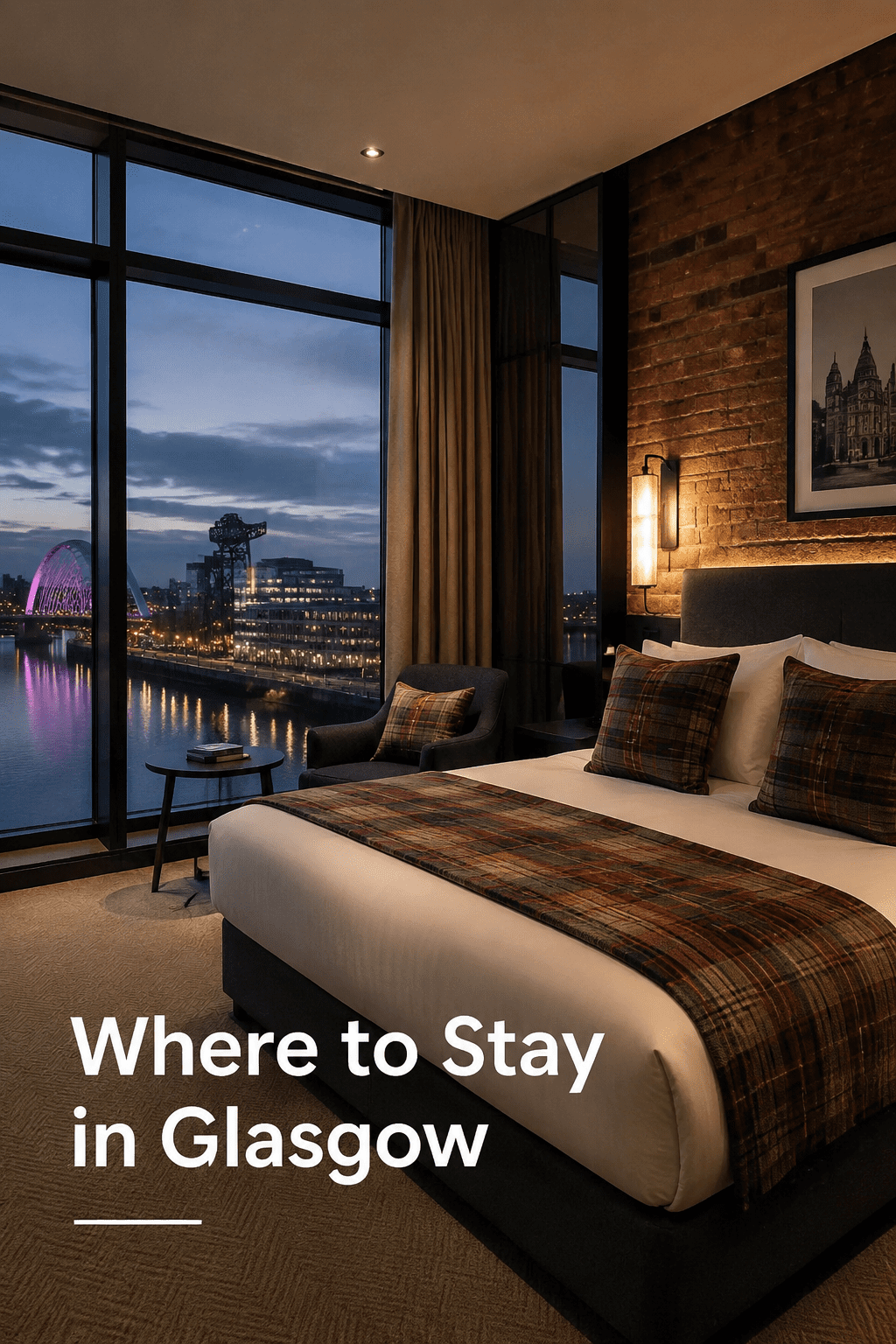
Where to Stay in Glasgow: Accommodations for Every Budget
Glasgow has a solid range of accommodation options, and prices are noticeably lower than Edinburgh, especially during peak summer months.
Budget (£40–£80/night)
- Safestay Glasgow — well-located hostel near the city center, private rooms available
- easyHotel Glasgow — no-frills but clean, central location near Sauchiehall Street
- Premier Inn Glasgow City Centre — reliable chain, often has deals booked in advance
Mid-Range (£80–£160/night)
- Grasshoppers Hotel — small, characterful hotel above Central Station with excellent reviews
- Hotel Indigo Glasgow — stylish boutique hotel in a converted Victorian building, great location
- Kimpton Blythswood Square — one of the best mid-range options in the city, in a stunning Georgian building
Luxury (£160+/night)
- Radisson RED Glasgow — contemporary design hotel near the SECC, ideal for 2026 Commonwealth Games visitors
- The Balmoral… (note: that’s Edinburgh) — in Glasgow, the Kimpton Blythswood Square steps up to luxury territory with its spa and rooftop bar
Where to stay if it’s your first visit: The West End gives you walkable access to Kelvingrove, the Botanic Gardens, and Byres Road. The City Centre is better if you’re attending events or want easy transport links.
2026 Commonwealth Games note: Book accommodation early if you’re visiting between July and August 2026. The Games are bringing significant visitor numbers to the city, and central hotels are filling up fast [4].
If you’re also planning time in Scotland’s capital, check out our Edinburgh 4-day itinerary — the two cities are only 50 minutes apart by train.
Practical Tips for Visiting Glasgow
Getting there:
- Glasgow has two airports: Glasgow International (GLA) and Glasgow Prestwick (PIK). GLA is closer to the city center.
- From London, the train takes about 4.5 hours and is often cheaper than flying when booked early.
Getting around:
- The city center and West End are very walkable.
- The Glasgow Subway (nicknamed “the Clockwork Orange”) is useful for getting between the West End and City Centre. A day ticket costs around £4.50.
- Buses cover the Southside well.
Best time to visit:
- May to September for the best weather (though “best” is relative in Scotland).
- December for the Christmas market at George Square.
- 2026 summer if you want to catch the Commonwealth Games atmosphere.
Money:
- Most attractions are free, so your main costs will be food, accommodation, and transport.
- Glasgow is significantly cheaper than London and slightly cheaper than Edinburgh for most things.
For broader Scotland trip planning, our What to See in Scotland guide covers the full country in detail.
FAQ: What to See in Glasgow Scotland
Is Glasgow worth visiting as a first-time Scotland traveler?
Yes, absolutely. Glasgow is often skipped in favor of Edinburgh, but it has more free museums, a better food scene, and a more authentic local atmosphere. Most visitors say it surprised them.
How many days do you need in Glasgow?
Two to three days is enough to cover the main attractions. Four or five days lets you explore neighborhoods, take day trips, and really settle in [8].
Is Glasgow safe for tourists?
Yes. Glasgow has a reputation that’s largely outdated. The city center and West End are very safe for tourists. Standard urban awareness applies, especially at night.
What is Glasgow most famous for?
The city is known for its Victorian architecture, Charles Rennie Mackintosh design heritage, world-class free museums, and its live music scene. It was also the UK’s second city of the British Empire.
Can I visit Glasgow and Edinburgh on the same trip?
Easily. The two cities are 50 minutes apart by train, and trains run frequently throughout the day. Many travelers do both in a week.
Is Glasgow expensive?
Not compared to most major UK cities. The biggest saving is that most top museums are free. Accommodation and food are cheaper than London and roughly on par with or slightly below Edinburgh.
What’s the best free thing to do in Glasgow?
Kelvingrove Art Gallery and Museum is the standout free attraction. It’s genuinely world-class and takes at least two to three hours to explore properly [3].
What neighborhoods should I explore beyond the tourist trail?
The Southside (especially Victoria Road and Shawlands) and the East End (around the Barras market) give you a more local Glasgow experience.
Is Glasgow good for a weekend trip?
Yes, it’s one of the best weekend city break destinations in the UK. Two days is enough to hit the highlights, and the city is compact enough that you won’t waste time on transport.
What’s happening in Glasgow in 2026?
Glasgow is hosting the 2026 Commonwealth Games, making it a major international destination this year. The event is bringing infrastructure improvements and a packed cultural calendar [4].
Is Glasgow good for solo travelers?
Very much so. The locals are famously friendly, the city is easy to navigate, and the bar and music scene makes it easy to meet people.
What’s the difference between Glasgow and Edinburgh for travelers?
Edinburgh is more scenic and historic, with the castle and the Royal Mile. Glasgow is grittier, more urban, has better museums, a stronger food and music scene, and feels more lived-in. They complement each other well.
Conclusion: Why Glasgow Deserves a Spot on Your Scotland Itinerary
Glasgow doesn’t try to compete with Edinburgh’s postcard looks, and that’s exactly what makes it worth visiting. It’s a city that rewards curiosity: free world-class museums, architecture that genuinely stops you in your tracks, neighborhoods full of independent businesses, and locals who are among the friendliest you’ll meet anywhere in the UK.
Your next steps:
- Book accommodation early if you’re visiting in summer 2026 due to the Commonwealth Games
- Start with Kelvingrove on your first morning — it sets the tone for the whole trip
- Base yourself in the West End for the best mix of walkability and local atmosphere
- Don’t skip the Necropolis — it’s free, atmospheric, and most tourists walk right past it
- Pair Glasgow with Edinburgh for a complete Scottish city experience (just 50 minutes apart by train)
If you’re building a broader Scotland trip, our Scotland ultimate bucket list is a great next read. And if you enjoy discovering underrated European cities, you might also love our guides to what to see in Athens beyond the Acropolis and hidden gems in Amsterdam — cities that, like Glasgow, have far more to offer than their reputation suggests.
Glasgow is the kind of city that people visit once and then tell everyone about. Go find out why.
References
[1] Tourism G186534 Glasgow Scotland Vacations – https://www.tripadvisor.com/Tourism-g186534-Glasgow_Scotland-Vacations.html
[2] Weekend Itinerary – https://www.visitscotland.com/places-to-go/glasgow/things-to-do/weekend-itinerary
[3] D740 – https://www.viator.com/Glasgow/d740
[4] Glasgow – https://www.visitbritain.com/en/destinations/scotland/glasgow
[5] A Guide To Glasgow Attractions 25 Things To Do In Glasgow Scotland – https://independenttravelcats.com/a-guide-to-glasgow-attractions-25-things-to-do-in-glasgow-scotland/
[6] Glasgow Things To Do – https://www.wanderlustchloe.com/glasgow-things-to-do/
[7] Things To Do In Glasgow.d1334.travel Guide Activities – https://www.expedia.com/Things-To-Do-In-Glasgow.d1334.Travel-Guide-Activities
[8] Glasgow 5 Nights – https://community.ricksteves.com/travel-forum/scotland/glasgow-5-nights