Last updated: October 1, 2026
Quick Answer
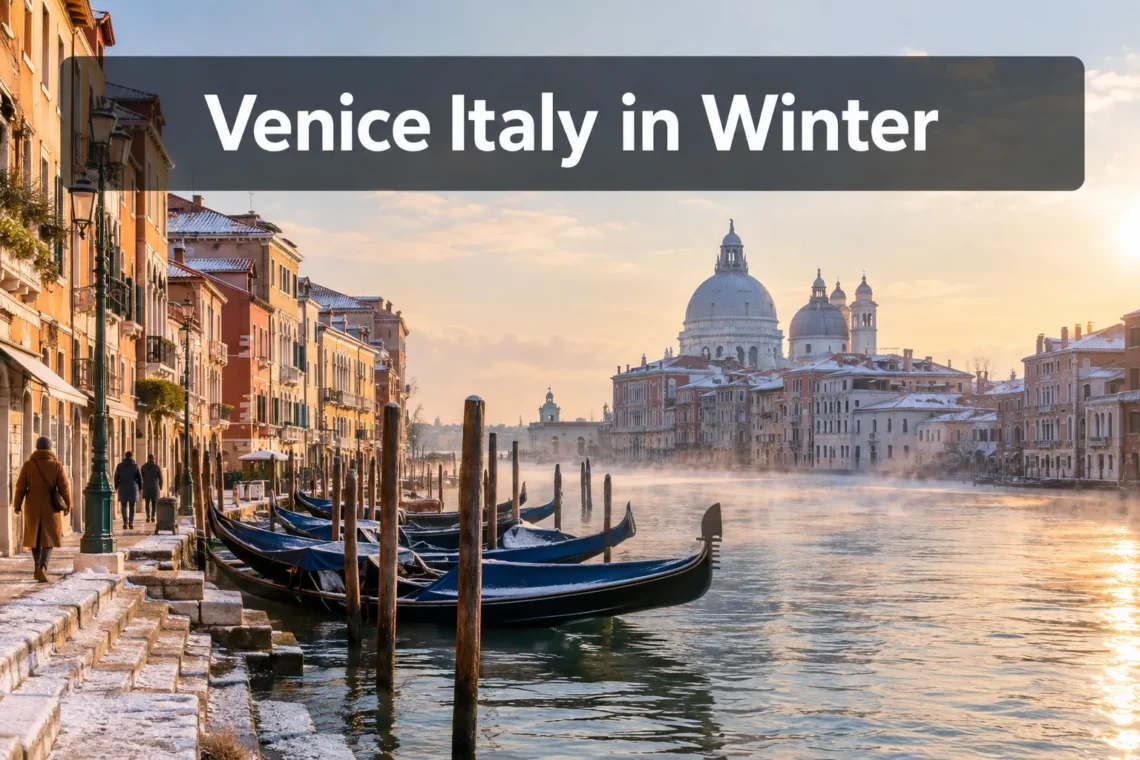
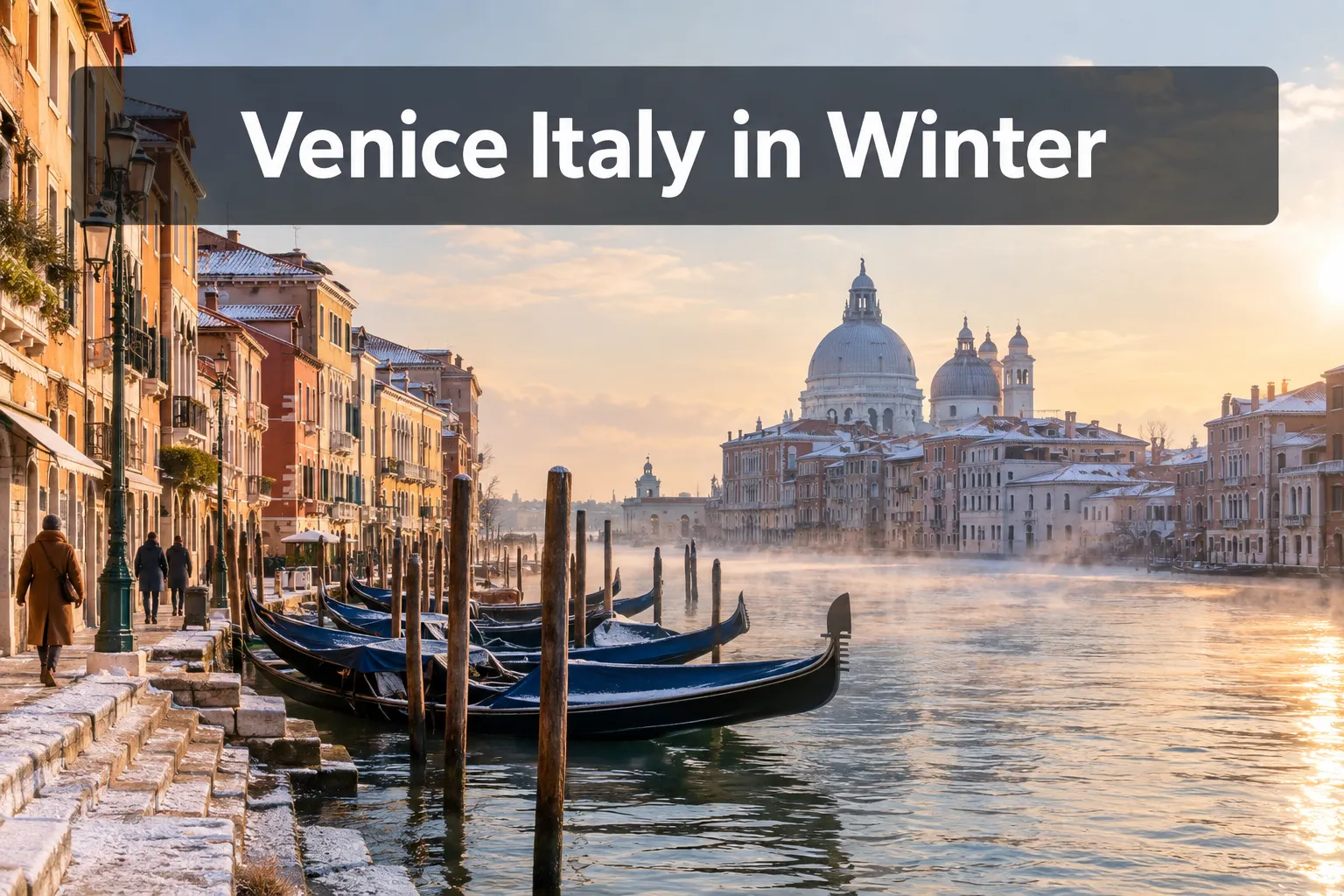
Venice Italy in winter trades gondola traffic jams for empty bridges, fog-draped canals, and an ice rink in the middle of a 700-year-old square. You get lower prices, real Venetian neighborhoods instead of cruise-ship crowds, and seasonal events like Carnival and Natale di Vetro that simply don’t exist in July. If you want the romantic, quiet, authentic version of Venice, winter is it.
Key Takeaways
- Venice Italy in winter sees far fewer tourists than peak summer months, especially on weekdays.
- Daytime temperatures usually sit between 3°C and 9°C (37°F to 48°F), with fog common in December and January.
- Venice Carnival 2026 runs from January 31 to February 17, bringing masks, parades, and street theater.
- Campo San Polo hosts a seasonal outdoor ice rink that only exists in the cooler months.
- Hotel rates and tour prices drop noticeably compared to summer, especially January through early February.
- Acqua alta (high water flooding) is more common in winter but manageable with basic precautions.
- You cannot swim in Venice’s canals in any season, winter included, for safety and water quality reasons.
- Murano’s glass festivals and La Fenice’s New Year concert are winter-only cultural events.
What Is Venice Italy in Winter Really Like
Venice Italy in winter feels like a different city from the one on postcards. The canals turn glassy and still, fog rolls in off the lagoon, and you can actually hear your own footsteps on the stone bridges.
Locals come back out. Shopkeepers reopen the bacari (small wine bars) that summer crowds push them to abandon. Fishermen still work the lagoon at dawn, and you’ll see Venetians doing errands by boat instead of posing for photos.
The light is softer too. Low winter sun hits the Grand Canal at an angle that turns the water copper and gold in the late afternoon, something summer’s harsh midday glare rarely gives you.
Choose winter if: you want quiet streets, moody photography, and a slower pace. Skip it if: you need guaranteed sunshine or want to swim at the Lido beaches.
Is Venice Worth Visiting in Winter (and When’s the Best Time)
Yes, Venice is absolutely worth visiting in winter, and many seasoned travelers argue it’s the best version of the city. The official Venice tourism board promotes winter as a season of its own, with themed itineraries built around fog, festivals, and fewer crowds.
The best time to visit Venice in winter depends on what you want:
- Early December: Christmas markets, lights, and mild crowds before the holiday rush.
- Late December to early January: Festive atmosphere, New Year concerts, higher prices around Christmas week.
- Mid-January to late January: The quietest, cheapest window of the whole year.
- Late January to mid-February: Venice Carnival, bigger crowds again but a totally different energy.
Travel experts at Fodor’s list winter among their top reasons to visit Venice precisely because the city empties out and shows its real character. If you’re also curious about nearby itineraries, check out this 2-day Venice itinerary guide for pairing your winter trip with a tight schedule.
11 Magical Things You Can Only Do in Venice Italy in Winter
Venice Italy in winter unlocks experiences that summer’s heat, crowds, and tourist schedules simply don’t allow. Here are 11 things unique to the cold season.
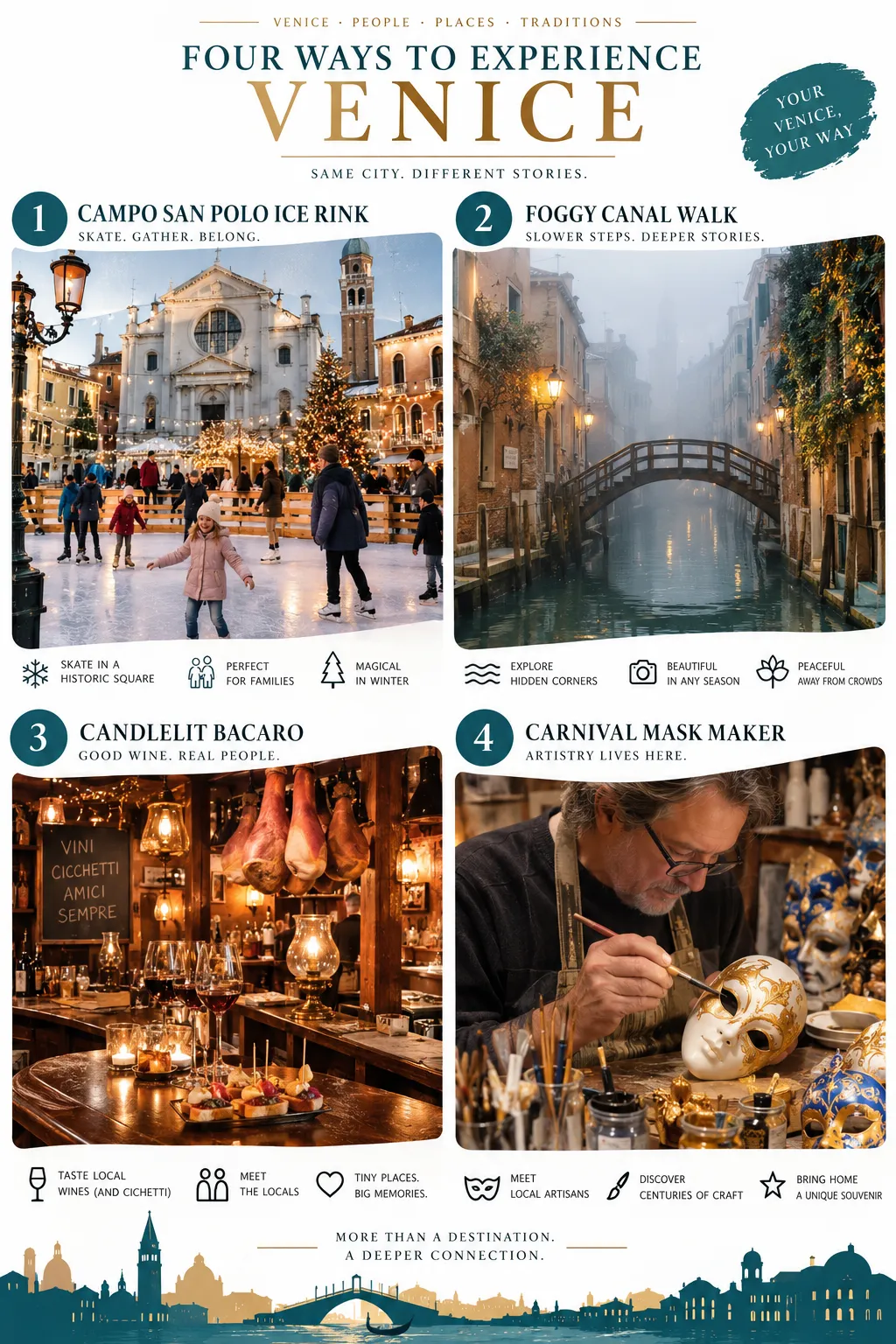
- Skate at Campo San Polo’s ice rink. This seasonal outdoor rink pops up in one of Venice’s largest squares and disappears by spring, according to the Venezia Unica tourism site.
- Walk through genuine fog. Thick lagoon mist rolls through the canals most mornings in December and January, something summer’s clear heat never produces.
- Browse Christmas markets and city lights. December 2026 brings wooden stalls, mulled wine, and citywide illuminations that vanish after the holidays, per Venice travel guides.
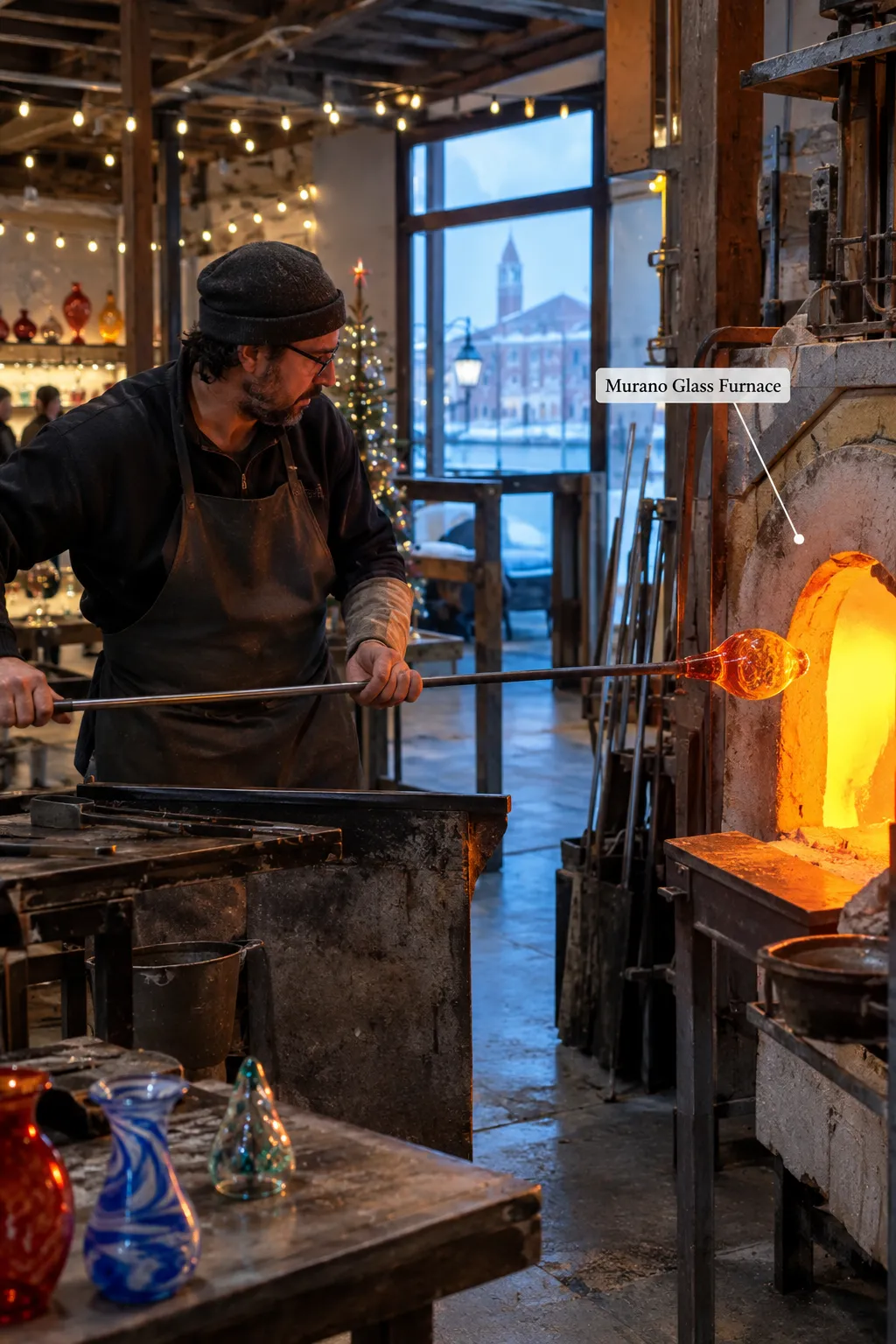
- See Murano’s Natale di Vetro glass festival. Murano’s glassmakers run special winter exhibitions tied to the holiday season.
- Catch The Venice Glass Week 2026 events. Some glass-art programming extends into the cooler months, with official event listings confirming the 2026 schedule.
- Attend La Fenice’s Concerto di Capodanno. The New Year’s concert at Teatro La Fenice is a once-a-year cultural event exclusive to the season.
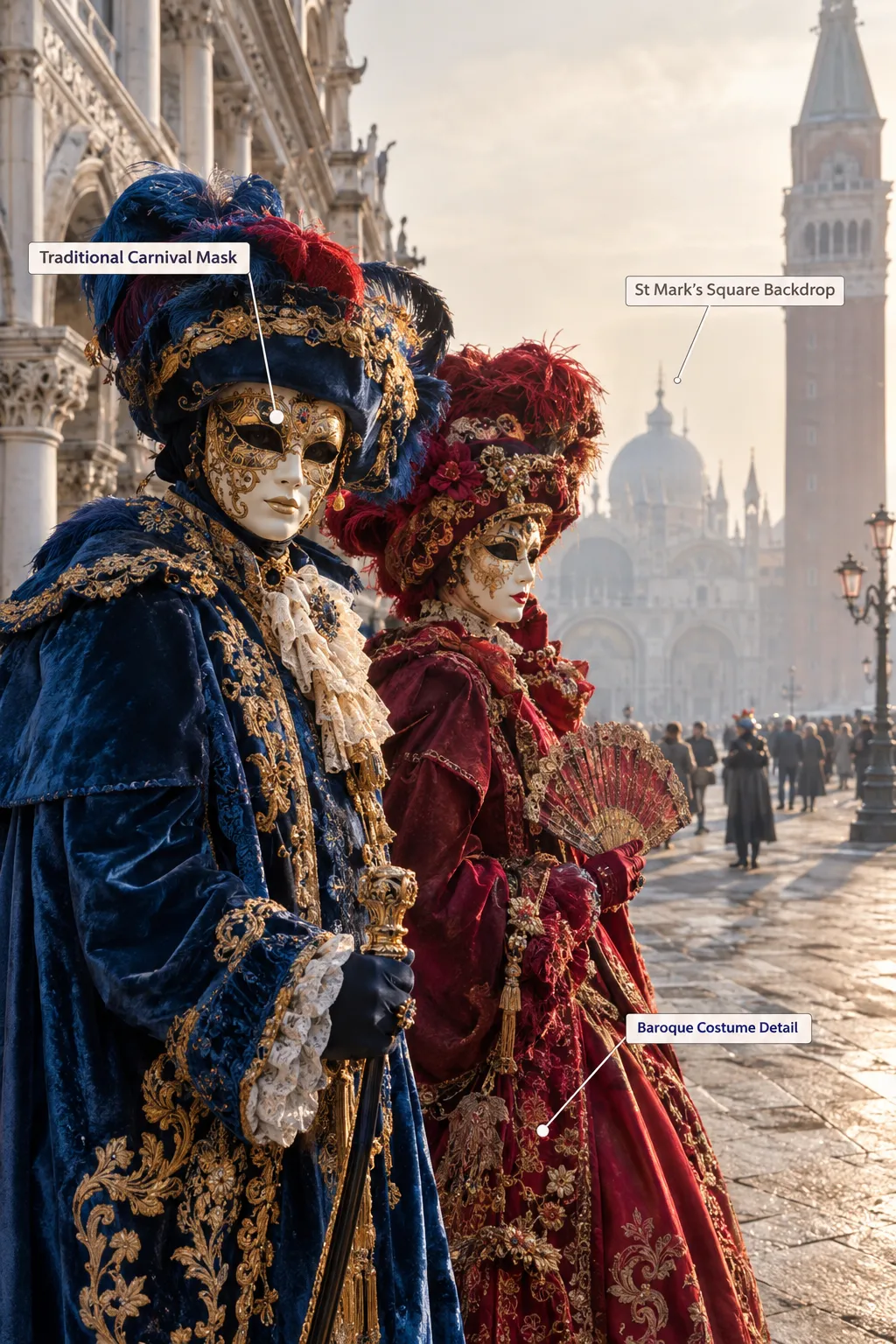
- Dress up for Venice Carnival. Mask-wearing, parades, and street performances take over from late January through mid-February.
- Have St. Mark’s Square almost to yourself. Early winter mornings offer empty views impossible to get in July.
- Book a festive lagoon dinner. Luxury properties run Santa-themed and New Year lagoon events only in December and January, as noted in the Aman Venice festive brochure.
- Photograph snow on rooftops. Rare but real, light snow occasionally dusts Venice’s terracotta roofs in deep winter.
- Enjoy warm bacaro culture. Tiny wine bars fill with locals seeking shelter from the cold, giving you an authentic evening scene summer tourism crowds out.
Venice Italy in Winter Weather and Temperature
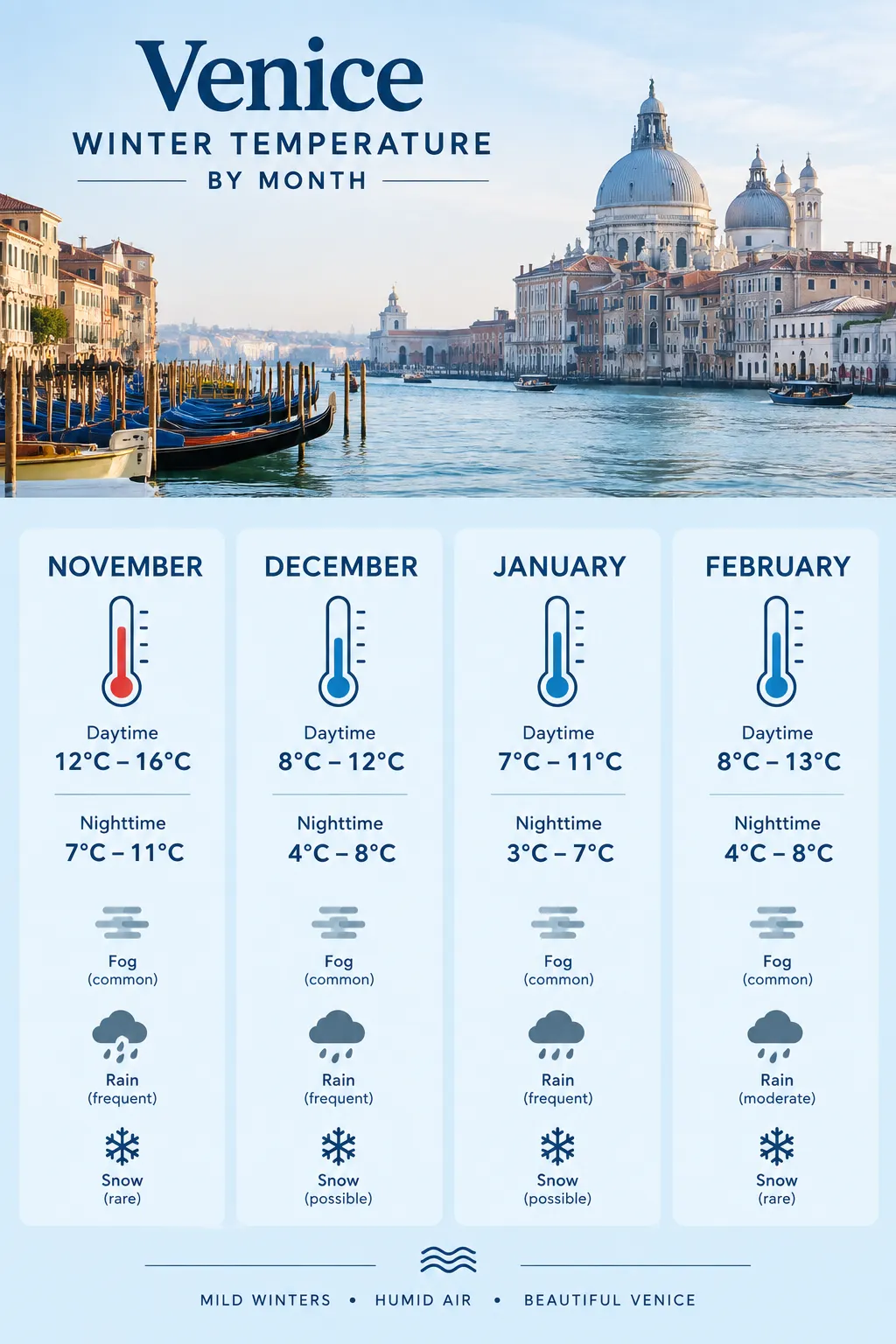
Venice Italy in winter stays mild compared to much of northern Europe, with daytime highs typically between 3°C and 9°C (37°F to 48°F). Fog, light rain, and occasional frost are more common than snow.
| Month | Typical Daytime Temp | Weather Notes |
|---|---|---|
| November | 8-13°C (46-55°F) | Rain likely, early fog |
| December | 4-9°C (39-48°F) | Fog common, festive lights |
| January | 2-7°C (36-45°F) | Coldest month, occasional frost |
| February | 4-9°C (39-48°F) | Carnival crowds, mild cold |
Common mistake: packing only a light jacket. Humid cold off the lagoon feels sharper than the thermometer suggests.
How Crowded Is Venice in Winter vs Summer
Venice in winter is dramatically less crowded than in summer, especially on weekdays outside Carnival and Christmas week. You’ll notice the difference immediately at St. Mark’s Square and the Rialto Bridge.
Summer brings cruise ship passengers, school groups, and day-trippers packed onto the same few bridges. Winter thins that out to a fraction, except during Carnival weekends when crowds spike again, though still less than peak July and August.
- January weekdays: lightest crowds of the year.
- December holiday week: moderate crowds, festive atmosphere.
- Carnival weekends (Jan 31-Feb 17, 2026): heavy crowds, but concentrated in specific squares rather than everywhere.
If crowd-free streets are your priority, aim for mid-January. For more general city highlights regardless of season, this top 10 things to do in Venice guide is a useful companion.
Venetian Carnival Dates and What to Expect
Venice Carnival 2026 runs from January 31 to February 17, according to the official Carnival event guide. Expect elaborate masks, costumed parades, and nightly events across the historic center.
Highlights typically include:
- The Flight of the Angel over St. Mark’s Square.
- Costume contests in major squares.
- Masquerade balls, some ticketed and formal, others free and open-air.
- Street performers and live music through the evenings.
Decision rule: go during Carnival if you want spectacle and don’t mind crowds. Skip it if you came for Venice’s quiet winter solitude, and visit the week before or after instead.
Where to Stay in Venice Italy Winter on a Budget
Winter is the cheapest season to book accommodation in Venice, with the lowest rates typically found in January outside Carnival dates. Neighborhoods away from St. Mark’s Square offer the best value without sacrificing convenience.
- Cannaregio: budget-friendly, local feel, close to the train station.
- Santa Croce: quieter, walkable to major sights, generally lower rates.
- Dorsoduro: artsy, slightly pricier, but good winter deals outside peak weeks.
- Mestre (mainland): cheapest option, short train ride into Venice proper.
Edge case: avoid booking during Carnival weekends if you’re on a strict budget, since rates jump even in off-the-beaten-path neighborhoods.
Is It Safe to Visit Venice in Winter Flooding Season
Yes, visiting Venice during flooding season is safe as long as you plan around acqua alta (high water) events, which are more frequent between October and January. Local systems now manage this far better than in past decades.
Venice uses the MOSE flood barrier system and public flood alerts to warn residents and visitors ahead of high water events. Raised walkways appear in low-lying squares like St. Mark’s when needed.
- Check tide forecasts posted around the city or via local apps.
- Pack waterproof boots just in case.
- Avoid scheduling tight connections during known high-tide windows.
Common mistake: assuming all of Venice floods constantly. In reality, most acqua alta events are brief, localized, and predictable.
What to Pack for a Venice Italy Winter Trip
Pack layers, waterproof footwear, and a windproof coat for a Venice Italy winter trip. The damp lagoon cold feels colder than the actual temperature.
- Waterproof boots with good grip for wet stone bridges.
- A warm, windproof coat (down or wool blend).
- Layers you can add or remove, since indoor spaces run warm.
- A compact umbrella for sudden winter showers.
- Gloves and a scarf for early morning photo walks.
If you’re combining this trip with other cold-weather European destinations, this packing guide for winter in France covers similar layering strategies that apply well to Venice too.
Best Restaurants and Indoor Attractions Venice Winter
Winter is the best season to enjoy Venice’s indoor culture, since museums, churches, and historic bacari are far less crowded than in summer. Reservations are easier to get and lines are shorter.
- Museums: Doge’s Palace and the Gallerie dell’Accademia see shorter lines in winter.
- Churches: Basilica di San Marco is calmer outside summer tour-group hours.
- Bacari: small wine bars serving cicchetti (Venetian tapas) fill up with locals, not tourists.
- Teatro La Fenice: winter concert season runs through the cold months.
For broader Italian indoor and cultural ideas beyond Venice, see this Florence itinerary guide for pairing cities on one trip.
Venice Italy Winter Prices vs Summer Costs
Venice Italy winter prices run noticeably lower than summer costs across hotels, tours, and even some restaurants. The biggest savings appear in January outside Carnival dates.
- Hotels: often 20-40% cheaper than July and August rates.
- Gondola rides: prices stay fairly fixed year-round, but you’ll wait less.
- Guided tours: more availability and sometimes lower group rates in low season.
- Day-trip visitor fees: Venice’s entry fee program for day-trippers has shifted visitor patterns, with reporting on 2026 tourism management noting its effect on crowd distribution across seasons.
Quick example: a hotel room running 250 euros a night in August might drop to 130-160 euros in mid-January.
Can You Swim in Venice Canals in Winter
No, you cannot swim in Venice’s canals in winter or any other season. The canals carry boat traffic, have variable water quality, and pose real safety risks year-round.
If you want swimming during a Venice trip, head to the Lido beaches in warmer months instead, or treat winter as a season for walking, photography, and indoor culture rather than water activities.
Hidden Gems and Local Experiences Venice Winter
Winter is when Venice’s quieter neighborhoods and small festivals come alive without tourist crowds drowning them out. This is the season to go beyond St. Mark’s Square.
- Murano glass workshops: watch artisans work during slower winter hours, tied to events like Natale di Vetro.
- Burano’s quiet lanes: the famously colorful island feels almost empty on winter weekdays.
- Local fish markets at dawn: the Rialto market runs on local time, not tourist time, in winter.
- Neighborhood bacari crawls: ask locals, not guidebooks, for their favorite cicchetti spots.
For more under-the-radar Italian spots beyond Venice, this hidden gems in Italy guide pairs well with a winter Venice trip, as does a side trip inspired by Bruges in winter if you’re building a broader European winter itinerary. If you’d rather extend into the countryside, a Piedmont Italy itinerary makes a scenic winter add-on.
FAQ
Is Venice too cold to visit in winter?
No. Daytime temperatures usually stay between 3°C and 9°C, cold but manageable with proper layers.
What’s the cheapest month to visit Venice?
January, outside Carnival dates, typically offers the lowest hotel and tour prices.
Does it snow in Venice?
Rarely, but light snow does occasionally dust rooftops and squares in deep winter.
How many days do I need in Venice in winter?
Three to four days covers the main sights, a Murano or Burano trip, and time for slow wandering.
Is Carnival worth planning a trip around?
Yes, if you want costumes, parades, and energy. Skip it if you prefer Venice’s quieter winter side.
Are boat tours still running in winter?
Yes, most gondola and vaporetto services run year-round, though schedules may shrink slightly.
Do I need to worry about flooding as a tourist?
Minimal risk if you check tide alerts and pack waterproof shoes. Most events are short and predictable.
Can I combine Venice with other Italian cities in winter?
Yes. Florence and Verona are easy train connections and also shine in the quieter winter months.
Conclusion
Venice Italy in winter rewards travelers who trade beach weather for fog, quiet bridges, and festivals that only exist in the cold months. You’ll pay less, wait less, and see a version of the city locals actually recognize.
If you’re planning a trip, pick your window first: early December for lights, mid-January for the cheapest and quietest stretch, or late January through mid-February for Carnival energy. Pack layers, check tide alerts, and book indoor attractions in advance since winter hours can run shorter.
Start with two or three days focused on the historic center, then add Murano or Burano if the schedule allows. Venice in winter isn’t a compromise. It’s arguably the realest version of the city you’ll ever get.