

Last updated: October 17, 2026
Quick Answer: The best markets in Paris include Marché des Enfants Rouges, Marché Bastille, Marché d’Aligre, and the Puces de Saint-Ouen flea market. Paris has over 80 open-air and covered markets spread across the city, running on specific days of the week. Whether you love fresh food, vintage finds, or flowers, there’s a market here for every kind of traveler.
Key Takeaways
- Paris has more than 80 official markets, from daily covered halls to weekly open-air food markets
- Marché des Enfants Rouges (75003 Paris) is the oldest covered market in the city, dating to 1615
- Marché Bastille runs Thursday and Sunday on Boulevard Richard Lenoir in the 75012 Paris area
- Marché d’Aligre is widely considered the most authentic everyday market in the city
- Most food markets open around 7 or 8 AM and close by 1 or 2 PM – go in the morning
- You can haggle at flea markets like Puces de Saint-Ouen, but not at food markets
- Many of the best markets in Paris are open on Sunday, making it a great day to explore
- Bring cash and a reusable tote bag – card readers are not always available at every stall
What Are the Most Famous Markets in Paris?
The most famous markets in Paris are Marché des Enfants Rouges, Marché Bastille, Marché d’Aligre, and the Puces de Saint-Ouen flea market. Each one has a distinct character, from gourmet food halls to sprawling antique districts. Together, they give you a full picture of how Parisians actually live, eat, and shop.
Paris has been a market city for centuries. According to Paris city records, there are more than 80 official markets operating across the capital today. That’s a lot of ground to cover, so here’s a focused list of the ones actually worth your time.
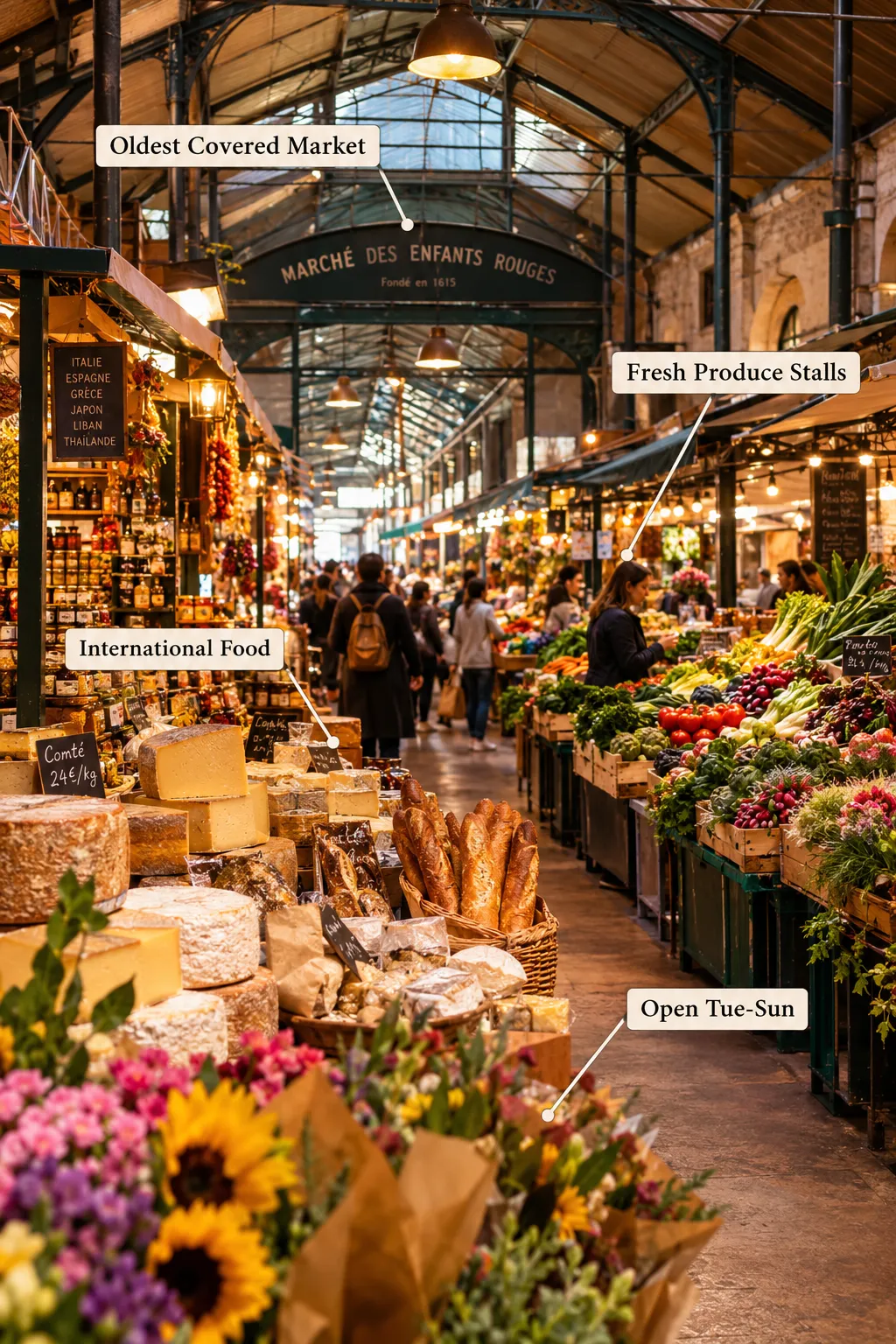
1. Marché Couvert des Enfants Rouges – A Historical and Gourmet Treasure
This is the oldest covered market in Paris, established in 1615. Located at 39 Rue de Bretagne in the Marais, 75003 Paris, it sits just a stone’s throw from the Francs-Bourgeois and the Carnavalet and Picasso museums. The market is open Tuesday through Sunday, and it draws a mix of locals and visitors who love its international food stalls – Moroccan, Japanese, Lebanese, and classic French all share the same iron-and-glass hall.
The des enfants rouges market is one of those rare places where you can grab a hot lunch, buy fresh produce, and pick up flowers all in one visit. The march des enfants rouges section is especially popular on weekend mornings. This is a firm favorite among food markets in the Marais.
- Address: 39 Rue de Bretagne, 75003 Paris
- Hours: Tue-Sat 8:30 AM – 1 PM and 4 PM – 7:30 PM, Sun 8:30 AM – 2 PM
- Metro: Filles du Calvaire (Line 8)
“The Marché des Enfants Rouges is not just a market – it’s a living piece of Paris history.”
2. Bistrot Instinct – The Awakening of Authentic Flavors
Bistrot Instinct sits near the Marais and serves as a perfect companion stop after a morning at the local market. It focuses on seasonal, locally sourced ingredients and embodies the kind of French bistro culture that makes Paris so compelling. The flavors here are honest and deeply rooted in French culinary tradition.
If you love food markets and want to sit down after browsing stalls, this is a great place to take a break. The menu changes with the seasons, so there’s always something fresh to try.
3. Marché Bastille – Parisian Excitement in All Its Splendor
Marché Bastille is one of the largest and most energetic open-air food markets in all of Paris. It runs every Thursday and Sunday morning on Boulevard Richard Lenoir, near the Paris Bastille metro station in 75012 Paris. According to Go City’s Paris market guide, it’s consistently ranked among the top food markets paris travelers should visit.
The paris bastille market stretches for nearly a kilometer along the boulevard. You’ll find fresh cheese, charcuterie, seafood, vegetables, olives, bread, and even clothing. Sunday is the busiest day – arrive before 9 AM if you want the best picks and a little breathing room.
- Best day to visit: Sunday morning
- What to buy: Rotisserie chicken, aged cheeses, fresh oysters, seasonal fruit
- Metro: Bastille (Lines 1, 5, 8)
4. Marché d’Aligre and the Beauvau Market – Best Food Market Combo in Paris
Marché d’Aligre is widely regarded as the most authentic everyday market in Paris. It combines an outdoor flea section on Place d’Aligre with a covered food hall called Marché Beauvau, making it a two-in-one experience. Lonely Planet rates it as one of the top food markets in the city for good reason.
The outdoor section has cheap vintage clothing, books, and bric-a-brac. The covered Beauvau hall inside is all about fresh food – fish, meat, cheese, and produce from small French producers. This is where you can find real French flavors without the tourist markup.
- Address: Place d’Aligre, 75012 Paris
- Hours: Tue-Sun, mornings only (closes around 1 PM)
- Tip: Go on a weekday morning for a quieter, more local experience
5. Le Bistrot de l’Oulette – French Conviviality Near the Marais
Le Bistrot de l’Oulette is a beloved spot near the Marais that captures the spirit of French conviviality. It’s not a market itself, but it’s the kind of place you end up after a morning at the march des enfants rouges or the Bastille market. The food is rooted in southwest French tradition, and the welcome is genuinely warm.
If you’re spending time in the des vosges bastille and vosges bastille saint-paul corridor, this bistro is worth a visit for lunch. It represents the best of what French food culture has to offer.
6. Baudoyer Market – The Discreet Charm of the City Center
Baudoyer Market is one of the lesser-known markets in Paris, but it has real charm. Located near Place Baudoyer in the 4th arrondissement, it runs on Wednesday and Saturday mornings. This small market is popular with locals from the Marais and the surrounding neighborhoods, and it rarely feels crowded.
It’s a good choice if you want to visit a market without the tourist rush. You’ll find fresh produce, flowers, and a few specialty food vendors. The place has a genuine neighborhood feel that’s hard to find at the bigger markets.
7. La Table d’Aligre – For Lovers of Iodized Flavors
La Table d’Aligre is a restaurant right next to the Marché d’Aligre that specializes in seafood and iodized flavors from the French coast. It’s a favorite among locals who come to the market on Saturday and Sunday mornings and then stay for lunch. The menu leans heavily on whatever is freshest at the market that day.
If you love oysters, sea urchin, or fresh fish, this is a cannot miss stop in the 75012 Paris area. The connection between the market and the kitchen here is as direct as it gets.
Best Time to Visit Paris Markets
The best time to visit paris markets is early morning, between 7:30 and 9:30 AM, when stalls are fully stocked and the atmosphere is at its most vibrant. Most food markets close by 1 or 2 PM, so arriving late means missing out on the best produce and the real Parisian morning energy.
Sunday is the single best day for market-hopping in Paris. Many of the favorite markets in the city – including Marché Bastille and Marché des Enfants Rouges – are open on Sunday and draw their biggest crowds. If you’re planning your trip around markets, build your Sunday morning around one of these.
For a quieter experience, Tuesday and Friday mornings at smaller neighborhood markets are ideal. You’ll find the same fresh food with far fewer people around.
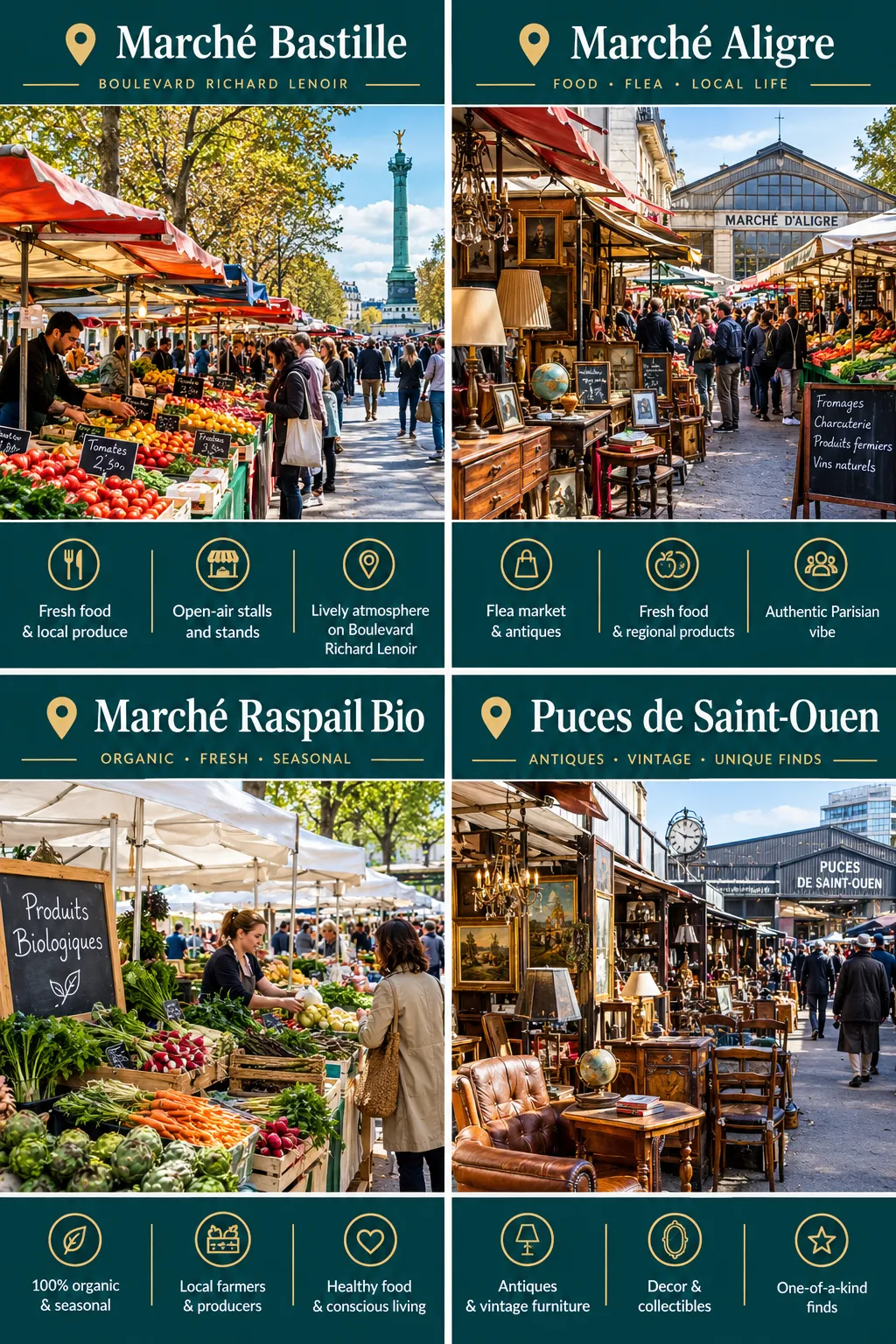
Marché Bastille vs Marché Aligre – Which Is Better?
Marché Bastille is bigger, louder, and more theatrical – it’s the market you visit for the full Parisian spectacle. Marché d’Aligre is smaller, more local, and better value – it’s where Parisians actually do their weekly shopping. Choose Bastille if it’s your first time in Paris; choose Aligre if you want something more authentic.
Both are excellent food markets. The key difference is scale and atmosphere. Bastille runs on Thursday and Sunday; Aligre runs Tuesday through Sunday. If you have time, visit both – they’re only about 15 minutes apart on foot.
Paris Flea Markets – Antiques, Vintage, and Haggling
The Puces de Saint-Ouen is the largest flea market in the world, covering around 7 hectares and hosting over 2,000 dealers. It’s located at the northern edge of Paris near the Clignancourt metro stop and runs on Saturday, Sunday, and Monday. This is where serious antique hunters and casual browsers alike find treasures paris has been accumulating for over a century.
Can you haggle at Paris flea markets? Yes – haggling is expected and accepted at flea markets like Puces de Saint-Ouen and Puces de Montreuil. Start at around 20-30% below the asking price and be polite about it. Do not try to haggle at food markets – it’s considered rude and won’t work.
Puces de Montreuil is the scrappier, cheaper alternative. It’s less polished but better for bargain hunters looking for vintage clothing, tools, and affordable bric-a-brac. Both markets are worth a visit if you love going out shopping for unique finds.
How to Get to Marché des Enfants Rouges from the Metro
Take Line 8 to Filles du Calvaire station, then walk about 5 minutes south along Rue de Bretagne. The market entrance is at number 39. Alternatively, take Line 3 to Temple – the walk from there is about 8 minutes through the heart of the Marais. The address is 75003 Paris, and the market is easy to find once you’re on Rue de Bretagne.
The Marais is very walkable, so you can combine a visit to the des enfants rouges market with a stroll past the Francs-Bourgeois, the Carnavalet and Picasso museums, and the Place des Vosges – all within easy walking distance.
Paris Flower Markets – Where to Find Them
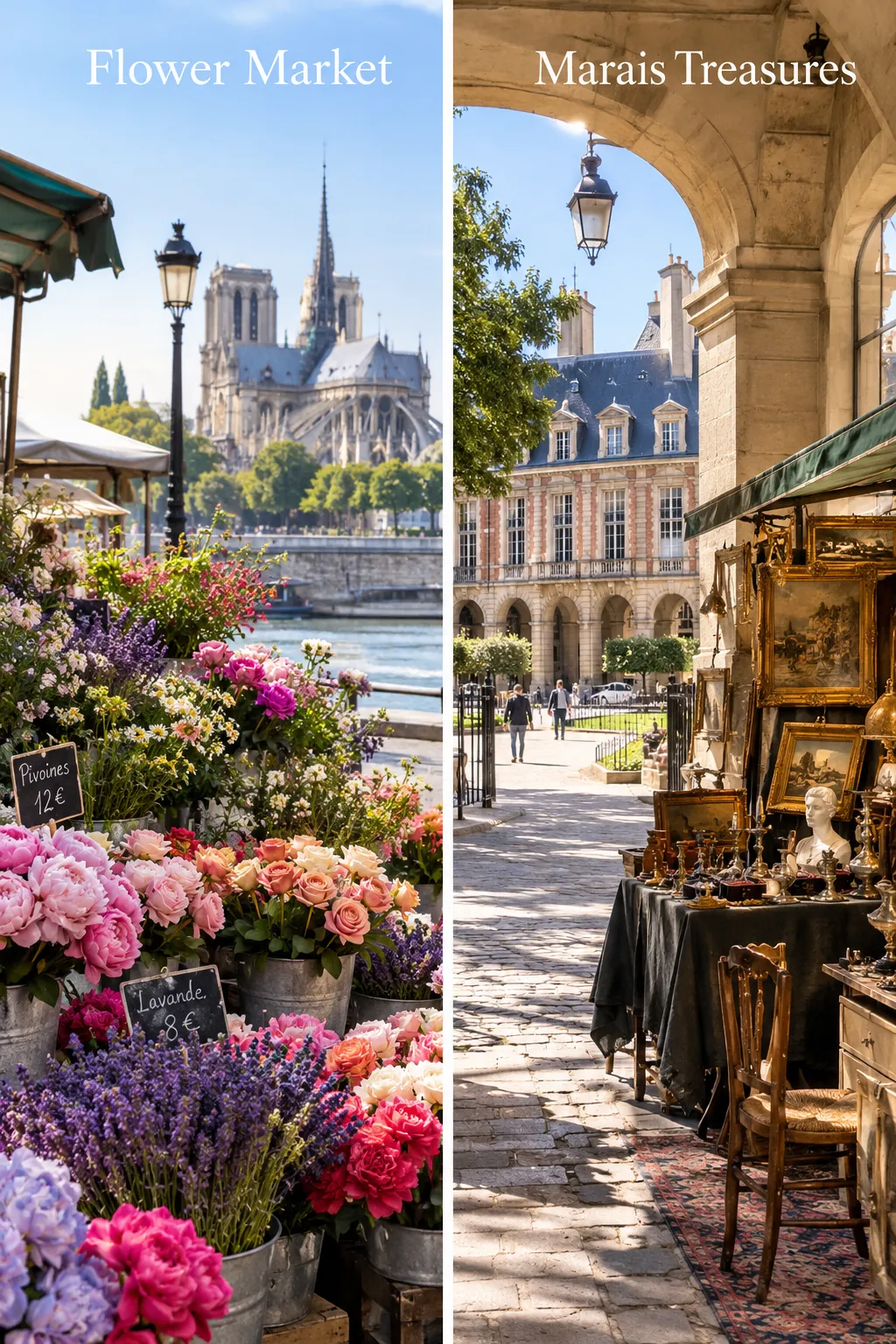
The Marché aux Fleurs Queen Elizabeth II on Ile de la Cité is the most famous flower market in Paris. It’s open every day except Sunday, when it transforms into a bird market. Located near Notre Dame on the Ile Saint Louis side of the Seine, it’s a floral oasis right in the center of the city. The dame ile saint area is one of the most scenic spots in all of Paris.
The market has been operating on the same spot since 1808, making it one of the oldest flower markets in France. You’ll find cut flowers, potted plants, seeds, and garden accessories. It’s a beautiful stop even if you’re not buying – the colors and scents are worth the visit on their own.
What to Buy at Paris Markets – Souvenirs and Food
The best things to buy at Paris markets are items you actually cannot find easily at home. Think aged French cheeses, cured meats, local honey, lavender sachets, vintage postcards, and handmade ceramics. These make far better souvenirs than anything sold in a tourist shop near the Seine.
At food markets, look for:
- Cheese: Comté, Roquefort, Camembert from small producers
- Charcuterie: Saucisson, pâté, rillettes
- Bread and pastries: From local bakers, not supermarket brands
- Seasonal produce: Strawberries in spring, mushrooms in autumn
At flea markets, look for:
- Vintage French linens and kitchenware
- Old maps and prints of Paris
- Antique silverware and jewelry
- Vinyl records and old French film posters
For a full guide to stretching your budget across the city, check out Paris on a Budget: 17 Ways to Travel Cheap in 2026.
How Much Do Things Cost at Paris Markets?
Paris food markets are generally affordable compared to restaurants, but prices vary by vendor and location. According to Merveil Paris’s food market guide, a typical market lunch at Marché des Enfants Rouges runs between 10 and 15 euros per person. A wedge of good cheese costs 3-8 euros, and a bunch of fresh flowers rarely exceeds 10 euros.
Flea market prices vary widely. A small vintage print might cost 5 euros; a piece of antique furniture could run into the hundreds. Always compare a few stalls before buying anything significant.
Which Paris Markets Are Open on Sundays and Year-Round?
Several of the best markets in Paris are open on Sunday and run year-round without seasonal closures. These include Marché Bastille (Sunday), Marché des Enfants Rouges (Sunday morning), Marché d’Aligre (Sunday morning), and the Puces de Saint-Ouen (Saturday, Sunday, Monday). The Marché aux Fleurs becomes a bird market on Sundays.
Most open-air food markets close in the early afternoon and do not operate on Mondays. Covered markets like des enfants rouges tend to have more consistent hours across the week. Always check current hours before you visit, as holiday schedules can shift things around.
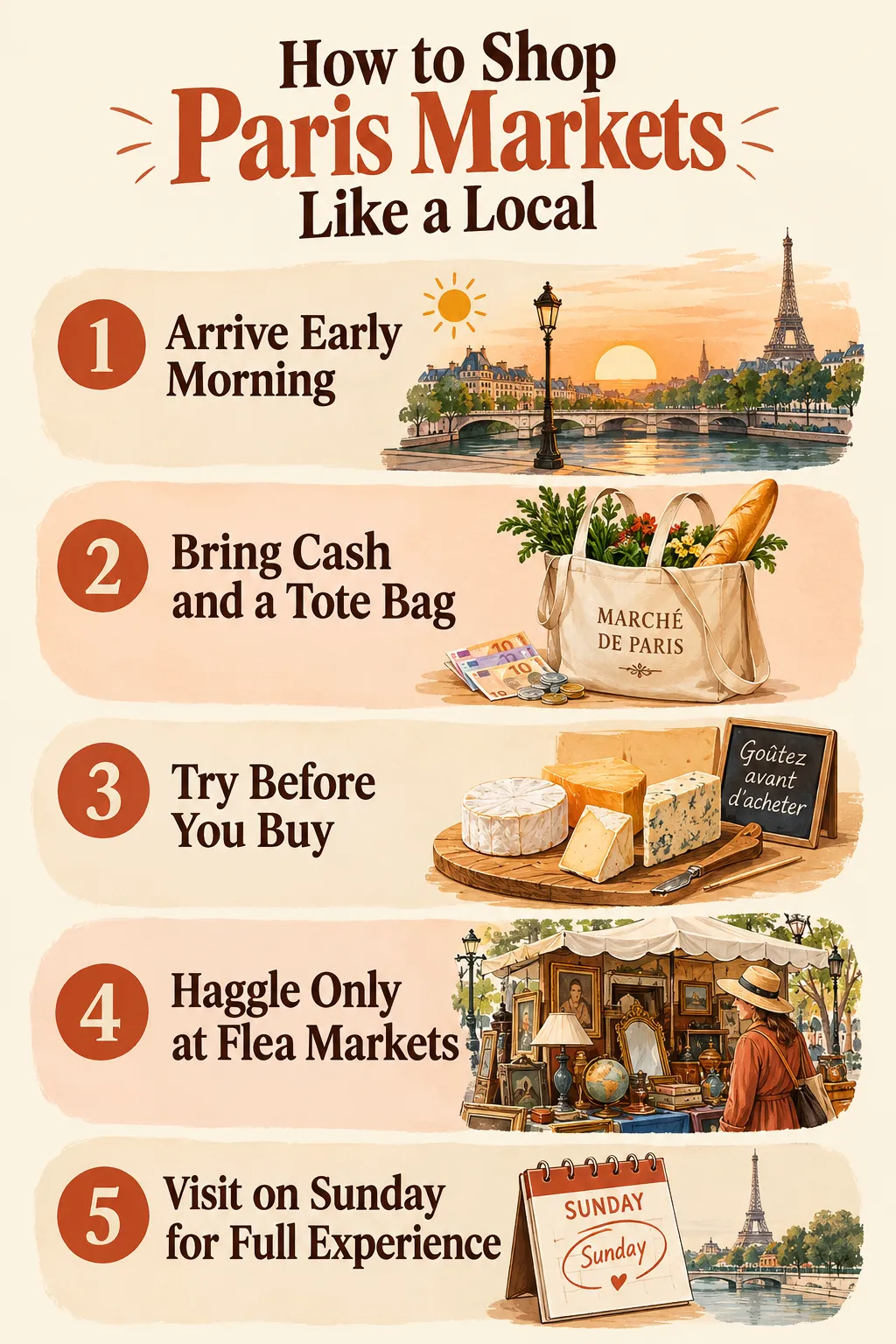
Are Paris Markets Worth Visiting or Tourist Traps?
The best markets in Paris are absolutely worth visiting – they’re not tourist traps when you know which ones to choose. Markets like Marché d’Aligre and Baudoyer are genuinely local, with real Parisian shoppers and fair prices. Even the more famous ones like Marché Bastille offer good value if you skip the vendors closest to the main entrance and walk deeper into the market.
The tourist trap risk is real at some stalls near major landmarks. Vendors near the Seine or Notre Dame ile area sometimes charge inflated prices for low-quality goods. Stick to the markets listed here, and read up on Paris scams and red flags before your trip so you know what to watch for.
Beginner Mistakes When Shopping at Paris Markets
New visitors make a few common mistakes that are easy to avoid. The biggest one is arriving too late – most food markets are winding down by noon, and the best produce is gone by 10 AM. The second mistake is not bringing cash. While some vendors now accept cards, many still prefer cash, and you don’t want to miss out on something you love because you have no euros on hand.
Other mistakes to avoid:
- Touching produce without asking – wait for the vendor to select items for you
- Trying to haggle at food markets – it’s not done here
- Skipping the covered markets – they’re often more interesting than the open-air ones
- Only visiting on weekends – Tuesday and Friday morning markets are quieter and just as good
For more tips on making the most of your time in the city, see 15 Best Things To Do In Paris.
Other Treasures of the Marais and Beyond
The Marais is packed with more than just the des enfants rouges market. The neighborhood sits between the temple publique bataclan corridor and the ville beaubourg pletzl area, and it rewards slow exploration. Walk along Rue de Bretagne and Rue des Francs-Bourgeois for boutique shopping and café stops. The Place des Vosges is just a short walk from the market, and the whole des vosges bastille and vosges bastille saint-paul route makes for a perfect half-day loop.
The Marais also has smaller pop-up markets and brocantes (secondhand sales) that appear on weekends throughout the year. Check local listings on Facebook and Instagram for dates – these events are often posted only a week or two in advance.
Beyond the Marais, don’t overlook:
- Marché Raspail (organic Sunday market on Boulevard Raspail)
- Marché Président-Wilson (upscale food market near the Eiffel Tower)
- Marché Batignolles Bio (organic market in the 17th, Saturday mornings)
- Rue Cler (classic Parisian market street in the 7th arrondissement)
For more on what the city has to offer, check out Paris Monuments: 17 Iconic Landmarks and Paris in Spring: 15 Magical Things To Do.
L’Ange 20 and Le Bougnat – More Parisian Flavors to Discover
L’Ange 20 is a charming bistro near the Marais that focuses on seasonal French cooking with a modern touch. It’s a great place to take a long lunch after a morning at one of the nearby markets. The menu changes regularly, and the wine list leans toward small French producers – exactly the kind of place you love stumbling into.
Le Bougnat brings the flavors of Auvergne to Paris. This region of central France is known for hearty dishes like aligot (mashed potato with cheese), lentils, and cured pork. Le Bougnat keeps those traditions alive in the city, and it’s a genuinely different experience from the typical Parisian bistro. If you’ve never tried Auvergne cooking, this is a great first introduction.
Both spots reflect what makes the Paris food scene so rich – there’s always something new to discover, even if you’ve visited the city many times before. For a broader look at seasonal activities, the Paris in November itinerary guide has some excellent ideas for combining market visits with other city highlights.
FAQ
Where is luxury shopping in Paris?
Luxury shopping in Paris is concentrated in the Golden Triangle – the area around Avenue Montaigne, Rue du Faubourg Saint-Honoré, and Avenue des Champs-Élysées. You’ll find flagship stores for Chanel, Louis Vuitton, Dior, and Hermès here. The Marais also has high-end boutiques, particularly along Rue des Francs-Bourgeois and near Place des Vosges.
What to beware of in Paris?
The most common issues in Paris include pickpocketing near tourist sites, petition scams near the Eiffel Tower and Seine, and overpriced goods at stalls targeting tourists. At markets, watch your bag in crowded areas and be cautious of vendors who pressure you to buy quickly. Read a full breakdown of Paris scams and red flags before your visit.
What is the most popular Christmas market in Paris?
The most popular Christmas market in Paris is the one on the Champs-Élysées, which runs from mid-November through late December and attracts millions of visitors each year. The Trocadéro market and the one at La Défense are also very popular. For a broader look at festive options across Europe, see 17 Magical Christmas Markets in Europe.
What are the famous markets in Paris?
The most famous markets in Paris are Marché des Enfants Rouges (oldest covered market), Marché Bastille (largest open-air food market), Marché d’Aligre (most authentic everyday market), Puces de Saint-Ouen (world-class flea market), and the Marché aux Fleurs Queen Elizabeth II (historic flower market). According to Go City’s Paris guide, these markets consistently top traveler rankings year after year.
Conclusion
The best markets in Paris are more than shopping stops – they’re where the city actually comes alive. From the historic covered halls of des enfants rouges in the Marais to the sprawling paris bastille market on a Sunday morning, each one gives you a different window into French daily life.
Here’s how to make the most of them:
- Plan your mornings around markets – most close by 1 PM, so go early
- Bring cash and a tote bag – practical and essential
- Visit at least one covered market and one open-air market – they’re completely different experiences
- Combine a market visit with a neighborhood walk – the Marais, Bastille, and Ile Saint Louis areas reward slow exploration
- Check Sunday schedules – it’s the single best day for market-hopping in Paris
Whether it’s your first time in the city or your tenth, there’s always a new market to discover. Start with the ones listed here, follow your nose through the stalls, and let Paris do the rest.
For more help planning your trip, check out 15 Best Things To Do In Paris and Best Hotels In Paris That Are Affordable.