Last updated: July 20, 2026
Quick Answer: Switzerland’s most breathtaking places are not always the ones on postcards. Beyond Interlaken and Zermatt, you’ll find turquoise alpine lakes, car-free ridge villages, and untouched valleys that most tourists never reach. These hidden gems in Switzerland are real, accessible, and absolutely worth the detour.
Key Takeaways
- Switzerland hit a record 42.8 million hotel overnight stays in 2025, pushing more travelers toward quieter, lesser-known spots [4]
- Many of the best hidden gems in Switzerland are reachable by train or cable car – no car needed
- Places like Caumasee, Gelmersee, and Lavertezzo offer turquoise water that rivals anything in the Maldives
- The best time to visit most of these spots is late May through early October
- Several locations, including Stoos and Melchsee-Frutt, are genuinely family-friendly
- Costs in remote Swiss areas can actually be lower than in tourist hotspots like Lucerne or Geneva
- Some of these gems, like Valposchiavo, blend Swiss and Italian culture in a way you won’t find anywhere else
- Over 130 mountain lakes in Switzerland remain largely unknown to mass tourism [5]
What Are the Most Underrated Places to Visit in Switzerland
Switzerland’s most underrated destinations include Valposchiavo, Stein am Rhein, Appenzell, Lavertezzo, and the Aletsch Arena. These places offer jaw-dropping scenery without the shoulder-to-shoulder crowds you’ll find in Lucerne or Grindelwald.
Here’s the thing – Switzerland recorded over 42.8 million hotel overnight stays in 2025, the highest in 50 years [4]. That kind of demand is pushing savvy travelers away from the classics and toward quieter corners of the country.
Some of the most underrated spots worth adding to your list:
- Stein am Rhein – a medieval river town with painted facades that look almost too perfect
- Appenzell – a tiny canton with traditional painted farmhouses and zero tourist crowds
- Lavertezzo – a stone-bridge village in Ticino where locals swim in bright blue-green river pools
- Aletsch Arena – UNESCO-listed glacier views that most visitors never make it to [7]
- Rosenlaui Valley – an almost completely untouched alpine valley near Meiringen
If you enjoy discovering places that feel genuinely off the beaten path, you might also love our guide to hidden gems in Italy that feel absolutely magical.
Hidden Gems in Switzerland That Tourists Don’t Know About
Most tourists stick to the “golden triangle” of Zurich, Lucerne, and Interlaken. The places below barely appear in mainstream travel guides, yet they’re among the most beautiful spots in the entire country.
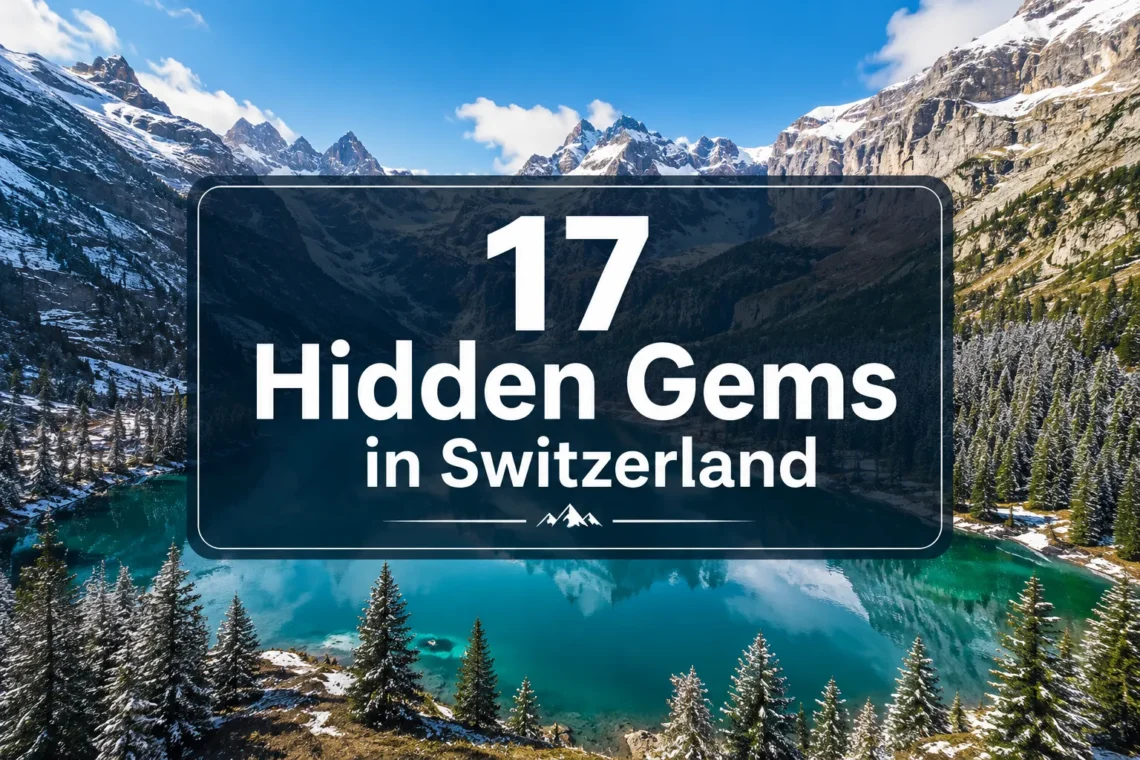
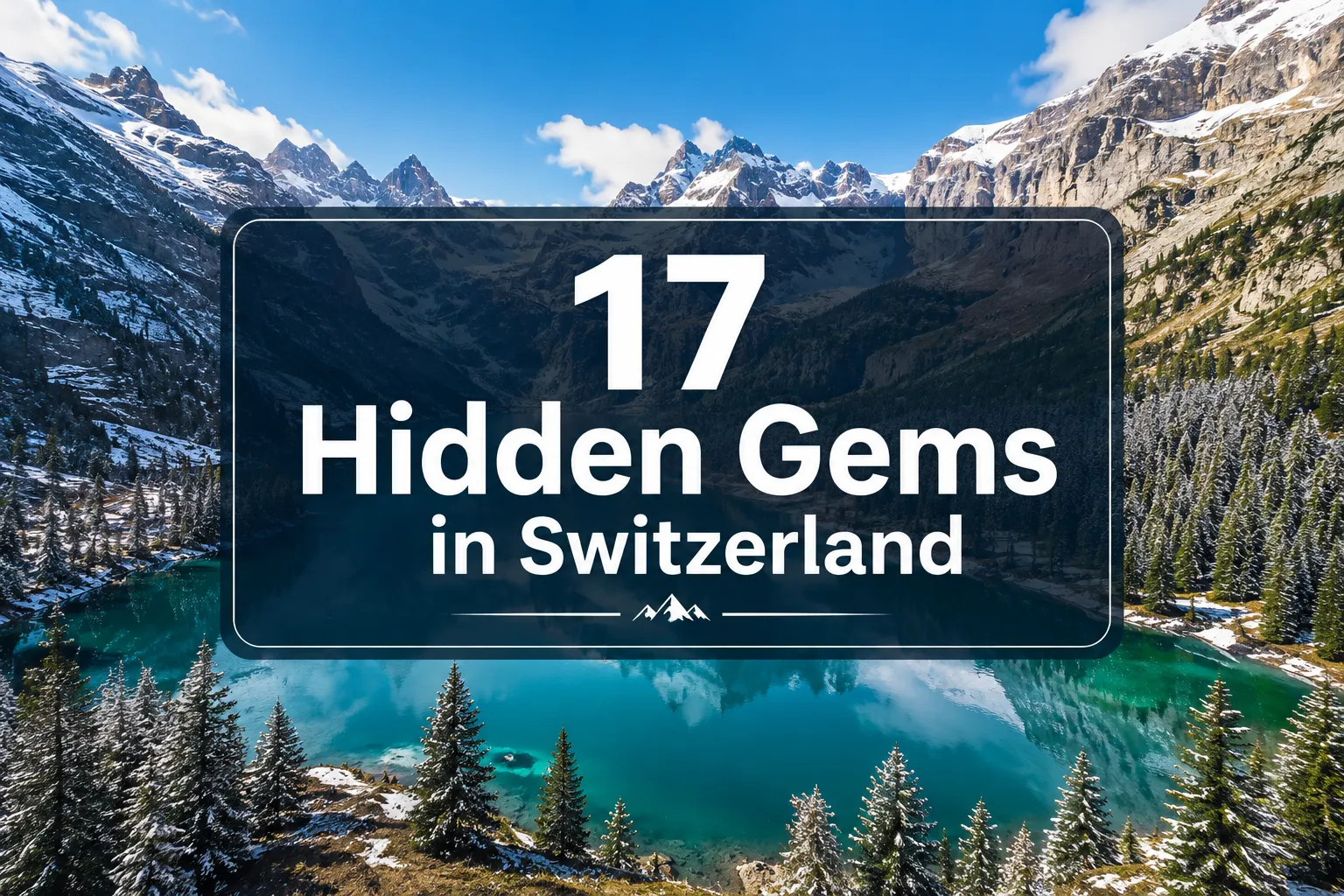
17 hidden gems in Switzerland worth knowing:
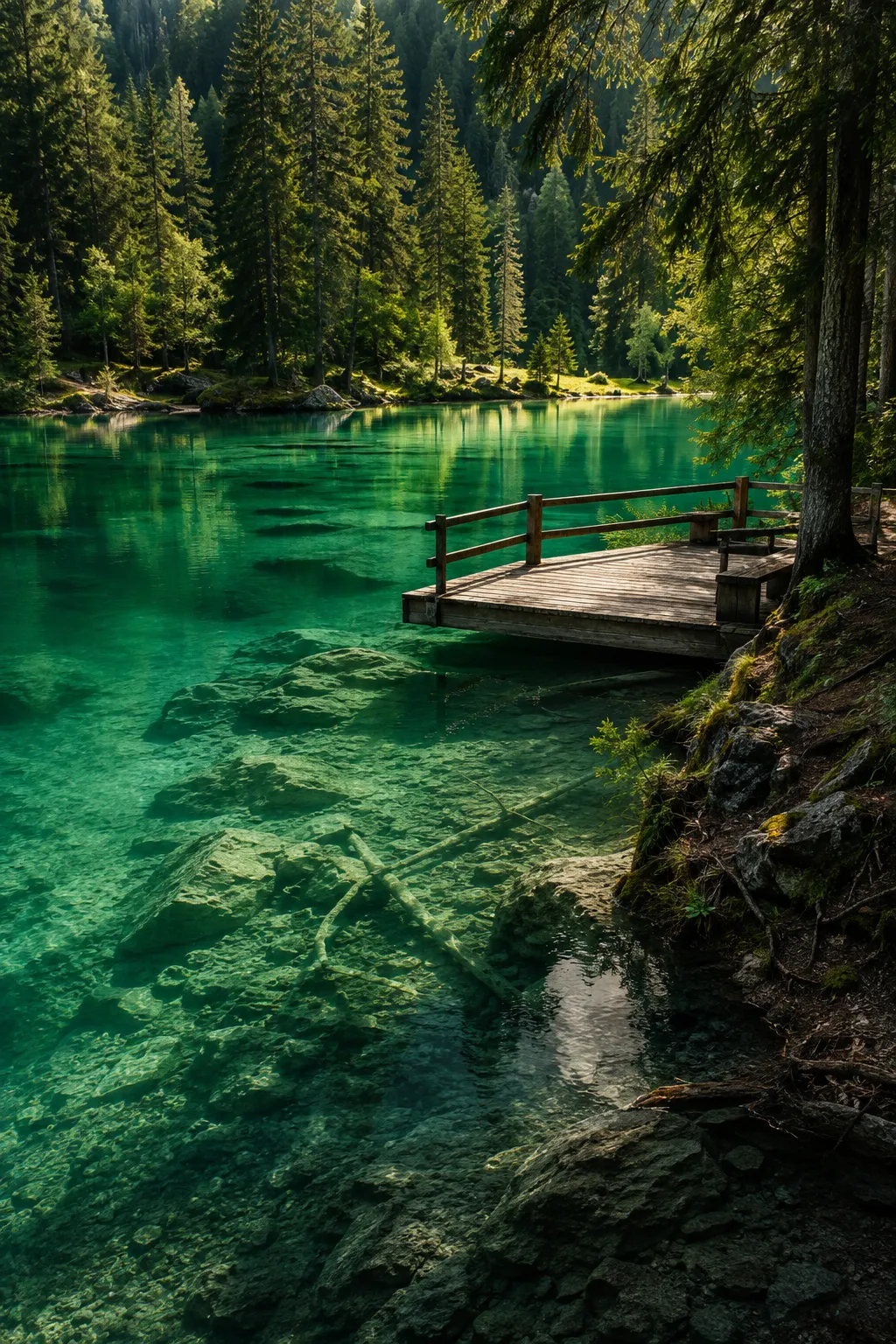
- Caumasee – a glowing turquoise lake near Flims, accessible only on foot or by funicular
- Gelmersee – a reservoir lake reached by one of Europe’s steepest funicular railways
- Melchsee-Frutt – twin alpine lakes (Melchsee and Tannensee) with almost no crowds [8]
- Bannalpsee – a quiet lake in Nidwalden that locals keep to themselves [8]
- Lavertezzo – Roman-arched stone bridge over a swimming hole in Verzasca Valley
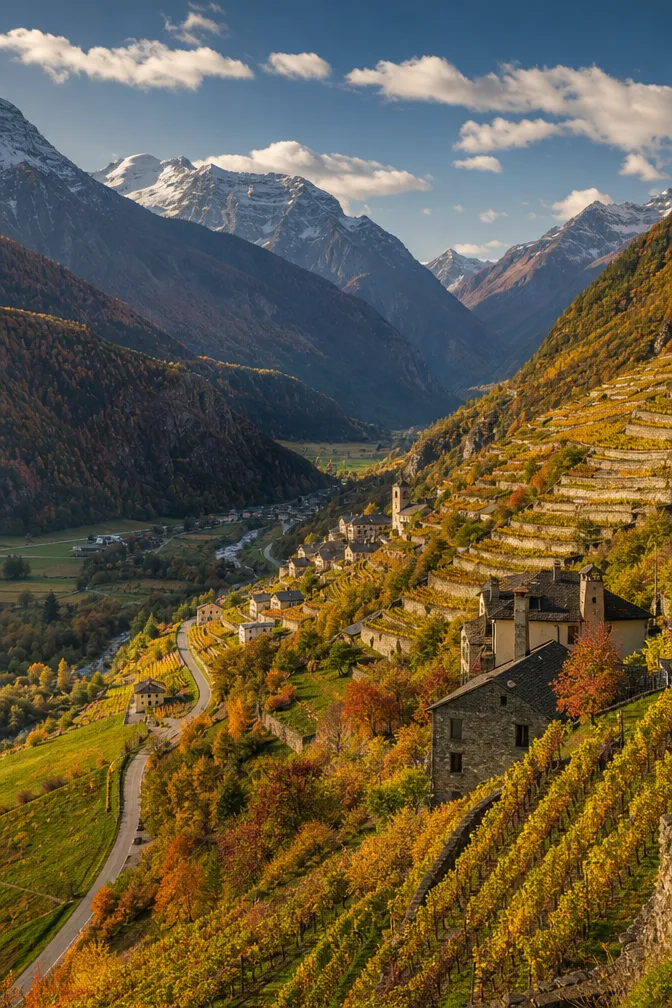
- Valposchiavo – a bilingual valley near the Italian border with its own distinct culture [7]
- Rosenlaui Valley – an untouched glacial valley near Meiringen [7]
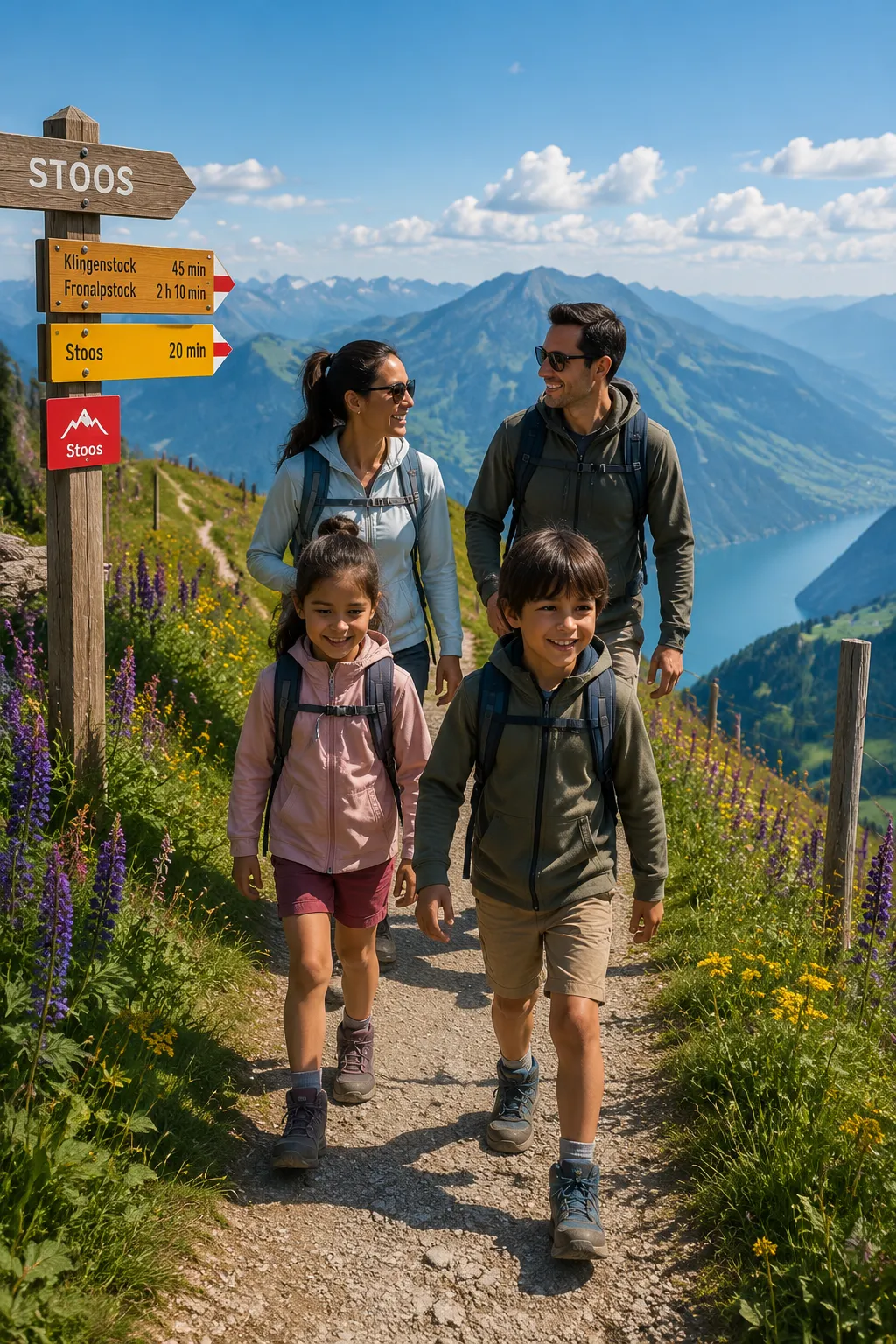
- Stoos – a car-free ridge village with sweeping views over Lake Lucerne [7]
- Aletsch Arena – the largest glacier in the Alps, UNESCO-listed, rarely crowded [7]
- Lenzerheide – a lake-focused outdoor hub that’s quieter than St. Moritz [7]
- Sils-Maria and the Fex Valley – a philosopher’s retreat in the Engadin [7]
- Augusta Raurica – Roman ruins near Basel that most visitors walk right past [5]
- Gonten in Appenzell – a tiny village with traditional Appenzeller culture intact
- Lukmanier Pass – a high alpine pass with sweeping views and almost no traffic [5]
- Stein am Rhein – a medieval town with frescoed buildings along the Rhine
- Morcote – a lakeside village on Lake Lugano that looks like it belongs in Italy
- Binn Valley – a remote Walser mountain village with crystal-clear streams and rare minerals [5]
Best Secret Villages in Switzerland Off the Beaten Path
The best secret villages in Switzerland include Lavertezzo, Morcote, Gonten, Binn, and Sils-Maria. Each one offers something distinct – from swimming holes to Roman history to traditional Appenzeller culture.
Lavertezzo sits in the Verzasca Valley in Ticino. The double-arched Ponte dei Salti bridge dates back to the 17th century, and the water beneath it is a shade of blue-green that genuinely looks edited. Locals swim here on summer weekends.
Morcote on Lake Lugano is often called the “Pearl of Lake Lugano.” Narrow cobblestone alleys, a hilltop church, and lakeside arcades make it one of the most photogenic villages in the entire country.
Gonten in Appenzell is where you’ll see traditional Landsgemeinde democracy still practiced outdoors. The painted farmhouses and rolling green hills feel like a living museum – but without the admission fee.
Binn Valley in Valais is a Walser village so remote that it’s only accessible through a single mountain road. It’s known among geologists for rare mineral deposits, but for most visitors, the real draw is the silence [5].
“Some of the country’s most striking landscapes are only accessible on foot and remain largely unknown to mass tourism.” [5]
How to Find Hidden Waterfalls and Lakes in Switzerland
Switzerland has over 130 mountain lakes that most tourists never see [5]. Finding them requires a bit of planning, but it’s easier than you’d think.
The best approach:
- Use the SchweizMobil app or website – it maps every hiking trail in the country, including routes to remote lakes
- Look for lakes above 1,500 meters elevation – these are rarely reached by casual visitors
- Check local cantonal tourism websites, not just MySwitzerland.com
- Ask at smaller train stations – staff often know trails that don’t appear online
Top hidden lakes worth the hike:
| Lake | Location | Why It’s Special |
|---|---|---|
| Caumasee | Near Flims, Graubünden | Turquoise water, forest access only |
| Gelmersee | Bernese Alps | Reached by Europe’s steepest funicular |
| Bannalpsee | Nidwalden | Almost no visitors, mirror-calm water |
| Melchsee | Obwalden | Twin lakes, easy family hike |
| Tannensee | Obwalden | Connected to Melchsee, even quieter |
For waterfalls, the Rosenlaui Valley near Meiringen has a gorge walk that passes multiple cascades – and it sees a fraction of the visitors that Trümmelbach Falls gets [7].
Lesser Known Mountains and Hiking Spots in Switzerland
The Swiss Alps have thousands of kilometers of marked trails, but most hikers crowd onto the same dozen routes. The lesser-known spots offer equally dramatic scenery with far fewer people.
Top underrated hiking areas:
- Stoos Ridge – a car-free area above Lake Lucerne with a ridge walk that offers 360-degree views. You reach it via the world’s steepest funicular (110% gradient) [7]
- Aletsch Arena – the 23-kilometer Aletsch Glacier is the largest in the Alps. The viewing trails above Riederalp and Bettmeralp are UNESCO-listed and surprisingly quiet [7]
- Lukmanier Pass – connects Graubünden and Ticino, offering high-alpine scenery without the crowds of the Gotthard route [5]
- Rosenlaui Valley – a glacial valley near Meiringen with a gorge walk and almost no tourist infrastructure [7]
- Binn Valley – remote Walser trails through meadows and past mountain streams [5]
Choose Stoos if you want dramatic views with minimal effort – the funicular does the hard work. Choose Aletsch if you want the most visually overwhelming glacier scenery in Europe.
If you love dramatic mountain landscapes, check out our guide to Dolomites Italy summer spots that look too beautiful to be real – a great complement to a Swiss Alps trip.
Hidden Gems in Switzerland Worth the Drive
Some of Switzerland’s best-kept secrets genuinely reward a road trip. These spots are harder to reach by public transport but absolutely worth the extra effort.
Best drive-worthy hidden gems:
- Valposchiavo – a valley near the Italian border accessible via the Bernina Pass road. The drive itself is spectacular, and the valley has its own bilingual culture and cuisine [7]
- Binn Valley – a single-road valley in Valais with Walser villages and mineral-rich streams [5]
- Lukmanier Pass – one of Switzerland’s oldest Alpine crossings, with sweeping views and almost no traffic [5]
- Augusta Raurica – Roman ruins near Basel that you can walk through freely. It’s the largest Roman archaeological site in Switzerland and barely appears on tourist maps [5]
Pro tip: Switzerland’s road vignette costs around CHF 40 per year (as of 2026) and covers all motorways. For mountain passes, no extra fee is needed – but check seasonal opening dates, as many close from November to May.
If you enjoy scenic road trips to unexpected places, our Mount Rushmore road trip guide has a similar spirit of chasing beauty off the main route.
Switzerland Hidden Gems Near Zurich and Geneva
You don’t need to travel far from Switzerland’s two biggest cities to find something genuinely special. Several hidden gems sit within 90 minutes of both Zurich and Geneva.
Near Zurich (under 90 minutes):
- Stein am Rhein – 50 minutes by train, a medieval town with frescoed building facades along the Rhine. Fewer than 3,000 people live there.
- Gonten, Appenzell – 75 minutes by train, traditional Swiss culture at its most authentic
- Augusta Raurica – 30 minutes from Basel (itself 55 minutes from Zurich), free Roman ruins [5]
Near Geneva (under 90 minutes):
- Gruyères – yes, the cheese town, but the medieval castle and surrounding hills are genuinely beautiful and far less crowded than most assume
- Romont – a small fortified town on a hill with a 13th-century castle and almost no tourists
- Lac de Joux – a high plateau lake in the Jura mountains, popular with locals but unknown to most international visitors
Common mistake: Many travelers near Geneva head straight to Montreux or Lausanne. Both are lovely, but Romont and Lac de Joux offer comparable scenery with none of the crowds.
Best Time to Visit Hidden Gems in Switzerland
Late May through early October is the best window for visiting most hidden gems in Switzerland. Snow blocks many mountain trails and passes before late May, and after October the days get short fast.
Month-by-month breakdown:
- Late May – June: Wildflowers in bloom, waterfalls at full flow, trails just opening. Fewer crowds than July-August.
- July – August: Peak season. Even hidden spots see more visitors, but still far quieter than Interlaken or Zermatt.
- September – October: The sweet spot. Crowds thin out, autumn colors arrive, and the light is extraordinary for photography.
- November – April: Most high-alpine spots close. Good for winter hidden gems like Stoos (skiing) or Appenzell (Christmas markets).
Are hidden gems in Switzerland crowded in summer? Yes, slightly more than in shoulder season – but they’re still dramatically quieter than the main tourist hotspots. Caumasee on a Saturday in August will have some visitors, but nothing like the queues at Oeschinensee or the Lauterbrunnen Valley.
The best strategy is to arrive early (before 9am) or visit on weekdays. Most Swiss locals are at work Monday through Friday, so even popular hidden spots feel empty on a Tuesday morning.
How Much Does It Cost to Visit Remote Areas in Switzerland
Visiting remote areas in Switzerland can actually cost less than staying in tourist hotspots. Accommodation in villages like Binn or Gonten runs significantly cheaper than in Zermatt or Lucerne.
Rough cost estimates for 2026:
- Accommodation: Budget CHF 80-120/night for a guesthouse in a remote village vs. CHF 200-400/night in Zermatt
- Swiss Travel Pass: Covers most trains, buses, and boats. A 4-day pass costs around CHF 244 for adults (2026 pricing – verify at sbb.ch before booking)
- Funiculars to hidden lakes: Most cost CHF 10-25 return
- Hiking: Free, once you’re there
- Food: Village restaurants often charge 20-30% less than tourist-area restaurants
Can you reach hidden gems in Switzerland without a car? Absolutely. Switzerland’s public transport network is one of the best in the world. Places like Stoos, Melchsee-Frutt, Aletsch Arena, and Lavertezzo are all reachable by train and cable car or bus. The Swiss Travel Pass covers most of these connections [7].
Some spots like Binn Valley and Valposchiavo are easier with a car, but both have train connections via the Matterhorn Gotthard Bahn and the Bernina Express respectively.
Which Hidden Gems in Switzerland Are Family Friendly
Several hidden gems in Switzerland are genuinely excellent for families with children. The key is choosing spots with easy access, calm water, and short hiking distances.
Best family-friendly options:
- Melchsee-Frutt – cable car access, two calm alpine lakes, and a flat trail connecting them. Kids can swim in summer and sled in winter [8]
- Stoos – car-free, safe for kids, and the funicular ride itself is an adventure [7]
- Stein am Rhein – flat riverside walks, ice cream shops, and painted buildings that kids find genuinely fascinating
- Augusta Raurica – free Roman ruins with an open-air museum and a Roman house reconstruction. Kids can explore freely [5]
- Appenzell – small, walkable, and the local cheese dairy offers tours that younger travelers enjoy
Choose Melchsee-Frutt if you want a full day outdoors with minimal effort – the cable car eliminates any serious climbing, and the lakeside path is stroller-friendly.
For more ideas on traveling with kids, our guide to budget-friendly vacations with kids covers how to stretch your travel budget without sacrificing the experience.
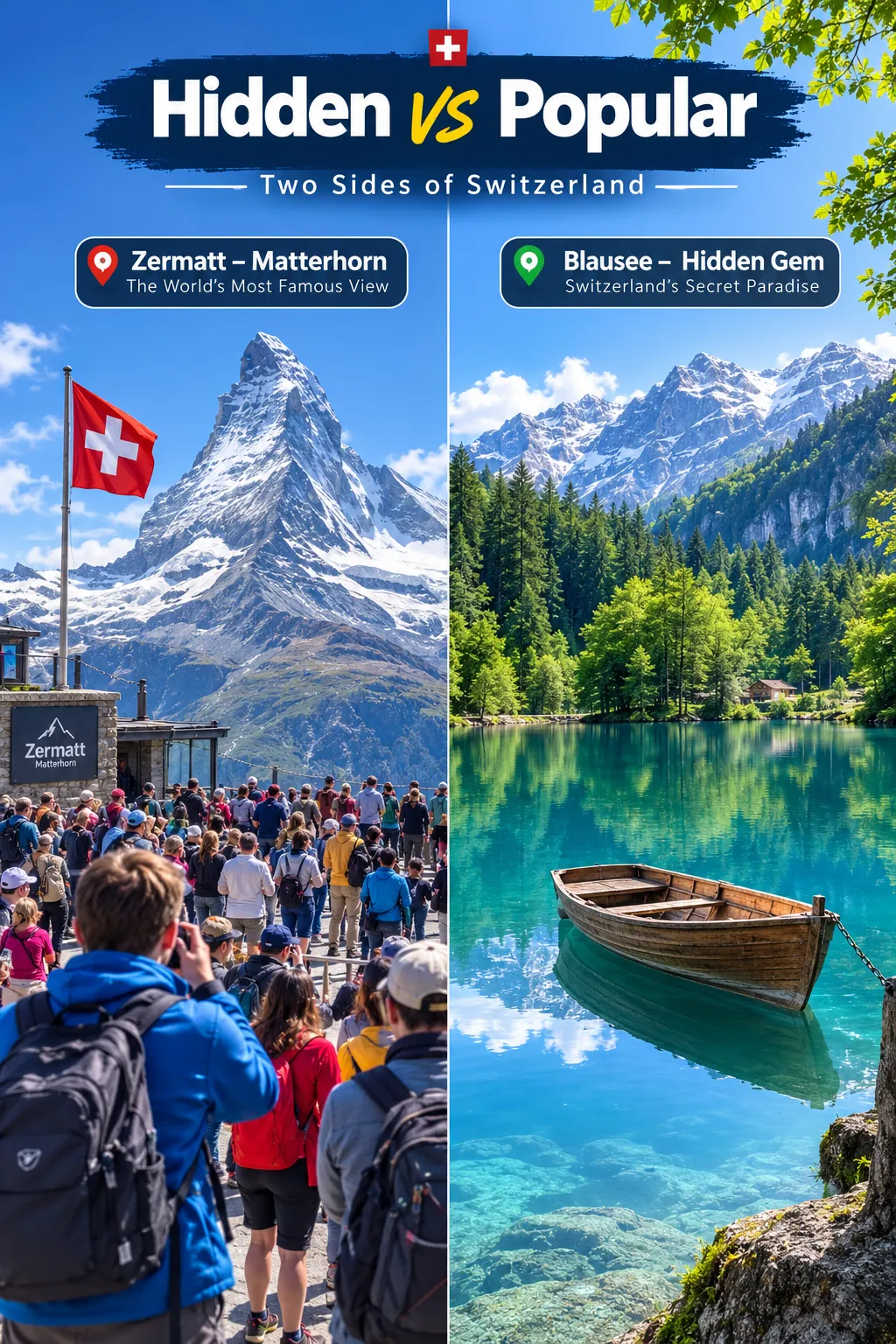
What’s the Difference Between Popular Swiss Destinations and Hidden Gems
Popular Swiss destinations like Interlaken, Zermatt, and Lucerne offer world-class infrastructure and iconic views – but they come with crowds, high prices, and a slightly manufactured tourist feel. Hidden gems offer rawer beauty, local authenticity, and far more breathing room.
Here’s a practical comparison:
Popular destinations:
- Heavily marketed, easy to book
- Tourist infrastructure is excellent
- Prices are at a premium
- Queues for viewpoints, restaurants, and transport
- Beautiful, but you share the view with hundreds of others
Hidden gems in Switzerland:
- Require more planning and research
- Fewer English-speaking services in very remote areas
- Noticeably cheaper accommodation and food
- You often have entire viewpoints to yourself
- The experience feels more personal and less staged
The honest truth is that both have value. Zermatt and the Matterhorn are iconic for a reason. But if you’ve already done the classics – or if you simply want something that feels genuinely undiscovered – the hidden gems deliver something the postcard spots can’t.
If you enjoy this kind of comparison between tourist trails and real local spots, our guide to hidden gems in Milan Italy takes the same approach to one of Europe’s most visited cities.
Hidden Gems in Switzerland That Are Hard to Photograph
Some of Switzerland’s most beautiful spots are notoriously difficult to capture well. The light, the scale, and the access all create challenges – but that’s also part of what keeps them uncrowded.
The trickiest spots to photograph:
- Gelmersee – the lake sits in a bowl surrounded by steep rock faces. The best light is mid-morning when the sun clears the ridgeline. Getting there requires the steep funicular, which limits tripod setups.
- Lavertezzo – the Ponte dei Salti bridge is beautiful but the gorge walls create heavy shadows. Golden hour (6-8am in summer) is the only time the light is even.
- Caumasee – the forest surrounding the lake blocks direct light for most of the day. Overcast days actually produce better results here because the turquoise color pops without harsh shadows [8].
- Bannalpsee – the mirror reflections only appear in early morning before any wind picks up [8].
Quick tip: For any alpine lake in Switzerland, arrive before 8am. The light is better, the water is calmer, and you’ll almost certainly have the spot to yourself.
Conclusion
Switzerland’s famous destinations deserve their reputation – but the country holds far more than what appears on a typical itinerary. These 17 hidden gems in Switzerland prove that the most memorable travel experiences often happen when you take a small detour off the main route.
Your next steps:
- Pick two or three spots from this list that match your travel style – don’t try to hit all 17 in one trip
- Check the Swiss Travel Pass options at sbb.ch before booking – it covers most of these destinations and saves money
- Plan for shoulder season – late May, June, or September give you the best combination of good weather and low crowds
- Book accommodation early in small villages – there are fewer beds, and they fill up faster than you’d expect
- Download SchweizMobil for offline trail maps – cell service can be patchy in the most remote areas
Switzerland’s hidden corners are waiting. The only thing standing between you and a turquoise lake with no one else around is a little planning and a willingness to go slightly off-script.
For more inspiration on finding the unexpected in Europe, explore our guides to hidden gems in Florence Italy and the Lofoten Islands Norway travel guide – two more destinations that reward travelers who look beyond the obvious.
FAQ
What is the most hidden gem in Switzerland?
Lavertezzo in the Verzasca Valley is arguably the most hidden. The double-arched stone bridge and turquoise swimming holes are stunning, yet most international tourists have never heard of it.
Are hidden gems in Switzerland expensive to visit?
Not necessarily. Remote villages cost significantly less for accommodation and food than tourist hotspots like Zermatt. Many hidden lakes and trails are free to access once you’re there.
Can I visit hidden gems in Switzerland without a car?
Yes. Switzerland’s public transport is world-class. Most hidden gems – including Stoos, Melchsee-Frutt, Lavertezzo, and Aletsch Arena – are reachable by train, bus, or cable car.
When is the best time to visit hidden lakes in Switzerland?
Late May through September is ideal. Many mountain lakes are inaccessible before late May due to snow, and the best light and calmest water conditions occur in early morning during this window.
Is Caumasee really as turquoise as the photos show?
Yes. The color comes from glacial meltwater and the lake’s depth. On overcast days, the turquoise is actually more vivid because harsh sunlight doesn’t wash out the color.
What is Valposchiavo and why is it special?
Valposchiavo is a valley in Graubünden near the Italian border. It’s bilingual (Romansh and Italian), has its own distinct food culture, and is accessible via the famous Bernina Express train route – yet most travelers pass through without stopping.
Are there hidden gems in Switzerland near Zurich?
Yes. Stein am Rhein is 50 minutes by train and has medieval painted facades that look almost unreal. Gonten in Appenzell is 75 minutes away and offers traditional Swiss culture at its most authentic.
What is the Aletsch Arena?
The Aletsch Arena is a UNESCO World Heritage area in the Bernese Alps centered on the Aletsch Glacier – the largest glacier in the Alps at 23 kilometers long. The viewing trails above Riederalp and Bettmeralp are surprisingly uncrowded.
Is Stoos good for families?
Yes. Stoos is car-free, safe for children, and the funicular ride (the world’s steepest) is an experience in itself. In summer there are easy ridge walks; in winter there’s skiing and sledding.
How do I find hidden mountain lakes in Switzerland?
Use the SchweizMobil app, which maps every marked trail in Switzerland including routes to remote lakes. Lakes above 1,500 meters elevation are typically the least visited.
What is Augusta Raurica?
Augusta Raurica is the largest Roman archaeological site in Switzerland, located near Basel. It includes a reconstructed Roman house, an open-air theater, and a museum. Entry is free and it sees a fraction of the visitors that better-known Swiss attractions receive.
Are hidden gems in Switzerland crowded in summer?
They see more visitors in July and August than in shoulder season, but still far fewer than mainstream hotspots. Arriving before 9am on weekdays is usually enough to have most spots to yourself.
References
[4] Switzerland Tourism Statistics – https://roadgenius.com/statistics/tourism/switzerland/
[5] 5 Hidden Gems Of Switzerland – https://www.noi2events.com/2025/03/06/5-hidden-gems-of-switzerland/
[7] Switzerland Beyond The Postcards 10 Hidden Gems Locals Love And Most Travelers Miss In 2026 – https://www.magicswitzerland.com/blog/switzerland-beyond-the-postcards-10-hidden-gems-locals-love-and-most-travelers-miss-in-2026/
[8] 10 Photos To Inspire You To Visit Less Touristy Places In Switzerland – https://myfaultycompass.com/10-photos-to-inspire-you-to-visit-less-touristy-places-in-switzerland/