Last updated: June 22, 2026
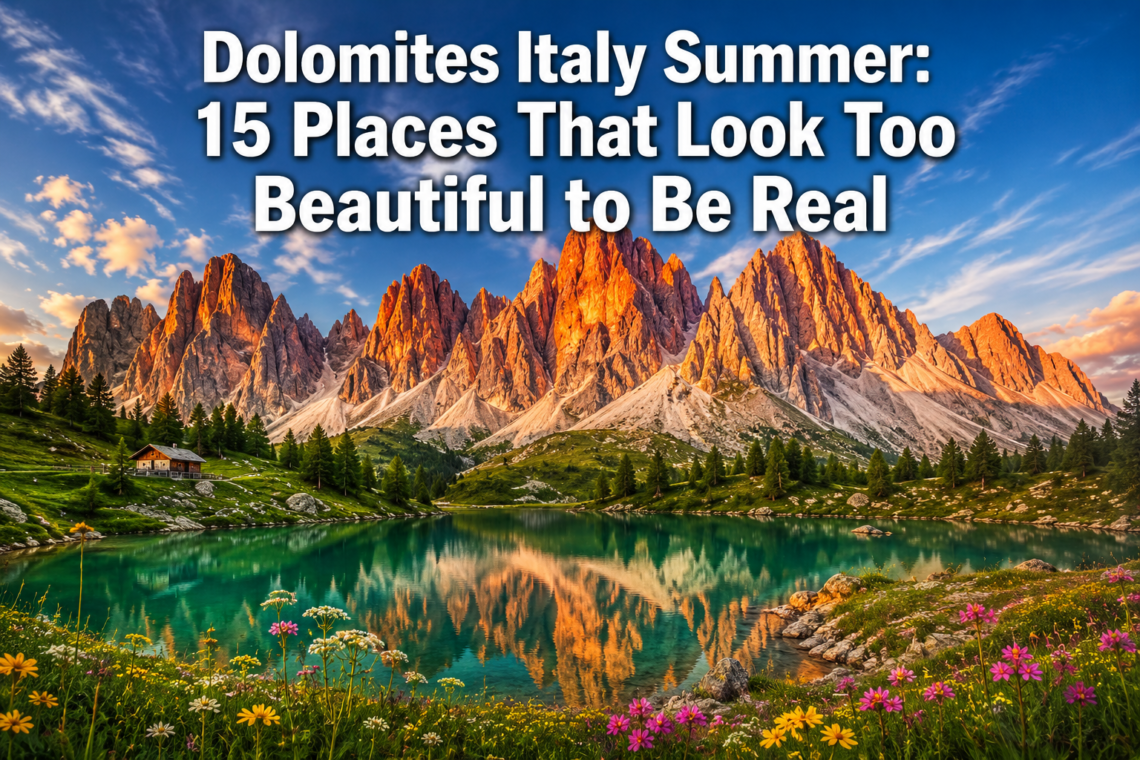
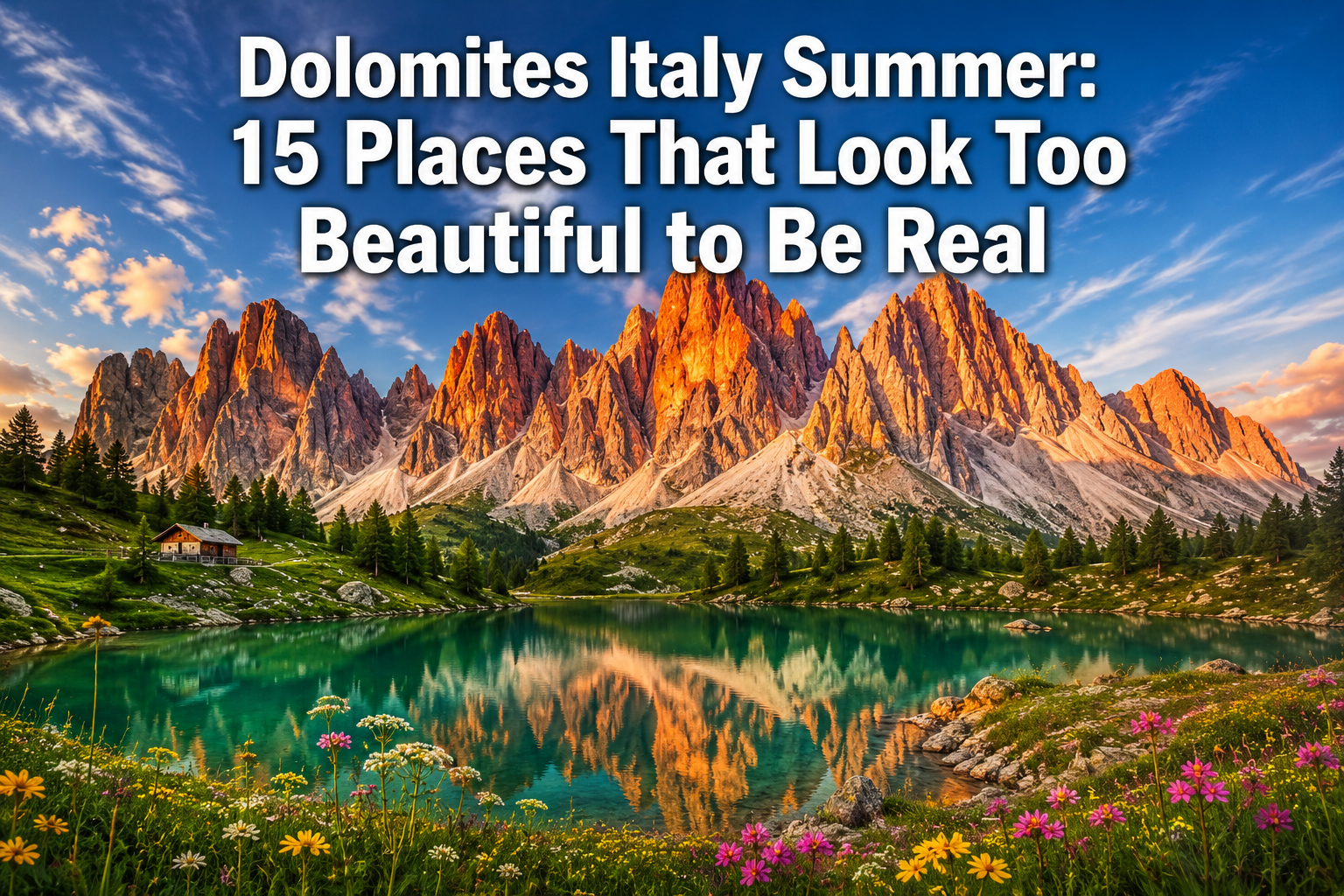
Quick Answer: The Dolomites in summer offer some of the most visually dramatic landscapes in Europe, with turquoise alpine lakes, jagged limestone peaks, wildflower meadows, and world-class hiking trails all accessible between June and September. The best spots include Lago di Braies, Tre Cime di Lavaredo, Seceda, Alta Badia, and Cortina d’Ampezzo, among others. Summer days are warm and long, crowds peak in July and August, and the Dolomiti Super Summer Card gives you affordable lift access across the region [1].
Key Takeaways
- 🏔️ Summer runs June to September – June offers wildflowers and fewer crowds; July-August brings long golden evenings and buzzing villages [4]
- 🎫 The Dolomiti Super Summer Card covers roughly 140 lifts across the region, with adult day passes starting around €67 [1]
- 🥾 Hiking is the main draw – trails range from easy lakeside walks to multi-day Alta Via routes
- 📸 Lago di Braies and Tre Cime di Lavaredo are the two most photographed spots – arrive before 7am to beat the crowds [5]
- 🚵 Val Gardena has become a top mountain biking destination as of 2026, with trails for all skill levels [2]
- 🌧️ Pack layers – summer afternoons can bring quick thunderstorms even on sunny days [6]
- 🚗 Some roads require shuttle buses or timed entry in peak season – plan transport in advance
- 🍽️ Alta Badia combines hiking with Michelin-star dining – a genuinely rare combination at altitude [3]
Why Dolomites Italy Summer Beats Every Other Season
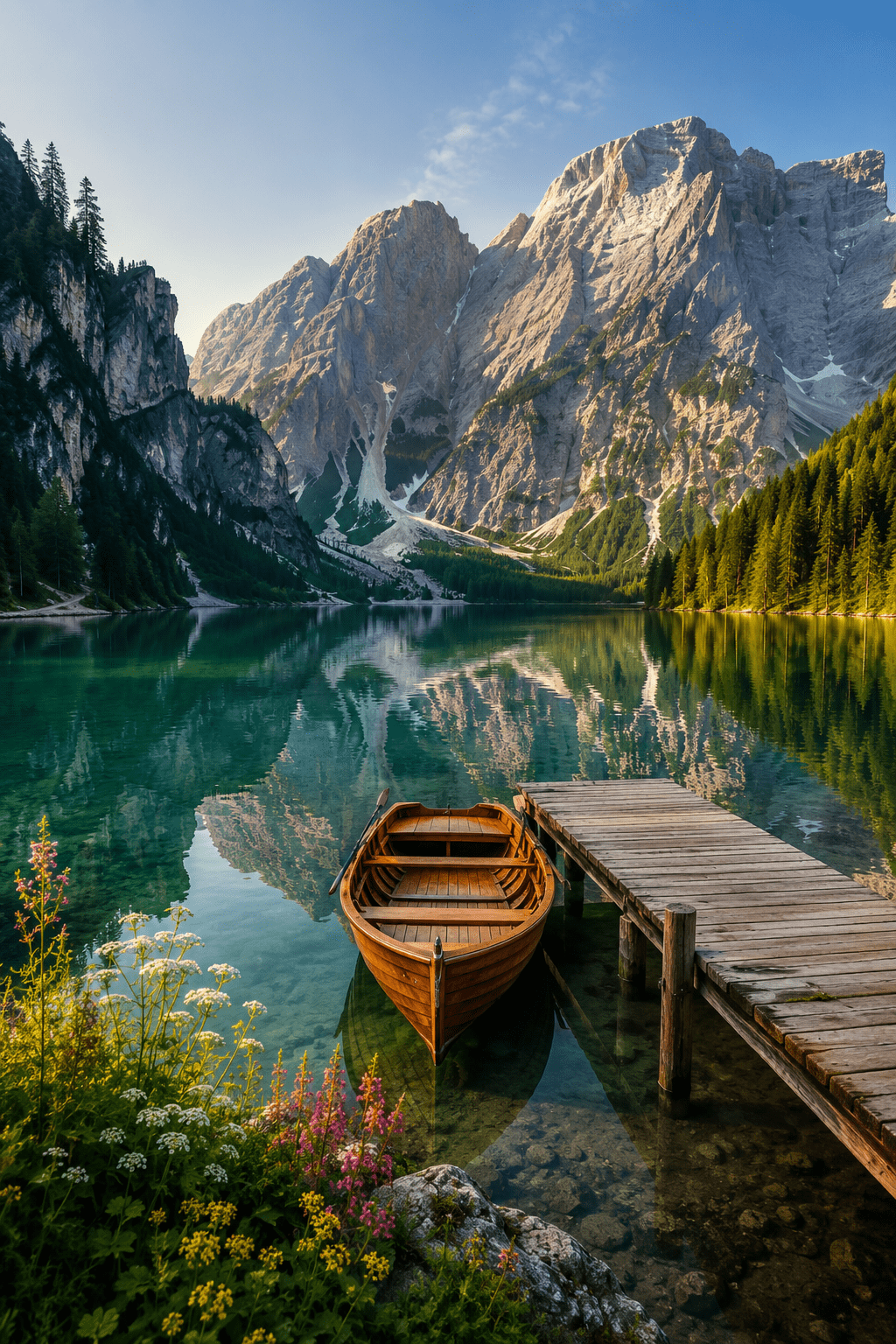
The Dolomites in summer are simply the most accessible version of this landscape. Trails that are buried under snow from October to May open up fully by late June, cable cars run daily, and the pale limestone towers glow a warm amber in the long evening light that you just don’t get in winter.
Weather-wise, expect warm days (typically 20-25°C at valley level) and noticeably cool nights in the mountains. June is the sweet spot for wildflowers and thin crowds. July and August are peak season – villages feel alive, but popular spots like Lago di Braies get genuinely packed by mid-morning [4].
“Early summer in the Dolomites feels like the mountains just exhaled. The meadows are impossibly green, the snow patches are still visible on the high peaks, and you can hike for hours without seeing another soul.”
A few practical notes before we get into the list:
- Shuttle buses replace private cars on some roads (like the one to Lago di Braies) during peak weeks
- Book accommodation early – popular villages like Ortisei and Cortina fill up fast in July
- The Dolomiti SuperSummer lifts opened May 25, 2026, so the full network is already running for this season [2]
If you’re planning a broader Italian trip, our Dolomites Italy itinerary guide covers the logistics in detail.
The 15 Most Stunning Places to Visit
Here are the 15 spots that genuinely look like they were designed by someone who had never heard the word “subtle.”
1. Lago di Braies (Pragser Wildsee)
This is the postcard. A deep emerald lake ringed by pine forest and backed by sheer rock walls – it looks digitally enhanced in person. Rent a wooden rowboat and paddle out at 6:30am before the shuttle buses arrive. The loop trail around the lake takes about 1.5 hours [5].
Best time to visit: Weekday mornings in June or early September.
2. Tre Cime di Lavaredo
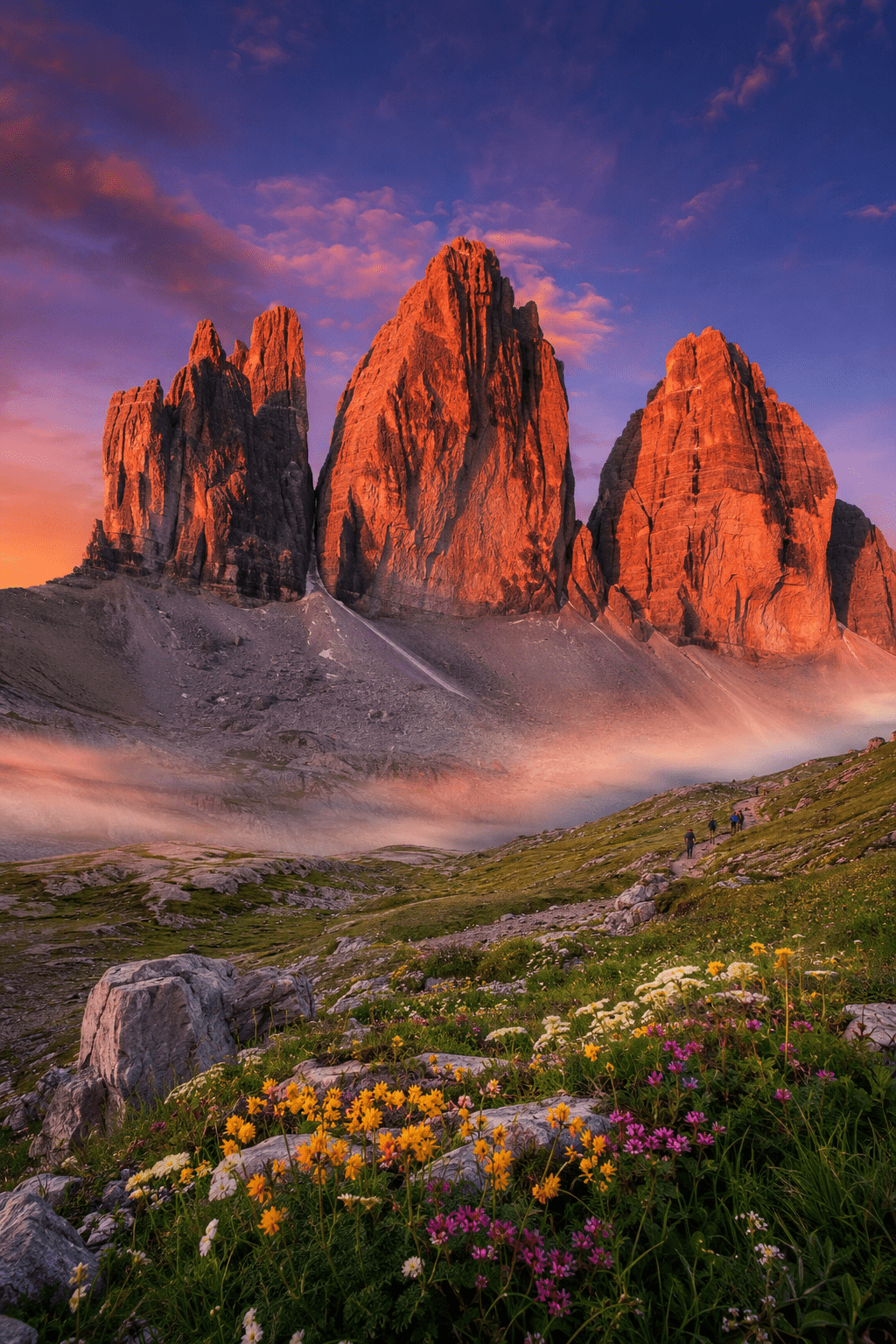
Three massive cylindrical rock towers rising from a high plateau at around 2,400 meters. The circular hike around all three peaks (about 10km) is one of the most iconic walks in the Alps. Sunrise here is genuinely otherworldly – the towers turn pink and orange before the sky fully brightens [7].
Tip: The road to Rifugio Auronzo requires a toll (around €30 per car in peak season). Arrive before 8am or take the shuttle from Misurina.
3. Seceda Ridge, Val Gardena
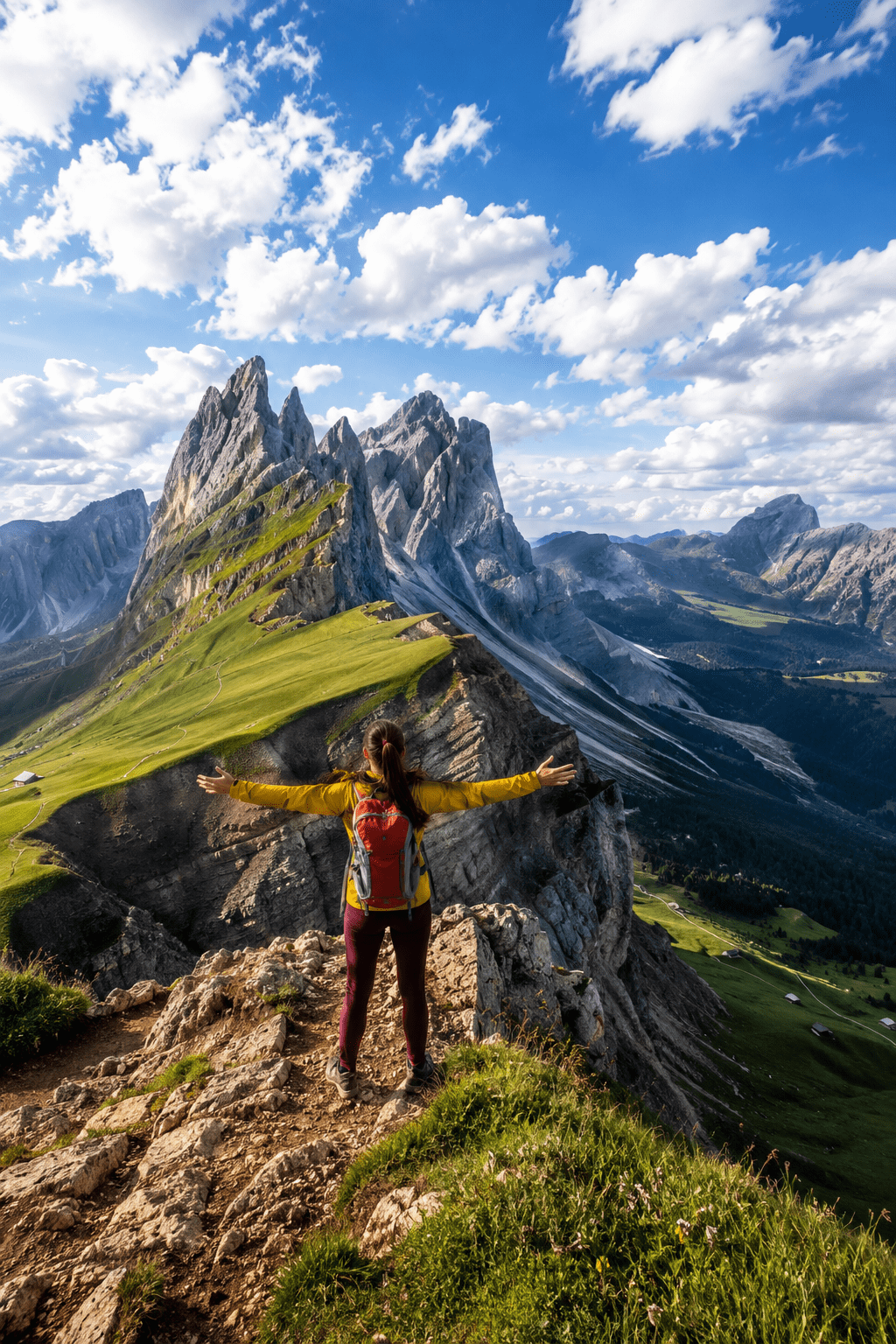
The Seceda gondola from Ortisei lifts you to a ridge at 2,500 meters with a jaw-dropping view of the Odle/Geisler rock spires. The landscape here looks almost architectural – like someone stacked enormous stone teeth along the horizon. The high-altitude meadows are perfect for easy walks with big views [8].
4. Alta Badia
Alta Badia sits in a wide, sun-filled valley surrounded by some of the most dramatic Dolomite walls in the region. In summer 2026, it offers hiking trails for all fitness levels, cycling routes over legendary mountain passes, and a food scene that punches well above its weight – several restaurants here hold Michelin stars [3].
5. Cortina d’Ampezzo
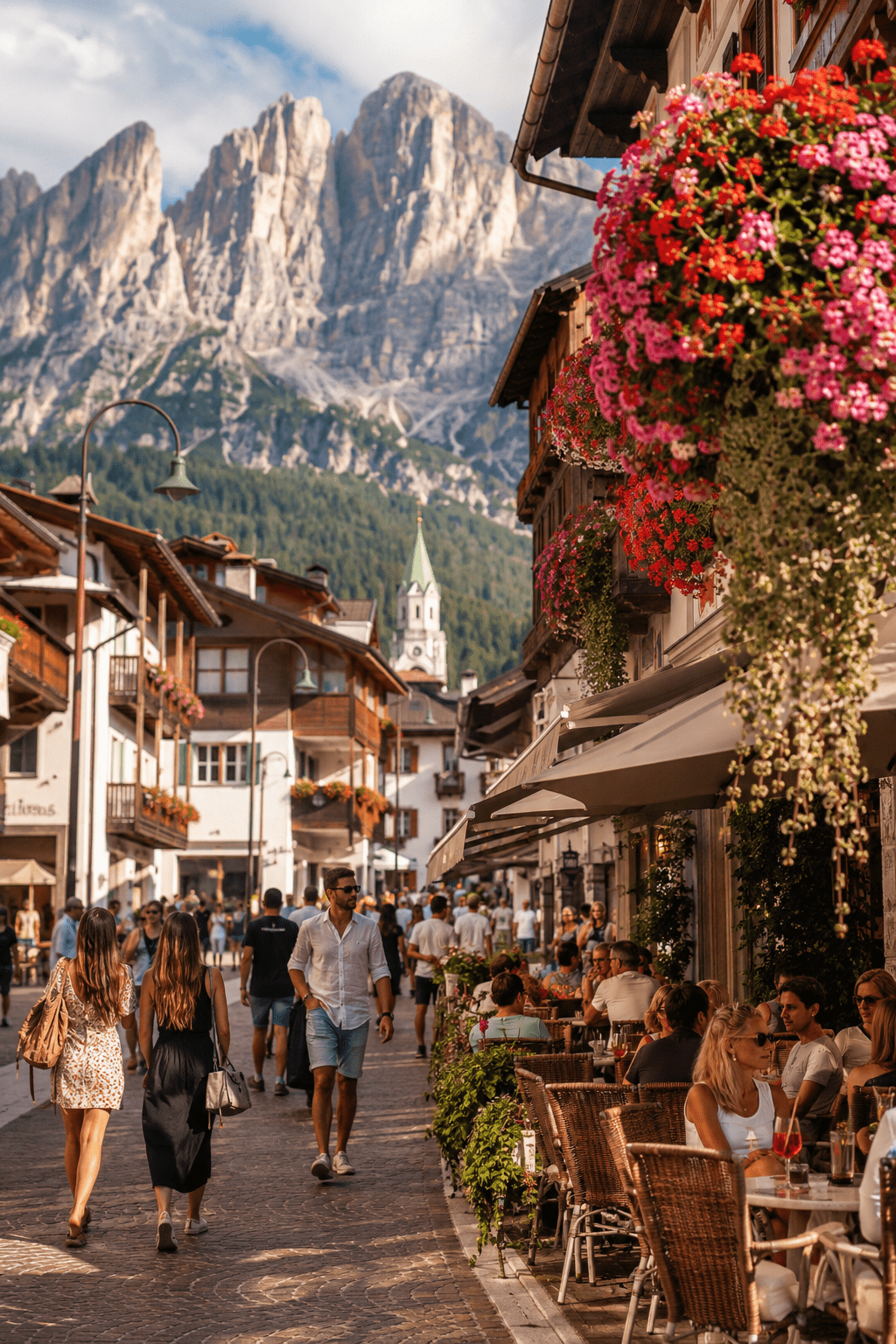
Cortina is the glamorous one. The town sits in a wide bowl surrounded by peaks on all sides, and the main pedestrian street (Corso Italia) is lined with boutiques and cafes. But don’t let the designer shops fool you – the hiking and via ferrata routes around Cortina are world-class. The Faloria cable car gives you instant access to high terrain [8].
6. Alpe di Siusi (Seiser Alm)
Europe’s largest high-altitude alpine meadow. In summer, it’s a sea of green and yellow wildflowers stretching across a plateau above the treeline, with the Sassolungo and Sciliar massifs rising on either side. Cars are restricted – take the gondola from Ortisei or Siusi. Cycling and easy hiking here are exceptional [4].
7. Lago di Carezza (Karersee)
Smaller than Braies but arguably more colorful. The water shifts between turquoise and deep green depending on the light, and the backdrop of the Latemar mountain group is reflected perfectly on calm mornings. It’s roadside accessible, which makes it crowded – visit early or late in the day.
8. Passo Pordoi
At 2,239 meters, Pordoi is one of the great Dolomite passes. Drive or cycle up and you’re rewarded with a panorama that includes the Marmolada glacier (the Dolomites’ highest peak) and the Sella massif. The cable car to Sass Pordoi takes you even higher, to a rocky plateau at 2,950 meters where the views are borderline absurd.
9. Fanes-Sennes-Braies Nature Park
This is where you go to escape the crowds. The park covers a vast high-altitude plateau with turquoise lakes, ancient Ladin cultural sites, and trails that connect rifugios (mountain huts) where you can stay overnight. The Fanes legend – a local myth about a lost Ladin kingdom – gives the place an extra layer of atmosphere.
10. Val di Funes (Villnöss)
The small village of Santa Maddalena in Val di Funes is one of the most photographed views in all of Italy. A cluster of traditional farmhouses and a white church sit in a green meadow with the jagged Odle peaks rising directly behind them. It’s a short drive from Ortisei and absolutely worth it [7].
11. Marmolada Glacier
The Marmolada is the highest point in the Dolomites at 3,343 meters. A cable car system takes you up to the glacier, where you get a 360-degree view that stretches on clear days to the Austrian Alps. Note that the glacier has been retreating significantly – visiting in 2026 means seeing it while it’s still accessible.
12. Lago di Fedaia
Sitting right at the foot of the Marmolada, this reservoir lake has an almost surreal blue-gray color fed by glacial meltwater. The road over Passo Fedaia is one of the great cycling climbs in the Dolomites and featured in the Giro d’Italia multiple times.
13. Cinque Torri
Five eroded rock towers rising from a grassy plateau near Cortina. The area was a World War I battlefield, and the open-air museum here (with preserved trenches and artillery) adds real historical weight to the landscape. The hike up from the Bai de Dones lift is easy and family-friendly [7].
14. Misurina Lake
A wide, calm lake at 1,754 meters with a direct view of the Tre Cime group reflected in the water. It’s less visited than Braies and has a more relaxed, old-fashioned resort feel. The air here is notably clean and dry – the area has been used as a treatment location for respiratory conditions for over a century.
15. Livinallongo del Col di Lana
Less famous than the others, but that’s the point. This quiet valley near Arabba has traditional Ladin villages, excellent hiking into the Marmolada area, and almost none of the tourist infrastructure that makes some Dolomite spots feel theme-park-ish. It’s the kind of place you find when you’ve been to the Dolomites before and want something real.
What to Actually Do During Dolomites Italy Summer
Beyond just showing up and staring at mountains (which is valid), here’s how most travelers structure their time.
Hiking is the core activity. The network of marked trails is excellent, rifugios serve hot food and have overnight beds, and the Alta Via routes (long-distance trails crossing the entire range) are bucket-list material for serious walkers.
Mountain biking has grown significantly. Val Gardena in particular has become a major biking hub as of 2026, with trails ranging from gentle gravel paths to technical descents [2]. The Dolomiti SuperSummer lifts opened in late May 2026, so you can ride up and descend on trails without the climb [2].
Via ferrata (protected climbing routes with fixed cables and ladders) are a Dolomites specialty. Routes like the Ferrata Lipella near Tofana or the Ferrata Brigata Tridentina near Tre Cime are accessible to anyone with basic gear and a head for heights.
Cycling over the great passes – Pordoi, Sella, Gardena, Campolongo – is a classic summer activity. The Sella Ronda circuit connects four passes in a single day and is one of the most famous cycling loops in Europe.
For families, the Dolomites Italy itinerary guide has specific suggestions for routes with kids.
How to Get Around Without Losing Your Mind
Getting around the Dolomites in summer requires a bit of planning because the road network is narrow and some areas restrict private vehicles during peak weeks.
| Getting Around | Best For | Notes |
|---|---|---|
| Rental car | Flexibility, off-peak travel | Essential for reaching smaller valleys |
| Shuttle buses | Peak season, popular spots | Lago di Braies, Alpe di Siusi have shuttle systems |
| Cable cars/lifts | Reaching high terrain fast | Dolomiti Super Summer Card covers ~140 lifts [1] |
| Cycling | Fit travelers, pass routes | E-bikes available widely for rent |
| Train | Getting to the region | Bolzano and Belluno are main rail hubs |
The Dolomiti Super Summer Card is worth calculating for your trip. Adult day passes start at around €67, with multi-day options available from May 23 to November 9 [1]. If you’re planning to use lifts on multiple days, the math usually works in your favor.
Common mistake: Driving to Lago di Braies at 10am in August. The road closes to private cars during peak hours and you’ll end up waiting for a shuttle. Go early or go late.
If you’re exploring other parts of northern Italy on the same trip, the Piedmont Italy itinerary is a great complement – completely different landscape, equally rewarding.
Dolomites Italy Summer: When to Go and What to Expect
The honest answer is that every month from June to September has a different character, and the right choice depends on what you’re after.
June: Wildflowers are at peak bloom, snow patches still visible on high peaks, trails are quieter, and accommodation is easier to find. Some high-altitude rifugios may not be open until late June. Weather is slightly more unpredictable.
July: Everything is open, days are long (sunset around 9pm), and the mountains are at their most alive. Crowds build from mid-July onward. This is also when football training camps begin using the Dolomites as a base [2].
August: Peak season. Lago di Braies and Tre Cime are genuinely crowded by 9am. Book everything 3-4 months ahead. The evenings are spectacular – long golden light on the peaks.
September: My personal favorite. Crowds thin out noticeably after the first week. The light turns slightly warmer and more golden, the first autumn colors appear on the lower slopes, and prices drop. Most trails and lifts remain open until late October.
For weather, expect warm afternoons (18-25°C in valleys) and cool nights (8-12°C at altitude). Afternoon thunderstorms are common in July and August – plan hikes to finish before 2pm [4]. Pack a waterproof layer regardless of the forecast [6].
Practical Tips Before You Go
A few things that make a real difference:
- Book rifugio beds weeks in advance for popular overnight huts like Rifugio Lagazuoi or Rifugio Locatelli
- Start hikes early – not just for crowds, but because afternoon storms are a real safety consideration
- Carry cash – many mountain huts and small villages don’t accept cards reliably
- Download offline maps – cell coverage is patchy on high trails; apps like Komoot or Maps.me work well
- The “Train of the Castles” tour began May 18, 2026, running through Val di Sole and Val di Non – a genuinely unique way to see the region’s historic castles if you want a break from hiking [2]
For packing, a carry-on friendly approach works well – layers are more important than volume [6]. You don’t need heavy gear for most summer trails, but good hiking boots and a rain jacket are non-negotiable.
If the Dolomites are part of a broader Italy trip, check out our guides to hidden gems in Italy and what to see in Florence for ideas on combining regions. And if you’re worried about common travel errors, our mistakes to avoid in Italy guide covers the pitfalls that catch first-timers.
FAQ
When is the best time to visit the Dolomites in summer?
June and September offer the best balance of good weather, open trails, and manageable crowds. July and August are peak season with longer days but significantly more visitors at popular spots.
Do I need a car to explore the Dolomites in summer?
A rental car gives you the most flexibility, but it’s not strictly necessary. Shuttle buses cover the most popular spots during peak season, and cable cars handle the vertical access. For smaller valleys and off-the-beaten-path spots, a car is a real advantage.
Is the Dolomiti Super Summer Card worth buying?
If you plan to use lifts on two or more days, it usually pays for itself. Adult day passes start at around €67, with multi-day options available. The card covers roughly 140 lifts across the region [1].
How crowded does Lago di Braies get in summer?
Very crowded by mid-morning in July and August. The road to the lake is closed to private cars during peak hours and replaced by a shuttle bus. Arriving before 7am or after 5pm gives you the experience without the crowds [5].
Are the Dolomites good for families with kids?
Yes – especially areas like Alpe di Siusi and Val Gardena, which have easy gondola access to high terrain, gentle walking paths, and plenty of family-friendly rifugios. The Cinque Torri area near Cortina also has an accessible open-air WWI museum that older kids find genuinely interesting.
What should I pack for a summer trip to the Dolomites?
Good hiking boots, a waterproof jacket, warm layers for evenings and high altitude, sunscreen (UV is intense at elevation), and a reusable water bottle. A carry-on friendly approach works well – pack for layers rather than bulk [6].
Can I do via ferrata as a beginner?
Some via ferrata routes are graded for beginners, but you’ll need a harness, helmet, and via ferrata set (available to rent in most towns). Taking a guided introduction course is the safest approach if you’ve never done it before.
What’s the best base town for exploring the Dolomites?
Ortisei (Val Gardena) and Cortina d’Ampezzo are the two most central and well-connected options. Ortisei is slightly less expensive and has excellent gondola access to Seceda and Alpe di Siusi. Cortina is more upscale with a wider range of restaurants and shops.
Are there waterfalls worth visiting in summer?
Yes – the Dolomites have several impressive waterfalls that are at peak flow in early summer from snowmelt. They’re a good option on days when higher trails are closed due to weather [9].
Is the Dolomites region safe for solo female travelers?
The Dolomites are considered very safe for solo travelers of all kinds. Trails are well-marked, rifugios are welcoming, and the region has excellent infrastructure. For broader solo travel inspiration, see our best places for solo female travel guide.
Conclusion
The Dolomites in summer are one of those places that genuinely exceed expectations – and expectations are usually already high. The 15 spots in this list range from iconic (Tre Cime, Lago di Braies) to quietly spectacular (Livinallongo, Fanes-Sennes-Braies), and all of them reward early starts and a bit of advance planning.
Your actionable next steps:
- Pick your base – Ortisei for central access, Cortina for a more upscale feel, or a smaller village like Arabba if you want to avoid crowds entirely
- Book accommodation now – July and August fill up months in advance
- Check the Dolomiti Super Summer Card against your planned lift usage to see if it saves you money [1]
- Plan at least one sunrise hike – Tre Cime or Seceda at first light is worth the early alarm
- Download offline maps before you leave cell coverage range
- Read the Dolomites Italy itinerary guide for a day-by-day structure if you’re visiting for a week or more
The Dolomites Italy summer experience is one of those rare travel moments where the photos don’t lie. In fact, they usually don’t do it justice.
References
[1] Dolomiti Super Summer Card – https://www.south-tirol.com/useful-information/advantage-cards/dolomiti-super-summer-card
[2] News – https://www.dolomiti.it/en/news
[3] Summer In Alta Badia Nature Relaxation And Adventure In The Heart Of The Dolomites – https://www.orizzonteitalia.com/en/news.237/summer-in-alta-badia-nature-relaxation-and-adventure-in-the-heart-of-the-dolomites
[4] Dolomites In The Summer – https://www.grasshopperadventures.com/article/dolomites-in-the-summer
[5] Top 15 Must See Spots In Dolomites Italy – https://miawanders.com/top-15-must-see-spots-in-dolomites-italy/
[6] Dolomites Packing List Summer – https://theatlasheart.com/dolomites-packing-list-summer/
[7] 10 Destinations In The Dolomites To Photograph – https://www.dolomiti.it/en/summer-holidays/10-destinations-in-the-dolomites-to-photograph
[8] Summer Holidays In The Dolomites – https://www.leotrippi.com/magazine/summer/summer-holidays-in-the-dolomites/
[9] Cascate Dolomiti – https://www.montagnaestate.it/en/cascate-dolomiti/