
Last updated: September 17, 2026
Quick Answer: Utah has far more to offer than Zion and Moab. From a warm-water scuba crater in a small town to Mars-like lava tubes and glowing slot canyons, the state’s lesser-known spots reward curious travelers with fewer crowds and more wonder. This guide covers 17 of the best Utah hidden gems, plus everything you need to plan your visit safely.
Key Takeaways
- Utah has over 159 documented offbeat and unusual attractions beyond its five major national parks
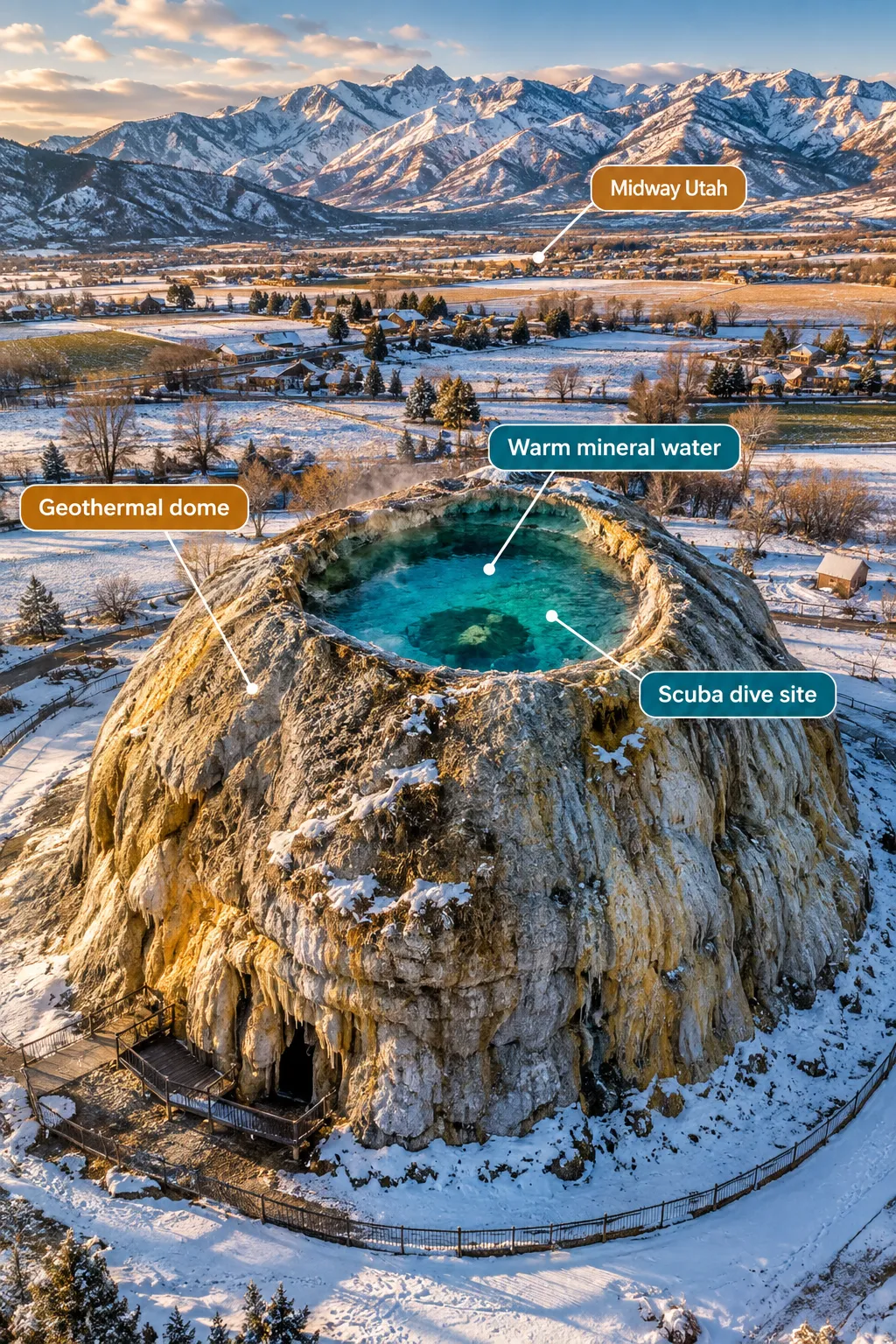
- Homestead Crater in Midway is one of the only geothermal scuba dive sites in the U.S.
- Little Wild Horse Canyon offers a slot canyon experience without the tour fees of Antelope Canyon
- Several hidden Utah spots are accessible in winter, including natural hot springs and lava tubes
- The best time to visit most hidden gems is spring (April-May) or fall (September-October)
- Many spots sit within 2-3 hours of Salt Lake City, making them easy day trips
- Cell service is often nonexistent – offline maps and extra water are essential
- Family-friendly options exist, but some spots require moderate hiking experience
What Are the Most Underrated Places to Visit in Utah
Utah’s most underrated spots sit just outside the tourist radar – places like Goblin Valley, Kanarra Creek, and the San Rafael Swell that locals have quietly enjoyed for years. These aren’t hard to reach, but they rarely make the top-ten lists that send everyone to the same trailheads.
Here are 17 Utah hidden gems worth putting on your map:
- Homestead Crater – Midway (geothermal scuba/swimming)
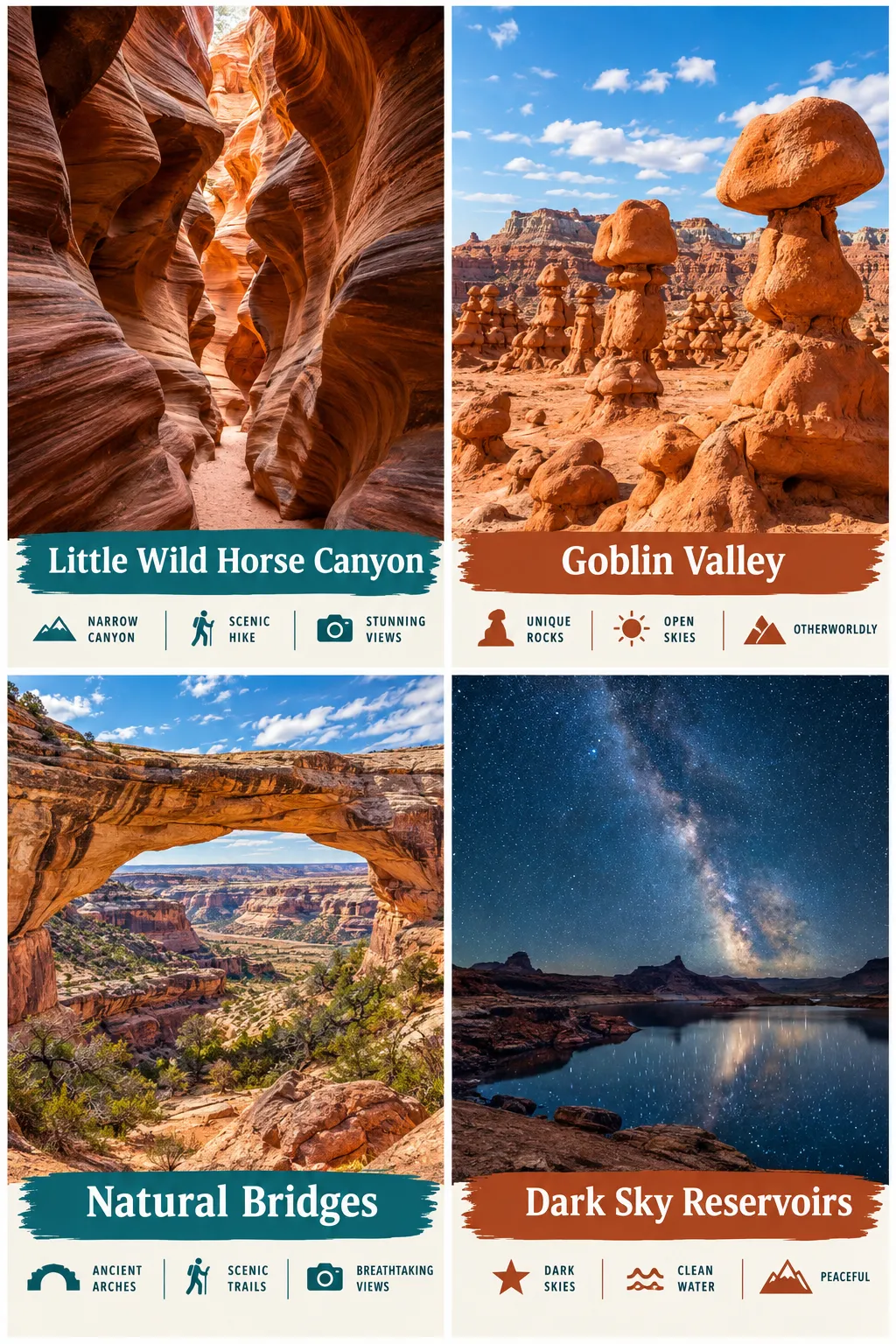
- Little Wild Horse Canyon – San Rafael Swell (slot canyon hike)
- Goblin Valley State Park – Emery County (alien hoodoos)
- Kanarra Creek – Kanarraville (waterfall canyon wade)
- Natural Bridges National Monument – San Juan County (three massive stone bridges)
- Paria Canyon – Grand Staircase area (remote slot canyon backpacking)
- Mossy Cave Trail – Bryce Canyon area (hidden waterfall)
- Antelope Island State Park – Great Salt Lake (bison and sunsets)
- Bonneville Salt Flats – Tooele County (surreal white expanse)
- Newspaper Rock – Indian Creek (massive petroglyph panel)
- Box Canyon Hot Springs – near Midway (outdoor soaking)
- Lava Point – Zion backcountry (crowd-free Zion views)
- Calf Creek Falls – Grand Staircase (hidden waterfall hike)
- Dead Horse Point State Park – Moab area (panoramic overlook)
- Torrey, Utah – Capitol Reef basecamp town
- Nine Mile Canyon – Carbon County (world’s longest art gallery)
- Kodachrome Basin State Park – Cannonville (colorful spires)
According to Visit Utah’s official hidden adventures guide, many of these spots see a fraction of the foot traffic of the major parks, even when located just miles away.
Best Hidden Gems Near Salt Lake City That Tourists Miss
Several strong Utah hidden gems sit within a 90-minute drive of Salt Lake City, making them perfect for day trips or weekend escapes. Most tourists fly into SLC and head straight to Zion or Arches – which means these closer spots stay blissfully quiet.
Top picks near SLC:
- Homestead Crater (Midway, 45 min) – a dome-shaped limestone crater with a 90°F geothermal pool inside
- Antelope Island State Park (30 min) – bison roam freely, and the sunsets over the Great Salt Lake are unreal
- Box Canyon Hot Springs (Midway area, 50 min) – outdoor soaking with mountain views
- Bonneville Salt Flats (1.5 hrs west) – looks like another planet, especially at sunrise
The Utah Valley hidden gems guide from Provo.com highlights several of these as top picks for locals who want to skip the crowds entirely.
Where to Find Secret Waterfalls in Utah
Utah has several stunning waterfalls that most visitors never find, tucked inside canyon hikes that require a bit of wading or a short trail. The best secret waterfalls in Utah include Kanarra Creek, Calf Creek Falls, and Mossy Cave near Bryce Canyon.
Secret waterfall breakdown:
| Location | Hike Distance | Difficulty | Best Season |
|---|---|---|---|
| Kanarra Creek | 4 miles round trip | Moderate | May-Sept |
| Calf Creek Falls | 5.5 miles round trip | Moderate | Apr-Oct |
| Mossy Cave Trail | 0.8 miles | Easy | May-Oct |
| Paria Canyon | Multi-day | Strenuous | Apr-May, Sept-Oct |
Kanarra Creek is a standout. You wade through a narrow red-rock canyon, climb a few ladders, and arrive at a waterfall that feels completely private. The town of Kanarraville charges a small daily permit fee, so check ahead.
Calf Creek Falls drops 126 feet into a pool surrounded by cottonwoods and canyon walls covered in ancient pictographs. It’s one of the most beautiful short hikes in the state, yet it sees a tiny fraction of Zion’s crowds.
Least Crowded Hiking Trails and Hidden Natural Pools in Utah
The least crowded hiking trails in Utah are generally found in the San Rafael Swell, Grand Staircase-Escalante, and the Uinta Mountains. These areas get far fewer visitors than the national parks but offer equally dramatic scenery.
Low-crowd hiking picks:
- Little Wild Horse Canyon – one of the best slot canyon hikes in Utah, free to enter, and far less visited than Antelope Canyon
- Paria Canyon – a multi-day backpacking route through a 38-mile slot canyon system
- Lava Point, Zion – accessible via a back road, offering panoramic Zion views with almost no one around
- Natural Bridges National Monument – three of the world’s largest natural bridges, with visitor numbers a fraction of Arches
Hidden natural pools and swimming holes worth seeking out:
- Homestead Crater – warm mineral water in a geothermal dome (book ahead, capacity is limited)
- Kanarra Creek pools – cool, clear wading pools inside the canyon
- Paria River pools – seasonal, remote, and worth every step
“The San Rafael Swell is the size of Rhode Island and sees maybe 1% of the visitors that Zion does. It’s the most underrated landscape in the American West.” – Utah.com secret adventures
What Makes These Utah Spots Worth Visiting Instead of Zion or Moab
These Utah hidden gems offer the same dramatic geology as Zion and Moab but without the reservation systems, shuttle queues, or $35 entry fees. For travelers who want the experience without the logistics, they’re often the better choice.
Specific advantages:
- No timed entry permits at most hidden spots (as of 2026)
- Free or low-cost access – many charge under $10 per vehicle
- Shorter trails with bigger payoffs per mile at places like Mossy Cave
- Unique experiences you simply can’t get at the big parks – scuba diving in a geothermal crater, for example
Atlas Obscura lists over 159 cool, hidden, and unusual Utah entries, many of which sit right next to well-known parks but get almost no attention.
If you enjoy finding underrated spots in unexpected places, check out our guide to 25 beautiful hidden gems in the USA for more inspiration beyond Utah.
How Do I Get to Remote Utah Locations Safely
Getting to remote Utah locations safely requires an offline map, a full tank of gas, and at least one gallon of water per person per day. Many hidden gems sit on dirt roads with no cell service and no services for 50-100 miles.
Safety checklist before you go:
- Download offline maps (Google Maps, Gaia GPS, or AllTrails offline)
- Tell someone your exact route and expected return time
- Carry a physical map as backup
- Fill up gas before leaving any town – don’t assume the next stop has fuel
- Bring more water than you think you need
- Check road conditions at the Utah Department of Transportation site before heading out
Vehicle considerations: A standard car handles most paved and graded dirt roads. High-clearance 4WD is needed for places like the Burr Trail (unpaved sections), Coyote Gulch, and some Uinta Basin routes.
World Atlas notes that several offbeat Utah towns like Torrey and Escalante serve as smart basecamps – stock up on supplies there before heading deeper into the backcountry.
Best Time of Year to Visit Hidden Utah Gems
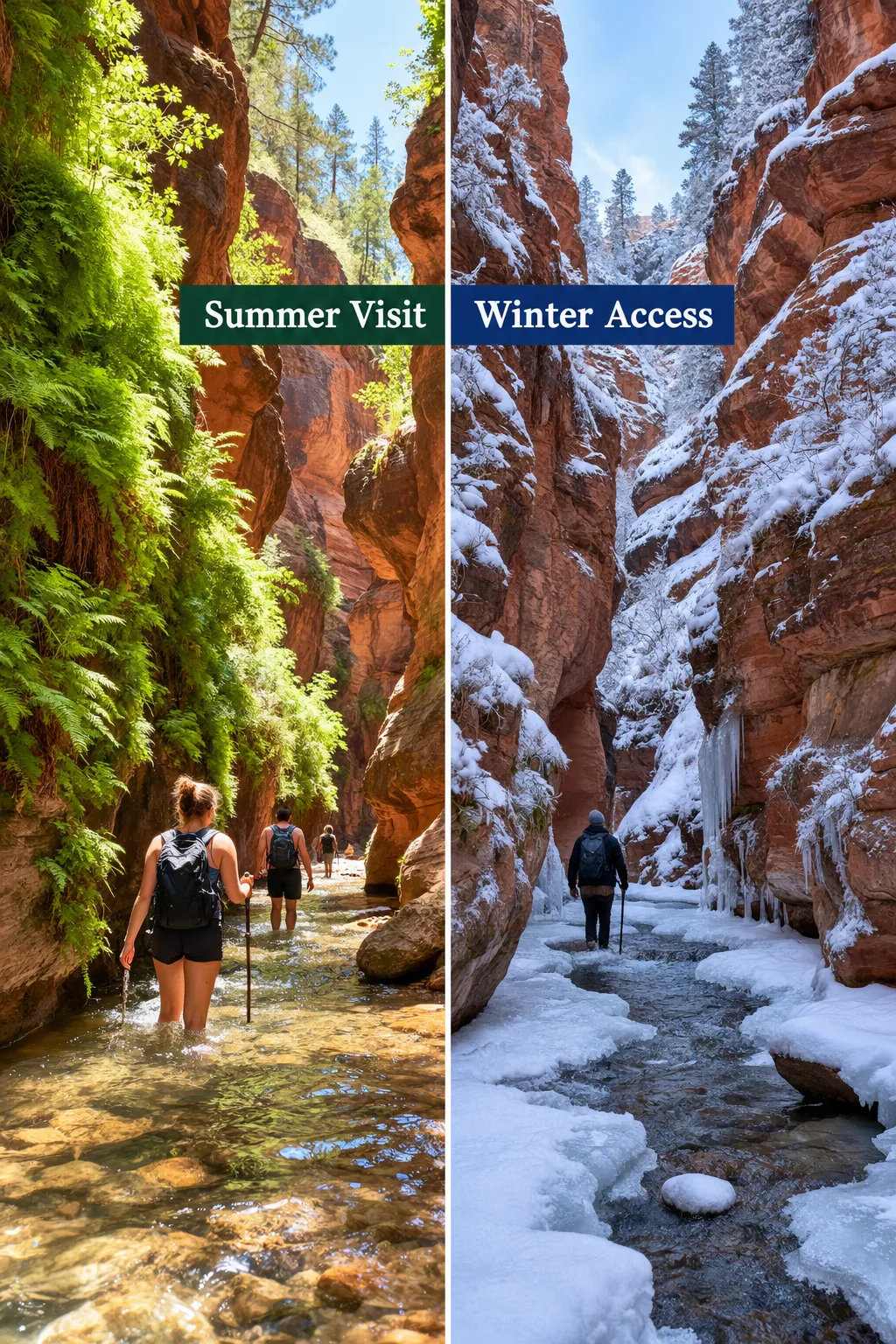
Spring (April-May) and fall (September-October) are the best times to visit most Utah hidden gems. Summer brings extreme heat in the desert south, and some slot canyons become flash-flood risks after monsoon rains in July-August.
Seasonal breakdown:
- Spring (Apr-May): Wildflowers, mild temps, waterfalls running strong – ideal for most spots
- Summer (Jun-Aug): Hot in southern Utah (often above 100°F), but fine for northern spots like the Uintas
- Fall (Sept-Oct): Cooler temps, golden light, low crowds – arguably the best window
- Winter (Nov-Mar): Limited access to many trails, but hot springs and lava tubes are great year-round
According to destination travel resources covering Utah’s off-the-beaten-path spots, the shoulder seasons also mean better photography light and more wildlife sightings.
Are Hidden Utah Spots Family Friendly or Better for Experienced Hikers
Many Utah hidden gems are genuinely family-friendly, while others require solid hiking fitness and backcountry experience. Knowing the difference before you go saves a lot of frustration.
Family-friendly picks (ages 5+):
- Goblin Valley State Park – flat walking among hoodoos, kids love it
- Bonneville Salt Flats – drive-up access, no hiking required
- Mossy Cave Trail – under a mile, paved start, big payoff
- Newspaper Rock – roadside stop, zero hiking
Better for experienced hikers:
- Paria Canyon (multi-day, flash flood risk)
- Little Wild Horse Canyon (tight squeezes, some scrambling)
- Lava tubes near Fillmore (dark, uneven terrain)
Edge case: Kanarra Creek involves wading through cold water and climbing ladders. It’s doable for older kids (8+) but requires water shoes and close supervision.
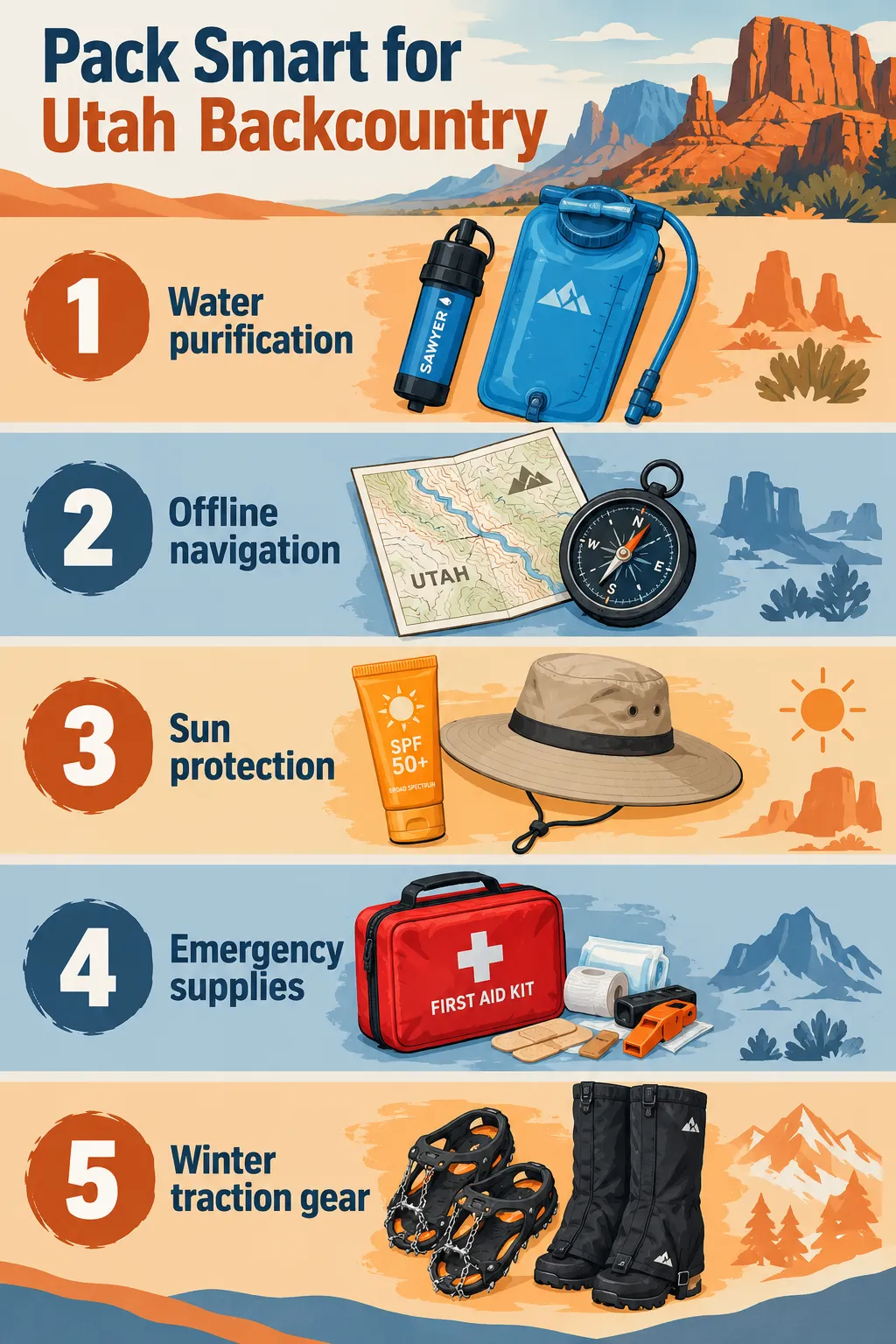
What Should I Pack for Exploring Utah’s Lesser Known Areas
Packing for Utah’s backcountry is different from packing for a national park day hike. The remoteness and desert conditions demand a few specific items most travelers forget.
Essential packing list:
- Water filter or purification tablets (springs exist but aren’t always safe)
- Trekking poles (helpful for slot canyon scrambles)
- Headlamp with extra batteries (lava tubes, early starts)
- Sun protection – hat, SPF 50+, UV sleeves
- Snacks with electrolytes, not just calories
- First aid kit with blister treatment
- Emergency space blanket
- Satellite communicator (like a Garmin inReach) for truly remote routes
What most people forget: Traction devices for winter visits. Several hidden gems like Mossy Cave and Kanarra Creek become icy and slippery from November through March.
Do You Need a Guide to Find These Hidden Gems in Utah
Most Utah hidden gems don’t require a guide – they’re accessible with good research, offline maps, and basic hiking fitness. However, guided tours add real value for remote slot canyons, lava tubes, and petroglyphs where context and navigation matter.
GetYourGuide lists several Utah hidden gems tours now explicitly branded as “hidden gems” experiences, covering areas like the San Rafael Swell and Grand Staircase that are genuinely tricky to navigate solo.
Choose a guide if:
- You’re visiting a technical slot canyon for the first time
- You want deep context on petroglyphs and Native American history
- You’re traveling solo in a very remote area
- You don’t have a high-clearance vehicle but want to reach backcountry spots
Skip the guide if:
- You’re visiting Goblin Valley, Bonneville, or Antelope Island
- You have AllTrails Premium and solid navigation skills
- You’re sticking to state park or well-marked trails
How Far Are These Secret Utah Spots From Main Highways
Most Utah hidden gems are between 15 minutes and 2 hours from a main highway. A few require longer dirt-road drives, but the majority are more accessible than their “secret” reputation suggests.
Distance from I-15 or US-89 (approximate):
- Homestead Crater: 45 min from SLC via US-40
- Goblin Valley: 2.5 hrs from SLC via I-70
- Kanarra Creek: 20 min off I-15 near Cedar City
- Newspaper Rock: 40 min off US-191 south of Moab
- Natural Bridges: 2 hrs from Moab via US-191 and UT-95
- Bonneville Salt Flats: 90 min from SLC via I-80
TripAdvisor’s Utah hidden attractions listings show that most top-rated offbeat spots cluster around existing travel corridors – you’re rarely going truly off-grid.
Which Hidden Utah Gems Are Accessible in Winter
Several Utah hidden gems stay accessible and even improve in winter. Homestead Crater is open year-round and is arguably better in winter when the warm water contrasts with cold air. Lava tubes near Fillmore stay a constant temperature regardless of season.
Winter-accessible picks:
- Homestead Crater – perfect in winter, book ahead
- Bonneville Salt Flats – drive-up, no snow typically
- Newspaper Rock – roadside, accessible most winters
- Antelope Island – open year-round, great for bison photography in snow
- Nine Mile Canyon – accessible by car most of the year
Avoid in winter: Kanarra Creek (icy ladders), Paria Canyon (flash freeze risk), most Uinta Mountain trails.
If you love off-season travel, our roundup of hidden gems in Switzerland that look too beautiful to be real shows how winter transforms landscapes into something extraordinary.
Common Mistakes People Make When Visiting Unknown Utah Locations
The biggest mistake people make visiting Utah’s hidden spots is underestimating distance and heat. A trailhead that looks “quick” on a map can be a 3-hour drive on a dirt road with no services.
Mistakes to avoid:
- Not downloading offline maps – cell service disappears fast outside towns
- Visiting slot canyons during monsoon season (July-Aug) without checking weather upstream
- Assuming permit-free means crowd-free – Goblin Valley and Kanarra Creek can fill up on weekends
- Skipping the gas station in small towns like Escalante or Torrey
- Wearing cotton – it holds moisture and causes dangerous chilling in canyon shade
- Not telling anyone your plans – rescue response times in remote Utah can exceed 24 hours
Herald Extra’s guide to things you don’t know about Utah points out that many visitors are surprised by how quickly desert conditions change, especially in spring and fall.
For more ideas on finding underrated spots closer to home, our guide to vacation spots in Texas that feel like you left the state is worth a look.
FAQ
Q: Are Utah hidden gems free to visit?
Most are low-cost or free. State parks charge $5-$15 per vehicle. Kanarra Creek charges a small daily permit fee. Homestead Crater charges per person for swimming or diving. National monuments like Natural Bridges charge a standard NPS fee.
Q: Do I need a permit for Little Wild Horse Canyon?
No permit is currently required for Little Wild Horse Canyon. It’s managed by the BLM and is free to hike. Arrive early on weekends to get a parking spot.
Q: Is Goblin Valley good for kids?
Yes. Goblin Valley is one of the most family-friendly Utah hidden gems. Kids can scramble freely among the hoodoos, and the terrain is relatively flat and safe.
Q: Can I swim in Homestead Crater?
Yes. Homestead Crater offers swimming, paddleboarding, and scuba diving in its 90°F geothermal pool. Reservations are required and sessions are time-limited.
Q: What is the best hidden gem near Moab?
Dead Horse Point State Park sits just 30 minutes from Moab and offers views that rival Canyonlands without the crowds. Newspaper Rock is another easy pick, about 40 minutes south.
Q: Are Utah’s hidden gems safe for solo travelers?
Many are, but solo travelers should always file a trip plan, carry a satellite communicator, and stick to well-documented routes. Remote areas like Paria Canyon carry real risk for solo hikers.
Q: What is Nine Mile Canyon?
Nine Mile Canyon in Carbon County is a remote canyon road lined with thousands of ancient Fremont petroglyphs and pictographs. It’s often called the world’s longest art gallery and is accessible by car.
Q: How do I find dark sky spots in Utah?
Natural Bridges National Monument was one of the first International Dark Sky Parks in the world. Goblin Valley and the San Rafael Swell also offer exceptional stargazing far from light pollution.
Q: Is Torrey, Utah worth visiting on its own?
Yes. Torrey is a small town near Capitol Reef that World Atlas highlights as one of Utah’s top offbeat basecamps. It has good food, local art galleries, and access to several hidden canyon routes.
Q: What’s the best Utah hidden gem for photography?
Kodachrome Basin State Park offers colorful sandstone spires in shades of red, orange, and white that photograph beautifully at golden hour. It’s far less visited than Bryce Canyon, which sits nearby.
Conclusion
Utah’s five national parks are iconic for a reason – but they’re only a fraction of what this state holds. The 17 Utah hidden gems in this guide offer the same jaw-dropping geology, ancient history, and wide-open skies with far fewer people and far more freedom.
Your next steps:
- Pick 2-3 spots that match your fitness level and travel style
- Download offline maps for each location before you leave home
- Check permit requirements and seasonal road conditions at Visit Utah
- Pack the backcountry essentials, especially water and sun protection
- Tell someone your plan before heading into remote areas
If this list sparked your appetite for off-the-beaten-path travel, you might also enjoy our guides to hidden gems in Italy that feel absolutely magical and Lake District hidden gems worth visiting. The world rewards travelers who look just a little further off the main road.