
Last updated: August 13, 2026
Quick Answer: The Lake District’s most rewarding hidden gems include Ennerdale Water, Brothers Water, Borrowdale’s Fairy Glen, Tarn Hows, Rydal Water, Loweswater, and the Newlands Valley – all beautiful places that sit well away from the Windermere crowds. Most are reachable by car in under 90 minutes from Keswick or Ambleside, and several have flat, accessible paths that work for families and casual walkers alike.
Key Takeaways
- 🏞️ The Lake District receives over 17.7 million visitors annually, making crowd-free planning essential
- 🚗 A car gives you the most flexibility for reaching hidden gems, but some spots are bus-accessible from Keswick and Ambleside
- 🧭 The western Lakes (Ennerdale, Loweswater, Crummock Water) are consistently the quietest areas in the district
- 📸 Early morning visits (before 9am) dramatically reduce crowds even at popular spots like Tarn Hows and Rydal Water
- 🏕️ Solo travel to the Lake District has risen sharply – from 7% of visitors in 2022 to 15% in 2025 – reflecting demand for quieter, more personal itineraries
- 👨👩👧 Several hidden gems, including Brothers Water and Loweswater, have flat shoreline paths that are genuinely family-friendly
- 🗓️ Late September through October and mid-week in May offer the best balance of good weather and low crowds
- 💡 Combining one “big name” spot (like Lake Windermere) with two or three hidden gems per day is the most satisfying itinerary structure
Why the Lake District Hidden Gems Matter More Than Ever in 2026
The Lake District is one of England’s most visited national parks, and the numbers back that up. Tourism data published in May 2026 confirms 17.73 million visitors and 26.85 million tourist days in 2024 alone, generating £2.373 billion in revenue. That concentration of visitors mostly flows to the same handful of spots – Lake Windermere, Bowness, Keswick, and Derwentwater.
The result is that the rest of the district – the quiet valleys, the lesser-known lakes, the mossy waterfalls – stays remarkably peaceful.
William Wordsworth, who lived at Dove Cottage in Grasmere and spent his life writing about these landscapes, described the Lake District as “a sort of national property.” He’d likely be surprised to see how unevenly that property gets visited today.
If you want the views without the queues, the water without the jet skis, and the walk without the selfie sticks, this guide is for you.
The 7 Best Hidden Lakes in the Lake District Away From Tourists
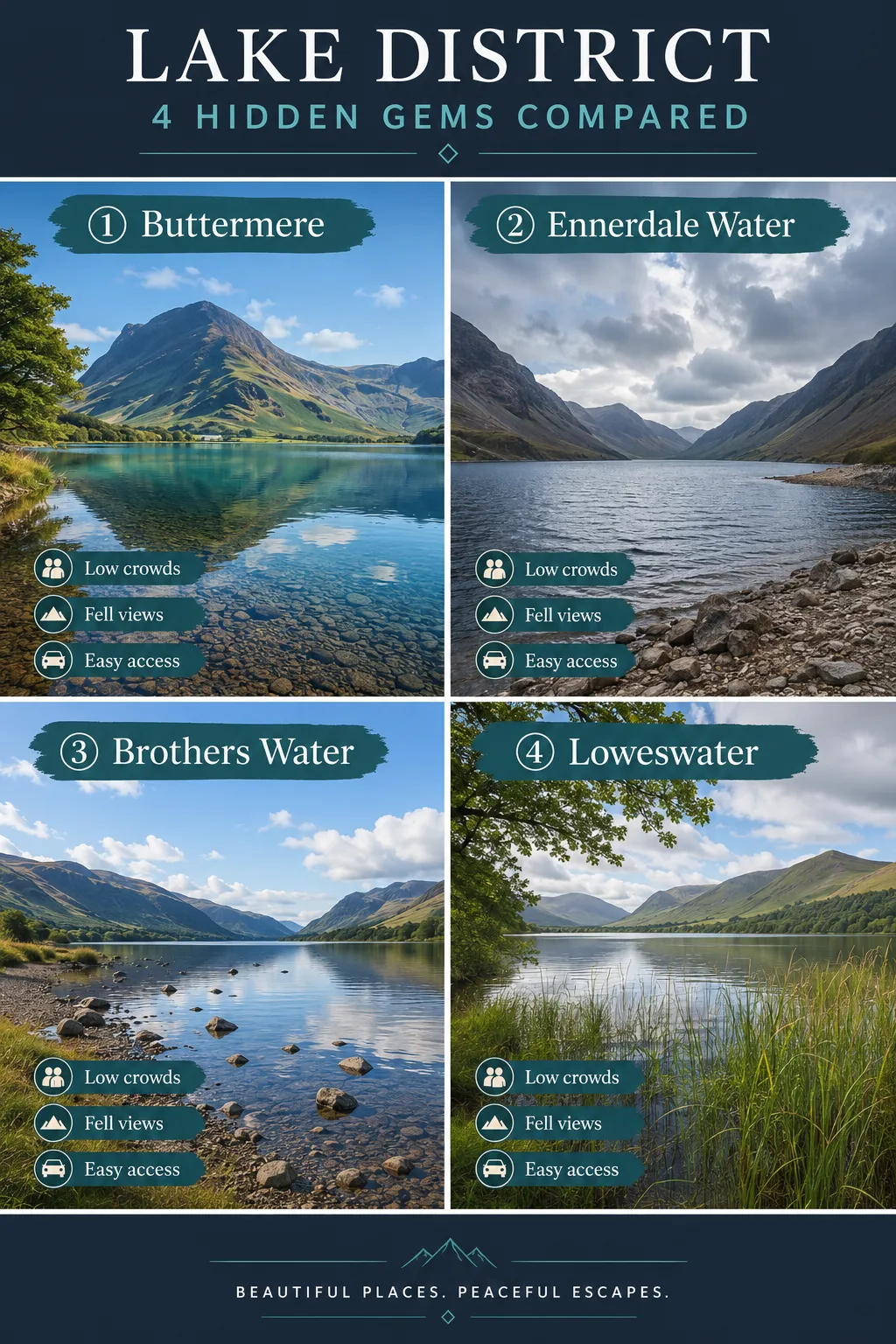
The quietest lakes in the Lake District are mostly in the western and northern fells, well away from the Windermere corridor. Ennerdale Water, Loweswater, Brothers Water, and Haweswater Reservoir consistently see the lowest visitor numbers while still offering genuinely great views and easy access.
Here are the seven hidden gems worth building your itinerary around:
1. Ennerdale Water – The Wild West
Ennerdale Water sits in the far west of the district, and its status as a reservoir means no motorboats are allowed on the water. Local guides updated in April 2026 confirm it’s one of the quietest corners of the park even during school holidays.
The lake is surrounded by ancient woodland and open fell, and the valley beyond it – Ennerdale Valley – has no public road through it. That alone keeps coach tours away.
- Best for: Wild walkers, photography, complete solitude
- Nearest hub: Cleator Moor (about 20 minutes drive)
- Walk options: The full lake circuit is around 8 miles; the eastern shore path is flat and easy
2. Brothers Water – Kirkstone Pass Gem
Brothers Water is tucked just south of the Kirkstone Pass near the hamlet of Hartsop. A calm-places guide updated in May 2026 calls it “one of the most peaceful lakes in the Lake District,” and it earns that description.
The lake is small, the car park is easy, and the flat shoreline path takes about 30 minutes to walk. It’s a hidden gem that most drivers pass without stopping.
3. Loweswater – North of Crummock Water
Loweswater sits at the northern end of the Crummock Water valley. It’s one of the few lakes where the surrounding woodland is actually owned by the National Trust, giving it a sheltered, enclosed feel that bigger lakes don’t have.
4. Rydal Water – Between Grasmere and Ambleside
Rydal Water is small, flat-shored, and sits on the old coffin road between Grasmere and Ambleside. It’s genuinely beautiful and far less visited than either of its famous neighbors. The path along the north shore is level and easy, making it one of the best places to visit with young children or anyone who prefers a gentle walk.
5. Tarn Hows – Easy Walk, Big Reward
Tarn Hows is technically an artificial tarn, created in the 19th century by damming three smaller tarns. It’s not entirely unknown, but it’s far quieter than Windermere. The freshly updated guide to beautiful Lake District places calls it the best easy walk in the district. Go on a weekday morning and you may have the circuit almost to yourself.
6. Buttermere – The Best Hidden Gem Lake
Buttermere sits at the end of the Honister Pass road and is often described as the most beautiful lake in the district. The same guide calls it “the best hidden gem” when compared to the Windermere crowds. The full lake circuit is 4.5 miles on a well-maintained path with great views over the water throughout.
7. Haweswater Reservoir – The Drowned Village
Haweswater is the Lake District’s most remote lake, reached by a single-track road from Shap. During droughts, the ruins of the drowned village of Mardale Green sometimes emerge from the water. It’s one of the most unusual and atmospheric places in all of Britain.
Lesser-Known Villages in the Lake District Worth Visiting
The Lake District’s hidden gem villages are often more rewarding than its famous towns. Hawkshead, Hartsop, Boot in Eskdale, and Caldbeck are all beautiful places that see a fraction of the visitors that Bowness or Ambleside attract.
Hawkshead is a car-free village of whitewashed buildings near Esthwaite Water. William Wordsworth went to school here, and the old grammar school is still standing. It’s genuinely charming and far less busy than Grasmere or Windermere town.
Hartsop is a tiny hamlet near Brothers Water with traditional spinning galleries on its old farmhouses. Most people drive straight past it on the way to the Kirkstone Pass.
Boot in Eskdale is the kind of place that makes you want to stay for a week. There’s a working watermill, a narrow-gauge railway, and the Eskdale Valley spreading out around it with almost no other tourists in sight.
Caldbeck sits on the northern edge of the district near Skiddaw. It’s the village where John Peel – the famous huntsman, not the DJ – is buried. The village green and surrounding fells are beautiful and rarely busy.
For more inspiration on finding places that tourists miss, check out our guide to hidden gems in the Amalfi Coast tourists never find – many of the same crowd-avoidance principles apply.
Hidden Waterfalls in the Lake District Easy to Reach
The Lake District has dozens of waterfalls, and the most spectacular ones are often the least visited. Whorneyside Force, Aira Force, Scale Force, and the waterfalls in Borrowdale’s Fairy Glen are all reachable without a serious hike.
Aira Force near Ullswater is one of the most dramatic waterfalls in England, dropping 20 meters into a wooded gorge. The path from the National Trust car park takes about 20 minutes. A May 2026 guide notes it offers “a sense of adventure without requiring a big hike.”
Whorneyside Force in the Langdale Valley is a top pick in a June 2026 hidden gems roundup as one of the best lesser-known waterfalls in the district. It’s reached via a moderate walk from the Old Dungeon Ghyll car park.
Scale Force near Buttermere is the tallest single-drop waterfall in the Lake District at around 52 meters. The path from Buttermere village takes about 45 minutes each way through open fell.
Fairy Glen in Borrowdale is a mossy, magical gorge near Grange. It’s the kind of place that looks like it belongs in a fairy tale, and it sees far fewer visitors than the nearby Bowder Stone.
Done-For-You 3-Day Lake District Hidden Gems Itinerary
You need at least 3 days to do the Lake District hidden gems justice, though a week lets you go deeper. Three days is enough to cover the western lakes, the Borrowdale Valley, and the quieter southern fells without feeling rushed.
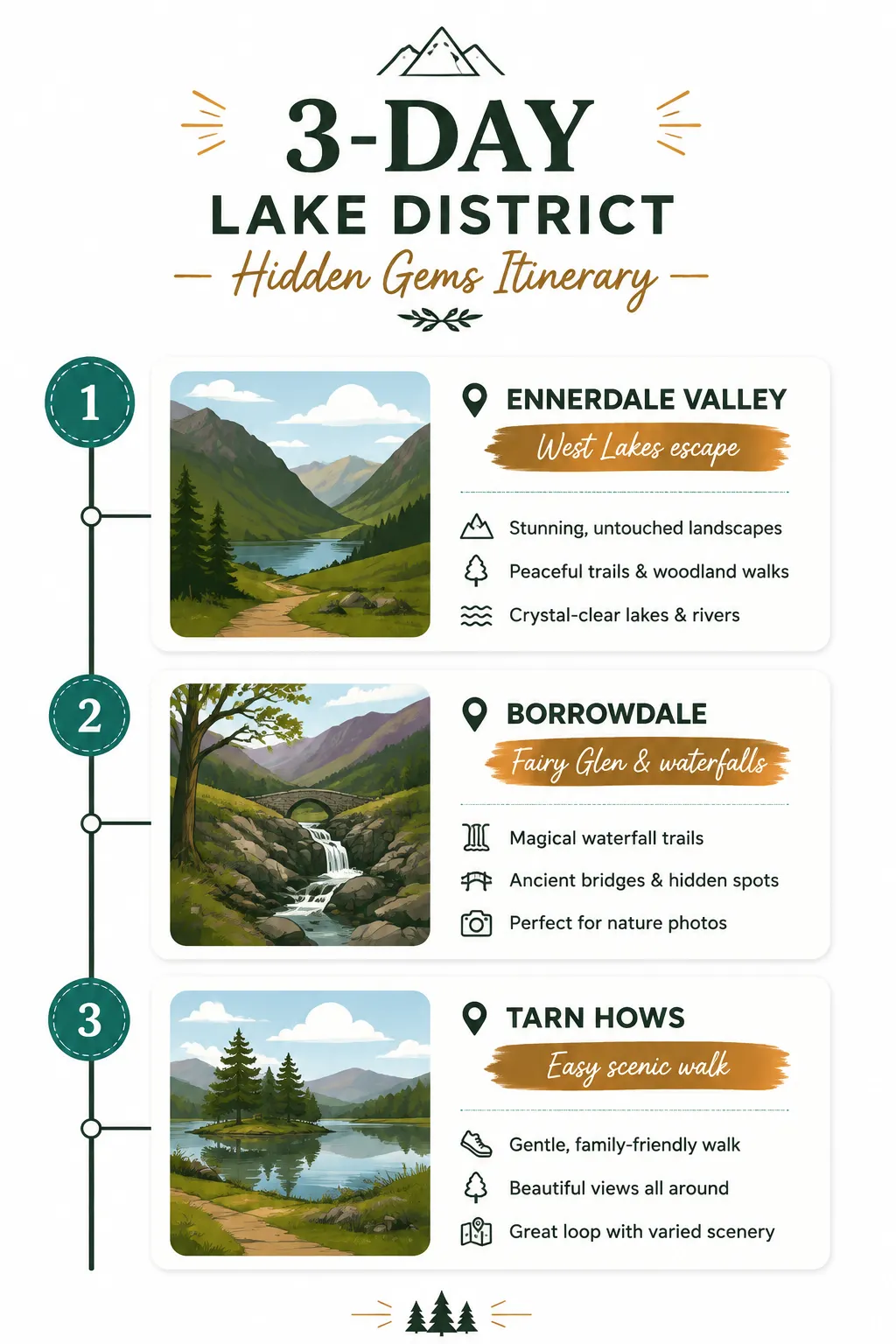
Day 1 – Western Lakes (Ennerdale, Buttermere, Crummock Water)
- Morning: Drive to Ennerdale Water. Walk the eastern shore path (flat, 2 miles return). Pack a flask – there’s no cafe out here.
- Midday: Drive over the Honister Pass to Buttermere. Walk the full lake circuit (4.5 miles, about 2 hours).
- Afternoon: Stop at Crummock Water on the way back north. The Rannerdale Knotts walk above the lake gives great views over the water with minimal effort.
- Stay: Keswick makes a great base for this area. The town sits on Derwentwater and has good food options around the market square.
Day 2 – Borrowdale Valley, Fairy Glen, and Castlerigg
- Morning: Drive south from Keswick into Borrowdale. Stop at the Fairy Glen near Grange. Then continue to the Ashness Bridge – one of the most photographed spots in the district, with views over Derwentwater below.
- Midday: Surprise View, just above Ashness Bridge, gives a sudden reveal of the lake and Skiddaw beyond. It genuinely earns its name.
- Afternoon: Castlerigg Stone Circle sits on a plateau above Keswick with 360-degree views of the surrounding fells. A November 2025 guide notes you can park by the roadside opposite the field entrance, making it one of the most accessible ancient sites in Britain.
- Evening: Back to Keswick for dinner.
Day 3 – Southern Gems (Tarn Hows, Hawkshead, Rydal Water)
- Morning: Tarn Hows circuit (3.5 miles, flat, about 90 minutes). Go early to beat the day-trippers.
- Midday: Drive to Hawkshead for lunch. The village has good cafes and a bakery. Visit the Wordsworth Grammar School if you have time.
- Afternoon: Walk the Rydal Water north shore path from Grasmere. It connects to Ambleside in about 45 minutes of easy walking.
- Evening: Ambleside has the best restaurant options in the southern Lakes. It’s a good place to end the trip.
Quiet Hiking Trails in the Lake District That Aren’t Crowded
The quietest hiking trails in the Lake District are in the western fells, the Newlands Valley, and the Eskdale area. Loughrigg Fell above Ambleside, the Newlands Pass circuit, and the Eskdale Valley walks all offer great views with a fraction of the foot traffic you’d find on Helvellyn or Scafell Pike.
Loughrigg Fell is a low, broad hill between Ambleside and Grasmere. The summit is only 335 meters, but the views over Lake Windermere, Grasmere, and Rydal Water are genuinely spectacular. It’s one of the best-value walks in the district for effort versus reward.
Newlands Pass and Newlands Valley form a quiet horseshoe of fells south of Keswick. The valley floor is farmed and peaceful, and the pass road itself is one of the most beautiful drives in England. Walking up from the valley to Causey Pike gives views north over the Solway Firth on a clear day.
Eskdale Valley is the Lake District’s quietest major valley. The narrow-gauge Ravenglass and Eskdale Railway runs through it, and you can use the train to walk one way and ride back. The valley has a distinctly remote feel even in summer.
Wrynose and Hardknott Pass are two of the steepest roads in England. The Roman fort at Hardknott is one of the most dramatic and least-visited historic sites in the country, sitting on a ledge above the valley with views all the way to the Irish Sea.
For comparison, if you enjoy dramatic mountain scenery with fewer tourists, our guide to 17 hidden gems in Switzerland that look too beautiful to be real follows a similar crowd-avoidance philosophy.
Lake District Hidden Gems Map – Where to Go and How to Plan
The best way to plan a Lake District hidden gems route is to divide the park into three zones: western, central, and southern. Each zone has its own character and its own hidden gems, and trying to mix zones in a single day leads to a lot of driving on narrow roads.
Western zone (Ennerdale, Buttermere, Crummock Water, Loweswater, Wast Water): This is the quietest part of the district. No major tourist infrastructure, no lake cruises, no gift shops. Wast Water is England’s deepest lake and sits beneath the dramatic Wasdale Head screes – one of the most striking views in Britain.
Central zone (Keswick, Derwentwater, Borrowdale, Castlerigg, Newlands Valley): This is the best base for hidden gem exploration. Keswick is a great place to stay – it’s a proper market town with good shops and restaurants, and it’s within 30 minutes of most central attractions.
Southern zone (Windermere, Ambleside, Grasmere, Rydal Water, Tarn Hows, Hawkshead, Coniston Water): This is the busiest part of the district, but it also has the most hidden gems tucked between the famous spots. Lake Windermere and Bowness-on-Windermere draw the biggest crowds; everything else in this zone is comparatively quiet.
Pro tip: Download the OS Maps app and save the Lake District Explorer maps offline before you go. Mobile signal is unreliable in the western valleys.
When to Visit Lake District Hidden Spots (Best Times to Go)
The best times to visit Lake District hidden gems are mid-week in May, or late September through October. These windows give you the best balance of reasonable weather, long daylight hours, and low visitor numbers.
Recent Cumbria Tourism research from February 2026 shows that 39% of visitors are now aged 25-44, with solo travel rising sharply. Most of these visitors come on weekends, which means mid-week visits are noticeably quieter even in peak months.
Month-by-month guide:
| Month | Crowds | Weather | Verdict |
|---|---|---|---|
| March-April | Low-Medium | Variable | Good for waterfalls (high water) |
| May | Low (mid-week) | Good | Best overall |
| June-August | High | Best | Avoid weekends |
| September | Medium | Good | Great for photography |
| October | Low | Variable | Best autumn colors |
| November-February | Very Low | Cold/wet | Dramatic but challenging |
The hidden gems roundup from June 2026 specifically recommends visiting waterfalls like Whorneyside Force after rainfall, when the water levels are highest and the falls are most dramatic.
Lake District Hidden Gems vs Popular Tourist Spots – Is It Worth the Drive?
Yes, the drive to Lake District hidden gems is almost always worth it. The western lakes in particular are 30-45 minutes further from the main tourist hubs, but that extra drive time translates directly into dramatically fewer people and a completely different experience.
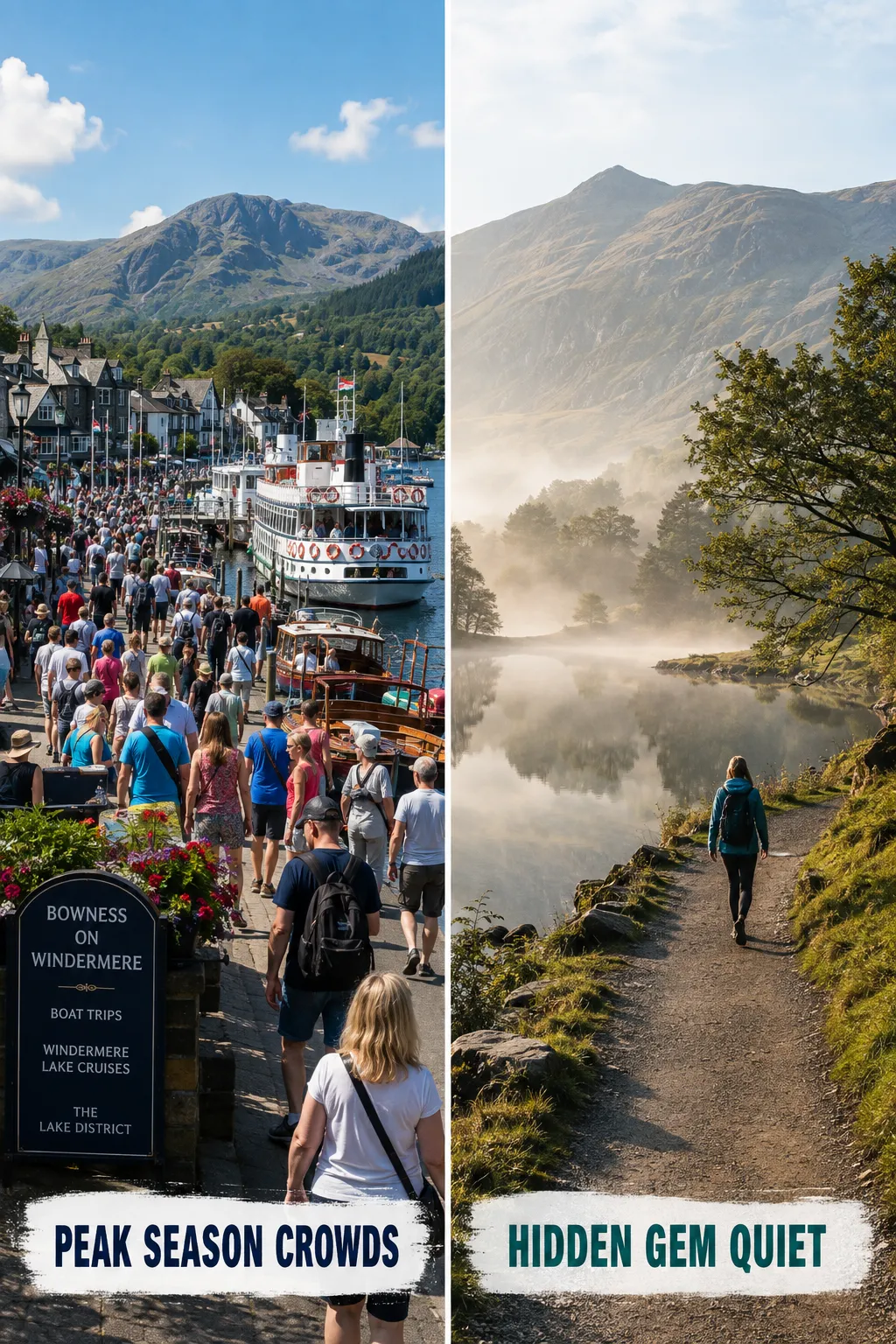
Here’s a direct comparison:
Lake Windermere (popular):
- England’s largest lake, beautiful in its own right
- Bowness-on-Windermere gets extremely busy in summer
- Boat hire, lake cruises, and tourist shops all around the lake
- Hard to find quiet spots near the water on weekends
Ennerdale Water (hidden gem):
- No motorboats, no cafes, no gift shops
- Wild fell scenery all around the lake
- You may see more red squirrels than people
- The drive in is part of the experience
Derwentwater near Keswick (popular):
- Stunning lake with great views over to Skiddaw
- Keswick is a lovely town but busy in summer
- The lake shore path gets crowded on weekends
Brothers Water (hidden gem):
- 10 minutes south of the Kirkstone Pass
- Flat path, easy parking, genuinely peaceful
- Almost nobody stops here despite it being right off the main road
The pattern is consistent across the district. Country Living’s guide to Lake District hidden gems profiles five waters specifically chosen for low visitor numbers, reinforcing that the quieter lakes are a genuinely different experience – not just a consolation prize.
Lake District Hidden Gems With Kids and Families
The best Lake District hidden gems for families are those with flat paths, accessible parking, and something interesting to look at beyond just the view. Brothers Water, Tarn Hows, Rydal Water, and Aira Force all tick these boxes.
Brothers Water has a flat shoreline path that works well for pushchairs and young children. The lake is calm and shallow at the edges, and the surrounding fells give older kids something to scramble on.
Tarn Hows has a well-maintained circular path that’s mostly flat and about 3.5 miles long. There are picnic benches, and the tarn has resident ducks and geese that children love.
Aira Force near Ullswater is one of the best family outings in the district. The waterfall is dramatic, the path is well-maintained, and the woodland around it is beautiful. The walk from the car park is short enough for young children but interesting enough to hold everyone’s attention.
Coniston Water is quieter than Windermere and has a good mix of easy shoreline walks and boat hire options. The Coniston Boating Centre rents rowing boats and kayaks, which makes for a great family afternoon.
For more family-friendly hidden gem inspiration, see our guide to 25 hidden gems in the USA for your best road trip – it uses a similar “off the beaten path but still accessible” approach.
Lake District Hidden Gems Accommodation – Where to Stay
The best bases for exploring Lake District hidden gems are Keswick (for the northern and western lakes), Ambleside (for the southern and central lakes), and smaller villages like Buttermere or Borrowdale for a fully immersive experience.
Keswick is the best all-round base. It’s a real town with good supermarkets, restaurants, and independent shops, and it sits right on Derwentwater. Hotels in the Lake District around Keswick range from budget B&Bs to country house hotels.
Glamping in the Lake District has grown significantly. There are now several well-reviewed glamping sites in the Borrowdale Valley, the Newlands Valley, and near Coniston Water. Some sites offer highland cow encounters – a popular draw that’s been generating significant interest on social media, particularly for couples.
Briery Wood Hotel near Windermere is a country house hotel that gets consistently strong reviews as a quieter alternative to the busier Bowness hotels. It sits in its own grounds away from the lake traffic.
Borrowdale Valley has several small guesthouses and farm B&Bs that put you right in the middle of the best hidden gem territory. Staying here means you’re 10 minutes from the Fairy Glen, 15 minutes from Buttermere, and 20 minutes from Keswick.
For couples: The Newlands Valley has some of the most romantic and secluded accommodation in the district. A few farms offer self-catering cottages with uninterrupted fell views and almost no passing traffic.
Can You Do Lake District Hidden Gems Without a Car?
You can visit some Lake District hidden gems without a car, but your options are significantly limited. Keswick, Ambleside, and Windermere are all served by trains and buses from London and other major cities, and several hidden gems are reachable from these hubs on foot or by local bus.
Without a car, your best options are:
- Rydal Water (30-minute walk from Ambleside or Grasmere)
- Castlerigg Stone Circle (20-minute walk from Keswick town center)
- Aira Force (bus from Penrith to Ullswater, then a short walk)
- Tarn Hows (seasonal bus service from Hawkshead)
- Coniston Water (bus from Ambleside to Coniston village)
What you’ll miss without a car:
- Ennerdale Water (no public transport)
- Wast Water (no public transport)
- Newlands Valley (very limited bus service)
- Brothers Water (possible but awkward by bus)
- Most of the western Lakes
The accessible spots guide from July 2026 highlights Rydal Water and the Newlands Valley as some of the most peaceful and accessible landscapes, emphasizing flat shoreline sections that work well for low-effort visits from public transport hubs.
Best Photography Locations in the Lake District Hidden Gems
The best photography locations among Lake District hidden gems are Ashness Bridge (for classic fell and lake compositions), Surprise View (for dramatic reveals over Derwentwater), Buttermere (for reflections), and Haweswater (for atmosphere and isolation).
Ashness Bridge is a small stone packhorse bridge above Derwentwater. The classic shot frames the bridge in the foreground with the lake and Skiddaw behind. Go at dawn in autumn for mist on the water and golden light on the fells.
Surprise View sits just above Ashness Bridge on the Watendlath road. The view opens suddenly as you round a corner – hence the name. It’s one of the most dramatic viewpoints in the district and sees far fewer visitors than the Keswick lakeside.
Buttermere offers some of the best reflection photography in England. The lake is calm in the early morning, and the surrounding fells – High Stile, Red Pike, Haystacks – create a perfect natural frame.
Gummers How is a small fell above the southern end of Lake Windermere. The summit is only 321 meters and takes about 30 minutes to reach, but the views over lake Windermere and the surrounding hills are exceptional, especially at sunset.
Loughrigg Fell gives views over three lakes simultaneously – Windermere, Grasmere, and Rydal Water – from a single vantage point. It’s one of the best photography spots in the district for anyone who wants to capture the scale of the Lakes.
What to Pack for Lake District Hiking
Pack layers, waterproofs, and proper footwear for any Lake District hike – the weather changes fast and even easy walks can turn wet and cold. This applies to hidden gems just as much as the popular peaks.
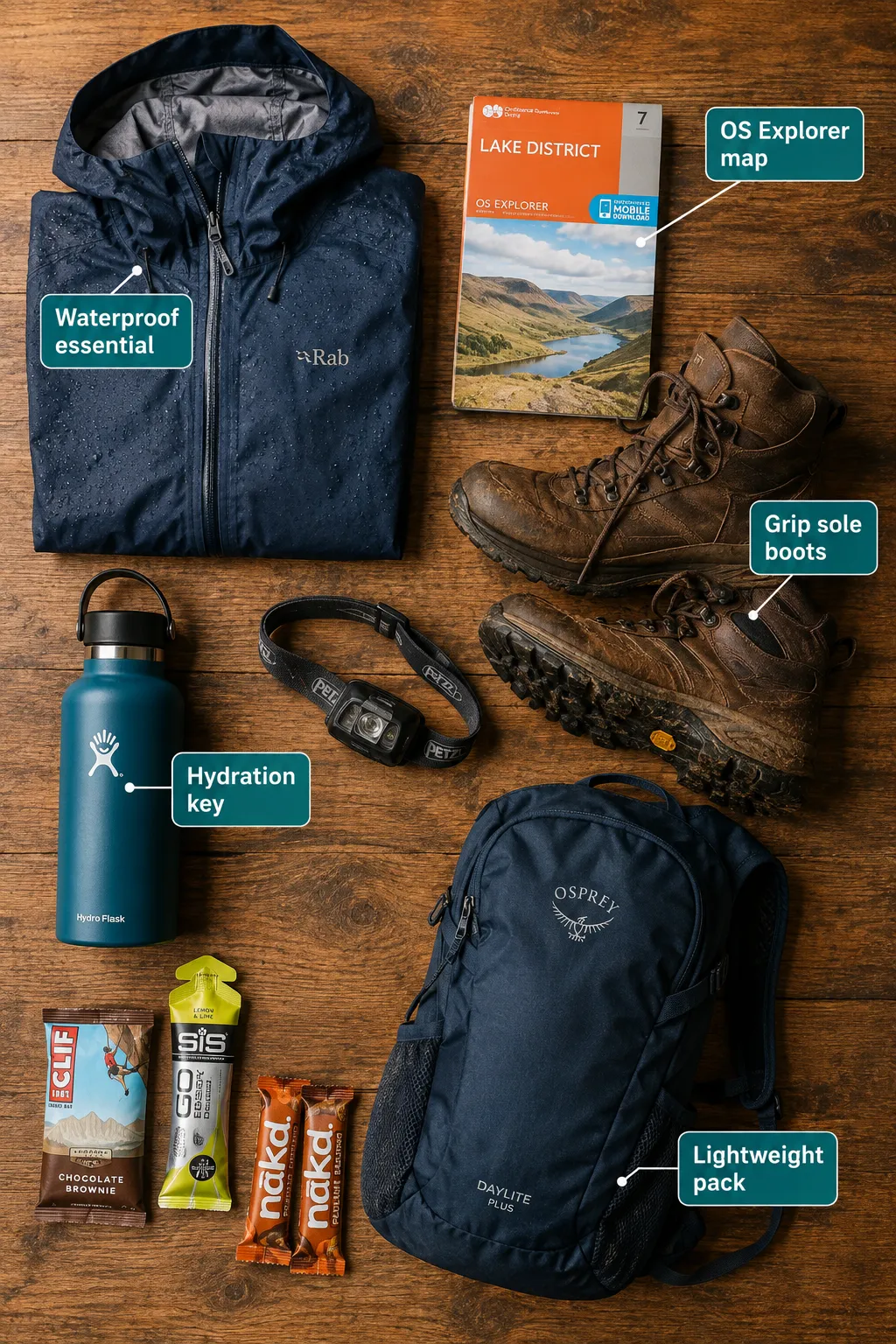
Essential kit list:
- Waterproof jacket – non-negotiable, even in summer
- Waterproof trousers – useful for longer walks
- Walking boots with ankle support – trail runners work for easy paths, but boots are better for fell terrain
- OS Explorer map (OL4 for the English Lakes North West, OL5 for the South West) – don’t rely on phone signal
- Compass – basic navigation skill is worth having in the western fells
- Reusable water bottle – most hidden gem locations have no shops nearby
- Snacks – same reason
- First aid kit – small and light, worth carrying
- Headtorch – useful if you’re out near dusk
- Portable battery pack – for charging your phone in remote areas
The western Lakes in particular have very limited mobile coverage. Download your maps offline before you leave your accommodation.
FAQ
What should you not miss in the Lake District?
Don’t miss Buttermere, Castlerigg Stone Circle, the Borrowdale Valley, and Ullswater. For a complete experience, add Tarn Hows for an easy walk, Aira Force for a waterfall, and Hawkshead for a beautiful historic village. These cover the best of the district without all concentrating on Lake Windermere and Bowness.
Where is the prettiest place in the Lake District?
Buttermere is widely considered the prettiest lake in the district, surrounded by dramatic fells with a 4.5-mile circular walk. Borrowdale Valley is the prettiest valley, and Tarn Hows is the prettiest easy walk. For a view, Surprise View above Derwentwater and Gummers How above Windermere both deliver exceptional panoramas.
Where did Taylor Swift go in the Lake District?
Taylor Swift visited the Lake District and was photographed near Windermere and the surrounding area during a private trip to England. The specific locations she visited were not all publicly confirmed, but the Lake Windermere area and the broader southern Lakes were reported as part of her visit, bringing significant attention to the region on social media.
Which is the prettiest town in the Lake District?
Hawkshead is consistently rated the prettiest town in the Lake District – a car-free village of whitewashed buildings where William Wordsworth went to school. Grasmere is a close second, with its connections to Wordsworth’s Dove Cottage and its beautiful lake setting. Keswick is the most practical base town, while Ambleside offers the best mix of amenities and scenery.
Conclusion
The Lake District rewards the people who look beyond the obvious. Lake Windermere is beautiful, Bowness is charming, and Keswick is worth every visit – but the real magic of the district is out in the western fells, up the quiet valleys, and along the shores of lakes that most visitors drive straight past.
Your next steps:
- Pick your base – Keswick for the north and west, Ambleside for the south
- Plan around 3 days minimum, with one “big name” spot and two hidden gems per day
- Book mid-week if possible, especially in June through August
- Download OS Maps offline before you leave
- Set your alarm for early – the first two hours of daylight are the best two hours in the Lakes
The Lake District’s visitor numbers are only going up. The hidden gems are still there, but they won’t stay secret forever. Go now, go early, and go prepared.
For more crowd-free travel ideas, explore our guides to hidden gems in Switzerland, hidden gems in Italy, and if you’re planning a longer European adventure, our Edinburgh 4-day itinerary pairs beautifully with a Lake District trip.