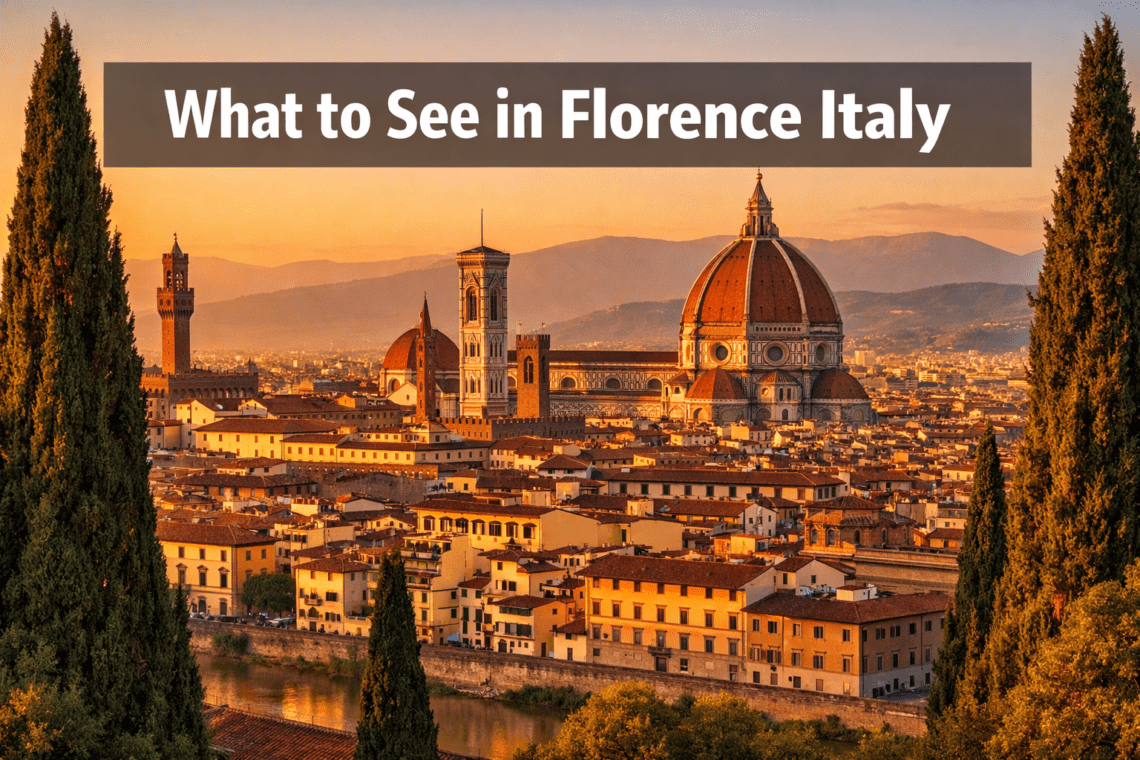
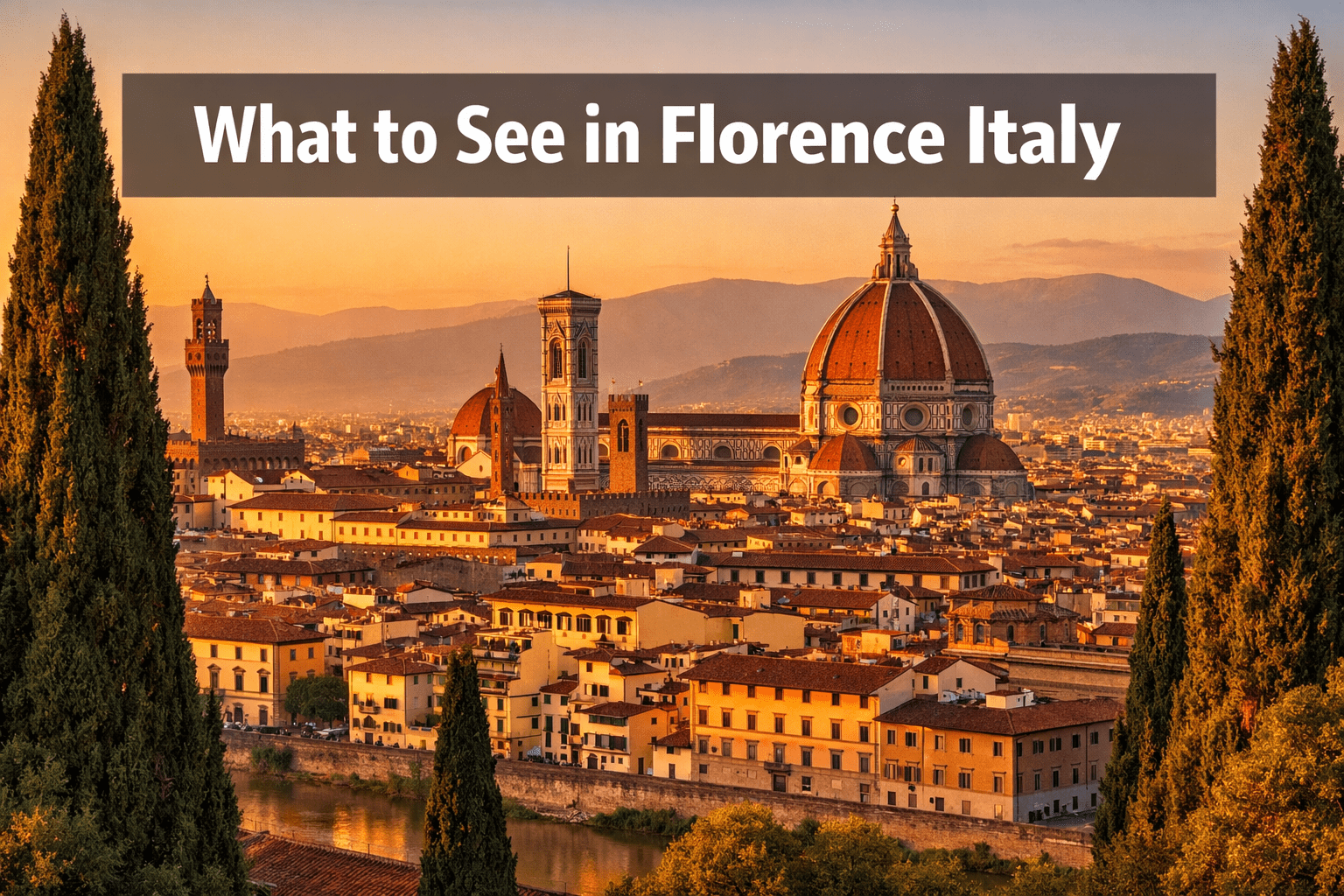
Quick Answer: Florence packs more world-class art and architecture per square kilometer than almost any city on earth. First-time visitors should anchor their trip around the Uffizi Gallery, the Duomo, and Ponte Vecchio, then carve out time for the Oltrarno neighborhood and Bardini Gardens to see the city beyond the crowds. Three to four days gives you a solid foundation; five days lets you breathe.
Key Takeaways
- Book the Uffizi and Accademia in advance — walk-up queues regularly run two hours or more during peak season
- The Oltrarno district (south side of the Arno) is where Florence feels most like itself: artisan workshops, local bars, and almost no tour groups
- Bardini Gardens offers the same panoramic views as Piazzale Michelangelo with a fraction of the visitors
- Basilica di Santo Spirito contains a Michelangelo crucifix and anchors one of the city’s most authentic piazzas
- The Officina Profumo-Farmaceutica di Santa Maria Novella is arguably the most beautiful shop in Florence — and it’s free to walk through
- Museo di Palazzo Davanzati is a 14th-century nobleman’s home that almost nobody visits, yet it’s one of the most immersive medieval experiences in Italy
- San Miniato al Monte rivals Piazzale Michelangelo for sunset views, with far fewer people and a genuinely peaceful atmosphere
- Spring (April–May) and fall (September–October) are the best times to visit: mild weather, manageable crowds, and the wisteria at Bardini Gardens in full bloom in late April
- Museo Sant’Orsala, a former convent that houses the tomb of the real Mona Lisa model, is scheduled to fully open as Florence’s first contemporary art center in 2026 [1]
- Staying in the Oltrarno or Santa Croce neighborhoods puts you close to the action without the noise of the tourist core
What to See in Florence Italy: The Essential First-Timer Checklist
Every first-time visitor to Florence should see these landmarks. They’re famous for good reason, and skipping them to be “different” is a mistake you’ll regret.
The non-negotiables:
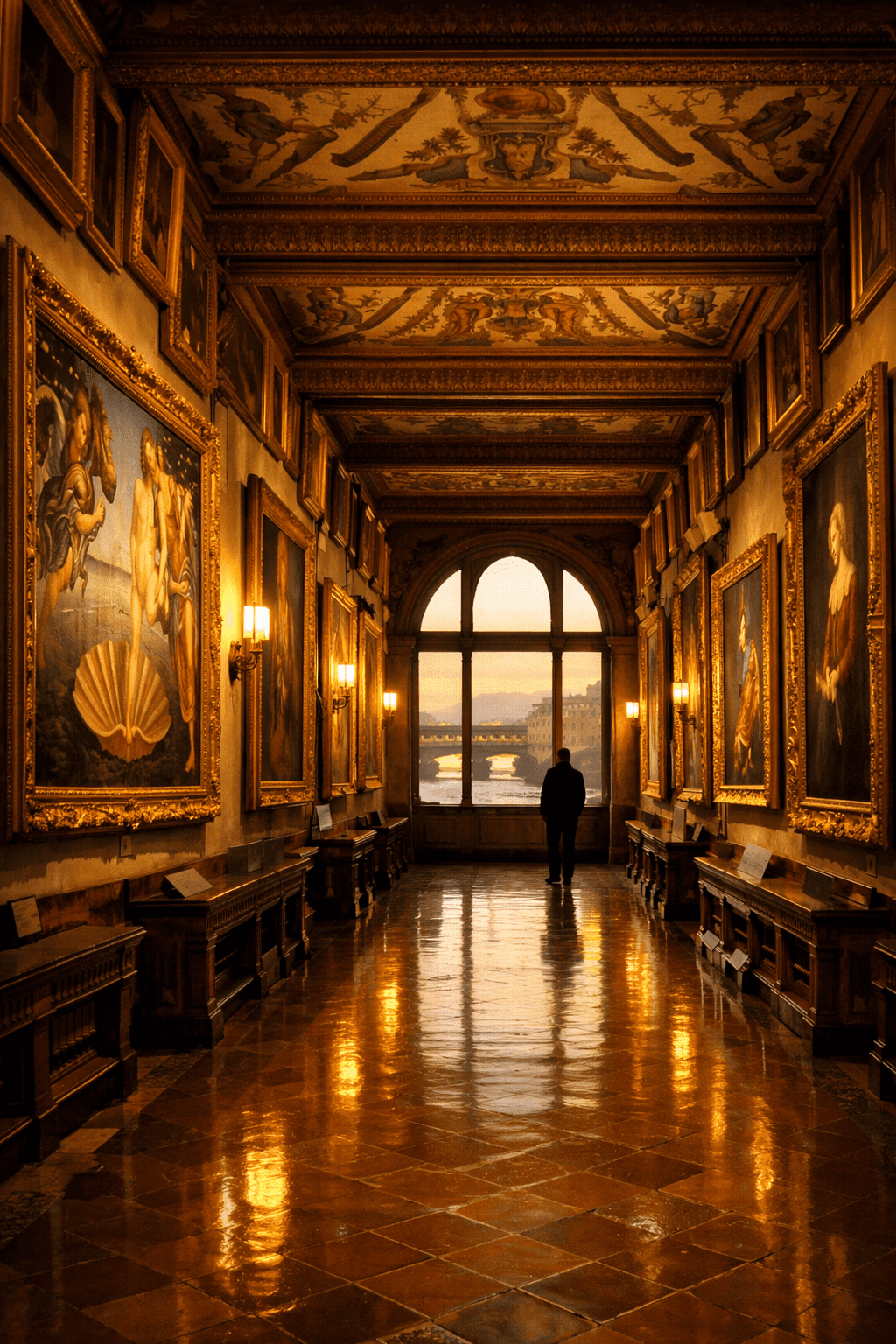
- Galleria degli Uffizi — Home to Botticelli’s Birth of Venus, works by Michelangelo, Leonardo da Vinci, and Titian. Book tickets at least two weeks ahead in summer [3]
- Florence Cathedral (Duomo) — Brunelleschi’s dome is an engineering marvel. Climb it for views over the red-tiled rooftops. The baptistery doors (Ghiberti’s Gates of Paradise) are across the square
- Ponte Vecchio — The medieval bridge lined with goldsmiths’ shops. Go early morning (before 8 a.m.) for photos without crowds
- Galleria dell’Accademia — Michelangelo’s David lives here. The statue is larger than most people expect; it genuinely stops you in your tracks
- Piazzale Michelangelo — The classic Florence panorama. Crowded at sunset, but still worth it once
- Palazzo Vecchio — Florence’s town hall since 1299, with a rooftop terrace and fascinating secret passages inside
“Florence is one of those cities where the famous sights actually live up to the hype — but the real magic happens in the streets between them.”
Practical tip: The Tuscany Italy Travel Guide is a great companion if you’re planning day trips to Siena, San Gimignano, or the Chianti wine region from Florence as a base.
Hidden Gems: What to See in Florence Italy Beyond the Tourist Trail
Florence’s lesser-known spots are where the city genuinely surprises you. These are the places locals actually use and visitors consistently wish they’d found sooner. [1]
Bardini Gardens 🌿
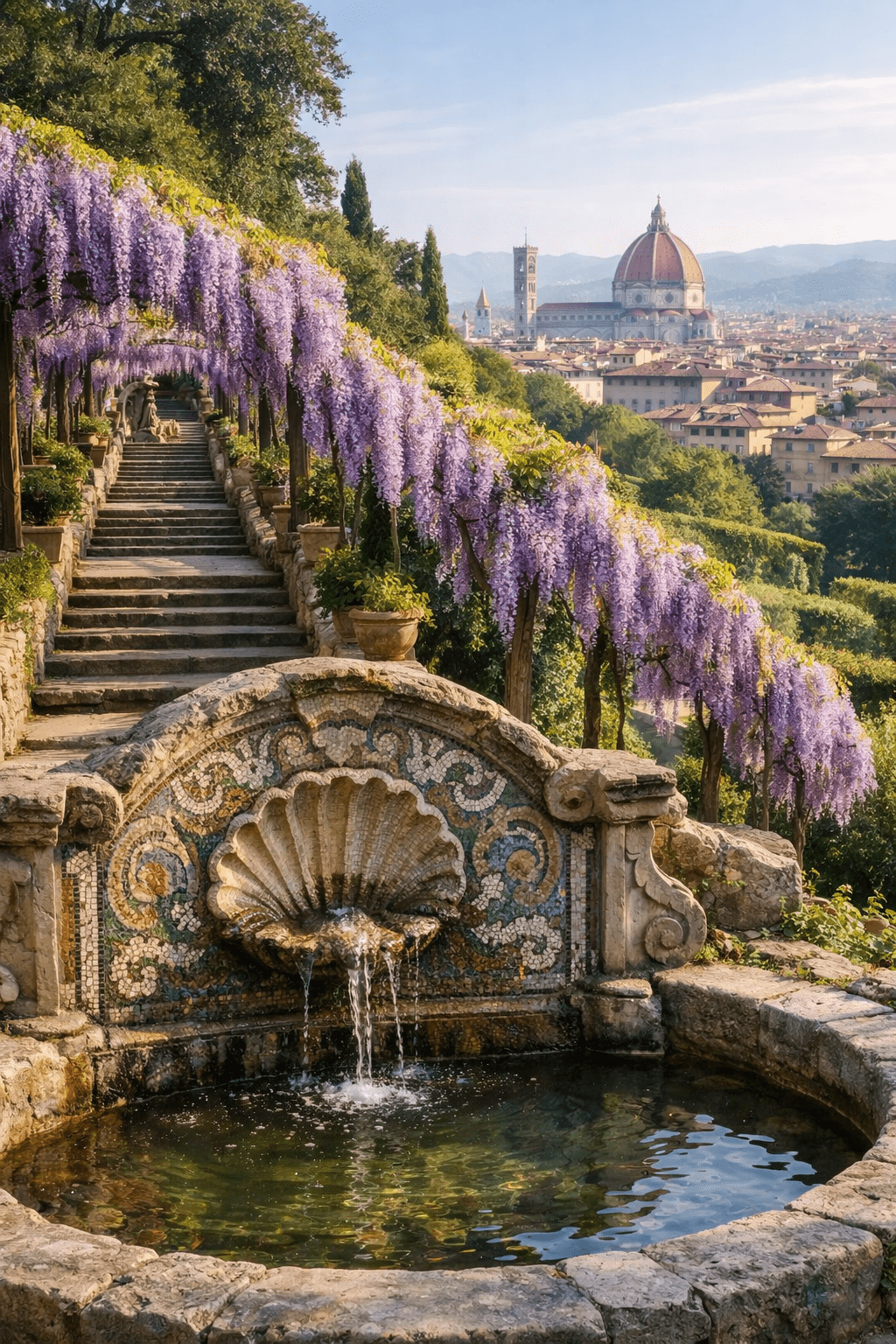
This four-hectare garden on the Oltrarno hillside combines three distinct styles: a central Baroque staircase with six mosaic fountains, an English woodland with a rare canal, and an agricultural park with traditional Tuscan fruit trees. The Belvedere terrace delivers panoramic views of Ponte Vecchio, Palazzo Vecchio, and the Duomo — all in one frame. Come in late April for the wisteria tunnel in full bloom. [1]
Basilica di Santo Spirito
Designed by Brunelleschi in 1444, this church in the Oltrarno holds a Michelangelo crucifix in its sacristy. The piazza outside hosts a weekly organic market and is genuinely where Florentines hang out — not tourists. [1]
Museo di Palazzo Davanzati
A 14th-century nobleman’s residence with rooms named the Hall of Parrots and Chamber of Peacocks, decorated with medieval frescoes. It shows you how wealthy Florentines actually lived, not just what they collected. Almost nobody goes here, which makes it all the better. [1]
Orsanmichele Church and Museum
The tower offers one of the best skyline views in Florence — looking directly at the Duomo and Palazzo Vecchio through Gothic windows. The museum inside holds original sculptures by Donatello and Ghiberti. Get a timed ticket from the kiosk in the morning. [1]
Officina Profumo-Farmaceutica di Santa Maria Novella
A 13th-century pharmacy run by Dominican friars, now a perfume and cosmetics shop with vaulted ceilings, hand-carved wooden panels, and museum-quality displays. Walking through is free. Buy something if you can — the rose water and herbal liqueurs are exceptional. [1]
Stibbert Museum
One of Florence’s most unusual spots: a private collection of armor, weapons, and samurai gear in a villa surrounded by a romantic English-style garden. Perfect for escaping the city center crowds entirely. [3]
Museo Sant’Orsala
A former convent founded in 1309, later converted to a tobacco factory under Napoleon. The tomb of Monna Lisa Gherardini — the presumed model for Leonardo’s Mona Lisa — is buried here (she died in 1542). The space is scheduled to fully open as Florence’s first contemporary art center in 2026, with temporary exhibitions and film screenings already running in the industrial spaces. [1]
For more off-the-beaten-path inspiration across Italy, check out these hidden gems in Italy that feel magical.
The Oltrarno: Florence’s Most Authentic Neighborhood
The Oltrarno (literally “beyond the Arno”) is the best neighborhood in Florence for travelers who want to feel like a local. Cross the Ponte Vecchio or Ponte Santa Trinita and you’re in a different city: quieter streets, artisan leather workshops, family-run trattorias, and almost no chain restaurants.
What to do here:
- Browse the artisan workshops on Via Maggio and Borgo San Jacopo — leather goods, bookbinding, and picture framing are the traditional crafts
- Visit Palazzo Pitti, the Medici family’s enormous palace, and the Boboli Gardens behind it (11 acres of formal Renaissance gardens laid out in the 16th century) [5]
- Have an aperitivo at one of the bars on Piazza Santo Spirito — this is where Florentines actually spend their evenings
- Walk up to San Miniato al Monte for sunset views that rival Piazzale Michelangelo with a fraction of the crowd and a genuinely serene Romanesque church atmosphere [3]
Choose Oltrarno if: You want authentic restaurants, quieter streets, and easy access to both the gardens and the main sights. It’s a 10-minute walk to the Uffizi.
Also worth knowing: if you’re comparing Italian cities, our guide to what to see in Rome Italy for first-timers covers the same approach — essential sights plus the neighborhoods most visitors miss.
Museums Worth Your Time (and Which to Skip)
Not every museum in Florence deserves a half-day. Here’s a quick breakdown:
| Museum | Best For | Skip If… |
|---|---|---|
| Uffizi Gallery | Renaissance masterworks | You have less than 2 hours |
| Accademia | Michelangelo’s David | You’ve seen it before |
| Museo di San Marco | Fra Angelico frescoes, monastery atmosphere | You’re short on time |
| Palazzo Davanzati | Medieval daily life | You only like “big” museums |
| Bargello | Sculpture (Donatello, Michelangelo) | Crowds bother you (it’s calm here) |
| Stibbert Museum | Armor, samurai gear, quirky collections | You prefer classical art |
| Palazzo Strozzi | Contemporary exhibitions in a Renaissance palace | You’re not into modern art |
Museo di San Marco deserves a special mention. The Fra Angelico painting at the top of the stairs — an Annunciation painted directly onto the monastery wall — is one of the most quietly powerful things in Florence. The upstairs monks’ cells, each with its own small fresco, are genuinely moving. [2]
Palazzo Strozzi is a Renaissance palace that now hosts rotating contemporary art exhibitions. The inner courtyard is open to all visitors at no charge, making it an easy stop even if the current show doesn’t interest you. [1]
Where to Stay in Florence: Neighborhoods and Hotel Picks
The best neighborhoods for first-time visitors:
- Santa Croce — Central, walkable to everything, slightly less expensive than the historic core. Great for families and solo travelers
- Oltrarno — Quieter, more local, excellent restaurant scene. Best for couples and repeat visitors
- Santa Maria Novella — Closest to the train station, good transport links, mix of budget and luxury options
- Duomo/Historic Center — Most convenient, but also noisiest and most expensive
Accommodation types and what to expect:
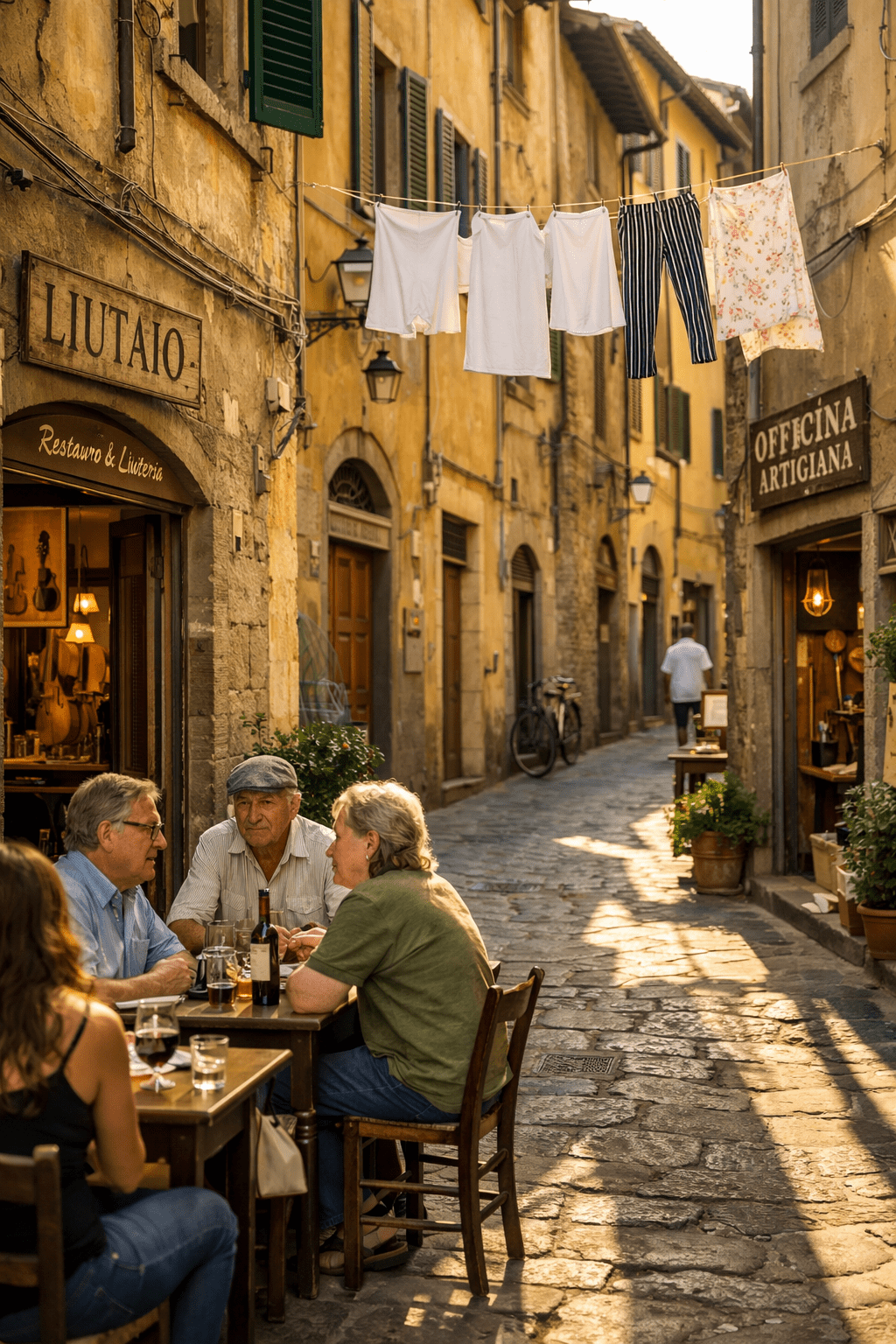
- Boutique hotels and pensioni: Florence’s sweet spot. Many occupy historic palazzos with original frescoes, terracotta floors, and rooftop terraces. Prices range from around €120–€300/night depending on season
- Agriturismos on the outskirts: If you have a car, staying in a Tuscan farmhouse 20–30 minutes from the city center gives you countryside views and a pool, with easy day trips into Florence
- Apartments: Good value for stays of three nights or more, especially in Oltrarno. Platforms like Airbnb and Booking.com have strong inventory
Practical tips:
- Book accommodations at least 6–8 weeks ahead for April, May, September, and October visits
- Many historic center hotels have noise from street traffic — ask for a courtyard-facing room
- Parking in Florence is extremely limited and expensive; if you’re renting a car for Tuscany day trips, pick it up on your last day in the city
For broader trip planning, the Tuscany Italy Travel Guide covers accommodation options across the region, including agriturismo stays and wine country bases.
Practical Tips for Visiting Florence in 2026
A few things that will genuinely improve your trip:
Getting around:
- The historic center is almost entirely walkable. Most major sights are within a 20-minute walk of each other
- Taxis and ride-shares are available but rarely necessary in the center
- Florence has a ZTL (limited traffic zone) — if you’re driving, do not enter without checking your hotel’s access arrangements first
Food and eating:
- Lunch is the main meal in Florence. A two-course pranzo at a local trattoria costs €12–€18 and is far better value than tourist-menu dinner spots near the Duomo
- Lampredotto (tripe sandwich) from a street cart is the authentic Florentine street food — try it at Nerbone in the Mercato Centrale
- Gelato rule: if the gelato is piled high in colorful mounds, it’s almost certainly made from a mix. Look for places where it’s stored flat in metal containers
Common mistakes to avoid:
- Paying for water at a restaurant when free drinking fountains (fontanelle) are everywhere
- Booking Uffizi tickets the day before in peak season — you’ll likely find nothing available
- Spending all your time in the historic center and missing Oltrarno entirely
For a full breakdown of what not to do, the 15 mistakes to avoid in Italy guide covers the most common errors first-timers make across the country.
FAQ: What to See in Florence Italy
How many days do I need in Florence?
Three days covers the main sights comfortably. Four to five days lets you explore neighborhoods, take a day trip to Siena or the Chianti hills, and actually slow down.
What’s the best time of year to visit Florence?
April–May and September–October. The weather is mild, crowds are manageable, and prices are lower than July–August. Late April is especially good for the Bardini Gardens wisteria.
Is Florence worth visiting without going to the Uffizi?
Yes, but you’d be missing one of the greatest art collections in the world. Even if you’re not an art person, the Botticelli rooms alone are worth the ticket price.
Can I visit Florence on a day trip from Rome?
Technically yes — the high-speed train takes about 1.5 hours. But one day is barely enough to scratch the surface. Two nights minimum is a much better use of your time.
What’s the most underrated thing to do in Florence?
Bardini Gardens, without question. Four hectares of terraced gardens, panoramic views, and almost no one there compared to Boboli or Piazzale Michelangelo. [1]
Is Florence safe for solo travelers?
Yes. Florence is one of Italy’s safest cities for tourists. The main thing to watch for is pickpocketing in crowded areas like the Mercato Centrale and around the Duomo.
Do I need to speak Italian in Florence?
No. English is widely spoken in hotels, restaurants, and tourist sites. Learning a few basic phrases (grazie, per favore, un caffè, per favore) is appreciated and goes a long way.
What’s the dress code for churches in Florence?
Shoulders and knees must be covered to enter churches. Carry a light scarf or shawl — you’ll need it more than once.
How do I get from Florence airport to the city center?
The Vola in Bus shuttle runs directly to Santa Maria Novella station (about 20 minutes, €6). Taxis are metered and cost roughly €25–€30.
Is the Duomo climb worth it?
Yes. The 463-step climb up Brunelleschi’s dome gives you a close-up view of the interior frescoes and a 360-degree panorama of Florence. Book a timed entry slot in advance.
What’s new in Florence in 2026?
Museo Sant’Orsala is scheduled to fully open as Florence’s first contemporary art center in 2026, housed in a former convent that also contains the tomb of the presumed model for the Mona Lisa. [1]
What’s the difference between Boboli Gardens and Bardini Gardens?
Boboli (11 acres, next to Palazzo Pitti) is Florence’s most famous formal garden — grand, historic, and busier. Bardini (4 hectares, a short walk away) is less visited, has better panoramic views, and the wisteria tunnel in April is spectacular. Both are worth visiting if you have time. [1] [5]
Conclusion: Planning Your Florence Visit
Florence rewards travelers who go beyond the obvious. The Uffizi and the Duomo are genuinely unmissable — don’t let anyone convince you otherwise — but the city’s real character lives in the Oltrarno’s cobblestone streets, the quiet of Bardini Gardens at 9 a.m., and the medieval rooms of Palazzo Davanzati that almost no one visits.
Your actionable next steps:
- Book Uffizi and Accademia tickets now — don’t leave this until you arrive
- Reserve accommodation in Oltrarno or Santa Croce for the best balance of location and authenticity
- Build in one morning for Bardini Gardens — go early, bring a coffee, and stay for the views
- Plan at least one evening on Piazza Santo Spirito — aperitivo, people-watching, and the real Florence
- Check the Museo Sant’Orsala schedule — if it’s fully open during your visit in 2026, it’s one of the most unusual experiences in the city
If you’re extending your Italy trip, the guides to what to see in Rome and things to do in Positano are solid next reads. And if you want to explore beyond Florence into the broader region, the Tuscany Italy Travel Guide has a complete five-day itinerary built around day trips from the city.
Florence is one of those places that earns repeat visits. Most people who go once start planning their return before they’ve even left.
References
[1] Hidden Gems In Florence Unique Things To Do In Florence Italy – https://www.artdistance.com/artstravel/hidden-gems-in-florence-unique-things-to-do-in-florence-italy
[2] Attractions G187895 Activities Zft12156 Florence Tuscany – https://www.tripadvisor.com/Attractions-g187895-Activities-zft12156-Florence_Tuscany.html
[3] Florence Italy – https://www.savoringitaly.com/florence-italy/
[5] Things To Do In Florence – https://www.ourescapeclause.com/things-to-do-in-florence/