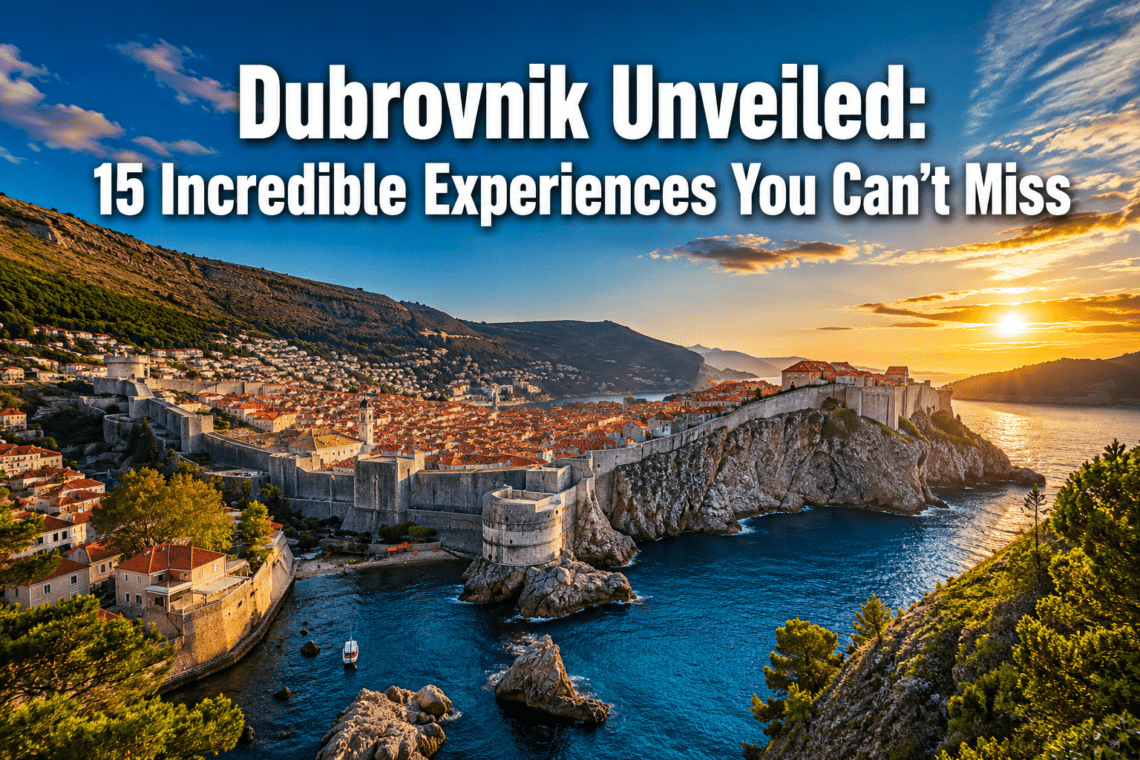
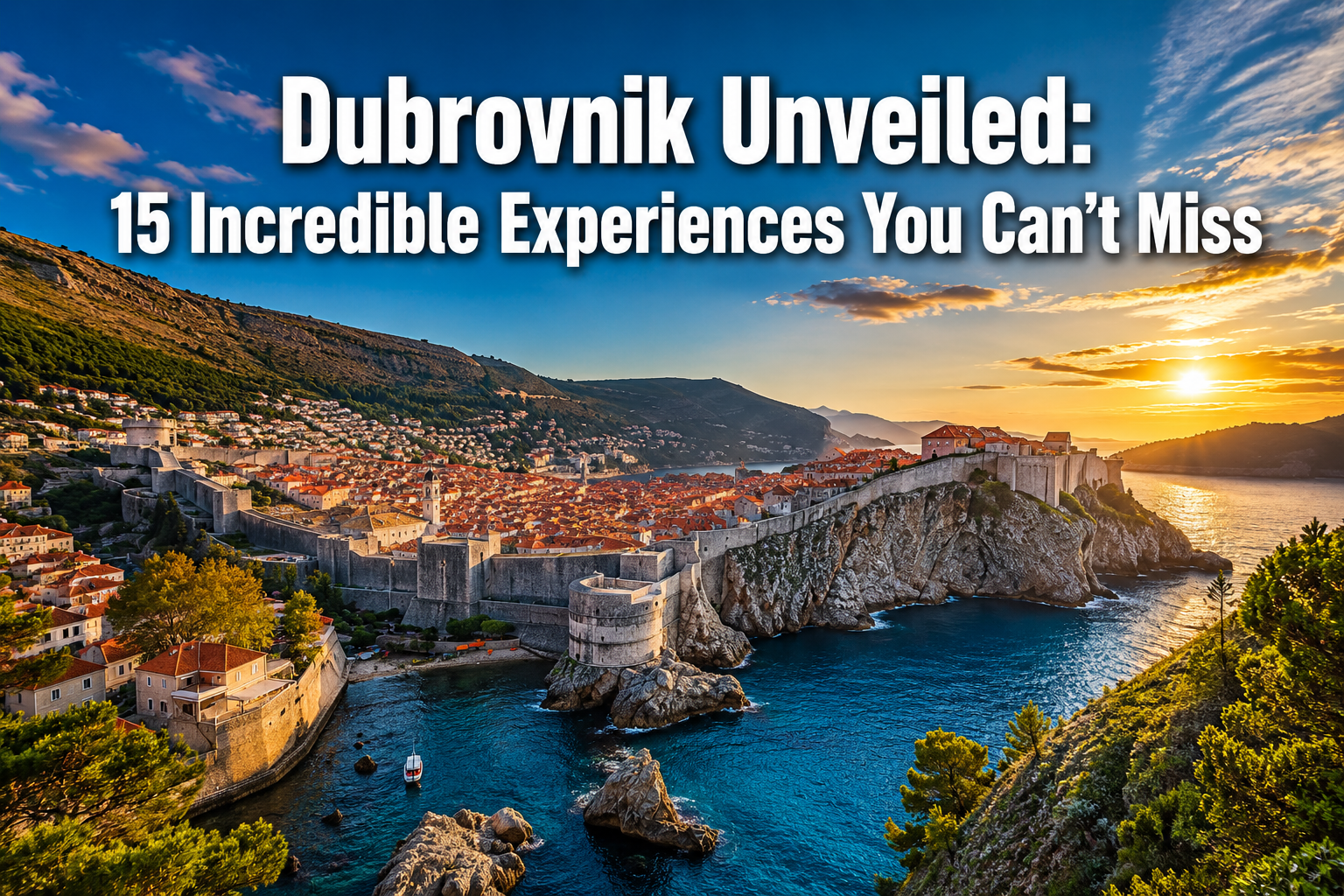
Quick Answer: Dubrovnik’s top experiences include walking the 2-km medieval City Walls (€35), exploring the marble-paved Stradun in the UNESCO-listed Old Town, taking a cable car up Mount Srđ for panoramic views, kayaking around the walls at sunrise, and day-tripping to Lokrum Island. First-time visitors need at least 3 full days to cover the highlights without feeling rushed.
Key Takeaways
- 🏛️ The City Walls (€35 adult ticket) are Dubrovnik’s single most iconic experience — go early morning or late afternoon to beat crowds and heat.
- 🎟️ The Dubrovnik Pass bundles walls entry, major museums, and bus transport; it often pays for itself on day one.
- ⏱️ 3 days is the recommended minimum; 4–5 days lets you add island day trips and slower exploration.
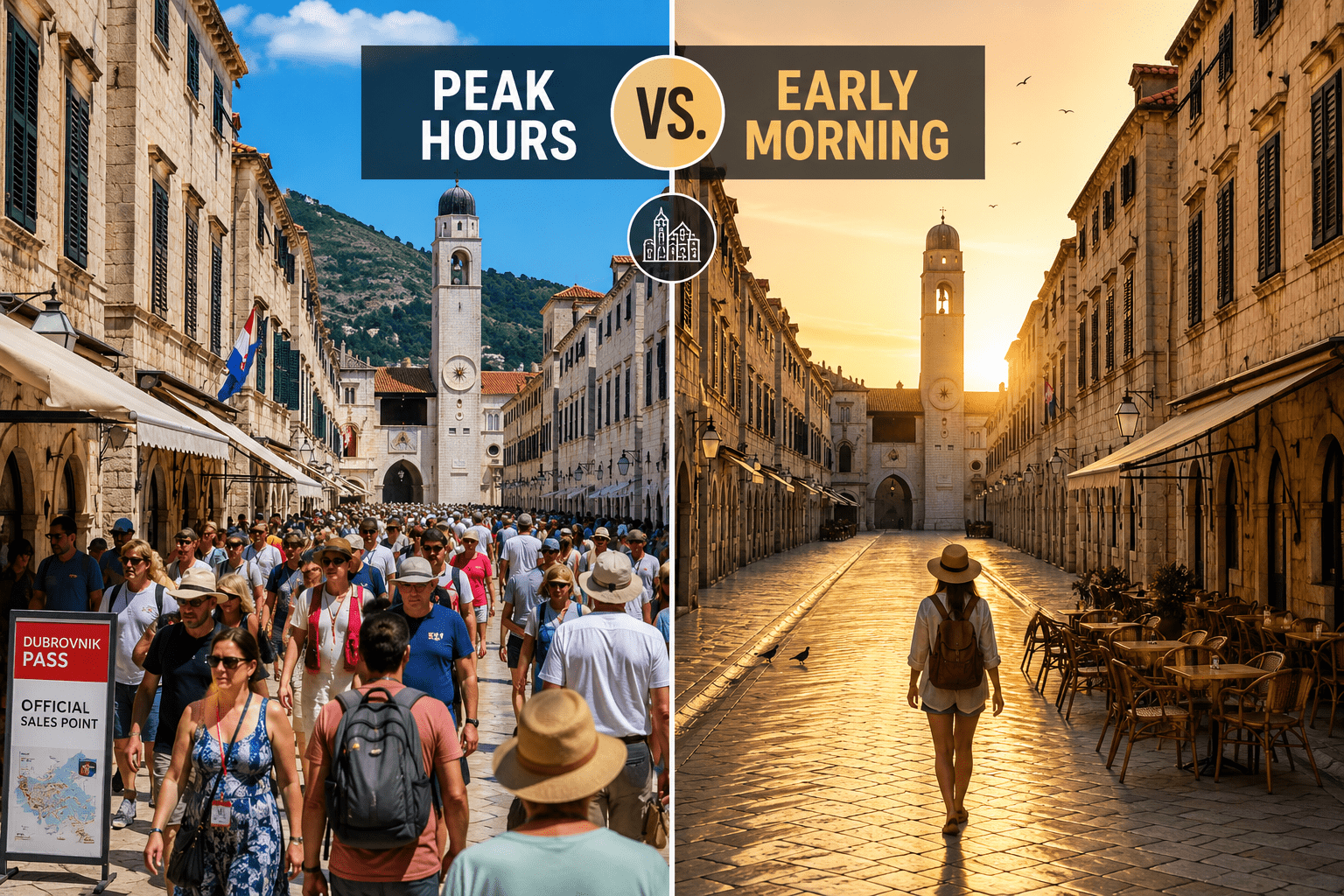
- 🚢 Cruise ship crowds peak between 10am and 4pm — plan Old Town visits outside these hours.
- 🏝️ Lokrum Island (15-minute boat ride) is the easiest half-day escape from the city.
- 🎬 Dubrovnik served as King’s Landing in Game of Thrones — dedicated tours run daily.
- 💰 Dubrovnik is one of Croatia’s priciest cities; budget €80–€150/day for mid-range travel.
- 🌤️ May, June, and September offer the best balance of good weather and manageable crowds.
- 🛡️ The city is very safe for solo travelers, including solo women.
- 🚤 Day trips to the Elaphiti Islands or Korcula are among the best excursions in the entire Adriatic.
What Are the Top Things to Do in Croatia Dubrovnik for First-Time Visitors?
Dubrovnik’s must-do list is anchored by its medieval City Walls, the Old Town’s marble streets, and the views from Mount Srđ. These three experiences alone justify the trip — and they’re all within easy walking distance of each other.
1. Walk the City Walls
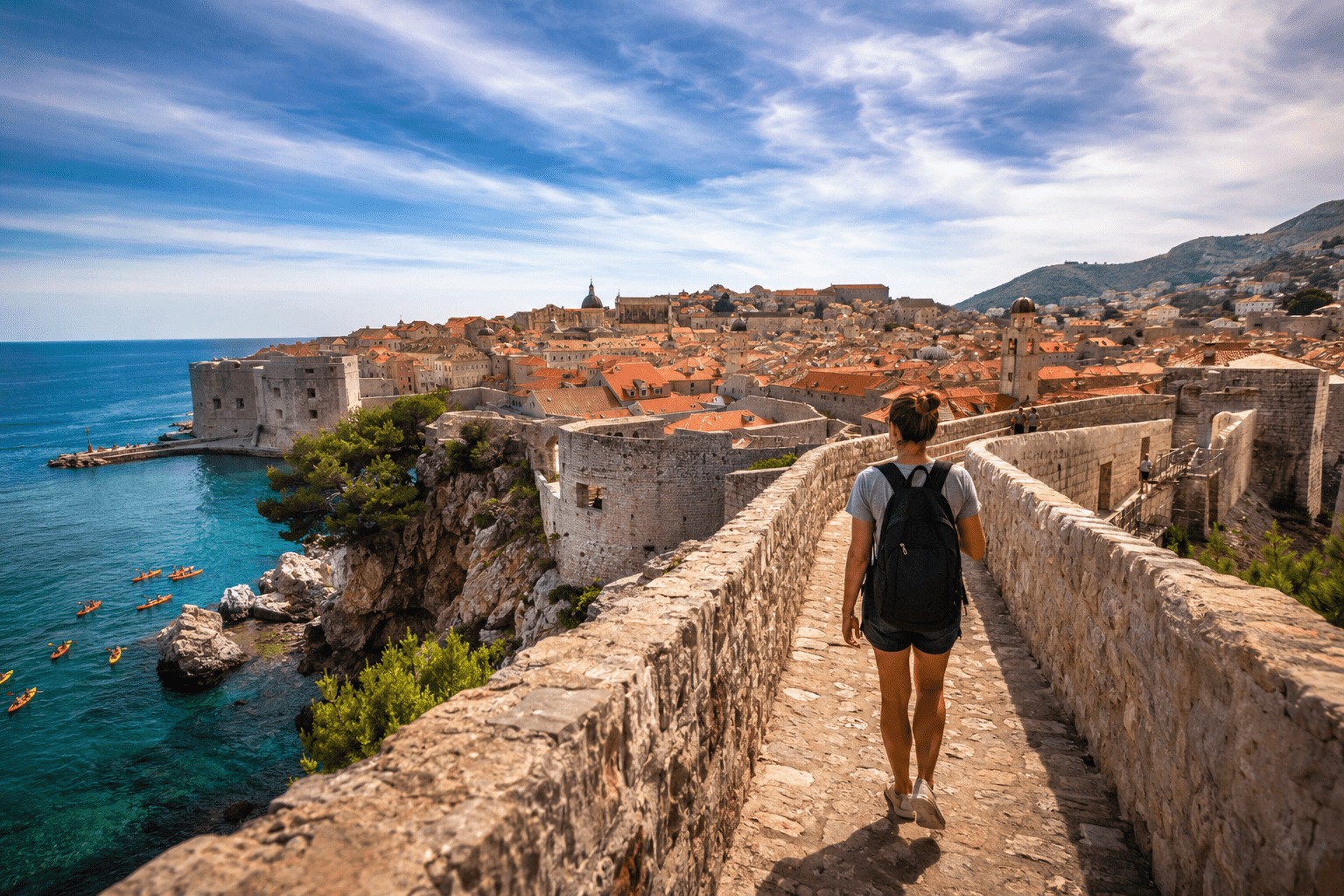
The 2-km circuit around Dubrovnik’s medieval fortifications is the city’s single best experience. The full walk takes roughly 90 minutes to 2 hours at a relaxed pace, with sweeping views over the Old Town’s terracotta rooftops, the Adriatic, and Lokrum Island. As of 2026, adult tickets cost €35 (children 7–18 pay €15; under 7 enter free), and the ticket is valid for one entry only [4].
Practical tips:
- Start at 8:00–9:00am or after 5:00pm to avoid midday heat and cruise crowds.
- The Dubrovnik Pass includes wall entry — check if bundling saves you money.
- Wear comfortable shoes; the limestone surface gets slippery when wet.
2. Stroll Stradun and the Old Town Core
The Stradun (also called Placa) is Dubrovnik’s main limestone thoroughfare, polished to a mirror shine by centuries of foot traffic. Walking it takes about 10 minutes end to end, but plan to spend much longer exploring the side streets, churches, and squares branching off it [6].
Don’t miss:
- Franciscan Monastery — home to one of Europe’s oldest continuously operating pharmacies (founded 1317)
- Rector’s Palace — the Gothic-Renaissance seat of the old Ragusan Republic, now a cultural history museum
- Dubrovnik Cathedral — holds relics of St. Blaise, the city’s patron saint
- Onofrio’s Fountain — a 15th-century landmark at the western end of Stradun
3. Ride the Cable Car Up Mount Srđ
The Dubrovnik Cable Car lifts you 778 meters to the summit of Mount Srđ in under four minutes. At the top, the Imperial Fortress houses a Homeland War museum, and the viewing platforms deliver some of the most photographed panoramas in the Mediterranean [4]. More active travelers hike the exposed but well-marked trail (30–60 minutes one way) and take the cable car down.
“The view from Mount Srđ at sunset, with the Old Town glowing orange below and the islands scattered across the Adriatic, is the kind of thing you remember for years.” — [Adventurous Kate][4]
4. Visit Lokrum Island
A 15–20-minute ferry from the Old Port drops you on Lokrum, a protected nature reserve with botanical gardens, a ruined Benedictine monastery, a 19th-century fort, resident peacocks, and several swimming spots. There are no hotels on the island, and food service is limited — bring water and snacks [3]. The combined boat/entry ticket is sold at the Old Port; boats run frequently throughout the main season.
5. Kayak Around the Walls at Sunrise
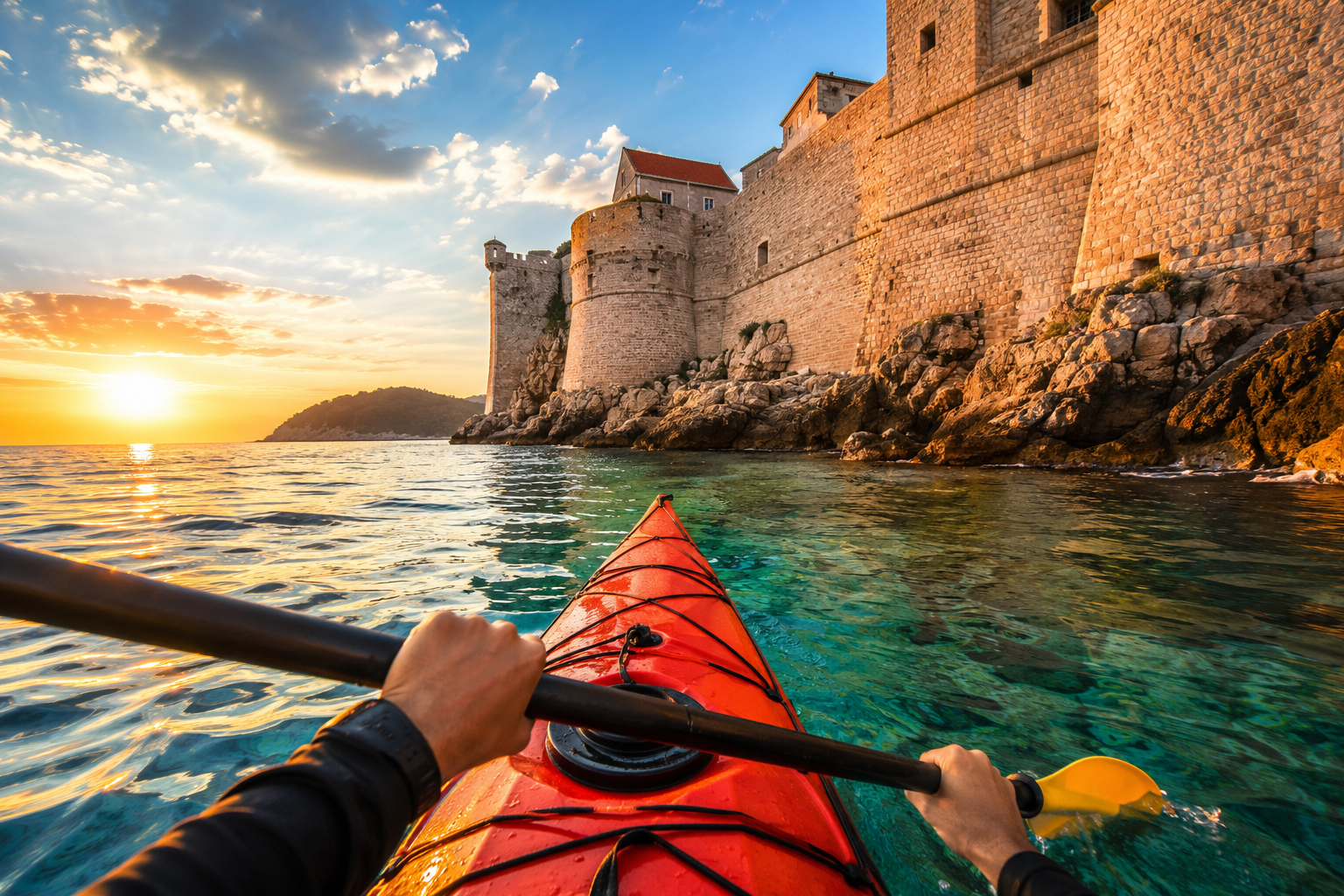
Sea kayaking tours launching from near Pile Gate have become one of Dubrovnik’s signature experiences. Paddling along the base of the city walls at sunrise, with the limestone glowing pink above you and the water glassy calm, is genuinely unlike anything else in Europe [4]. Tours typically run 2–3 hours and include stops at hidden coves and swimming spots.
How Can I Explore Dubrovnik’s Old Town Like a Local?
The honest answer: avoid the Old Town between 10am and 4pm in peak season. Locals and seasoned travelers schedule their Old Town time for early morning (before 9am) or evening, when the cruise crowds have returned to their ships and the streets belong to residents again [7].
Local habits worth copying:
- Grab coffee at a side-street café on Prijeko Street rather than anything facing Stradun.
- Visit the Buža Bar — a cliffside bar carved into the rocks just outside the walls, accessible through a small doorway marked only by a “cold drinks” sign. Sunset drinks here, with cliff-jumping optional, is a Dubrovnik rite of passage [4].
- Walk the Ploče neighborhood east of the Old Town for quieter streets and fewer tourists.
- The morning market near Gundulić Square sells local produce, lavender, and olive oil — it wraps up by noon.
Game of Thrones Filming Locations in Dubrovnik
Dubrovnik served as the primary filming location for King’s Landing in HBO’s Game of Thrones, and the city has fully leaned into this legacy. Dedicated tours run daily and cover a dozen or more recognizable spots [8].
Key filming locations:
| Location | GoT Scene |
|---|---|
| Fort Lovrijenac | Red Keep exterior |
| Minčeta Tower | House of the Undying |
| Pile Gate area | King’s Landing gates |
| Rector’s Palace courtyard | Various interior scenes |
| Stradun | Multiple street scenes |
| Trsteno Arboretum (day trip) | Tyrell garden scenes |
Choose a GoT tour if: you’re a fan who wants the full context and insider access to spots you’d otherwise walk past. Skip it if: you haven’t watched the show — the locations are beautiful regardless, but the tour commentary won’t mean much.
Are Cruise Ships Crowding Dubrovnik?
Yes — and it’s the city’s most significant visitor management challenge. Dubrovnik has been actively capping cruise passenger numbers through its “Respect the City” initiative, limiting arrivals to a few thousand cruise visitors per day and restricting the number of ships that can dock simultaneously [3]. Despite this, the Old Town between 10am and 4pm on peak summer days can feel genuinely overwhelming.
Practical impact for independent travelers:
- Arrive at the City Walls before 9am or after 5pm.
- Book Old Town restaurants for lunch before noon or after 2pm.
- Consider visiting in May, June, or September when cruise traffic is lower.
- The walls, Lokrum, and Mount Srđ all feel completely different before the first cruise passengers arrive.
What Neighborhoods Should I Stay In?
Old Town is the most atmospheric option but also the most expensive and noisiest at night. Lapad (a peninsula about 4km west) offers a calmer, more residential feel with its own beach and good transport links into the Old Town. Babin Kuk (adjacent to Lapad) suits families and those who want resort-style hotels without Old Town prices.
- Stay in Old Town if: budget isn’t a constraint and you want to walk everywhere.
- Stay in Lapad if: you want better value, a beach nearby, and quieter evenings.
- Stay in Ploče if: you want to be close to Old Town but slightly removed from the noise.
For a broader look at how to choose accommodation in Mediterranean destinations, the guide on where to stay in Barcelona Spain covers similar decision logic that applies here.
Is Dubrovnik Expensive for Tourists?
Dubrovnik is the most expensive city in Croatia and one of the pricier destinations on the Adriatic. Mid-range travelers should budget roughly €80–€150 per day covering accommodation, meals, and activities. Budget travelers staying in hostels and eating at local konobas (taverns) can manage on €50–€70/day, but this requires discipline [2].
Typical Food and Restaurant Prices in Dubrovnik
| Item | Estimated Price (2026) |
|---|---|
| Coffee (espresso) | €2–€3 |
| Local beer (0.5L) | €4–€6 |
| Pizza or pasta (restaurant) | €12–€18 |
| Fresh fish main course | €20–€35 |
| Three-course dinner (mid-range) | €35–€55 per person |
| Grocery store sandwich/snack | €3–€6 |
Money-saving tips:
- Eat at konobas away from Stradun — same quality, 30–40% lower prices.
- Buy the Dubrovnik Pass if you plan to visit walls + 2 or more museums.
- Carry a water bottle — refill at Onofrio’s Fountain (the water is drinkable).
Best Time of Year to Visit Dubrovnik
May, June, and September are the best months for most travelers. Temperatures are warm (22–28°C), the sea is swimmable, and crowds are noticeably lighter than July and August. October offers mild weather and very few tourists but some services begin to wind down [4].
| Month | Crowd Level | Avg Temp | Notes |
|---|---|---|---|
| April | Low | 16°C | Some rain; good for sightseeing |
| May | Low–Medium | 21°C | Best overall balance |
| June | Medium | 25°C | Busy but manageable |
| July–August | Very High | 28–30°C | Peak season; book everything early |
| September | Medium | 26°C | Excellent; sea still warm |
| October | Low | 20°C | Quiet; some closures begin |
Avoid July and August if crowds and heat bother you. If you must go in peak season, book accommodation and wall tickets at least 2–3 months in advance.
Can You Walk the Entire City Walls?
Yes — the full 2-km circuit is walkable for most people in reasonable health, with no special equipment needed. The path includes some steep sections and uneven limestone steps, and there are no exits mid-circuit once you start, so factor this in if you’re traveling with young children or anyone with mobility limitations [1].
The walls are open year-round, with hours varying by season (typically 8:00am–6:30pm in summer, shorter in winter). Timed-entry is encouraged to manage flow. The ticket (€35 adult) is single-entry only — you cannot re-enter on the same ticket.
Things to Do in Croatia Dubrovnik: Hidden Gems and Off-the-Beaten-Path Experiences
Beyond the headline attractions, several experiences reward travelers who look a little harder.
6. Buža Bar — Drinks on the Cliff Edge
Two “Buža” bars sit carved into the limestone cliffs just outside the southern walls, accessible through small doorways marked only by hand-painted “cold drinks” signs. Order a beer, find a rock ledge, and watch the sun drop into the Adriatic. Cliff-jumping is possible at the lower bar [4].
7. Banje Beach and Betina Cave Beach
Banje Beach, a pebble beach just outside Ploče Gate, is the closest swimming spot to the Old Town. It gets busy, but the views back toward the walls are exceptional. Betina Cave Beach is best reached by kayak — a hidden cove that most day-trippers never find [1].
8. Fort Lovrijenac (St. Lawrence Fortress)
This 11th-century fortress sits on a 37-meter cliff just west of Pile Gate and is included in the Dubrovnik Pass. The views from the top are arguably better than from the walls themselves, and it’s far less crowded [6].
9. Trsteno Arboretum
A 30-minute bus ride north of Dubrovnik, Trsteno is a 15th-century Renaissance garden with ancient plane trees and an aqueduct. Game of Thrones fans will recognize it as the Tyrell garden. It’s genuinely beautiful and almost always quiet [8].
10. The Dominican Monastery and Museum
Tucked into the eastern corner of the Old Town near the Ploče Gate, the Dominican Monastery holds a collection of Renaissance paintings and goldsmith work that rivals anything in the city’s more famous museums — and rarely has a queue [6].
Day Trips from Dubrovnik to Nearby Islands
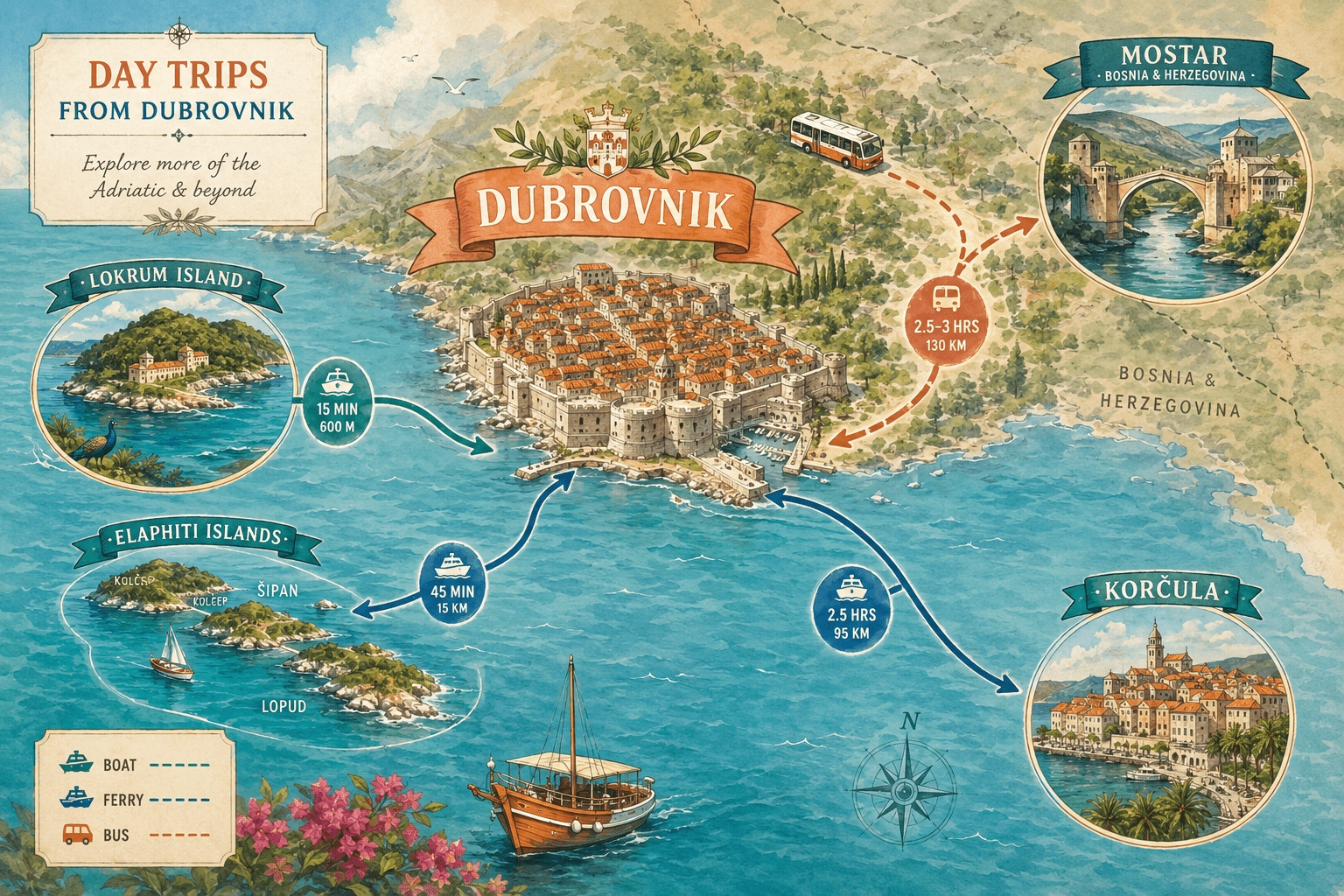
The islands around Dubrovnik are among the best reasons to base yourself here for more than a couple of days. The Elaphiti Islands (Koločep, Lopud, and Šipan) are reachable by regular ferry and offer quiet beaches, car-free villages, and excellent seafood. Korčula Island (2.5 hours by catamaran) is a medieval walled town that locals call “Little Dubrovnik” — without the crowds [2].
Day trip options at a glance:
- Lokrum Island — 15 min by boat; half-day; nature reserve, swimming, peacocks
- Elaphiti Islands — 30–90 min by ferry; full day; beaches, villages, local konobas
- Korčula — 2.5 hrs by catamaran; full day; medieval old town, wine, beaches
- Mostar, Bosnia — 2.5 hrs by bus; full day; Stari Most bridge, Ottoman bazaar
- Cavtat — 30 min by boat; half-day; quieter coastal town, Račić Mausoleum
How Much Does a Day Trip from Dubrovnik Cost?
Costs vary by destination. A Lokrum boat/entry ticket runs approximately €15–€20. Elaphiti Islands ferry day trips cost €30–€60 depending on whether you book independently or through a tour operator. Korčula catamaran tickets run €25–€35 each way. Mostar bus tours through operators typically cost €40–€60 including transport [3].
If you enjoy exploring historic coastal cities, the guide on what to see in Split Croatia is worth reading before you plan your Dalmatian itinerary — Split makes an excellent base for the northern part of the coast.
Is Dubrovnik Safe for Solo Travelers?
Dubrovnik is very safe for solo travelers, including solo women. Violent crime is extremely rare, and the city’s compact, well-lit Old Town makes navigation straightforward even at night [7]. The main practical concerns are petty theft in crowded tourist areas (keep bags close on Stradun during peak hours) and the physical demands of the terrain — the city is built on steep limestone, so comfortable shoes are essential.
For broader solo travel planning in the Mediterranean region, the solo travel in Spain guide covers many of the same logistical considerations that apply to Croatia.
How Different Is Dubrovnik from Other Croatian Cities?
Dubrovnik is significantly more tourist-focused and expensive than other Croatian cities. Split, Croatia’s second city, has a living, working old town built inside Diocletian’s Palace — it feels more authentic and less like a museum piece. Zadar and Šibenik are smaller, quieter, and far less visited. Zagreb, the capital, is a Central European city with a completely different character — more Vienna than Adriatic [2].
Dubrovnik’s isolation at the southern tip of Croatia also makes it geographically distinct. It’s closer to Sarajevo than to Zagreb, and its history as an independent republic (the Republic of Ragusa) gives it a cultural identity unlike anywhere else in the country.
What Should I Avoid Doing as a Tourist in Dubrovnik?
Several behaviors draw fines or genuine local frustration [7]:
- Wearing swimwear in the Old Town — a €100+ fine applies; cover up before entering through the gates.
- Sitting on the Stradun steps or fountains — prohibited and enforced.
- Dragging wheeled luggage through the Old Town — banned in parts of the city; use porters or carry bags.
- Booking nothing in advance in peak season — wall tickets, popular restaurants, and ferries sell out.
- Ignoring the heat — the walls circuit has almost no shade; heat exhaustion is a real risk in July and August without water and sun protection.
- Assuming everything is walkable — the terrain is steep and distances between neighborhoods are longer than they look on a map.
How Many Days Do I Need to Explore Dubrovnik?
3 days covers the core highlights comfortably: City Walls, Old Town, Mount Srđ, Lokrum, and one evening at Buža Bar. 4–5 days lets you add a day trip to the Elaphiti Islands or Korčula, explore Fort Lovrijenac and the Dominican Monastery, and generally move at a slower pace [4].
One day is enough for a cruise stop or transit visit — prioritize the walls and Stradun, nothing else.
Choose 3 days if you’re on a tight schedule. Choose 4–5 days if you want to include island day trips or plan to use Dubrovnik as a base for exploring the southern Dalmatian coast.
Best Beaches Near Old Town Dubrovnik
Dubrovnik’s beaches are mostly pebble rather than sand, but the water clarity is exceptional.
- Banje Beach — closest to Old Town (5-min walk from Ploče Gate); sun lounger rentals available
- Šulić Beach — small, rocky, just below the walls near Buža Bar; accessed via steps
- Danče Beach — west of Pile Gate; quieter, local crowd, no facilities
- Copacabana Beach (Babin Kuk) — larger, sandier, family-friendly; 15 min by bus
- Betina Cave Beach — hidden cove best reached by kayak; no facilities
Things to Do in Croatia Dubrovnik: Essential Experiences 11–15
11. Rector’s Palace
The finest example of Ragusan Gothic-Renaissance architecture, now housing the Cultural-Historical Museum. The atrium hosts summer concerts during the Dubrovnik Summer Festival [6].
12. Dubrovnik Summer Festival
Running from mid-July to late August, this festival has staged performances in the city’s courtyards, fortresses, and open-air venues since 1950. Tickets sell out weeks in advance for headline performances [10].
13. Franciscan Monastery Pharmacy
Founded in 1317, this is one of the oldest pharmacies in Europe still in operation. The monastery cloister is one of the most beautiful spaces in the Old Town and far less crowded than the walls [1].
14. Sunset from Fort Imperial (Mount Srđ)
While the cable car crowds thin out after 7pm, the summit stays accessible until late. Watching the sun set from the Imperial Fortress, with the entire Adriatic coastline spread below, is worth the €15–€20 cable car ticket on its own.
15. Cooking Class or Wine Tasting
Several operators run hands-on Croatian cooking classes and Dalmatian wine tastings in and around the Old Town. These work particularly well on arrival or departure days when you don’t have time for a full excursion but want something more engaging than another museum [9].
FAQ
Q: Do I need to book City Wall tickets in advance?
A: In peak season (July–August), yes — tickets can sell out by mid-morning. Book online through the official Dubrovnik Walls website or include them in a Dubrovnik Pass purchase.
Q: Is the Dubrovnik Pass worth buying?
A: For most visitors, yes. The pass covers wall entry (€35 standalone), several museums, and bus transport. If you plan to visit the walls plus two or more museums, it typically pays for itself on day one.
Q: Can I swim in the sea near the Old Town?
A: Yes. Banje Beach is a 5-minute walk from Ploče Gate, and Šulić Beach sits directly below the walls. The water is clean and clear throughout the season.
Q: How do I get from Dubrovnik Airport to the Old Town?
A: The Atlas airport shuttle bus runs directly to Pile Gate (the main Old Town entrance) for approximately €10–€12. Taxis and rideshares cost €25–€40 depending on traffic.
Q: Is it worth hiring a private guide for the Old Town?
A: For first-time visitors, a 2-hour guided walk adds significant context to the history of the Ragusan Republic and the 1991 siege. It’s especially worthwhile if you plan to visit Rector’s Palace and the monasteries.
Q: Are there good vegetarian or vegan options in Dubrovnik?
A: Yes, more so than in most Croatian cities. Several restaurants in and around the Old Town now offer dedicated vegetarian menus, and fresh produce from the Gundulić Square market is excellent.
Q: Can I visit Dubrovnik as a day trip from Split?
A: Technically yes — the drive is about 3.5 hours each way. But a day trip leaves very little time in the city. It’s better to stay at least one night, or combine it with a stop in Korčula or the Pelješac Peninsula en route.
Q: What language do people speak in Dubrovnik?
A: Croatian is the official language, but English is widely spoken throughout the tourist areas. Italian and German are also common in hospitality settings.
Q: Is Dubrovnik accessible for travelers with mobility issues?
A: The Old Town’s steep, uneven limestone streets and the City Walls circuit present real challenges. The Stradun itself is relatively flat, but most side streets involve steps. The cable car is accessible; Lokrum ferry is not wheelchair-friendly.
Q: What’s the best way to get around Dubrovnik?
A: Walking within the Old Town; public buses (Line 4 and Line 6 are most useful) between neighborhoods. Taxis and rideshares are available but can be expensive during peak hours.
Conclusion
Dubrovnik rewards travelers who plan ahead and move on its own schedule. Walk the walls before 9am, swim at Banje Beach in the afternoon, and watch the sunset from Buža Bar with a cold beer in hand. Add Lokrum for a half-day of nature, Mount Srđ for the view that puts the whole city in perspective, and at least one island day trip to understand why the Adriatic has been drawing travelers for centuries.
Actionable next steps:
- Book City Wall tickets (or a Dubrovnik Pass) before you arrive — especially for July or August travel.
- Reserve accommodation in Lapad or Old Town at least 2 months ahead in peak season.
- Plan your Old Town visits for early morning or evening to avoid cruise crowds.
- Add at least one island excursion to your itinerary — the Elaphiti Islands or Korčula are both excellent choices.
- Pack comfortable walking shoes, a refillable water bottle, and sun protection — the limestone reflects heat intensely in summer.
For more Mediterranean inspiration, explore our guides on what to see in Split Croatia, what to do in Mykonos Greece, hidden gems in the Amalfi Coast, what to see in Athens Greece, and what to see in Crete Greece for your broader European itinerary.
References
[1] Visiting Dubrovnik Best Things To Do – https://embracesomeplace.com/visiting-dubrovnik-best-things-to-do/
[2] Things To Do Dubrovnik Croatia – https://www.neverendingfootsteps.com/things-to-do-dubrovnik-croatia/
[3] Dubrovnik Things To Do – https://curioustravelbug.com/dubrovnik-things-to-do/
[4] Three Days In Dubrovnik Itinerary – https://www.adventurouskate.com/three-days-in-dubrovnik-itinerary/
[5] Watch – https://www.youtube.com/watch?v=YxbWCs1V5S4
[6] Old Town Dubrovnik – https://www.emmasdaydream.com/blog/old-town-dubrovnik
[7] Dubrovnik Things To Do And Things To Avoid – https://www.reddit.com/r/CroatiaTravelTips/comments/1e9rg13/dubrovnik_things_to_do_and_things_to_avoid/
[8] Things To Do In Dubrovnik Croatia – https://www.mywanderlust.pl/things-to-do-in-dubrovnik-croatia/
[9] Things To Do In Dubrovnik – https://www.expedia.com/Things-To-Do-In-Dubrovnik.d553248635126030638.Travel-Guide-Activities
[10] Dubrovnik – https://www.timeout.com/croatia/dubrovnik