Last updated: May 30, 2026
Quick Answer
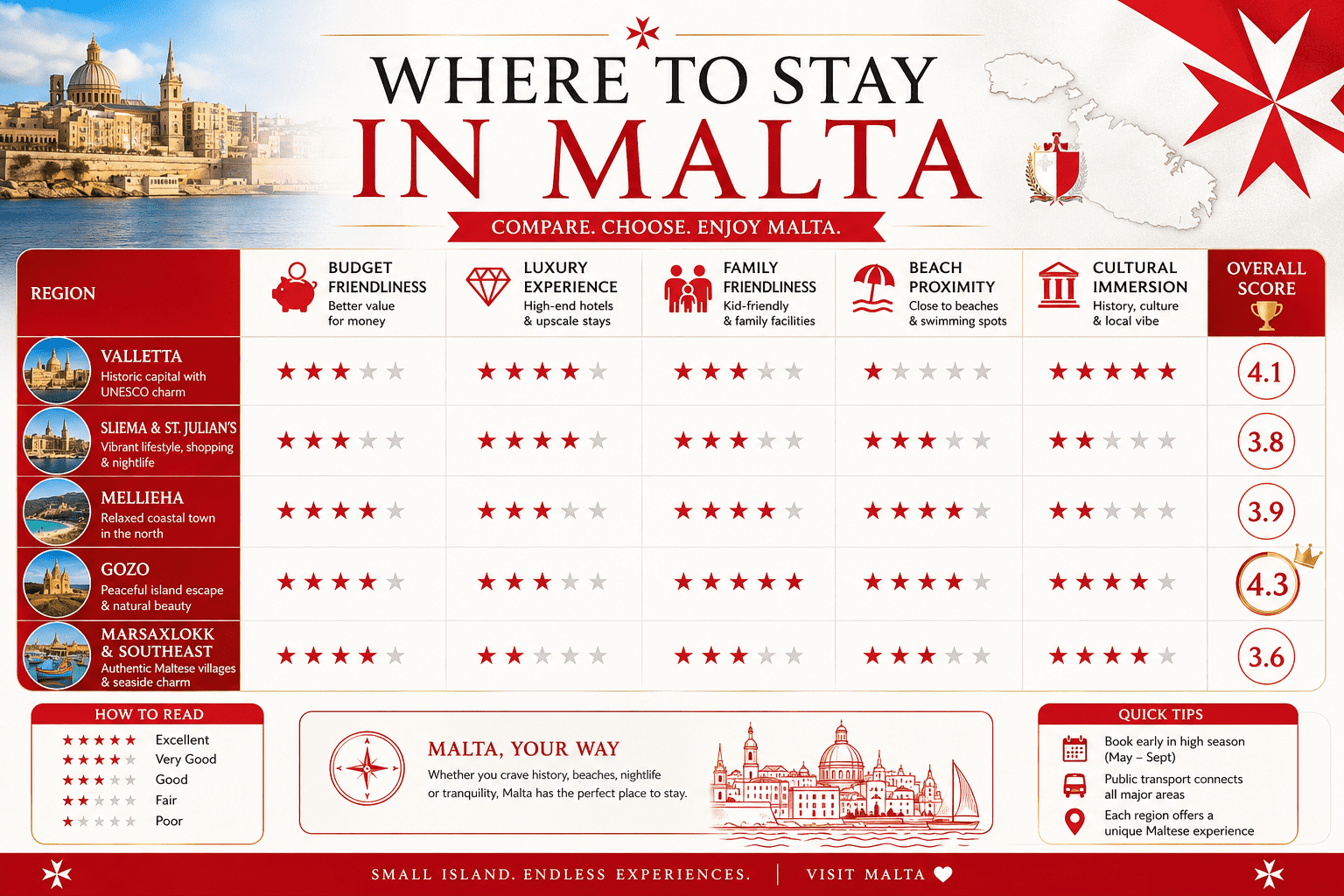
The best places to stay in Malta depend on your travel style. Valletta suits culture seekers, St. Julian’s works best for nightlife lovers, Sliema is ideal for shoppers and families, and Mellieha is the top pick for beach enthusiasts. Gozo and Mdina offer the quietest, most atmospheric retreats on the islands.
Key Takeaways
- Valletta is the best base for first-time visitors who want history, culture, and central access to Malta’s top attractions
- St. Julian’s has the liveliest nightlife and the widest range of upscale hotels, with mid-range options starting around EUR 80-120 per night
- Sliema is the most practical all-rounder, offering excellent transport links, dining, and a walkable waterfront
- Mellieha is the top choice for families and beach lovers, with Malta’s largest sandy beach right on its doorstep
- Mdina and Gozo are ideal for travelers who want quiet, romance, and a slower pace
- Budget travelers should look at Birkirkara, Paola, and guesthouses near the airport for the lowest nightly rates
- From July 1, 2026, Malta’s eco-contribution fee rises from EUR 0.50 to EUR 1.50 per person per night, so factor this into your budget [2]
- Airbnbs in Gozo are generally safe and widely used, but verify host reviews carefully for remote rural properties
- Solo female travelers are safest in Valletta, Sliema, and St. Julian’s, which have well-lit streets and active nightlife security
- Booking 3-4 months ahead is essential for peak summer months (June-August), when demand surges significantly
Is Valletta Good for First-Time Tourists?
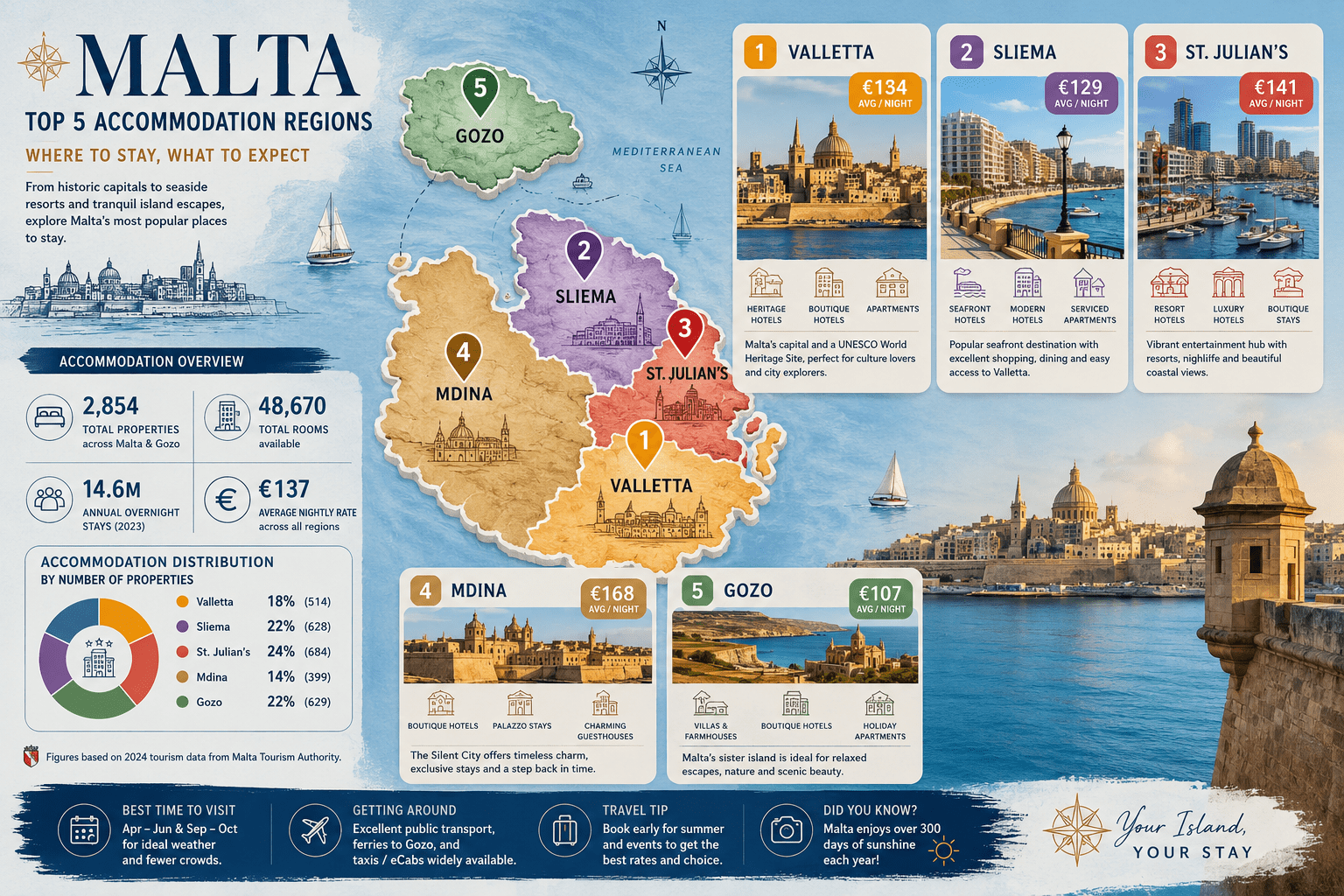
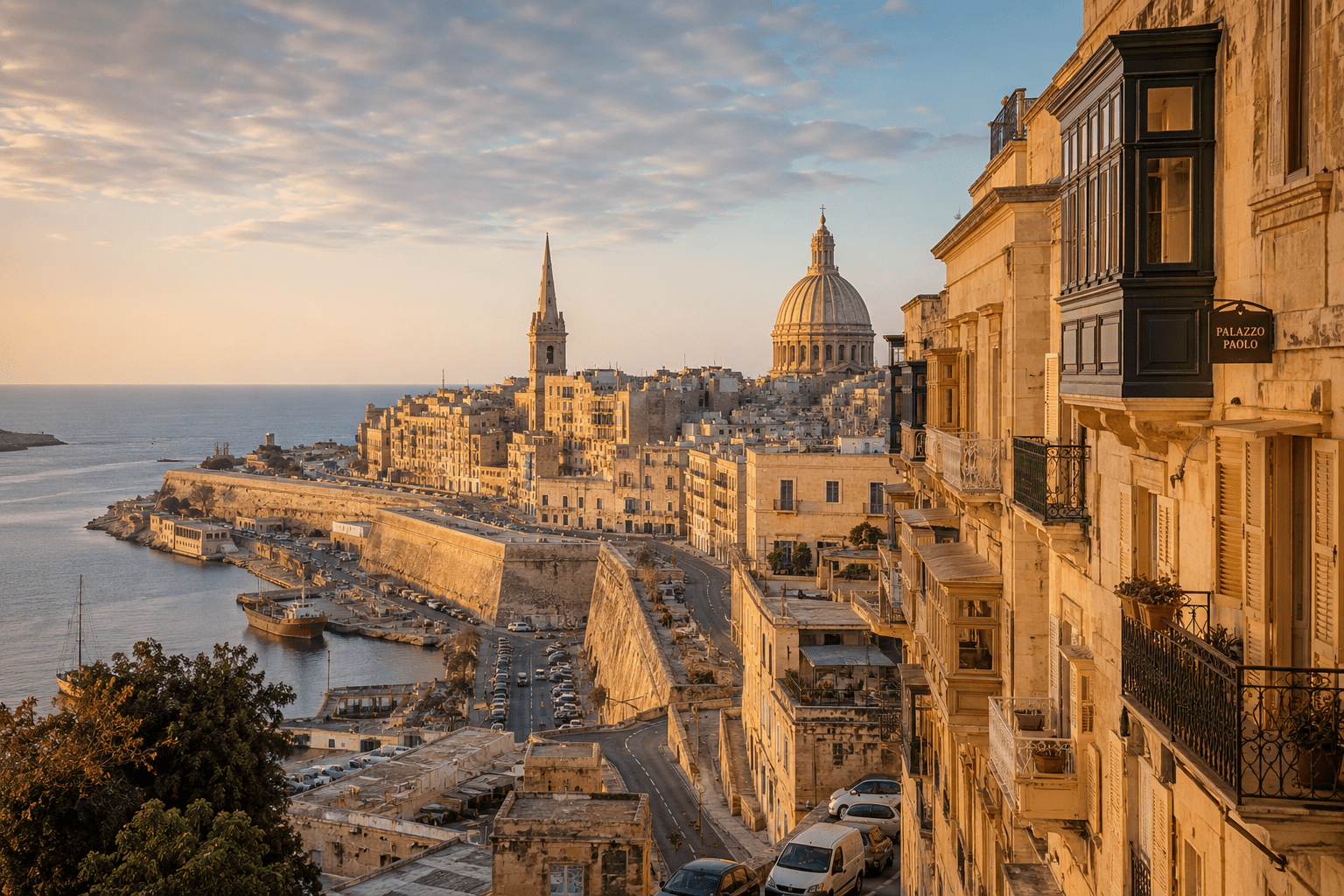
Valletta is the single best base for first-time visitors to Malta. As the capital city and a UNESCO World Heritage Site, it places you within walking distance of the island’s most celebrated landmarks, including St. John’s Co-Cathedral, the Grand Harbour, and the Upper Barrakka Gardens. [1]
Why Valletta works for first-timers:
- Direct bus connections to almost every part of Malta
- Compact enough to explore entirely on foot
- Rich concentration of museums, baroque architecture, and local restaurants
- Boutique hotels and converted palazzo guesthouses give it a distinctive character
The main trade-off is that Valletta’s accommodation options are more limited than Sliema or St. Julian’s, and prices for quality hotels can be higher per square foot. The city also quiets down significantly after 10 pm, which suits culture travelers but may frustrate those who want late-night options nearby.
Choose Valletta if: You’re visiting Malta for the first time, you want history and culture as your daily backdrop, or you plan to use public transport to explore the whole island.
Before you book, read our First Time in Malta guide covering 15 mistakes to avoid so you don’t overlook common planning errors.
Sliema vs. St. Julian’s: Key Differences for Where to Stay in Malta
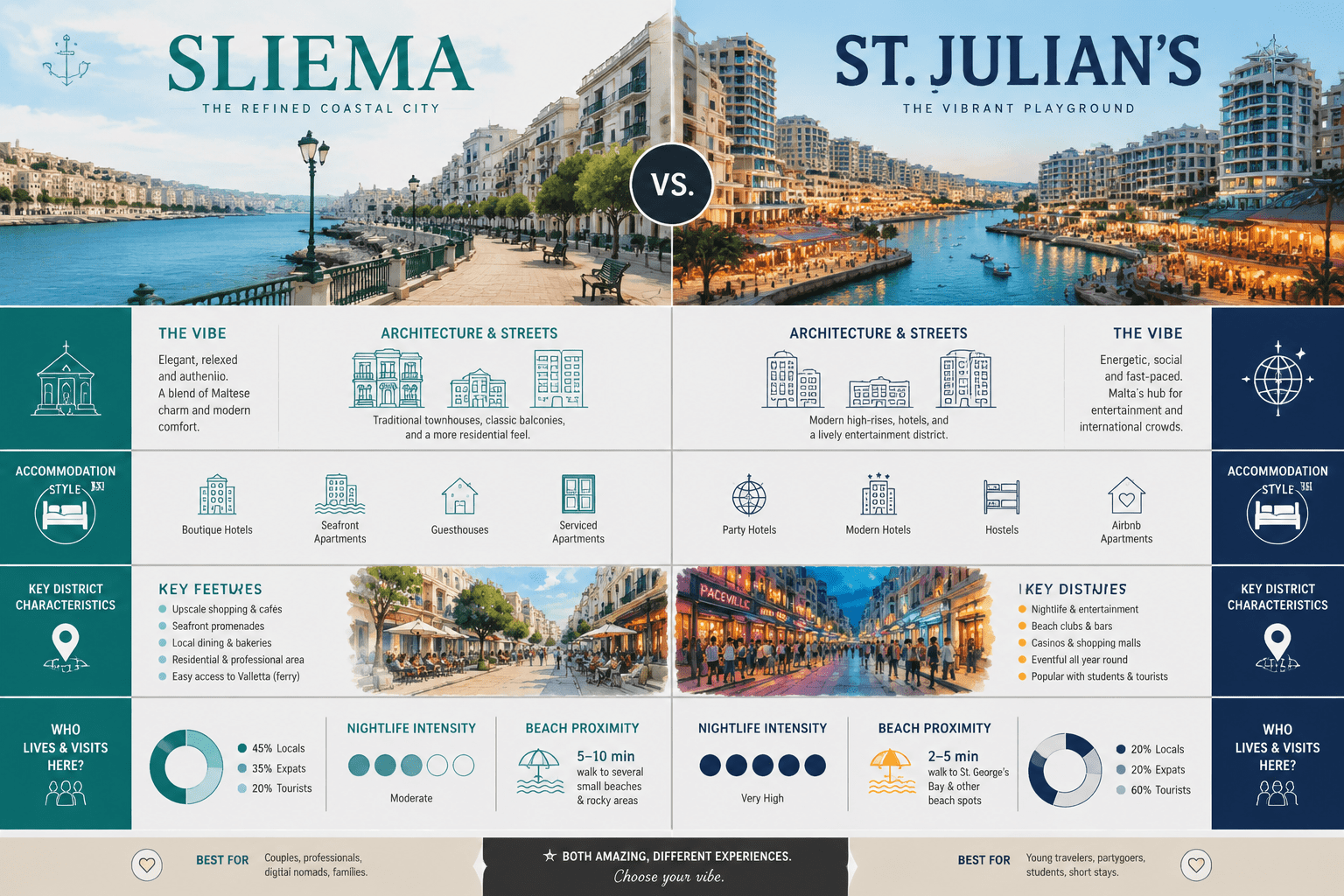
Sliema and St. Julian’s are the two most popular areas for tourists, and they sit just a 15-minute walk apart. Choosing between them comes down to one question: do you want a relaxed waterfront base or a lively entertainment hub?
| Feature | Sliema | St. Julian’s |
|---|---|---|
| Atmosphere | Calm, residential, walkable | Energetic, nightlife-focused |
| Beach type | Rocky waterfront promenade | Small sandy coves + pools |
| Shopping | Best in Malta | Limited |
| Nightlife | Quiet after 10 pm | Active until 3-4 am |
| Hotel range | Budget to mid-range | Mid-range to luxury |
| Best for | Families, shoppers, couples | Young travelers, party-goers |
| Transport links | Excellent | Good |
Sliema is Malta’s most cosmopolitan suburb. The Sliema Ferries terminal gives you a fast boat connection to Valletta (about 10 minutes), and the waterfront promenade is one of the best walking routes on the island. It’s more residential than touristy, which makes it a good place to experience everyday Maltese life. [1]
St. Julian’s centers on Paceville, Malta’s main entertainment district. The area has the island’s best concentration of five-star hotels, casino venues, and rooftop bars. Hotel costs in St. Julian’s typically run EUR 80-180 per night for mid-range options and EUR 200+ for luxury properties, based on general market estimates for the 2026 peak season.
Common mistake: Many travelers book in Paceville expecting a beach holiday, then discover the area’s “beaches” are mostly concrete lidos and small rocky inlets. If a sandy beach is your priority, Mellieha or Gozo are better choices.
Which Malta Location Is Best for Beach Lovers?
Mellieha is the best base for beach lovers in Malta, full stop. It sits in the island’s north and is home to Mellieha Bay (also called Ghadira Bay), which is Malta’s largest and most family-friendly sandy beach. The town itself sits on a ridge above the bay, offering stunning views and a quieter atmosphere than the central tourist belt. [1]
Top beach-focused locations in Malta:
- Mellieha Bay: Wide, shallow, sandy, and ideal for children and swimmers
- Golden Bay: A short drive from Mellieha, popular with younger crowds
- Paradise Bay: Small and scenic, near the Gozo ferry terminal
- St. George’s Bay (St. Julian’s): Sandy but small, surrounded by hotels and lidos
- Blue Lagoon (Comino): Day-trip only, no overnight accommodation on the island
Mellieha also has good bus connections to Valletta and the rest of the north, though you’ll likely want a rental car or taxi for flexibility. Accommodation here skews toward apartment rentals and smaller hotels rather than large resort chains.
For those who love combining beach stays with water activities, Malta is also one of Europe’s top scuba diving destinations. Check out our guide to the best places to scuba dive if diving is on your agenda.
What Are the Cheapest Areas to Stay in Malta?
Budget travelers will find the lowest accommodation prices in inland towns like Birkirkara, Paola, Qormi, and areas close to Malta International Airport in Luqa. These locations are less scenic than the coastal areas but offer solid public transport connections and nightly rates that can be 30-50% lower than Sliema or Valletta.
Budget accommodation options by area:
- Near the airport (Luqa/Gudja): Guesthouses and three-star hotels from approximately EUR 40-70 per night, convenient for early flights
- Birkirkara: Malta’s most populated town, with local guesthouses and apartment rentals at lower rates
- Marsaskala: A quieter fishing village on the southeast coast with affordable apartments and a genuine local feel
- Birgu (Vittoriosa): One of the Three Cities, historically rich and underrated, with fewer tourists and lower prices than Valletta
Note on the eco-contribution: From July 1, 2026, Malta triples its tourist eco-contribution from EUR 0.50 to EUR 1.50 per person per night. [2] This applies across all accommodation types, so budget travelers should factor this into nightly cost comparisons.
Budget tip: Searching for apartments and guesthouses in Marsaskala or Birgu gives you authentic local neighborhoods without the tourist markup. Both areas have waterfront promenades and are well-served by buses.
Best Malta Accommodation for Families with Kids
Mellieha is the top family choice, but Sliema and St. Paul’s Bay are strong runners-up. The key factors for families are shallow, sandy beaches, easy transport, proximity to supermarkets, and hotels with pools.
Family-friendly areas ranked:
- Mellieha: Shallow Mellieha Bay, quieter roads, spacious apartments, less nightlife noise
- Sliema: Excellent amenities, easy Valletta ferry, good restaurant variety, safe promenade for evening walks
- St. Paul’s Bay / Bugibba: More affordable than Sliema, with a lido, waterfront, and plenty of family-oriented hotels
- St. Julian’s: Works for families who want hotel pools and amenities, but Paceville noise can be disruptive at night
For families traveling with younger children, self-catering apartments in Mellieha or St. Paul’s Bay offer the best value. You get kitchen facilities, more space, and flexibility with meal times. For more ideas on keeping travel affordable with kids, see our roundup of budget-friendly vacations with kids.
Is Mdina a Good Place to Stay for Quiet Travelers?
Mdina is one of the most atmospheric places to stay in Malta, but accommodation options are extremely limited. The “Silent City” has only a handful of guesthouses and boutique hotels within its medieval walls, which means you’ll need to book well in advance. [1]
Mdina’s appeal is undeniable: narrow limestone alleyways, baroque palaces, and a population of fewer than 300 residents make it feel like stepping back several centuries. Nights here are genuinely quiet, with most day-trippers gone by late afternoon.
Mdina is right for you if:
- You prioritize atmosphere and history over convenience
- You’re comfortable renting a car, as bus connections from Mdina are less frequent
- You want a romantic or contemplative retreat rather than a beach holiday
Mdina is not ideal if:
- You need easy access to beaches or nightlife
- You’re traveling with young children who need space and activity
- You’re on a tight budget (the few hotels here tend to charge a premium for exclusivity)
Nearby Rabat, just outside the city walls, offers more accommodation options at lower prices while still giving you easy walking access to Mdina.
Are Airbnbs Safe in Gozo?
Airbnbs in Gozo are generally safe and widely used by travelers seeking a rural, authentic experience. Gozo is Malta’s quieter sister island, known for its farmhouses, cliffs, and small bays, and short-term rental properties are one of the most popular ways to stay there. [1]
What to know before booking a Gozo Airbnb:
- Read reviews carefully, especially for properties described as “remote” or “countryside.” Some rural farmhouses have limited mobile signal.
- Confirm that the property has air conditioning. Summer temperatures in Gozo regularly exceed 32°C (90°F).
- Check proximity to the ferry terminal at Mgarr if you plan to travel back to Malta frequently. The ferry crossing takes about 25 minutes.
- Most Gozo Airbnbs are converted stone farmhouses, which are charming but can be cool in winter and warm in summer without proper ventilation.
Gozo is a small island with a low crime rate and a tight-knit community. Safety is not a significant concern, but the island’s limited public transport means you’ll almost certainly need a rental car or scooter to get around comfortably.
Malta Accommodation Tips for Solo Female Travelers
Malta is considered one of the safer Mediterranean destinations for solo female travelers. Valletta, Sliema, and St. Julian’s are the recommended bases, as they have well-lit streets, active tourism infrastructure, and reliable transport links running late into the evening.
Practical tips for solo female travelers in Malta:
- Stay in central Valletta or Sliema for the best balance of safety, walkability, and convenience
- Avoid booking isolated rural properties on your first visit if you’re unfamiliar with the area
- St. Julian’s Paceville is lively but can get rowdy on weekend nights; stay aware of your surroundings in that specific area after midnight
- Malta’s bus network is reliable and generally safe for solo travel during daylight hours
- Hostels in Valletta and Sliema offer social environments and are popular with solo travelers
For broader context on planning solo trips as a woman, our guide to the 15 best places for solo female travel covers destinations where safety infrastructure is strong.
Most Romantic Towns in Malta for Couples
Mdina, Valletta, and Gozo top the list for couples. Each offers a distinct romantic atmosphere, from medieval silence to baroque grandeur to rural island escapes.
Best romantic bases for couples:
- Mdina: Candlelit dinners in ancient palaces, zero crowds after dark, extraordinary atmosphere
- Valletta: Boutique palazzo hotels, rooftop restaurants overlooking the Grand Harbour, sunset views from the Upper Barrakka Gardens
- Gozo (Xlendi or Marsalforn): Secluded farmhouse stays, cliff-top walks, quieter beaches, and excellent local wine
- Birgu (Vittoriosa): An underrated gem with a beautiful marina, historic streets, and far fewer tourists than Valletta
Couples who want a mix of romance and convenience tend to do best in Valletta, where a boutique hotel stay puts you within walking distance of excellent restaurants and evening entertainment without the noise of Paceville. For more romantic destination inspiration, browse our guide to the most romantic honeymoon destinations.
What Neighborhood Should I Avoid in Malta?
No area of Malta is genuinely dangerous for tourists, but a few locations are worth approaching with adjusted expectations. Paceville in St. Julian’s can be chaotic and occasionally confrontational on Friday and Saturday nights, particularly in the early hours of the morning. It’s not unsafe, but it’s not a relaxing environment either.
Areas to approach with realistic expectations:
- Paceville (St. Julian’s): Heavy nightlife concentration, loud until 4 am, not suitable for light sleepers or families
- Marsa: An industrial and commercial area with limited tourist appeal and few accommodation options worth choosing over better alternatives
- Some inland towns (Qormi, Marsa): Perfectly safe but offer little for tourists in terms of atmosphere or attractions
The honest answer is that Malta’s small size and strong tourism infrastructure mean there are no genuinely “bad” neighborhoods in the way larger cities have them. The bigger risk is choosing an area that doesn’t match your travel style rather than choosing somewhere unsafe.
What Are Common Mistakes Tourists Make When Booking Malta Hotels?
The most common booking mistake in Malta is choosing accommodation based on price alone without considering location relative to the attractions and beaches you actually want to visit. Malta is small (roughly 27km long), but bus journeys between areas can take 45-90 minutes in peak summer traffic.
Top booking mistakes to avoid:
- Booking in Paceville for a beach holiday: The beaches nearby are rocky lidos, not sandy shores
- Underestimating summer heat: Always confirm air conditioning is included, not just a ceiling fan
- Ignoring the eco-contribution fee: From July 2026, this adds EUR 1.50 per person per night to your bill [2]
- Booking non-refundable rates too early: Malta’s weather and ferry schedules to Gozo can affect plans; flexible rates are worth the small premium
- Overlooking the Three Cities: Birgu, Senglea, and Cospicua are atmospheric, affordable, and just a short ferry ride from Valletta
- Not checking parking: If you rent a car, confirm your hotel has parking. Central Valletta is largely pedestrianized and parking is very limited.
One more thing: Delta Air Lines launched its first nonstop flight from New York JFK to Malta starting June 7, 2026, running through October 23, 2026. [3] North American travelers now have a direct route, which means summer 2026 demand is higher than previous years. Book earlier than you normally would.
Where to Stay in Malta: Quick Area Comparison
Use this table to match your travel style to the right base:
| Area | Best For | Avoid If | Price Range (est.) |
|---|---|---|---|
| Valletta | First-timers, culture lovers | You want beach access | EUR 90-200/night |
| Sliema | Families, shoppers, all-rounders | You want sandy beaches | EUR 70-160/night |
| St. Julian’s | Nightlife, luxury hotels | You’re a light sleeper | EUR 80-250+/night |
| Mellieha | Beach lovers, families | You need central location | EUR 60-140/night |
| Mdina/Rabat | Quiet travelers, romantics | You need frequent transport | EUR 100-200/night |
| Gozo | Rural retreats, couples | You want nightlife or big beaches | EUR 60-150/night |
| St. Paul’s Bay | Budget families, lido lovers | You want upscale atmosphere | EUR 50-120/night |
| Birgu | Romantic, budget-conscious | You need lots of amenities | EUR 60-130/night |
FAQ: Where to Stay in Malta
Is Valletta or Sliema better for a first visit to Malta?
Valletta is better for first-timers who want history and culture. Sliema is better if you want a more modern, convenient base with easier access to shops and the waterfront. Both are excellent choices, and they’re connected by a short ferry ride.
How far is St. Julian’s from Valletta?
St. Julian’s is approximately 10km from Valletta. By bus, the journey takes around 30-40 minutes. By taxi or rideshare, expect 15-20 minutes outside peak traffic hours.
Is Malta good for a beach holiday?
Malta has beaches, but they’re not the soft-sand paradise many expect. Mellieha Bay is the best sandy beach on the main island. For more dramatic scenery and quieter coves, Gozo is the better choice. If pristine beaches are your top priority, compare Malta with nearby destinations before booking.
What is the best area to stay in Malta for nightlife?
St. Julian’s (specifically Paceville) is the undisputed nightlife hub. It has the highest concentration of bars, clubs, and late-night restaurants on the island.
Can I stay in Comino?
There is no permanent accommodation on Comino. The island is a day-trip destination only, most commonly visited for the Blue Lagoon. Boats run from Malta and Gozo.
Is Gozo worth staying on for more than one night?
Yes, especially if you want a slower pace. Two to three nights in Gozo is enough to explore the main sites, including the Citadel in Victoria, the Azure Window area, and the island’s beaches and farmhouses.
How much does accommodation in Malta cost on average?
Based on general market estimates for 2026, budget travelers can find guesthouses from EUR 40-70 per night, mid-range hotels run EUR 80-160, and luxury properties in St. Julian’s or Valletta start around EUR 200 per night. Add the EUR 1.50 per person per night eco-contribution from July 2026. [2]
Is Malta safe for solo travelers?
Malta is considered one of the safer destinations in the Mediterranean for solo travelers. Valletta and Sliema are the most recommended bases for solo visitors, including solo female travelers.
What is the best time of year to visit Malta?
May, June, September, and October offer the best balance of warm weather, manageable crowds, and reasonable prices. July and August are the hottest and most crowded months.
Do I need a car to get around Malta?
Not necessarily. Malta’s bus network covers most tourist areas, and the Valletta-Sliema ferry is a convenient shortcut. However, if you want to explore rural areas, northern beaches, or Gozo independently, a rental car gives you much more flexibility.
Are there budget hotels near Malta airport?
Yes. The airport in Luqa is served by several three-star hotels and guesthouses within a 5-10 minute drive. These are practical for early departures or late arrivals but are not scenic bases for a full holiday.
Which area of Malta is most authentic and least touristy?
Birgu (Vittoriosa), Marsaskala, and Marsaxlokk offer the most genuine local experience. Marsaxlokk is particularly worth visiting on Sunday mornings for its famous fish market, and staying in or near the village gives you a real sense of traditional Maltese life.
Conclusion
Deciding where to stay in Malta is ultimately about matching your base to what you actually want from the trip. Valletta delivers culture and history in concentrated form. Sliema gives you practicality and a walkable waterfront. St. Julian’s is the right choice if evenings out matter as much as daytime sightseeing. Mellieha and the north serve beach-focused travelers best, while Mdina, Gozo, and Birgu reward anyone willing to slow down and absorb atmosphere.
Your next steps:
- Identify your top two priorities (beach, nightlife, culture, quiet, budget) and use the comparison table above to shortlist your area
- Book accommodation 3-4 months ahead if you’re visiting between June and August, especially now that direct flights from New York are available [3]
- Factor in the July 2026 eco-contribution increase of EUR 1.50 per person per night when comparing total costs [2]
- Consider splitting your stay between two areas, for example, two nights in Valletta and the remainder in Mellieha or Gozo, to get a fuller picture of what Malta offers
Malta set new tourism records in early 2025 [5], and with improved North American air connectivity in 2026, demand will only increase. The island rewards travelers who plan thoughtfully and choose their base with intention.
References
[1] Where To Stay – https://www.maltauncovered.com/malta-holidays/where-to-stay/?utm_source=openai
[2] Malta To Triple Tourist Eco Contribution From July – https://www.independent.com.mt/articles/2026-05-07/local-news/Malta-to-triple-tourist-eco-contribution-from-July-6736289489?utm_source=openai
[3] Delta Vacations Presents First Malta Program For Delta’s Inaugural Nonstop Flight From JFK This Summer June 7 – October 23 2026 – https://www.globenewswire.com/news-release/2026/02/24/3243938/0/en/Delta-Vacations-Presents-First-Malta-Program-for-Delta-s-Inaugural-Nonstop-Flight-from-JFK-this-Summer-June-7-October-23-2026.html?utm_source=openai
[4] Malta Tourism Authority Targets US Luxury And MICE Markets With First North American Roadshow – https://maltainvest.mt/malta-tourism-authority-targets-us-luxury-and-mice-markets-with-first-north-american-roadshow/?utm_source=openai
[5] Malta Sets New Records For Inbound Tourism In The First Two Months Of 2025 – https://www.independent.com.mt/articles/2025-04-08/local/Malta-sets-new-records-for-inbound-tourism-in-the-first-two-months-of-2025-MTA-says-6736269191?utm_source=openai
[6] Advancing Malta’s Tourism Connectivity Quality And Sustainable Growth – https://publicservice.gov.mt/en/news/advancing-malta-s-tourism-connectivity-quality-and-sustainable-growth?utm_source=openai