Quick Answer: Crete is far more than beach resorts and Santorini stopovers. The island holds 3,500-year-old Minoan ruins, one of Europe’s best gorge hikes, a well-preserved Venetian harbor town, and remote beaches that most visitors never reach. If you want what to see in Crete Greece beyond the postcard shots, this guide covers the landmarks, hidden corners, and practical details you actually need.
Key Takeaways 🗺️
- Knossos Palace is Europe’s oldest city site, dating back 3,500 years — pair it with the Heraklion Archaeological Museum on the same day
- Samaria Gorge is ranked among the world’s top 10 hikes; the 14.5 km trail is open May through October and costs €5 to enter [1]
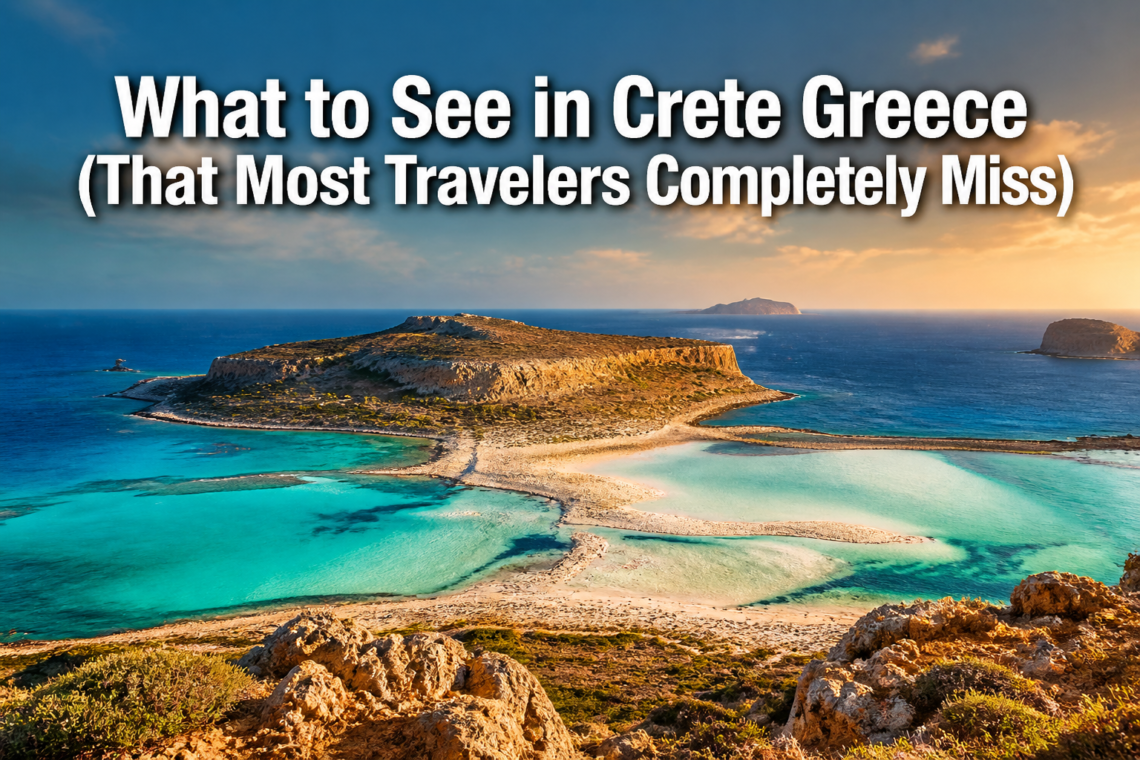
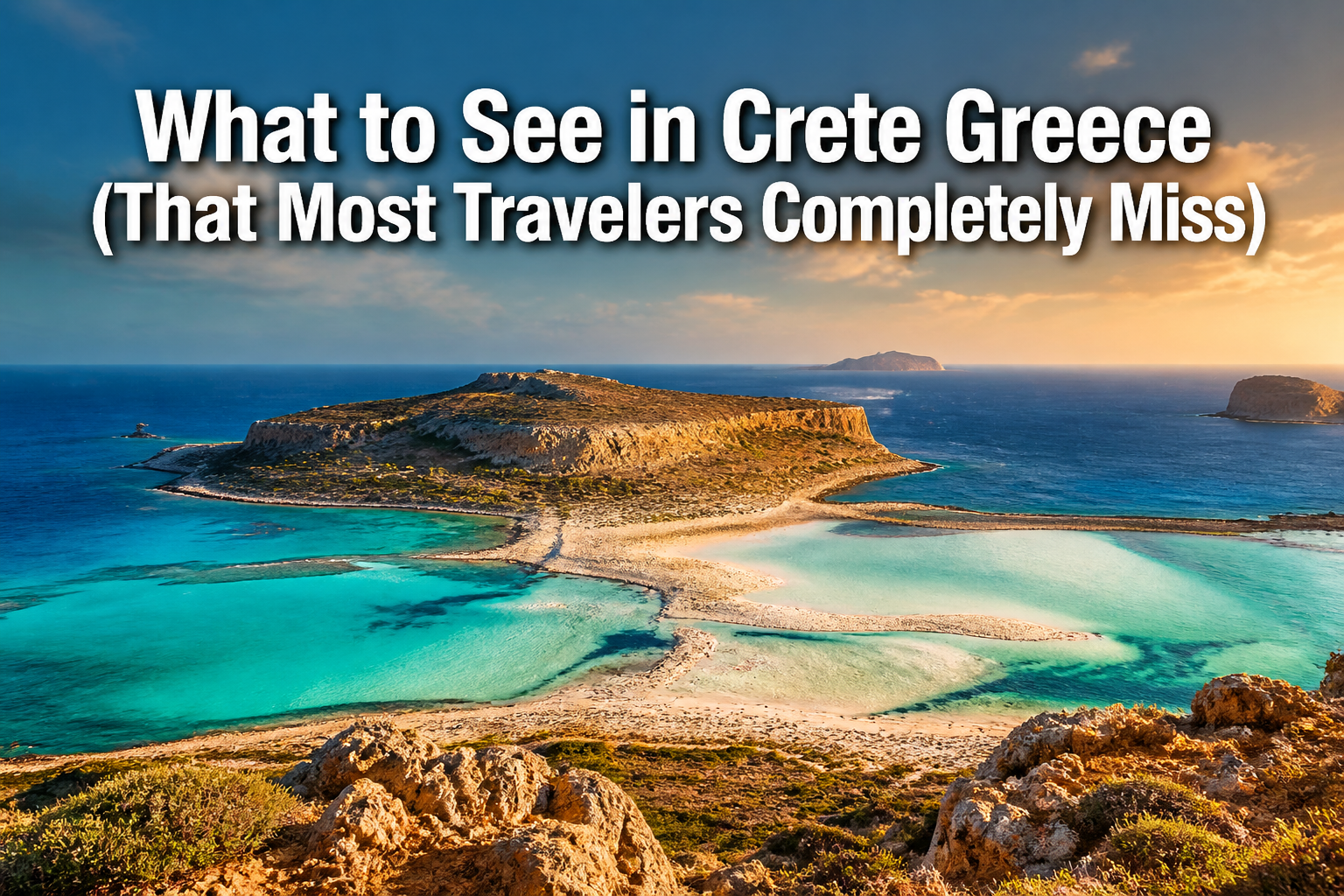
- Balos Lagoon is Crete’s most photographed beach, but it requires either a boat trip or a rough 4WD road — plan ahead [3]
- Chania’s Old Town is the island’s most atmospheric neighborhood, mixing Venetian, Ottoman, and Greek architecture in a walkable area
- Arkadi Monastery is one of Greece’s most historically significant sites, yet most beach-focused tourists skip it entirely [1]
- Rethymnon Fortress charges just €4 entry and is one of Greece’s best-preserved castles [3]
- Traveling in May, June, or September gives you better prices, fewer crowds, and cooler temperatures for hiking
- Renting a car is almost essential — Crete is 260 km long and public buses don’t reach most hidden spots
What to See in Crete Greece: The Landmarks You Actually Need to Visit
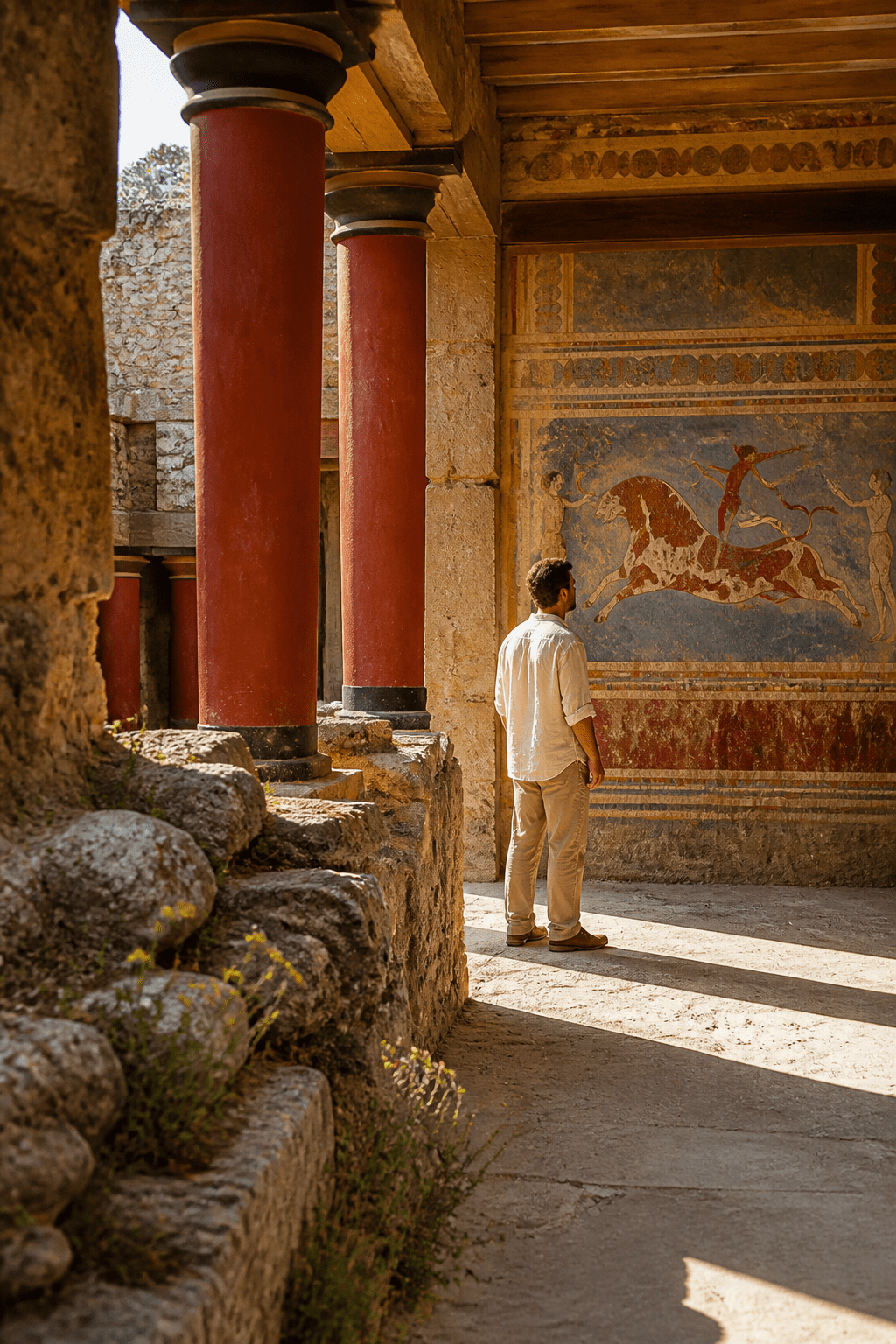
Most travelers land in Heraklion, spend a day at the beach, and leave thinking they’ve seen Crete. They haven’t. The island’s most rewarding sites sit inland, up mountain roads, or along coastlines that require a bit of effort to reach.
Knossos Palace and the Heraklion Museum
Start here if you have any interest in ancient history. Knossos Palace dates back 3,500 years to the Bronze Age and is considered one of Europe’s oldest continuously excavated city sites. [3] The reconstructed frescoes and labyrinthine layout make it genuinely impressive, not just another pile of stones.
Right after, walk or take a short taxi to the Heraklion Archaeological Museum. It houses the famous Phaistos Disc — a 3,800-year-old clay disc with an undeciphered script — plus extraordinary Minoan jewelry and pottery. [3] Budget a full day for both.
Pro tip: Book Knossos tickets online in advance during summer. The site gets crowded by 10 a.m., so aim to arrive when it opens.
Arkadi Monastery
This 16th-century monastery, about 23 km southeast of Rethymnon, is one of the most emotionally powerful places on the island. In 1866, hundreds of Cretan rebels and civilians sheltered here during an Ottoman siege. Rather than surrender, they detonated the gunpowder store. The monastery became a symbol of Greek resistance and independence. [1]
The attached museum documents the event with artifacts and portraits. The basilica itself is beautiful, and parking is easy. It’s worth two hours of your time.
Fortress of Rethymnon (Fortezza)
Built by the Venetians in the 16th century, the Fortezza is one of Greece’s best-preserved castles. [3] The €4 entrance fee is one of the best-value tickets on the island. Walk the ramparts, find the Bastion of Saint Lucas with its unusual cannon ramp, and look out over the sea and the old town below. Combine it with a wander through Rethymnon’s Old Town afterward.
The Hike Most Travelers Skip: Samaria Gorge
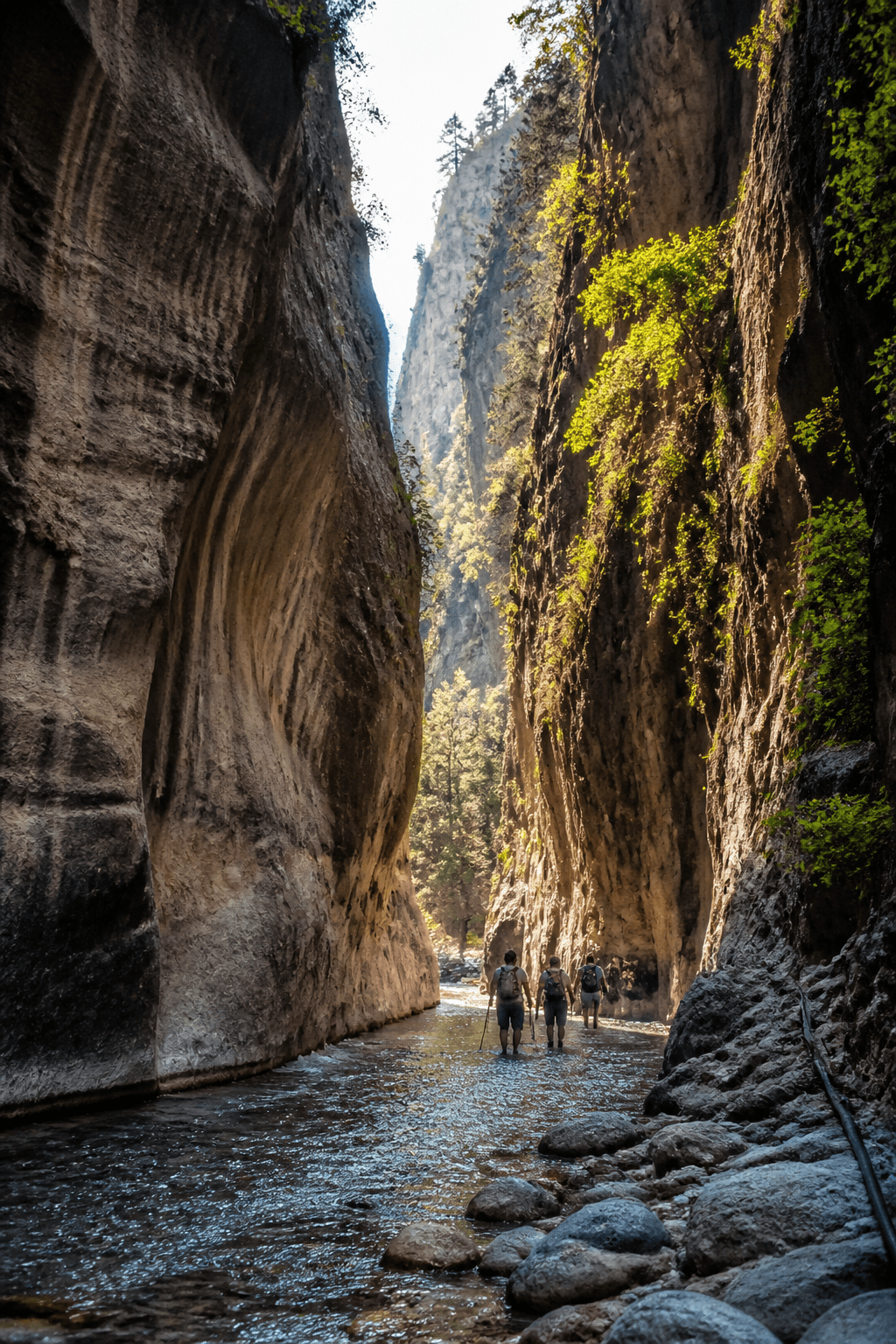
Samaria Gorge is a 14.5 km (9-mile) one-way hike through a UNESCO Biosphere Reserve in the White Mountains of western Crete. It’s ranked among the top 10 hikes in the world and features some of the most dramatic cliff scenery in Europe. [1]
What to Know Before You Go
| Detail | Info |
|---|---|
| Distance | 14.5 km one-way |
| Duration | 4–7 hours depending on pace |
| Entrance fee | €5 |
| Season | May through October only |
| Difficulty | Moderate (rocky terrain, no technical climbing) |
| End point | Agia Roumeli village (boat required to leave) |
The gorge passes through the narrowest point called the Iron Gates, where the cliffs rise roughly 300 meters on both sides and the path narrows to just a few meters wide. The biodiversity is exceptional — over 450 plant species grow here, with 70 found nowhere else on Earth. [1]
Choose this hike if: You’re reasonably fit, wearing proper shoes, and visiting between May and October.
Skip it if: You have knee problems (the descent is steep and rocky) or you’re visiting outside the open season.
Common mistake: Starting too late. Most hikers begin by 7–8 a.m. to avoid midday heat and afternoon crowds. The gorge exit at Agia Roumeli requires a ferry to Hora Sfakion, so missing the last boat means an unplanned overnight stay.
What to See in Crete Greece on the Coast: Beaches Beyond the Brochure
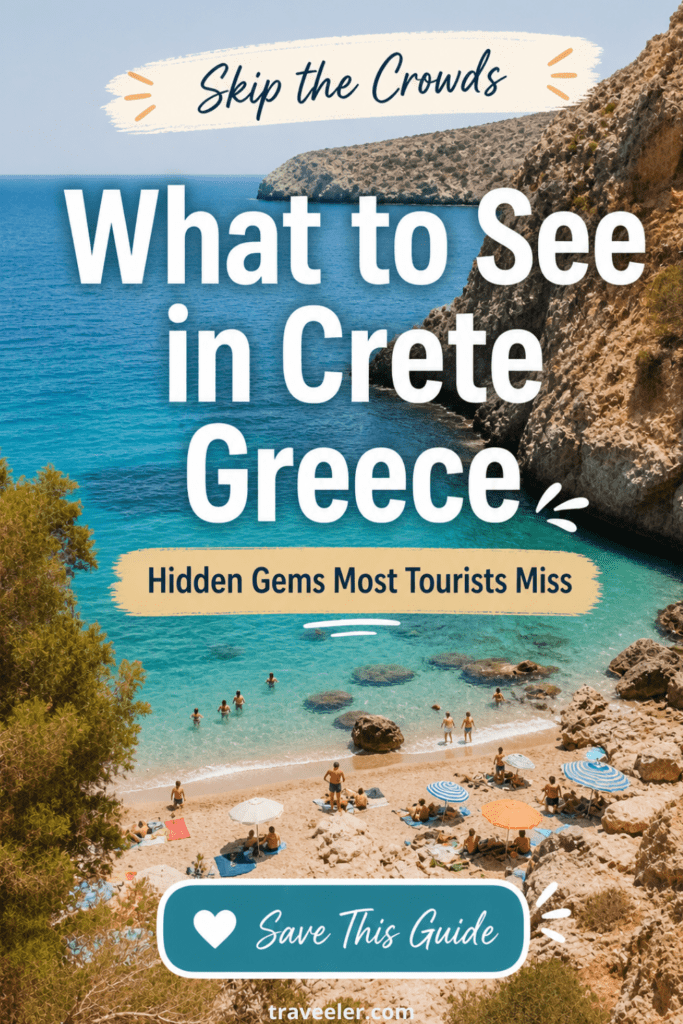
Crete has over 650 km of coastline, and the beaches that appear in every travel brochure are usually the most crowded ones. Here are the ones worth seeking out.
Balos Lagoon and Gramvousa Island
Balos is genuinely stunning — a shallow turquoise lagoon with white sand and a ruined Venetian fortress on the adjacent island of Gramvousa. [3] It’s Crete’s most photographed beach for a reason.
Getting there requires either:
- A 45-minute ferry from Kissamos port (the easier option)
- A rough unpaved road suitable for 4WD vehicles, followed by a 20-minute walk down to the beach
Go early or late in the day. Midday in July and August, the lagoon is packed.
Matala Beach
Located about an hour south of Heraklion, Matala sits in a deep bay with calm, clear water and no waves. [3] The cliffs above the beach are riddled with ancient Roman-era tombs that were later used as caves by hippie travelers in the 1960s and 70s — Joni Mitchell reportedly stayed here. The caves are now a small paid attraction.
Matala is one of the few southern-coast beaches accessible without a 4WD.
Elafonisi Beach
Pink-tinged sand, shallow warm water, and a small island you can wade to. Elafonisi is popular but large enough that you can find a quiet spot if you arrive before 10 a.m. It’s a 75-minute drive from Chania.
If you’re planning a Greek island-hopping trip, you might also want to read about what to do in Mykonos Greece or check whether Santorini is worth visiting for your specific travel style.
Chania: The Most Beautiful Town in Crete
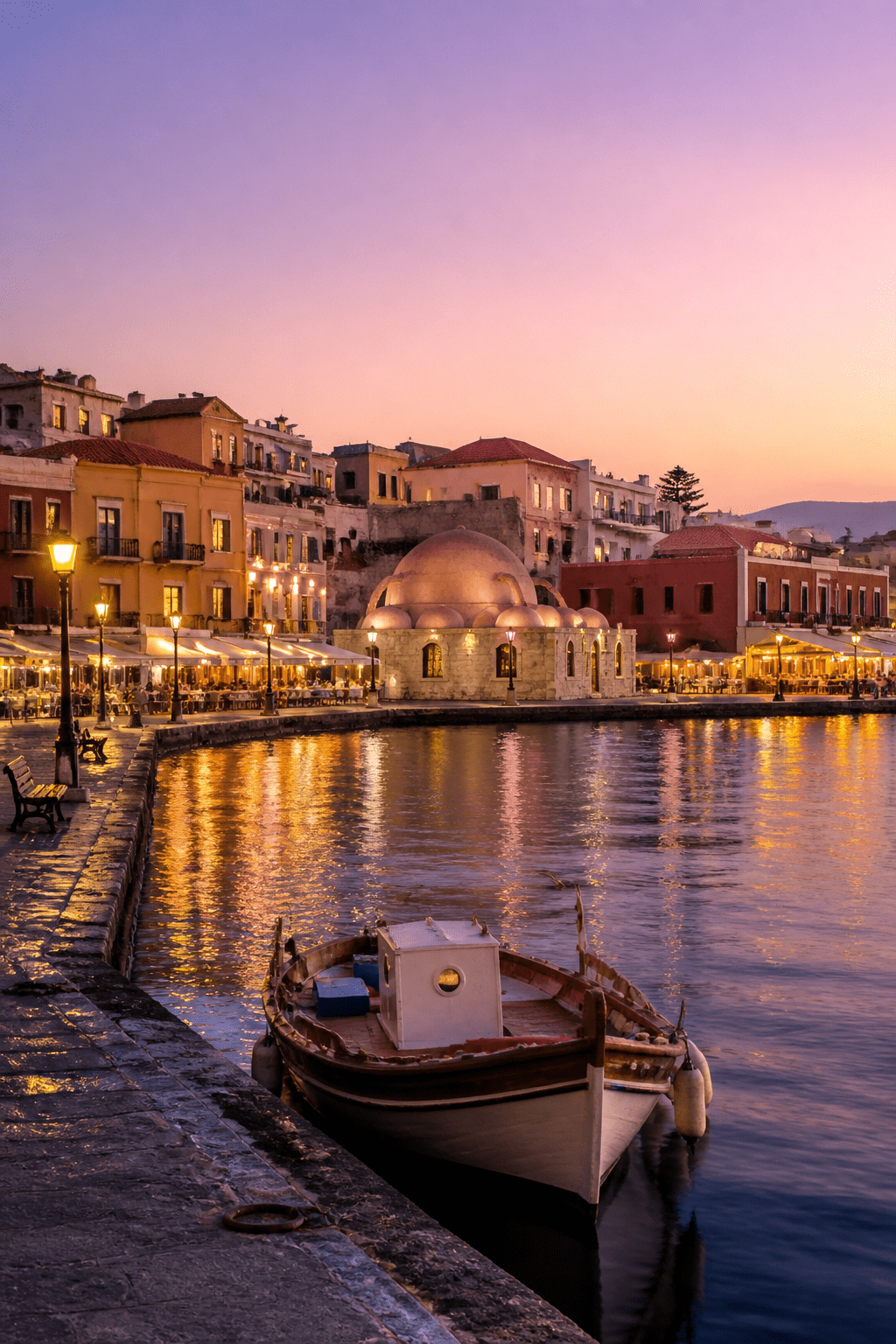
Chania’s Old Town is the most atmospheric place to base yourself in western Crete. It’s walkable, historically layered, and far more charming than Heraklion for an overnight stay.
What to See in Chania
- Venetian Quarter: Narrow lanes, boutique hotels in converted mansions, and excellent restaurants
- Venetian Port and Lighthouse: The harbor is most beautiful at sunrise and just after sunset
- Mosque of the Janissaries: The city’s most recognizable landmark, now used as an exhibition space [3]
- Etz Hayyim Synagogue: One of the oldest synagogues in Europe, tucked in a quiet alley — most visitors walk right past it
- Municipal Market (Agora): A 1911 cross-shaped covered market where locals actually shop
World War II history note: The area around Souda Bay and Chania holds significant WWII sites, including the Souda Bay War Cemetery where Allied soldiers from the 1941 Battle of Crete are buried. [5] This dimension of Crete’s history rarely appears in standard travel guides.
For more ideas on exploring Greek cities beyond the obvious, our guide to what to see in Athens Greece beyond the Acropolis covers a similar approach to finding the less-visited spots.
Where to Stay in Crete: Accommodations for Every Budget
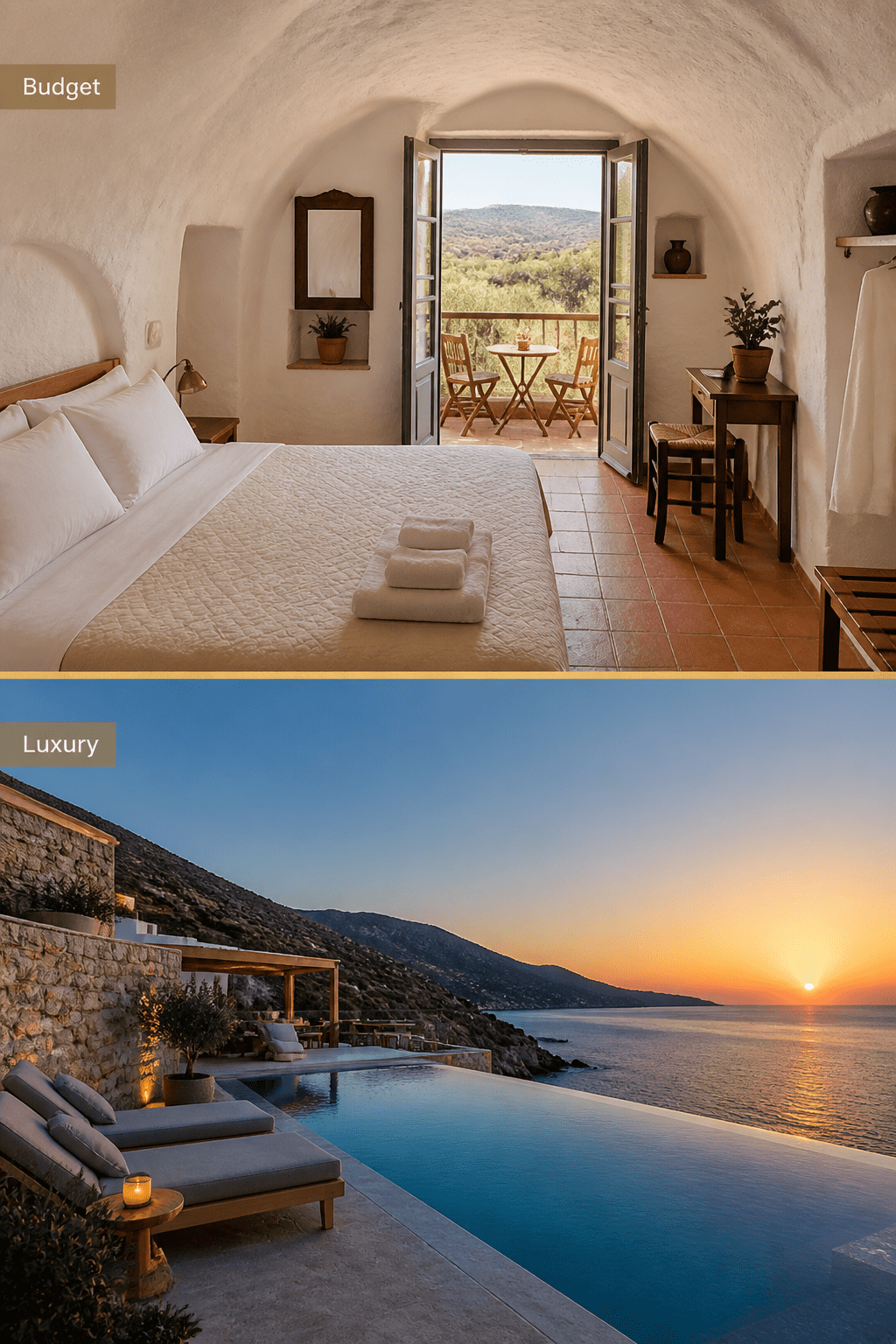
Where you stay in Crete shapes your entire experience. The island is 260 km long, so choosing the wrong base can mean two hours of driving to reach the things you actually want to see.
Choosing Your Base
| Base | Best For |
|---|---|
| Chania | Western beaches, Samaria Gorge, Balos, atmosphere |
| Rethymnon | Central location, Old Town charm, Arkadi Monastery |
| Heraklion | Knossos, Heraklion Museum, eastern Crete day trips |
| Elounda / Agios Nikolaos | Luxury resorts, quieter eastern coast |
Budget Options (€40–€80/night)
- Guesthouses in Rethymnon’s Old Town: Family-run, often in Venetian buildings, walking distance to everything
- Chania backpacker hostels: Several well-reviewed options near the harbor, good for solo travelers
- Apartments in Heraklion: More practical than pretty, but good value and central
Mid-Range (€80–€180/night)
- Boutique hotels in Chania’s Venetian Quarter: Stone-walled rooms, rooftop terraces, harbor views. Book at least 6–8 weeks ahead for summer
- Agrotourism stays in the Cretan countryside: Working farms and village guesthouses offer a completely different experience from coastal hotels
Luxury (€180+/night)
- Elounda Peninsula area: Home to some of Greece’s most exclusive resorts, with private beach access and infinity pools
- Cave-style villas near Chania: Boutique properties built into hillsides with panoramic sea views
Choose Chania if you want the best combination of atmosphere, beach access, and hiking proximity. Choose Elounda if luxury resort experience is the priority and you don’t mind being far from the main historical sites.
Practical Tips for Planning Your Crete Trip
- Best time to visit: May, June, and September offer warm weather, manageable crowds, and lower prices. July and August are peak season with intense heat (often 35°C+)
- Getting around: Rent a car. Buses connect the main towns but won’t get you to Balos, Samaria, or most village sites
- How long to stay: 7–10 days lets you cover western and central Crete comfortably. Five days is enough for a focused western Crete trip
- Currency: Euro. Cards are widely accepted in tourist areas, but carry cash for smaller villages and gorge entrance fees
- Language: Greek, but English is spoken almost everywhere in tourist areas
If you’re building a broader Mediterranean itinerary, our guides to what to see in Athens Greece and what to see in Split Croatia pair well with a Crete visit.
FAQ: What to See in Crete Greece
How many days do you need in Crete?
Seven to ten days is ideal for covering the main sites across western and central Crete. Five days works if you’re based in Chania and focus on the west.
Is Crete worth visiting for history lovers?
Yes. Knossos Palace, the Heraklion Museum, Arkadi Monastery, and the WWII sites around Chania make Crete one of the most historically layered destinations in Europe.
What is the best beach in Crete?
Balos Lagoon is the most visually spectacular. Elafonisi is the most accessible. Matala is the most interesting culturally. The “best” depends on what you’re after.
Is Samaria Gorge suitable for beginners?
Yes, with caveats. The trail is long (14.5 km) and rocky, but it requires no technical climbing. Wear proper hiking shoes, start early, and bring at least 2 liters of water.
What is the best base in Crete for first-timers?
Chania. It has the best Old Town atmosphere, easy access to western beaches, and is the closest major town to Samaria Gorge.
Is Crete expensive?
Moderately. It’s cheaper than Mykonos or Santorini but pricier than mainland Greece. Accommodation and dining costs drop significantly outside peak season (July–August).
Do I need a car in Crete?
For most travelers, yes. The island is large and the best sites (Balos, Samaria, Arkadi, Matala) are not well served by public transport.
When does Samaria Gorge open?
The gorge opens in May and closes in October. [1] Exact opening dates vary slightly by year depending on weather conditions.
Is Chania or Heraklion better for tourists?
Chania is more atmospheric and better for first-time visitors. Heraklion is more practical for history-focused travelers who want to be near Knossos and the Archaeological Museum.
What do most tourists miss in Crete?
The Arkadi Monastery, the Etz Hayyim Synagogue in Chania, the WWII sites around Souda Bay, and the agrotourism villages in the Cretan interior. [5]
Conclusion: Plan Beyond the Beach
Crete rewards travelers who look past the resort strips. The island holds Bronze Age ruins, a world-class gorge hike, a Venetian harbor town, and beaches that require actual effort to reach — which is exactly why they’re worth it.
Your next steps:
- Decide your base — Chania for western Crete, Heraklion for history, Rethymnon for a central option
- Book Samaria Gorge early if visiting in summer — the trail gets crowded and accommodations in nearby villages fill up fast
- Reserve your car before you land, especially for July and August travel
- Pair Knossos with the Heraklion Museum on the same day to get the full Minoan story
- Add at least one inland day — Arkadi Monastery and a village lunch in the Cretan mountains will be among your best memories from the trip
For more Mediterranean travel inspiration, explore our complete guide to what to see in Athens Greece or check out whether Santorini lives up to the hype before adding it to your itinerary.
References
[1] 12 Best Places To Visit On Crete – https://www.nextleveloftravel.com/greece/12-best-places-to-visit-on-crete/
[2] Things To Do Crete – https://destinationwellknown.com/things-to-do-crete/
[3] Best Things To Do In Crete Greece – https://apassionandapassport.com/best-things-to-do-in-crete-greece/
[4] 9 Gorgeous Places To Visit On Your Crete Holidays – https://handluggageonly.co.uk/9-gorgeous-places-to-visit-on-your-crete-holidays/
[5] Crete What The Travel Guides Dont Tell You – https://tammytourguide.wordpress.com/2022/06/06/crete-what-the-travel-guides-dont-tell-you/
[6] Attractions G189413 Activities Crete – https://www.tripadvisor.com/Attractions-g189413-Activities-Crete.html