Quick Answer: Seville is one of Europe’s most rewarding cities, packed with Moorish palaces, flamenco culture, and sun-drenched plazas that reward slow exploration. The top things to do in Seville Spain range from booking the Real Alcázar weeks in advance to wandering the Triana district after dark. Whether you have two days or a full week, this guide covers both the unmissable landmarks and the lesser-known spots that most visitors walk right past.
Key Takeaways 🗝️
- Book the Real Alcázar in advance — hourly visitor caps mean same-day entry is rarely possible in peak season
- Triana district is the authentic heart of flamenco culture and far less crowded than the historic center
- Las Setas (Metropol Parasol) offers the best free-ish rooftop view in the city for under €5
- Plaza de España is best visited early morning or at sunset to avoid tour groups
- Seville Cathedral holds Christopher Columbus’s tomb — climb La Giralda tower for panoramic views
- Day trips to Ronda and the White Towns are easy from Seville and worth at least one full day
- April (Feria de Abril) and March (Semana Santa) are the most atmospheric times to visit, but hotels book out months ahead
- Tapas culture here is serious — budget €15–25 per person for a proper tapas crawl in the Alameda de Hércules area
- Accommodations range from grand paradors to charming boutique guesthouses in the Santa Cruz neighborhood
- Seville is very walkable; most top attractions cluster within a 20-minute walk of each other
What Are the Top Things to Do in Seville Spain?
Seville’s greatest hits are genuinely great — not just tourist traps. The Real Alcázar, Seville Cathedral, Plaza de España, and the Triana district form the core of any visit. Beyond those, the city rewards anyone willing to peek down a side street or duck into a neighborhood market.
The top things to do in Seville Spain break down into three categories: iconic landmarks, authentic local experiences, and day trips. Most first-timers focus only on the first category and miss a lot of what makes Seville special.
The Unmissable Landmarks (Start Here)
These are the attractions that belong on every Seville itinerary, regardless of how long you’re staying. [2]
Real Alcázar
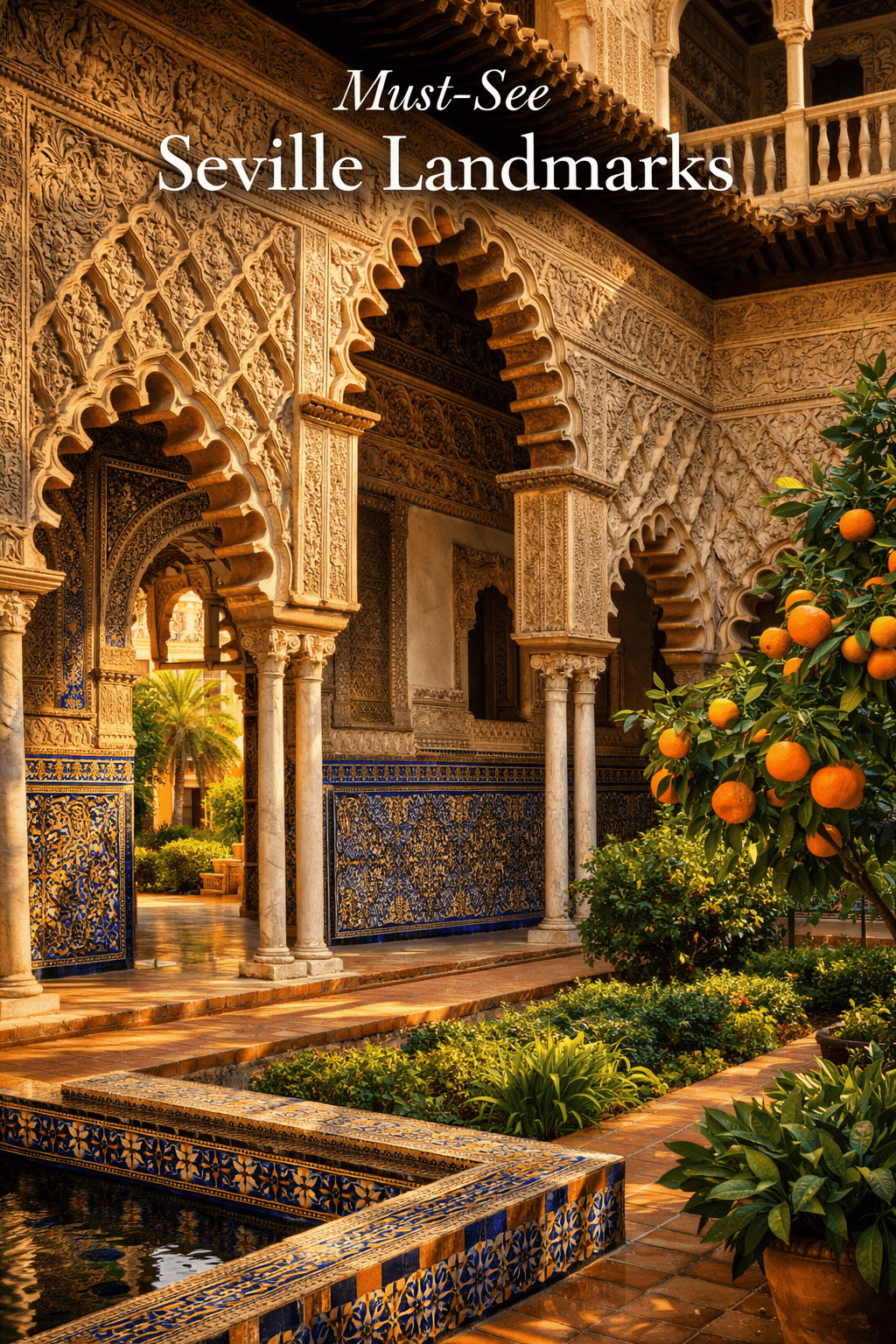
The Real Alcázar is the single most impressive thing to see in Seville. This Mudéjar-style royal palace has over 1,000 years of layered history — Moorish, Gothic, Renaissance, and Baroque architecture all coexist in one complex. The courtyards are stunning, the gardens feel almost dreamlike, and the tilework is some of the finest you’ll see anywhere in Europe. [2]
Practical tip: Tickets sell out days (sometimes weeks) ahead during spring and summer. Book online as soon as you confirm your travel dates. Entry costs around €14.50 for adults as of 2026.
Seville Cathedral & La Giralda Tower
Built on the foundations of a Moorish mosque, Seville Cathedral is one of the largest Gothic cathedrals in the world. Inside, you can visit Christopher Columbus’s tomb — a genuinely moving experience. The attached Giralda bell tower is a former minaret you can walk up via a series of ramps (no stairs) for sweeping views over the old city. [2]
- Entry: Around €12 for adults; free on certain Monday afternoons (check the official site before you go)
- Time needed: 1.5–2 hours minimum
Plaza de España
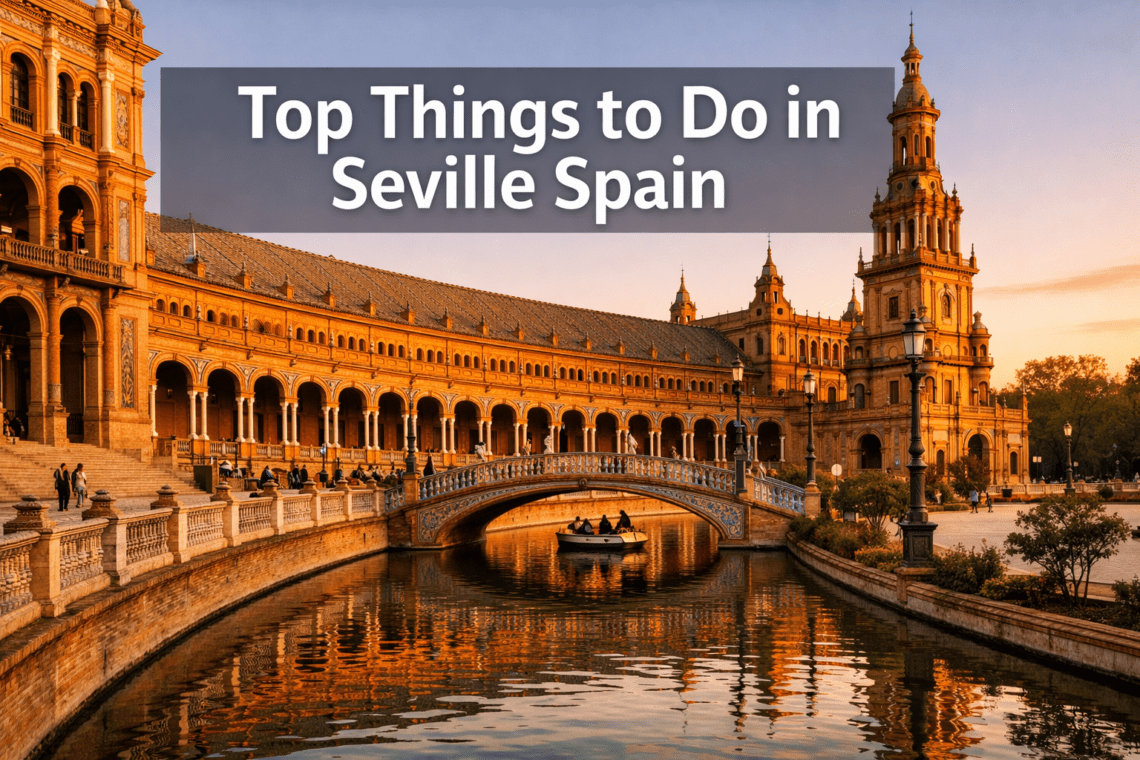
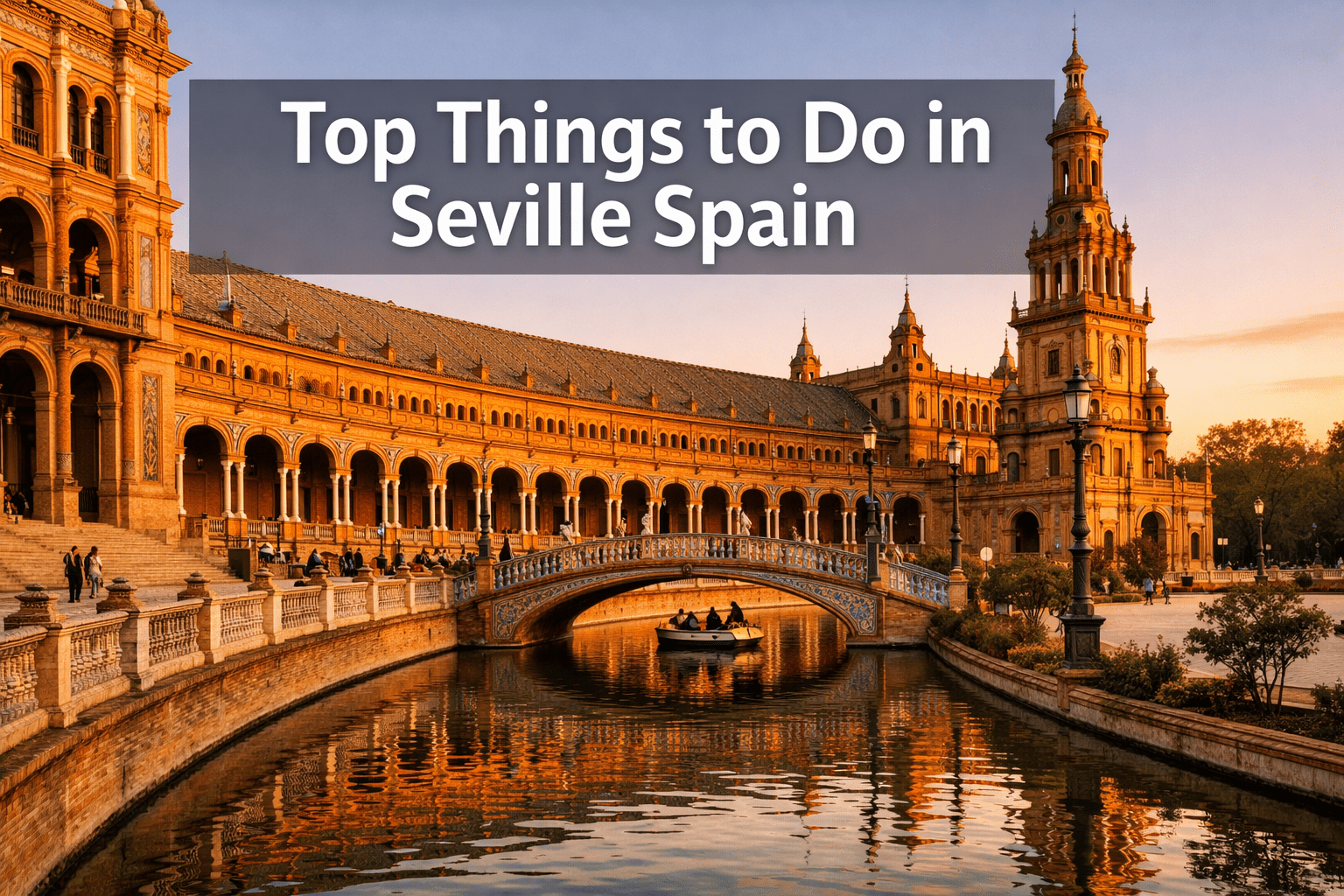
Built for the 1929 Ibero-American Exhibition, this semi-circular plaza is one of Spain’s most theatrical public spaces. Each Spanish province has its own ceramic tile alcove around the curved colonnade — you can easily spend an hour just walking the perimeter. Rent a rowboat on the canal for a few euros and see it from the water. [3]
Best time to visit: Arrive before 9am or after 6pm. Midday in summer brings intense heat and tour groups.
Hidden Gems in Seville Most Tourists Skip
The top things to do in Seville Spain aren’t limited to the big landmarks. Some of the city’s best experiences are tucked away in neighborhoods and buildings that don’t appear on most itineraries. [4]
Las Setas de Sevilla (Metropol Parasol)
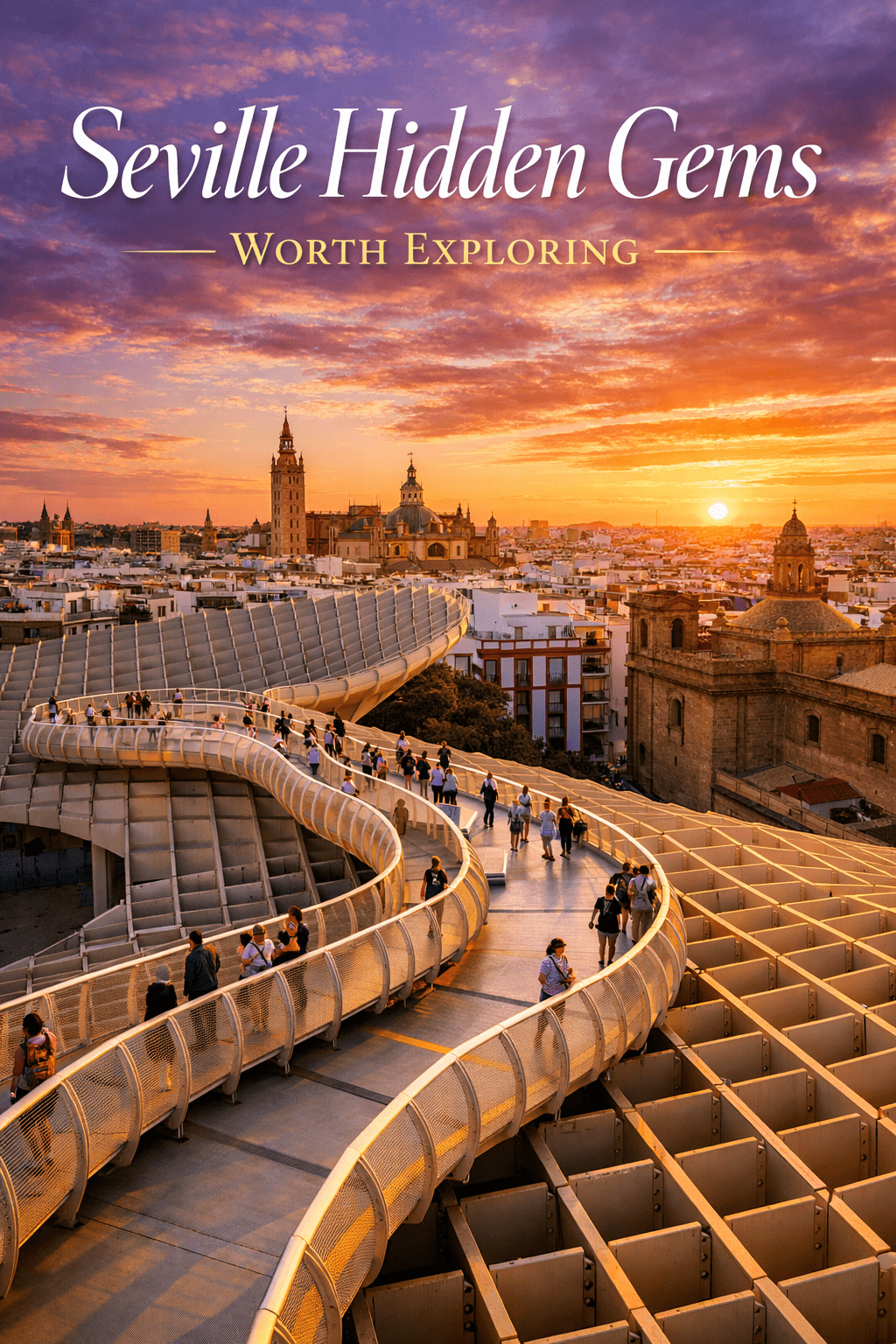
This giant wooden mushroom structure in the Plaza de la Encarnación divides locals — some love it, some find it jarring next to the historic architecture. Either way, the rooftop walkway offers one of the best panoramic views in the city for around €5. Come at sunset for the best light. Below the structure, the Mercado de la Encarnación is worth a morning visit for fresh produce and local food stalls. [2][4]
Palacio de la Condesa de Lebrija
Most visitors to Seville walk right past this former noble family residence on Calle Cuna. Inside, it’s filled with Roman mosaics (many salvaged from the ancient city of Italica nearby), Arab arches, and an impressive art collection assembled by the Countess of Lebrija. Entry costs around €12 for a full guided tour. It’s quiet, uncrowded, and genuinely fascinating. [2]
Casa de Pilatos
Another palace that flies under the radar compared to the Alcázar. Casa de Pilatos blends Mudéjar, Gothic, and Renaissance styles and features beautiful azulejo (ceramic tile) work throughout. The gardens are peaceful and the upper floor — accessible with a more expensive ticket — shows off the family’s art collection. [4]
Triana District
Cross the Isabel II bridge over the Guadalquivir River and you’re in Triana — historically the neighborhood of bullfighters, flamenco artists, and ceramics makers. It still feels more lived-in and less touristy than the historic center. Walk along Calle Betis for river views, browse the Mercado de Triana in the morning, and stay for dinner at one of the neighborhood’s unpretentious tapas bars. [2]
Where to Experience Authentic Flamenco in Seville
Seville is the spiritual home of flamenco, and seeing a live performance here is a completely different experience from a tourist show in Madrid or Barcelona.
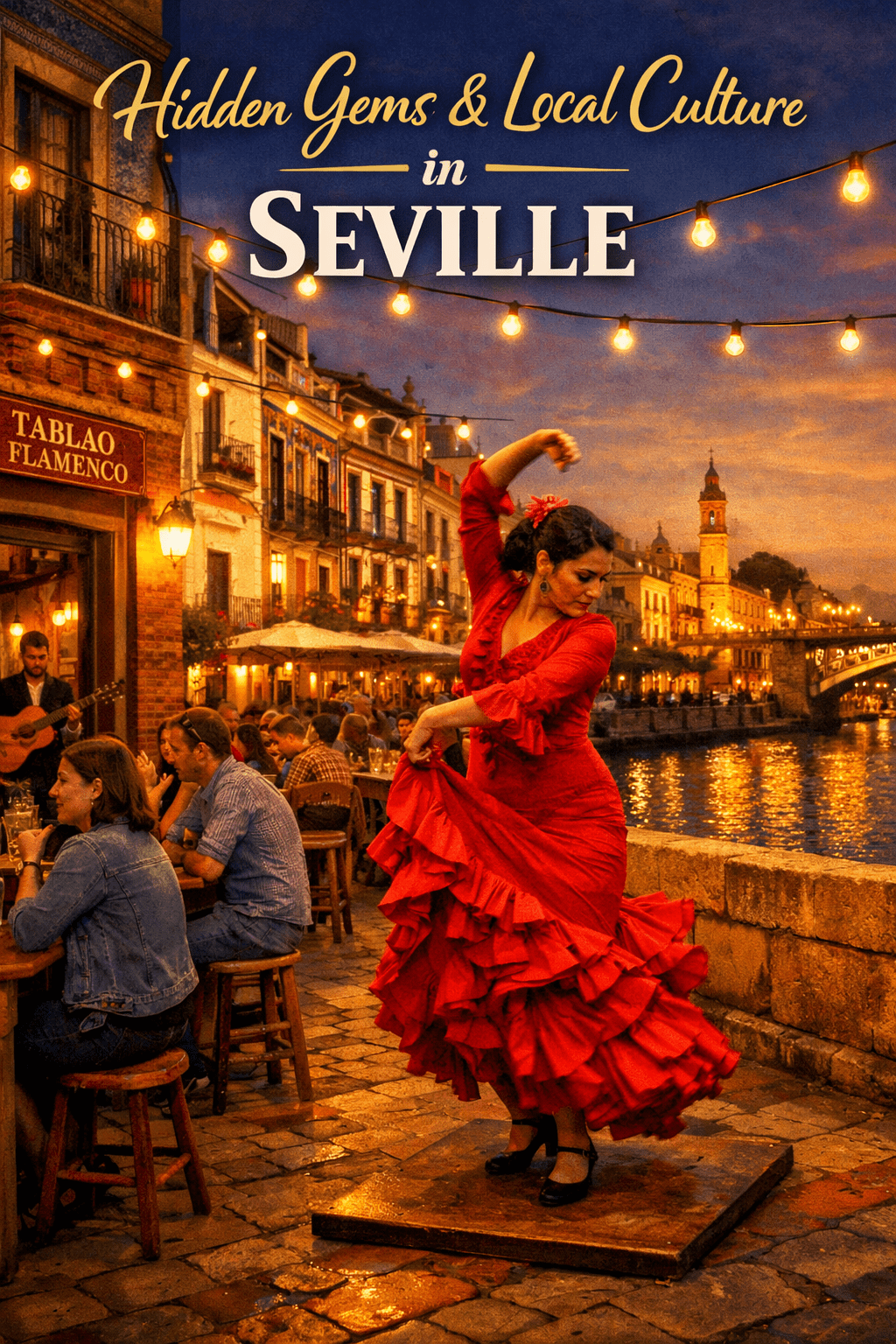
The Triana district is the historic center of flamenco culture in Seville. Several tablaos (flamenco venues) offer nightly performances, ranging from intimate to theatrical. [2]
| Venue | Style | Notes |
|---|---|---|
| Casa de la Memoria | Intimate, traditional | Most popular; book well ahead |
| Teatro Flamenco Triana | Authentic, raw | Considered most authentic by locals |
| Museo del Baile Flamenco | Educational + performance | Includes museum access |
| El Palacio Andaluz | Theatrical, dinner option | Larger venue, more polished |
Choose Casa de la Memoria if you want an intimate, close-up experience with serious dancers. Choose El Palacio Andaluz if you want a dinner-and-show format with a larger group.
“Flamenco isn’t background music here — it’s a conversation between the dancer, the guitarist, and the audience.” [2]
Day Trips Worth Taking from Seville
Seville’s location in Andalusia makes it an excellent base for exploring the surrounding region. The most popular day trips are easy to organize independently or through a guided tour. [5]
Ronda and the White Towns
The dramatic clifftop city of Ronda sits about 1.5 hours from Seville by car or bus. Its famous Puente Nuevo bridge spans a 120-meter gorge and the old town is genuinely beautiful. Combine it with a drive through the White Towns (Pueblos Blancos) — a string of whitewashed hilltop villages through the Andalusian countryside.
If you’re also planning a quick coastal detour, our guide to 1 day in Cádiz Spain covers the nearby Atlantic city perfectly.
Caminito del Rey
This restored mountain walkway (formerly one of the world’s most dangerous hiking paths) threads through a dramatic gorge about 1.5 hours from Seville. It’s a full-day excursion and requires advance booking, but it’s one of the most spectacular outdoor experiences in southern Spain. [5]
Italica
For a shorter half-day trip, the Roman ruins of Italica sit just 9km from Seville’s city center. This was the birthplace of Roman emperors Trajan and Hadrian, and the amphitheater is remarkably well-preserved. Entry is free for EU citizens; around €1.50 for others.
Best Accommodations in Seville for Every Budget
Seville has a strong range of places to stay, from grand historic hotels to budget-friendly guesthouses. The best neighborhood to stay in is Santa Cruz (closest to the main sights) or El Arenal (near the river, slightly quieter).
Luxury Options
- Hotel Alfonso XIII — Seville’s most iconic hotel, built for the 1929 Exhibition in a neo-Mudéjar style. Rates start around €300–500/night in peak season. Worth a visit even if you’re not staying, just to see the courtyard.
- Gran Meliá Colón — Art Deco landmark overlooking the bullring. Excellent location and rooftop pool.
Mid-Range (€80–180/night)
- EME Catedral Hotel — Rooftop pool with direct views of the Cathedral. Excellent value for the location.
- Hotel Casas de Santa Cruz — Charming boutique property in the heart of the Jewish quarter. Rooms are small but beautifully decorated with traditional Sevillian tiles.
Budget (Under €80/night)
- Oasis Backpackers’ Hostel — Consistently well-reviewed, rooftop terrace, social atmosphere. Great for solo travelers.
- Pensión Alcázar — Simple, clean guesthouses near the Cathedral. Book early as rooms fill fast.
Booking tip: Avoid staying during Semana Santa or Feria de Abril without booking 3–6 months ahead. Prices triple and availability disappears fast.
If you’re planning a broader Spain trip, our 3 days in Madrid itinerary and guide to must-see places in Spain for first-timers are useful next reads. For solo travelers, the solo travel in Spain guide covers logistics and safety in detail.
Practical Tips for Visiting Seville in 2026
A few things that will genuinely improve your trip:
- Best time to visit: March–May and September–October. July and August are brutally hot (often above 40°C/104°F) and many locals leave the city.
- Getting around: Seville is very walkable. The historic center, Triana, and the Parque de María Luisa are all connected on foot. The tram (Line T1) is useful for short hops.
- Tapas culture: In Seville, tapas are often free with a drink at traditional bars. Ask for “una caña” (small beer) and see what arrives. This isn’t universal, but it still happens at old-school spots.
- Language: Basic Spanish goes a long way. English is spoken at most hotels and tourist-facing businesses, but less so at neighborhood bars and markets.
- Safety: Seville is generally very safe. Watch for pickpockets around the Cathedral and on the main tourist streets, especially in crowded areas.
For more European city inspiration, check out what to see in Barcelona or what to see in Athens beyond the Acropolis for a similar mix of history and hidden gems.

FAQ: Top Things to Do in Seville Spain
How many days do you need in Seville?
Three full days covers the main landmarks comfortably. Four or five days lets you add a day trip to Ronda or Cádiz and explore neighborhoods like Triana more slowly.
Is Seville worth visiting in summer?
It’s doable but genuinely very hot. Temperatures regularly exceed 40°C in July and August. If summer is your only option, plan outdoor sightseeing for early morning and late evening, and budget time for long afternoon breaks.
Do I need to book the Real Alcázar in advance?
Yes, absolutely. The Alcázar operates on timed entry with limited hourly capacity. In spring and summer, tickets sell out days or weeks ahead. Book online as soon as your travel dates are confirmed. [2]
What’s the best neighborhood to stay in Seville?
Santa Cruz is the most convenient for first-timers — it puts you within walking distance of the Alcázar, Cathedral, and Plaza de España. El Arenal is slightly quieter and closer to the river.
Is Seville expensive?
Compared to Madrid or Barcelona, Seville is noticeably more affordable. Budget travelers can eat well for €15–20/day on tapas and set lunches. Mid-range travelers should expect €60–120/day including accommodation.
What is Seville known for?
Seville is known for flamenco, Moorish architecture (especially the Real Alcázar), Holy Week processions (Semana Santa), and the April Fair (Feria de Abril). It’s also the setting for several famous operas, including Carmen and The Barber of Seville.
Can you visit Seville on a day trip from Madrid?
Technically yes — the AVE high-speed train takes about 2.5 hours each way. But a day trip only scratches the surface. Two nights minimum is a much better use of the journey.
Is Triana worth visiting?
Definitely. Triana is one of the most authentic neighborhoods in Seville and feels genuinely different from the tourist-heavy historic center. Go for the flamenco venues, the riverside walk along Calle Betis, and the Mercado de Triana. [2]
What’s the best free thing to do in Seville?
Walking through the Santa Cruz neighborhood (the old Jewish quarter) costs nothing and takes about an hour. The narrow, winding streets, hidden plazas, and orange tree-lined courtyards are some of the most atmospheric spots in the city.
Are there good day trips from Seville?
Yes. Ronda, the White Towns, Cádiz, and the Roman ruins at Italica are all within easy reach. Caminito del Rey requires advance booking but is one of the most dramatic experiences in Andalusia. [5]
Conclusion: Planning Your Seville Trip
Seville rewards visitors who go beyond the obvious. Yes, the Real Alcázar and the Cathedral are genuinely unmissable — book those first. But the city’s real personality lives in Triana at night, in a quiet palace courtyard that most tourists walk past, and in a neighborhood bar where the tapas arrive without you asking.
Your action plan:
- Book Real Alcázar tickets as soon as your dates are set
- Reserve a flamenco show at Casa de la Memoria or Teatro Flamenco Triana
- Allocate at least one evening to Triana — dinner, a walk along the river, and a drink
- Add one day trip (Ronda or Cádiz are the strongest choices)
- Stay in Santa Cruz or El Arenal for the best access to everything
Seville is one of those cities that people visit once and immediately start planning a return trip. Give it at least three days, and you’ll understand why.

References
[2] Attractions Seville – https://sevillecityguide.com/attractions-seville.html
[3] Things To Do In Seville – https://www.heatheronhertravels.com/things-to-do-in-seville/
[4] Seville Guide To Do Foodie Recommendations – https://whereandwander.com/seville-guide-to-do-foodie-recommendations/
[5] getyourguide – https://www.getyourguide.com/seville-l48/ttd/
[6] Attractions G187443 Activities Seville Province Of Seville Andalucia – https://www.tripadvisor.com/Attractions-g187443-Activities-Seville_Province_of_Seville_Andalucia.html
[8] D556 Ttd – https://www.viator.com/Seville/d556-ttd